Symbiosis / Cong Sinh Architects


© Hiroyuki Oki


© Hiroyuki Oki


© Hiroyuki Oki


© Hiroyuki Oki

  • Architects: Cong Sinh Architects
  • Location: Huế, Thua Thien Hue, Vietnam
  • Architect In Charge: Vo Quang Thi
  • Project Architects: Vo Quang Thi, Nguyen Thi Nha Van, Phung Kim Phuoc, Tran Ngoc Hung, Vo Thi Kim Khanh, Tran Ngo Chi Mai, Le Thien Trieu, Do Truong Nguyen, Nguyen Manh Liem, Vu Hoang Phi Long, Tran Le Quyen.
  • Project Year: 2016
  • Photographs: Hiroyuki Oki
  • Contractor: Thanh An Interior & Construction Co.,Ltd

© Hiroyuki Oki

© Hiroyuki Oki

From the architect. Hue, the ancient capital of Vietnam, has been honored as the National Green City by the World Wide Fund for Nature (WWF). The city is divided into Northern and Southern regions by the beautiful Huong River.


Diagram

Diagram

In the Northern region where the old citadel is located, construction is strictly managed by the local authority. Constructions with high density and large scale are greatly restricted, which gives more space for plants and helps create a green and harmonious area. However, in the Southern region, urbanization takes place faster and there is less and less green space.


© Hiroyuki Oki

© Hiroyuki Oki

The building is an office which is located on a beautiful street running along the bank of a small river in the Southern region. This is one of the greenest streets that remain in this area. Despite this, in recent years, the street still cannot protect itself from the impacts of the rapid urbanization. Along the street, there have been constructions with very high density, which affects the overall landscape. Likewise, before renovation, the original building was also built with 100% density. Therefore, after buying this property, the architect had a simple idea for turning it into an office: creating an architectural form that appears friendly and harmonious, and that has a symbiotic relationship with the surroundings.


© Hiroyuki Oki

© Hiroyuki Oki

The building helps heal the wounds caused by the urbanization process on the street.
The solution is as follows: First, we replace the front half of the building with an area for plants and a vine trellis. The aim is to help the office completely blend in with the landscape around it and let nature cover and protect the space for use. This area is used for reception. Then, at the remaining area behind, we put another floor on top. The ground floor is a model studio and the first floor is the office for the architects. Both of the spaces are completely open to the front space that is covered by the plants and vine trellis. People in the building will feel like the space for use is doubled.


© Hiroyuki Oki

© Hiroyuki Oki

The people, the plants and the building have a symbiotic relationship with each other and they become a single unit. Every day, people take care of the plants and the building. On the stormy days in Hue city every year, the building covers and protects the plants and people. And on summer days with high temperature, the plants provide shade for the building and the people below.


© Hiroyuki Oki

© Hiroyuki Oki

The architects hope that this is a simple and effective solution which can be applied for every building with high density in order to bring back the original greenness to the street.


© Hiroyuki Oki
© Hiroyuki Oki

http://ift.tt/2cWoqL0

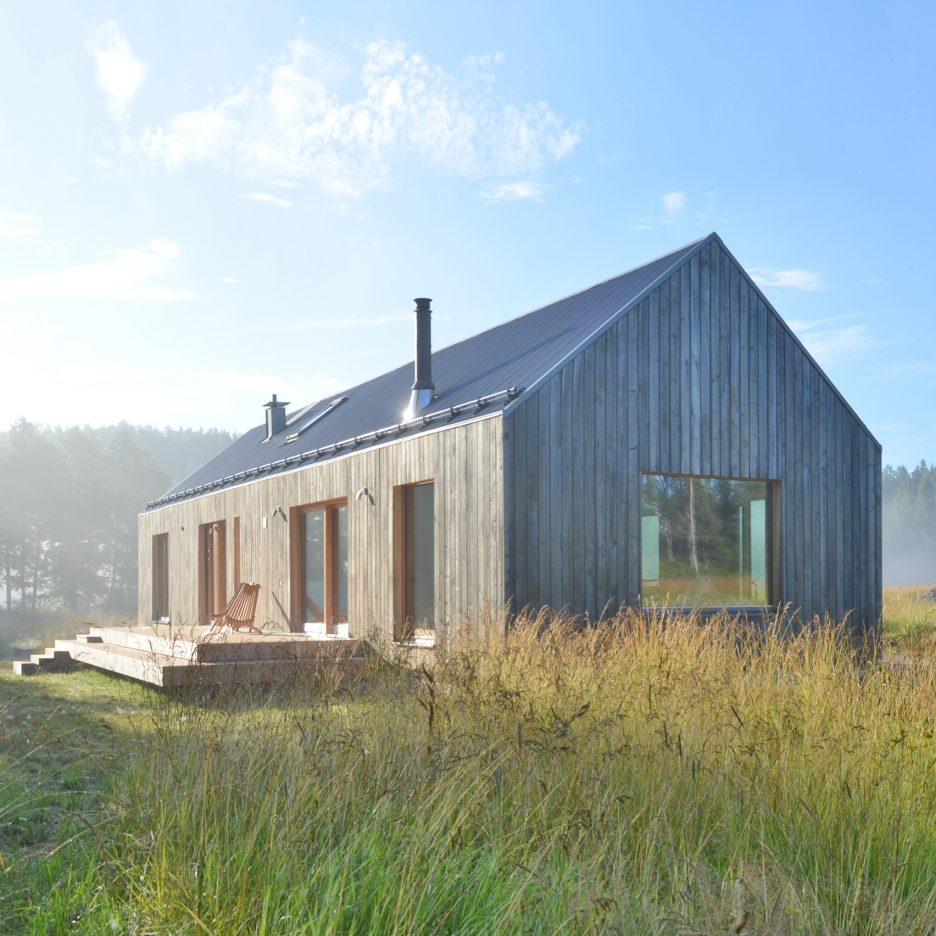
MNy Arkitekter uses seven types of timber for Finnish lake house


MNy Arkitekter has used seven varieties of timber to create this gabled house on the shoreline of a small lake in Tenala, Finland (+ slideshow). (more…)

http://ift.tt/2cKc3OA

O-ART-IM House / SOOK Architects


© Spaceshift Studio

© Spaceshift Studio


© Spaceshift Studio


© Spaceshift Studio


© Spaceshift Studio


© Spaceshift Studio

  • Architects: SOOK Architects
  • Location: Soi Phetchaburi 47 – Soi Phetchaburi Tut mai 47, Lane 3, Khwaeng Bang Kapi, Khet Huai Khwang, Krung Thep Maha Nakhon 10310, Thailand
  • Area: 261.0 sqm
  • Project Year: 2016
  • Photographs: Spaceshift Studio
  • Client: Nuntaporn Leelaryonkul
  • Structural Engineer: Pakanut Siriprasopsothron
  • System Engineer : Eakachai Hamhomvong

© Spaceshift Studio

© Spaceshift Studio

O-ART-IM HOUSE located in Sri Nakorn housing estate, which had been established since 1969. Nuntaporn has been living in this house with her family since she was young, later on her dad bought her adjacent land for a new house after marriage. 


© Spaceshift Studio

© Spaceshift Studio

Even the road in this village is only 4.5 m. wide which limited an one way transportation, every house was built with 8-10m. setback in the front ,for being a yard and growing a big tree for shading, as a green corridor. This characteristic of this village was always used as a place where neighbors are gathering and the kids are playing under a big tree.

Designing phase started when the owner decided to keep an open space in the front, to be a green area. So the whole setback area was designed as a multipurpose area which can be used for parking up to 4 cars. Grass pave was installed for the floor to absorb the rain water. Next to the parking, sliding lath fence is constructed, invites a friendly atmosphere, as well as an eyes on street while people from inside and outside can see each other through the fence which makes a whole community become more livable.


© Spaceshift Studio

© Spaceshift Studio

First floor of the house will be used for food designing studio, consists of a big kitchen, baking area, and multipurpose area for teaching a cooking class. Most of the areas were placed to the north so the southern part of the house can be used for growing organics plants.


© Spaceshift Studio

© Spaceshift Studio

Plan

Plan

© Spaceshift Studio

© Spaceshift Studio

Second and third floor are designed following the idea of one bedroom unit in condominium, by having living-bedroom with closet and bathroom , supporting an extension of the family in future when her little girl grows up.


© Spaceshift Studio

© Spaceshift Studio

Form and features of O-ART-IM House are simply, while a gable roof and wooden wall are designed imitate the old house’s style. The technique of Overlapping each floor one by one, giving a sense of widen space from a setback rule. A Overlapping part can be used to protect a lower floor from the rain, also used as a terrace for an upper floor.


Elevations

Elevations

Steel structure and most of materials are dry system. Renewable materials such as Fiber Cement Board were applied, for adaptive purposes and also to be capable for reusing process rather than wasting.


© Spaceshift Studio

© Spaceshift Studio

http://ift.tt/2co7OvF

Vinyl’s Mix / Sides Core


© Yoshiro Masuda

© Yoshiro Masuda


© Yoshiro Masuda


© Yoshiro Masuda


© Yoshiro Masuda


© Yoshiro Masuda

  • Architects: Sides Core
  • Location: Hagoromo, Takaishi, Osaka Prefecture 592-0002, Japan
  • Area: 90.9 sqm
  • Project Year: 2016
  • Photographs: Yoshiro Masuda
  • Designer: Sohei Arao
  • Construction Company: UEMOTO KOUMUTEN

© Yoshiro Masuda

© Yoshiro Masuda

This is a relocation project for a salon we designed previously. This is the youngest and most lively of the salon’s locations. The staff has curated a collection of books to showcase their ideas and personalities.  


© Yoshiro Masuda

© Yoshiro Masuda

Plan

Plan

© Yoshiro Masuda

© Yoshiro Masuda

The name “vinyl’s mix” reflects the owner’s idea of integrating music, art and other forms of cultural expression into a hair salon. The library represents this ideal. 


© Yoshiro Masuda

© Yoshiro Masuda

The premises have a narrow façade flanked by utility meters, and windows facing the cement block wall of the adjacent property. Rough surroundings reflect the raw, unpolished charm and undiscovered potential of the staff. We chose to make use of those features rather than hide them for an energetic vibe. 


© Yoshiro Masuda

© Yoshiro Masuda

Steel beams crisscrossing the ceiling became a grid for lighting fixtures. Water pipes running just below the ceiling are repurposed as supports for a bar to hang garments on. The redesigned interior has plenty of textured materials to harmonize with the existing rough, unfinished space, expressing the essence of the salon. 


© Yoshiro Masuda

© Yoshiro Masuda

To emphasize the depth of the space, the entrance is a glass sliding door with large, unobstructed panes. Dividers inside are high enough that customers do not feel prying eyes from outside, while still sharing the energy of the space with passersby.

http://ift.tt/2d0FGgK

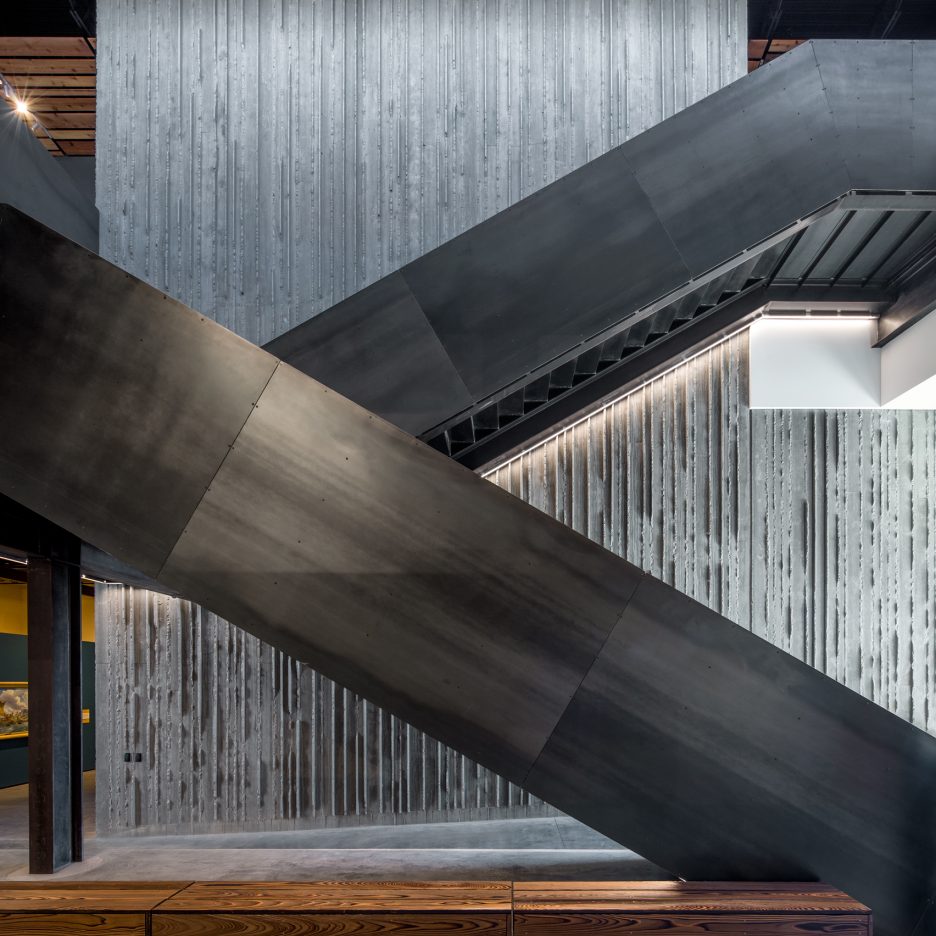
Museum of the West by Studio Ma features walls made of textured concrete


US firm Studio Ma has drawn inspiration from horseshoes, woven baskets and rugged landscapes for its design of a Western heritage museum in the metropolis of Phoenix, Arizona (+ slideshow). (more…)

http://ift.tt/2cbjwIN

Heatherwick Studio’s “Vessel” Will Take the Form of an Endless Stairway at New York’s Hudson Yards


Interior View of the Vessel. Image Courtesy of Forbes Massie-Heatherwick Studio

Interior View of the Vessel. Image Courtesy of Forbes Massie-Heatherwick Studio

Thomas Heatherwick is bringing a new public monument to New York City. Today, Heatherwick Studio revealed the first renderings of “Vessel,” a 15-story tall occupiable sculpture comprised of 154 intricately interconnecting flights of stairs that will serve as the centerpiece of the new Hudson Yards development in west Manhattan.


View of the Special Events Plaza. Image Courtesy of VisualHouse-NelsonByrdWoltz


Upper Level View Through the Vessel. Image Courtesy of Forbes Massie-Heatherwick Studio


View of the Public Square and Gardens Looking South from 33rd St.. Image Courtesy of Forbes Massie-Heatherwick Studio


View of the Pavilion Grove. Image Courtesy of VisualHouse-NelsonByrdWoltz


View of the Public Square and Gardens Looking South from 33rd St.. Image Courtesy of Forbes Massie-Heatherwick Studio

View of the Public Square and Gardens Looking South from 33rd St.. Image Courtesy of Forbes Massie-Heatherwick Studio

Inspired by the mesmerizing geometries of Indian stepwells, Vessel’s lattice calls to mind a beehive or jungle gym – and will indeed offer a workout to visitors game enough to climb the almost 2,500 individual steps within the structure, nearly a mile’s worth of vertical pathways.

The object’s form takes on a conical shape, widening from 50 feet at the base to 150 feet at the top. And if the geometries alone weren’t eye catching enough, the steel structural frame has been clad in a polished copper-colored steel skin, which will provide warped reflections of the plaza below.


Upper Level View Through the Vessel. Image Courtesy of Forbes Massie-Heatherwick Studio

Upper Level View Through the Vessel. Image Courtesy of Forbes Massie-Heatherwick Studio

“We had to think of what could act as the role of a landmarker,” said Thomas Heatherwick. “Something that could help give character and particularity to the space.”

The structure will be located in the central plaza of Hudson Yards, where it will be surrounded by native perennial gardens and a canopy of native trees, as well as a variety of seating options where visitors to the nearby Culture Shed or High Line can rest their feet.


View of the Special Events Plaza. Image Courtesy of VisualHouse-NelsonByrdWoltz

View of the Special Events Plaza. Image Courtesy of VisualHouse-NelsonByrdWoltz

The plaza platform itself constitutes quite the technical innovation, as it acts as a ventilating cover for the rail yards while also serving as a reservoir for site drainage and storm-water management.


View of the Pavilion Grove. Image Courtesy of VisualHouse-NelsonByrdWoltz

View of the Pavilion Grove. Image Courtesy of VisualHouse-NelsonByrdWoltz

The cost of “Vessel” is estimated at $150 million, double the original budget of $75 million.

Read more about the unveiling, here.

http://ift.tt/2cJUJcS

Atelier Bow-Wow, OMA, and Amale Andraos Live From the 2016 Oslo Architecture Triennale


The After Belonging Agency: Carlos Minguez Carrasco, Ignacio Galán, Alejandra Navarrese Llopis, Lluís Alexandre Casanovas Blanco and Marina Otero Verzier. Image Courtesy of Oslo Architecture Triennale

The After Belonging Agency: Carlos Minguez Carrasco, Ignacio Galán, Alejandra Navarrese Llopis, Lluís Alexandre Casanovas Blanco and Marina Otero Verzier. Image Courtesy of Oslo Architecture Triennale

“Belonging,” the curatorial quintet of the 2016 Oslo Architecture Triennale, After Belonging, argue, “is no longer something bound to one’s own space of residence, or to the territory of a nation.” For this group of Spanish-born architects, academics and theorists—Lluís Alexandre Casanovas Blanco, Ignacio Galán, Carlos Minguez Carrasco, Alejandra Navarrese Llopis and Marina Otero Verzier—the very notion of our belongings and what it means to belong is becoming increasingly unstable.

After Belonging is the sixth incarnation of the Triennale and the first one in which a single curatorial thread has woven all of the festival’s activities together, including the international conference. The goal of the two primary exhibitions—On Residence and In Residence, including a series of Intervention Strategies—is to develop platforms with the aim of “rehearsing research strategies,” providing new ways for architects to engage with “contemporary changing realities.”

While the European Union and the Schengen Area (the first successful transnational non-federal agreement for free movement of people) is becoming increasingly strained by nationalist rhetoric and a growing fear of open borders, development of an all-African passport will, in the words of After Belonging’s curators, “allow many to expand the territories they can call home.” As such, being “at home” today has different definitions. The ways and places in which we reside—be it a rural farmstead, a studio apartment, or simply a room—are changing, and rapidly so. Our relationship to the objects that we “produce, own, share and exchange” is fundamentally tied to the question: “where do we belong?”


"In Residence" Exhibition (National Museum – Architecture, Oslo). Image Courtesy of Oslo Architecture Triennale

"In Residence" Exhibition (National Museum – Architecture, Oslo). Image Courtesy of Oslo Architecture Triennale

"On Residence" Exhibition (DogA, Oslo). Image Courtesy of Oslo Architecture Triennale

"On Residence" Exhibition (DogA, Oslo). Image Courtesy of Oslo Architecture Triennale

http://ift.tt/2cf8wbW

The After Belonging Conference

On September 9th, 2016, Snøhetta’s National Opera and Ballet in Oslo hosted the After Belonging conference, bringing together a wide collection of architects, thinkers, decision-makers, and local experts tasked with dissecting “the architectures entangled in the contemporary reconfiguration of belonging.” Topics addressing architecture’s relation to refugeeism, migration and homelessness were discussed, alongside new mediated forms of domesticity and foreignness, environmental displacements, tourism, and the technologies and economies of sharing.

During the course of the conference ArchDaily broadcast live discussions with a selection of the speakers in order to hear their take on the Triennale theme. You can watch them all again, here.

http://ift.tt/2cf9nZZ

http://ift.tt/2cxTsDv

http://ift.tt/2cf9kh0

http://ift.tt/2cxU1wY

http://ift.tt/2cf9k0u


Courtesy of Oslo Architecture Triennale

Courtesy of Oslo Architecture Triennale

http://ift.tt/2cJPgm9

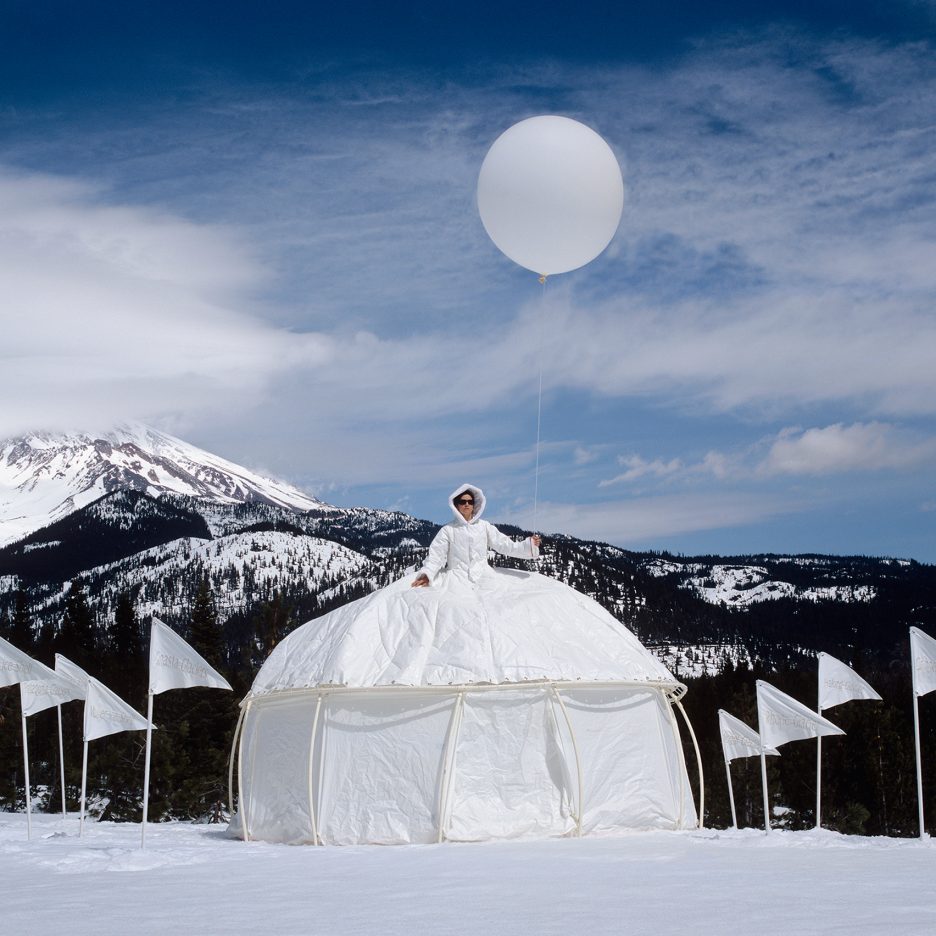
Dress Tents by Robin Lasser and Adrienne Pao are part shelter, part attire


These tents worn as giant dresses were created and photographed by artists Robin Lasser and Adrienne Pao as “wearable architecture” (+ slideshow). (more…)

http://ift.tt/2cYAya7

Byens Bro Foot and Cycle Bridge / Gottlieb Paludan Architects


© Lars R. Mortensen

© Lars R. Mortensen


© Lars R. Mortensen


© Gottlieb Paludan Architects


© Lars R. Mortensen


© Lars R. Mortensen


© Lars R. Mortensen

© Lars R. Mortensen

The Foot and Cycle bridge, named Byens Bro(The City’s Bridge), provides a link between Central Odense and the new urban developments by the harbor. The bridge provides better access to the platforms of the railway station, while it at the same time creates a magnificent new landmark for Odense, Denmark’s third-largest city.


© Lars R. Mortensen

© Lars R. Mortensen

The new foot and cycle bridge gives shape to Odense Municipality’s vision of a transport link for cyclists and pedestrians across the railway, using simple and effective architectural tools. The bridge is a dynamic and spectacular extension of the existing urban space of Odense, as it connects the urban quarters north and south of the railway. It has become a beautiful, practical and organic part of Odense’s urban space, and easy to use for all pedestrians and cyclists and for the many people travelling to and from Odense by train every day. This basic functional quality translates into a bridge that blurs the boundaries between architecture and engineering artistry and gives Odense an inspirational and efficient traffic solution as well as a striking landmark that will stand the test of time. 


Plan

Plan

The bridge is devised as an extension of Odense’s existing infrastructural grid and therefore it is actually two bridges in one: a cycle bridge designed to cater for cyclists’ traffic needs and a foot bridge providing the very best access conditions for pedestrians. For comfort and safety reasons, the two functions are segregated but visually and architecturally, they are brought together in one bridge. 


© Lars R. Mortensen

© Lars R. Mortensen

A prominent feature of the bridge and the city is the 30-metre pylon in mirror-finished steel carrying the longest span of the bridge and marking its roots in the city. The lighting of the pylon follows the same principles as that of the rest of the construction and reflects dynamically what it is all about, namely the motion of people and cyclists crossing the bridge. The bridge is designed through the natural traffic patterns and creates a beacon for Odense and a celebration of non-motorized traffic.


Plan

Plan

The bridge enriches the urban space of Odense with two new attractive squares — one in the centre of the city and the other near a new adult education center. The squares serve as meeting points and arrival areas for train passengers and provide room for some 1,400 bicycle parking spaces. The stairs can be used as seats when events take place on the squares and in King’s Garden — the park across the street.


© Lars R. Mortensen

© Lars R. Mortensen

© Lars R. Mortensen

© Lars R. Mortensen

Gottlieb Paludan Architects has acted as design architect and lead consultant on the project with subconsultants ES-Consult, NIRAS, Bartenbach and lighting-design artist Anita Jørgensen. The construction project has been carried out by Bladt Industries A/S. The bridge opened in the summer of 2015. Since the bridge has received a European Steel Design Award of Merit in 2015 and a prize for ‘beautiful buildings and structures’ from the city of Odense.


© Lars R. Mortensen

© Lars R. Mortensen

http://ift.tt/2cOa7DA

Call for entries to A’ Design Awards and Competition 2017


Dezeen promotion: architects and designers are invited to submit entries to this year’s A’ Design Awards (+ slideshow). (more…)

http://ift.tt/2crOLxu