Center for Postgraduate Studies / Studiohuerta


© Roland Halbe

© Roland Halbe


© Roland Halbe


© Roland Halbe


© Roland Halbe


© Roland Halbe

  • Architects: Studiohuerta
  • Location: Mexicali, Baja California, Mexico
  • Design Team: Salvador Gutierrez, Gabriel Huerta, Kevin Murray, Angelos Palaskas, Armando Toscano, Jorge Velez
  • Area: 4400.0 sqm
  • Project Year: 2016
  • Photographs: Roland Halbe
  • Client: Cetys University (Centro de Enseñanza Técnica y Superior)
  • Consultants: Grupo Basica, Grupo Softair, Hermosillo y Asociados, Ingeneria Rojas, Jorge Almaraz / Green Desert, Luis Vilchis

© Roland Halbe

© Roland Halbe

From the architect. Since its founding in 1961, Cetys University has been dedicated to shaping a new culture for expanding and sharing knowledge throughout Baja California. The Center for Postgraduate Studies is emblematic of the institution’s vision for leadership and innovation, creating a singular building focused on social connectivity and environmental sustainability.


© Roland Halbe

© Roland Halbe

Located in the arid desert climate of Mexicali, along the San Andreas fault line, the building stands as a fortiñed block that protects against earthquakes and high temperatures. The solid mass of the building wraps around the southeast and west sides with a layered exterior shell and built earthen topography insulating against the sun, whereas to the north the structure and landscape open to connect with the central campus quad. The thick exterior walls house the building’s anti-seismic structure and help isolate interior and exterior temperatures, and an expanded aluminum screen offset from the perimeter envelops the building, creating an additional layer that allows for natural air circulation and reduced heat gain.


Diagram

Diagram

The building’s interior organization is predicated upon the interaction of two distinct spatial zones, creating a strategic composition of public and private spaces that simultaneously serves as a passive ventilation system. An enclosed, private zone of classrooms, offices and study areas interlocks with an open, public zone made up of various social spaces, producing a vibrant interplay of transparency and opacity as well as a continuous dialogue of spatial uses. A spiraling of hallways across the building’s three floors allows for both pedestrian and air circulation. The central atrium is not only a major social hub, but also the largest of various thermal centers which collect and flush out hot air through a system of solar chimneys located above stairways and other multiple-height spaces.


© Roland Halbe

© Roland Halbe

Though shielded, the building’s private zone interacts with its public spaces and the campus through a series of cubes and incisions that reveal the building’s deep interiors and frame views to both the outside and within. Like stones cast in a riverbed at varying depths, the cubes puncture, expand, and expose the solid walls. Private rooms for study and meetings are located within – dense and protected, they’re closed off from the noise of the building but are visually open, allowing light and visibility for those inside. Although the building’s thickness stems from the need to protect against solar radiation, these moments allow for transparency without over-exposure, creating both visual and thermal connections throughout.


© Roland Halbe

© Roland Halbe

By integrating passive thermal strategies with the building’s interior space, a 50% reduction in energy demand was achieved in comparison to a building of equal size and conventional construction. The Center for Postgraduate Studies marks a new precedent for Cetys University’s future growth, as well as the development of energy-passive building specific to the arid climates of Baja and Southern California.


© Roland Halbe

© Roland Halbe

http://ift.tt/2c8wPFe

People, places and abandoned buildings in the Province of Buenos Aires, by Juan Viel


Courtesy of Juan Viel

Courtesy of Juan Viel

Small stories and architectonic practices that existed in each character filled village and provinces in Buenos Aires are here rescued by Juan Viel when he captures their atmospheres and particularities through his camera.

The variety of images and their subjects invite us to reflect on the substance and architectural heritage in these small Argentinian towns, and to think about the places where we live.


Courtesy of Juan Viel


Courtesy of Juan Viel


Courtesy of Juan Viel


Courtesy of Juan Viel


Courtesy of Juan Viel

Courtesy of Juan Viel

Courtesy of Juan Viel

Courtesy of Juan Viel

Courtesy of Juan Viel

Courtesy of Juan Viel

Courtesy of Juan Viel

Courtesy of Juan Viel

Courtesy of Juan Viel

Courtesy of Juan Viel

Courtesy of Juan Viel

Courtesy of Juan Viel

Courtesy of Juan Viel

Courtesy of Juan Viel

Courtesy of Juan Viel

Courtesy of Juan Viel

Courtesy of Juan Viel

Courtesy of Juan Viel

Courtesy of Juan Viel

Courtesy of Juan Viel

Courtesy of Juan Viel

Courtesy of Juan Viel

Courtesy of Juan Viel

Courtesy of Juan Viel

Courtesy of Juan Viel

Courtesy of Juan Viel

Courtesy of Juan Viel

Courtesy of Juan Viel

Courtesy of Juan Viel

Courtesy of Juan Viel

Courtesy of Juan Viel

Courtesy of Juan Viel

Courtesy of Juan Viel

Courtesy of Juan Viel

Courtesy of Juan Viel

Courtesy of Juan Viel

Courtesy of Juan Viel

Courtesy of Juan Viel

Courtesy of Juan Viel

Courtesy of Juan Viel

Courtesy of Juan Viel

Courtesy of Juan Viel

Courtesy of Juan Viel

Courtesy of Juan Viel

Courtesy of Juan Viel

Courtesy of Juan Viel

Courtesy of Juan Viel

Courtesy of Juan Viel

Courtesy of Juan Viel

Courtesy of Juan Viel

Courtesy of Juan Viel

Courtesy of Juan Viel

Courtesy of Juan Viel

Courtesy of Juan Viel

Courtesy of Juan Viel

Courtesy of Juan Viel

Courtesy of Juan Viel

Courtesy of Juan Viel

Courtesy of Juan Viel

Courtesy of Juan Viel

Courtesy of Juan Viel

Courtesy of Juan Viel

Courtesy of Juan Viel

Courtesy of Juan Viel

Courtesy of Juan Viel

Courtesy of Juan Viel

* For more pictures head over to Pueblos Buenos Aires or Panoramio de Juan Viel.

http://ift.tt/2cmWrid

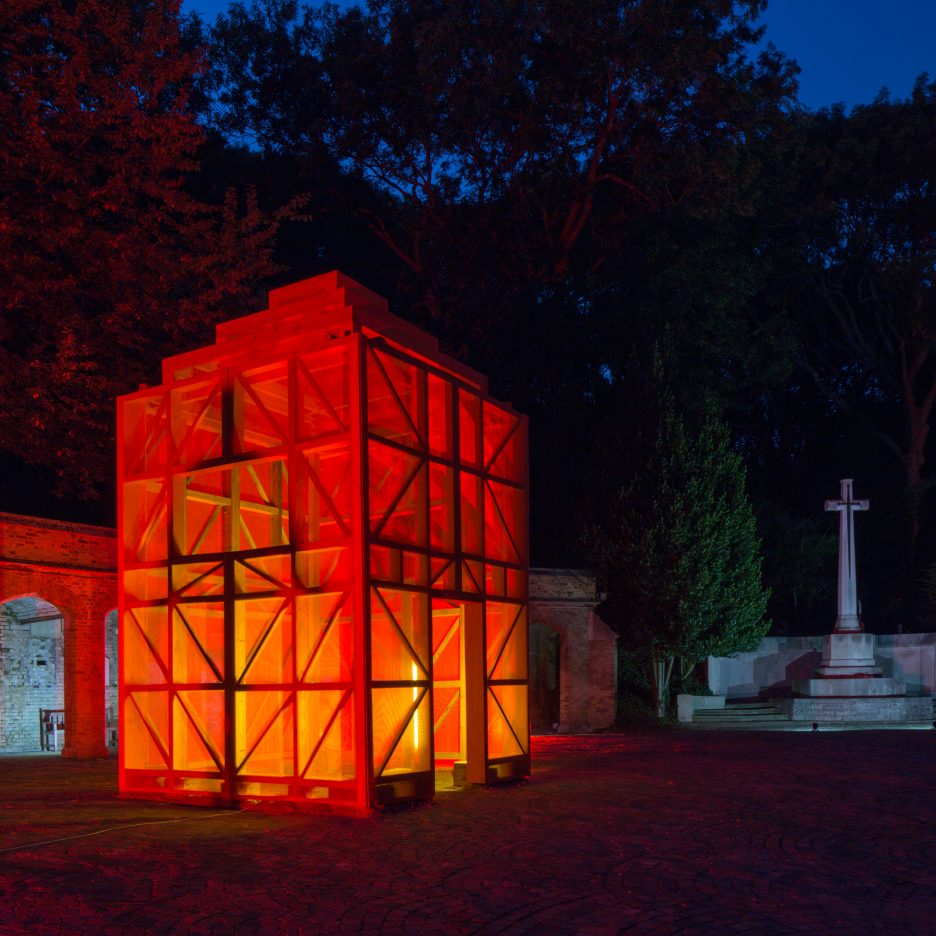
Conran, Rogers and Heatherwick back Brexit Design Manifesto

Sam Jacob erects Adolf Loos-designed mausoleum in Highgate Cemetery


A tomb that was designed but never realised by modernist architect Adolf Loos has been built by British architect Sam Jacob in a historic London cemetery. (more…)

http://ift.tt/2c8iFUu

An Apartment Building in San Francisco Designed by Stephen Phillips Architects

Linden Street by Stephen Phillips Architects (16)

Linden Street is a residential project designed by Stephen Phillips Architects in 2016. It is located in San Francisco, California, USA. Linden Street by Stephen Phillips Architects: “Challenging the local San Francisco vernacular with powerful contemporary style, this new apartment building designed by Stephen Phillips Architects (SPARCHS) plays with viewer perception to create dramatic visual and spatial effects. Linden Street, a back alley to Hayes Valley’s boutique San Francisco mixed-use..

More…

AD Classics: Planetario Galileo Galilei / Enrique Jan


via Flickr user: Luis Argerich CC BY–NC 2.0

via Flickr user: Luis Argerich CC BY–NC 2.0

Within the Buenos Aires neighborhood of Palermo in a park designed by the French landscape architect Charles Thays, the Parque 3 de Febrero (February 3rd Park) , sits the Galileo Galilei Planetarium. Inaugurated on December 20, 1966, it was born of the idea of human evolution and the need to show it in architecture. The building exists as an instrument or bridge between the scientific world and the citizens of the city of Buenos Aires.

Designed by Argentine architect Enrique Jan, the building establishes a relationship between astronomy and architecture through its shared components: mathematics and geometry. Thanks to its location and unique shape, it is currently one of the iconic images of the city and the scene of many scientific, cultural, and festive events.


via Flickr user: Luis Argerich CC BY–NC 2.0

via Flickr user: Luis Argerich CC BY–NC 2.0

The profile of the planetarium stands out because of Jan’s contribution, both in the development of Argentine industry and as the manifestation of its possibilities, by putting forth a symbol for architectural expression. According to the architect, “This building is one of the few in the world designed and constructed based on the module of an equilateral triangle”, the first flat surface that can be created with a minimum of equal sides and enclosing a symbolic principle of unity of origin that establishes a recurring theme in the project. This unit can be seen in the ground plan and is present in all parts of the building, demonstrating the relationship between the parts and the whole.


via Flickr user: digitaltemi CC BY 2.0

via Flickr user: digitaltemi CC BY 2.0

The construction of Galileo Galilei Planetarium began in 1962, under the Argentinian architect’s direction and through the Department of Architecture of the then Municipality of the City of Buenos Aires. The company Construcciones Civiles SA was in charge of construction and, with great technical effort and professional collaboration, the first function was held in June 1967 and the opening of the planetarium took place on April 5, 1968.


Section/ Courtesy of Planetario Galileo Galilei

Section/ Courtesy of Planetario Galileo Galilei

The building has five floors and six staircases, forming three main parts; the front grounds, the exhibition area on the first floor and the circular planetary room, 20-meter-wide space made up of a series of three hemispherical domes.


via © Wikipedia User: Claudio Elias Licensed under public domain

via © Wikipedia User: Claudio Elias Licensed under public domain

The front grounds consist of a bridge over a water mirror 47 meters in diameter where you can find ammonites, marine fossils and a metallic meteorite found in Chaco Province in 1965. The entrance hall leads to a spiral staircase that takes you up to the first floor, and the triangular shaped exhibition area, or down to the basement level, where you would find a specialized library, administrative and management room, restrooms, storage rooms and the machine room.


via Flickr user: Denise Mayumi CC BY 2.0

via Flickr user: Denise Mayumi CC BY 2.0

Until 2011 the main room was home to the 5 meters tall and 2.5-ton instrument that made up the system for projecting onto the first inner dome which was covered with aluminum sheets as a screen and provided various functions in relation to the astronomical theme.


via © Wikipedia User: Christian Pavez Licensed under CC BY-SA 3.0

via © Wikipedia User: Christian Pavez Licensed under CC BY-SA 3.0

After 2011 the space has undergone some renovations. Inside the dome projection, equipment and armchairs were replaced with newer models and the dome’s aluminum plates were also updated. Outside, the dome’s 15-year-old Xenon arc lamp architectural lighting system was replaced by LED lamps, resulting in the current geometric profile that stands out in the Buenos Aires night.


via Flickr user: Luis Argerich CC BY–NC 2.0

via Flickr user: Luis Argerich CC BY–NC 2.0

via © Wikipedia User: Mikecesar Licensed under CC BY-SA 3.0

via © Wikipedia User: Mikecesar Licensed under CC BY-SA 3.0

http://ift.tt/2ce1xQg

Museums need to collect “the whole storyline” of design says Studio Makkink & Bey


London Design Biennale 2016: museums need to collect more design prototypes, according to Dutch duo Studio Makkink & Bey, who are presenting their own take on an archive during the London Design Biennale. (more…)

http://ift.tt/2c87wTC

Virgen del Carmen Bar / Estudio Arn Arquitectos


© David Frutos

© David Frutos


© David Frutos


© David Frutos


© David Frutos


© David Frutos

  • Architects: Estudio Arn Arquitectos
  • Location: Santa Pola, Alicante, Spain
  • Architects In Charge: José Amorós Gonzálvez, Luis Rubiato Brotons, Patricia Navarro Mazón
  • Photographs: David Frutos
  • Promotion: Cofradía de Pescadores de Santa Pola.
  • Technical Architect: Elena Rogel Ruíz
  • Industrial Engineer: Amorós Ingenieros ; María Amorós Gonzálvez
  • Calculist: Raúl Álamo Brotons
  • Collaborator: Universidad de Alicante (GIRA); Miguel Louis Cereceda, Yolanda Spairani Berrio, Raúl Prado Govea, Jose Antonio Huesca Tortosa, Ángeles García del Cura, David Benavente
  • Santa Pola Municipality: Rafael Plá
  • Construction: Grupo Renovak Rehabilitación de Edificios,
  • Wood Works: Carpinteria Quiver.
  • Steel Works: Cerrajería La Vila
  • Paintor: Decokeren
  • Fountain: Fontanería Galiana
  • Electricity: Electricidad Paquete

© David Frutos

© David Frutos

From the architect. What initially was meant to be the repair of some humidity and filtrations, turned out to be the full rehabilitation of this historical building, which dates to 1860, to its original value of “Posito Pesquero”.


© David Frutos

© David Frutos

During the intervention it becomes self-evident that, the different actions executed over time on the building, as well as the evolution of the building´s purpose, have provoked the initial condition, together with the composition and the cavities in its facade, to be found completely modified and detracted from its initial aspect due to its constant adaptations towards its current function, making it unrecognizable when compared to its initial aspect and projection.


© David Frutos

© David Frutos

Externally, the walls were found covered by different layers of paint and mortar. Internally, a brick wall covered with tiles, hid the original ashlar and masonry walls. Two levels of false ceilings placed at different heights prevented the view of the original wooden structure which composed the roof of the building.


© David Frutos

© David Frutos

An interior redistribution of the existing surface area is suggested, as well as a small expansion which takes advantage of the spatial dimensions in order to, by creating a double-height, offer the possibility of savoring the building from unknown points of view, placed on different levels and allowing to put value on highly important and singular elements such as the original wooden structure that forms the roof.


Section 1

Section 1

Section 2

Section 2

An extensive consolidation and cleaning process is carried out with several actions towards its maintenance and recovery.


© David Frutos

© David Frutos

For this process, the different layers of paint and mortar that covered the external facade are removed in order to allow for the visibility of the load-bearing masonry walls with elements of brick, plinth, border and cornice.


© David Frutos

© David Frutos

The original composition of the cavities in the facade is recovered by eliminating the cavities generated by the new functional use of the building. In this case, functionality had been prioritized however not respecting its original look given its dimensions and locations.


© David Frutos

© David Frutos

The original roof tiles are recovered and polished up as well as provided with the necessary isolation and water-resistant treatment for its current use. The exterior aspect of plain roof tile is also recovered.


© David Frutos

© David Frutos

Two large access gates are introduced in the facade, resembling the warehouses of the days. The gates help to enhance the access to the building and to hide and integrate at the same time the composition of the facade and the supply connections that must be placed in the external enclosure of the building.


© David Frutos

© David Frutos

Two metallic coated crates painted in black allow to separate the carpentry in the access thereby respecting the brick borders that used to frame the original cavities.


© David Frutos

© David Frutos

A forged wall is built to separate the construction from direct contact with the land against capillary rise of humidity. A floated concrete deck is used as pavement in order to provide continuity.


© David Frutos

© David Frutos

The new floor structure that is executed and that constitutes the intermediate attic floor, is separated from the ashlar stones and the masonry walls, respecting hereby the original building structure and clearly differentiating if from the new intervention.


© David Frutos

© David Frutos

http://ift.tt/2cMCi65

Studio AUTORI Designs a Stylish Home for a Couple in Belgrade, Serbia

Vacheron Constantin / Bernard Tschumi Architects


© Peter Mauss

© Peter Mauss


© Peter Mauss


© Peter Mauss


© Peter Mauss


© Peter Mauss

  • Architects: Bernard Tschumi Architects
  • Location: Geneva, Switzerland
  • Lead Designer: Bernard Tschumi
  • Design Team: Paul-Arthur Heller, Clinton Peterson, Nicolas Grillet, Pierre-Yves Kuhn, Joel Rutten
  • Area: 110000.0 ft2
  • Project Year: 2015
  • Photographs: Peter Mauss
  • Urbanistes Team: Véronique Descharrières, Rémy Cointet, Emmanuel Desmazières
  • Local Architect: Atelier d’architecture Glauco Lombardi
  • Structural: MDI Ingeniéurs Civils
  • Hvac: Amstein+Walthert Genève S.A.
  • Electrical: Scherler S.A.
  • Facades: BCS S.A.
  • Worker Safety And Accessibility: Securiconcept
  • Energy Management: Tech-Building

© Peter Mauss

© Peter Mauss

The Vacheron Constantin Headquarters and Manufacturing Center, designed and built by Bernard Tschumi Architects (2001-2005), required additional facilities so as to meet the manufacturer’s increasing demands for state-of-the-art watch production. Although the new program is more than double the size of the original four-story building situated on the outskirts of Geneva, the client insisted on preserving the building’s iconic and symbolic presence. 


© Peter Mauss

© Peter Mauss

Sketch

Sketch

© Peter Mauss

© Peter Mauss

The new building is located so as to open a cone of vision toward the flagship building. Since other construction is anticipated, the architects conceived of a campus in which all the buildings differ in configuration, but appear to belong to the same structural family. 


© Peter Mauss

© Peter Mauss

Plan 1

Plan 1

© Peter Mauss

© Peter Mauss

The manufacturing spaces have been oriented on the north side of the new building so as to achieve the best natural light for the skilled watchmakers, with skylights providing comfortable working conditions. A large restaurant opens onto a generous lawn. A ground-level service court allows for truck deliveries, while the car park and small delivery depot occupy the basement level. 


© Peter Mauss

© Peter Mauss

© Peter Mauss

© Peter Mauss

The concept of a curved metal envelope acting as a common denominator for both manufacturing and management, blue- and white-collar workers, was the starting point for the original building. For the extension, the architects developed a two-story variation on the original roof and installed 15,000 square feet (1500 m2) of continuous solar panels for energy conservation and efficiency. 


© Peter Mauss

© Peter Mauss

A key feature of the extension is a spectacular glazed stepped ramp that serves as a vestibule and leads to the watchmakers’ changing rooms. The ramp provides an articulation between the original and new buildings.


© Peter Mauss

© Peter Mauss

http://ift.tt/2cmx7Jf