C-Glass House / Deegan Day Design


© Taiyo Watanabe

© Taiyo Watanabe


© Taiyo Watanabe


© Taiyo Watanabe


© Taiyo Watanabe


© Taiyo Watanabe

  • Architects: Deegan Day Design
  • Location: Dillon Beach, CA, USA
  • Design Team: Joe Day, Taiyo Watanabe ,Yo Oshima, Noel Williams, Sonali Patel, Mark Lyons, Bonnie Solmssen, Felicia Martin, Garo Hachigian
  • Area: 2100.0 ft2
  • Project Year: 2014
  • Photographs: Taiyo Watanabe
  • Executive Architect: Dave Maynard Architecture
  • Structural Engineer : Gordon Polon
  • Project Engineer: Greg Marin
  • Construction Team: Morita Construction
  • General Contractor: Ken Morita, Matt Curley
  • Grading And Septic: Furlong Brothers, Kevin Furlong
  • Structural Steel: Banks Welding, Doug Banks
  • Roofing: Henris Roofing, Steve Henris
  • Plumbing: Scott’s Plumbing, Basil Scott
  • Radiant Heat: Warm Zone
  • Electrical: Sherlock Electric, Tom Sherlock
  • Drywall: Tsarnas Drywall, John Tsarnas
  • Shower Doors Arch's Glass: Rick Stewart
  • Painting: DeCarli Painting, Rich DeCarli

© Taiyo Watanabe

© Taiyo Watanabe

Set on a remote site with sweeping coastal views, C-Glass House poses an abstract counterpoint to its daunting natural surroundings. Designed for a client who once helped Phillip Johnson mount a Mies van der Rohe retrospective at MoMA, the project is an exercise in high-performance transparency – a home of maximal exposure with minimal environmental impact.


© Taiyo Watanabe

© Taiyo Watanabe

Plan 1

Plan 1

© Taiyo Watanabe

© Taiyo Watanabe

The C-Glass House is a 2100sf retreat in northern California. Set on a spectacular but periodically wind-swept site, the C-Glass House opens to a panoramic view of Tomales Bay and the open ocean, while bracing against winds that approach 100mph from multiple directions. 


Section

Section

Section

Section

The design engages not only Philip Johnson’s Glass House and the Farnsworth House by Mies van der Rohe (the client helped translate texts for Mies’ 1972 retrospective at MoMA), but also the California legacies of Elwood, Koenig and others. In contrast to earlier ‘vitrines in a garden,’ west coast glass houses bias towards the environment, employing tactics of framing, cantilever and directional enclosure to heighten, as well as quantify, the beauty of their surroundings. C-Glass House brokers between the Leica-like precision of high modern glass houses and the cinematic wideframe of the Case Study generation. 


© Taiyo Watanabe

© Taiyo Watanabe

Though its architectural lineage is self-evident, this glass house is as indebted to artists’ explorations of glazed enclosures as it is to the precedents of Johnson and Mies. Larry Bell’s elevated cubes and Dan Graham’s many pavilions capitalize more on the reflective and refractive ambiguities of the medium than its transparency, as do mirrored works by Gerhard Richter and the aquarium-like cages of Damien Hirst.  The C-Glass House bridged between these ambitions in a new way, opening up to a panoramic vista but also modulating and reflecting back on architecture’s evolving role in the American landscape. 
http://ift.tt/2cRkLtZ

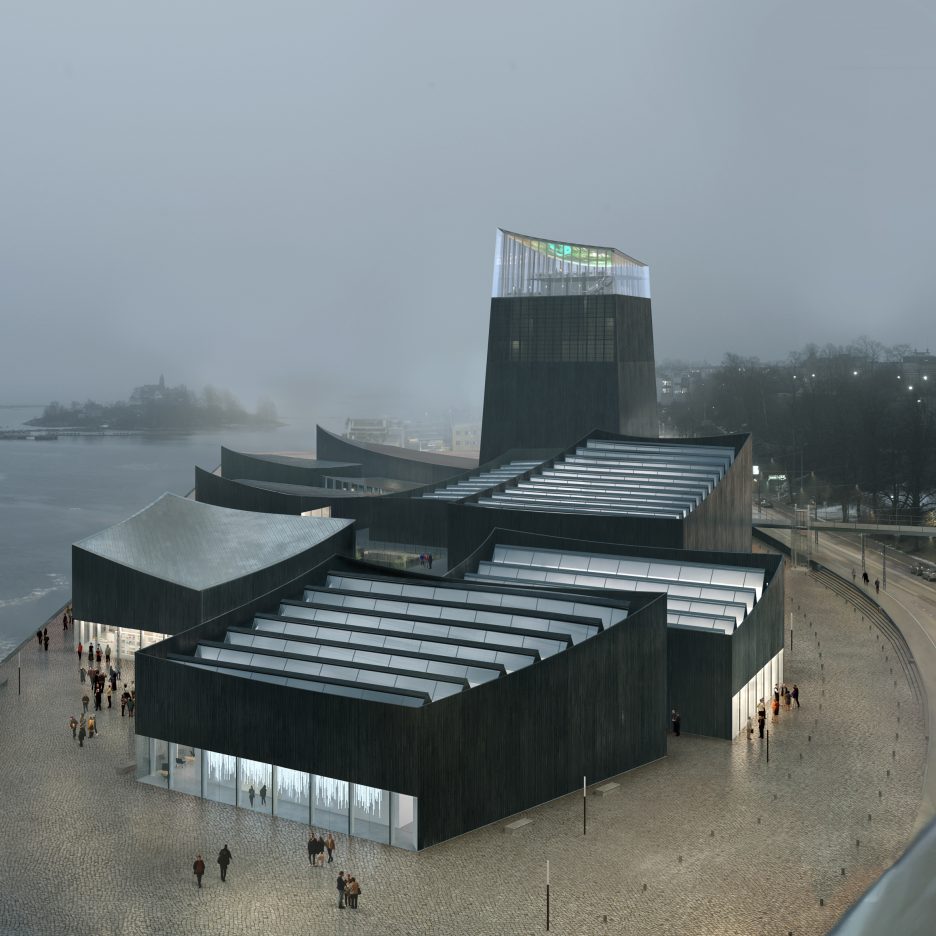
Guggenheim Helsinki denied funding from Finnish government


The Finnish government has reneged on its plans to part fund a new outpost of the Guggenheim museum in Helsinki, which is designed by Parisian practice Moreau Kusunoki Architectes. (more…)

http://ift.tt/2cHdsUX

Ecological Urbanism


While climate change, sustainable architecture and green technologies have become increasingly topical issues, concerns regarding the sustainability of the city are rarely addressed. The premise of Ecological Urbanism is that an ecological approach is urgently needed both as a remedial device for the contemporary city and an organizing principle for new cities.

Ecological Urbanism, now in an updated edition with over forty new projects, considers the city using multiple instruments and with a worldview that is fluid in scale and disciplinary focus. Design provides the synthetic key to connecting ecology with an urbanism that is not in contradiction with its environment.

The book brings together practitioners, theorists, economists, engineers, artists, policymakers, scientists and public health specialists, with the goal of providing a multilayered, diverse and nuanced understanding of ecological urbanism and how it might evolve in the future. The promise is nothing short of a new ethics and aesthetics of the urban.

Revised Edition

Edited by Mohsen Mostafavi, Gareth Doherty, co-published by Harvard University Graduate School of Design

  • Isbn: 9783037784679
  • Title: Ecological Urbanism
  • Author: Mohsen Mostafavi, Gareth Doherty
  • Publisher: Lars Muller
  • Project Year: 2016
  • Binding: Hardcover
  • Language: English

Ecological Urbanism

http://ift.tt/2cR1Nn3

Triplex Apartment in Prague / Lenka Míková & Markéta Bromová


© Veronika Raffajová

© Veronika Raffajová


© Veronika Raffajová


© Veronika Raffajová


© Veronika Raffajová


© Veronika Raffajová


© Veronika Raffajová

© Veronika Raffajová

The client asked us to design a refurbishment of an existing triplex with great views and his brief was to create a modern living inspired by American mid-century interiors. Our approach was to keep the interior space clean and simple in shapes and put an emphasis on the surfaces. We tried to minimize all details and hide technical fittings in order to support the natural texture or decor of the materials and their visual and haptic qualities.


© Veronika Raffajová

© Veronika Raffajová

The careful choice of materials is projected for example in flooring – each of the three floors and all bathrooms have a different surface that responds to the use of the space. At the same time we used several features that repeat on all floors to visually unite the interior. It’s mainly the wooden surface of natural oak veneer that appears on the wall unit in the living space and also on the cladding with sliding doors facing the staircase on the other two floors, as well as on the cladding in the main bedroom and all furniture units in bathrooms. Another uniting feature are tall doors of floor to ceiling height that make the relatively low spaces look higher, or the shape of handles on all custom-made elements.  


© Veronika Raffajová

© Veronika Raffajová

Layout 

The new layout of the apartment is divided into three parts corresponding to the three floors. The middle entrance floor serves for common activities and gathering of the family in the large living space with an open kitchen corner. From this common area the staircase leads to private parts – a half floor down to the area of children, a half way up to the rooms of parents. 


© Veronika Raffajová

© Veronika Raffajová

The living space has been purposely left open and undivided. The interior continues outside through a glass wall with large sliding panels to an outdoor terrace and the spacious feeling is enhanced by the generous view over the city. The main feature of the living space is the wooden wall unit that includes facilities both for the lounge and the kitchen. Its uniform look is marked only by a few openings – at one end there is a TV niche, a fireplace and an in-built bar and fitted kitchen units with a desktop in a niche at the other. By putting all necessary equipment to one side of the room we could leave the opposite wall free as a display for paintings. The kitchen part is designed in the way that it can be hidden when not in use, so it doesn’t visually disturb the lounge area – a wooden door can cover a set of appliances, sliding panels of white corian can close the shelving behind the desk in the opening. The kitchen island with cladding in carrara marble stands out in the space as a jewel. For practical reasons the kitchen is complemented by a separate storage room with a desk where all messy things can be made out of sight. The entrance corridor is divided only partially by white vertical slats, so the daylight gets in and even reflects in the glossy surface of closet doors. The slatted partition, the wooden wall unit and the general openness evoke together the mood of American 50s and 60s, which is supported by the selection of furniture including several design icons.    


Diagram 1

Diagram 1

On the way down, the staircase leads to a small hall in front of the children bedrooms that can be used as an extended playroom. The bedrooms are also connected by a sliding door and both have glazed walls with an access to a common outdoor terrace that continues into a garden. Both bedrooms are marked by unique wall illustrations by the talented illustrator Michal Bacak. The children share walk-in closet in pale colours and the bathroom with playful tiles decor. Other doors from the hall lead to a separate toilet that can be used by guests and to a technical room. The parents have their privacy on the floor above the children, beside a small home office there is mainly a bedroom connected with a walk-in closet and a large bathroom.  


© Veronika Raffajová

© Veronika Raffajová

Atypical solutions

The refurbishment changed substantially the layout of the apartment and its technical equipment including air-conditioning, the relatively low ceiling brought quite a challenge. We tried to reduce all visible components and ventilation grills were incorporated into the custom made furniture. As a reply to a dense technical equipment above the parents bathroom, we designed an atypical false slatted ceiling that includes ventilation, revision openings and lighting. It also supports an intimate atmosphere in the bathroom. The combination of tiles and wooden furniture is supplemented by aged brass fittings and brass cladding behind the mirror cabinet. The water taps are located precisely to match the fissures of the hexagonal tiles. In the children bathroom we used decorative tiles in an original pattern which gradually passes from the floor to walls around the bathtub. A large part of the interior consists of custom-made furniture and components that were designed specifically for the apartment and include details that support both the concept and a practical use. 


© Veronika Raffajová

© Veronika Raffajová

http://ift.tt/2cR4J7l

Dinara Kasko’s Design Background Inspires Architectural Deserts & Delicacies


Part of the beauty of an architectural education is that it provides you with design skills that can be applied to a wide variety to jobs. So when it came time for Kharkov University Architecture School graduate Dinara Kasko to select a career path, she chose to pursue something a little bit sweeter: architectural pastry chef.


via Dinara Kasko's Instagram (http://ift.tt/2c9RomP)


via Dinara Kasko's Instagram (http://ift.tt/2c9RomP)


via Dinara Kasko's Instagram (http://ift.tt/2c9RomP)


via Dinara Kasko's Instagram (http://ift.tt/2c9RomP)


via Dinara Kasko's Instagram (http://ift.tt/2c9RomP)

via Dinara Kasko's Instagram (http://ift.tt/2c9RomP)

After graduating from university, the Ukrainian-born Kasko developed her architectural skills for 3 years as a designer-visualizer for a firm in the Netherlands, where she also worked part-time as a photographer. But her true love was pastry making, which she had discovered after traveling to 16 countries starting at age 17. So when she needed to take time off after the birth of her child, she found an opening to follow her passion, inspired by her architectural past.


via Dinara Kasko's Instagram (http://ift.tt/2c9RomP)

via Dinara Kasko's Instagram (http://ift.tt/2c9RomP)

via Dinara Kasko's Instagram (http://ift.tt/2c9RomP)

via Dinara Kasko's Instagram (http://ift.tt/2c9RomP)

Approaching her cakes and treats as if they were scale-models of buildings, Kasko utilizes 3D-modeling technologies to create silicon cake molds. She first models the designs in 3DMAX, then prints the master model on a 3D printer, which she uses to cast the silicon molds.


via Dinara Kasko's Instagram (http://ift.tt/2c9RomP)

via Dinara Kasko's Instagram (http://ift.tt/2c9RomP)

via Dinara Kasko's Instagram (http://ift.tt/2c9RomP)

via Dinara Kasko's Instagram (http://ift.tt/2c9RomP)

via Dinara Kasko's Instagram (http://ift.tt/2c9RomP)

via Dinara Kasko's Instagram (http://ift.tt/2c9RomP)

In their completed forms, her cakes resembled diagrammatic models of contemporary architecture, but rather than building with steel, concrete or glass, the material palette for her buildings consists of meringue, gelatin and chocolate.

In searching for her own niche within the field, Kasko is striving to connect “patisserie and architecture” through geometric forms and careful compositions.


via Dinara Kasko's Instagram (http://ift.tt/2c9RomP)

via Dinara Kasko's Instagram (http://ift.tt/2c9RomP)

via Dinara Kasko's Instagram (http://ift.tt/2c9RomP)

via Dinara Kasko's Instagram (http://ift.tt/2c9RomP)

“In my creations, I’ve used such geometric constructing principles as triangulation, the Voronoi diagram, biomimicry,” she explained in an interview with So Good Magazine. “Biomimicry is using the models, systems, and elements of nature, macro elements in general. It can be anything, fragmentation of expanding shells in spiral, herb structure, or the form that bubbles take.”


via Dinara Kasko's Instagram (http://ift.tt/2c9RomP)

via Dinara Kasko's Instagram (http://ift.tt/2c9RomP)

via Dinara Kasko's Instagram (http://ift.tt/2c9RomP)

via Dinara Kasko's Instagram (http://ift.tt/2c9RomP)

via Dinara Kasko's Instagram (http://ift.tt/2c9RomP)

via Dinara Kasko's Instagram (http://ift.tt/2c9RomP)

via Dinara Kasko's Instagram (http://ift.tt/2c9RomP)

via Dinara Kasko's Instagram (http://ift.tt/2c9RomP)

via Dinara Kasko's Instagram (http://ift.tt/2c9RomP)

via Dinara Kasko's Instagram (http://ift.tt/2c9RomP)

via Dinara Kasko's Instagram (http://ift.tt/2c9RomP)

via Dinara Kasko's Instagram (http://ift.tt/2c9RomP)

via Dinara Kasko's Instagram (http://ift.tt/2c9RomP)

via Dinara Kasko's Instagram (http://ift.tt/2c9RomP)

via Dinara Kasko's Instagram (http://ift.tt/2c9RomP)

via Dinara Kasko's Instagram (http://ift.tt/2c9RomP)

via Dinara Kasko's Instagram (http://ift.tt/2c9RomP)

via Dinara Kasko's Instagram (http://ift.tt/2c9RomP)

via Dinara Kasko's Instagram (http://ift.tt/2c9RomP)

via Dinara Kasko's Instagram (http://ift.tt/2c9RomP)

via Dinara Kasko's Instagram (http://ift.tt/2c9RomP)

via Dinara Kasko's Instagram (http://ift.tt/2c9RomP)

via Dinara Kasko's Instagram (http://ift.tt/2c9RomP)

via Dinara Kasko's Instagram (http://ift.tt/2c9RomP)

via Dinara Kasko's Instagram (http://ift.tt/2c9RomP)

via Dinara Kasko's Instagram (http://ift.tt/2c9RomP)

via Dinara Kasko's Instagram (http://ift.tt/2c9RomP)

via Dinara Kasko's Instagram (http://ift.tt/2c9RomP)

via Dinara Kasko's Instagram (http://ift.tt/2c9RomP)

via Dinara Kasko's Instagram (http://ift.tt/2c9RomP)

Kasko has also spent time visiting the kitchen of legendary pastry chef Pierre Hermé. Check out the video below for his lecture at the Harvard GSD on “The Architecture of Taste”:

H/T Bored PandaMetro UK

http://ift.tt/2cDpkbI

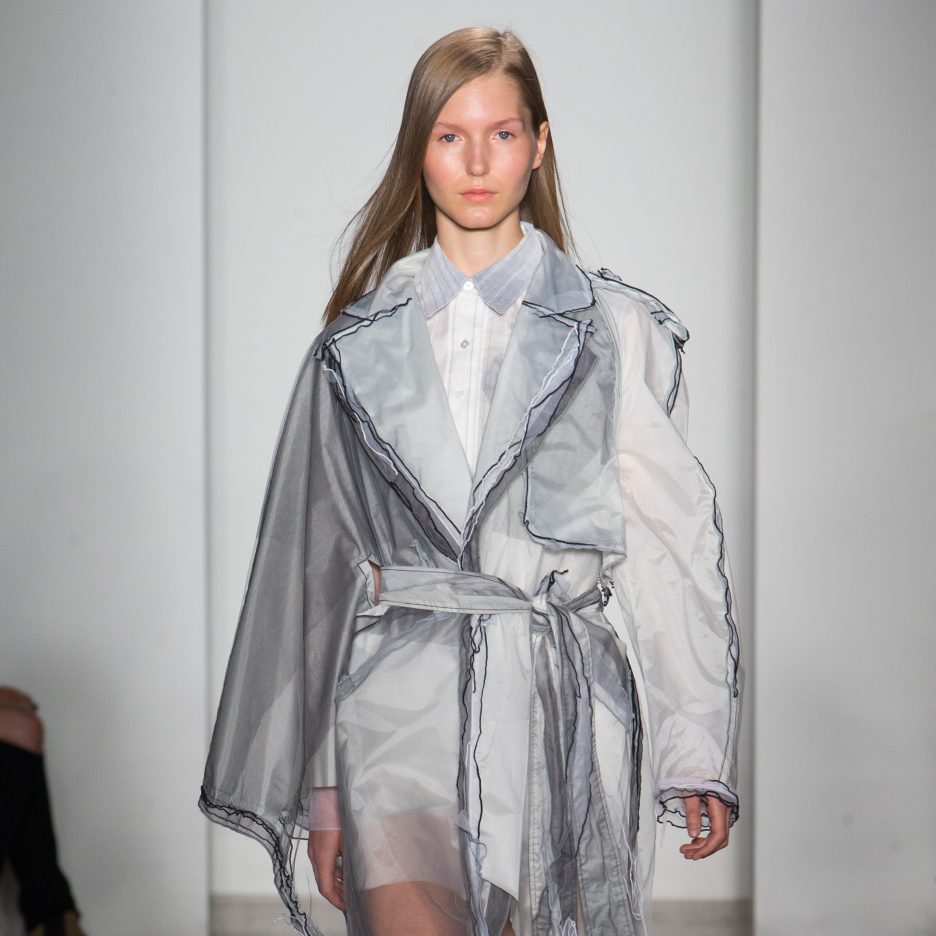
Dezeen’s top five collections from Parsons 2016 MA graduate fashion show


Graduate shows 2016: the trend for line-drawn furniture design crossed over into fashion at the Parsons School of Design graduate show in New York, where two collections with sketch-like details were among Dezeen US editor Dan Howarth’s favourites. (more…)

http://ift.tt/2c5omqS

Designjunction 2016 adds to programme of events during London Design Festival


Dezeen promotion: activities taking place at designjunction‘s new Kings Cross location will include an open-air design party, film screenings and interactive workshops. (more…)

http://ift.tt/2cDdoHi

Nida House / Pezo von Ellrichshausen


© Pezo von Ellrichshausen

© Pezo von Ellrichshausen


© Pezo von Ellrichshausen


© Pezo von Ellrichshausen


© Pezo von Ellrichshausen


© Pezo von Ellrichshausen

  • Collaborators: Diego Perez, Valentina Chandia, Giacomo Pelizzari
  • Builder: Ricardo Ballesta
  • Structure: Luis Mendieta
  • Building Services: Marcelo Valenzuela (Sanitary), Daniel Garrido (Electricity), Christoph Wander (Energy)
  • Plot Surface: 5.304 sqm
  • Design Phase: 2014
  • Construction Phase: 2014-2015

© Pezo von Ellrichshausen

© Pezo von Ellrichshausen

A concentric and non-directional structure formed by four rigid frames, with eight continuous columns that allow for open corners in every floor and other eight that step up regularly in the two elevated levels. This is a balanced sequence in which every floor is symmetrically protected by the following one. The foot of each exterior column is slightly misaligned from the perpendicular beams, thus their heads seem to outline decorative triglyphs. The building is a monolithic piece that supports an entirely confined framework within a compact figure, producing a flat landscape from within, dense and almost mechanically stratified. 


Paint

Paint

Throughout an eccentric spiral staircase there is a transition from the smallest and shaded storey, compartmented in quadrants with an access in the central crossing point, to another storey diagonally divided by a block of furniture and, in the highest level, to an open and diaphanous plan, although filled with corners, where an informal aerial life can unfold. From the top, the visual relationship with the inferior floor is imperceptible, to the point of cancelling any contact with the natural ground. This veiled logic of an inverted gravitational adjustment (a classical “entasis”) timidly emerges on top of the surroundings foliage.


© Pezo von Ellrichshausen

© Pezo von Ellrichshausen

Floor Plans

Floor Plans

© Pezo von Ellrichshausen

© Pezo von Ellrichshausen

In between the darkened reinforced concrete grid there is only native wood for platforms, furniture and large glass panels of fixed or sliding window frames. Perhaps, due to its artificial weightlessness, despite natural efforts descending through the very centre, along a thick core, experiences always tend to be suspended against the solid shadows of each perimeter, against silhouettes backlit by the sun, or rather because of the seduction of their immaterial reflections.


Model

Model

http://ift.tt/2cDdyOQ

Philip Johnson’s Glass House Featuring Yayoi Kusama’s Exhibition Will be your New Obsession


© Matthew Placek

© Matthew Placek

Artist and writer Yayoi Kusama has created an installation for the Glass House that will be on display in celebration of the 110th anniversary of Philip Johnson’s birth, as well as the 10th anniversary of the opening of the Glass House site to the public.

From September 1 through 26, Dots Obsession – Alive, Seeking for Eternal Hope will be on display, with the Glass House itself covered with polka dots. “Visitors who attend the exhibition during this time will be offered the unique experience to simultaneously see the world through the eyes of both Philip Johnson and Yayoi Kusama.”


© Matthew Placek


© Matthew Placek


© Matthew Placek


© Matthew Placek


© Matthew Placek

© Matthew Placek

© Matthew Placek

© Matthew Placek

My desire is to measure and to make order of the infinite, unbounded universe from my own position within it, with polka dots, says Kusama. In exploring this, the single dot is my own life, and I am a single particle amongst billions. I work with the principal themes of infinity, self-image, and compulsive repetition in objects and forms, such as the steel spheres of Narcissus Garden and the mirrored walls I have created.


© Matthew Placek

© Matthew Placek

Just as Kusama uses the polka dot to represent an individual, so did Johnson create his own universe at the Glass House by sculpting the landscape experience.


© Matthew Placek

© Matthew Placek

© Matthew Placek

© Matthew Placek

© Matthew Placek

© Matthew Placek

Kusama’s Narcissus Garden—which was first created 50 years ago in 1966 for the 33rd Venice Biennale—will also be incorporated into the Glass House’s 49-acre landscape in New Canaan, Connecticut from May 1 to November 30, 2016.


© Matthew Placek

© Matthew Placek

Additionally, Kusama’s recent steel PUMPKIN will be displayed on the hillside meadow, east-northeast of the Brick House.

News via the Glass House

http://ift.tt/2ckDnT3

Museum dedicated to architecture models opens in Japan


Models by Japanese architects including Shigeru Ban, Kengo Kuma and Riken Yamamoto are the focus of a museum that has opened in Tokyo (+ slideshow). (more…)

http://ift.tt/2cQHbQ7