Twin House / Poetic Space Studio


© Ketsiree Wongwan

© Ketsiree Wongwan


© Ketsiree Wongwan


© Ketsiree Wongwan


© Ketsiree Wongwan


© Ketsiree Wongwan

  • Architects: Poetic Space Studio
  • Location: 24/56 Phahonyothin Rd, Khwaeng Anusawari, Khet Bang Khen, Krung Thep Maha Nakhon 10220, Thailand
  • Architect In Charge: Nuthasard Jeendpund, Yupayong Chaikajonpat
  • Engineer: Wichakorn Pinjan
  • Area: 451.0 sqm
  • Project Year: 2015
  • Photographs: Ketsiree Wongwan

© Ketsiree Wongwan

© Ketsiree Wongwan

From the architect. The house is built after the great flood in Thailand since 2011-2012, along with the reason of shifting the member of family from ‘single family’ to ‘extended family.’ There are eight members of three generations – grandparent, two families of parent, and grandchild. The project name of ‘Twin House’ comes from the twin daughter of the 2nd generation.


© Ketsiree Wongwan

© Ketsiree Wongwan

The 400 sqm. land is divided to be 2 pieces of land for two families – two houses. The design program of both houses is similar, which is 3 bedrooms, 4 restrooms, 2 living rooms, kitchen, and dinning area, basically. By the reason of limitation of land along with a lot of programs to accommodate eight members. Sharing space is a good solution in this project to be completed all facilities – 5 cars parking and service area. Eventually, the design program is consisted of two houses and sharing space.


© Ketsiree Wongwan

© Ketsiree Wongwan

By conversation with the owner of two houses; even in the similar design program, we have found the different attitude of using space in the terms of public and privacy space, between inside and outside space. We summarize design direction of this project – ‘similar physical body, different thresholds.’ Meanwhile, sharing space is the area of making the connection of both houses.


Section

Section

Section

Section

These two house is different degree of privacy. We really concentrate how and where to make the opening void and wall, in order to maintain personal privacy and the place for the whole family meeting. It is important in our thought of how designing a house for a big family.


© Ketsiree Wongwan

© Ketsiree Wongwan

Two storey house make the relationship between inside and outside space, trying the blur the wall or boundary connected to its surrounding. The living area is mixed and connected inside program and outside sharing space. Meanwhile, three storey house is on the privacy mode – inside program connection, mainly. The pocket garden in the back transfers space between house and sharing space, garden in the middle. The terrace on the rooftop defines visual privacy of outdoor space, making connection only ground and the sky.


© Ketsiree Wongwan
© Ketsiree Wongwan

http://ift.tt/2czGzMW

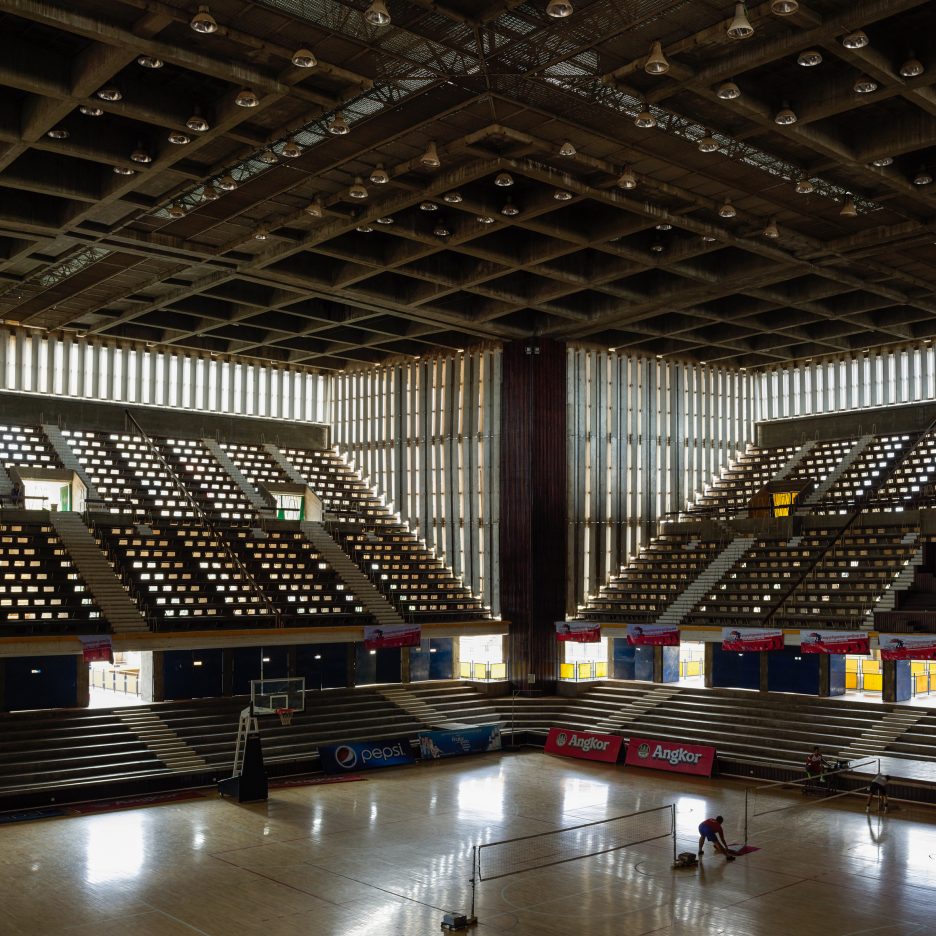
Modernist stadium in Cambodia captured in new photos by Virgile Simon Bertrand


These images by French photographer Virgile Simon Bertrand show a concrete stadium in Cambodia, which was designed by architect Vann Molyvann for a Southeast Asian Games that never took place (+ slideshow). (more…)

http://ift.tt/2cjJGoY

House in Kugayama / miCo.


© Koichi Torimura

© Koichi Torimura


© Koichi Torimura


© Koichi Torimura


© Koichi Torimura


© Koichi Torimura

  • Architects: miCo.
  • Location: Tokyo, Japan
  • Architect In Charge: Mizuki Imamura + Isao Shinohara
  • Area: 119.24 sqm
  • Project Year: 2014
  • Photographs: Koichi Torimura
  • Structural Engineer: Yasushi Moribe
  • Construction: STYLE
  • Site Area: 135.09 sqm

© Koichi Torimura

© Koichi Torimura

From the architect. This is the renovation, located in the western Tokyo residential area. We had to adjust the boundary, from the greenbelt to the living space configured with territory of the layer, tracing in the city of configuration with some of the territory of the layer.


© Koichi Torimura

© Koichi Torimura

Floor Plan

Floor Plan

© Koichi Torimura

© Koichi Torimura

Providing the Engawa, breaking the high fence, planting trees in the garden. Windows and the balcony renovated, to feel the greenbelt. Privateroom was in space that can adjust the sense of openness, by joinery that put the glass to the existing foundation. We want to be the space with depth, by placing them in the boundary layer.


© Koichi Torimura

© Koichi Torimura

http://ift.tt/2czzagC

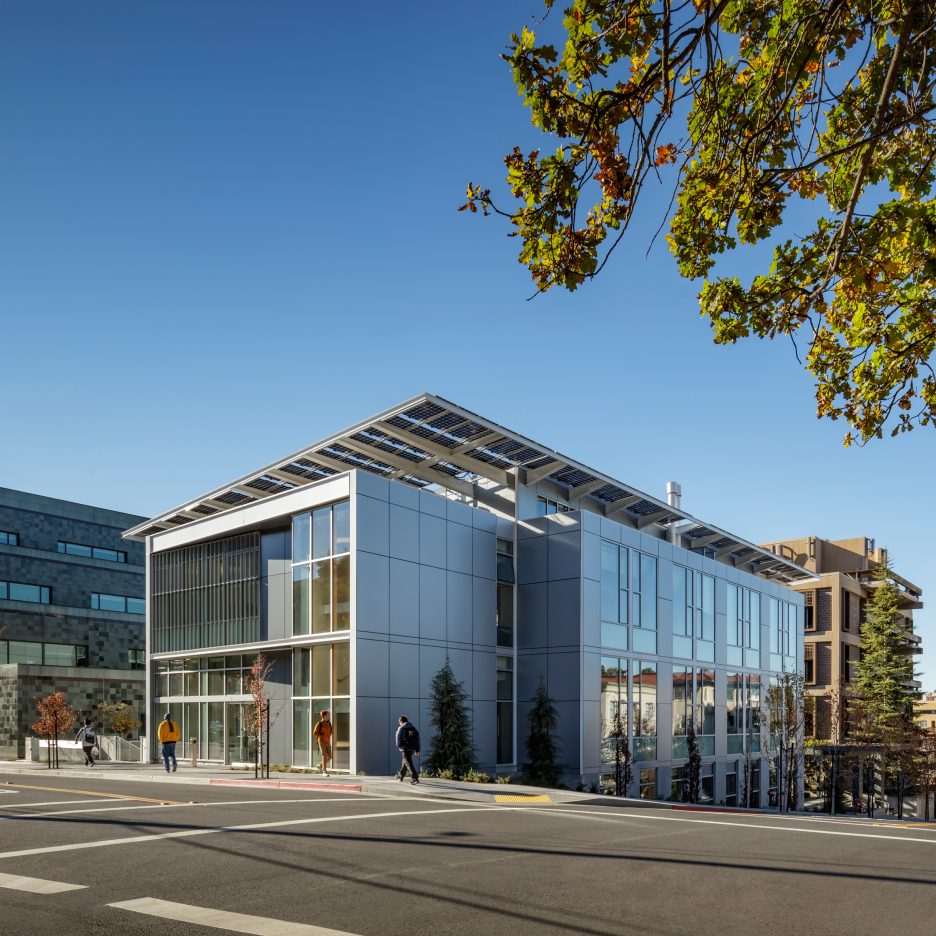
Leddy Maytum Stacy covers entire roof of Berkeley design centre with photovoltaics


US firm Leddy Maytum Stacy Architects has completed an academic facility on the Berkeley campus in California that is topped with an expansive, overhanging canopy made up of solar cells (+ slideshow). (more…)

http://ift.tt/2czi0Qc

Llewellyn House / studioplusthree


© Brett Boardman

© Brett Boardman


© Brett Boardman


© Brett Boardman


© Brett Boardman


© Brett Boardman

  • Structural Engineer: Harrison and Morris Consultancy
  • Acoustic Consultant: Acoustic Logic

© Brett Boardman

© Brett Boardman

From the architect. Working in the context of the renewal of a derelict urban heritage property, the approach to this project began with considerations of typology, density and affordability. Key to this was the appropriate adaptation of a Federation-style cottage into a home for two musicians that allowed for future flexibility, and that made the most of its constraints both of site and budget. The result is the transformation of a derelict property into an open, light-filled home for two musicians.


© Brett Boardman

© Brett Boardman

The starting point was a dilapidated, water-damaged house containing a warren of dark and uninhabitable rooms. The rear portion was demolished to provide a series of open living spaces in its place.


Ground Floor Plan

Ground Floor Plan

Located in an area undergoing rapid renewal, the design takes advantage of the detached cottage typology. The narrow side alley, common to this type but often neglected, offered an opportunity to extend the living area to create a lightwell and wall garden, allowing light to penetrate deep within the centre of the house.


© Brett Boardman

© Brett Boardman

The route through the house was conceived as a journey of changing light, colour and materiality. Original Federation interiors have been restored in crisp white, whilst new elements are introduced in a restrained palette of dark timber, steel and porcelain. A contrast of light and dark materiality is used to knit together old and new.


Concept

Concept

This duality continues in various material combinations. In the kitchen, natural materials are contrasted with the manufactured; such as French-polished timber veneers in combination with crisp, large-format porcelain sheets.


© Brett Boardman

© Brett Boardman

In the living room, bespoke joinery exploits the depth of recycled brick walls, creating pockets of storage along the edges of the tightly constrained site. Flush finishes form continuous planes from inside to out, creating one large living space that expands to fill the outdoor side alley.


© Brett Boardman

© Brett Boardman

These new living spaces are open to the outdoors, yet tempered from the strong northern sun by the depth of a black steel awning, detailed so that it appears to float over the rear timber deck. In a minimal and modern interpretation of a traditional verandah, its glossy surface reflects the garden into the house.


Model

Model

The dialogue between old and new continues by contrasting the roughness of aged, dry pressed recycled bricks, with glossy black steel. It is a project united by contrast – rustic and slick, thin yet massive, dark and bright.


© Brett Boardman

© Brett Boardman

http://ift.tt/2cUwnPw

Santiago Calatrava’s Oculus Opens to the Sky in Remembrance of 9/11

//platform.instagram.com/en_US/embeds.js

On the 15th anniversary of 9/11 yesterday, the skylights at Santiago Calatrava’s Oculus at the World Trade Center opened for the first time, allowing light to fill the massive space as a memorial to the attacks on the twin towers. Following the masterplan laid out by Daniel Libeskind, Calatrava’s design used the angle of light as a guiding principle for orienting the transportation hub – so that at precisely 10:28 am each September 11th (the time of the collapse of the North Tower), a beam of light would pass through the opening in the roof and project all the way down the center of the Oculus floor.

A placard at the Oculus for the event explained:

On 9/11 each year, weather permitting, the skylight of the Oculus will be opened to allow the sun to fill this entire space.

Envisioned by Santiago Calatrava to symbolize a dove released from a child’s hand, the Oculus is situated at an angle in contrast to neighboring buildings and even the entire grid of the city, thereby allowing the light to shine directly overhead and for the sun to move across its axis exactly on September 11th each year.

On this 15th anniversary, we remember the innocent lives lost and celebrate the acts of selflessness and courage by so many. Please join us in remembrance of the victims and heroes of 9/11.

A photo posted by Brian Bowen (@bbowen2129) on Sep 11, 2016 at 7:35am PDT

//platform.instagram.com/en_US/embeds.js

A photo posted by Marçial (@marcialll_) on Sep 11, 2016 at 9:29am PDT

//platform.instagram.com/en_US/embeds.js

//platform.instagram.com/en_US/embeds.js

A video posted by Kim Hernandez (@kim.gif) on Sep 11, 2016 at 10:14am PDT

//platform.instagram.com/en_US/embeds.js

A photo posted by cali (@caliklein) on Sep 11, 2016 at 10:27am PDT

//platform.instagram.com/en_US/embeds.js

The roof remained open for the day’s events, giving visitors a framed view of One World Trade Center, serving as a symbol of the city’s strength to recover and rebuild from the tragic day.

http://ift.tt/2cHWB4t

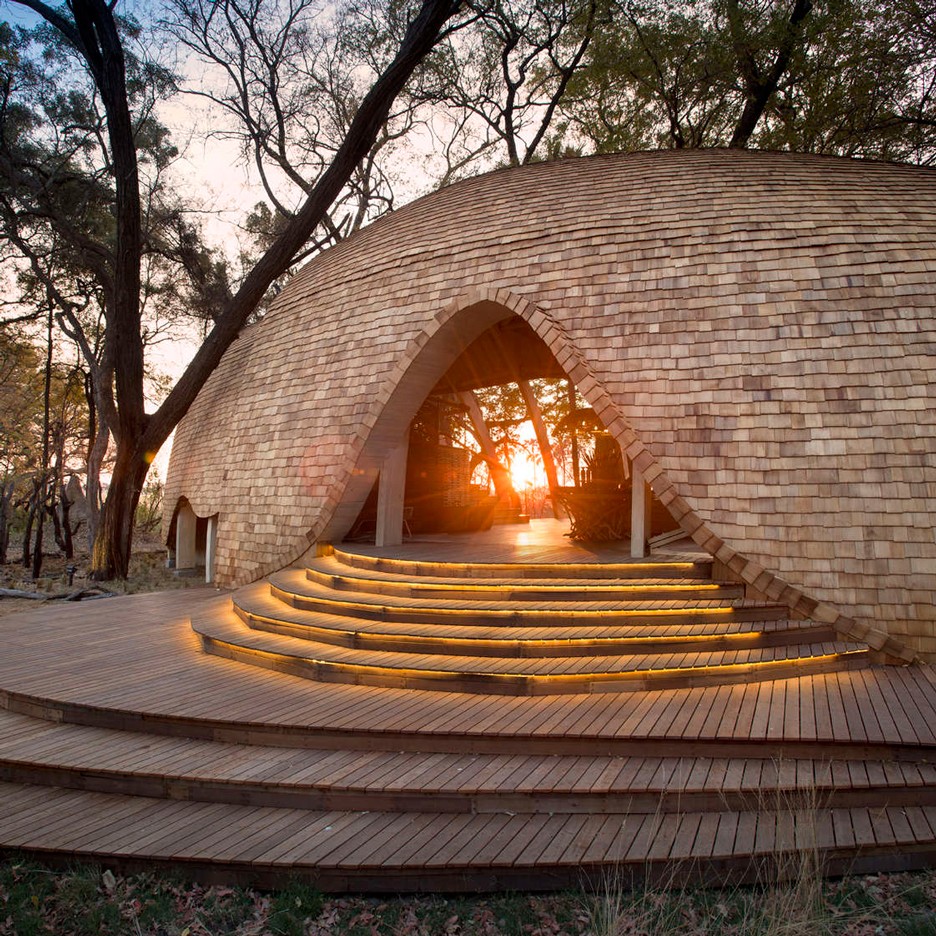
Sandibe Okavango Safari Lodge provides luxury getaway in remote African beauty spot


A+Awards: the African armadillo influenced the curved, scale-covered form of this boutique safari lodge in Botswana – one of the winners at this year’s Architizer A+Awards. (more…)

http://ift.tt/2cRKvGu

Reforma CCF / GOAA


© Pedro Vannucchi

© Pedro Vannucchi


© Pedro Vannucchi


© Pedro Vannucchi


© Pedro Vannucchi


© Pedro Vannucchi

  • Architects: GOAA
  • Location: Vila Anglo Brasileira, São Paulo – SP, Brazil
  • Authors: Guido Otero, Ricardo Gusmão
  • Area: 70.0 sqm
  • Project Year: 2015
  • Photographs: Pedro Vannucchi
  • Collaborators: Felipe Barradas, Murilo Zidan, Raul Aguiar
  • Engineering: Francisco da Silva Alves

© Pedro Vannucchi

© Pedro Vannucchi

The strategy to reorganize the program of this house, consisted in taking advantage of its unusual arrangement in order to create a new spatial sequence. The project focused on the transformation of the house facing the street and whose blind facade contained a graffiti made by a neighbor artist and valued by the client. 

The starting point was to remove all the existing informal constructions followed by the reorganization of the openings, doors and windows, seeking a more fluid integration between internal and external spaces. The adjustment of the courtyards levels created a more connected open space and made room to a rain water cistern, which required a reconfiguration of the residence´s water supply system. 


© Pedro Vannucchi

© Pedro Vannucchi

Two spatial operations complete the routing: the multiplication of the outdoor space by creating a rooftop terrace and connecting the kitchen to the outside area. 


© Pedro Vannucchi

© Pedro Vannucchi

© Pedro Vannucchi

© Pedro Vannucchi

The new program is contained within wooden volumes in order to make a clear distinction between the old and the new construction. These volumes are also visible from the street, announcing its internal reconfiguration and adjusting its scale to its surroundings morphology.


© Pedro Vannucchi

© Pedro Vannucchi

http://ift.tt/2cfPGnA

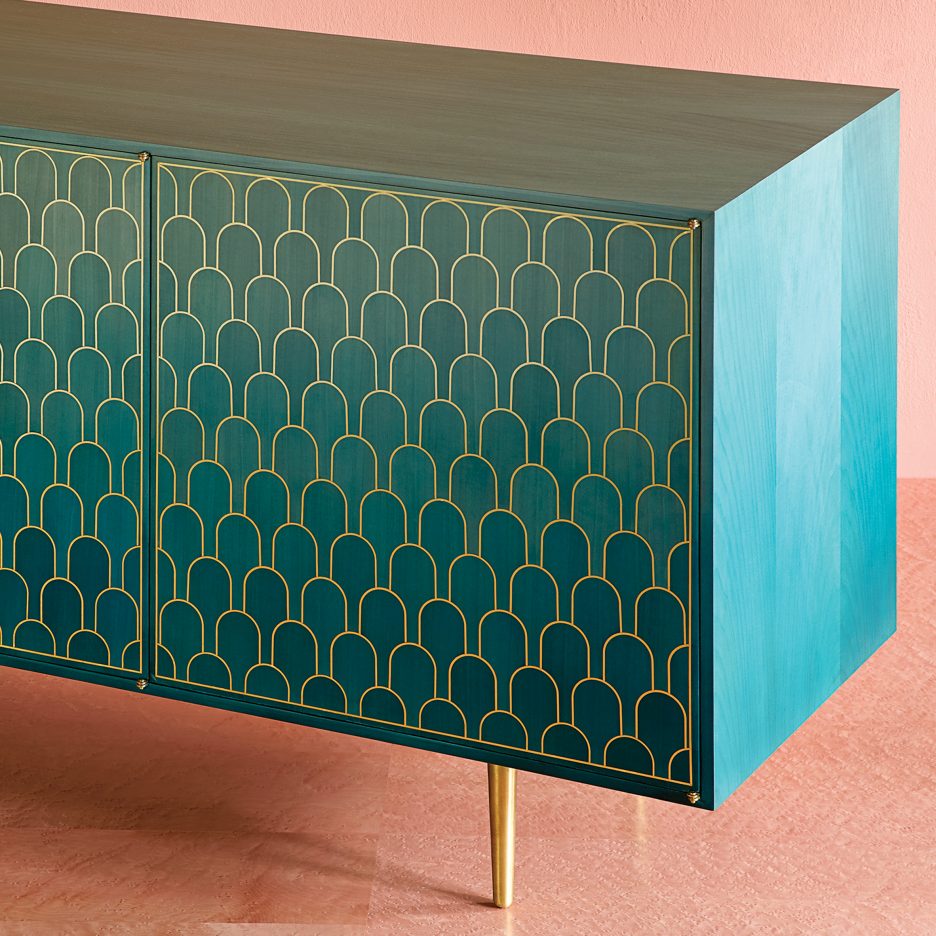
Bethan Gray bases brass-patterned furniture on the architecture of Oman


London Design Festival 2016: British designer Bethan Gray created her latest collection of handmade furniture using vibrantly stained wood and brass marquetry (+ slideshow). (more…)

http://ift.tt/2cHB3Fj

OPEN, SANAA, Jean Nouvel & David Chipperfield Shortlisted in Competition for Pudong Art Museum in Shanghai


OPEN's competition entry. Image Courtesy of OPEN

OPEN's competition entry. Image Courtesy of OPEN

Four leading architecture firms have been selected as finalists for a new Art Museum of Pudong in Shanghai, China. Located on the tip of Pudong’s Lujiazui Central Business District directly below the Oriental Pearl Tower, the museum site features views across the Huangpu River to the Bund. Because the new building will serve as an important part of the modern Lujiazui skyline, the site had been left deliberately vacant for several years in anticipation of becoming the new home of a significant cultural institute – with this competition, that void will now be filled with a world-class piece of architecture.


OPEN's competition entry. Image Courtesy of OPEN

OPEN's competition entry. Image Courtesy of OPEN

The competition consists of two rounds, from which OPEN, SANAA, Ateliers Jean Nouvel and David Chipperfield Architects emerged as the four firms selected to advance to the final round. The winning project will be announced by the government at a later date.

OPEN’s Competition Entry


OPEN's competition entry. Image Courtesy of OPEN

OPEN's competition entry. Image Courtesy of OPEN

From the Architects:

OPEN’s competition entry was highly recognized by the juries for its active intervention to the urban life. The Greater Lujiazui area as the site of the Pudong Art Museum, is a compelling example of the rapid urbanization of China in the past decades. An intense concentration of visual stimuli results in a hyper postcard of Pudong skyline built for admiration across the river from the Bund, yet when examined closely, a fragmented and alienating city is revealed.

“As we stand at the beginning of what is arguably a new post-bubble economy era, looking back to the results of such rapid growth, new place-specific strategies are urgently needed to remedy and revive the urban condition.” says Li Hu, the founding partner of OPEN.


OPEN's competition entry. Image Courtesy of OPEN

OPEN's competition entry. Image Courtesy of OPEN

OPEN’s design started with an urban concept that proposes the use of natural landscapes to connect and consolidate the existing isolated parklands, cultural facilities, and riverbanks to create an enormous new looped park system. Within this connecting natural landscape, new cultural, leisure and entertainment programs are inserted to complement the existing key nodes. Within the Shanghai metropolis, this parkland will in itself become a new cultural destination, and at the same time it will become an integral part of the lives of those who live and work around the Greater Lujiazui region.

The Pudong Art Museum is sited precisely at the critical junction within this new super looped parkway, together with the adjacent landscaped area to the east, it connects the Oriental Pearl Parklands with the Riverside. The existing eastern landscape is transformed into a sculpture garden and music park, as an extension of the art museum.


OPEN's competition entry. Image Courtesy of OPEN

OPEN's competition entry. Image Courtesy of OPEN

Conceptually the Art Museum is a visual link between the Greater Lujiazui area of Pudong and the Bund area of Puxi. Yet distinct from vertical and formal tendencies of the surrounding buildings, the Art Museum is more horizontal and seeks to fit into its surroundings. The minimalist geometry of the building sits like a diamond within Pudong’s urban horizon, its facets carved out and defined through urban forces.


OPEN's competition entry. Image Courtesy of OPEN

OPEN's competition entry. Image Courtesy of OPEN

The building was divided into two parts – the “Floating Gallery of Art” and the “Community Forum of Art”. They can accommodate a wide range of curatorial requirements and make Art and Culture become inseparable with urban life and cultural education. The intriguing void that’s held in suspense in between these two parts of the building is the most special place in this museum. It’s a completely open urban art plaza. To the east, it becomes a great urban stage set linked with the park, with the Oriental Pearl Tower as its magnificent back drop. While at the west end, the upper and lower parts of the building act to create a unique frame through which to survey the Bund and the historical urban fabric of Shanghai.


OPEN's competition entry. Image Courtesy of OPEN

OPEN's competition entry. Image Courtesy of OPEN

In this space, visitors are positioned at the junction between the upper and lower parts of the gallery, between the two parklands East and West, and between an urban imagination past and future. An entirely new relationship is created between City, Art, Nature and People.


OPEN's competition entry. Image Courtesy of OPEN

OPEN's competition entry. Image Courtesy of OPEN

Program: Art Galleries, Art Community, Urban Art Plaza, Art Park
Building Area: 36,486 sqm
Principals in Charge: Li Hu, Huang Wenjing
Project Team: Ye Qing, Zhou Tingting, Luo Ren, Ma Qiancheng, Hu Boji, Zhou Xiaochen, Anne Fang
Consulting Engineers: Arup

News via OPEN.

http://ift.tt/2cTTRV8