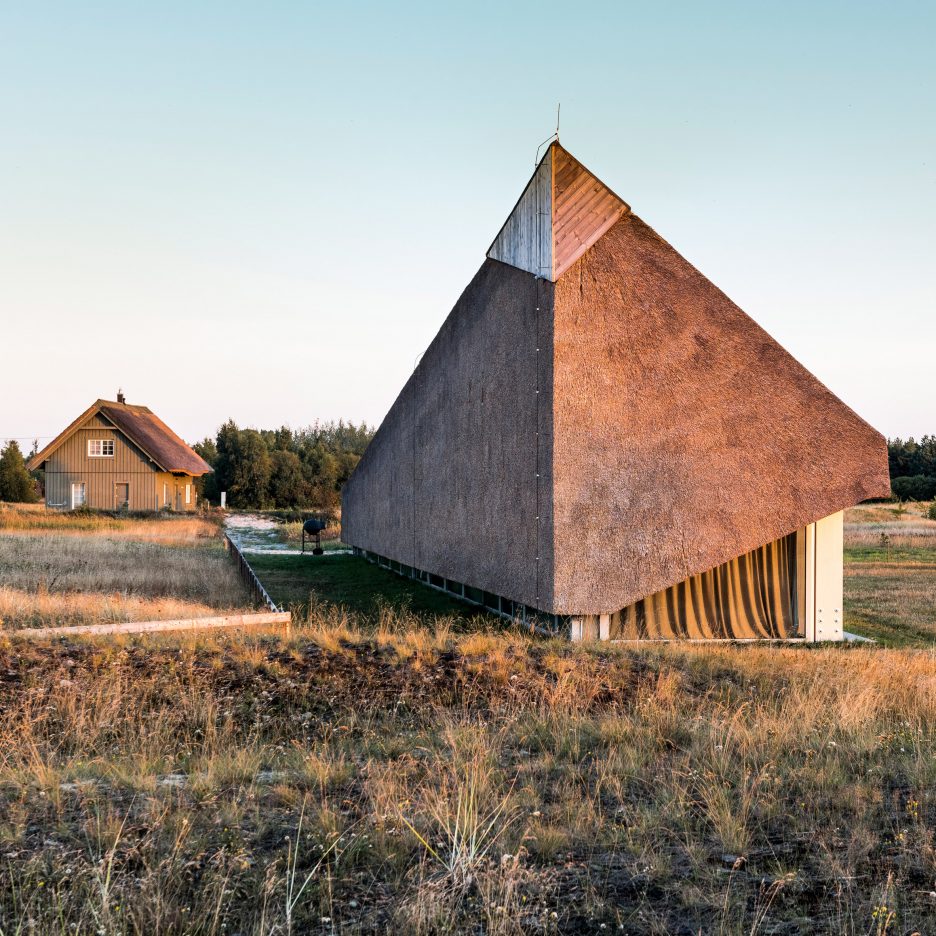
An angular thatched roof extends down over this seaside house, which references the grassy dune landscape of Latvia‘s Pape Nature Reserve (+ slideshow). (more…)
An angular thatched roof extends down over this seaside house, which references the grassy dune landscape of Latvia‘s Pape Nature Reserve (+ slideshow). (more…)

Toorak Residence is a private residence designed by Workroom. The 2,624-square-foot home is located in Melbourne, Australia. Photos courtesy of Workroom

From the architect. Introduction
This new residence, located on a beautiful wooded riverside site in the Constantia Valley, attempts to establish a close relationship with a relatively unspoilt piece of the natural environment.
Site and Context
The site, subdivided off from a larger estate, and originally containing lawns and a tennis court, has a gentle fall to a beautiful stream to the south, which hosts a variety of birds and wildlife. It is entirely surrounded by tall well-established trees. As a result, despite being located on a relatively busy suburban road, the site is visually completely secluded, a ’clearing in the forest’, offering a unique set of opportunities for transparency and continuity with its surroundings.
In terms of NEMA legislation, the house was required to be set back 30m from the stream. The site between house and stream was rehabilitated: the tennis court and lawns were removed and replaced with an indigenous garden, accessed by elevated timber boardwalks and flowing continuously into the lush riverbank vegetation.
Brief
The clients, a couple with grown children, require a 3- bedroom, open plan house for themselves and occasional guests.
The brief focused on simplicity of lifestyle, ease of use, the pleasure of well-crafted natural materials and directness of experience of the natural surroundings.
Concept
The green wall of trees surrounding the site, were seen as the living perimeter of the house, with the roof expressed as a long continuous inclined plane falling with the slope of the site and forming an evocation of tree canopy, over a free-flowing ground plane. The single storey structure hugs the ground plane and is glazed extensively, to establish contact with the outdoors all round. The street edge is protected by a massive concrete wall, which is designed to reflect road noise from the living areas.
Program and Organisation
The house is arranged linearly, parallel to the river on the south and opening up to the sun along its entire length to the north. The living accommodation is positioned closer to Brommersvlei Road to the east, with the bedroom section on the interior of the site. The house pivots around a well-established oak tree, which deforms what could have been an idealized floor plan and establishes the idea of a resurgent nature as the primary element on the site.
The single storey structure hugs the ground plane and is glazed extensively, to establish contact with the outdoors all round. The street edge is protected by a massive concrete wall, which is designed to reflect road noise from the living areas.
A series of courtyards and patios, each offering a different experience of site and different degrees of sun exposure and wind protection at different times of the year, focus each grouping of accommodation.
The entrance court, a roughly square piazza- sized space, bounded by massive concrete and stone elements, is intended to establish an atmosphere of tranquility and silence as the prevalent mood of the house.
The kitchen and dining room open entirely onto a covered braai patio and the lounge is bounded by two courtyards, one planted and one containing a long natural pond.
The entire south façade has an extended timber patio, which forms an interface between interior floor-plane and garden.
Circulation is structured by two cross-axes, both of which start and terminate in the landscape and which are formed by long wall elements.
All the wall elements of the house are detached from the roof and extend out into the landscape to enclose outdoor space and blur the distinction between inside and outside

From the architect. Commissioned by CaoHeJing in 2014, Schmidt Hammer Lassen architects’ proposal was to overclad and unify the existing rendered concrete facade utilising a corrugated and perforated polyester powder coated aluminium skin.
The facade concept allows for a simple and clean expression of openings within and behind the perforated aluminium, providing shading to every workspace whilst optimising both view and daylight. The facade also facilitates the increased insulation build-ups and the integrated approach to new and existing services whilst enabling these to be hidden from everyday view.
The second key design strategy was to open up the existing deep plan of the building, creating a new atrium through the middle with connected views and much improved daylighting.
This new atrium space becomes the heart of the entire project, creating opportunities for collaboration and visual connection. Along with key new public circulation, it contains break out spaces, a cafe bar, hanging meeting boxes and connections to the external green terraces.
The incubator also features a site specific mural designed by Shanghai based graffiti artist, The Orange Blowfish.
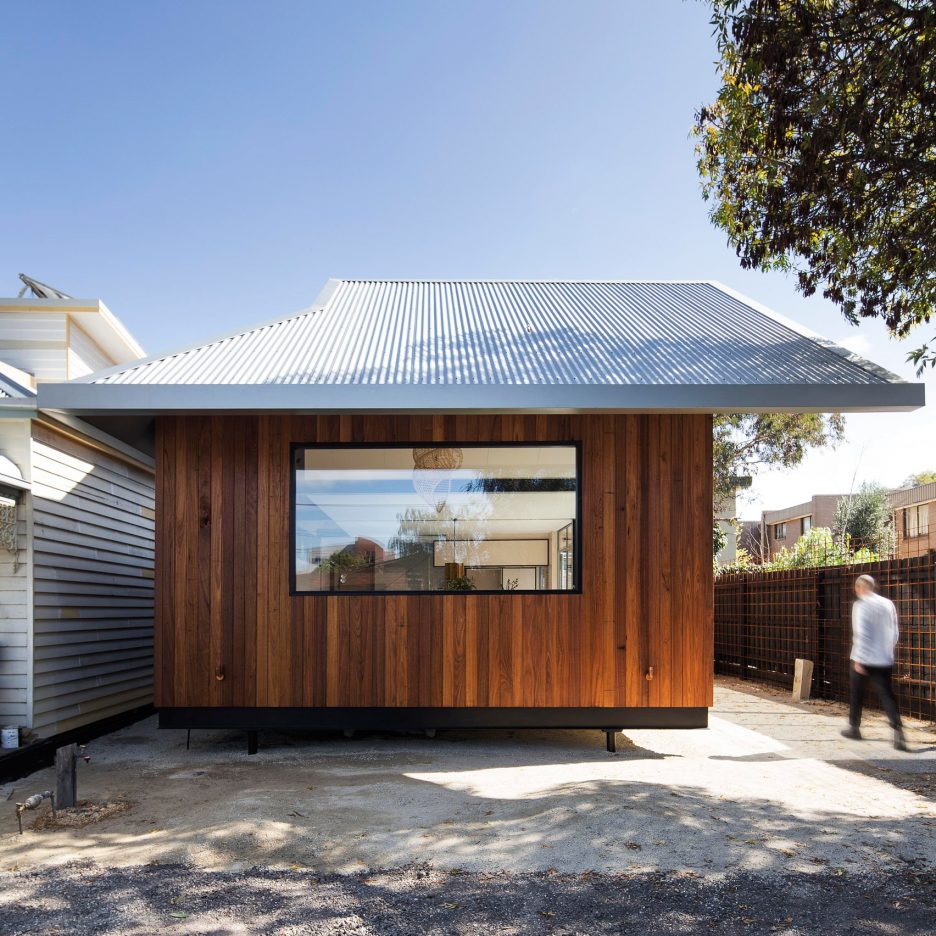
A large corrugated metal roof is drawn down over the the upper floor of this house in Melbourne, making it appear to have just a single level when seen from the street (+ slideshow). (more…)

House PS is a residential project completed by SoNo Arhitekti. The home is located in Slovenia. House PS by SoNo Arhitekti: “This family home is an example of a modern design filled with natural light and building blocks comprised of sustainable material – in this case wood, one of the if not the most strategic material of Slovenia. It’s definitely not a typical prefabricated house out of catalogue as we..
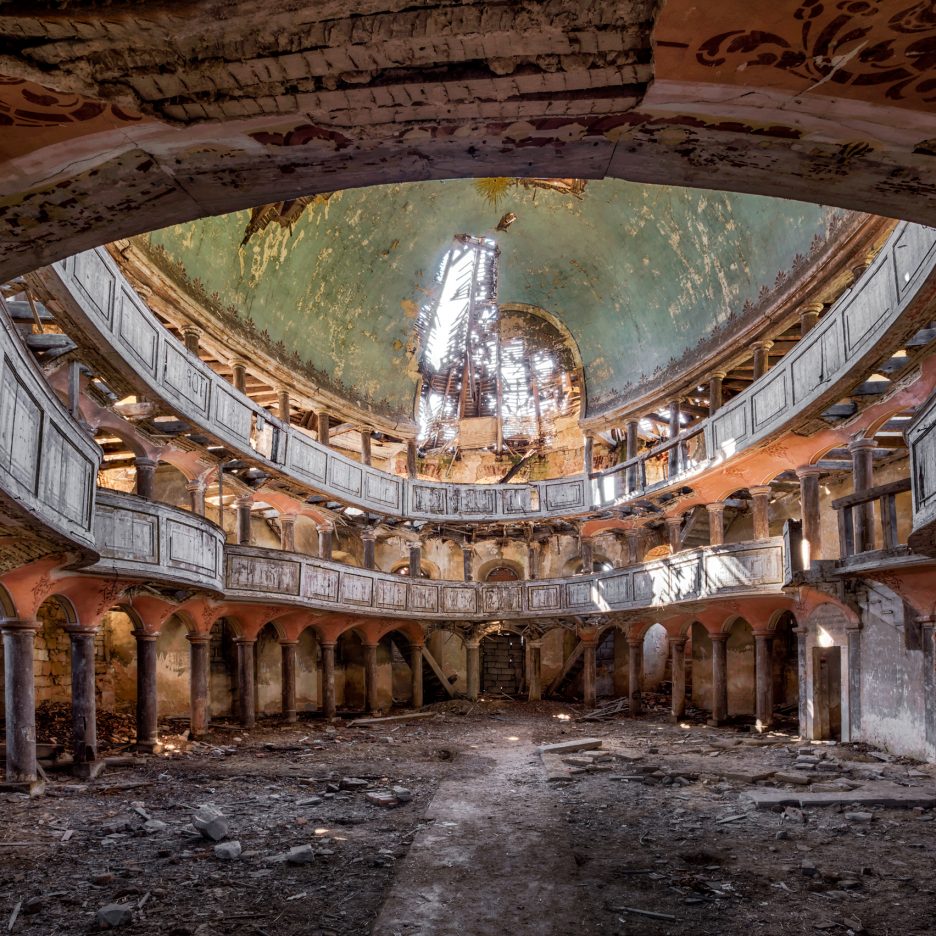
Photo essay: German photographer Christian Richter has been breaking into abandoned buildings across Europe to capture their “swan song” for his Abandoned series (+ slideshow). (more…)

Benoy’s UAE studios best known for their work in the MENA region have released the plans for Abu Dhabi’s upcoming Sheikha Fatima Bint Mubarak Park. In a redefinition of the former Khalidya Ladies Park, the renovation—as a portion of the AED94 million renovation—was commissioned by The Department of Municipal Affairs and Transport at Abu Dhabi City Municipality to “fuel discovery and support the core tenets of the Abu Dhabi Vision 2030.”
The open-air project centers on the concepts of sustainability, economic diversification and growth, improved social and community facilities, the promotion of Arab and Emirati culture, and a focus on contemporary living.
Benoy strives to design environments that are accessible, all-inclusive and serve to bring the community together. As an open-air, multi-dimensional destination, Sheikha Fatima Bint Mubarak Park will represent a completely new typology for Abu Dhabi; one that will appeal to a broad spectrum of demographics to promote cohesion among communities.
Over a span of 46,000 square meters, the project will feature an urban forest, lush greenery, amphitheater, cycling track, natural play areas, fitness zone, and Women’s Center for the next generation of female entrepreneurs in the region.
With Sheikha Fatima Bint Mubarak Park, we’ve deliberately stepped out of our comfort zone to really push the boundaries and create something that will continue to evolve and stay relevant over time, stated Paul Priest, Director and Head of Benoy’s MENA Studios. I believe that this type of environment, which takes the visitor out of an enclosed space and promotes walkability and discovery, is a trend that we’ll see a lot of demand for in the GCC and greater MENA region in the near future.
News via Benoy.

This article is part of our new series “Material Focus“, which asks the architects to reflect on the thought process behind their choice of materials and illuminates the steps needed for constructing buildings.
The RPII Residence was designed by Gustavo Arbex Architects. The almost 1000m2 project was built in Sao Paulo. We spoke with the architect Gustavo Arbex to learn more about the choices of materials and the challenges of the project.
What were the main materials used in the project?
GA: Exposed concrete, teak wood, cement flooring, glass, natural stone.
What were your main sources of inspiration and influence when you were choosing the materials used in the project?
GA: Frank Lloyd Wright, Calatrava, Marcio Kogan/Studio MK27.
Describe how decisions on materials influenced the design of the project.
GA: Technical details to adapt to each of the materials’ capabilities.
What were the advantages that this material offered for the construction of the project?
GA: Lightweight materials, uniform and with personality. They work well for large plans.
Did the choice of materials impose any kind of challenges to the project?
GA: Yes. The wood slats.
Did you ever consider the possibility of other materials for the project? If so, how would that have changed the project?
GA: Yes. The cost, aesthetics, etc.
How did you research suppliers and builders suitable for materials used in the project?
GA: Trade and websites of well-known brands.