Architecture
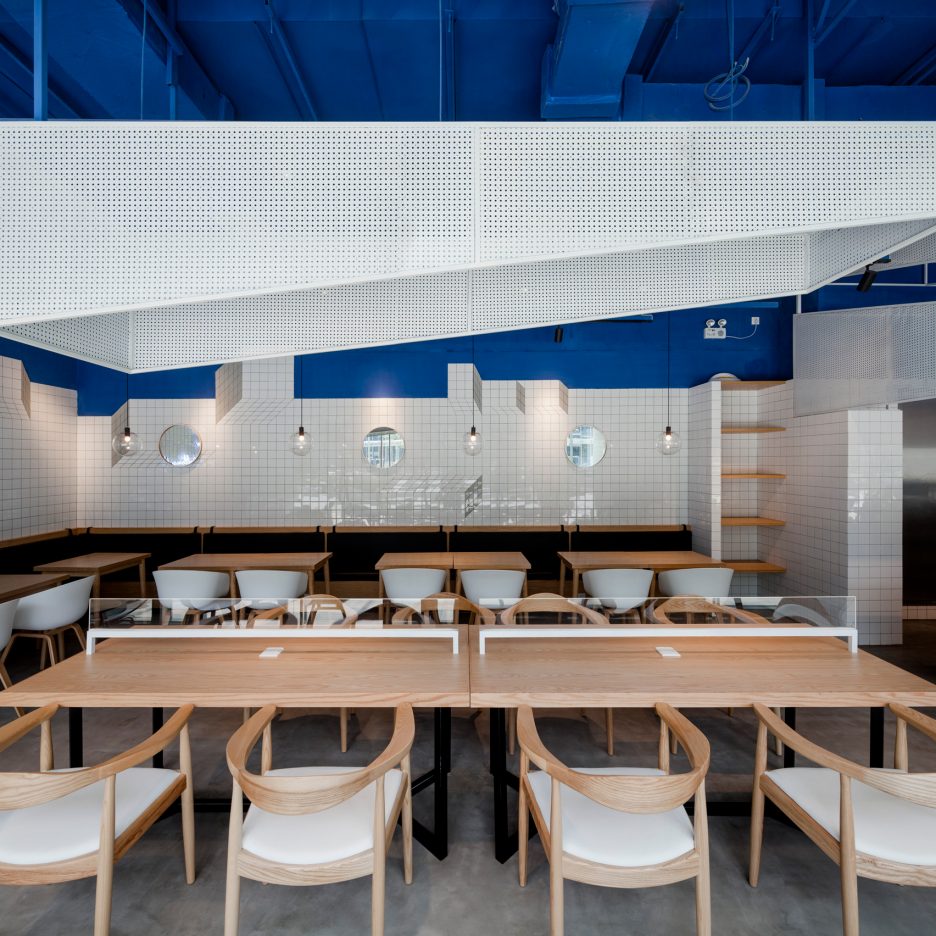
Co-working utopic_US Conde de Casal / Izaskun Chinchilla Architects

© Imagen subliminal
- Architects: Izaskun Chinchilla Architects
- Location: Conde de Casal, 28009 Madrid, Spain
- Architects Collaborators: Adriana Cabello, Alejandro Espallargas, Guillermo Sánchez, Jesús Valer
- Trainee Student: Cristina Traba
- Area: 900.0 sqm
- Project Year: 2016
- Photographs: Imagen subliminal
© Imagen subliminal
According to many studies, the coworking phenomenon is intrinsicly associated to the urban lifestyle. The density and diversity of people and oportunities that a big metropolis produces, encourages the apparition of places where its fundamental purpouse is sharing creativity. This is why it seemed natural for us that our spaces payed tribute and were inspired by great cities.
utopic_US is a young and creative company, we could even say it is a little bit carefree… and the idea was to mix inspirations and memories of two cities, with the real soul of the firm. At the same time Izaskun Chinchilla Architects looks to strengthen the link between design and user by means of interactuation and surprise.
© Imagen subliminal
Conde de Casal is the first space we open following this philosophy, this is the reason why we appeal to two classics : New York and Tokyo. Two cities where everyone wants to travel to, where anyone wants to go back to, no matter how many times you’ve been to and two cities whose landmarks are recognised all around the globe. They are places that take part of the universal imagination. New York is still the emblem of an opened city where people go to invent and succeed. Whereas Tokyo remains as the symbol of a simbiosis between latest technology and ancestral culture. This is how UTOPIC_US Conde de Casal is : open, filled with oportunities for those who imagine a different World.
© Imagen subliminal
Madrid cultural history could be described looking at the transformations that younger generations have imposed. Nowadays the millenials have convinced us of the networking importance and the advantages of sharing. They are starting to transform Madrid once again. utopic_US is an ambitious project, is part of a coworking spaces network that tries to become in the headquarters for this generation to transform Madrid, turning it into the capital of creative entrepreneurship. We want to be the support for that generation.
© Imagen subliminal
Diagram
© Imagen subliminal
It is an interior design project. We have designed a versatile equipment that can be moved to another location but trying to create something memorable. We have worked modifying and transforming industrial and contemporary furniture (beds into tables, bunk banks into Skype rooms…) We have also introduced a lot of color employing different fabrics, ceramics, painted papers, etc.
© Imagen subliminal
We are trying to inspire the users, everything around them can be transformed into something unexpected.
© Imagen subliminal
Note Design creates office divider for people working on the go
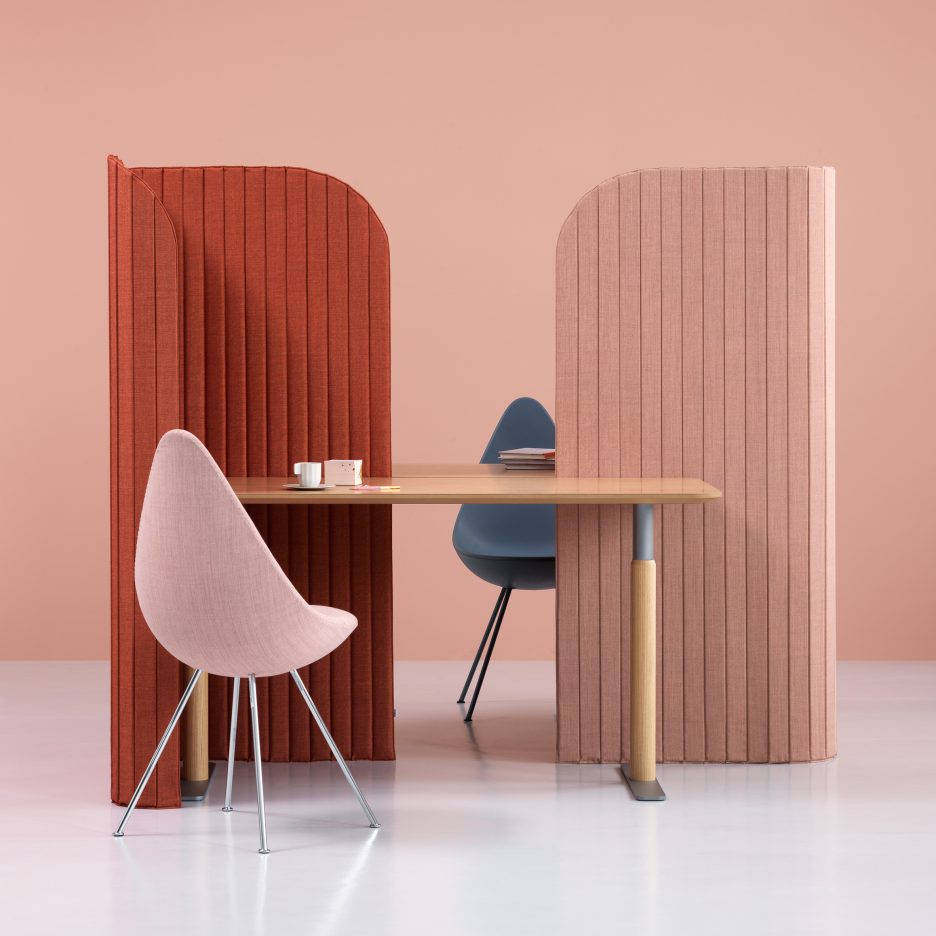
Note Design‘s Focus divider can be rolled up and stored in a backpack for nomadic office workers who need more privacy (+ slideshow). (more…)
Copenhagen Named the World’s Most Livable City in Metropolis Magazine’s 2016 Rankings

Copenhagen. Public domain image <a href='http://ift.tt/2c1EC7v Wikimedia</a>.
Metropolis Magazine has released their 2016 rankings of the world’s most “livable” cities. Acknowledging that what makes a city “livable” can often be subjective, the team at Metropolis emphasizes that in creating the list they “focused on the concerns at Metropolis’ core—housing, transportation, sustainability, and culture.” The result of this research was last year’s top prize-winner Toronto dropping to the number 9 spot and Copenhagen, which last year took the number 4 spot, jumping to the top. Rounding out the top three are Berlin and Helsinki.
Given the often-controversial nature of such city rankings, one convenient aspect of the Metropolis rankings is that they include detailed write-ups explaining the reasons behind their selections. First-placed Copenhagen, for example, is noted for the fact that “New York and many other city-rankings regulars have been Copenhagen-ized, with smart streets, bike lanes, and small public space projects,” contributing to the city’s credibility as the most livable worldwide.
You can see the full list of the top ten, and the reasons behind each, here.
House in Felgueiras / AZO. Sequeira Arquitectos Associados

© Hugo Delgado | WAPA
- Architects: AZO. Sequeira Arquitectos Associados
- Location: 4610 Felgueiras, Portugal
- Authors: Mário Sequeira, Alfredo Machado
- Team: Pedro Soares, Fátima Barroso, Jorge Vilela
- Area: 450.0 sqm
- Project Year: 2014
- Photographs: Hugo Delgado | WAPA
- Structural Engineer: Engº Carlos Alves
© Hugo Delgado | WAPA
From the architect. A residential building for a small family, with two floors.
In Level 0 develop if social spaces with a strong relation with the outside; on the upper level we’ve installed the private spaces, three bedrooms and one office.
© Hugo Delgado | WAPA
On the upper floor the application of a vertical wood structure keeps the interior protected from the sun.
© Hugo Delgado | WAPA
The layout of the interior spaces was influenced by the sun direction and these spaces are strategically located to take advantage of the available views.
Sections
The building appears parallel to the existing street, open up the Northeast and close to the street in order to ensure privacy to the common areas of the house.
© Hugo Delgado | WAPA
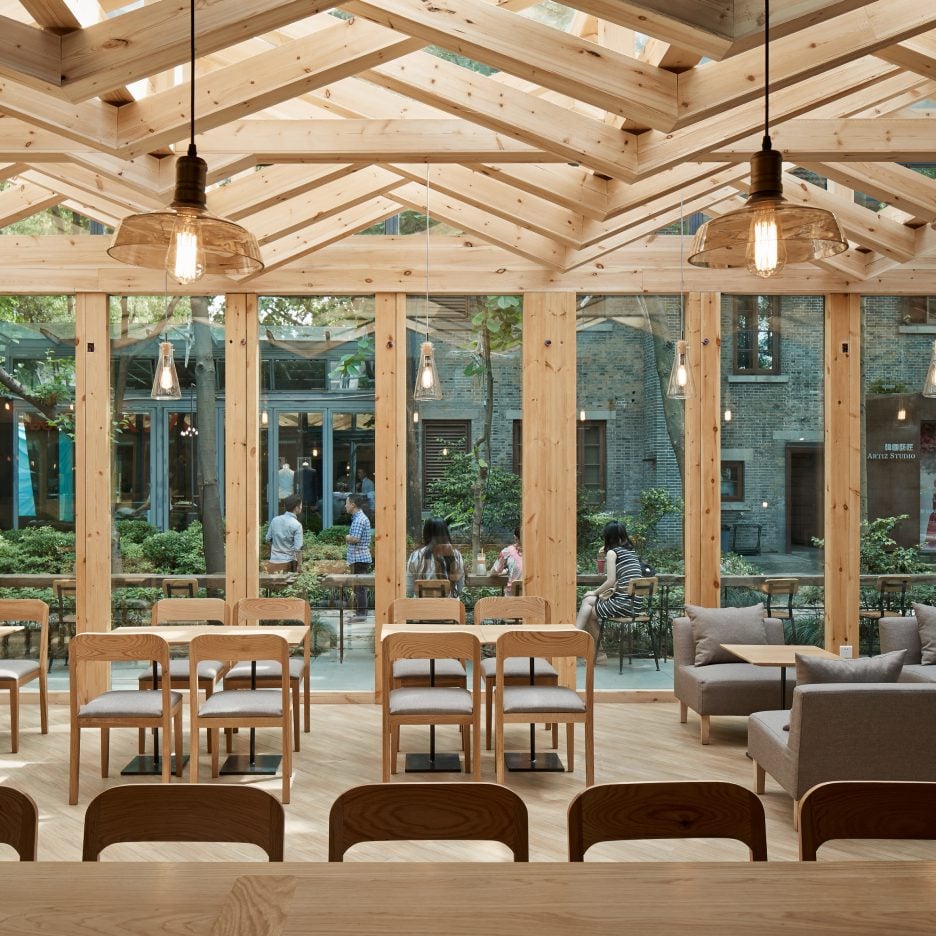
Kooo Architects adds wooden lattice ceiling to cafe in China
Mecanoo is Helping Commuters Find their Way With Vibrant Plans for Ede Wageningen Train Station

Courtesy of Mecanoo
Mecanoo has unveiled the designs for the new Ede Wageningen Train Station in the city of Ede in the Netherlands, after winning the competition for the design of the project in 2014. As a gateway to the Veluwe National Park, the transport hub is designed to support future expansion in response to growth in passenger numbers.
Inspired by the local Veluwe landscape—its topography, typologies, and existing buildings and monuments—the Station building is nestled in the slopes of the moraine between the Veluwe Massif and the Gelderse Valley.
The wooden clock tower and roof of the project serve as the station’s hallmark. Consisting of a series of wooden triangles, the roof cascades over the bicycle parking, retail space, and other station facilities, ending as the overhang of the main entrance and connecting all quadrants of the hub in a uniform manner.
Courtesy of Mecanoo
The use of natural materials like wood, stone, glass and steel fit the Veluwe landscape. The sturdy detailing makes the design not only durable but also resistant to vandalism – said the architects in a press release.
Courtesy of Mecanoo
Furthermore, the shape of the roof, as well as the platforms’ outfitting are designed to support the sightlines and orientation of travellers, thereby supporting safety and navigability.
Courtesy of Mecanoo
Courtesy of Mecanoo
From the platforms, all transport modes can be seen: the station square, buses, drop off zone, taxi rank, and bicycle parking. A large indoor parking facility has been integrated into the design and can accommodate up to 6,000 bicycles. A large car park is located at walking distance from the main entrance. Circulation routes are intuitive, covered and well-organized. The station is seamlessly integrated into the existing network of streets and roads, separating slow and fast traffic – described the architects.
Courtesy of Mecanoo
Construction of the Station is set to take place from 2018 to 2021.
News via Mecanoo.
Monochrome Iranian holiday home by RooyDaad Architects is dark on the outside and white on the inside
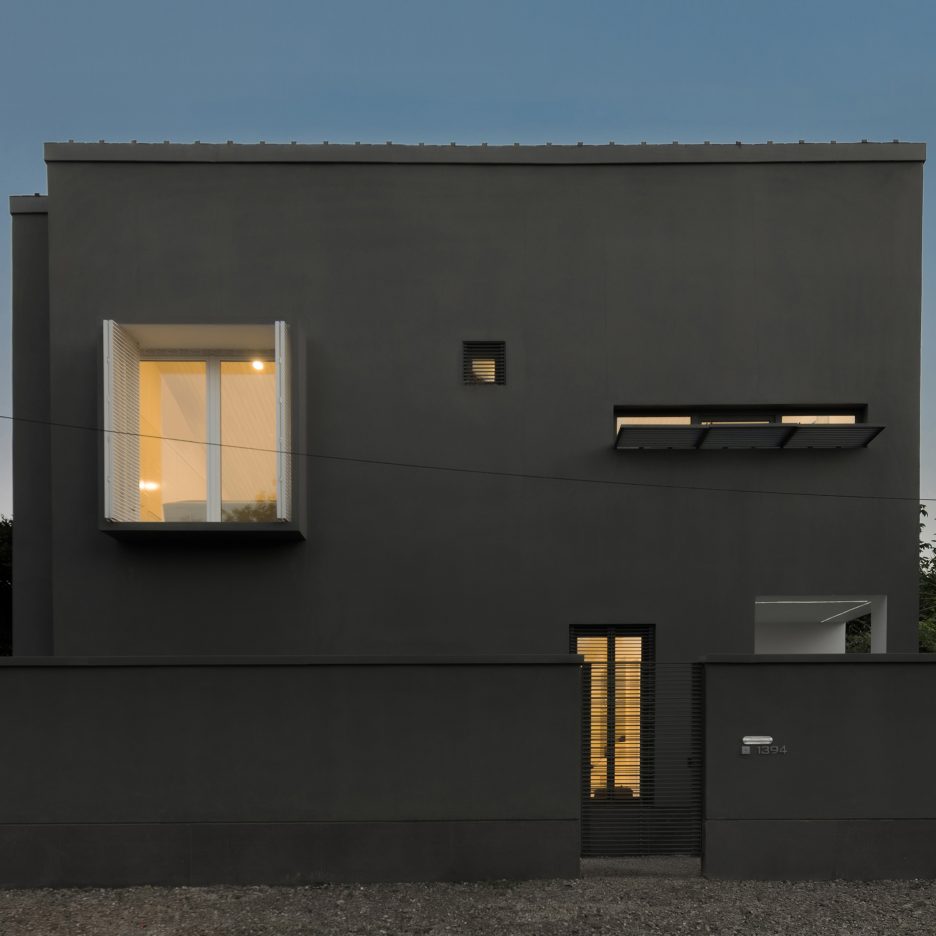
RooyDaad Architects created this monochrome house as a weekend retreat from their practice in Tehran, and based its design on a housing model by Le Corbusier (+ slideshow). (more…)
Archimontage Design Fields Sophisticated Creates a Home in an Urban Area for a Newlywed Couple

Dindang House is a residential project completed by Archimontage Design Fields Sophisticated. The 8,826-square-foot home is located in Bangkok, Thailand. Dindang House by Archimontage Design Fields Sophisticated: “An alley where this house is located is a heavily populate urban area that surrounded by clothing factories in old shop houses. Yet this crowded and chaotic environment, which sometimes leads to unpredictable events, does not obstruct the house owner to buy the..
Jordanbad Sauna Village / Jeschke Architektur&Planung

© Sandra Wolf
- Architects: Jeschke Architektur&Planung
- Location: Biberach, Germany
- Area: 750.0 sqm
- Project Year: 2015
- Photographs: Sandra Wolf, Christina Jeschke
- Construction Management: RF Bauprojekt Management
- Structural Planning: Ingenieurbüro Rohmer
- Heating, Ventilation, Sanitation And Swimming Pool Technology: Ingenieurbüro Spleis
- Electro Planning: Ingenieurbüro Sulzer
- Landscape Planning: Freiraumplanung Sigmund,
- Building Physics: Institut für Bautenschutz, Baustoffe u. Bauphysik Dr. Rieche, Dr. Schürger GmbH & Co.
- Fire Protection: Brandschutzconsult
- Consulting: B.S. Consulting
© Sandra Wolf
From the architect. The former outdoor sauna huts of Jordanbad in Biberach, Germany, were supposed to be replaced by a new, durable and sustainable, larger and more spacious sauna village.
The extensibility of the sauna complex and grounds was planned in a comprehensive master plan in order to expand and add further saunas and relaxation rooms easily in later years.
Site Plan
All successful spa complexes should be designed as a constantly growing process. The aim of the redevelopment was to increase the appeal and feel-good factor of this spa and to create more interesting spaces for a larger number of visitors.
© Christina Jeschke
Sauna Village
The sauna village consists of a large infusion sauna for 110-120 persons, one herbal sauna and one fireplace sauna, each for around 25 people. Herbal and fireplace sauna ( ´double- sauna´) are accessed via a shared foyer.
© Christina Jeschke
The water / shower center is situated in a separate building – with a variety of shower facilities, outside there is a large open waterfall shower.
The overall complex is designed as a kind of new‚ ´modern´ village – with gabled-roof sauna houses.
Ground Floor Plan
Their side-facades and roofs are all structured in the same type of surface design with Robinia wood slats – in a vertical and horizontal pattern.
Particularly important was the arrangement of the various sauna houses with well-proportioned intermediate space, which forms the key quality of the village as sauna complex.
© Sandra Wolf
Landscape
In the center of the complex there is a large pond – with wooden decks and benches for sunbathing in the south-west sun on one side – with a soft pebble shore and big boulders for seating on the other side. On the soft, more natural side of the pond, there are semicircles of paved terraces for sunbathing.
© Christina Jeschke
Three immersion pools – each 2m2 – are located on the wooden deck, facing the pond – they can be filled with warm or cold water depending on the season.
A tree in front of the water center with a bench seat forms the central meeting point for the sauna users.
© Christina Jeschke
Sauna Cabins and experiences
The client preferred a more longlasting construction method for the buildings – after his sad experience with the previous short-living log-cabins. The result of these discussions was a concrete construction as center of all walls and roofs – covered inside and outside with layers of wood.
Outside all cabins have got extreme long-lasting slats of Robinia-wood. Inside, each sauna has its very own atmosphere with different wood materials and finish.
© Christina Jeschke
The volume of the infusion sauna is created by the intersection of two gabled houses – for combining several more intimate space volumes with one large space – for all kinds of Sauna ceremonies for up to 120 persons.
The visitors can sit with nice views outside, enjoy relaxing tranquility in the three areas on one side – and in the other direction the sauna users look into the center with a large sauna oven in the middle and enjoy the communal sauna experience in the large, high intersecting center space.
© Sandra Wolf
The intimate fireplace sauna has a large attractive fireplace as an eyecatcher at the front of the wide opening panoramic window and has walls out of especially narrow wood-strips.
The herbal sauna has an atmospheric ‘herbal oven‘ out of slate in its center with an integrated herb-basin out of natural stone. Herbal aromas flow through this sauna- and walls are covered with large wooden panels.
Light and atmosphere
A goal was the indirect illumination of all saunas and outdoor spaces. The quality of experience by light is achieved in all saunas by indirect LED lighting, allowing a subtle very slow change of color. Sitting in the sauna, the users can look out at the indirectly lightened trees and landscape.
The design style of the sauna village is a contemporary architectural language – free of kitch – creating rich extraordinary experiences for the visitors by careful use of space and form, light and material – inside and outside. Inside, each sauna has its own individual atmosphere – with carefully chosen views into various parts of the garden, landscape and pond through large panorama windows.
© Sandra Wolf
Energy and heat supply
A cost-saving, ecological form of energy supply has been chosen for the sauna village. The electric power and heat generated by the power unit (CHP) can cover the complete electricity and heat demand for hot water and heating.
© Christina Jeschke
By means of an exhaust gas thermal oil heat exchanger, the energy is transported through thermal oil (temp. about 260 ° C) into pipelines to the individual, specially designed thermal oil heaters.
A new feature of the outdoor sauna facility is, that no electricity, gas or oil and no solid fuels are used for heating the saunas. Only the exhaust gases of the CHP are used. The Saunas are heated by energy from a waste product
© Christina Jeschke

