Gebze Industrial Vocational High School / Norm Architects


© Altkat Architectural Photography

© Altkat Architectural Photography


© Altkat Architectural Photography


© Altkat Architectural Photography


© Altkat Architectural Photography


© Altkat Architectural Photography

  • Project Team : Esin Tercan, Aslıhan Kemer, Yiğit Yılmaz, Çetin Çetkin, Ahmet Korfalı, Serhan Aydoğdu, Neslihan Ağaoğlu
  • Structural Engineering: RMZ Yapı Mühendislik
  • ​Mechanical Engineering: Turgut Bozkurt, Ekin Mühendislik
  • Electrical Engineering: Yaşar Helvayiyen, Ekin Mühendislik

© Altkat Architectural Photography

© Altkat Architectural Photography

Gebze Industrial Vocational High School was designed within the context of a social responsibility project. 

Located on the fringes of a 150-200 m. long green belt along the urban periphery –where no other elements of the built environment can be observed- the project for the building was developed by the Ministry of Education within the boundaries of a void space allocated for secondary education. No other structures can be observed within the vicinity of the same plot, except for some public housing units built long ago. The stabilized road passing through the southern end will be improved in time to function as the main transport line. It is also projected that an urban form will start to develop within the surroundings of the project once the education unit is finalized.


© Altkat Architectural Photography

© Altkat Architectural Photography

The correct analysis and interpretation of environmental data and user needs constitutes the backbone of the main approach adopted for the project. 


© Altkat Architectural Photography

© Altkat Architectural Photography

The environmental data is quite determining since there are no other points of reference regarding urban formations nearby and there are also no limiting elements except for the road on the southern end. It is for this reason that the definition of relationship between the building and its surroundings has become extremely important.


Diagram

Diagram

User needs are of equal importance since the employer is making demands in a way to positively transform the established image of a ‘vocational school’ and relating the potential quality of education with the potential impact of design quite directly.


© Altkat Architectural Photography

© Altkat Architectural Photography

The main motivation of the design process comprises of the multi-dimensional reading of a seemingly undefined context, and the dissolution and reinterpretation of a building programme that allows for and accentuates the possibilities of informal education and living. 


© Altkat Architectural Photography

© Altkat Architectural Photography

It is with these goals in mind that the relationship between the building and the context, alongside its perceptual integration with the environment, has become of utmost significance.  The powerful plastic arrangement of the masses observed on the approach from the city center, creates a welcoming effect, in harmony with the natural setting. 


Basement Floor Plan

Basement Floor Plan

Ground Floor Plan

Ground Floor Plan

1st Floor Plan

1st Floor Plan

Once the building is approached, what is noticed is that the entrance canopy defines a distinct and human-oriented scale. The interface formed by the canopy and the main entrance opens to the central courtyard. 


© Altkat Architectural Photography

© Altkat Architectural Photography

The front courtyard on the north is bordered by the education building overlooking the South and the workshop space overlooking the North; in this sense, the courtyard functions as the central and main spatial element of the entire structure. Connecting to the amphitheatre located on lower east end, the courtyard represents the real arrival point of the building and opens up towards the nature on the north end. 


© Altkat Architectural Photography

© Altkat Architectural Photography

The entire programme is dissolved around courtyards at varying elevations within the context of an enriching relationship of the inside and the outside. This simple yet determined approach enables a strong sense of identity and belongingness, triggered by a diversity of spatial arrangements and relationships with the nature; the resulting ‘void’ invites the user to interaction. 


© Altkat Architectural Photography

© Altkat Architectural Photography

Material choices of façades emphasize the tectonic character of architectural elements; façades comprising of exposed concrete and opaque polycarbonate panels  make references to the simple and ‘technical’ aspects of design. 


© Altkat Architectural Photography

© Altkat Architectural Photography

Ferroconcrete and steel composite structures, heat resistant joints for moveable surfaces, and photovoltaic panels (PV) on the South/South-West are preferred for the construction system of the building.


© Altkat Architectural Photography

© Altkat Architectural Photography

It is expected that the entire structure will refine in time with the practices of users, without ever losing anyhting from its character as it harmonizes with the changing conditions, and also that additional units will help the project area grow towards the East.     


© Altkat Architectural Photography

© Altkat Architectural Photography
http://ift.tt/2cqf6LU

Nanotechnology Center of Excellence / Arch International


© Eresh Weerasuriya

© Eresh Weerasuriya


© Eresh Weerasuriya


© Eresh Weerasuriya


© Eresh Weerasuriya


© Eresh Weerasuriya

  • Architects: Arch International
  • Location: Homagama, Sri Lanka
  • Architect In Charge: Sunil Ariyaratna
  • Design/Project Architect: Chanaka Ariyaratna
  • Area: 5000.0 sqm
  • Project Year: 2013
  • Photographs: Eresh Weerasuriya

© Eresh Weerasuriya

© Eresh Weerasuriya

From the architect. The SLINTEC, Nanotechnology park is one of the pioneering visions of the greater ‘knowledge hub’ development plan for Homagama creating a unique opportunity to house research incubation and technology commercialization in one setup that functions to both the public and private sectors. SLINTEC is one of the most successful implementations of a private-public partnership in aspects of funding, management and operations that lead to a challenging framework that generated a unique architectural solution in design of spatial and functional requirements. The building is a catalyst for scientific research putting Sri Lanka on the map for science and technology with the state of the art facility being the signature trademark for the nanotechnology park that is to proceed in the future masterplan.


© Eresh Weerasuriya

© Eresh Weerasuriya

The iconic appearance of the Sri Lanka Institute of Nanotechnology creates the epicenter of the park and features the bold statement of advance technology integrated with sustainable thinking. SLINTEC’s architecture that gives it a corporate identity resonates throughout the research and the commercialization which was much needed for the earlier basement housed research facility that needed to expand alongside its rapid technological development.


Ground Floor Plan

Ground Floor Plan

The hexagonal plan profile encloses a quadrangular atrium that is covered by a pyramidal skylight & opens up a triangular courtyard that generates a skeletal curved three membered tower converging to a singular point pinnacle spire depicting the play of polygons and shapes inspired by Carbon’s molecular structures that is observed at nanoscopic levels.  Elements of all scales and sizes within the architectural language have been used in order to depict the relationship with nanotechnology as well as geometries that are closely involved in the sciences; this establishes the weight and depth of the research that is happening within the facilities. All incubation areas of the center capture the tranquil and freely accessible natural environment so as to create a free mindset that will enable uninterrupted idea flow to its researchers. The laboratories and research areas are controlled environments yet linked with the exterior natural environment hence visually creating the required spatial feeling.


© Eresh Weerasuriya

© Eresh Weerasuriya

The center is composed of five levels. The ground floor comprises of public areas and the financing and incubation areas. A Basement houses a one of a kind vibration-proof underground laboratory for housing ultra-sensitive electronic microscopes. Offices for scientists and management is located on the first floor while the second floor takes you through laboratory facilities and further areas for research. Finally a roof terrace level acts as the podium for services and a solar array topped with the 3 pronged iconic tower. The large Atrium dominates the design being a source of light and ventilation that acts as a link both physically and visually to all levels of the building.


Section

Section

Being the only Platinum certified LEEDS Research Center in South Asia, the SLINTEC Building’s sustainable design through fundamental passive and active strategies minimizes demand and maximizes efficiency of all building service resources.


© Eresh Weerasuriya

© Eresh Weerasuriya

Strategies such as lush green landscaping, courtyards, creation of natural ventilation through drafts and stack effect, use of evaporative cooling, shading devices, Rainwater harvesting, Green rated fixtures, Alternative Energy source of a 102 kW Solar Array were all initially designed around as key principal requirements to achieve the highest sustainability.


© Eresh Weerasuriya

© Eresh Weerasuriya

The external skin of the building is a modular shading device to minimize solar exposure and gain, thereby reducing the energy demand of the internal air-conditions that is compulsory for the scientific instrumentation. Climatic models suggest a drop of 1 to 2 degrees in temperature with the skin and thermal coating for exposed glass.


© Eresh Weerasuriya

© Eresh Weerasuriya

The iconic skeletal tower acts as a ranged lightning conductor protecting the entire nanotechnology park. This was a critical solution due to the expensive equipment and the fact that the area is prone to high lightning strikes. It doubles up as a telecommunication relay tower generating income to the facility


© Eresh Weerasuriya

© Eresh Weerasuriya

The choice of materials reflects on the modern and hi-tech architectural styles and contributes to making the center stand out as a sleek and refined facility. The use of glass and aluminum break the monotony of the concrete structure and add aesthetic appeal to the building while also improving functionality.

The Nanotechnology Center of Excellence is an ideal example of a building that challenges conventional Sri Lanka institutional architecture. It is a step into the future while setting a firm foot in the present.  


© Eresh Weerasuriya

© Eresh Weerasuriya

http://ift.tt/2cuirIH

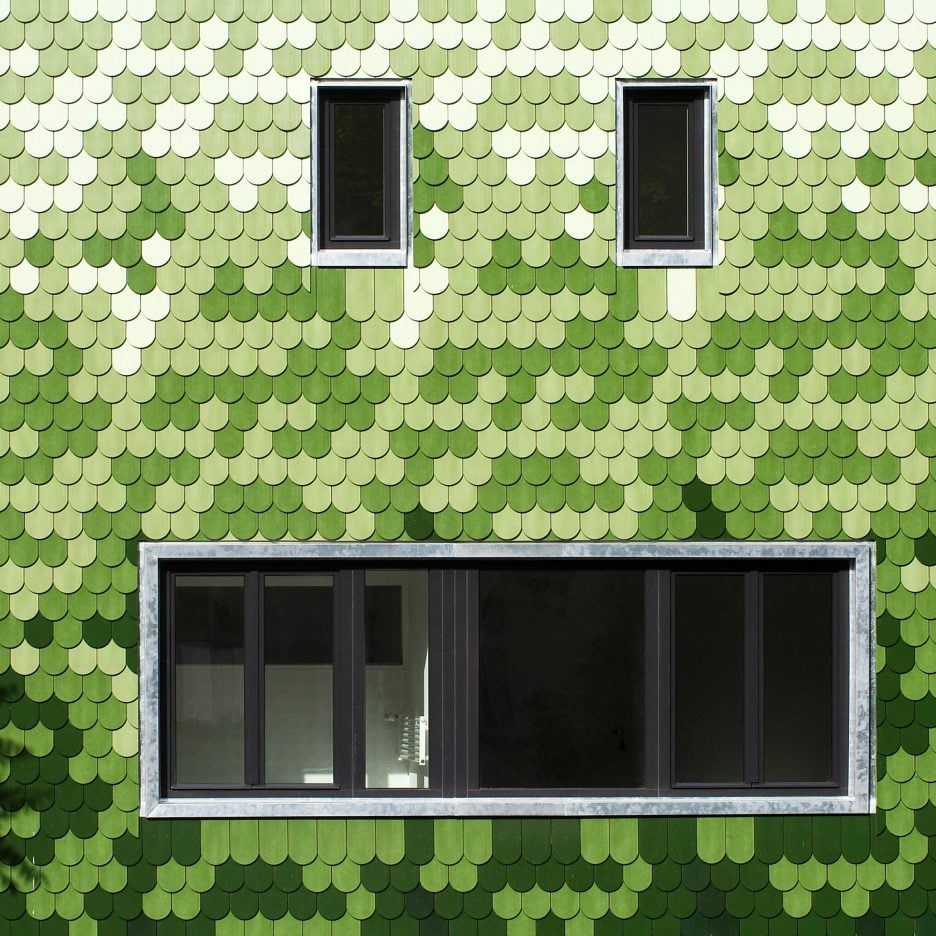
Green shingles cover “peculiar” Schuppen house by Brandt + Simon Architekten


This house in Berlin designed by Brandt + Simon Architekten is covered in rows of green shingles with curved edges and features windows laid out to resemble a face (+ slideshow). (more…)

http://ift.tt/2c8hBkf

Hotel by the Water Falls / Palinda Kannangara Architects


© Palinda Kannangara Arcitects

© Palinda Kannangara Arcitects


© Palinda Kannangara Arcitects


© Palinda Kannangara Arcitects


© Palinda Kannangara Arcitects


© Palinda Kannangara Arcitects


© Palinda Kannangara Arcitects

© Palinda Kannangara Arcitects

Located in a small hill town of Ramboda in central Sri Lanka, between Kandy (historic city) and Nuwereliya (tourist hill station), in a unique ecological zone (of tropical montane forests and grasslands) this 27 room, 6 storey hotel building is completely integrated into the terrain of the land.


© Palinda Kannangara Arcitects

© Palinda Kannangara Arcitects

The design had to address environmental regulations that stipulated a 2 storey building to the road and to avoid blocking views of the scenery to the locals and passing tourists. 


© Palinda Kannangara Arcitects

© Palinda Kannangara Arcitects

The design adopts these challenges and presents a visitor friendly 2 storey facade to the road permeable to the dramatic views of Ramboda  falls. Visitors and guests enter the hotel at 4thfloor level which is also the road level.  The parking, lobby as well as the upper level is allow for views of the vast valleys, dam, waterfalls and the horizon. A 30 feet cantilevered open viewing deck, provides a 270⁰ panoramic view of the surrounding nature- the Waterfalls, Kotmale reservoir and the verdant hills. 


Plan

Plan

Section

Section

The site helped generate the brief, initially the client had requested building a restaurant and a few rooms however upon analysing the terrain the possibility of additional hotel rooms was suggested. Building with the natural terrain, enabled the building of two floors below the road level nestled into the topography, which became the bedroom wings of the hotel. While 4th and 5th floor is given to public activities, lobby, gem store, fine dining, and an observation deck, the guests descend to the lower levels, away from the road, noise and public areas to the bedroom wings. The rooms are serene allowing for picture postcard views the scenery. The luxury suite is located beneath the cantilevered deck providing guests with expansive views of the valleys and water.


© Palinda Kannangara Arcitects

© Palinda Kannangara Arcitects

An important aspect of the design was creating a public viewing platform for the passing motorists to stop and to enjoy the view. The parking area has been designed to also function as this viewing space. The material palette and construction too were based on this idea of keeping the public levels totally permeable to the valley and view, and thereby create an unhindered view to the people.


© Palinda Kannangara Arcitects

© Palinda Kannangara Arcitects

The attempt was to minimize environmental impact and ensure that hotel blends into and is a part of landscape.


© Palinda Kannangara Arcitects

© Palinda Kannangara Arcitects

http://ift.tt/2c60YHa

Apple Watch Series 2 is “completely reengineered” for swimming


Targeted at swimmers, the second version of the divisive Apple Watch has been unveiled, along with the iPhone 7 and AirPod wireless headphones. (more…)

http://ift.tt/2bZazTV

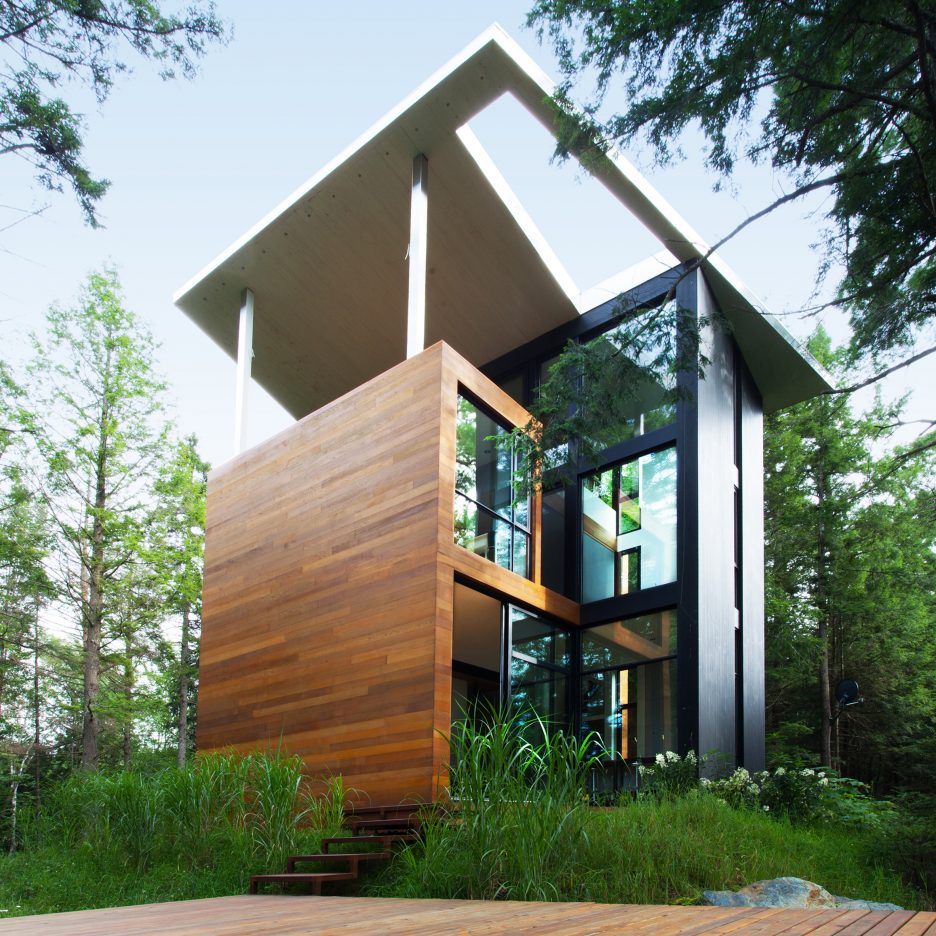
YH2 clads Quebec holiday home for a sculptor in red cedar and blackened pine


Montreal studio YH2 has completed a retreat for Polish-Canadian sculptor Jacek Jarnuszkiewicz, with a vertical form that takes cues from the surrounding forest (+ slideshow). (more…)

http://ift.tt/2c9e58M

Cabot Links / Omar Gandhi Architect


© doublespace photography

© doublespace photography


© doublespace photography


© doublespace photography


© doublespace photography


© doublespace photography

  • Contractor: David Maclean
  • Structural: Joe Janega Engineering

© doublespace photography

© doublespace photography

Nestled along the dramatic shoreline of Cape Breton, The Golf Villas at Cabot Links are an invitation to a course, a land and a journey like no other. With its unique brand of pure links play and panoramic vistas, Cabot represents a dramatic departure from the typical golf excursion. 


© doublespace photography

© doublespace photography

Like the course itself, the Golf Villas at Cabot offer the absolute best of both worlds: An upscale living environment with modern influences and high-end amenities, set against a picturesque backdrop that hearkens back to the game’s very origins. Whether passion for the game or the appreciation of life’s less traveled roads first brought guests to Cabot, the team at the Links hope guests will consider extending their tee time indefinitely. 


© doublespace photography

© doublespace photography

An escape from the ordinary, elegance has never been more inviting. Overlooking the lush greens and majestic ocean views of Cabot Links, the 2- and 4-bedroom Golf Villas of Cabot Links provide a level of accommodation that is rare to find, yet decidedly easy to appreciate. Because entertaining is an art unto itself, each villa features a fully custom kitchen with oversized stone countertops, premium appliances and a modern, open design. Throughout each living space, accents like detailed wide plank wood floors and unique wood feature walls reveal that even the smallest details have been given the utmost attention. Lounge in the serenity of a private deck with an outdoor fireplace. Take a soak in a freestanding bath. Or relax indoors while enjoying the quiet, refined ambiance of a sanctuary like no other.


Plan

Plan

From the outset, the team at Omar Gandhi Architect and Jill Greaves Design challenged themselves to create a distinctive aesthetic that’s as captivating as it is welcoming. The result is a serpentine arrangement of wood-clad villas that creates a threshold between the town of Inverness and the now famed Cabot Links golf course. Designed to reflect a simple elegance, each villa’s exterior is clad in finely crafted wooden slats, with a fully glazed façade that looks out toward the sea. To establish a natural sense of balance with its surroundings, each building follows the direction of the gently sloping landscape. The effect is subtle yet profound, creating an attractive and idyllic retreat from the everyday world.


© doublespace photography

© doublespace photography

The 2-bedroom, semi-detached villa occupies 1332 square feet, offering a comfortable escape designed entirely by Jill Greaves Design and adorned by endless panoramas. Inside, a master bedroom with en suite (large tub and walk-in shower), an additional bedroom with detached bathroom, an open-concept living space and kitchen with uninterrupted sunset views and expansive private deck. 


© doublespace photography

© doublespace photography

Each spacious 4-bedroom villa occupies 2297 square feet, offering the ultimate in comfort and design. A master suite and accompanying three additional bedrooms and bathrooms.  The free-flowing kitchen and living space features unsurpassed ocean and golf views, opening onto a large private deck. Each villa features a gas fireplace, contemporary décor and multiple seating areas.


© doublespace photography

© doublespace photography

http://ift.tt/2cpGCJD

Architect Magazine Names the Top 50 Architecture Firms in the US for 2016


Images © Raul J. Garcia, Timothy Hursley & Matthew Anderson

Images © Raul J. Garcia, Timothy Hursley & Matthew Anderson

Architect Magazine has unveiled the latest edition of the “Architect 50,” their list of the 50 best architecture firms in the United States. The 2016 rankings are based on scores from three categories: business, design and sustainability; the last of which was calculated using a new methodology this year. Topping the list this year was ZGF Architects, who also were given the distinction of top sustainable firm, while William Rawn Associates and Marlon Blackwell Architects finished number 1 in business and design, respectively.

See the top 10 from each category after the break.


Pearl Izumi North American Headquarters / ZGF Architects. Image © Raul J. Garcia

Pearl Izumi North American Headquarters / ZGF Architects. Image © Raul J. Garcia

Overall

  1. ZGF Architects
  2. Westlake Reed Leskosky
  3. Skidmore, Owings & Merrill
  4. Adrian Smith + Gordon Gill Architecture
  5. EYP
  6. William Rawn Associates
  7. WRNS Studio
  8. Hastings Architecture Associates
  9. Brooks + Scarpa
  10. Perkins+Will

Vol Walker Hall & the Steven L Anderson Design Center / Marlon Blackwell Architect. Image © Timothy Hursley

Vol Walker Hall & the Steven L Anderson Design Center / Marlon Blackwell Architect. Image © Timothy Hursley

Design

  1. Marlon Blackwell Architects
  2. Studio Gang Architects
  3. NADAAA
  4. Brooks + Scarpa
  5. Works Partnership Architects
  6. Skidmore, Owings & Merrill
  7. ZGF Architects
  8. MASS Design Group
  9. nArchitects
  10. John Ronan Architects

Stanford University Central Energy Facility / ZGF Architects. Image © Matthew Anderson

Stanford University Central Energy Facility / ZGF Architects. Image © Matthew Anderson

Sustainability

  1. ZGF Architects
  2. EYP
  3. Perkins+Will
  4. BNIM Architects
  5. Westlake Reed Leskosky
  6. ZeroEnergy Design
  7. HDR
  8. WRNS Studio
  9. SmithGroupJJR
  10. Skidmore, Owings & Merrill

Berklee College of Music / William Rawn Associates. Image © Bruce T. Martin Photography

Berklee College of Music / William Rawn Associates. Image © Bruce T. Martin Photography

Business

  1. William Rawn Associates
  2. Ikon.5 Architects
  3. Blair + Mui Dowd Architects
  4. Adrian Smith + Gordon Gill Architecture
  5. Cambridge Seven Associates
  6. Richärd+Bauer
  7. Mark Cavagnero Associates
  8. Ann Beha Architects
  9. AECOM
  10. Form4 Architecture

See the full Architect 50 overall list here, and subcategory results here.

News via Architect Magazine.

http://ift.tt/2bTFBqb

Is the New iPhone 7 The Best Cell Phone for Architects?


via Apple Special Event Streaming. September 7, 2016.

via Apple Special Event Streaming. September 7, 2016.

The iPhone 7 is here. Announced at Apple’s September Launch event today, the new device and its sibling, the iPhone 7 plus, have arrived after months of rumors, leaks and anticipation. The phones are loaded with a bevy of new components, including a new pressure-sensitive home button and bluetooth headphones, marking another step in the journey toward our wireless future.

Of course, in spite of the hype that the new iPhone will inevitably get—as it always does—it’s not the only smartphone on the market. Many will point to the fact that its expected RAM capabilities (2GB for the iPhone 7 and 3GB for the 7 Plus) still lag behind some competitors (for comparison the Samsung Galaxy S7 has 3GB and the S7 Edge 4GB), while the upgraded 32GB storage and newly-found water-resistance are no more than catching up with Apple’s competition. Nonetheless, Apple’s iPhone 7 also features a number of features that could make it a phone perfectly suited to architects. Read on to find out exactly why.


via Apple Special Event Streaming. September 7, 2016.

via Apple Special Event Streaming. September 7, 2016.

1. Improved Camera


via Apple Special Event Streaming. September 7, 2016.

via Apple Special Event Streaming. September 7, 2016.

In many ways, smartphone cameras have already replaced traditional cameras for casual, everyday usage. But with the latest iPhone camera upgrade, the quality may now challenge that of your DSLR as well.


via Apple Special Event Streaming. September 7, 2016.

via Apple Special Event Streaming. September 7, 2016.

The 12 MP camera uses technology Apple acquired from LinX Imaging this past spring to produce crisper, brighter photos. Optical image stabilization and a finely tuned aperture window let in more light with shorter exposure times, resulting in pictures with reduced noise and higher clarity, even when taken in indoor or low-light environments.


via Apple Special Event Streaming. September 7, 2016.

via Apple Special Event Streaming. September 7, 2016.

For architects, this means you no longer need additional light sources when looking to snap a few shots of architectural details on a dim construction site, and the improved clarity means increased understanding of how parts come together as well.

2. Dual-Lens Camera System on the 7 Plus


via Apple Special Event Streaming. September 7, 2016.

via Apple Special Event Streaming. September 7, 2016.

For even more control over the photos you’re taking, the iPhone 7 Plus contains two camera lenses: one wide-angle lens and one telephoto lens, finally allowing users to zoom up to 2x without any loss of quality. And thanks to the improved picture clarity, digital zoom is now available up to 10x. Coupled with new real-time deep depth preview, which allows you to adjust the focal depth on screen, it is now possible to take quality photos, even from a distance.

Stuck behind a fence and can’t reach the building detail you want to photograph? Increased zoom will take you where you couldn’t quite get before. What could be even more exciting for architects is that this depth perception could potentially be implemented into a variety of apps where measuring space is important, from room-scanning apps to a variety of augmented-reality implementations.

3. HomeKit Home Automation


via Apple Special Event Streaming. September 7, 2016.

via Apple Special Event Streaming. September 7, 2016.

Included on iOS 10, a new Siri-enabled built-in app will allow your phone to seamlessly serve as the control center for your smart home products. By pairing the iPhone with other Internet of Things products, you will be able to control your work environment remotely; or even start a fresh pot of coffee to be waiting for you when you arrive each morning.

4. Real-Time Collaboration

Also part of iOS 10, iWork applications (keynote, etc.) will now allow multiple users to edit one file simultaneously (similarly to how google docs works). Presentations and documents can now be shared and edited, in real time, on all apple devices, so everyone can work together to prepare for that last-minute deadline.

5. Improved Capabilities of Applications


via Apple Special Event Streaming. September 7, 2016.

via Apple Special Event Streaming. September 7, 2016.

An improved processor will allow applications to approach 90% of the capabilities of the full software – so applications like Adobe Lightroom can be used onsite for editing photos at nearly their full potential.

6. Double the Memory Capacity

Phones are now available in sizes up to 256 GB, so downloading drawings sets or portfolios will no longer take your phone out of commission, and you can take and store a huge number of photos without worrying about having to delete any of your favorites.

BONUS: High-Gloss Jet Black Finish


via Apple Special Event Streaming. September 7, 2016.

via Apple Special Event Streaming. September 7, 2016.

We all are aware of architects’ love of black. Thanks to a new jet black glossy finish, the iPhone will serve as a perfect complement to any architect’s outfit.

Prices for the iPhone 7 will start at $649.


via Apple Special Event Streaming. September 7, 2016.

via Apple Special Event Streaming. September 7, 2016.

via Apple Special Event Streaming. September 7, 2016.

via Apple Special Event Streaming. September 7, 2016.

http://ift.tt/2cdSdwg

Padre Renato Poblete River Park / Boza Arquitectos


© Felipe Díaz Contardo

© Felipe Díaz Contardo


© Felipe Díaz Contardo


© Felipe Díaz Contardo


© Felipe Díaz Contardo


Courtesy of Cristian Boza Wilson

  • Architects: Boza Arquitectos
  • Location: Av Costanera Sur 3201, Quinta Normal, Región Metropolitana, Chile
  • Author Architects: Cristián Boza D, Cristián Boza W, Diego Labbé, Eduardo Ruiz-Risueño, Michel Carles Tapia
  • Collaborators: Pedro Pedraza,Víctor Reyman, Karina Lecaros,Felipe Selman, Víctor Alegría
  • Promoter And Client: Gobierno de Chile – Ministerio de Obras Publicas MOP
  • Project Year: 2015
  • Photographs: Felipe Díaz Contardo , Cortesía de Cristian Boza Wilson , Guy Wenborne
  • Constructor: Brotec
  • Engineering: CICSA Consult
  • Text: Pedraza-BozaW
  • Constructed Surface: 9.1 hectares hectaresˈhekˌte(ə)r

© Guy Wenborne

© Guy Wenborne

The idea of river park was created in 2001 with the main objective to recover the banks of Rio Mapocho through the implementation of collapsible locks along 34k from east to west. The original intention is to generate various development poles along the route by referring to a navigable river.


© Felipe Díaz Contardo

© Felipe Díaz Contardo

© Felipe Díaz Contardo

© Felipe Díaz Contardo

Located in the western sector of Santiago, Padre Renato Poblete River Park, is seen as a sustainable urban public space intervention. The main objective is to value the banks of the Mapocho river and rehabilitate degraded industrial area that are now integrated across the water of the channel.


Plan

Plan

For a more situational approach of the project it is possible to explain the park through three essential points:  from the contemporary, from overcoming prejudices, and finally, creating  a new imaginary landscape. 


Courtesy of Cristian Boza Wilson

Courtesy of Cristian Boza Wilson

Courtesy of Cristian Boza Wilson

Courtesy of Cristian Boza Wilson

In the words of Joan Roig, architect and Spanish landscaper, “Contemporanizar”; to contemporary, or in other words to update the profession. Renato Poblete Park is essentially designed by a group of young architects who overcame inertia to continue the design of its next national landscape references, marking a distance. In this sense, it proposes a new design for the national context from what the theory of landscape has drawn back to the ground as thick or groundscape, which is basically understood that the manipulated surface is understood in its three physical dimensions.       


© Felipe Díaz Contardo

© Felipe Díaz Contardo

The park is a certain improvement to urban bias. The first is the supposed impossibility of esclusar a torrent. Issue discussed for years  for various “pseudo experts” who thought the only way esclusar was in reference to some European urban river. Second, a park area west of Santiago may not be of high standard, because it is low-income communities. Then the design and execution of the park was not from scarcity but from efficiency, rehabilitating a degraded industrial zone.


Section

Section

Section

Section

Section

Section

Finally If there is anything that the proposed park to the city, is the ability to regain the look over the river from a bank. Strictly speaking the park behaves like a meandering river. Diverts your water and water vegetation. From the bicycle, or in its various walks edge you can see the basin of the Mapocho , its relationship with the Cerro Renca and the axis formed until the Cordillera . His ataludado containment wall that proximity allows coming society claiming to time in its many sporadic appropriations down the channeled river bed . Inward vertigo of being on and in contact with water from the river it is proposed.


© Felipe Díaz Contardo

© Felipe Díaz Contardo

http://ift.tt/2bUsGt4