Architecture
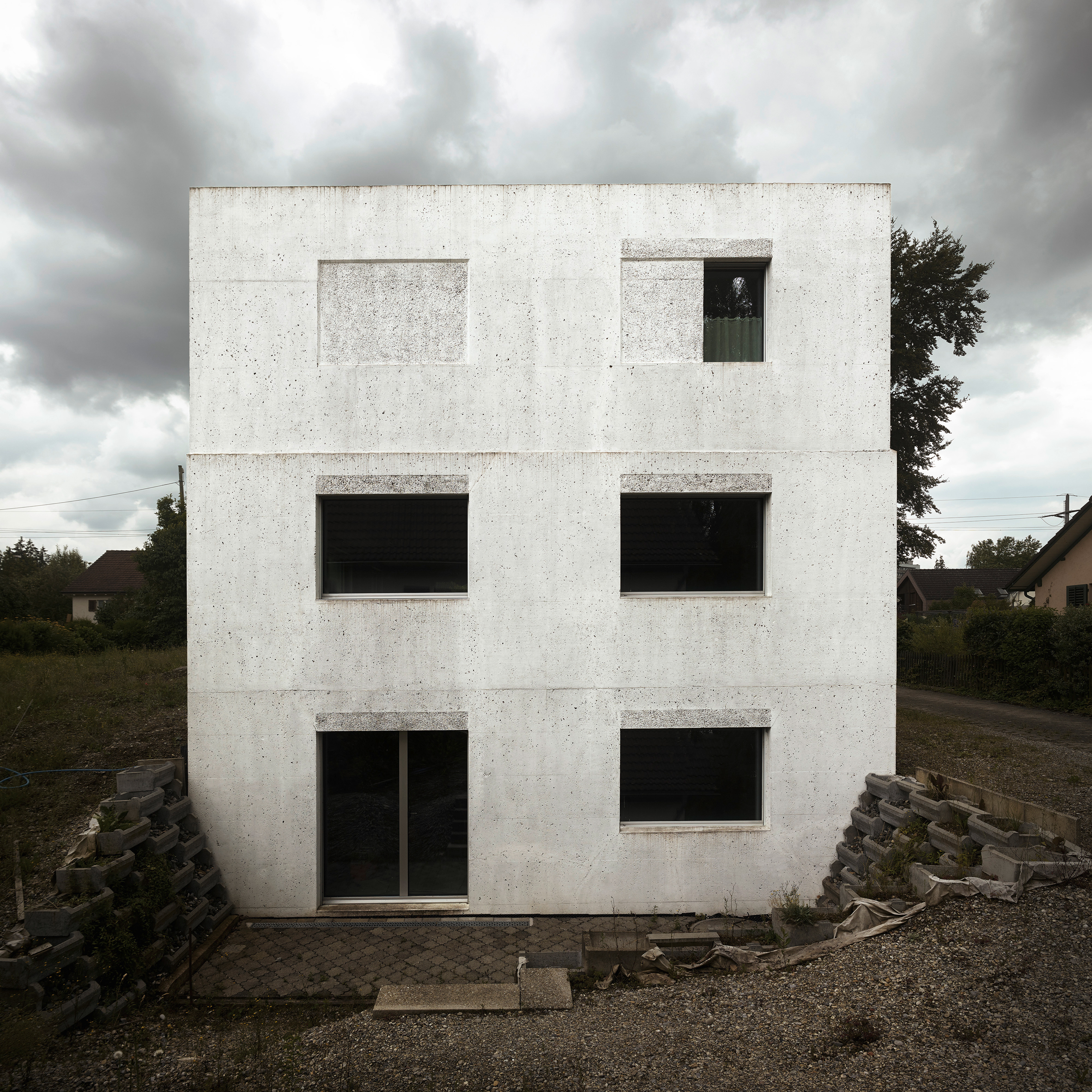
House in Azeitão / Aires Mateus

© Daniel Malhão
- Architects: Aires Mateus
- Location: 2925-069 Azeitão, Portugal
- Authors: Manuel Aires Mateus, Francisco Aires Mateus
- Project Leader: Mafalda Neto Rebelo
- Area: 408 sqm
- Project Year: 2003
- Photographs: Daniel Malhão
- Collaborators: Maria Rebelo Pinto, Ana Rita Rosa
- Engineer: Alexandre Portugal
© Daniel Malhão
An ancient winery is rehabilitated. Its main attributes are a wide space and thick walls. Though introducing a new program, the universal character of the space remains. Together with the existing wall, a new thick wall houses all of the social functions on the main level.
Plan
Section
Stairs within the thick wall and day lit from above make the light transition from social to private space. The more private areas – bedrooms, bathrooms and a studio– are conceived as habitable volumes in an “impossible” balance, structuring the space. The volumes, articulated by light, modulate the main space of the lower living room, emphasizing its breadth.
© Daniel Malhão
Jean Jullien brings his illustrative style to first sculpture exhibition
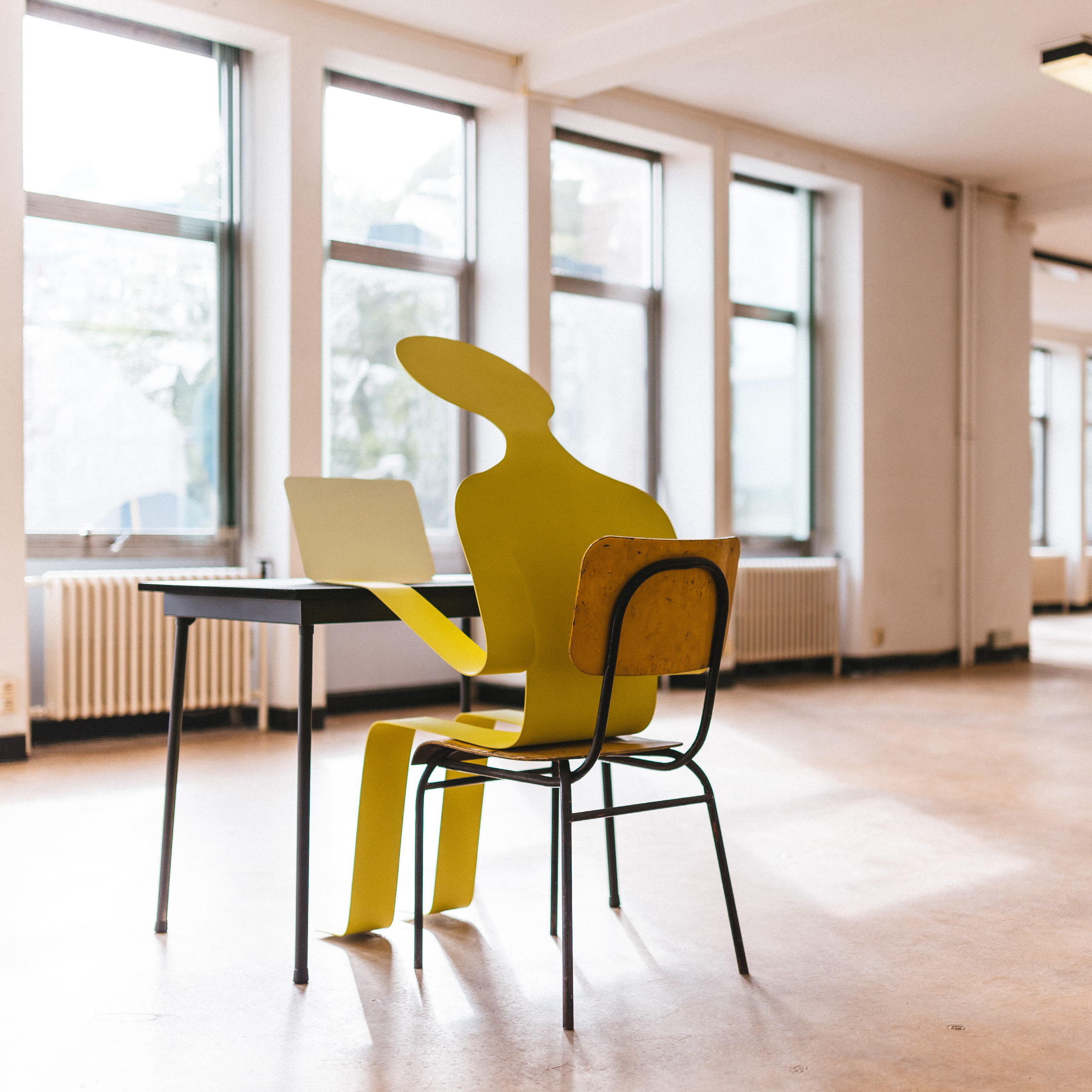
Ghent’s Dift Gallery has presented the first large-scale exhibition of sculptures by French illustrator Jean Jullien in a show titled Flat Out (+ slideshow). (more…)
OJI House / Kenta Eto Atelier Architects

© Toshiyuki Yano
- Architects: Kenta Eto Atelier Architects
- Location: Oita, Oita Prefecture, Japan
- Area: 105.16 sqm
- Project Year: 2016
- Photographs: Toshiyuki Yano
- Building: Hikari Sougou
- Structure: Kuroiwa structure design
© Toshiyuki Yano
It is a house with its exterior wall cut off at an acute angle for the relationship with the surrounding environment. Plants gently define the boundary and link the house with its neighborhood.
© Toshiyuki Yano
The site is located in Oita prefecture, slightly away from the center of Oita city. It is situated at a low ground area coming down from a rise in a dense residential area with many detached houses and public buildings. In front of the site, there is a street in 4m wide, which diverges into the west and east directions and affects the shape of the site. It was necessary to think about the living in a valley-like condition with such surrounding conditions as the narrow yet heavy traffic streets, condensed houses and public buildings in the east and west sides of the site. Considering owner’s privacy, we placed a living room and water section on the second floor as a public zone, while bedrooms and other private spaces were located on the first floor. Openings on the first floor level were minimized for security reason. In addition to the basic plan configurations, we sorted out the conditions of those enriching external elements to be layered, such as openness, day lighting, natural ventilation, and borrowed scenery.
Plan 1
Tall west-side wall is built for privacy against the adjacent house across the street, to the height not to lose the sight of wild cherry tree on the rise. On the east side—since cherry blossom trees line up at the boundary of the public building, and the street on the east is about 80cm lower along the site, opening is provided for the living room on the second floor level to enjoy the view of those cherry blossoms. Daylight can be taken in from the corner of the site facing to the fork road on the south side because there is no adjacent house. By creating a courtyard as a buffer zone, daylight and wind can come into the interior space. We also planted trees at the boundary of the courtyard to connect the house gently with surrounding environment (neighborhood). Those trees are rather a part of the building translated into the element for the expression of the house— in this case, it is a lattice-like element, or used as screen—than typical vegetation of a house
© Toshiyuki Yano
Section
© Toshiyuki Yano
By doing so, this building, with acutely cut off expression, detaching itself from the surrounding environment, can still connect itself with the surrounding environment (neighborhood) in gentle manner, as the expression of the house changes when the trees move or grow. Our aim for the interior space was to create rich spaces through the borrowed scenery with courtyard trees and cherry blossoms trees to be viewed beneath the living room on the second floor.
© Toshiyuki Yano
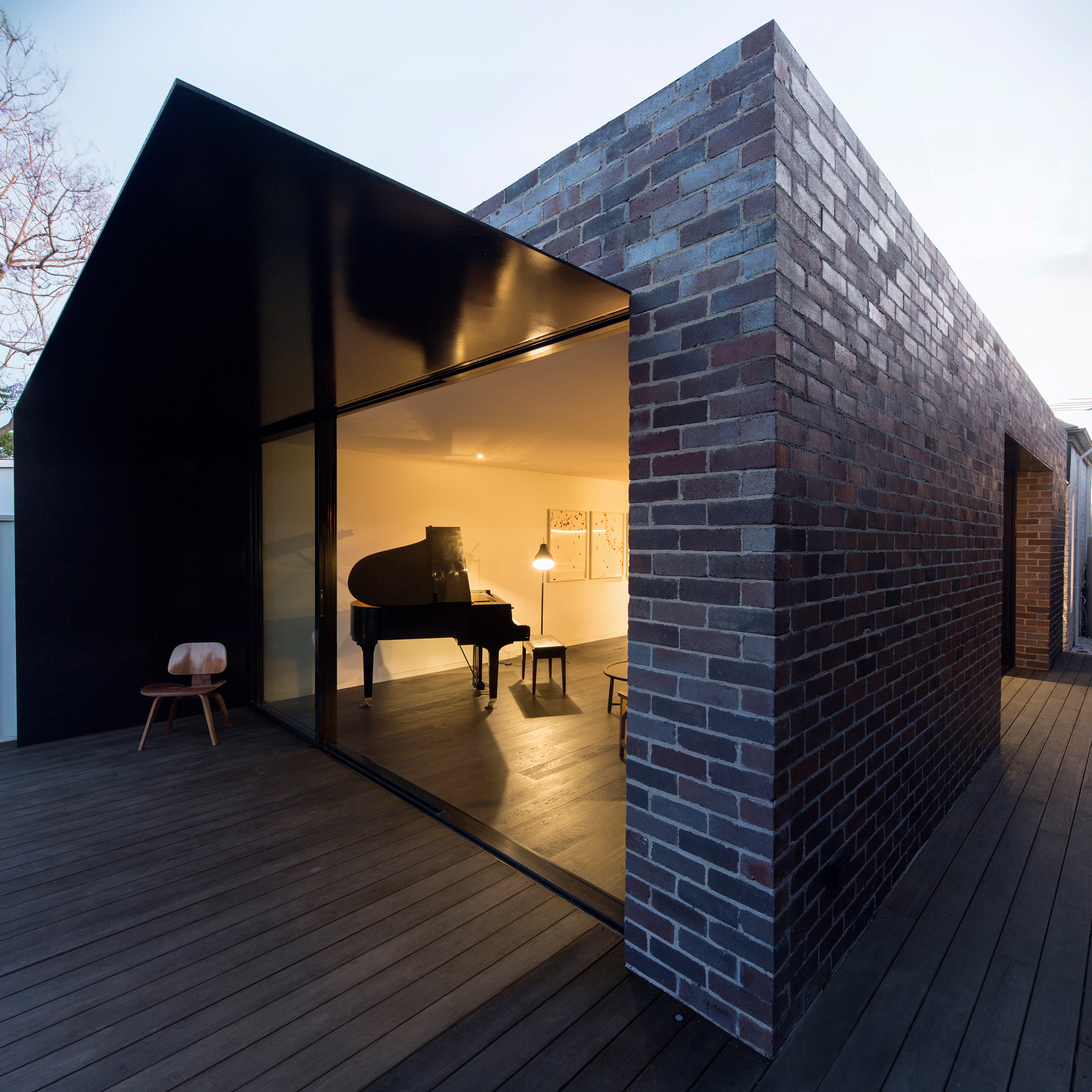
Dark-toned extension added to white Federation house in Sydney by Studioplusthree
Poetic Lab’s faceless Silo Clock shifts shape throughout the day
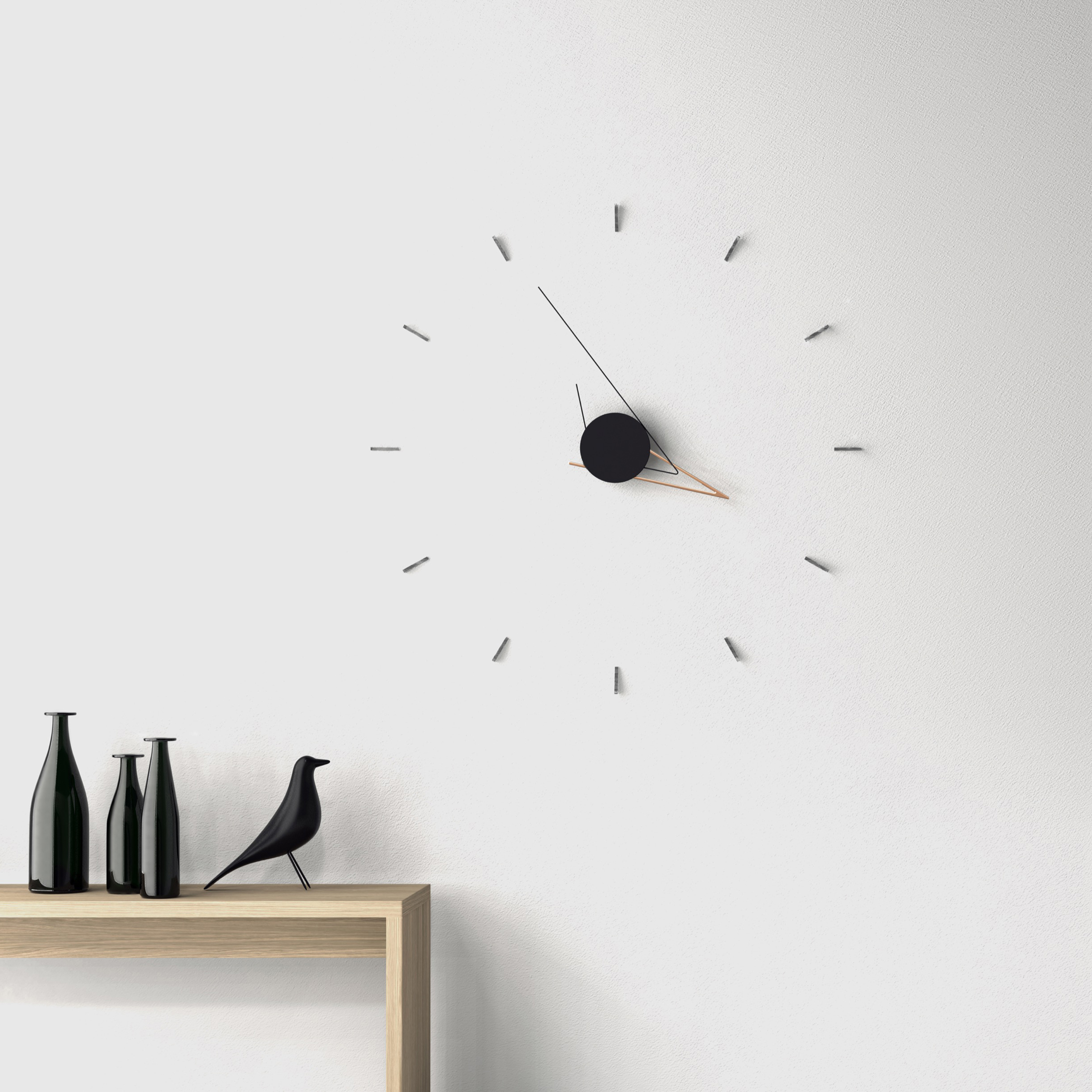
Maison&Objet 2016: London studio Poetic Lab has designed a clock with sculptural hands that form different shapes as they turn (+ movie). (more…)
Hassell Unveil Design for Geelong Performing Arts Center

Courtesy of HASSELL
HASSELL has unveiled a contemporary new addition to the Geelong Performing Arts Centre in Geelong, Australia. Just over an hour south-west of Melbourne, the complex is a significant hub for the growth and promotion of the arts in regional Victoria. Over its illustrious 35 year life, it has built a reputation as one of the premier performing arts spaces in the state, and the $38.5 million upgrade will cement its prominence.
The redevelopment centers around a new entrance and facade, completely redefining the building’s street presence. Contemporary and sleek, the addition sits atop the current building at an angle parallel to the existing roof pitch. The new entrance also provides a crucial upgrade to the building’s accessibility and amenity.
Courtesy of HASSELL
The expansion will also include rehearsal facilities, new dance studios and provision for creative industries offices. As the only state-owned arts centre outside Melbourne, Geelong Performing Arts Centre will not only be a landmark destination it will also service the needs of the growing creative and cultural community, said Mark Loughnan, HASSELL Principal and Head of Design in a press release.
Courtesy of HASSELL
Construction is scheduled to begin in mid-2017 and stage 2 is slated for completion in late 2018.
News via HASSELL.
- Architects: HASSELL
- Location: 50 Little Malop St, Geelong VIC 3220, Australia
- Project Year: 2016
- Photographs: Courtesy of HASSELL
Studio Gang Selected to Design Next Iteration of National Building Museum’s Summer Block Party

Studio Gang’s Nature Boardwalk at Lincoln Park Zoo. Image © Hedrich Blessing
Studio Gang has been selected to design next year’s installation of the Summer Block Party at the National Building Museum in Washington, D.C. The temporary exhibition will be the latest in the Museum’s annual series, after this year’s ICEBERGS by James Corner Field Operations, and previous installations like Snarkitecture’s The BEACH in 2015, and Bjarke Ingels Group’s BIG Maze in 2014.
Studio Gang's Masonry Variations. Image © Jim Tetro
We are delighted to embark on a new collaboration with Studio Gang over the next year, said Chase W. Rynd, executive director of the National Building Museum. With their creativity and impeccable design credentials, they are poised to reimagine the possibilities of this series.
The concept for the new exhibition is currently in development, and will be announced in early 2017.
The installation will open to the public on July 4, and will remain on display until Labor Day 2017.
News via The National Building Museum.
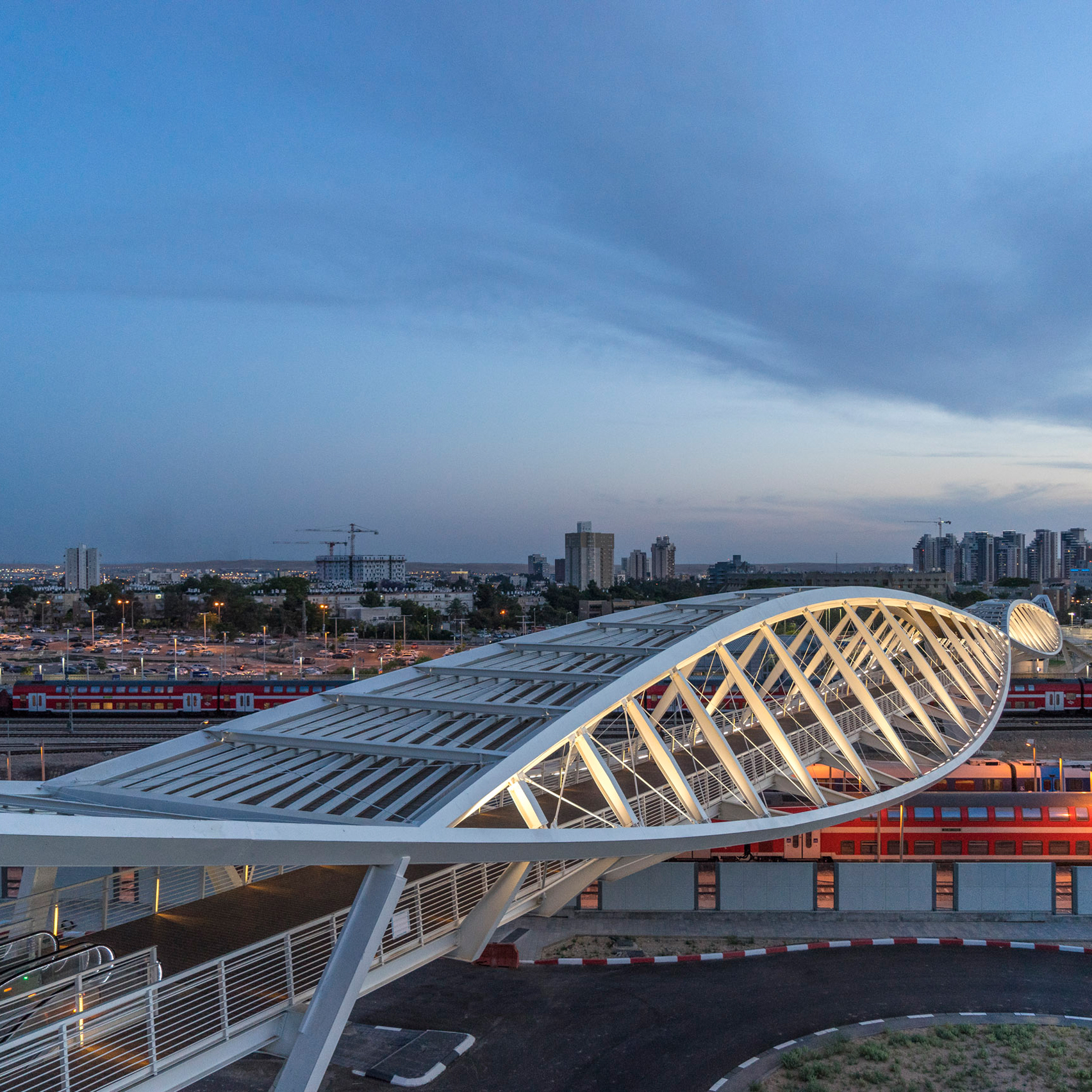
Beersheba station bridge in Israel is shaped like a pair of eyes
House and Studio in Orlandia / SPBR arquitetos

© Nelson Kon
- Architects: SPBR Arquitetos
- Location: Orlândia, SP, Brazil
- Area: 382.87 sqm
- Project Year: 2012
- Photographs: Nelson Kon
- Project Team: Angelo Bucci [principal], João Paulo Meirelles de Faria, Juliana Braga, Tatiana Ozzetti, Nilton Suenaga
- Collaborators: Victor Próspero, Fernanda Cavallaro, Lucas Nobre
- Structure: Ibsen Puleo Uvo
- Lighting: Ricardo Heder
- Landscape: Raul Pereira
- Constructor: Paulo Balugoli
© Nelson Kon
A proper balance as a goal
Two activities: live and work. Its two corresponding spaces, house and studio, have been shaped historically, as two quite clear architectonic typologies.
© Nelson Kon
Our first goal to this project was to combine both in a single small building, firstly keeping their programmatic independence and secondly achieving a proper balance in the whole [not a house with a studio appended, neither a studio with an added house].
© Nelson Kon
It means, we would like to integrate both programs in such a way that both could live together with no conflicts. The studio should not be disturbed when the house is empty. In the same way, the house should not be degraded by an uninhabited studio.
© Nelson Kon
Studio
The studio was disposed 1m lower the street level as a strategy to change the typical perception of a full-story building, then its function does not dominate the building.
© Nelson Kon
Moreover, it is turned to the site’s rear. In particular, a transparent façade enables the studio to benefit from a small garden conceived there.
Planta
In between the studio and the house there is an empty space that clarifies the independence of the two programs.
© Nelson Kon
House
At the west plot limit, the house entrance leads to a single-floor house, spread in the second level slab. The bedrooms are situated at the front side and the living room towards the rear. Connecting bedrooms and the living-room are the kitchen and service areas.
© Nelson Kon
This program arrangement creates an inner court making an opportune use of the studio’s roof slab as a reflecting pool
© Nelson Kon
The reflecting pool mitigates the severe local weather and multiplies the light in the house patio. In addition, it assures the impermeability of the concrete slab, free of any membrane, and works as thermal insulation for the studio.
Planta
Planta
The house’s design aimed for no evident architectonic elements like doors and windows. Thus, its function is not apprehended at first glance in order to not prevail over the studio.
© Nelson Kon
Two major construction materials
Both programs are being built with few major materials: glass and concrete.
This conciseness is a strategy to keep construction process and costs under control.
© Nelson Kon

