Casa Pico Building / SPBR Arquitetos + Baserga Mozzetti Architetti


© Nelson Kon

© Nelson Kon


© Nelson Kon


© Nelson Kon


© Nelson Kon


© Nelson Kon

  • Team: Tatiana Ozzetti, Ciro Miguel, Eric Ennser, Giovanni Meirelles de Faria, João Paulo Meirelles de Faria, Juliana Braga, Nilton Suenaga, Fernanda Cavallaro, Joaquin Corvalan, Victor Próspero) Baserga Mozzetti Architetti (Nicola Baserga, Christian Mozzetti, Marilena Quadranti, Thea Delorenzi
  • Structure: Ingegneri Pedrazzini Guidotti (Andrea Pedrazzini, Eugenio Pedrazzini, Roberto Guidotti, Karin Lehmann e Ladislao Ricci)
  • Facade: Feroplan Engineering (Marc Bischoff)
  • Building Physics : Physarch (Mirko Galli)
  • Mep: Studio Tecnico Ferreti (Idalgo Ferreti); Crivelli; Aircond; ACR Energiebohr
  • Eletric Installations: Elettronorma (Daniele Ruess, Daniele Baruffaldi), Etavis (Mauro Marzini)
  • Fire Protection: Studio Tecnico Geo Viviani
  • Waterproofing: Visetti Isolazioni
  • Lighting: Reka (Ricardo Heder); Tulux
  • Builder: Pedrazzini Construzioni (Luigi Pedrazzini e Alan Del Giorgio)

© Nelson Kon

© Nelson Kon

Introduction / acknowledgments
The accurate study previously done by Nicola Baserga and Christian Mozzetti, more than providing basic information about land use regulations in Lugano, gave us a reliable direction to our design concept. They provided us a good foundation for our proposal and due to their previous work, the project was already advanced before it even started. 


© Nelson Kon

© Nelson Kon

© Nelson Kon

© Nelson Kon

Geometry
The irregular polygon which defines the site has seven sides and holds about 1,000 m2. The setbacks imprint an inner polygon (with a curve in one corner) that corresponds to a 330 m2 area in which it was possible to build 3 m above ground level. However, inside that inner figure we could only have 230 m2 per floor, considering the maximum height allowed (six floors) and the building program. The geometry of the slabs has two centers, as two cores of activities. On first three floors, it corresponds to one small apartment each, and for the three upper floors, it corresponds to two different programs in one large apartment. 

Structure
The design of the structure follows those two cores. Each core is supported by a “T” concrete wall that supports vertical and horizontal loads. The “T” wall is associated to two columns for vertical loads. Both cores are structurally combined which their “T”s perpendicularly displayed in order to support horizontal efforts in both directions. A lonely extra thin column, placed on the extreme north, frees the slab geometry to configure areas where it wouldn’t be possible.


© Nelson Kon

© Nelson Kon

Such disposition of vertical elements waives the slabs of having beams. Therefore the slab plane has no clearly readable direction as usually happens with a structure with beams. As a result, once inside the building, the rigorous geometry of walls and columns cannot be easily understood. As if, once built, the building gives away its essence to be broken into parts, back to the surrounding geometry and the landscape.


© Nelson Kon

© Nelson Kon

Facades
Each façade is either an opaque plane, made with wood panels, or a transparent one, made with glazing panels. The opaque plane always meets a transparent one. As a result, from inside, the view has always an escape to the outside. On the other hand, from outside, the building volume seems like not having solids, just by planes.    


© Nelson Kon

© Nelson Kon

Ground level
The ground level is an open passage. Specifically for those who have the building as a destination, the ground level shares two different programs: housing and office.


© Nelson Kon

© Nelson Kon

The office space is placed slightly sunk in the middle of the garden. As a result its height is shorter than that we typically associate to an inhabited construction and one cannot immediately realize its function. Besides, it was carefully placed aside the path and protected by the two structural reinforced concrete wall. As such, it merges two contrasting features: on the one hand it is quite discrete; on the other hand it brings some vitality to a peripheral corner of the site.
At this level, the housing program is just announced by a small abstract prism, the elevator hall, whose size and feature were carefully calibrated not predominate in that space.


© Nelson Kon

© Nelson Kon

Plan

Plan

© Nelson Kon

© Nelson Kon

Neither house nor office, the predominance on the ground level is an open space. Although surrounded by gardens, the ground here is completely constructed.. 


© Nelson Kon

© Nelson Kon

Underground level
There are two floors underground: the parking garage and the storage. The parking garage covers the entire available area, about 650 m2, and it is shallow enough to allow us to keep an historical retaining wall, and its function, at Pico street. This floor is full naturally lit and ventilated, and the access is provided by a gentle ramp, even for walking standards. It results that the ambience at this space is perceived as placed on the surface and not as a typical undergrounded one. The storage, 250 m2, has an inner perimeter inscribed in the previous floor. The setback from the boundaries avoids the use of both double high retaining walls and excavation on the border.


© Nelson Kon

© Nelson Kon

Low energy 
All façade panels were designed following parameters defined by our consultant in order to achieve the best energetic performance. The wood panel outside is ventilated and assembled on a frame which holds successive layers of thermal insulation, vapor barrier and an inside drywall panel. The glazing has triple glass panels on aluminum frame. The south and west glass facades are shaded by a retractable aluminum louver.


© Nelson Kon

© Nelson Kon

Controlled ventilation
Thermal losses are drastically reduced due to a mechanical system of controlled ventilation, independent in each apartment.


© Nelson Kon

© Nelson Kon

Geothermal system
One more strategy adopted to reduce drastically energy consumption for heating and cooling is the geothermal system. Four geothermal probes go down 225 m into vertical loops.  


Diagram

Diagram

All these issues aim a low energy building and allow to achieve the Swiss standard for energy consumption, the Minergie.   


© Nelson Kon
© Nelson Kon

http://ift.tt/2cc05Mt

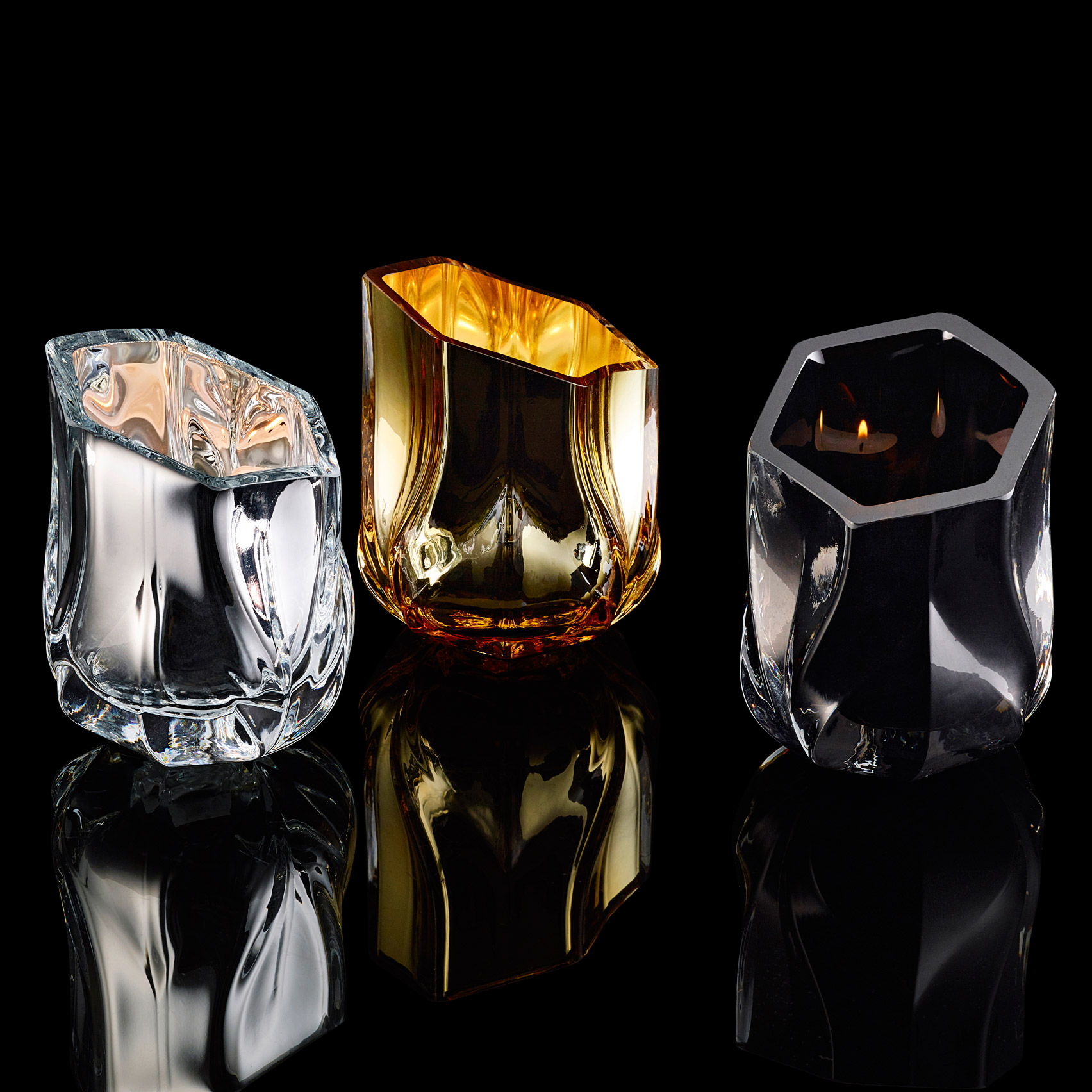
Zaha Hadid homeware collection to be unveiled at Maison&Objet


Maison&Objet 2016: Homeware patterned with optical illusions features in the latest collection of products by the late Zaha Hadid (+ slideshow). (more…)

http://ift.tt/2bF5udc

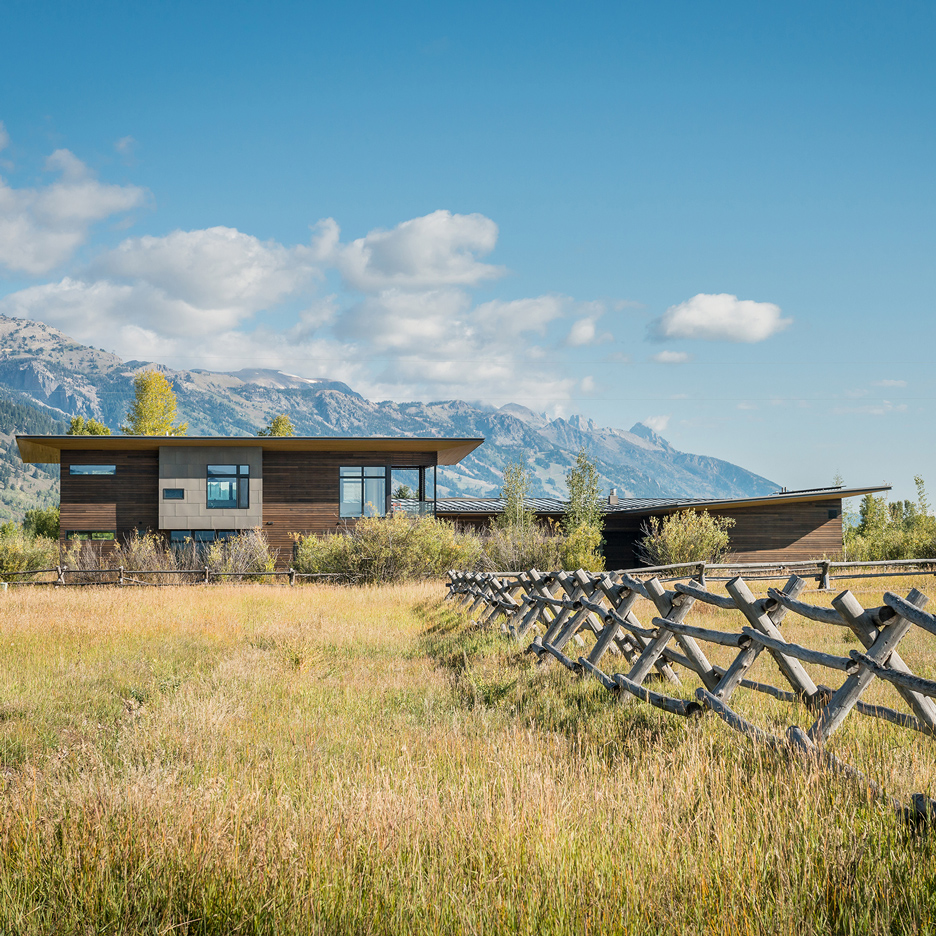
Remote Wyoming retreat by Carney Logan Burke faces the Teton mountains


Wyoming architecture firm Carney Logan Burke has created a vacation estate for a New York family that is oriented to provide dramatic views (+ slideshow). (more…)

http://ift.tt/2bLhGK8

OMA’s Taipei Performing Arts Center Facade Unveiled


OMA's Taipei Performing Arts Center Facade Unveiled. Image © OMA by Chris Stowers

OMA's Taipei Performing Arts Center Facade Unveiled. Image © OMA by Chris Stowers

The scaffolding obscuring the facade of OMA’s Taipei Performing Arts Center has begun to come down, exposing the aluminum exteriors of the spherical Proscenium Playhouse and the Multiform Theatre for the first time. Upon completion, the experimental building will feature a looped public pathway, flexible auditoriums and unique stage environments. Construction on the building is now moving full speed ahead, with an expected opening date in June 2017.

Continue on for more images of the in-progress building.


OMA's Taipei Performing Arts Center Facade Unveiled. Image © OMA by Chris Stowers

OMA's Taipei Performing Arts Center Facade Unveiled. Image © OMA by Chris Stowers

The Taipei Performing Arts Center will house three theaters in total: the 1,500-seat Grand Theatre, the 800-seat Multiform Theatre designed with a flexible layout for experimental performances and the spherical 800-seat Proscenium Playhouse, which serves as perhaps the most iconic element of the facade. The three theaters will be joined together by a transparent central cube containing shared backstage and technical facilities that will allow the theaters to be used independently or in tandem, expanding the potential for experimental theater pieces.


OMA's Taipei Performing Arts Center Facade Unveiled. Image © OMA by Chris Stowers

OMA's Taipei Performing Arts Center Facade Unveiled. Image © OMA by Chris Stowers

OMA won the design competition for Taipei Performing Arts Center in January 2009, with construction beginning in 2012.

Read ArchDaily’s interview with OMA partner-in-charge David Gianotten here and follow the links below for past coverage of the building.

OMA wins competition for the Taipei Performing Arts Centre
//cdn.embedly.com/widgets/platform.js

OMA’s Taipei Performing Arts Center breaks ground
//cdn.embedly.com/widgets/platform.js

OMA’s Taipei Performing Arts Center (TPAC) Tops Out
//cdn.embedly.com/widgets/platform.js

http://ift.tt/2bENgOd

House in Braga / AZO. Sequeira Arquitectos Associados


© Nelson Garrido

© Nelson Garrido


© Nelson Garrido


© Nelson Garrido


© Nelson Garrido


© Nelson Garrido

  • Authors: Mário Sequeira, Alfredo Machado
  • Team: Nuno Veiga

© Nelson Garrido

© Nelson Garrido

From the architect. Located in the periphery of the city of Braga, this lot has 815 m2. It is placed in a hillside and it is in the privileged visual alignment for the city. With a total of 3 floors, the housing was thought of form to adapt it the declivity of the land, allowing a good functioning and joint of all spaces, preventing a construction with too much impact, keeping with involving a balanced relation allowing the creation of a useful exterior space. 


© Nelson Garrido

© Nelson Garrido

Section

Section

© Nelson Garrido

© Nelson Garrido

The intermediate floor is composed for the social zone, constituted of the kitchen, main room and room of games. These spaces become related with the exterior zone where if it finds the swimming pool and the garden. The superior floor is destined to the private area of the building and groups in three suites and an office. In the inferior floor it is placed garage. The totality of the volume is composed for the white color, and the contrast of the glass with the black metal of the doors and windows.


© Nelson Garrido

© Nelson Garrido

http://ift.tt/2bV5XvU

Floating Restaurant in New York Takes the Dining Experience to New Heights


Courtesy of Big Foot Developers

Courtesy of Big Foot Developers

New-York-based Big Foot Developers have unveiled the designs for The Floating Restaurant, a glass cube restaurant that will hang between two smokestacks at the historic Glenwood power plant over the Hudson River in the Yonkers neighborhood of New York City.

With forest on the riverbank, the water below, and green space inside the restaurant, the project aims to blend architecture and nature while having a minimal impact on the view of the site.


Courtesy of Big Foot Developers


Courtesy of Big Foot Developers


Courtesy of Big Foot Developers


Courtesy of Big Foot Developers

The floors walls, and ceiling of the construction will be made of glass, and the entirety of the restaurant will be suspended by tension steel cables.


Courtesy of Big Foot Developers

Courtesy of Big Foot Developers

News via Big Foot Developers.

http://ift.tt/2bUWvs8

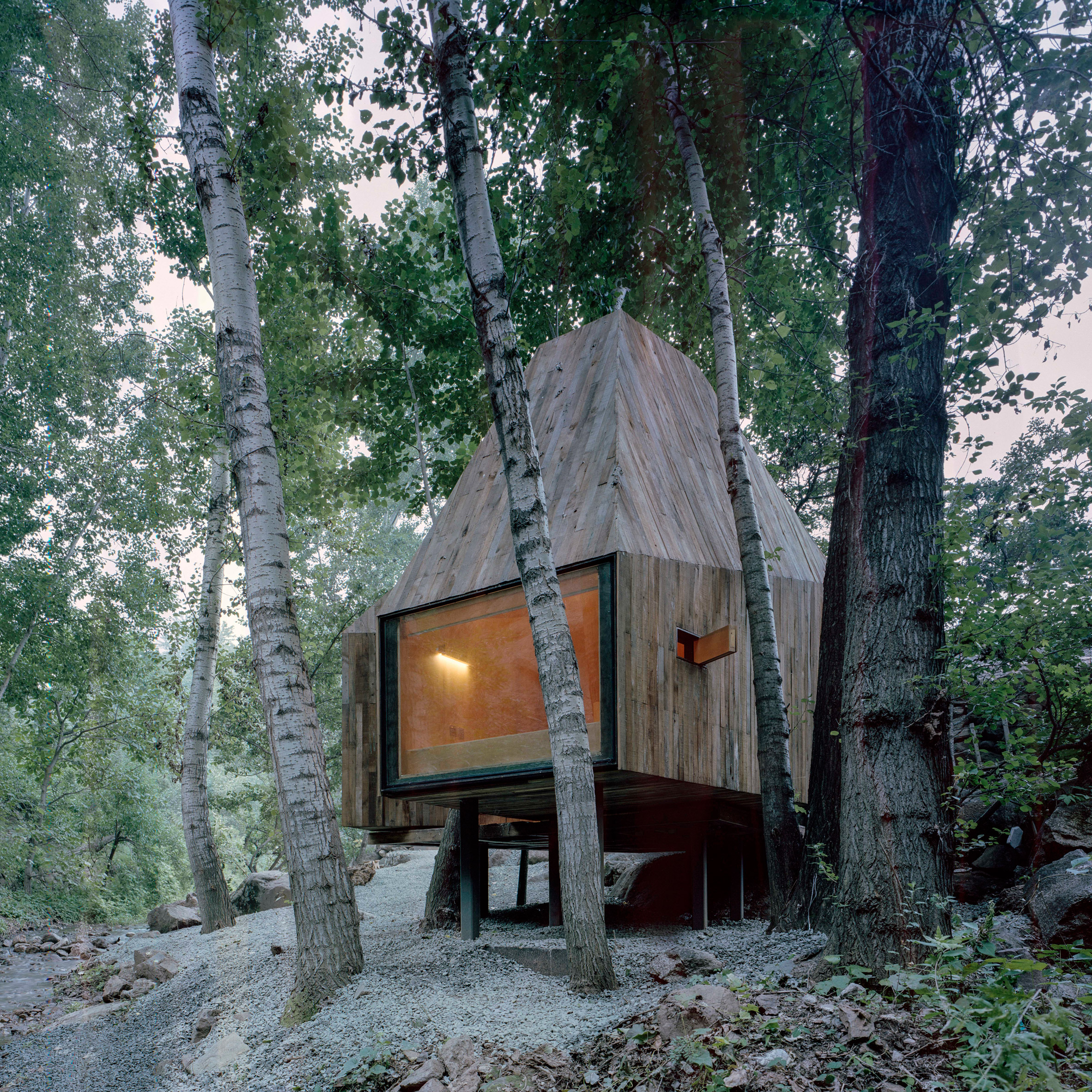
Wee Studio completes crowdfunded treehouses on the edge of a woodland stream


This pair of stilted wooden huts are set among poplar and hawthorn trees in a stretch of woodland at the foot of Mount Wuling in Beijing‘s Miyun District (+ slideshow). (more…)

http://ift.tt/2chubBr

UK architects predict crash in workload in face of Brexit uncertainty


Brexit crisis: architects have reported concerns over the future of their businesses in the first major survey of confidence levels since the EU referendum. (more…)

http://ift.tt/2bErGJx

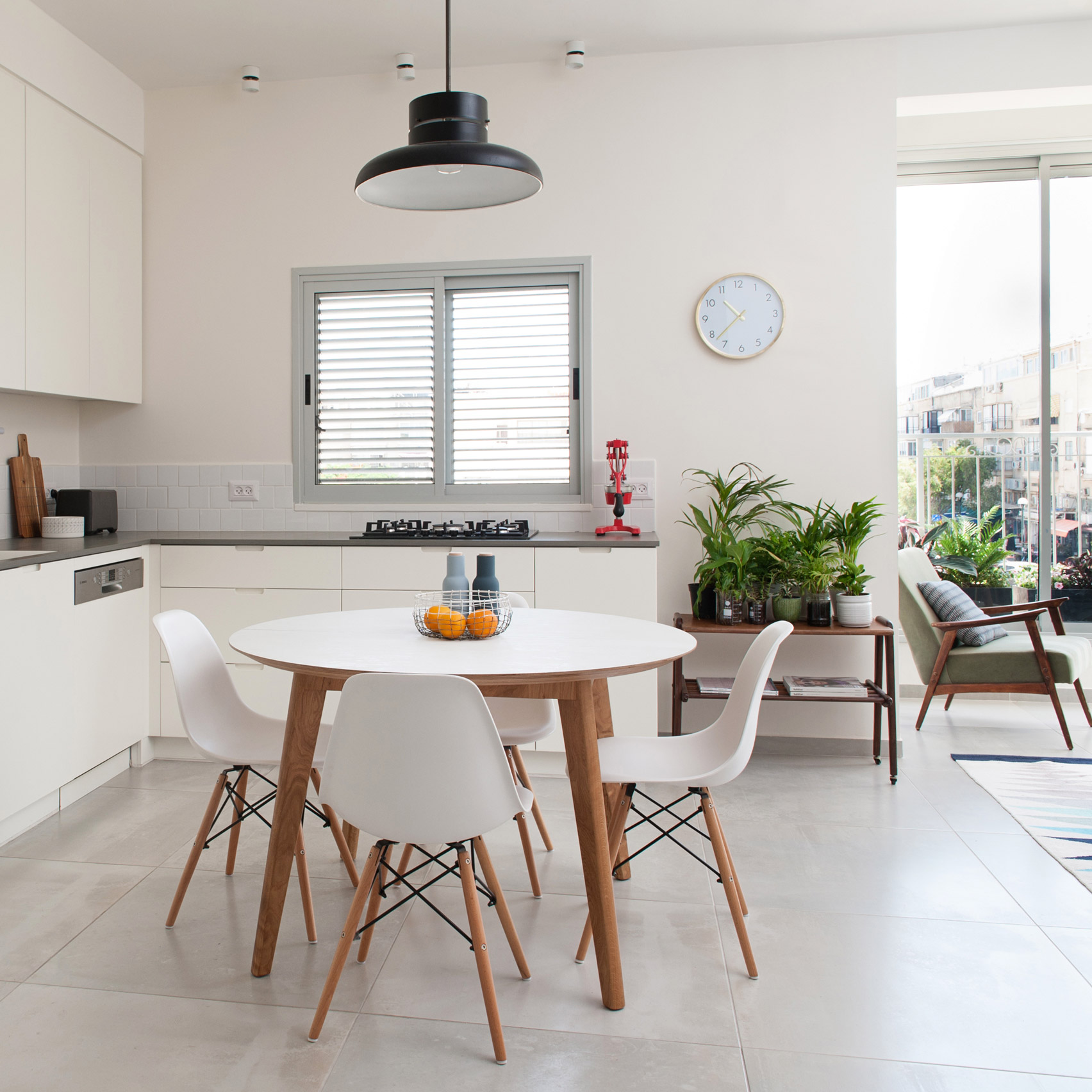
Dalit Lilienthal renovates small Tel Aviv apartment to fit a growing family


Israeli interior designer Dalit Lilienthal has renovated this 65-square-metre apartment in Tel Aviv to accommodate the needs of a young, growing family (+ slideshow). (more…)

http://ift.tt/2chgi6n

Svoya Studio Designs a Stylish Home in Dnipropetrovsk