“World’s Tallest Timber Tower” Tops Out in Vancouver


Courtesy of Talk Shop Media

Courtesy of Talk Shop Media

The world’s tallest timber tower has topped out this week, standing 53 meters high in the Vancouver skyline. The 18 story building, designed by Acton Ostry Architects, began construction in November 2015 and has since opened the floodgates for a new wave of mass timber towers. The building, which has been erected at record speed, will house 404 students as the Brock Commons Student Residence at the University of British Columbia (UBC). Offsite-production and the careful coordination of trades saw it rise at a rate of two floors per week, with the official completion set for mid-2017. 

The building utilizes a hybridized construction model, with concrete cores and prefabricated steel elements assisting the mass timber frame. Lateral and vertical stability is gained from the combination of these material elements. In order to meet the new seismic design requirements for the 2015 National Building Code of Canada, steel connectors are fitted to the glulam columns to provide direct load transfer between the columns and a grid of cross-laminated timber (CLT) panels. 


Courtesy of Talk Shop Media

Courtesy of Talk Shop Media

Crucially, the glulam columns and the CLT panels were prepared offsite, allowing them to be installed immediately as they arrived at UBC. Structurlam provided the mass timber package, and their engagement in the early stages of manufacture design allowed the process of lamination to be optimized. In their press release, the project team said that the assembly of the building was “like Lego”; the individual elements were all so carefully planned, they fit together perfectly. 


Courtesy of Talk Shop Media

Courtesy of Talk Shop Media

CNC machinery and heavily refined 3D information allowed a level of precision that was integral to this perfect assembly. The careful preparation taken in the pre-production stages ensured that the building stuck to its ambitious timeline – one floor every three days – with virtually zero wastage. 

The four trades working on the erection of the tower had to work together perfectly in tandem, with no team jumping ahead of another. The 8 week completion time for the mass timber structure will go down as a significant milestone in construction, setting the standard for the completion of other wooden buildings. 


Courtesy of Talk Shop Media

Courtesy of Talk Shop Media

The rise of timber towers was inevitable, as the benefits of wood as a construction material are plentiful. Aside from being a sustainable building material that stores, rather than emits, carbon dioxide, the lower amount of energy that is consumed during fabrication also lowers its carbon footprint. The construction methodologies are now catching up with its potential, meaning that we should be seeing mass timber construction becoming more and more common over the next few years. 

For more information and some early construction images, check out our feature from earlier this year. 

News via Talk Shop Media.

http://ift.tt/2bUFwGJ

TRAX Roeselare / NERO Architecten


© Filip Dujardin

© Filip Dujardin


Courtesy of NERO Architecten


© Filip Dujardin


© Filip Dujardin


© Filip Dujardin

  • Architects: NERO Architecten
  • Location: Roeselare, Belgium
  • Area: 1400.0 sqm
  • Project Year: 2015
  • Photographs: Filip Dujardin, Courtesy of NERO Architecten

© Filip Dujardin

© Filip Dujardin

The redevelopment of a former train transfer station to a cultural site in the center of Roeselare, Belgium. Important characteristics from the surroundings and the impressive existing structure on an elevated square were the key starting points. By opening up the former warehouse on all sides and removing some small buildings we see the large plinth as one elevated urban square, the starting point of a large new and green strip in the larger masterplan for the uninhabited area’s next to the railway. Underneath the large canopy, 4 new volumes are carefully placed, searching for a balance between build and unbuilt space; between defined and non-defined area’s.


© Filip Dujardin

© Filip Dujardin

Plan Site

Plan Site

© Filip Dujardin

© Filip Dujardin

The conservation of the former warehouse is crucial to make a transition and new identity for this space. There are 4 buildings planned under the canopy with a variety of functions; repetition rooms, party hall, artist studio’s, depot, etc. The most public functions are placed more at the front of the plinth. The open character of the structure also allows for lots of outdoor activities; organised or not.


© Filip Dujardin

© Filip Dujardin

Phase 1 of the masterplan is currently build with the realization of youth and meeting center TRAX.


© Filip Dujardin

© Filip Dujardin

http://ift.tt/2c6J4V5

A Mid-19th-Century Villa Gets an Extension in Winchester, England

The Pilot's House by AR Design Studio (20)

The Pilot’s House is a private residence renovated by AR Design Studio. It is located in Winchester, England and was completed in 2016. The Pilot’s House by AR Design Studio: “Built in the mid-19th century, The Pilot’s House was one of the original ‘Winchester Villas’; a collection of family homes built for the wealthy and located close to England’s oldest school, Winchester College. Built using fine brick-work and flint masonry,..

More…

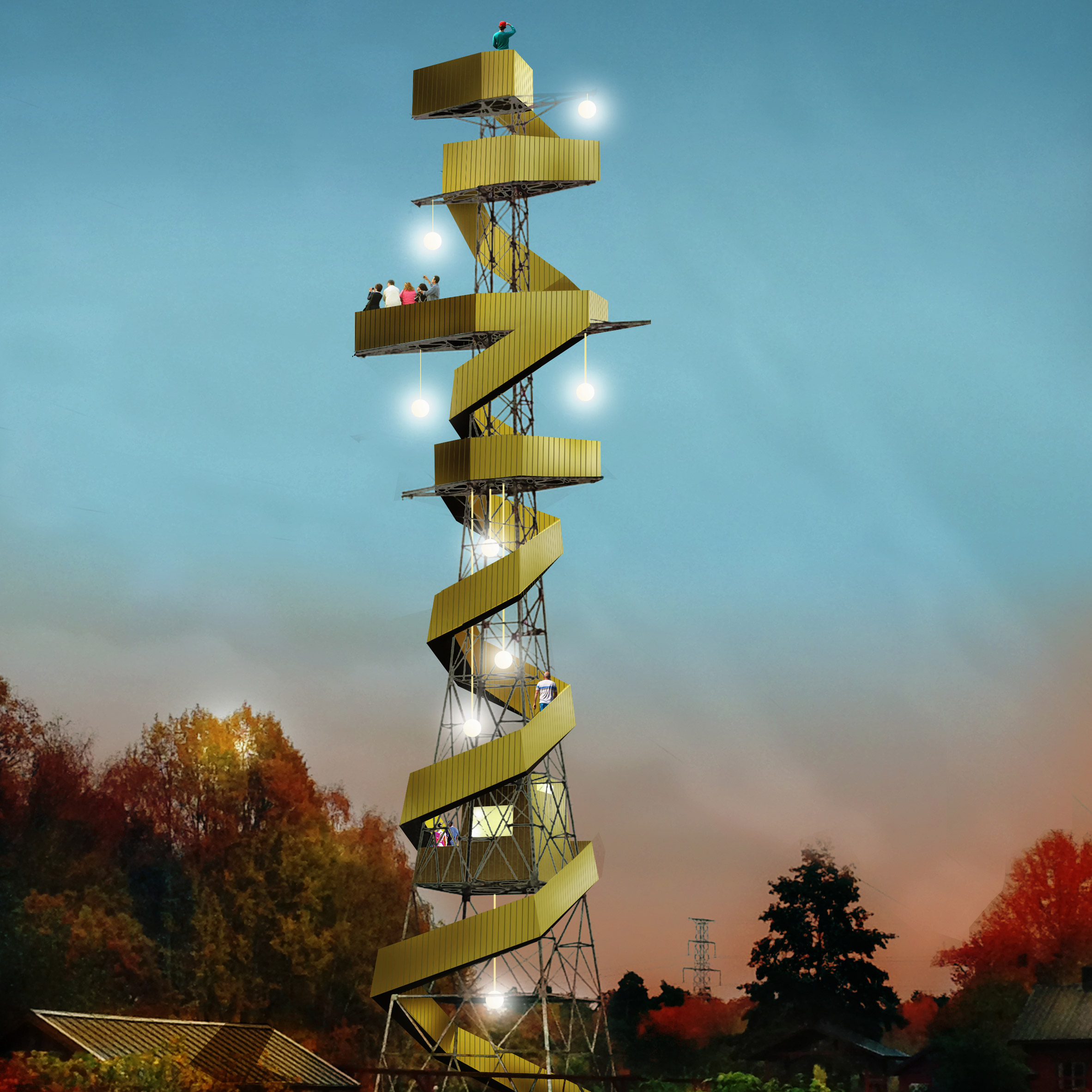
Stockholm pylons converted into “picnic towers” in plans by architect Anders Berensson


Swedish architect Anders Berensson has unveiled conceptual plans to convert a pair of disused electricity pylons into observation towers in Stockholm‘s Norra Djurgården national park. (more…)

http://ift.tt/2bUhvPO

House as a Rock / Global Architects


© Mirko Merchiori

© Mirko Merchiori


© Mirko Merchiori


© Mirko Merchiori


© Mirko Merchiori


© Mirko Merchiori


© Mirko Merchiori

© Mirko Merchiori

‘House as a rock’ is a modern dream villa, developed as a private commissioning project in the dunes of the Westlandse Zoom  in the South of Holland at the beach. The residents asked for much space, light and a minimalist, modern design. The urban building requirement was for a gable-roofed house and a gutter of maximally 6 metres high.


© Mirko Merchiori

© Mirko Merchiori

Floor Plan

Floor Plan

© Mirko Merchiori

© Mirko Merchiori

Instead of a traditional gable roof, we have merged the house and the roof to create a sculptural form that emerges from the dunes like a rock. Each side of the house has its own character: at the eastern side, the roof was extended until 1 metre above surface level, whereas at the southwest, the incised roof reaches up to 6 metres. A cut-out creates a pleasant exterior space and a singular appearance. The southern facade is the most open. The residents wanted to maintain as close a relationship with the water and the beautiful view as possible. The large windows and two sunrooms highlight the transition from inside to outside and render the feeling of living outdoors: regardless of the season.


Floor Plan

Floor Plan

The serrated dunes that will embrace the house, will bring a sense of privacy at both the northern, eastern and western sides and nestle the villa in nature.


© Mirko Merchiori

© Mirko Merchiori

http://ift.tt/2bJKSAZ

Dan Gayfer Design Complete a Renovation Project in Fitzroy North, Australia

High House by Dan Gayfer Design (13)

High House is a private residence designed by Dan Gayfer Design in 2015. The home is located in Fitzroy North, Australia. High House by Dan Gayfer Design: “High House is the end product of a significant renovation to a five-metre (sixteen-foot) wide inner city terrace. The owners were intent on taking inner city terrace living to a new level, wanting the convenience of the location without compromising on space, function,..

More…

House in Janeanes / Branco-DelRio Arquitectos


© do mal o menos

© do mal o menos


© do mal o menos


© do mal o menos


© do mal o menos


© do mal o menos

  • Architects: Branco-DelRio Arquitectos
  • Location: Serra de Janeanes, 3150-331, Portugal
  • Authors: João Branco, Paula del Río
  • Colaborador: Gerson Rei
  • Area: 317.0 m2
  • Project Year: 2013
  • Photographs: do mal o menos

© do mal o menos

© do mal o menos

The access area of this site is a welcoming space as the existing buildings and stone walls convert it in a confined a shady location. As you course along westward, the slope to reach the highest part of the garden is considerable. At this point, stripped of limits, the distant mountains are the only horizon.


© do mal o menos

© do mal o menos

The task consisted in converting the agricultural use buildings in a weekend home for a four generation family. Thus, the usual program of a single-family house: living room, dining room, kitchen and five bedrooms, is organized so that each space can be used with a degree of intimacy and independence. To this program was also requested the addition of a library.


© do mal o menos

© do mal o menos

The main areas of the house occupy the old corrals – four stony and dark volumes, with very occasional openings, adjacent amongst but with no communication between them, located at different levels and following the slope of the land with North orientation.


Floor Plan

Floor Plan

Diagram

Diagram

The project proposes two fundamental operations: first a new longitudinal axis that cuts across the various existing buildings, like a corridor carved in stone that unites the various spaces. Secondly, two new patios enable natural light to reach the innermost parts of the house.


© do mal o menos

© do mal o menos

The work is completed with an exterior dining area and a swimming pool located near the existing barn floor at the upper part of the land, taking advantage of the best views and most advantageous sun exposure.


© do mal o menos

© do mal o menos

Throughout the work process the idea of contrast and surprise was always present. An exterior that mimics the stony and massive surroundings is very distinct from the sober and very illuminated interior that offers a delicate unexpected encounter in contrast with the rough brutality of the circumambient.


© do mal o menos

© do mal o menos

http://ift.tt/2bEQyzh

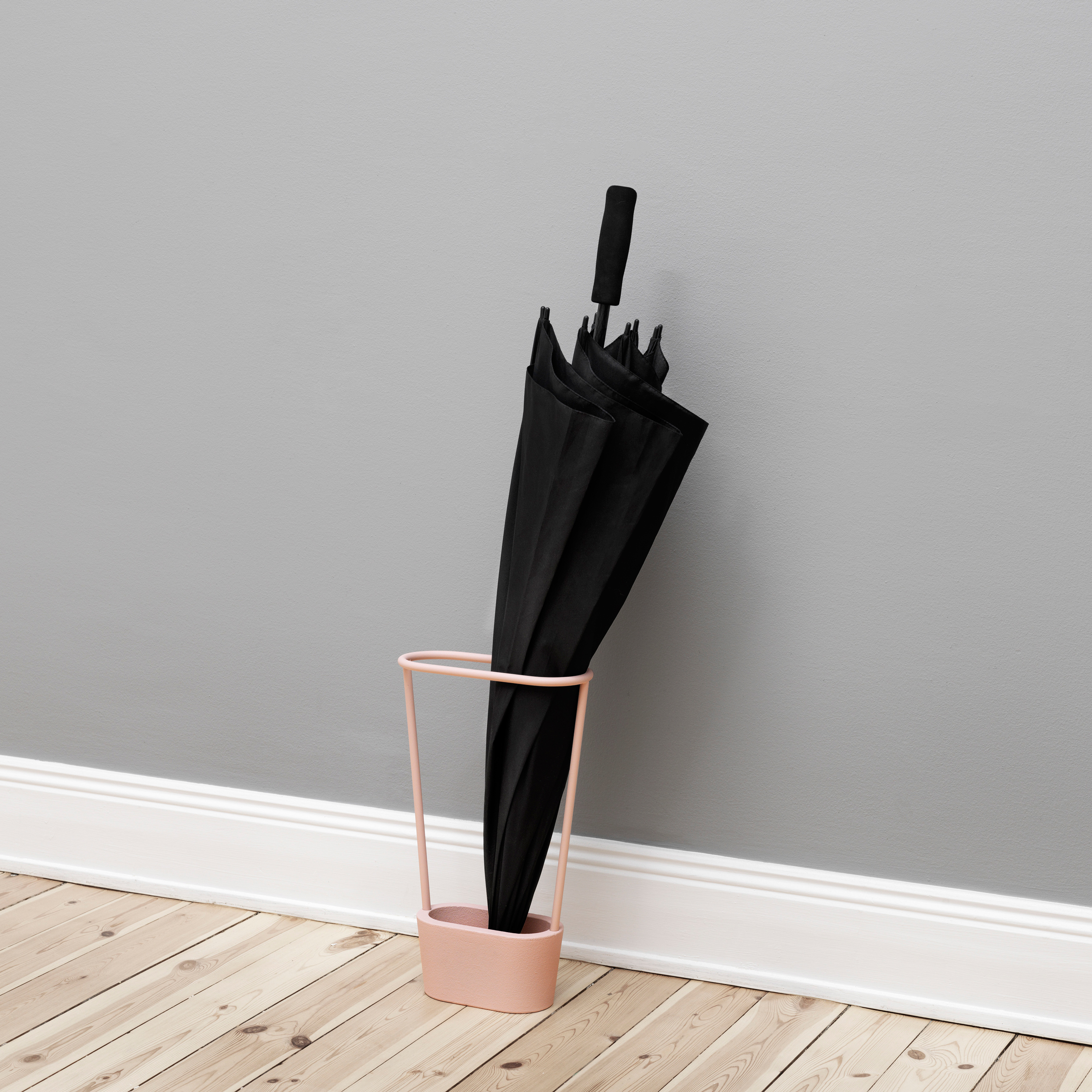
Mika Tolvanen designs minimal umbrella stand for NakNak


Maison&Objet 2016: Finnish designer Mika Tolvanen based the simplicity of this umbrella stand on a vintage cast iron model he found at a flea market (+ slideshow). (more…)

http://ift.tt/2bEIhLF

White Office Building / BNS Studio


© Farshad Kazerooni - Azin Soltani

© Farshad Kazerooni – Azin Soltani


© Farshad Kazerooni - Azin Soltani


© Farshad Kazerooni - Azin Soltani


© Farshad Kazerooni - Azin Soltani


© Farshad Kazerooni - Azin Soltani

  • Design Associates: Mahta Heydari, Ali Kashtiara, Hadi Sharifzadeh, Nioosha Rashidi, Zoha Nekouian, Shabnam Abtahi
  • Detailed Design Consultant: Naser Naghdi, Mansour Naghdi 

  • Façade Contractor: Alma aluminum industry

© Farshad Kazerooni - Azin Soltani

© Farshad Kazerooni – Azin Soltani

The project is located at one of the busiest street in shahrak-e-gharb, Tehran. Its total area is 1500 sqm. The office complex comprises five levels of open office floors and one double height retail store at street level.


© Farshad Kazerooni - Azin Soltani

© Farshad Kazerooni – Azin Soltani

The main aim of design was to create an iconic façade to be in contrast with its surrounding buildings. The building façade is designed as a double skin façade. The first layer is a double glazed curtail wall. The building south and east facades are treated with series of white color horizontal aluminum louver that is being used as sunscreens which protects the internal glass façade from solar gain.


© Farshad Kazerooni - Azin Soltani

© Farshad Kazerooni – Azin Soltani

Detail

Detail

© Farshad Kazerooni - Azin Soltani

© Farshad Kazerooni – Azin Soltani

The distance between aluminum louver profile with 5×5 cm and 10×10 cm sections are designed according to human eye level in siting and standing positions in order to provide the suitable view and pleasant light and shadow.


Section

Section

There is about 70 cm space between the two skins that connect to each other with galvanized catwalk. There is an opening in façade louver at each floor level for both letting the windows to open for natural ventilation and for making the building façade more dynamic. In front of each opening there is a flower box with automatic irrigation which brings natural greens into the building façade. The double height retail store which is located at street level is not covered by louver skin façade to create sense of lightness and make it suitable for having wide retail windows.


© Farshad Kazerooni - Azin Soltani

© Farshad Kazerooni – Azin Soltani

http://ift.tt/2bEiNOz

Apathy Residence / SPA Design


© Amit Pasricha

© Amit Pasricha


© Amit Pasricha


© Amit Pasricha


© Amit Pasricha


© Amit Pasricha

  • Interior Design : Aishwarya Pathy
  • Furniture : Urbanist
  • Structural Engineer : Dr. L.S. Jayagopal – Mithran Structures Coimbatore,
  • Civil Contractors : Mr. Prabhu – Sujan Consortium, Coimbatore
  • Electrical Contractors : Mr. Pratap – JB Electricals, Coimbatore

© Amit Pasricha

© Amit Pasricha

From the architect. The house, conceived for an art collector, is designed as a “machine a regarder” color and light, a place for meditation. In a square plot of 30mX30m, the house is a roughly a square of 20mX20m that occupies the center. To compensate for the lack of garden depth, the plan is designed like a jigsaw puzzle piece with carved in courtyards, terrace gardens  and swimming pool. The outdoor comes inside the house, bringing light to its heart. The central self supported spiral staircase is lit for a top skylight in a transcendental light.


© Amit Pasricha

© Amit Pasricha

The plan is designed as a pinwheel figure. The garden level is composed of 4 rooms looking at the different orientations. The boundary wall, clad in laterite stone, collects the garden sculptures in its back drop screen, as well as an enclosed tropical garden in the center of the city. The plan also defines the garden use from entrance side, outdoor dining, evening garden, and pool side garden, each with a different character.


Ground Floor Plan

Ground Floor Plan

The first floor is focusing on 4 screen walls that reveal the light and time of the day. Each solar orientation is enhanced with a specific color:  Yellow for morning light on the East, Red for mid day light on the South, Orange for evening light on the West and Green for indirect light on the North. The coloured ceramic tiles on the facades reflect the sunlight on the inner face of the suspended screen wall, according to the time of the day, the 9 m wide walls get irradiated with bright color in succession as an homage to Mark Rothko and James Turell.


© Amit Pasricha

© Amit Pasricha

The red pool comes deep inside the house like a tong, making swimming activity part of art of living.


© Amit Pasricha

© Amit Pasricha

The outer projected grey plaster gives an elephant skin protection to the white inner sanctum of the house. The project is based on 5 colors/ materials: Ochre Red of the laterite boundary screen complemented by green of the tropical garden, Grey of the outer facade, White walls and ceiling, Black mosaic floor and staircase parapet

http://ift.tt/2bTu79S