House 119 / Takeshi Hosaka Architects


© Koji Fujii / Nacasa & Partners Inc.

© Koji Fujii / Nacasa & Partners Inc.


© Koji Fujii / Nacasa & Partners Inc.


© Koji Fujii / Nacasa & Partners Inc.


© Koji Fujii / Nacasa & Partners Inc.


© Koji Fujii / Nacasa & Partners Inc.

  • Structural Engineers: Kenji Nawa, Nawakenji-M
  • Client: Sinichi Suzuki
  • Site Area: 194.45 sqm
  • Floor Area Ratio: 116.31 sqm
  • Building Height: 4880 mm

© Koji Fujii / Nacasa & Partners Inc.

© Koji Fujii / Nacasa & Partners Inc.

The cross-sectional and longitudinal aspects of scale

The house belongs to a married couple with two children, and stands near the Tama River, which flows through Atsugi City in Kanagawa Prefecture.


Plan 1

Plan 1

Although the surface of the Tama River flows eight meters below the house, The dry part of the river is at the same level as the house’s property.  The dry part of the bed adjoins the property without any separation by an embankment or other structure.  Although a road is situated between the dry river bed and the property, because there is almost no difference in elevation, the property is essentially a continuation of the river bed.  The scale of the Tama River is far larger than the scale of the house’s property; however, the scale of the Sagami River, into which the Tama River flows just a short distance downstream from that point, is even larger. 


© Koji Fujii / Nacasa & Partners Inc.

© Koji Fujii / Nacasa & Partners Inc.

For this unique location, in which scales ranging from the ultra small to the ultra large exist together, I came up with the idea of using an inverted V-shaped plane that combines both ultra small and ultra large scales.  The open side of the inverted V indicates extensity whereby scale grows infinitely in the direction toward the river.  The narrowing side becomes the space for clothing or food in the house.  I arranged six of these inverted V-shaped planes to form a flat house resembling a fan-shaped plane. 


© Koji Fujii / Nacasa & Partners Inc.

© Koji Fujii / Nacasa & Partners Inc.

Section

Section

© Koji Fujii / Nacasa & Partners Inc.

© Koji Fujii / Nacasa & Partners Inc.

For the cross-section, I arranged windows of the same size at the intermediate level, between the first and second floor (when viewed at the scale of the surrounding houses), in an associative array facing the river.  For the floors, I alternated a high floor and low floor.  The living room on the higher floor is a space of panoramic proportions with a suppressed ceiling height.  The children’s room on the lower floor is a space of oblong proportions with a high ceiling.  I called the area under the higher floor an “under-floor open space” and installed equipment for play and daily life there.  It is a place for outdoor living, resembling a garden that extends to the adjoining ultra large-scale dry portion of the river bed.


© Koji Fujii / Nacasa & Partners Inc.

© Koji Fujii / Nacasa & Partners Inc.

Indoors, people go back and forth between the open side and the narrow side of the inverted V-shaped plane as they also go up and down between the higher floor and the lower floor.  Outdoors, they go directly out from the under-floor open space to the dry river bed via the adjoining land.  For both the indoors and outdoors, the zoom moves in and out freely in terms of the planar and cross-sectional view between the ultra small scale of the house’s interior and the ultra large scale of the river.


© Koji Fujii / Nacasa & Partners Inc.

© Koji Fujii / Nacasa & Partners Inc.

When rapeseed blossoms on the ultra small scale bloom across the entire dry river bed, the scale of the natural landscape in view swings within a certain range. This creates an ultra large-scale landscape, making the tall Mt. Fuji appear small, and making the Tanzawa mountains (which are lower than Mt. Fuji) appear larger.  I wanted to create a sense of living where there are rapeseed blossoms, a house, a river, and mountains within such a mischievous shifting of scale.


© Koji Fujii / Nacasa & Partners Inc.
© Koji Fujii / Nacasa & Partners Inc.

http://ift.tt/2bq9mCk

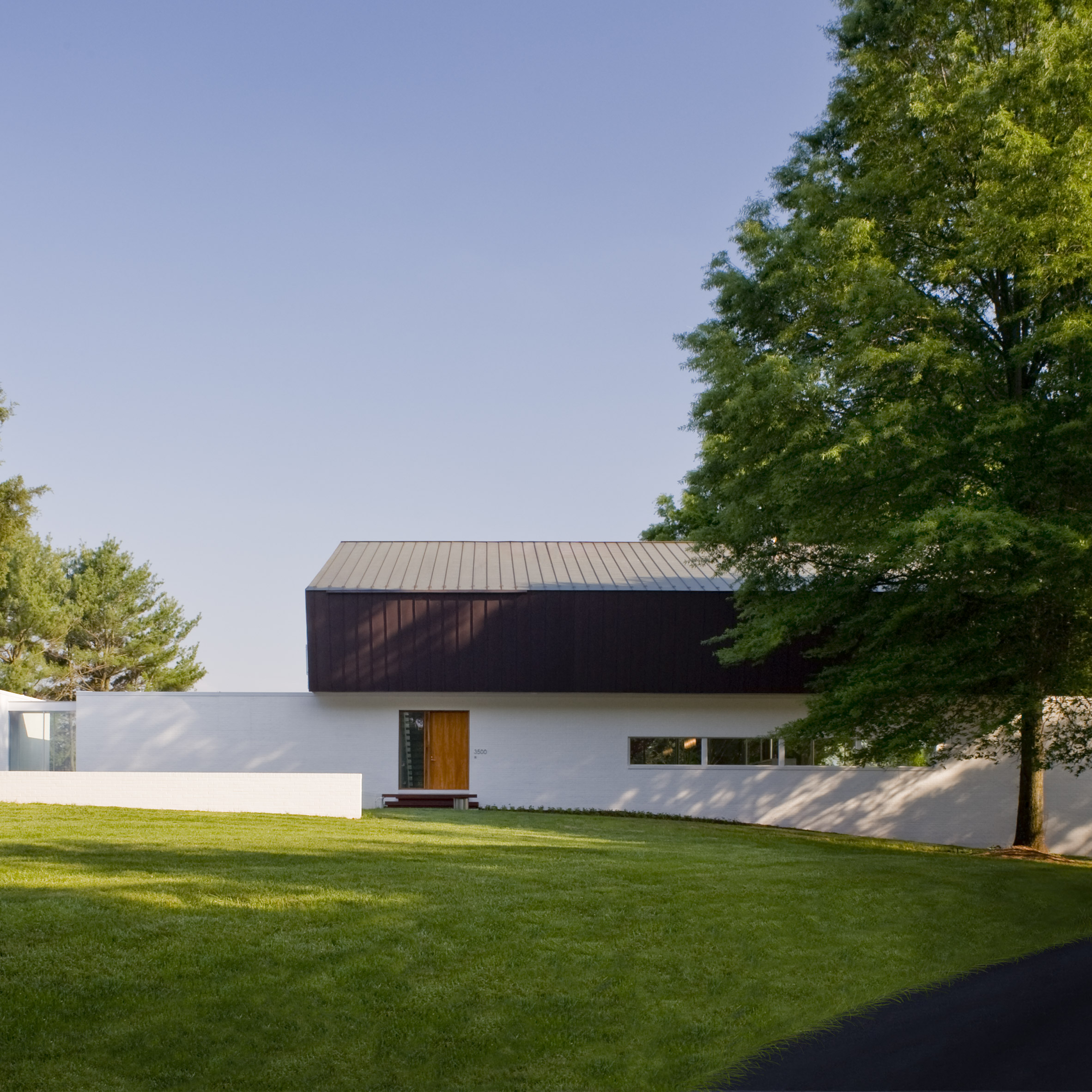
Robert Gurney’s waterfront Buisson Residence is capped with a folded copper roof


American architect Robert Gurney has created a house in Virginia topped with a geometric roof, which folds over the building to protect it from harsh winds (+ slideshow). (more…)

http://ift.tt/2bWCe3L

With a Bookstore at its Core Aedas Unveils Mix-use Project Inspired by Rolled Book Scrolls


Courtesy of Aedas

Courtesy of Aedas

Aedas has unveiled the plans for its Chongqing Xinhua Bookstore Group Jiefangbei Book City mixed-use project, a complex of retail, residential, office, and hotel space with a Xinhua Bookstore at its core. Based on an ancient Chinese prose that states “knowledge brings wealth,” the project aims to integrate the concept of a book with the cultural elements of Chongqing to create an interactive commercial space.


Courtesy of Aedas


Courtesy of Aedas


Courtesy of Aedas


Courtesy of Aedas


Courtesy of Aedas

Courtesy of Aedas

Inspired by the form of a rolled book scroll, the central building in the project appears to unfold through stepped terraces, “implying the spirit of wisdom and knowledge.” These stepped terraces furthermore reflect the landscape of Chongqing, which is called the “Mountain City.”


Courtesy of Aedas

Courtesy of Aedas

Courtesy of Aedas

Courtesy of Aedas

The complex will additionally feature three themed plazas: The inclined rooftop and cultural plaza at the podium become a new cultural destination for lifestyle and entertainment activities, while the sky cultural plaza enriches and extends the civic space of Jiefangbei Plaza to provide a refreshing and tranquil environment in this business center for users to relax and enjoy.


Courtesy of Aedas

Courtesy of Aedas

Courtesy of Aedas

Courtesy of Aedas

Expected completion of the complex is set for 2020.

  • Architects: Aedas
  • Location: Chongqing, China
  • Area: 153980.0 sqm
  • Project Year: 2020
  • Photographs: Courtesy of Aedas

News via Aedas.

http://ift.tt/2bpIG4v

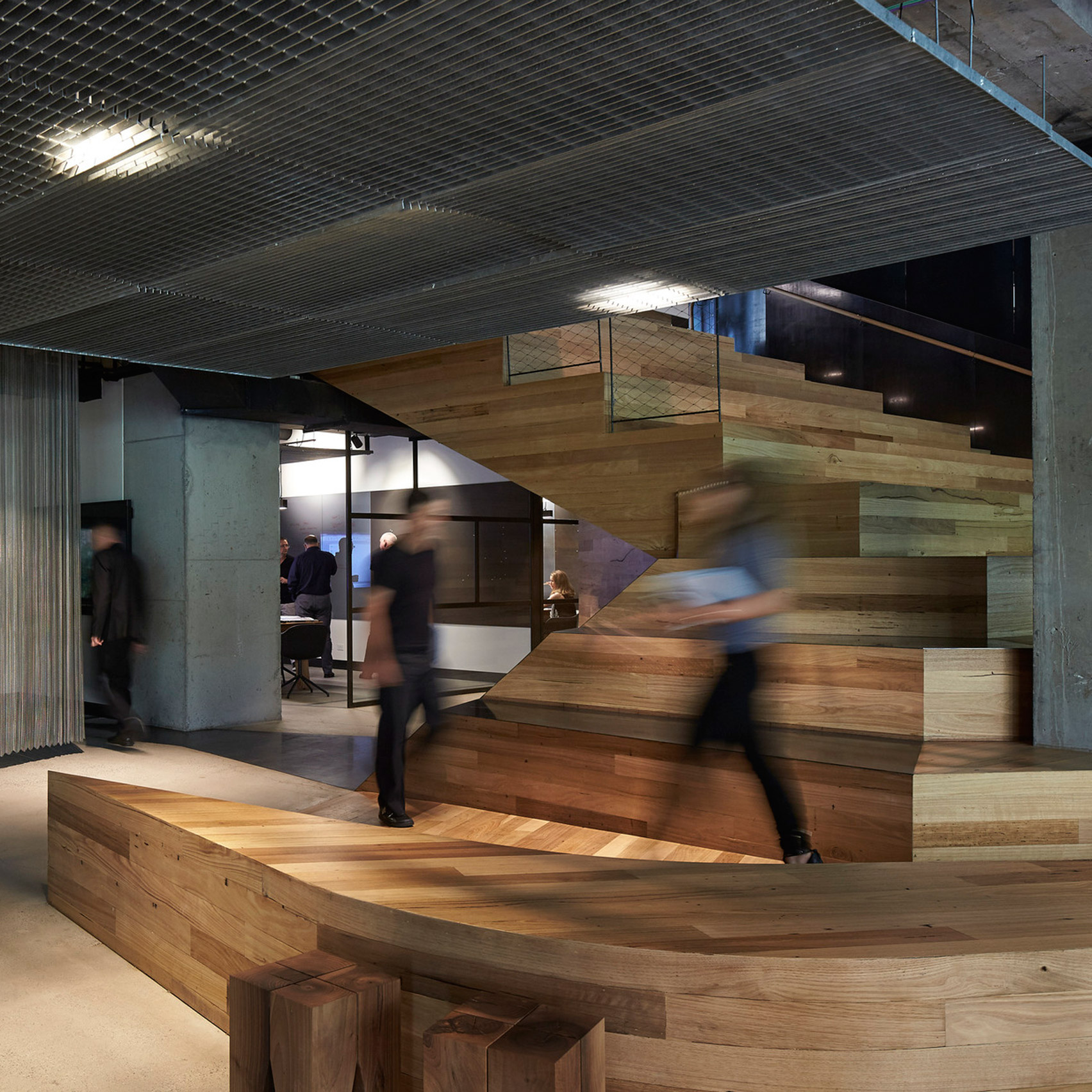
Woods Bagot designs its own Melbourne architecture office to encourage staff to socialise


A cookbook by El Bulli chef Ferran Adrià played a key role in determining architecture firm Woods Bagot‘s design for its new Melbourne studio (+ slideshow). (more…)

http://ift.tt/2bVXEh6

Rice University Fellow Creates Half House that Pushes Boundaries and Challenges Perspectives of Light and Space

Visiting Wortham Fellow at the Rice School of Architecture Michelle Chang has created A,B 1:2, a twisted “half house” installation in the university’s jury room. Built at a half scale, the project superimposes and bisects two simple cubes, playing with light and shade through skewed windows in order to demonstrate how architects and artists think about space, as well as how drawings and renderings translate into physical constructions.


© Michelle Chang/Rice School of Architecture

© Michelle Chang/Rice School of Architecture

I don’t want to get overly technical, says Chang. I just want people to see it and understand there’s something kind of weird going on in a couple of places and image what that does. A lot of my work is based in optics and perspectives, how changing certain assumptions of our representational conventions can lead to new ways of seeing. What’s interesting about doing these installations is they’re always so incredibly different from what I imagined them to be, working digitally.


© Jeff Fitlow/Rice University

© Jeff Fitlow/Rice University

With sunlight filtering through the high windows on three sides of the exhibit’s room, the interior character of the installation is expected to change throughout the day, influencing the interpreted locations of typical “bedroom” or “living room” spaces.

The spaces are defined more by the angular interior and play of light, rather than boundaries according to elements like walls, windows, or objects.


© Jeff Fitlow/Rice University

© Jeff Fitlow/Rice University

The installation will officially open on August 26 at 5:00 pm.

While Chang’s fellowship will end next year, she will remain at Rice to become an assistant professor of architecture in July.

Learn more about the project here.

News via Rice University.

http://ift.tt/2bp4OJn

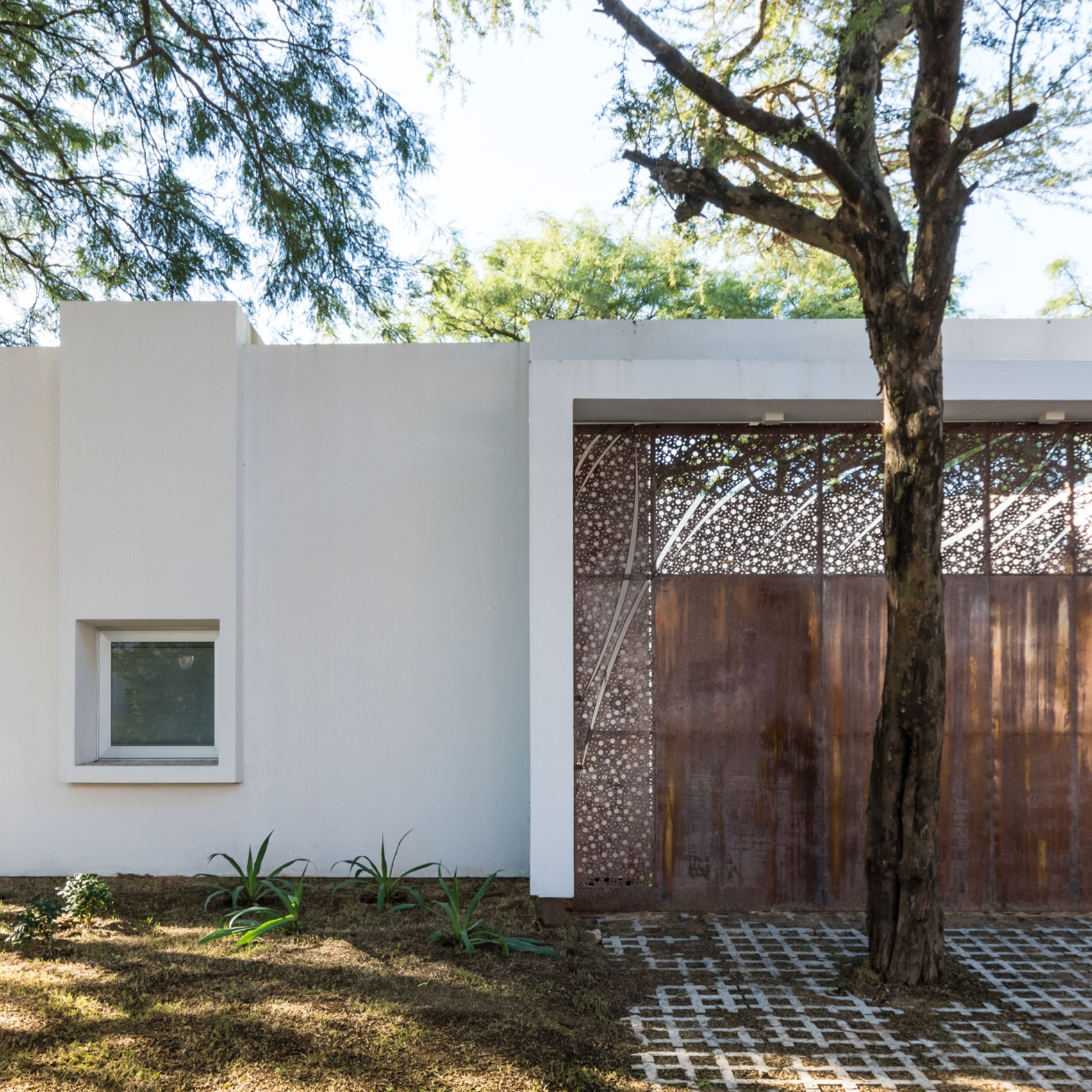
FCP Arquitectura pairs bright white walls with perforated iron screens at Mooe House


Rusted iron panels screen the most private rooms of this house in the Argentinian city of Córdoba, but are perforated with an intricate pattern that evokes the dappled shadows cast by trees (+ slideshow). (more…)

http://ift.tt/2byp4tC

The Regional Transportation Commission of Southern Nevada Mobility Training Center / Gensler


Courtesy of Gensler

Courtesy of Gensler


Courtesy of Gensler


Courtesy of Gensler


Courtesy of Gensler


Courtesy of Gensler

  • Architects: Gensler
  • Location: United States, Las Vegas, NV, USA
  • Area: 18300.0 ft2
  • Project Year: 2016
  • Photographs: Courtesy of Gensler
  • Landscape: Southwick Landscape
  • Civil & Structural: The Louis Berger Group
  • Mep: Henderson Engineers
  • Murals & Graphics: Anne Johnson
  • Code Consultant: Rolf Jensen O’Connor
  • Construction: Sletten Construction Companies

Courtesy of Gensler

Courtesy of Gensler

From the architect. The RTC’s new Mobility Training Center is designed to increase mobility among Southern Nevadans, especially senior residents and persons with disabilities, by equipping them with the skills and knowledge necessary to use public transportation throughout Clark County in Southern Nevada.


Floor Plan

Floor Plan

This new facility consolidates transit mobility training and Americans with Disabilities Act (ADA) Paratransit certification under one roof. The Mobility Training Center includes these key elements:

Mobility Training Facility
The interior design of the 14,500 sq. ft. Mobility Training Facility includes two full-sized city buses situated on a fictitious exterior streetscape encompassing a transit shelter and stop, paved roads, curb cut outs, ADA-compliant ramps and sidewalk, and a functional assessment course with various surfaces and terrain obstacles.

The space also includes additional parking, direct front door access for city buses, a new bus stop, and an exterior dog relief area.


Courtesy of Gensler

Courtesy of Gensler

Blindconnect’s Angela’s House
This unique feature of the facility is a simulated, typical Las Vegas, two-bedroom, 1,200 sq. ft. residence.  This fully equipped mock residence will be used by the vision impaired for learning critical living skills. Angela’s House is the only blindness skills training facility in Nevada.


Courtesy of Gensler

Courtesy of Gensler

PRINCIPAL FEATURES               
Gensler designed the exterior of the facility to work in harmony with the existing maintenance facility and present a friendly desert-inspired aesthetic.  

The architectural inspiration is derived from the mountains of Red Rock Canyon National Conservation Area that can be seen in the distance from the west side of the site.  The dynamic red and orange color of the building’s cladding systems is symbolic of Red Rock.  The protruding glazed volume to the northwest is in reference of the desert sky.  Finally, the elongated entry volume wrapped with perforated panels in reference to the “canyon” concept is embedded into a mountain-scape.  


Courtesy of Gensler

Courtesy of Gensler

Color is used to enliven the large entry signage to the public entranceway and to welcome the mobility and visually impaired patrons into the building.   The design team at Gensler introduced a lime-green feature wall to create a “spark” to energize the entry zone.  The patterned perforations to the canopy create a 4d entry experience via the ever-shifting casting of light and shadow effects scattered throughout the area and the unseen light sensations felt within this space.


Courtesy of Gensler

Courtesy of Gensler

The building serves as the new terminus for the RTC fixed bus route, Route 103 – Decatur.  The project was designed with an onsite bus turn around loop drive, a separate bus turn off, and a bus stop which helps to free up roadway space on Hauck Street.


Courtesy of Gensler

Courtesy of Gensler

The new training center is intended for public access and use, so it is important that the training center be recognizable to the public and be differentiated from the existing non-public RTC maintenance facility adjacent to it.  The building’s fenestration located in the upper northeast corner, serves as a beacon or lantern at night and is clearly visible from the I-215 freeway.

http://ift.tt/2bpm4Rw

A New Website That Catalogs the Mid-Century Modernist Heritage of Fire Island Pines


At 601 Tuna Walk is <a href='http://ift.tt/2bOmilf Caldari Architects' 2013 Renovation</a> of a 1960s A-frame structure by an unknown architect. Image © Mikiko Kikuyama

At 601 Tuna Walk is <a href='http://ift.tt/2bOmilf Caldari Architects' 2013 Renovation</a> of a 1960s A-frame structure by an unknown architect. Image © Mikiko Kikuyama

At just 1,310 feet (400 meters) across at its widest point, Fire Island, a barrier island to the south of Long Island in New York, may not seem like an ideal place to host a community. Nonetheless, the island is home to a number of small villages, whose seclusion and proximity to the ocean make them popular getaway locations. With its beach atmosphere (the community is only accessible by ferry) and its growing reputation from the 1960s onward as a safe space for the gay community, Fire Island Pines is one such popular summer destination. As the village grew in the post-war years, the care-free recreational lifestyle encouraged by Fire Island Pines’ setting was an ideal proving ground for many of the ideals of mid-century modernist house design, with architects such as the prolific Horace Gifford—who designed 40 homes in Fire Island Pines alone—answering the call.


At 601 Tuna Walk is <a href='http://ift.tt/2bOmilf Caldari Architects' 2013 Renovation</a> of a 1960s A-frame structure by an unknown architect. Image © Mikiko Kikuyama

At 601 Tuna Walk is <a href='http://ift.tt/2bOmilf Caldari Architects' 2013 Renovation</a> of a 1960s A-frame structure by an unknown architect. Image © Mikiko Kikuyama

Sadly though, after a steep population decline in recent decades, many of the modernist homes in Fire Island Pines are now at risk, with owners unaware of the historical and architectural significance of their properties. In response to this, Christopher Rawlins, a principle at Rawlins Design and author of the book Fire Island Modernist: Horace Gifford and the Architecture of Seduction, has created Pines Modern, a website dedicated to cataloging and disseminating information on the architectural heritage of Fire Island Pines.

Pines Modern catalogs 45 buildings in the small community, with each documented through photographs (both contemporary and from when the building was in its prime) drawings, and a short description available in both textual and audio formats. In the words of Chris Rawlins, the website “is a call to action that aims to unlock our history, rethink our priorities, and honor the homeowners who have maintained the integrity of their vintage properties.”

Check out all of Fire Island Pines’ impressive architectural heritage at Pines Modern here.

http://ift.tt/2c4fSjC

This Moscow Circus School Proposal is Composed of a Series of Domes and Undulating Waves


Courtesy of Hang Guo and Shanshan Li

Courtesy of Hang Guo and Shanshan Li

A team comprised of Chinese architects Hang Guo and Shanshan Li have used the history of theatre and circus to drive their proposal for a new Moscow Circus School. The design, dubbed Dome and Circus, was developed for the recent Architectural Competition Concours d’Architecture (AC-CA) competition, which encouraged participants to consider the ways in which their design could generate discussion about the relationship between architecture and culture.  

Dome and Circus respond to this criteria by reinterpreting ancient theatrical spaces, such as the Pantheon or ancient Greek outdoor theatres, into a contemporary cultural arena. The “theme and prototype” of the project became the dome, and it is deployed across the project in “multiple and continuous” ways.


Courtesy of Hang Guo and Shanshan Li

Courtesy of Hang Guo and Shanshan Li

By interlacing the once separate domes, a sequence of spaces was created with blurred boundaries to one another. Above the domes lies a space described by the competition team as resembling “undulating waves,” accommodating a vibrant mix of public program.


Courtesy of Hang Guo and Shanshan Li

Courtesy of Hang Guo and Shanshan Li

The roof plane is based upon the continuous Greek outdoor theatre and references the Moscow Hermitage Garden, a popular cultural destination nearby. The spaces between each of the demarcated programmatic zones are filled “rhythmically” with spheres, which have the dual function of public space and structure. 


Courtesy of Hang Guo and Shanshan Li

Courtesy of Hang Guo and Shanshan Li

The architects said in their design statement: When the sun goes down, the light projects shadow through the hole of the roof, indicating the coming of night. The hustle and bustle began to play at the circus. This is the miracle show time of the Moscow Circus School.


Courtesy of Hang Guo and Shanshan Li

Courtesy of Hang Guo and Shanshan Li

Dome and Circus was awarded an honorable mention. For more information, including all of the published award winners, head over to the competition website

News via Hang Guo and Shanshan Li.

http://ift.tt/2bYDt1Z

Mrzyk & Moriceau create cast of surreal commuters for The Avalanches


Illustration duo Mrzyk & Moriceau’s music video for The Avalanches’ track Subways features a collection of colourful characters embarking on a surreal underground journey (+ movie). (more…)

http://ift.tt/2bp7UA6