 From the moment of my diagnosis, I pondered the nature of love: Had I left my sons enough of it? Does love endure? Is love bankable? I stumble upon the answer courtesy of an illness that forced me to look back on a childhood marked by loss and love’s absence. In an orphan’s life such as my own, I only now see that if you’re parentless and live on your wits, you look out for love, take it if you find it, look out for more. But you don’t bank the love; you live off reserves, and do not accrue funds. My sons, by contrast, are emotionally entitled; they default to a state of happiness whose roots reach deep, deep into the constancy of love.
Books
The B&N Podcast: Laura Lippman

Every author has a story beyond the one that they put down on paper. The Barnes & Noble Podcast goes between the lines with today’s most interesting writers, exploring what inspires them, what confounds them, and what they were thinking when they wrote the books we’re talking about.
Laura Lippman’s new novel Sunburn begins with the arrival in a Delaware town – the kind of town most people pass through on their way to the beach without a second glance – of a woman who is definitely going to be noticed. But for all its film noir atmosphere and slow-kindling unease, in this story of ill-starred lovers readers of the author’s addictive and unique works of mystery and suspense will find all the hallmarks of a Lippman classic: a precise sense of place, a love for certain aspects of the past, and a wry, captivating voice. The author joins us on the podcast to talk about Sunburn, and how the work of James M. Cain inspired this intoxicating tale.
New York Times bestselling author Laura Lippman returns with a superb novel of psychological suspense about a pair of lovers with the best intentions and the worst luck: two people locked in a passionate yet uncompromising game of cat and mouse. But instead of rules, this game has dark secrets, forbidden desires, inevitable betrayals—and cold-blooded murder.
One is playing a long game. But which one?
They meet at a local tavern in the small town of Belleville, Delaware. Polly is set on heading west. Adam says he’s also passing through. Yet she stays and he stays—drawn to this mysterious redhead whose quiet stillness both unnerves and excites him. Over the course of a punishing summer, Polly and Adam abandon themselves to a steamy, inexorable affair. Still, each holds something back from the other—dangerous, even lethal, secrets.
Then someone dies. Was it an accident, or part of a plan? By now, Adam and Polly are so ensnared in each other’s lives and lies that neither one knows how to get away—or even if they want to. Is their love strong enough to withstand the truth, or will it ultimately destroy them?
Something—or someone—has to give.
Which one will it be?
See more books by Laura Lippman.
Like this podcast? Subscribe on iTunes or Stitcher to discover intriguing new conversations every week.
Author photo of Laura Lippman (c) Lesley Unruh.
The post The B&N Podcast: Laura Lippman appeared first on The Barnes & Noble Review.
The Barnes & Noble Review http://ift.tt/2BJ6wpy
Luther vs. Erasmus: When Populism First Eclipsed the Liberal Elite
 Erasmus was an internationalist who sought to establish a borderless Christian union; Luther was a nationalist who appealed to the patriotism of the German people. Where Erasmus wrote exclusively in Latin, Luther often used the vernacular, the better to reach the common man. Erasmus wanted to educate a learned caste; Luther, to evangelize the masses. For years, they waged a battle of ideas, with each seeking to win over Europe to his side. But in a turbulent and polarized age, Erasmus became an increasingly marginal figure: the archetypal reasonable liberal.
When They Call You a Terrorist

The first time Patrisse Khan-Cullors, a founder of the Black Lives Matter Movement, was arrested she was twelve years old. A police officer appeared at the front of the classroom at her school in Van Nuys, California. He called her name — when she walked up to him he cuffed her in front of all the students present, students gathered to study sixth-grade math and science. The not-yet-teenage girl, her “stomach dropping the way it does on one of those monster roller coaster rides,” was marched off to the principal’s office, where her bag and person where searched: pockets turned out, shoes checked. No drugs were found, but dignity had been duly extracted from a little girl, and no apologies would ever be offered. Finding drugs is not the point. Searching, patting, stripping, violating are acts in law enforcement’s pageant of subjugation and dehumanization. Black bodies, we learn from the pages of When They Call You a Terrorist, Khan-Cullors’s memoir written in collaboration with co-author asha bandele (the writer does not capitalize her name), make up the terrain on which white supremacy parades its power.
The onslaught, as Khan-Cullors documents with empathy and acuity, is unrelenting. Before she is in double digits in birthdays, she is witness to the “War on Drugs,” which is in truth a war on African Americans. Her brothers are “trained and tracked,” thrown in and out of juvenile detention, “readied for longer stretches in prisons far away.” They return from prison hardened, different people: a “human testimony to other little boys” of the future that awaits them. Nor is home a refuge; in one search of the small apartment Khan-Cullors shares with her siblings and single mother, the police go through every drawer and tear apart every room, their ruthlessness unchecked despite the presence of small children. Another lesson, to the children, of how their lives are valued.
As the ’80s march on, a War on Gangs is declared. Kids hanging out with friends in Khan-Cullors’s Van Nuys barrio, where “there are no parks, no green spaces, no community centers,” are now labeled “gangs.” The tax dollars thrown into fighting this never-defined phenomenon fund an advancing army of law enforcement. Helicopters now hover over their homes “at all hours of the day and night,” shining lights, “circling and surveilling, vultures looking for prey.” Their targets, their “enemy,” is anyone “Black or Brown who moved.”
The personal histories that constitute When They Call You a Terrorist highlight the architecture of an all-encompassing surveillance, which sets the stage for the subjugation and removal of those being watched. The black bodies that are rounded up and taken to prison are “disappeared,” both figuratively and literally. When Khan-Cullors’s brother is taken away to Los Angeles County prison, the family, despite her mom’s desperate efforts, does not find out where he is for nearly a month. When the author’s mother finally does get to see him, he is drugged and drooling. In prison, Monte Cullors has been diagnosed with schizoaffective disorder. It is only later, much later, that his sister will discover the extent of the torture he has faced behind bars. After being digested by the system, he is broken in all the ways a man can be.
The losses contained in the pages of When They Call You a Terrorist are acute, but they are rendered with lucidity and lyricism; the endings of many chapters have a lilting, almost incantatory rhythm. The chapter in which Khan-Cullors tells of the impunity with which black children are violated ends with “Twelve and childhood already gone / Twelve and being who we are can cost us our lives / It cost Tamir Rice his life / He was a child of twelve.” In a later chapter, she tells of her brother’s relapse into schizophrenia and the gentleness with which her older brother and her boyfriend come to his rescue, and concludes with the lines: “This is what the love of Black men looks like / This is what our Black yesterday once looked like / And I think: If we are to survive this is what our future must look like.”
It is this effort to reclaim a lost communal love for her generation that radiates through When They Call You a Terrorist. It stands by in moments of uncertainty and in moments of desperation; as a teenage Khan-Cullors struggles with coming out as queer, her cousin Naomi — who has already declared herself — is there to comfort her. When she finally graduates high school but has no real plan for her future, a patient high school teacher takes her in. Then there is Strategy Partners, the nonprofit where she eventually works, which gives her a solid base; and the “intentional family” of friends and lovers she creates carries her through the darkest hours of her life.
It is unsurprising, then, that it is in the strength of communal action — as opposed to only the individual — that When They Call You a Terrorist situates its hopes for the future. In its early pages Khan-Cullors says, “We lived a precarious life bordered at each end by the politics of personal responsibility that Black pastors and then the first Black President preached more than a commitment to collective responsibility.” It is this disproportionate emphasis on individual responsibility, in Khan-Cullors’s view, that imprisons black men like her biological father, Gabriel. Unable to contextualize their own failings against a society that degrades and excludes, they remain engulfed in a shame that never leaves. Struggling with drug addiction, Gabriel swallows the whole prescriptions of his twelve-step counselors, who disconnect his condition from collective failures that surround him. Trailing him into meetings, the author listens to the stock rhetoric of individual responsibility but comes to a different conclusion. As she says at his funeral, he “died of a broken heart in a nation of broken promises.”
Hardship can birth tenacity more formidable than fear, and Patrisse Khan-Cullors’s story, told so evocatively in When They Call You a Terrorist, is proof of it. Even as she acknowledges the dire character of the present, she refuses to bow before it. As she says: “So yes, yes, it is a terrifying time, as an organizer, as a new mother, as the wife of an immigrant living in a Queer relationship to be in this nation.” But for all the terror of it, she also admits, “I can’t leave the work here.”
The post When They Call You a Terrorist appeared first on The Barnes & Noble Review.
The Barnes & Noble Review http://ift.tt/2Cximjk
Wallis in Love
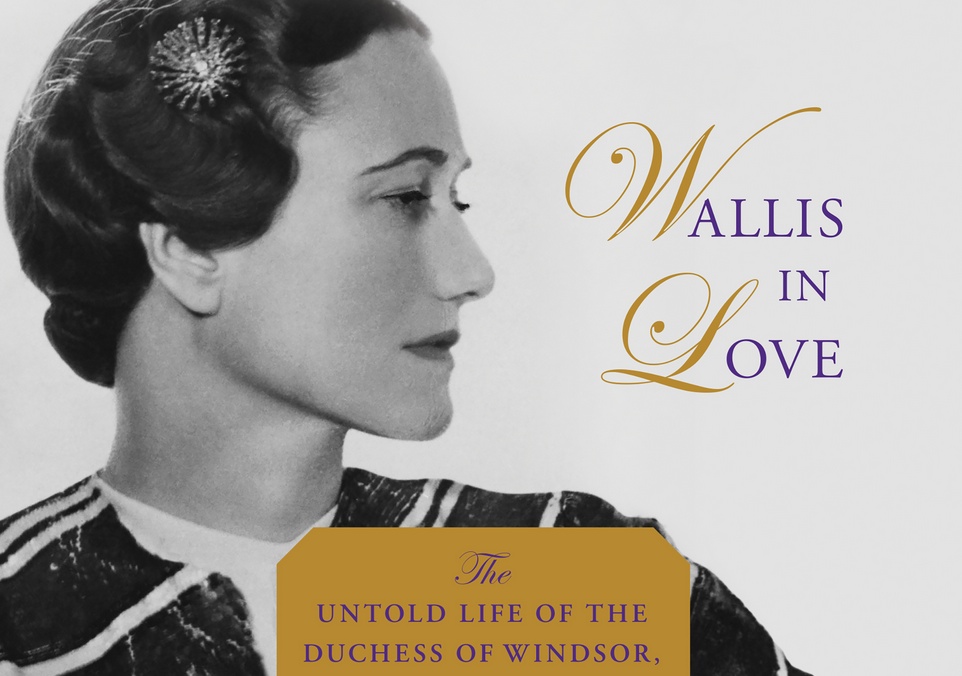
If you’re feeling sardonic, a frame of mind that veteran crowned-heads chronicler Andrew Morton’s Wallis in Love does a lot to encourage, it’s tempting to see Wallis Simpson as 1930s Britain’s tabloid equivalent of Lee Harvey Oswald. At a literal level, the comparison doesn’t hold water, since no British monarch has died by violence since Charles I’s beheading in 1649. But until the Baltimore-raised divorcée who ended her days as the duchess of Windsor came along, no British monarch had voluntarily quit the throne either.
As fans of The Crown already know, all Wallis had to do to end the brief reign of Edward VIII was to get him besotted with her. Because ardor wasn’t her thing, she never reciprocated, leaving her stuck for the rest of her life miming the charade of a “great romance” with a man she often privately treated with contempt. Yet her public performance was so convincing that you can’t help wondering how she might have fared if she’d turned actress for real. She might be remembered today as a great one, not the termagant most Britons never forgave for existing.
((EAN1}}Putting Prince Charles’s, Princess Diana’s, and Camilla Parker-Bowles’s later soap-opera hijinks in the shade, Edward’s decision to abdicate in 1936 for the sake of “the woman I love” was both a genuine national trauma and the climax of Britain’s worst constitutional crisis of the twentieth century. To her credit, Wallis realized the idea was cuckoo and tried to derail it, but that wasn’t widely known at the time. During the abdication drama, public hostility to her was intense enough that she even incited her own would-be Jack Ruby: an Australian who wrote letters threatening to find her in France — where she’d fled to wait out the hullaballoo — and “put a bullet in her.” For that matter, Australia itself threatened to leave the British Empire if Edward had the gall to try making her queen.
Then and later, rumors flew that she was a paid Nazi agent, or had seduced the king with the arcane sexual tricks she’d learned in a Chinese brothel, or was a hermaphrodite. (Why not all three?) Anticipating their American counterparts after That Day in Dallas, the Brits were seemingly ready to believe almost any explanation for their young, popular ruler’s abrupt vamoose — preferably, one that didn’t involve accepting that he’d fallen head-over-heels for a pushy Yank whose attractions were confined to a pair of piercing blue eyes and a minor talent for spiteful wit.
Coming closer to the mark, maybe, were the insiders who guessed that Edward had seized on marrying Wallis as a terrific excuse to get out of a job he hated. Aside from that scenario, Morton can’t explain what goaded him either, but Wallis in Love isn’t the kind of book you read for its psychological insights. You read it because the duke and duchess of Windsor were two of the weirdest gargoyles of their era and because their story is such a dotty combination of historical consequence and unspeakably charmless triviality.
Morton marches his readers briskly through Bessie Wallis Warfield’s shabby-genteel Baltimore upbringing. Its details read like a rejected draft of an Edith Wharton novel: The House of Mirth‘s gloom crossed with The Custom of the Country‘s satire, say. After her father died of tuberculosis during her infancy, she and her mother, Alice, were often dependent on relatives for their upkeep — and, no less important, their social status, such as it was. Wallis went to posh schools, but her clothes were often hand-sewn by Alice.
By late adolescence, her verve was attracting any number of would-be beaux. But you hardly get the impression that she was susceptible to romance for romance’s sake. From the start, attracting male attention was, quite relentlessly, her career: the only means available to her to move up in the world. By contrast, her sometime Baltimore neighbor, Gertrude Stein — whose novel Ida, about “publicity saints,” was partly based on Wallis — at least tried her hand at becoming a doctor, although Stein gets dragged into Wallis in Love, mostly because Morton likes hinting at lesbianism as his protagonist’s never-acknowledged Rosetta Stone.
Her first marriage, to naval aviator Earl Spencer, hit the skids quickly, thanks to his drinking and her apparent allergy to sex. (She later told a confidant that she’d never slept with either of her first two husbands, leaving us wondering whether that was also true of her third.) An affair with an Argentine diplomat in Washington, D.C., was her first “grand passion,” and also her entrée to international political elites. Once that ended, an attempted reconciliation with Spencer took Wallis on a long jaunt to China, where he was then stationed. Hence the bogus story about her Oriental-brothel sexual education, which was quite possibly inspired — though Morton doesn’t say so — by lurid 1930s movies like Josef von Sternberg’s Shanghai Express rather than anything Wallis actually did.
In reality, the lasting value of her “Lotus Year” was her introduction to American expat Herman Rogers, who stayed loyal to her for decades and functioned as her “de facto husband” in crises. Wallis called him “the only man I’ve ever loved,” and it typifies her astounding self-centeredness that she chose to tell this to Rogers’s second wife shortly after their wedding in 1950. In fact, his new bride had pushed for a speedy ceremony after his first wife’s death, fearing that Wallis — by then the duchess of Windsor — would toss the poor old duke aside like stale fish guts once her Herman was suddenly available.
After her return from China, she was back on the prowl, eventually divorcing Spencer to marry businessman Ernest Simpson: “to all intents and purposes,” Morton writes, “Herman Rogers Lite.” An Anglomane so inveterate that he’d given up U.S. citizenship to become a naturalized British subject, Simpson was Wallis’s ticket to London — a place she instantly loathed. “I’m sick of seeing old things,” she was soon complaining. “I want to see something young.”
In his mid-thirties by then, the prince of Wales just barely qualified. But Wallis soon got intrigued with his press coverage and promptly began scheming to insinuate herself into his social circle. Exactly what she was hoping would happen isn’t clear, but she presumably didn’t anticipate what did. Happy to dally with a series of mistresses, the heir to the throne had never indicated any interest in marriage, no doubt to the anxiety of His Majesty’s Government as the succession loomed. There may be no better proof of the adage to be careful what you wish for.
Carried on with her complaisant husband’s help, Wallis’s pursuit was well enough known to her family that she wrote “Mission accomplished” to an aunt once they finally met. But then he got smitten, phoning her constantly and sending her puppyish love letters. On her end, his thirty-eight-year-old paramour was enjoying herself: “I might as well finish up any youth that is left to me with a flourish,” she wrote, implying that a permanent union was the farthest thing from her mind. Once she realized he was serious about forging one, she tried to warn him off — predicting, quite accurately, “I am sure you and I would only create disaster together.”
Even so, the situation might have been resolved much more tranquilly if Edward had surrendered his right to the throne for Wallis’s sake before George V’s death turned him into Edward VIII. Making matters worse, the new king insisted on marrying her before his scheduled formal coronation the following spring. Morton’s fresh angle on the ensuing crisis is to tell the story exclusively from Wallis’s point of view. Stranded in France, barred from seeing Edward until her divorce from Simpson was final, she was unable to sway him in their frustrating long-distance phone conversations. When he called to tell her the die was cast, her reply was succinct and, once again, accurate: “You God-damned fool.”
Wed at long last in June 1937, the newly minted duke and duchess of Windsor didn’t need much time before their behavior made Edward VIII’s former subjects catch on that they might be better off without him. The couple’s ill-considered visit to Nazi Germany in 1937, including tea with Adolf Hitler and too many “Sieg Heil” salutes, was a blunder from which they never recovered, and the duke seems to have remained a more or less unrepentant Nazi sympathizer even after the war began. The Nazis themselves certainly thought so, plotting to kidnap him from his Riviera exile for propaganda purposes once Germany invaded France in 1940. Instead, Winston Churchill packed the pair off to Bermuda for the duration after appointing the duke its governor, largely to keep him — or them — safely offstage.
It was the last even semi-serious post the former king ever held. Afterward came decades of vacuous society life in Paris, Cannes, New York, and elsewhere until his death in 1972, followed by Wallis’s own a dozen years later. While the duke never quite came to despise her, she certainly came to despise him, sending him home early from nightclubs with an ungracious “Buzz off, mosquito.” Notoriety was all they had, and not much else bound them together except bitterness at the way they’d been treated.
Considering what she’d come up from, Wallis’s unmitigated self-pity was remarkable. At her worst, she was capable of saying that she couldn’t feel sorry for the British people’s sufferings during World War II after what they’d done to her. One ongoing source of resentment was the royal family’s refusal to let her call herself “Her Royal Highness,” although the duke was allowed the male equivalent. Beyond that, says Morton, their later lives were consumed by only “two issues: their image and their bank balance.” Despite the author’s occasional (and glib) speculations that Edward enjoyed playing the submissive to Wallis’s metaphorical — well, let’s hope — dominatrix, whatever submerged emotional or psychosexual complexities figured into the marriage stayed largely hidden by the two peculiar wax dolls that several generations of magazine readers grew wearily familiar with over the years.
In our time, both The Crown and The King’s Speech have turned the couple into fascinating reptiles, always good for a laugh whenever they intrude on the royal dullards. Morton knows better than to attempt the fool’s errand of trying to make Wallis sympathetic or even pleasant. Yet it seems charitable to think of her as thwarted. In a less gynophobic age, her brains, drive, and cunning could have been put to better use than seducing an idiot with an impressive title. She probably spoke her truest epitaph when a photographer asked her to smile during the abdication brouhaha: “Why smile?”
The post Wallis in Love appeared first on The Barnes & Noble Review.
The Barnes & Noble Review http://ift.tt/2EH2fph
Congo for the Congolese
 Beneath Congo’s soil lies an estimated $24 trillion in natural resources, but this wealth is also the source of untold suffering. Today, more Congolese are displaced from their homes than Syrians, Iraqis, Yemenis, or Rohingyas, yet their miseries are all but invisible, in part because the identities and aims of Congo’s myriad combatants are mystified by layers of rumor and misinformation, which serve the interests of those who profit from the mayhem. But pieces of the puzzle sometimes emerge.
Building the Great Society: Inside Lyndon Johnson’s White House

Lyndon Baines Johnson is the only Shakespearean president of our time. In the last hundred years, who else is there? There have been periodic attempts to claim this mantle for Nixon. But despite the magnitude of his crimes—Laos and Cambodia, Watergate, the outright treason of trying to derail the Paris Peace Talks, there is no tragic dimension in Nixon’s downfall because there is no horror in watching a crooked operator act like a crooked operator.. By contrast, Obama’s command of oratory and his stewardship of the country through a period of multiple crises also raises associations with the Bard – but Obama, while certainly a complex man, was , crucially, an executive of great steadiness. The drama of which he was at the center, the drama of watching America’s nervous breakdown at the prospect of a leader who wasn’t white, wasn’t visibly reflected in any expression of personal torment.
But LBJ? In his character one can spot the tragic outline: an awe-inspring combination of daring and worship of conventional wisdom; an awareness of the immensity the social problems confronting America and cussed determination not to be cowed by them. He was a visionary who believed in the transformative power of politics and possessed a ruthless mastery of the way politics actually operates. He was, in the words of his best biographer Robert Dallek, a flawed giant. There is no denying LBJ’s failures, and I do not mean to gloss over the young men who died in Vietnam because of those failures, those failures took place on a larger scale than most president’s successes.
The conventional line on LBJ, particularly from the white left, has been that whatever good intentions drove his gargantuan ambition to finish the business of FDR’s New Deal through his own Great Society, they were undone by Johnson’s choice to mire America deeper and deeper in Vietnam.
It’s not entirely a wrong view, and it is, at root, the view of Joshua Zeitz’s Building the Great Society: Inside Lyndon Johnson’s White House. Zeitz, an editor at Politico, has conceived of his book as a kind of political version of an NFL instant replay. Anyone reading it will learn who was involved in what decisions, the nature of each player’s relationship with LBJ, how they did or didn’t work together, and what it was about each player’s contribution, their foresight or shortsightedness, spelled success or failure. You will find out the money each legislative initiative required, and how well that money was spent. No one can read Zeitz’s book and not come away from it with knowledge of the day-to-day workings of the Johnson White House.
All of this to say that Building the Great Society is a wonk’s book. And at a time when the White House treats reality as a construct that they would like to banish, it might seem to be abetting that same delusion to insist that the magnitude of a president cannot solely be measured by the success of failure of individual legislature. But, as Norman Mailer insisted in his great political writing of the ‘60s, there is a spiritual side to politics that cannot be discounted if we are to take the measure of any president. What Zeitz cannot do here is bring to life the way in which LBJ’s political ruthlessness, which was not enough to save his presidency, was also tied to a transformative moral vision. Yes, he understands and documents that LBJ had been a reliable part of the segregationist Southern Democrat voting bloc during his time in the Senate. And yes he understands that LBJ had a more intimate relationship with poverty than his predecessor. It’s not too much to say that Zeitz understands the noblesse oblige attitude at the heart of the Kennedy administration’s often inadequate poverty and civil rights initiatives. (Which is why that famous footage of a clearly tormented Bobby Kennedy wordlessly trying to bring comfort to the desperately poor he encountered in Appalachia offers the sense of a man thunderstruck to his soul.)
But this is a book about the most colorful and profane and impassioned of presidents that has nothing in the way of humor or drama — or, for that matter, good common dirt. It’s not that Zeitz dislikes LBJ, or that he is indifferent to the peculiar character of the man. One of the most vivid elements of the book are the accounts of how LBJ overworked person after person on the White House staff, could be impatient and even cruel, and also suddenly solicitous and embracing. Zeitz understands what it meant to the White House staff to be invited into the First Family’s living quarters for a cocktail reception. It had never happened during JFK’s time and it calls up Johnson’s common touch, not an insignificant thing for a president whose focus was poverty and civil rights.
The victories are here: the Civil Rights bill of 1964, the Voting Rights Act of 1965, the creation of Head Start and Medicare, the Fair Housing Act. Zeitz, commendably, understands that some of these acts were not as far reaching as some more liberal parties to them wished them to be. But he does not dismiss the belief in politics as the art of the possible with the cynicism masked as purity that is now all too common on the left.
Zeitz’s interests are not those of a storyteller, a prober of the nation’s soul, or even a psychobiographer of the president at the heart of these changes. Even with only a little more than 300 pages of text, Building the Great Society has the feel of someone filling out an evaluation. Robert Dallek’s two-volume LBJ bio managed a command of the detail of the workings of the White House without neglecting an overarching vision of his subject. For all the detail in Zeitz’s book you can help feeling there is more of LBJ in the ten pages of Ralph Ellison’s essay “The Myth of the Flawed White Southerner,” which concludes, “When all of the returns are in, perhaps President Johnson will have to settle for being recognized as the greatest American President for the poor and for Negroes, but this, as I see it, is a very great honor indeed.”
During a recent city election I saw a poster for a young progressive candidate that proudly proclaimed “not a politician,” as if this were a good thing. The disparaging of experience and expertise is not something we value in any other profession. (Do you know anyone who would prefer a less-experienced surgeon?) Experience, the ability to understand both how politics works and how to work it to the desired purpose, is somehow regarded as proof of corruption.. Johnson was, above all, a politician. And if we now fear for the longevity of Medicare or the Voting Rights Act, it’s worth remembering those things would not exist in the first place without his genius as a politician. This was a man obsessed with how he wanted to be remembered. It seems particularly cruel that the immortality given him is unique to him: that of a great President who is not beloved.
The post Building the Great Society: Inside Lyndon Johnson’s White House appeared first on The Barnes & Noble Review.
The Barnes & Noble Review http://ift.tt/2Gt0Xuy
Roth Agonistes
 During his early writing years in Chicago, Philip Roth began each morning by shouting at the young face peering out from the mirror at him: “Attack! Attack!” The force of Roth’s attack, sustained for more than a half-century, is what made his retirement so startling. It is also the quality that, more than anything, sustains his Why Write?: Collected Nonfiction 1960–2013.
‘The Twilight Zone,’ from A to Z
 The Twilight Zone‘s most prevalent themes are probably best distilled as “you are not what you took yourself to be,” “you are not where you thought you were,” and “beneath the façade of mundane American society lurks a cavalcade of monsters, clones, and robots.” Rod Serling had served as a paratrooper in the Philippines in 1945 and returned with PTSD; he and his eventual audience were indeed caught between the familiar past and an unknown future. They stood dazed in a no-longer-recognizable world, flooded with strange new technologies, vastly expansionist corporate or federal jurisdictions, and once-unfathomable ideologies.
Hell of a Fiesta
 In the spring of 2017, and all through the year, social media feeds in Venezuela were filled with images of deprivation and despair: long lines of people hoping to purchase food; women fighting over a stick of butter; mothers who could not find milk to buy; children picking through garbage in search of something to eat; empty shelves in pharmacies and stores; hospitals without stretchers, drugs, or minimum levels of hygiene; doctors operating on a patient by the light of a cell phone; women giving birth outside of hospitals. This is a humanitarian crisis of immense proportions.
 Sig Nordal