Ultralight: The Zen Habits Guide to Traveling Light & Living Light (short read ebook)

ultralight3

By Leo Babauta

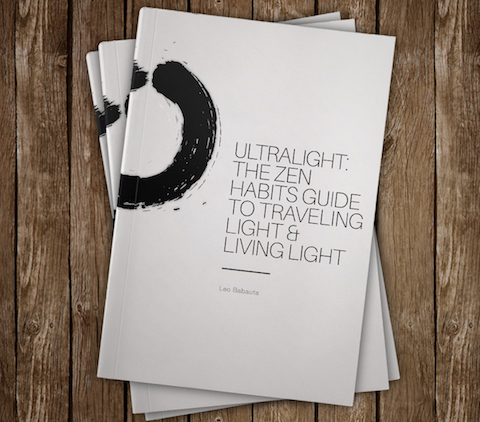
I’m excited to announce the latest “short read” ebook that I’ve written: Ultralight: The Zen Habits Guide to Traveling Light & Living Light.

Traveling light has become one of the joys of my life, shedding the extra weight in return for freedom, lightness, and energy.

This book contains my recommendations and methods for:

  • Breezing through airports
  • Cutting back on clothing
  • Minimizing electronics, toiletries, and more
  • Finding restaurants, apartments, recommendations for where to go
  • What you don’t need to pack
  • Developing a flexible mindset
  • My packing list
  • My favorite travel apps
  • Ultralight backpacking
  • And lots more

I also talk about applying these ideas to simplify the rest of your life, in a “living light” section of the book:

  • Living without too much stuff
  • Cutting back on clothing, books, papers, everything else
  • Finding digital simplicity
  • Dealing with the urge to buy

I’ve found that living simply and traveling light are wonderful ways to live, and I hope you’ll find use out of this book as I’ve tried to put as much useful information as I can.

The Short Ebook & the Package Deal

I’ve written this intentionally as a “short read” … and so I’m pricing it low ($4.99), so more people will be able to buy and use it.

You can buy just the ebook here (in PDF, Kindle & iBooks formats):

Buy the Ebook

But I’ve also created a package with three videos to go along with the ebook:

  1. My favorite travel gear
  2. A packing video that shows what I bring and how I pack it
  3. How I wash clothes simply while traveling

You can buy the package with the video downloads and the ebook in 3 formats here:

Buy the Package

Contents

Here’s the table of contents:

Introduction: Why Travel Light? Freedom From Burden
Part I: Ultralight Travel

  • Chapter 1: Traveling Light Isn’t a Competition
  • Chapter 2: What It’s Like to Travel with One Bag
  • Chapter 3: Why We Pack Too Many Clothes, & How to Cut Back
  • Chapter 4: Clothing System
  • Chapter 5: Electronics
  • Chapter 6: Toiletries
  • Chapter 7: Water & Food
  • Chapter 8: What You Don’t Need
  • Chapter 9: Don’t Pack Your Fears
  • Chapter 10: What Bag?
  • Chapter 11: Getting Through Airports
  • Chapter 12: Apartments & Hotels
  • Chapter 13: Getting Around Cities & Where to Go
  • Chapter 14: Longer Trips
  • Chapter 15: Flexible Mind, Flexible Travel
  • Chapter 16: Useful Travel Apps
  • Chapter 17: Travel Miles & Cards
  • Chapter 18: My Packing List
  • Chapter 19: Ultralight Hiking

Part II: Living Lightly

  • Chapter 20: What It’s Like to Live Without Too Much Stuff
  • Chapter 21: Less Clothing
  • Chapter 22: Books & Papers
  • Chapter 23: Less Other Stuff
  • Chapter 24: Electronics & Digital Simplicity
  • Chapter 25: Dealing with the Urge to Buy
  • Chapter 26: A Final Word on Living Lightly

Book Formats

I’ve written the book in PDF, Kindle (mobi) and iBooks (epub) formats. You can buy them all in one compressed file here for $4.99:

Buy the Ebook

If you just want to buy the book from the Amazon Kindle store, you can buy it here for $4.99. That will only be the Kindle format, though. I would love it if you gave me a good review and/or rating! (Note: It should be available in all of the global Amazon stores.)

If you just want to buy the book from the Apple iBooks store, you can buy it here for $4.99. That will only be the iBooks/epub format, though. And again, I would love it if you gave me a good review and/or rating! (Note: It’s available in all of the global iBooks stores.)

Finally, I have the three formats (PDF, mobi, epub) plus a package of three audio guided meditations for $9.99 that you can buy here:

Buy the Package

Table of Contents & Sample Chapters

If you’d like to see the table of contents, plus the introduction and first two chapters, you can download/open the PDF here:

Table of Contents & Sample Chapters

Questions

You have questions, I have answers.

Q: What do I get when I buy the ebook?

A: If you buy it using the blue “buy the ebook” button above, you’ll get a compressed zip file … when you decompress it, there will be a folder with the PDF, epub (for iBooks) and mobi (for Kindle) files.

If you buy from the Kindle store, you’ll just get the Kindle book.

If you buy from the iBooks store, you’ll just get the epub version.

And if you buy the package deal, you’ll get the three formats plus links to download three companion videos that I’ve recorded.

Q: Is there a print version? What about an audiobook version?

A: No, sorry. This is only being released as an ebook.

Q: I bought the package, but where are the video files?

A: Open the “Read me” PDF file in the folder you downloaded … there are links to download the video files in the Read me PDF.

Q: Did you do the design yourself?

A: No, I wish! The cover was designed by Dave of Spyre, and the interior was designed by Shawn Mihalik.

Q: I’m hugely disappointed and want my money back!

A: I’m sorry to hear that. There’s a 100% money back guarantee on all my books. Just email support@zenhabits.net and we’ll give you a full refund. I don’t want unhappy customers.

http://ift.tt/2enwsNA

How to Start Decluttering Your Life: 5 Simple Steps

How to Declutter

“It is not a daily increase, but a daily decrease. Hack away at the inessentials.”
Bruce Lee

I love decluttering.

Why?

Because a life with less clutter makes it easier to:

  • Reduce the daily stress and find inner peace.
  • Focus and to do a better job (and often do it quicker too).
  • Keep your attention steadily on what is most important and meaningful in life.

Clutter creates distraction. It can create stress and confusion that you may not be aware that it’s creating.

But after you have decluttered there is usually a sensation of feeling calmer and lighter, a bit more upbeat and being able to think more clearly.

Decluttering a drawer, shelf or some kind of space in your life can be an unexpectedly positive experience not just practically. But for you as a person both emotionally and mentally.

This is the most important reason why I declutter.

But it, of course, also frees up space. It can help you to sometimes earn a bit of extra money. It can make someone else happier by giving them something you have no use for anymore.

If you have just 5 or 10 minutes to spare today and want to take a first step to simplify your outer and inner life then I recommend uncluttering just one small space in your house.

Here’s how I declutter in five quick steps.

  1. Pick a drawer or a shelf. Empty it out and clean it out. Put everything that was in that space in one big pile.
  2. Make choices about those items, one at a time. For each item in that pile ask yourself this: have I used this in the past year? If not, then it is often pretty safe to say that you won’t be using it in the future either.
  3. Give it away or trash it? If you are not keeping it then you may want to give it to someone you know that you think could make good use of it. Or you can give it away to your local charity.  If that is the case put it in a box or bag for that purpose. And if you just want to trash it then put it then put it in a bag where you’ll collect the trash items during this brief uncluttering session.
  4. If you are keeping it, then find a home for it. It could be at one of the front corners of your drawer or to the right in the top shelf of your bookcase. Having a home for each item where you put it back each time after using it will reduce the weekly clutter in your home and you will always be able to easily find the item.
  5. If you are unsure about the item then put it in a 6-month box. Put that box away somewhere where you can easily access it – a closet for example – if you need something from it. On the outside of the box write the date when you put the stuff in it. 6 months later get the box and see what is still in it. If you haven’t used those things in the past 6 months then you have no need for them and you can safely give them away or throw them out.

And that’s it.

By taking small 5-10 minute steps when you have some time to spare you can declutter a whole lot over a few weeks.

Or that first small step may lead you to uncluttering a whole room at once. Or inspire you to take 5-10 minutes tomorrow to start decluttering your work space.

http://ift.tt/2e5UpqM

A Key to Success: Choosing the Hard Way

Many people want to live a successful life. Not many, however, are willing to pay the price.

I have read the stories of many great people, and they all share common characteristics. In particular, there is one principle that I believe they all follow, whether they realize it or not. The principle is this:

Choose the hard way

Yes, choose the hard way. When given the choice between the easy way and the hard way, great people consistently choose the hard way.

A good example is Colonel Sanders, the founder of Kentucky Fried Chicken. He once had a successful restaurant. Life was good for him. But one day the government moved the highway junction in front of his restaurant to another site. As a result, the traffic to his restaurant plummeted. It went so bad that he eventually had to sell his restaurant. Worse, he was already 66 years old at that time.

The easy way for him was to just blame the situation and do nothing. The hard way was to go selling his fried chicken door-to-door, even if that means sleeping in his car.

He chose the hard way. He kept knocking on doors despite many rejections. He endured having to sleep in his car. He paid the price and eventually built Kentucky Fried Chicken.

Another example is Theodore Roosevelt. In fact, there are so many examples in his life that it’s difficult for me to choose. But I’ll choose this one: his bravery in the Spanish-American War.

In 1898, the Spanish-American War broke out. Roosevelt was Assistant Secretary of the Navy at that time. That means he didn’t need to go to the front line; he could just sit behind his desk and do his duties. But he felt compelled to go to the front line. So he did; he led the Rough Riders into battles and almost got killed for that.

One more example is the story of Bill Gates and Paul Allen. They saw the magazine cover of Altair microcomputer in 1975. Microcomputer was new at that time. The easy way was to just read the magazine and talk about it. But they chose the hard way: they worked day and night for three months to create a programming language for Altair. That product launched Microsoft.

Everywhere I look, I see that successful people live by this principle. They choose the hard way. They pay the price for success.

Michelangelo put it well: “If people knew how hard I had to work to gain my mastery, it would not seem so wonderful at all.”

http://ift.tt/2ekkvZi

End of Busy: A Deliberate Life vs. Reactive Life, with Jonathan Fields

By Leo Babauta

Every day, we get caught up in busyness — reacting to what comes at us, lost in the thousands of tasks and emails we have to deal with, and we are so busy dealing with all of it that we get stuck on autopilot.

What if we could get out of that trap, and live a more deliberate life?

This is what I recently talked about with my friend Jonathan Fields, who is releasing his new book today: How to Live a Good Life: Soulful Stories, Surprising Science and Practical Wisdom.

You can read Jonathan’s responses to some of my questions below, and watch us talk about mindfulness, uncertainty, and living a good life in this video:

Living a Deliberate Life

Leo: A lot of us get caught in the trap of busyness — reacting to what comes at us. And often it feels like a status symbol, being busy. But this busyness isn’t a part of the Good Life prescription, is it? Can you talk about why it’s a problem?

jfields-bw-1Jonathan: Busyness has become a bit of a lightning rod. In one camp, we’ve got busyness as a status symbol of hustle and achievement (though, often it’s neither). In the other, we have busyness as a signpost of failure and surrender.

Truth is, I’ve come to see busyness as more of a symptom of a bigger problem, rather than a cause. Being busy, alone, need not be a bad thing. What makes it good or bad is why we’re busy, what we’re busy with, and what we’re giving up along the way.

Being busy as a reaction to the compounding agendas others, to what they’ve chosen to heap into our lives, without considering whether any of it matters to us, that’s a problem. It drops us into a state of mindless autopilot busyness, reacting rather than responding. It leaves us watching our lives fill with unrelenting pace, screaming past us, without ever stopping to choose what matters, be present, cultivate meaning, joy, connection and vitality, and experience each moment through the lense of choice and presence. We end up busy without a cause, and it leaves us utterly gutted. Empty.

Being busy from a place of meaning and intention, though, that’s not necessarily a bad thing. If our days, weeks, months and life are populated by a stream of experiences, activities and people that keep us engaged much of every day, including things like moving our bodies, sitting in meditation, expressing our voices, engaging our strengths, deepening into service and meaning, working and playing with people we cannot get enough of, choosing only what truly lifts us up and matters deeply, we end up crafting a life of intention, joy, vitality and meaning. Are we busy along the way? Yes! But, that type of busyness leaves us full, not empty.

And, that adds to a life well lived.

Leo: You tell the story of a woman you had in mind while writing the book, a woman who is overwhelmed by a sense of busyness, who reacts to other people’s agendas, who realizes she’s living an “autopilot life.” How do we seem to slip into these autopilot lives?

Jonathan: This is where it gets a little scary. The challenge is that we never really choose to live reactively. Instead, it just kind of happens. A little bit, every day. Until, one day, we wake up and realize, “my life is not my own.”

Think about it. Did you choose, “I will begin checking my email first thing before I get out of bed, and then respond to what everyone else says is important today?” Was there a moment where you said to yourself, “I will respond immediately, in real time to every email that hits my inbox, every to-do I’m tasked with and every status update on Facebook?”

Not likely, you just started doing it, and the technology that supports this behavior is the perfect intermittent reinforcement machine. In short order, it becomes habit. And, it all went down, bit by momentary bit, by surrendering to seemingly innocuous prompts that end up adding up to autopilot, reactive mindlessness.

There’s no blame here, it’s become the social norm to build a life this way. But, just because it’s the norm, doesn’t mean it’s good.

Question is, now that you know, what will you do moving forward? Choose with intention, or continue to surrender to a life of default reactive busyness, bundled with the annihilation of agency and intention?

Leo: What’s the alternative to the reactive, autopilot life of busyness that you recommend for a good life?

Jonathan: Awareness and intention. We need to break the cycle of mindless, reactive living and reclaim a sense of choice, agency and intention. We need to step back into the driver’s seat of our lives. To say, “I get to choose. My days, my years, my life belongs to me. Other people’s agendas, stories and will are not the primary driver of where I place my attention, my gifts, my love and energy.”

If we want to fill our days with activities, experiences and peoples, so be it. But, let’s start making those choices actively and proactively. Mindfully, from a place of filling our lives with connection, vitality and meaning. Not reactively, because we’ve never stopped to own the responsibility and the blessing of choice.

Leo: How do we start to move from autopilot to this direction?

Jonathan: Step one, own that we’ve got a problem. Step two, begin to cultivate a daily awareness practice. For me, it’s a sitting mindfulness practice, bundled with daily prompts that keep me “dropping into” the moment. These train your brain to become increasingly more present and aware of what’s really happening in life.

One you become more mindful, you start to see the opportunities to swap intention for reactivity all around you, and you begin to choose choice, rather than succumb to pace and mindless surrender.

This is so important, it’s actually why I’ve devoted an entire chapter to it in my new book, and even created guided audio practices to help you begin the practice.

Leo: What might a day of awareness and intention look like, just so we can visualize what this might mean?

Jonathan: This’ll be completely different for each person. It’s so important to honor the very real-world demands of your life, and not hold yourself to the opportunities and constraints of anyone else. But, here’s an example.

You wake and, wait for it, do not check your device. Not email. Not instagram. Not facebook or snapchat. Not even texts. Just lie in bed, place one hand over your heart, the other over your abdomen, eyes closed and breathe for a few moments. Note how you’re feeling as you enter the day. Calm, stressed, energized, fatigued, focus, distracted? No need to change it, just notice, and know that is going to play into the way you move through the day.

You roll quietly out of bed and find somewhere to sit comfortably, eyes half-closed, allowing your attention to rest on your breath for a brief, seated mindfulness practice. Anywhere from 3 to 30-minutes. From there, maybe you’ll close by setting an intention for the day. I always close my morning practice with a brief loving-kindness or “metta” incantation. This is how I’ll bring myself to the day. Then, you write down the single most important thing to accomplish, the one that actually is meaningful to you.

You head into the kitchen, grind some coffee and make a cup, or a pot if you’re brewing for more than one. As the coffee brews, you take single action, spend less than 30-seconds, that connects you with someone you care about. Maybe you text a friend to say, “just thinking about you and sending wishes for a great day.”

While you sit with your coffee, you know that the next few hours are your peak creative time, your window to get your most meaningful work done first. Especially, if it’s your most challenging work. But you also know that you need to get the “checking siren” out of your head, so you quickly spin through email and more. Still, you cap it at 5 minutes, and commit to only responding if there is true urgency. Everyone else can wait. This is your day, not theirs. They may be renting space in your device, but not your heart and head. You then come back to your computer and spend the rest of the morning creating, not consuming or managing.

Then comes a little movement break, just 10 or 15 minutes, because you know it’s good for your body and brain, followed by a lunch break. After lunch, you feel great, because you’ve already accomplished what matters most, so you settle into more of a managing and socializing and meeting mode. Catching up online, but still limiting time to 30-minutes and starting with the things that matter most. In the late afternoon, you walk-n-talk with your colleague or anyone else who wants your time, leaving your phone in your pocket the whole time, giving them your attention. Later in the day, you exercise for 40 minutes, then settle in to read or relax, spend time with friends and family and start to ease toward dinner together.

After dinner, more relaxation or creative time, and, if you need, catching up with any lingering tasks that really matter. Then you spend the evening in a wind-down mode, journaling a bit, reflecting on your day, how it went, how you feel, what you learned, what can bring into tomorrow, writing in gratitude, sharing conversation with an intimate partner, family or friends, and settling in to read, watch a movie or whatever else you enjoy.

Now, does this sound somewhat Utopian? Sure. But, many elements of it, on any given day, can become mindful anchors, moments that allow you to touch back down into your life. The idea is simply to make it yours. To keep finding ways to be present, mindful and focus your attention and actions on the people and activities that fill your Good Life Buckets, rather than empty them. Those will shift on any given day, too, so be open to the possibility of unforeseen experiences and the need to adapt on the fly.

htl-3d-cover-1-crop-247x300Leo: Thanks for the amazing info and inspiration, Jonathan! To everyone: I highly recommend checking out Jonathan’s new book, How to Live a Good Life: Soulful Stories, Surprising Science and Practical Wisdom.

http://ift.tt/2ehRKaX
6 Practical Ways to Practice Being Present

By Leo Babauta

There are a lot of amazing benefits to being more present and mindful, but one of my favorites is this: you’re not missing the beauty and joy of the present moment.

Being present also helps you to see when you are feeling fear or resistance, uncertainty or the urge to procrastinate, anger or resentment … and then to work with those difficulties mindfully.

That’s all great, but how do you remember to practice being present? It’s so easy to get caught up in our thoughts and distractions, and forget to practice.

The honest truth is that no one is perfect at this. Me least of all. It’s a continual learning process, not something you figure out and then you’re good. It’s messy and beautiful.

So with that in mind, here are some practical ways to practice:

  1. A Small Regular Practice. Form the simple habit of meditating for just two minutes a day (to start with). After you wake up, simply sit comfortably and try to focus on your breath for two minutes. When (not if) your mind wanders, just notice it and label it “thinking.” And gently return to the breath, without harshness. Set a timer, and when the timer goes off, you’re done! If you feel like expanding it by a minute every week or so, feel free to do so, but you don’t have to expand. The benefit of this regular practice is that you learn skills you can take and practice in other parts of your day.
  2. Work with Others. Having a regular group or partner to meditate with is helpful. You support each other continuing to practice, and can talk about struggles and things you’re learning. If you don’t have a practice group in your area, you could find people online to talk to regularly about practicing.
  3. Have Mindfulness Bells. You could have a chime regularly sound off on your phone or computer (numerous apps do this) to remind you to pause and be mindful of what’s going on right now. I’ve also found it useful to see other things as mindfulness bells: seeing my child’s face, a traffic light, hearing an alert from an appliance or the computer. Each of these can be a reminder to be present when I notice them.
  4. Set an Intention Before an Activity. If you’re about to do a work task, process email, read a book, cook dinner … you can pause just before starting, and think for a second about what your intention for that activity might be. What are you hoping to do with this activity? For me, I might cook dinner out of love for my family or myself. I might write a blog post (like this one) out of love for my readers. I might do a workout out of love for myself (and to set a good example for my kids). I process email out of responsibility and consideration for those trying to communicate with me. By setting an intention, it reminds you to be mindful of that intention as you do any activity.
  5. Reflect Daily. At the end of each day, or at the beginning, take a minute to journal or just reflect on how your day has gone. How have you done with practicing being present? What have you struggled with? Have you been using your mindfulness bells and setting intentions? What resistance has come up for you, what stories are you telling yourself about all of this? Daily reflection is one of the most useful habits for continuing to practice and getting better at practicing.
  6. See Everything as a Teacher. This method admittedly sounds a bit corny, but it’s actually amazing. When you’re feeling frustrated with someone, feeling stressed out by work, feeling upset or grieving about the health of a loved one, feeling anxious about a national election … pause and see this person or situation as a teacher. What can you learn from them about being present? What attachments can you see in yourself that are causing this difficulty? What stories are you forming that are causing you to feel this way? What can you practice letting go of? What can you appreciate about this moment that you are taking for granted? In this way, every difficulty, every person, everything that arises in the present moment can be a loving teacher that is helping us along the path to being present.

Mindfulness for Beginner’s ebook

If you’d like help with mindfulness, check out my new Zen Habits Beginner’s Guide to Mindfulness short ebook.

http://ift.tt/2dPyQdK

9 Practical Ways to Become More Productive Today

Do you want to become more productive? There are many methods and tools you can use for that. Some of them, however, are pretty complicated and take time to apply.

But what if you want to become more productive today, not tomorrow or next week? Then you need something that’s simple and practicalsomething that you can apply right away.

Here are nine practical ways to become more productive today.

1. Exercise

Here is a fact: your productivity depends more on your energy management than time management.

Time management gets a lot of attention, but energy management is actually more important. Why? Because if your energy level is high, then you can get many things done in a small amount of time.

Have you ever felt like you don’t make enough progress despite spending significant time on a task? A likely reason for that is a low energy level, which makes it difficult for you to focus.

A good way to increase your energy level is to exercise in the morning. Even a 15-minute exercise will do. I didn’t have this habit years ago, so I can attest to the difference it makes. It gives me the energy to go through the day with focus and enthusiasm.

2. Prioritize

You might want to accomplish a lot in your day, but the fact is that your resources are limited. So you need to prioritize. You need to choose the few things that can make the most difference.

Ask yourself: what are the few things that – if I accomplish them – will make me feel productive today? Do them, and then delegate or eliminate the rest.

As Rick Warren once said, “You should say to no to good opportunities so that you can say yes to the great ones.”

3. Allocate an Uninterrupted Block of Time

One important factor for productivity is flow, a state where you get absorbed in the task at hand and lose your sense of time. But flow can only happen if you have a large amount of uninterrupted time.

So make sure that you have such a time. Allocate uninterrupted blocks of time for serious work.

4. Turn Off Notifications

To prevent yourself from getting interrupted, turn off notifications before your work sessions. This includes phone notifications, email notifications, etc.

In my case, I turn off all notifications from instant messaging apps. I check them only when I’m not working. This helps me focus on my tasks.

5. Use a Timer

This might not work for everyone, but my favorite way to help myself focus is using a timer.

The rule is this: when the timer runs, I must work on the task at hand. I may not do other things. Whenever I switch to something else (such as checking emails), I must stop the timer first. This requirement makes me aware of the distraction, and I can usually get back to the task quickly.

An added benefit is that I can measure my productivity. I can see how much productive time I have in a day by looking at the timer.

6. Use a White Noise App

If you are in an environment that has distracting sounds, it’s helpful to use a white noise app. It blocks out the noise in your environment. It has ambient sounds that can help you focus, such as the sounds of rain or sea.

Using such an app can also give you the feeling of being in a new environment. You can feel like you’re in a jungle, boat, or some other place. This can help you feel fresh.

7. Use a Checklist

For routine tasks that you do again and again, it’s a good idea to use a checklist.

Using a checklist has many benefits. For instance, you don’t need to remember all the steps to finish a task so your mind is free for creative thinking.

8. Do the Next Simple Thing

One thing that can prevent you from being productive is feeling overwhelmed. If that happens to you, you might become paralyzed and end up taking no action at all.

To avoid that, you should focus on the next simple thing. Ask yourself: what is the next simple thing I can do to move this project forward? Do it and then ask the question again. With this habit of persistent starting, you will eventually finish the big project.

Remember, the way to eat an elephant is to eat it one bite at a time.

9. Write Down Your Ideas

You may have a lot of ideas during the day. But if you don’t write them down, you might lose them forever. That’s why it’s important that you write down your ideas. Writing down your ideas can help you become more productive.

***

These tips are simple, but they can increase your productivity. Choose the ones that work for you and apply them. I’m sure you will be happy with the results.

#####

Get smarter in less time: try Blinkist

http://ift.tt/2e6AlkJ

A Method for Dealing with Feeling Stressed & Overwhelmed

By Leo Babauta

I have an overwhelming amount on my mind today, and with that feeling of being overwhelmed, my stress levels have gone up significantly.

This is a wonderful opportunity to practice being present.

We all experience stress, we all get overwhelmed, and we can drown in it and let it rule our lives … or we can practice with it. Learn from it.

So here’s what I’m doing today to deal with my stress:

  1. Recognize the signs. When my stress levels go up, two things happen: I have stress hormones flooding my body, and I tend to rush around and jump from one task to another really quickly. These are great signals that something is going on! So the first step of this method is to realize that I’m overwhelmed, and that I need to pause.
  2. Pause and notice. I stop moving, and notice what’s going on. Just sit still and look inward. Feel the stress in my body. It feels like waves of electricity flowing from my head and chest toward my extremities. Just notice this physical feeling, notice how rushed I feel, notice how I am feeling like the world is crashing down on me.
  3. Notice the urge to be in control. The feeling of being overwhelmed is so strong because I don’t feel in control. When I can do one thing at a time and have a manageable amount on my plate, I feel in control. This is simply an illusion. I’m never really in control. I make lists, I create systems, I develop routines, I have goals and mark my progress, I have accountability … but I’m just floundering in the dark like everyone else. I don’t know where I’m going, nor am I executing an exact plan to get anywhere. I’m just trying to make my way in an uncertain, uncontrollable world, without falling on my face too much. So now I notice this urge to be in control of my life, and don’t act on it. Just see it, acknowledge it.
  4. Give yourself love. As I see this urge to be in control, see the stress flowing through me … I can send love to myself. It’s like putting a warm hand over my heart. Then putting a warm hand over the other parts of me that are stressed, that want control. It relaxes me a bit, makes me feel less anxious. It’s like a mother’s love calming an upset child.
  5. Narrow my scope. This is my concession to my desire to be in control. I can’t do everything at once. Nor can I do in a single day all of the thousand and one things I need to do. I can only do a handful of things today. So I make a list, then pick a few things I can do today. The Today list ends up being too long, so I have to renegotiate my commitments and acknowledge that I only have a limited capacity. I narrow down my Today list. This is now doable. The rest I’ll have to do once I’m done with this smaller list.
  6. Focus on one thing. All I can do is one thing. I want to do a hundred right now. But I can only do one. So I pick one, clear everything else away, and just focus completely on that one thing. Yes, there’s still stress in my body, and I can be aware of that stress and the urge to be in control that remains, continue to give myself love, as I do my one thing. This is the best I can do. So I do my best at it.
  7. Relax into the moment. As I do my one thing right now, I can feel the tension in myself. My chest is tight, my neck is tense, my arms and legs are tensed up. So I tell myself to relax into this present moment. I just let myself relax and accept what’s going on, relax and be here with this moment instead of fighting against it, relax and see that there’s beauty and joy to appreciate in this moment, even in the midst of chaos and stress. There’s so much in this one moment that I don’t need to focus on everything else — I’ll get to those things later — but instead can relax into the warm embrace of the goodness of this moment.

I am practicing this method as I write these words, and hope to practice it all day today. I offer it to you in hopes that you’ll find some beauty, joy, and appreciation with it as well.

http://ift.tt/2eoE94T

A Primer on Understanding & Compassion

By Leo Babauta

A reader wrote to me that he is frustrated with himself — he hasn’t been as compassionate to people as he’d like recently.

Lots of us experience this: we’re judgmental, quick to snap at people, getting frustrated with how other people act, judging people who have different beliefs than us.

The reader who wrote to me is actually aware of being judgmental — most of us don’t even realize when we’re doing it. We think we’re right to judge others, to be frustrated with them, to snap in anger.

This reader, in contrast, sees the less-than-friendly actions he takes and sees that they’re not aligned with the good person he wants to be, the compassionate person he is at heart. He sees the less friendly actions and wants to change them. That is worthy of celebration.

In this primer, I’d like to talk about how to be more understanding, and then how to be mindfully compassionate on an everyday basis. Of course, I am as guilty of being judgmental and less-than-compassionate as anyone else, so I don’t want to convey the impression that I’m above anyone. I’m not!

That said, I think this is important: when we are judgmental, it hurts our relationships with others, and makes us frustrated and unhappy. We can dissolve all of that, and be happier and more loving with other people and ourselves.

The Basics of Being Understanding

When we’re feeling frustrated with others, when we notice ourselves judging others … we can use this as a signpost that it’s time to try understanding them instead.

We judge people all the time:

  • They are acting badly, so we’re frustrated with them
  • They eat differently than us, so we think they’re wrong
  • They live differently than us, so we think they are dumb
  • They have different political views than us, so we think they’re deluded
  • They’re overweight, poor, have a different religion, speak poorly, dress badly, are on their phones all the time, taking too many selfies, have too much sex, are too prudish, etc. etc.

We don’t recognize all of this as being judgmental, but it is. So when we’re doing it, let’s use it as a mindfulness bell.

Here’s what you can do when that mindfulness bell sounds:

  1. Seek to understand. Instead of having an instant opinion about someone, challenge yourself to be curious instead. See if you can try to understand the person rather than thinking they’re wrong. If we are judging someone, we’re not understanding them. We have a lack of knowledge that’s causing us to be judgmental.
  2. Ask how you can see the good-hearted explanation. Ask how you can explain the other person’s behavior in a good-hearted way. There’s an explanation that makes the other person seem inconsiderate, ignorant, wrong. And then there’s one that assumes the other person has good-hearted intentions. This isn’t always easy, but if someone is doing something irritating, we might assume they are just trying to be happy. When someone lashes out at you, they might be experiencing fear. We might assume this fear means they want to protect their tender hearts. There’s always a good-hearted way to explain an action, even one we might think of as evil. We don’t have to condone that action, but we can see the tender heart that lies beneath it.
  3. Remember what it’s like to go through that difficulty. We have all experienced fear, frustration, anxiety, uncertainty, wanting to go away from discomfort. If we see the good-hearted intention behind the action, we can see the difficulty they’re having that goes with that intention. And we can remember what it’s like to have a similar difficulty — remember the pain, fear, frustration, anger, grief that goes with that difficulty.

Once we start to understand the person and their actions, see the good heart behind the actions, empathize with their difficulty … we can start offering compassion.

A Simple Compassion Method

If you can empathize with the other person’s difficulties, then you can offer them compassion:

  • If they’re suffering pain or stress, you can simply wish for an end to that pain or stress.
  • You might also wish for them to be happy.
  • You might even send love from your heart to theirs.

A good daily practice is compassion meditation. Try this for just a few minutes a day:

  1. Simply sit still and picture yourself in pain or stress (from your actions, or from other things). Feel it in your body.
  2. Wish yourself happiness. Wish for an end to your difficulties. Give yourself some love.
  3. Now repeat this with a loved one, picturing them in pain. Wish for an end to their difficulties, wish for their happiness, send them love.
  4. Repeat the process with a good friend, a colleague, a neighbor, and a stranger.
  5. Finally, picture everyone in the world, and wish for their happiness and an end to their difficulties.

This meditation can just take a few minutes a day. It helps cultivate compassion inside of us. When you see other people struggle, you’ll notice this more often, and wish for them to have an end to that struggle. It will take awhile, but if you do this daily (or as close as you can), I believe you’ll see a difference.

http://ift.tt/2dSfgdR

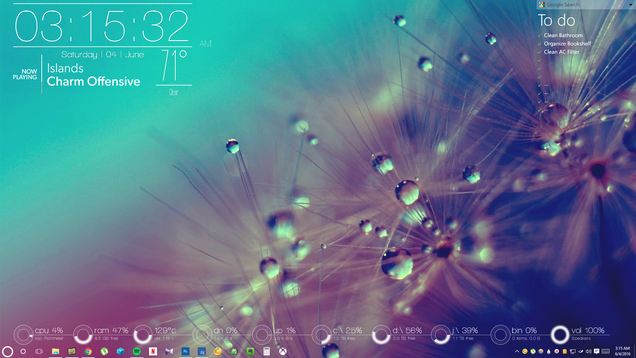
The Drops of Clarity Desktop

Reader ravenclawwit is no stranger to our featured desktop series, and submitted this beautiful setup to our Desktop Showcase a few weeks ago. It looks great, from top to bottom, and is pretty heavily personalized. It also has a little secret.

Read more…

http://ift.tt/28VL9Rn

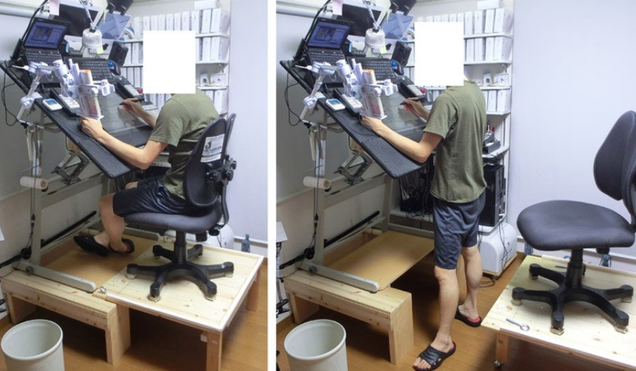
One Manga Artist’s Quest For The Best Work Desk 

I think he’s found it. Finally.

Read more…

http://ift.tt/28NiXiZ