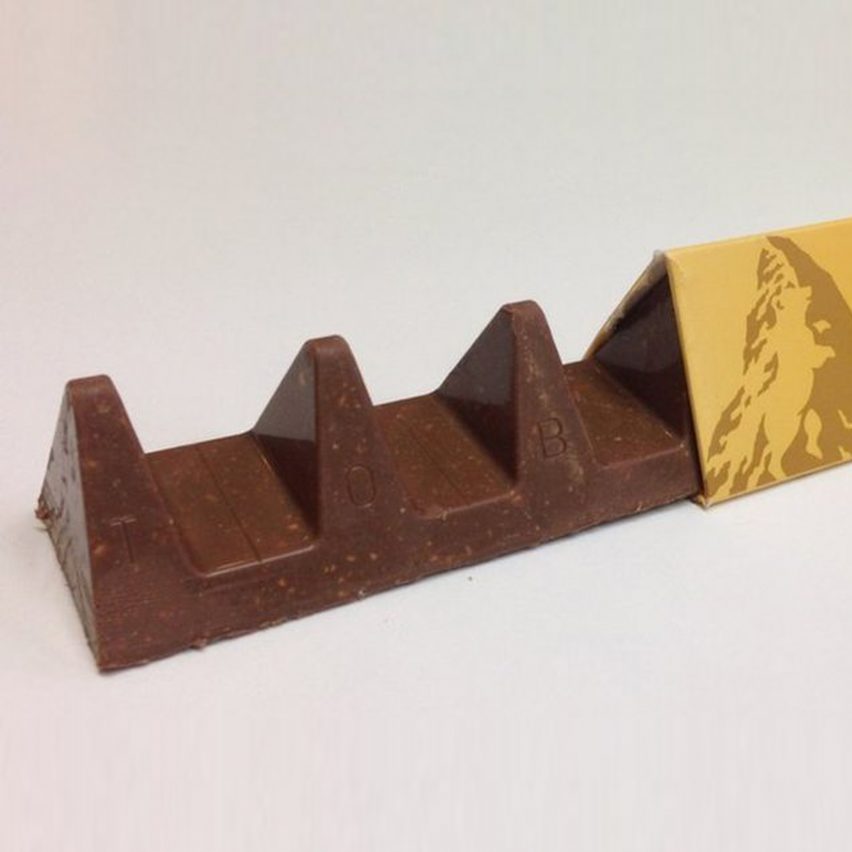
A savings-driven redesign of the iconic, triangular Toblerone chocolate bar has not gone down well with the British public. Read more
A savings-driven redesign of the iconic, triangular Toblerone chocolate bar has not gone down well with the British public. Read more

¿Great home or small town? Arts center of Verin provides the intimacy of a home and the heterogeneity of a town.
The initial approach of the project comes from a previous study of the environment.
From this analysis, we get the conclusion that Concello do Verín stands out by the heterogeneity of its blocks, which have been developed around an urban nucleus. Even though each block has different shapes, the way they are set is the same in most of them.
This occupation is based in many small buildings that are aligned with the edges of the patchs, standing next to the road and leaving gaps to the interiors for common spaces, grouped in this way, into small communities or ‘towns’ within the whole Verin. ‘Towns’ with a random order that are being defined by the flexibility of its uses.
This project is a Centre of Arts where the fact that each use works by its own way but on balance is emphasized. The example we follow is the scheme above mentioned, where each unit works independently to the exterior and in conjunction to the interior, not interfering with others.
This basic premise involve the concept of the proposal. Each use of the program required by the City Hall materializes as a unit, as a volume that is aligned to the edge of the plot creating a space of coexistence and relationship, without hierarchies, supporting the idea of small community.
Once comes to this point, we reach the conclusion that it is impossible to avoid the relations between the different uses, so respecting the scheme of individual volumes to the exterior and common space to the interior, the units are sliding according to its use and letting interstitial spaces appear.
The Centre of Arts turns into a space of cohabitation of different activities, an special place where its units works as separate ‘houses’ and as ‘town’ all together.
Formally the design method is surprisingly accurate. The displacement and delicate turn of volumes generates a random appearance scheme but full of relationships and variants. It is a place defined by its own flexibility, unpredictable. Something involuntary that occurs as a result of the relationships of their own uses.
Between volumes irregular spaces arise as a cell, places of different scales that allow users enjoy rooms center and hide at once. Like a small town, center users interpret and live spaces freely and at will. They walk from one side to another, seeking privacy behind a corner or leave, are left to see and relate.
In conclusion, this scheme make separation and connexion of the units compatible, generating numerous nucleus that interact and change depending on the use of its occupants.
The general aspect is filled by ‘the fifth façade’ of the building, the deck. In this case, it is made of green cover.
Despite of the simplicity of its construction ( concrete and glass volumes), the centre has a outstanding character, without dismissing the environment it is set and taking care about the scale (size and height) with the surroundings.
Due to the way it is set in the plan, and the independence of its use, this is a centre that can be changed and expanded easily, because both appearance and operation are unalterable.
Talking about the access, the visitor could entry through a large square in the corner where the three main roads conclude. A walk that will continue inside the building to enhance the idea of ‘town’.
In addition, every time that the volumes contact with the edge of the patch, some common spaces are generate, at the same time of exterior access of each volume is created.
The last remarkable aspect of the building is its sustainable manner, due to the materials in the urban land (Green spaces and recyclable pavement) and the installations, that allows energy and water savings.
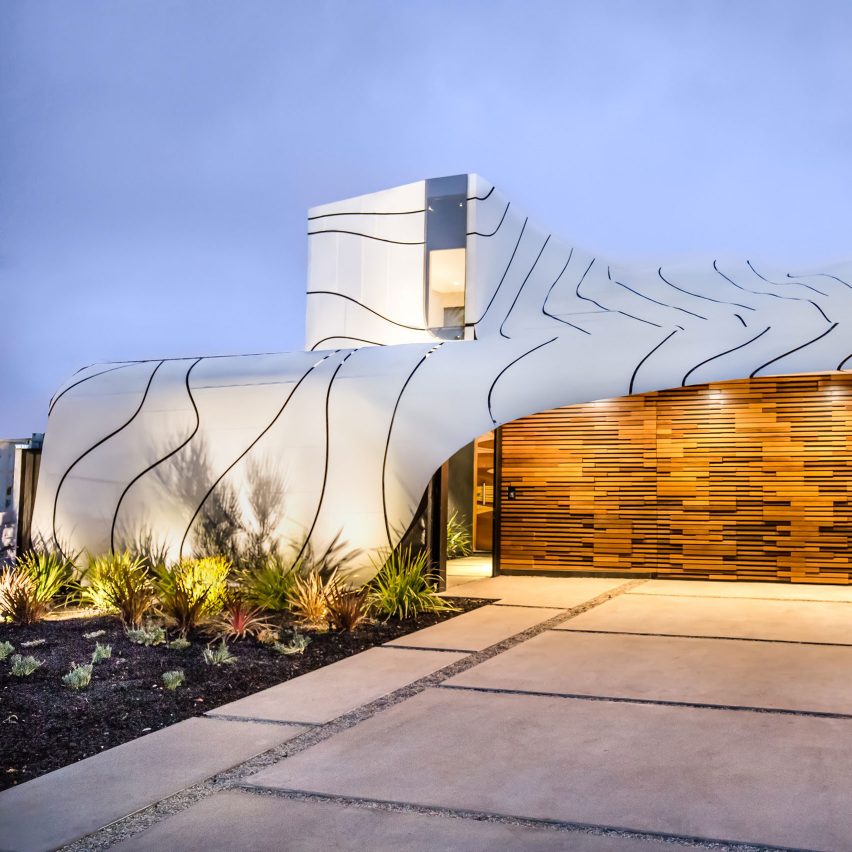
The undulating metal exterior of this family home by Los Angeles designer Mario Romano takes its cues from the movement of the ocean. Read more

JAJA Architects has been announced as the winners of an open international competition to design a new parish church in the Sydhavnen (South Harbor) district of Copenhagen. When completed, it will be the first new church built in Copenhagen since 1989.
The competition, organized by The Danish Association of Architects, sought proposals for a 3,200 square meter church to be located on a waterfront site in the revitalized district of Sydhavnen that could be used for a range of religious, social, cultural and musical events. Construction of the church is expected to be completed in 2019.
Continue reading to see the winning proposal as well as several additional entries.
Project description via JAJA Architects. Designed as an upward-moving spiral walkway of ramps, the harbor landscape merges with the church roof, inviting the city dwellers to ascend to the top and enjoy the view. A gathering point for the congregation as well as for the whole city, the church space with its view of the city skyline becomes common property.
A colonnade following the movement of the façade from the bottom to the top forms a soft transition between inside and outside, accentuating the building entrances along the way. The spiral walkway enables direct access to all the church functions without passing through the main entrance. Various terraces form little havens along the walkway, inviting people to pause for a while and let thoughts flow freely.
The more ‘extrovert’ church functions are located on the ground floor, such as the main entrance, the café and the lively cultural spaces towards the harbor, providing active façades along all sides of the building. The nave is placed on the top floor, its inner spiral form reflecting the outer shape of the church.
Water is a universal element to the church – both by its Christian reference, but in as much as a reference to the harbor and the location by the waterfront. Architecturally, the water becomes an integral part of the church experience by letting a water spring create a flow of water basins and water gardens, as it trickles down the building from a source on top of the church to the harbor. The water experience will vary as a reflection of the weather throughout the day. Heavy rain will cause the water basins to overflow, creating a dramatic series of smaller waterfalls along the church façade. The colonnade offers shelter for the rain, allowing for poetic experiences in all weather.
Project description via Studio David Thulstrup. As part of Folkekirken (The Danish National Church), the new Sydhavn parish has an important role in Danish society and it’s immediate surroundings. The new church in the harbour district called “Sydhavn” is to house all the necessary framework for the parish daily service as well as an abundance of cultural activities for it’s citizens. The aim was to have the right balance between the public-, holy-, and a ceremonial atmosphere. It was therefore important for us that the church had the visual qualities that make it recognisable as a church, both from the street and in the church itself.
A church space has been intended as a place where the church guests have an opportunity to form a bond with the parish and celebrate some of their lives momentous occasions. From baptism, weddings and funerals, the church is designed to accommodate the full range of human emotions.
Relatively early in our design process, we took the decision that the building’s appearance should communicate its programme. The combination between a church and a culture house was very interesting to us and we felt that it should be very clear which is which. Depending on where the building is seen from, one would be able to read the programme of the building. This gives the building a juxtaposed, but a very dynamic appearance.
The choice of light bricks as the church’s facade material is chosen based on its natural and welcoming nature and connection to the greater Sydhavn context. The brick is strongly represented throughout the building, both inside and out. Other selected materials, for example, concrete, glass, metal and wood. All chosen materials mature beautifully, hold a great tactility and durability.
Project Description via Architects of Invention. This design proposes a church with a vertical emphasis, creating a distilled space for religious ceremonies, and an accessible venue to the community for a variety of activities both day and night. The proposal reflects the industrial past of the site, taking one of Copenhagen’s landmarks – Masterkraanen – as an inspiration.
Analysis of traditional church architecture (in Copenhagen especially) suggests that the organization of church buildings is mainly horizontal. Although churches themselves may be tall, there is no functional use made of the verticality of the church (except in a notional or spiritual capacity).
Taking this as a starting point, we developed the concept of a Vertical Church. This new church would be able to provide operational space for a full range of activities (mass, concert, lecture, etc.) – but as a vertically inhabited space, the building becomes more intense as well as more flexible. The skin of the building is designed as an exterior structural skeleton with a fractal pattern creating sharp shadows inside. From a distance, it appears as a blurry abstract cloud with a distinctive silhouette.
In using raw materials (wood, concrete, etc.), we preserve the stature of the building as well as making it a more sustainable project.
Competition Brief via the Architectural Review. News via JAJA Architects, David Thulstrup Studio, Architects of Invention.

From the architect. Incorporating the site’s dynamic landscape into the daily life of its residents, the Bracketed Space House is designed as a meaningfully-framed procession through the property with nuanced natural lighting throughout. A continuous and jogging retaining wall from outside to inside embeds the structure below natural grade at the front with flush transitions at its rear facade. All indoor spaces open up to a courtyard which terraces down to the tree canopy, creating a readily visible and occupiable transitional space between man-made and nature.
The courtyard scheme is simplified by the common and private wings – connected by a glass dining “bridge.” This transparent volume also visually connects the front yard to the courtyard, clearing for the prospect view, while maintaining a subdued street presence. The staircase acts as a vertical “knuckle,” mediating shifting wing angles while contrasting the predominant horizontality of the house.

Janne Kyttanen has become the latest designer to wade into the US election, creating frozen treats based on the presidential hopefuls. Read more
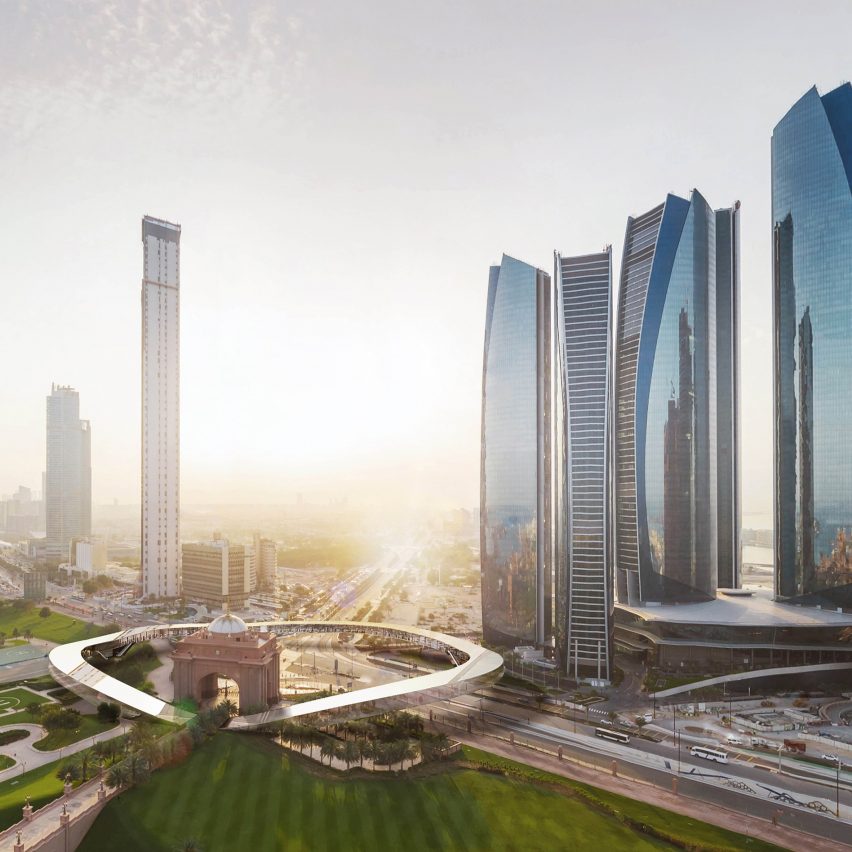
Bjarke Ingels Group has today unveiled its designs for the world’s first Hyperloop high-speed transportation system in Dubai, which is to feature pods that travel at “near supersonic speed”. Read more
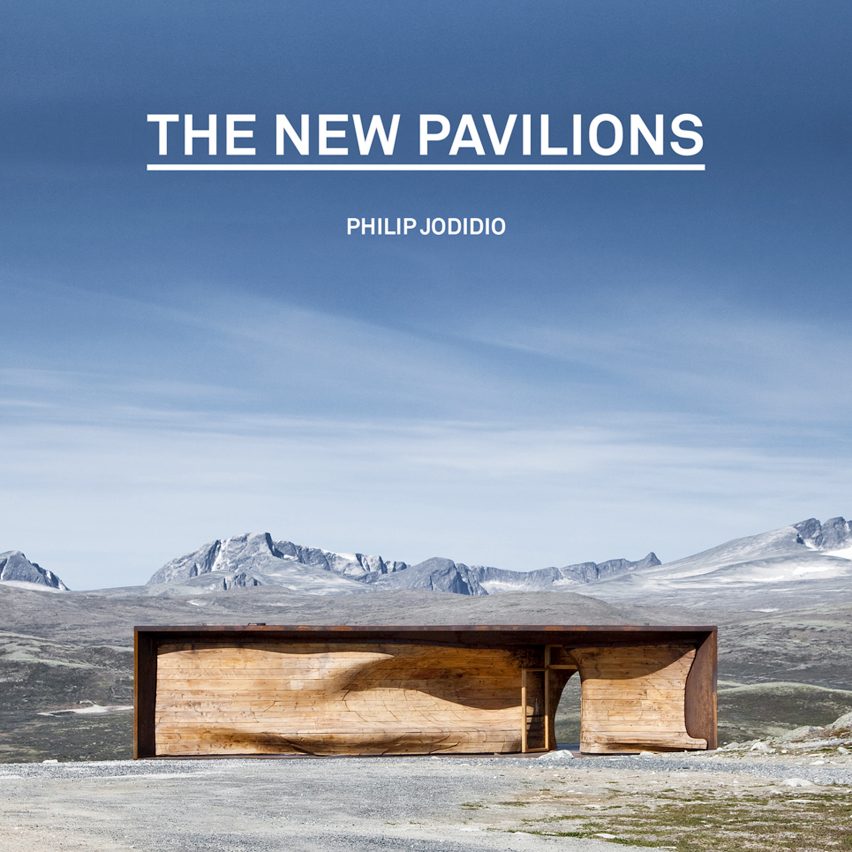
Dezeen has teamed up with publishing house Thames & Hudson to give readers the opportunity to win one of five copies of The New Pavilions book. Read more
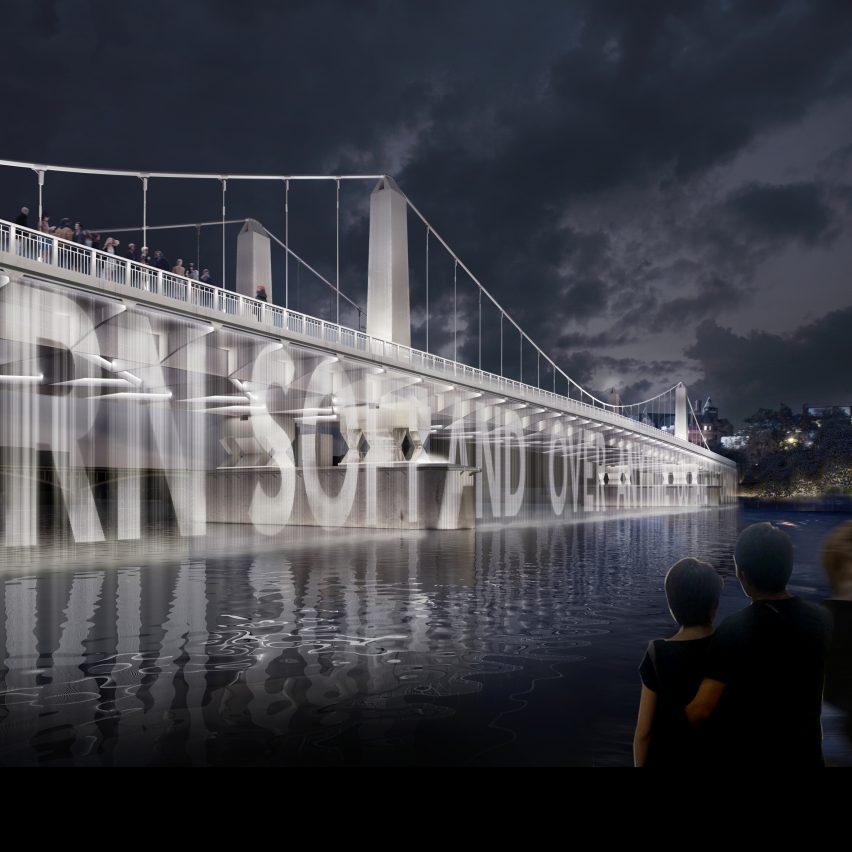
David Adjaye, Amanda Levete and Diller Scofidio + Renfro are among the six design teams shortlisted to create light installations for the bridges on London‘s River Thames. Read more

Our job of the day from Dezeen Jobs is for a product and furniture designer at Thomas Heatherwick’s London studio, whose design for a Garden Bridge over the River Thames is pictured. Read more stories about Thomas Heatherwick or browse more architecture and design opportunities on Dezeen Jobs.

