In this latest set of illustrations from Federico Babina, the artist envisions set designs in the styles of 27 of history’s greatest architects, using signature elements from some of their most notable works to “stage [architecture] as if it were an architectural play.”
“In these illustrations I try to transform some famous architects in set designer of his own work,” explains Babina. “I imagine spaces set up for a performance of a show that relates the architects’ work. Stage machinery that simulate architectural illusions, which draw from the language of the characters to represent an architectural metaphor. The architecture dress up, wears makeup and is transformed to play herself in a show where the volumes and forms write the dramaturgy and relating stories.”
Babina likens the set to “a virtual theater where the scenography, the architecture, the light, the shapes and the objects create a tiny show to make a short trip with the imagination and fantasy through an aesthetic universe inspired by architecture and some of its protagonists.”
Located in Xomalli street 153, in the town of San Lorenzo Huipulco , the xomali house it develops through two floors and a mezzanine on a plot of land of just 35.64 m2, each program element is accurate within the project settings , with the intention of re think the minimum dwelling space. The scheme has a commercial ground floor , the first floor contains the public spaces consists of the kitchen, living room, service area and a double-height study; the third floor has a mezzanine that contains the master bedroom as the most private core.
Axonometric
The location of the house on the street facing has made a distinction in urban silhouette, proposing a reconfiguration in integration into the context, becoming an urban reference.
In terms of program, the project is a single room with trading floor; but our goal was to solve the complexity of living in community. So we seek the independence of the individual, through the quality of space:
An interaction place was respected in the center of the field: a courtyard as consequence to the location of the earlier buildings and the proposed new space, an interaction space for members of the three families occupying the same land.
Section
Section
Ownership of the building, in obedience to individual complexity. In a double access, alternating a dual identity that responds to be in family, and the identity needed to be independent.
The “low cost” that does not compromise the quality. The greatness of space focuses on attention to the detail. A materiality without presumption, frank and is no stranger to the individual. Sensory appropriation of space through the correct handling of light also was one of the resources used.
Section
House Xomali is a contribution to the imaginary of emergency social architecture in Mexico City. Through this exercise we reinforce the identity of a family, and support the emancipation of the individual, making easy a community life, which is a feature -and not an obstacle- of Latin American society.
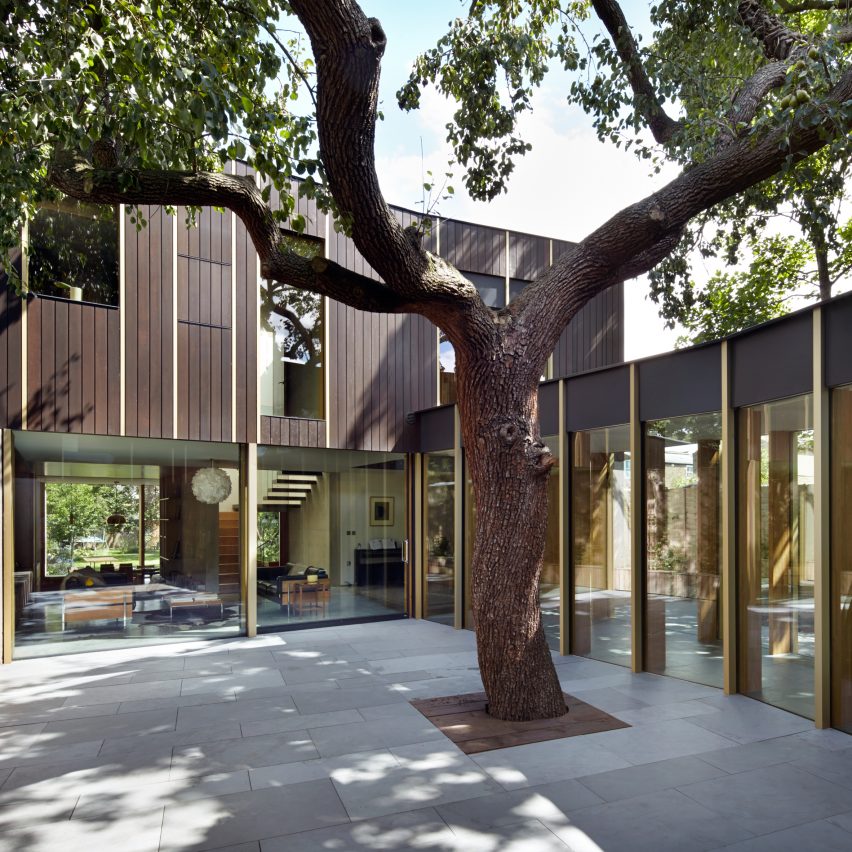
This house in south London, arranged around an old pear tree, was designed by British architect Jake Edgley as a home for himself and his family. Read more
Collaborators: Carlos Domingo (Structure), Ingeniería Torné (Instalations), Juan Pedro Fuentes (Technical Architect), María Roda (Instalations), técnicos del Departamento de Política Territorial, Justicia e Interior (Luis Faci, Alejandro Rincón y Sergio Sebastián)
The building follows a specific scheme in order to host the Provincial Court offices. It is developed in two different volumes that are mainly defined by a large vitrine. The first volume, with a rather strict geometry, comprises the judiciary facilities and both the Prosecution and Provincial Court Presidency Offices. The second one, the ground floor, has a more organic nature and it hosts the courtrooms and the most public spaces of the building. These formal and constructive solutions respond to the requirements of each volume and the way they are used.
The ground floor structure is made of exposed concrete with some openings. The upper floors, however, have a double aluminum panel and a curtain wall on the east-west orientation. The north-south orientation is completed with exposed concrete walls.
Section
Our solution maximizes the useful surface of these floors by placing the air conditioning system between the slats and the façade, granting a simpler and more effective maintenance. The building incorporates other energy use systems, such as façades with solar control based on their orientation and photovoltaic panels.
The building’s main entrance is an urban space located on the ground floor. The other independent entrance gives access to the Summary Court and will be used when the remaining courtrooms are closed.
The courtrooms and the main hall, used as entrance hall and waiting room, take up a big part of the ground floor. The Civil Register, the Police Court, the offices and a multipurpose room for conferences, weddings and public ceremonies are located on the remaining space of the building.
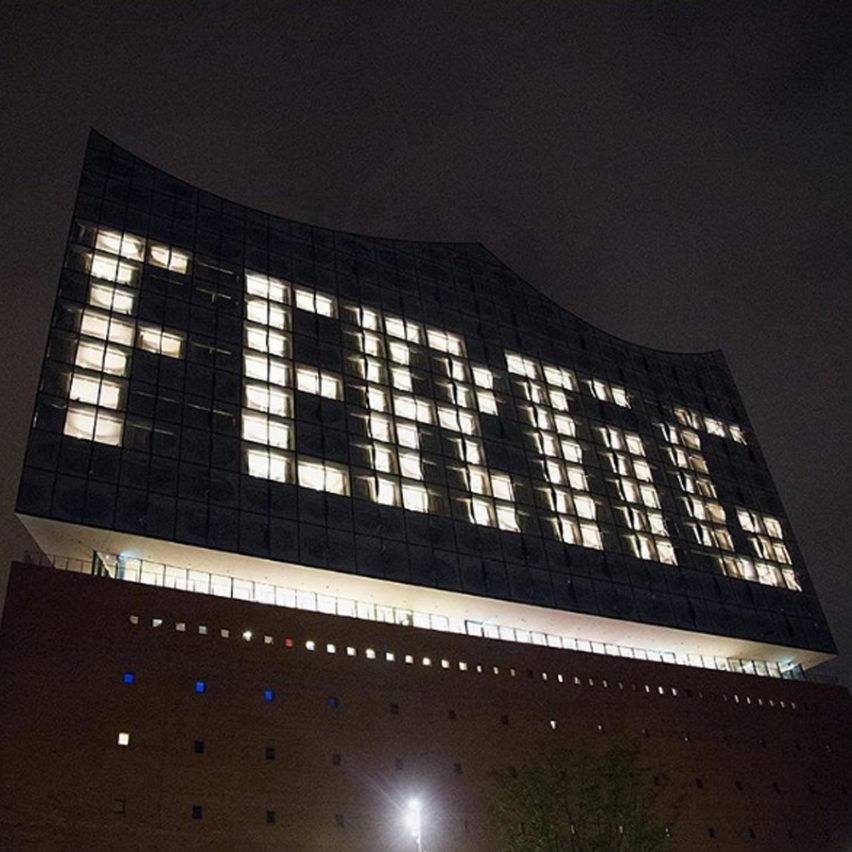
Which are the architects, designers, brands, schools and events that Dezeen readers most wanted to read about over the last year? We’ll reveal the answers when we launch Dezeen Hot List on 9 November. Read more
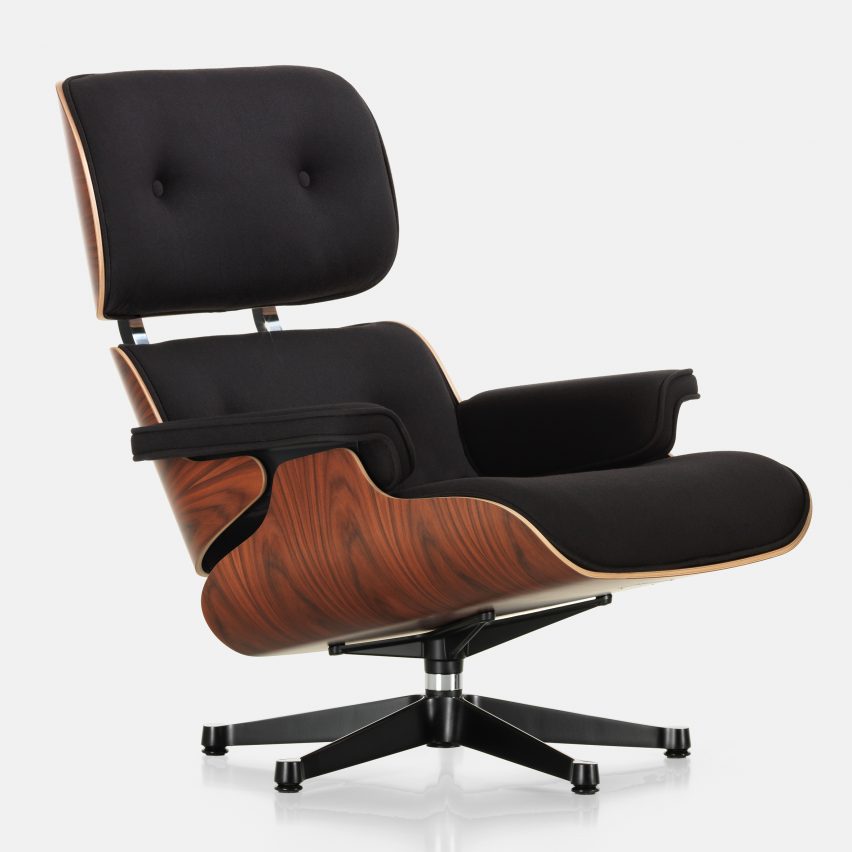
Swiss furniture brand Vitra is launching a limited-edition version of Charles and Ray Eames‘ Lounge Chair to commemorate its 60 years in production. Read more
Somatic Collaborative has unveiled its design for Neapolitan Housing and Co-working Complex, a new urban block typology located in Gravatai, Brazil, that contrasts the traditional landscape of repetitive housing types that dominate the urban peripheries of Latin American cities. Like a Neapolitan ice cream, the project’s buildings will be layered, housing a variety of residential units and co-working space.
In a drastic shift from typical low-rise residential enclaves, gates, and walled compounds, the project will create high-density urban blocks “that engage the street as a source of urban life” through porous borders that encourage new city centralities. A semi-porous perimeter block with retail and commercial space will allow the project to better interact with its surroundings while designating the distinction between public, semipublic, and private space through the buildings’ masses.
Courtesy of Somatic Collaborative
Through mixed-use commercial programming on the first floor, the project will additionally provide direct sources of employment on site. An 8,000 square meters of multipurpose co-working space for the textile and clothing industry will be incorporated here, thanks to a partnership with Plataformadamoda.com.br, a digital platform that links clothing manufacturers to retailers nationwide in order to cut production prices.
Courtesy of Somatic Collaborative
Courtesy of Somatic Collaborative
Courtesy of Somatic Collaborative
A diverse array of residential units ranging from micro-studios to two-bedroom units will occupy the upper floors of the buildings, allowing for a broad range of ages and family structures to thrive. “This plurality of unit types is an incredible asset to the project,” said Roberto Carvalho Dias, CEO of Self-Sustaining Urban Development Fund (SUD-F), and developer for the project. “We are constantly getting extended nuclear families who want to move in with parents, in-laws, etc. but they cannot afford to buy two houses, the idea of combining a two bedroom apartment with a smaller studio apartment addresses this issue perfectly.”
Courtesy of Somatic Collaborative
Courtesy of Somatic Collaborative
Taking advantage of the steep topography, a series of gardens and open spaces merge the perimeter envelope and the bar into a composite hybrid that makes up the block. A vehicular and pedestrian passageway cuts across the east – west axis of the project, flowing with the topography of the site. Parking is then hidden in the middle of the block. This central spine organizes a series of public, collective and private open spaces that adapt to the topography and minimize earth-work explained Felipe Correa, the lead designer for Somatic Collaborative in a press release.
Courtesy of Somatic Collaborative
Courtesy of Somatic Collaborative
The initial phase of the project will consist of three urban blocks, which will be a mix of perimeter blocks that accommodate co-working space, and a series of residential bars that promote cross ventilation in hot, humid climates.
A real-time synthetic environments screen grab of the reception area at St Helens and Knowsley Teaching Hospitals NHS Trust in St Helens, UK. Image Courtesy of Arup
Evaluating the user performance of a particular building design is obviously a good way for clients and architects to gauge whether their design was successful—or could have been better.
There’s even an entire academic discipline called post-occupancy evaluation (POE) devoted to this concept, and Arup is tapping into it with a network of 22 industry partners using the Building Use Studies (BUS) methodology. Too few designers tap into POE, but with gamified simulations done before projects are built, that could change.
Admiralty station screen capture. Image Courtesy of Arup
“Basically, you design the thing, you use the thing, and then you evaluate the thing,” says Alvise Simondetti, global leader of Digital Environments NeXt_work at Arup. “That process generates concrete ideas for improvement. Everyone in architecture and design acknowledges that post-occupancy evaluation is important so that we don’t keep making the same mistakes. But in practice, it’s not done as often as we would like.”
Two reasons why POE isn’t a regular practice in architecture is because fees are often not built into projects for Post Occupancy work, and there is some reluctance from the industry to engage. POE has to take place when a building is, well, occupied. And studying the effectiveness of intensively used buildings like stations, airports, or hospitals can be difficult in terms of engaging numerous users who are going about their daily business. “It’s sometimes a challenge,” Simondetti says.
And there’s at least one more factor—a psychological one that tends to suppress wider use of POE: The process can be perceived as being about detecting design mistakes when its intention is really to evaluate the positive attributes of a facility and optimize operations for a better building.
Simondetti is leading a movement that directly confronts these frustrating challenges by pioneering an evaluation discipline he cheerfully (and somewhat oxymoronically) calls post-occupancy evaluation preconstruction (POEPC).
Three-monitor wide screen capture of the Admiralty station environment. Image Courtesy of Arup
One POEPC project he led was the expansion of Hong Kong’s Admiralty railroad station, the city’s busiest stop. Arup was hired to design two more train lines in Admiralty, which doubled the number of train platforms and increased the number of possible journeys to more than 50.
Simondetti used 3D-design models of the station and a video-game engine to create a realistic station environment complete with contextual sounds, accurate signage and visual cues, and hordes of avatars milling about to simulate crowded conditions. He then installed a system that allowed users to “joystick” an avatar through the station. The experience simulates walking, with head-height visual feedback projected on three monitors that fill the user’s peripheral vision.
In this case, Arup was evaluating proposed signage and wayfinding schemes—an important thing to test in a station already serving one million passengers daily. By asking users to navigate from point to point through the modeled station and measuring their speed as they passed various digital checkpoints, Simondetti was able to gather crucial information on how well proposed wayfinding structure worked in actual conditions. Thus, he was doing post-occupancy evaluation in an accurately modeled environment in the preconstruction phase, before any signage was physically installed.
A designer explores crowd-sourced design feedback of the Admiralty station gathered from a public-exhibition wayfinding session. Image Courtesy of Arup
This way, Arup was able to crowdsource the wayfinding-design process, and the virtual testing and analysis returned extremely practical results. For example, testing by hundreds of users revealed a persistent bottleneck at the bottom of one four-story escalator.
“Looking at the signage in this area in 2D, everything was fine,” Simondetti explains. “But when our virtual users joysticked through this area and down the escalator, it turned out that important signage was obscured during part of the escalator ride, and users tended to stop in confusion at the bottom. Without the virtual analysis, we wouldn’t have discovered the problem until after real users had created an actual bottleneck.”
Ultimately, Simondetti’s use of this real-time synthetic environment identified 235 potential problems with the 970 proposed new signs. The projected efficiency gains are hard to quantify, but the POEPC process certainly saved Hong Kong commuters hundreds of thousands of hours of confusion.
But Admiralty is not the only POEPC project to create a better experience for users. POEPC is something Simondetti and his team has been experimenting with for years—and in different contexts. “Hospitals are similar to train stations, in that they are used by large amounts of people that make many daily trips from point to point, so they are suitable for this kind of analysis,” he says. “Arup applied an earlier qualitative version of POEPC for VINCI Construction UK Ltd and the St Helens and Knowsley NHS Trust during design more than 10 years ago. The hospitals were some of the first to be built new in the UK using the POEPC process, are operational now, and are widely considered to be a great success.”
Here, design models and the gaming engine were again used to create a highly realistic hospital environment. But instead of random users, the joystick was turned over to the experts who would be actually working in the new hospital. One notable breakthrough came when nurses were asked to “use” a proposed surgical theater.
A wayfinding session of the Admiralty station environment at a public exhibition. Image Courtesy of Arup
“The nurses seemed to be the most interested of all the stakeholders we asked to review our designs, and watching them joystick around the theater really raised their confidence, and ours, in our design,” Simondetti says. “One of the first things they asked was, ‘Where’s the bathroom?’ It turns out that, since operations can last for hours, surgical teams need bathrooms that are near, but not actually in, the theater. Making that change in the design phase saved a lot of trouble for everyone.”
POEPC continues to evolve as a discipline. Simondetti has already tested variations to the process: networking multiple users, equipment-interface design (for things like elevator panels), A/B testing (performance evaluation of multiple designs), and introducing sounds and other feedback triggered by specific user actions. Currently, Simondetti’s team is working on new wayfinding projects that are going through RFP.
But even with initial versions of the technology, results are literally game-changing—no more bottlenecks of people at the end of escalators or nurses running down the hall at breakneck speed to the bathroom.