Politeama Theatre / Estudio Lorieto-Pintos-Santellán arquitectos


© Pablo Pintos

© Pablo Pintos


© Diego Villar


© Diego Villar


© Pablo Pintos


© Pablo Pintos

  • Structural Engineer: Ing. Carlos Scoseria
  • Air Conditioning And Fire Protection Engineers: Ing. Luis Lagomarsino
  • Sanitary Engineer: Pablo Richero
  • Mepf Engineer: Walter Riveiro
  • Acoustics: Arch. Gonzalo Fernandez

© Diego Villar

© Diego Villar

OBJECTIVES

As a result of the need to build a new front of house (cafeteria, administration, restrooms, staff areas, etc.) and to change the circulation layout to provide for universal accessibility, the spatial perception of constricted public areas was doubled. The new building associates with the existing one in a complex manner. First, it acknowledges the primary role of the theater building, and takes from it its design guidelines: material and color, its own height and the height of its formal components, how its façade aligns, and the leading role of solid over hollow. However, this relationship is strained by opposites: the weight of the older building contrasts with a light construction that disregards massiveness while choosing planes that join together following the logic of an origami. While the former’s genetic memory features stone, the latter’s one features paper. The plot of land for the new building had been surrounded by a wall that replicated the material and the esthetics of the theater. What ensued shows a contemporary sensitivity that – as expressed by Solá-Morales – waves from resemblance to analogy.


Courtesy of Estudio Lorieto-Pintos-Santellán

Courtesy of Estudio Lorieto-Pintos-Santellán

CONTEXT

Teatro Politeama is the main cultural center in the City of Canelones (Capital City of the homonymous Department, pop. 100 000). It was built in 1921 to become, for 60 years, the venue not only of arts and sports events, but also of circus performances. Teatro Politeama was closed in 2012, after years of progressive deterioration caused by normal wear-and-tear added to some ill-advised architectural interventions. The local government, owner of the building, then decided to call for tenders in order to recuperate and complement the theater for it to turn into a cultural complex. Therefore, not only was the building envelope restored, but several requalification operations were performed concerning stage, audience and services. The original project was supplemented with a multi-purpose area (for rehearsals and smaller-scale drama or musical performances), classrooms, administrative, direction and staff support offices, as well as a cafeteria. Furthermore, these actions included redesigning the circulation layout and the services location, in order to provide for universal accessibility in the whole complex. The Politeama Cultural Complex reopened on September 19, 2014. Construction took eight months.


© Diego Villar

© Diego Villar

Sketch

Sketch

Courtesy of Estudio Lorieto-Pintos-Santellán

Courtesy of Estudio Lorieto-Pintos-Santellán

PERFORMANCE

Since it was reopened, the Politeama Cultural Complex has shown great vitality. Programming has been very busy in all its different areas: music, dance, theater, academic and social activities, etc., most often filled to capacity. As to education, it hosts a branch of the National Dance School, a permanent theater troupe, and a music school. Along with reclaiming the theater building came the improvement of some public areas, e.g. the street became semi-pedestrian, as an extension of the neighboring square. Opposite the Complex stands another historical building in precarious conditions, which nonetheless hosts music classes, both instrumental and lyrical. Based on the success of Teatro Politeama, it has been announced that this building will be refurbished. Once this becomes a reality, Canelones will have a Cultural Center of a dimension consistent with regional scale.


© Diego Villar

© Diego Villar

Plan / Section

Plan / Section

Courtesy of Estudio Lorieto-Pintos-Santellán

Courtesy of Estudio Lorieto-Pintos-Santellán

http://ift.tt/28PmnlU

Honey Releases Amazon Price Protection to Find You a Better Deal

We’ve told you all about
the couponing tool Honey, which automatically hunts for and applies coupon codes for your online purchases. The browser extension recently released a new feature that can help you find better prices on Amazon.

Read more…

http://ift.tt/28JVQa4

Spectacular sunrises are a fantastic way to start an adventure…

Spectacular sunrises are a fantastic way to start an adventure in Shenandoah National Park in Virginia. Photographer Elliott Cliborne captured this brilliant photo at the top of Mary’s Rock, where a 3.7-round trip hike along the Appalachian Trail leads to expansive views. Of the experience, says Cliborne: “It was by far the best sunrise I experienced in over 400 miles of hiking last summer.” Photo courtesy of Elliott Cliborne.

Video: Reiulf Ramstad Explains “The Nordic Way of Building”

“We believe that architecture makes sense when it’s anchored in the locales where it’s built, and the people who are going to use it. That’s why I’m not so occupied with the zeitgeist of architecture.”

In this interview from Louisiana Channel, Oslo-based architect Reiulf Ramstad discusses how the Scandinavian landscape is at the core of his design concepts. In a context of globalization, increased mobility, and communication medias, Ramstad believes “the depth of the locale becomes shallow.” His architecture contrasts this mainstream approach by offering designs specifically tailored to Norwegian cultural heritage and the landscape of its remote areas.


National Tourist Route Trollstigen / Reiulf Ramstad Architects + Oslo Norway . Image Courtesy of Reiulf Ramstad Arkitekter

National Tourist Route Trollstigen / Reiulf Ramstad Architects + Oslo Norway . Image Courtesy of Reiulf Ramstad Arkitekter

Ramstad first introduces his project for the National Tourist Route in Trollstigen, an opportunity to build in one of Norway’s most impressive landscapes. Norway is one of the rare places where untouched nature is familiar, so Ramstad wanted visitors to feel surrounded by the larger landscape space. He explains that his design strategy was to clarify what is natural from what is man-made. The project is “more a landscape than a singular building or a bridge,” as it takes almost 30 minutes to walk from one place to the other. In designing the project, Ramstad explored the “value of depth of time,” which he further identified during the construction process because of the difficulty of dealing with nature’s brutality: “We erected test elements and when we came back the following year, they were gone. I believe we’ll need that insight in the years to come because the climate will change, the weather will be more brutal, so that way of testing architecture through the Trollstigen project has given us a lot of experience.”


Split View Mountain Lodge / Reiulf Ramstad Architects. Image © Søren Harder Nielsen

Split View Mountain Lodge / Reiulf Ramstad Architects. Image © Søren Harder Nielsen

With his Split View Mountain Lodge project, Ramstad explored Norway’s well-established culture of cabins as second homes. As he says, “the holiday cabins that are made become a kind of suburbia and in a way the natural landscape turns into a slum because people want to bring the same lifestyle with them into nature.” In contrast, Ramstad thinks that a house built in a natural setting should be the opposite of the urban house. The Split View project is “anchored in the locale so that you almost get the feeling of being outside,” and “some of the windows are created in such a way that when you’re inside there’s just a climate membrane between you and nature. The glass is fixed so that you don’t see the frame to bring it closer.”


Square House Veierland / Reiulf Ramstad Architects. Image Courtesy of Reiulf Ramstad Arkitekter

Square House Veierland / Reiulf Ramstad Architects. Image Courtesy of Reiulf Ramstad Arkitekter

Community Church Knarvik / Reiulf Ramstad Architects. Image © Hundven-Clements Photography

Community Church Knarvik / Reiulf Ramstad Architects. Image © Hundven-Clements Photography

The video further outlines some of Ramstad’s projects – the Square House VeierlandCommunity Church Knarvik, Romsdal Folk Museum, and Selvika National Tourist Route – while the architect highlights how the climate has made him very pragmatic, and how, in contrast to today’s global context, “In the Nordic societies people will live ever closer” adding that he is “convinced that quality of life is not necessarily connected to the abundance of space or quantity.”


Romsdal Folk Museum / Reiulf Ramstad Architects. Image ©  Erik Hattrem, Reiulf Ramstad Arkitekter

Romsdal Folk Museum / Reiulf Ramstad Architects. Image © Erik Hattrem, Reiulf Ramstad Arkitekter

Selvika  / Reiulf Ramstad Architects. Image Courtesy of Reiulf Ramstad Arkitekter

Selvika / Reiulf Ramstad Architects. Image Courtesy of Reiulf Ramstad Arkitekter

http://ift.tt/28P75gQ

Clean Dirty Paintbrushes In a Snap with a Fork

Your paintbrushes should be clean and dry when you store them, but getting all that paint out of the bristles can be messy. Rather than use your hands or buy a brush comb, grab a fork to get between those bristles.

Read more…

http://ift.tt/28P6z2u

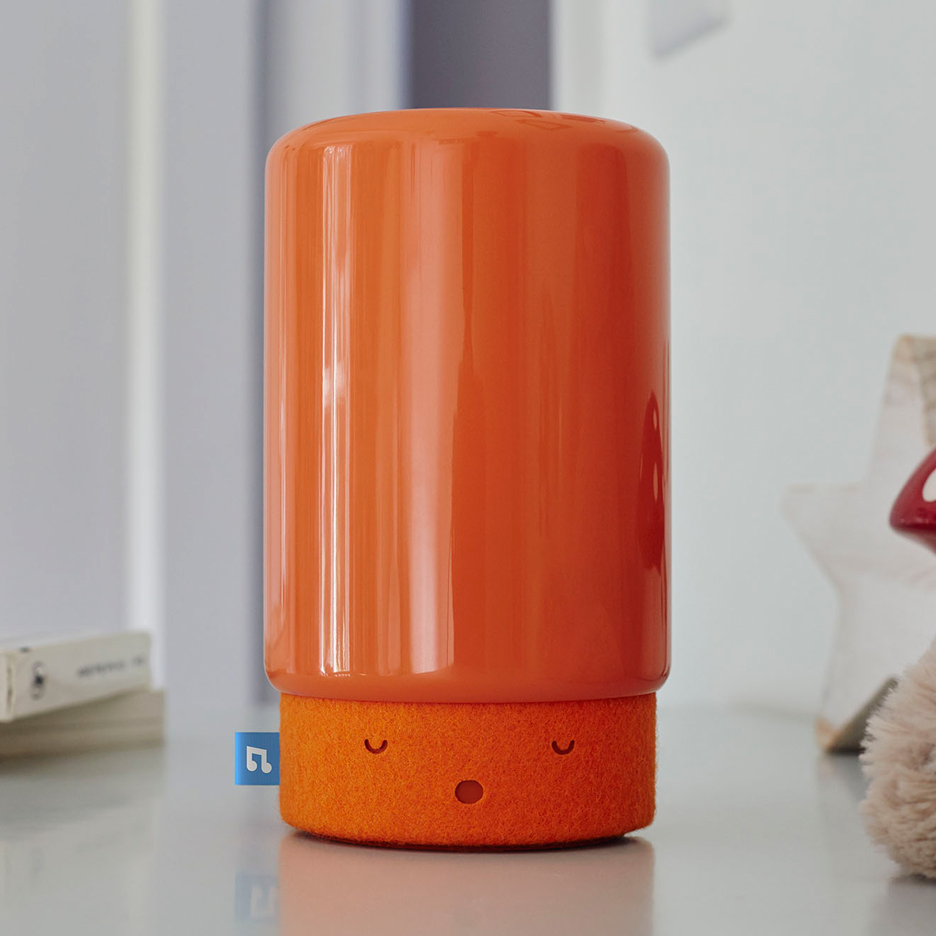
Suzy Snooze baby monitor uses light and sound to help children sleep


Parenting technology company BleepBleeps has designed a device that combines a baby monitor, sleep trainer and night light, all in the shape of a friendly face wearing a hat (+ slideshow). (more…)

http://ift.tt/28P43JF

Make Delicious, Flavorful Poached Chicken with Kitchen Scraps

I always keep a bag of kitchen scraps—like onion skins, ginger peels, parm rinds, etc.—in the freezer, ready to be tossed in a pot of broth or stock, but now I have one more use for my bag o’ scraps: poached chicken.

Read more…

http://ift.tt/28KujDk