Five Spiritual Tools to Improve Your Intuition and Psychic Ability

Developing your intuition and psychic ability on your own is not an easy task, especially if you are a beginner.

But with the right tools you can develop and even enhance your psychic gifts naturally.

For ages, psychics have used certain kinds of divination and spiritual tools to nurture and improve their intuition and psychic abilities.

When used correctly, the tools I’m about to share with you can help you improve your intuitive sense to a great extent and benefit you enormously.

spiritual_toolsGiven here is a list of five spiritual tools that you can use to develop your intuition and psychic skills.

1. Tarot Cards:

Tarot cards or angel cards are commonly used by psychics all over the world.

The images, symbols, and colors on these cards trigger the right side of your brain, which is associated with creativity, imagination, and intuition.

When used correctly, these cards communicate with your subconscious and give you the answers and insights that you need.

One of the important aspects of tarot cards is that they tap into the consciousness of the person who reads them.

This is why two people looking at the same card can interpret its meaning in different ways because the card talks to each person individually.

So, it is a great tool for fine tuning your gut instinct and intuition.

To make the most out of tarot cards and enhance your sense of intuition, you should allow the pictures to communicate with you, imagine what they could symbolize, and try to come up with your own interpretation, rather than learning the meaning of the symbols from a book.

2. Pendulum

The pendulum is one of the easiest tools to use and is also one of the most effective ways to physically demonstrate the power of your intuition.

Though it is primarily used to answer “yes” or “no” questions, it has many applications.

It can be used to find lost items such as car keys or cell phones, seek answers to your everyday problems, and confirm what you sense or feel about a particular object, person, or problem.

Simply, hold the pendulum in your hand and ask a question to which the answer is “Yes.”

Observe the way the pendulum moves and make a note of it.

Similarly, ask a question to which the answer is “No.” and make a note of its movement.

You can repeat this experiment until you find a pattern in the movement and can easily recognize which way the pendulum moves for a “Yes.” or “No.”’ response.

Once you do, you can use it to develop a keen sense of intuition.

It can be a little difficult in the beginning, and you may get a lot of wrong answers, but over a period of time, you can clearly recognize a pattern in the movement of the pendulum.

You can easily buy a pendulum from any metaphysical store.

However if you’re in a DIY mood, then just make your own pendulum; simply tie a string and a weight or with a gemstone for better results.

3. Gemstones:

Gemstones have been known for their ability to enhance intuition and psychic abilities for a long time.

They are used to help people communicate with the spiritual realm.

They are also used to ward off negative energies and act as psychic protection tools.

This is the reason why psychics and clairvoyants have always used gemstones for various purposes.

There are a large variety of gemstones available on the market, but certain stones like Azurite, Amethyst, Quartz, Moonstone, Turquoise, and Snowflake

Obsidian are known for their amazing ability to develop people’s sense of intuition and enhance their psychic abilities greatly.

You can wear these stones as jewelry, use them for meditating every day, or simply keep them in your possession all the time.

You need not buy all these stones, as any one stone that you feel a strong connection with will do.

As you continue to use your gemstones, you will be able to sense your power of intuition and clairvoyance increasing sharply.

4. I Ching

The I Ching can be used as a decision-making tool, similar to a pendulum.

When used regularly, it will improve your mental clarity and stimulate your sense of intuition significantly.

I Ching allows you to approach your issues in a completely relaxed manner.

Experts say that your psychic abilities and intuition are in a heightened state when you are relaxed.

Also, I Ching allows your subconscious to interpret things in your own way and produce a pattern.

Once you are aware of the pattern and the way your subconscious responds to various queries and problems, you can improve your sense of intuition exponentially.

5. Auto Writing Journal

Auto writing, or automatic writing, is a great way to connect with your inner self and develop psychic skills.

All you need is a pen and a notepad to jot down the thoughts in your mind.

This is a very simple and effective exercise to develop a strong sense of intuition.

You can also use a computer if you type faster than you write, but writing with a pen on paper feels a lot more personal than using a PC.

You should use a clean, white sheet of paper without any ragged edges and a pen or pencil that you are comfortable using.

Sit down in a quiet place and make sure you have at least 30 minutes of uninterrupted time before you begin the exercise.

Say a prayer or meditate for a few minutes before you get started.

It does not only clear the unwanted thoughts in your mind but also makes you receptive to your inner self and heightens your sense of intuition.

Write the question first, stay silent for a moment, and listen to yourself.

Do not try to think anything and do not be judgemental.

Trust your intuition and write down exactly what comes to your mind.

Do not worry about making grammatical or spelling mistakes.

Initially, the answers may seem random, but you will see a pattern over time.

You can keep experimenting with different questions until you get the answers you are looking for.

Once you do, you can use this experiment to validate your intuition on various issues in your life.

Here you have it!

5 awesome tools that you can use from the comfort of your home to develop your intuition and psychic ability!

While the tools mentioned above can help you develop your psychic abilities greatly, It is, however, important to remember that these tools do not give you predictive power.

It comes from within you.

These tools merely help you develop a keen sense of intuition and help you interpret the messages from your subconscious in the right manner.

The post Five Spiritual Tools to Improve Your Intuition and Psychic Ability appeared first on Change your thoughts.
http://ift.tt/2aN0V1M

Serpentine Summer Houses put up for sale on The Modern House


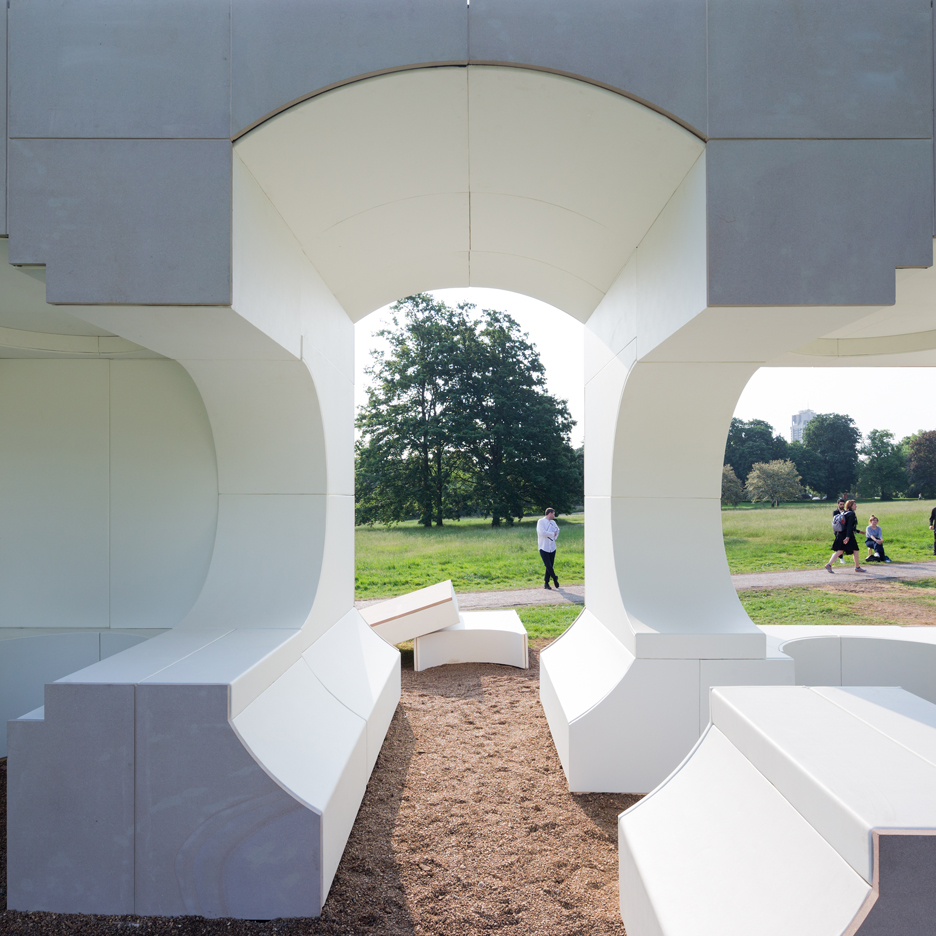
The four Summer Houses built to accompany BIG’s Serpentine Gallery Pavilion have been listed for sale through architecture-led estate agent The Modern House. (more…)

http://ift.tt/2adOXO6

Mohican Hills House / Robert M. Gurney


© Hoachlander Davis Photography

© Hoachlander Davis Photography


© Hoachlander Davis Photography


© Hoachlander Davis Photography


© Hoachlander Davis Photography


© Hoachlander Davis Photography

  • Owner : Withheld
  • Contractor : Steve McCaughan
  • Engineer: D. Anthony Beale LLC
  • Landscape Architect: Kevin Campion, Campion Hruby Landscape Architects

© Hoachlander Davis Photography

© Hoachlander Davis Photography

From the architect. Mohican Hills is a small community in Glen Echo, Maryland within very close proximity to Washington, DC. This community boasts an unusually high percentage of contemporary and mid-century modern houses relative to most Washington, DC suburban neighborhoods.  This community is adjacent to the Potomac River. Many of the lots have a steep sloping topography and share River views.


© Hoachlander Davis Photography

© Hoachlander Davis Photography

Plan 1

Plan 1

© Hoachlander Davis Photography

© Hoachlander Davis Photography

This new house, in Mohican Hills is located on one such lot. The house is positioned along the ridge of the sloping site and oriented toward distant river views.  A linear composition of spaces arranged along the ridge and open to an existing clearing provides a large lawn with minimal site intrusion and preserves the vast majority of mature trees. The house is organized around a two-story living space with an open floor plan that integrates a high-ceilinged volume with intimate spaces adjacent to the double height space. A small office on the first floor is separated from the living spaces and is convertible to a fifth bedroom. A three story entry volume separates the master bedroom area from the subsidiary bedrooms.


© Hoachlander Davis Photography

© Hoachlander Davis Photography

Plan 2

Plan 2

© Hoachlander Davis Photography

© Hoachlander Davis Photography

Expanses of glass provide views into the wooded landscape toward the distant river and animate the house with light.  A combination intersecting spaces insure light penetration all times of day and all times of the year.  


© Hoachlander Davis Photography

© Hoachlander Davis Photography

This house employs a concrete slab throughout the main floor which provides passive solar energy assistance. The concrete is stained dark with the goal of increasing the potential solar gain and storage.  Expanses of Energy Star glass provide an abundance of daylighting while solar sensitive shades mediate heat gain. Energy efficient appliances, high efficiency HVAC Equipment, wall and ceiling infrastructure with maximum insulation and a ventilated building envelope are employed with the expectation of reducing fossil fuel consumption.  Large operable windows and doors are located to provide natural ventilation and direct access to the outdoors. Thermally modified wood siding is employed as an alternative to exotic or expensive hardwoods.  The wood is forest managed and treated, non-toxic and durable.


© Hoachlander Davis Photography

© Hoachlander Davis Photography

http://ift.tt/2a2i0aT

Dezeen Mail issue 316 features this week’s best stories and discussions

What happens to your body and brain when you get too hot

Seoul’s Dramatic “New Towns” Are Captured in this Photoset by Manuel Alvarez Diestro


© Manuel Alvarez Diestro

© Manuel Alvarez Diestro

As Seoul’s population boomed, apartment blocks became commonplace. Photographer Manuel Alvarez Diestro spent 6 months exploring the city’s new towns, aiming to “reveal in visual terms the expansive nature of urbanization and the transformation of the landscape through the construction of these new housing developments of massive scale.”


© Manuel Alvarez Diestro


© Manuel Alvarez Diestro


© Manuel Alvarez Diestro


© Manuel Alvarez Diestro


© Manuel Alvarez Diestro

© Manuel Alvarez Diestro

After liberation from Japanese rule in 1945, people migrated to Seoul from all parts of the country. City officials were unprepared to deal with such rapid expansion and urban squatter settlements developed next to the city’s four gates. It wasn’t until the mid-1960s that authorities cleared urban slums and developed a coherent city plan that featured 21 medium-density self-contained communities just outside the city limits.


© Manuel Alvarez Diestro

© Manuel Alvarez Diestro

Soon enough, the sprawling new towns merged, with ever more dwellings needed. Seoul’s authorities revised the 1966 plan and the first high-rise buildings mushroomed south of the Han River. Nowadays, new towns continue to grow on the city’s outskirts in order to decongest Seoul and keep pace with the population growth that has accompanied Korea’s economic success.


© Manuel Alvarez Diestro

© Manuel Alvarez Diestro

As Joochul Kum and Sang-Chuel Choe explain in Seoul: The Making of a Metropolis, “the physical growth of Seoul and its present social arrangement resulted more from accidental growth than rational, forward-looking political plans and decisions. Although there have been continuous government attempts to control and guide the process of growth, the overall growth of the city was largely based on the accumulated growth of many districts, sprawling one at a time.”[1]


© Manuel Alvarez Diestro

© Manuel Alvarez Diestro

High-rise buildings around Seoul are mainly developed by privately-owned companies. There is little coherent planning of the new towns, and public infrastructure fails to keep up. This in turn increases commuting time, and leads to self-containment on the city’s outskirts. But despite the lack of amenities and connecting infrastructure, residents still spend their days in central Seoul, with these “new towns” functioning primarily as bedroom communities.


© Manuel Alvarez Diestro

© Manuel Alvarez Diestro

For his photoset, Diestro went to the final station of each of the 18 subway lines across Seoul’s metropolitan area. Using his bicycle to explore large areas of land, he captured buildings whose surrounding earth was still stripped bare and churned from recent construction work. In his pictures, the new buildings float on the disturbed earth, disconnected from any surrounding urban structure: a poetic way to point out to the lack of coherent planning in Seoul’s urban development and the lack of connection to the rest of Seoul’s urban landscape.


© Manuel Alvarez Diestro

© Manuel Alvarez Diestro

References:

  1. Joochul Kum and Sang-Chuel Choe, Seoul: The Making of a Metropolis (Chichester: John Wiley & Sons, 1997)

http://ift.tt/2adFo1D

Incredible sunsets are one of the many rewards of hiking along…

Incredible sunsets are one of the many rewards of hiking along the Appalachian Trail, a national scenic trail that stretches from Georgia to Maine. Native to the Appalachian Mountains, rhododendrons bloom in this gorgeous photo that was taken along the trail near the Roan Highlands on the border of Tennessee and North Carolina. With so many great vistas to choose from, this scenic area is a favorite with day hikers and backpackers alike. Photo courtesy of Serge Skiba.

Stanton Williams and Asif Khan chosen to design new Museum of London at Smithfield market


Architects Stanton Williams and Asif Khan have been selected over teams including BIG and Caruso St John to design a new building for the Museum of London, after being described by competition judges as “a clear winner” (+ slideshow). (more…)

http://ift.tt/2aMK7YC

Stanton Williams and Asif Khan Selected to Design Future Home for the Museum of London


© Stanton Williams Architects

© Stanton Williams Architects

Stanton Williams and Asif Khan have been announced as the winners of the competition to design the new Museum of London at West Smithfield. Beating out 70 entries from top firms and a shortlist including BIG, Caruso St. John and Lacaton & Vassal, the winning proposal was selected for its “innovative thinking, sensitivity to the heritage of existing market buildings and understanding of practicalities of creating a great museum experience.”


© Stanton Williams Architects


© Stanton Williams Architects


© Stanton Williams Architects


© Stanton Williams Architects


© Stanton Williams Architects

© Stanton Williams Architects

As part of London’s Smithfield Market, the museum will consist of a combination of new construction and adaptive reuse. Emphasizing the need for preservation, Stanton Williams and Asif Khan will work with conversation architect Julian Harrap and landscape design consultants J&L Gibbons to ensure the integrity of the historic site is maintained.

“Encountering the historic market spaces for the first time in early April this year, we were ‘blown away’ by the power and physicality already existing, and knew then, that whatever scheme we developed, this physicality needed to be harnessed, and not lost, and that initial observation has inspired our initial design proposals,” said Paul Williams, Director of Stanton Williams. “This project will engage a broad community well beyond London.”


© Stanton Williams Architects

© Stanton Williams Architects

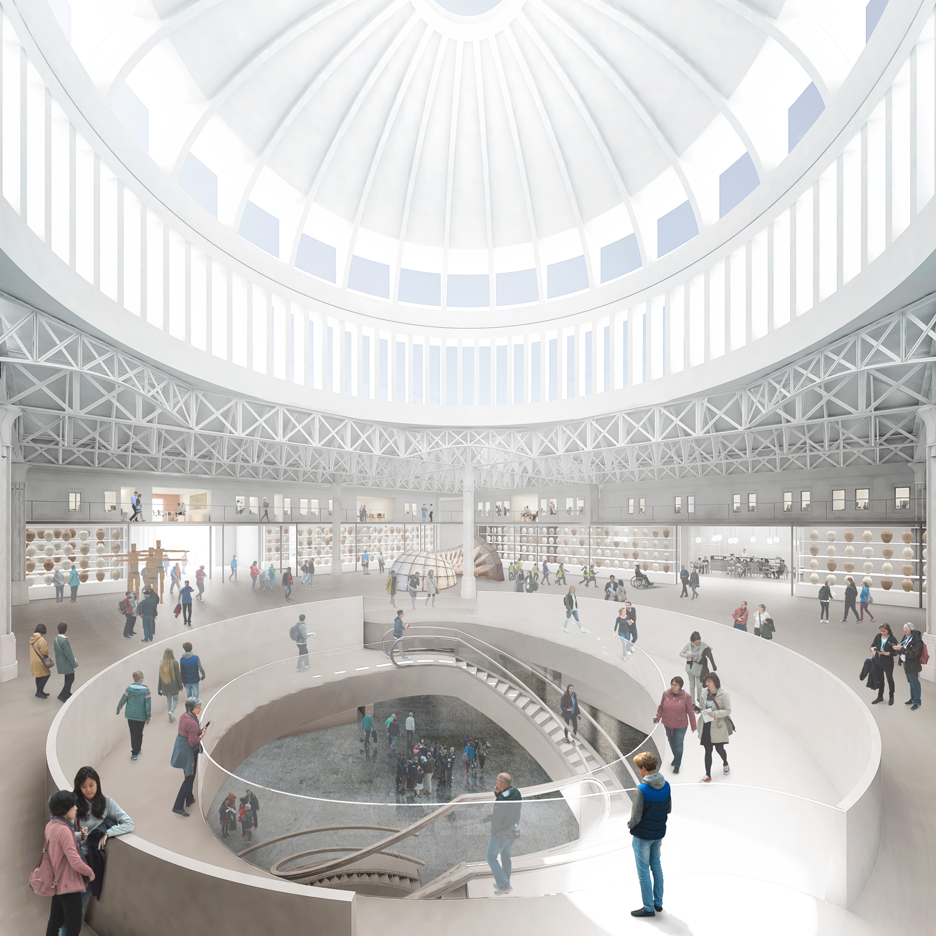
Early concepts for the design show a crisp and contemporary vision with a strong respect for the existing spaces of the West Smithfield site. New elements will include a landmark to dome draw light into the museum entrance, innovative spiral escalators to transport visitors down into the exhibition galleries, large flexible spaces for events and debate, and a sunken garden and green spaces to provide pockets of respite.

“We all know the power of public spaces in changing our city and our individual lives, and this is what drives us. We want the Museum of London to be a museum where everyone belongs, and where the future of London is created,” added Asif Khan.


© Stanton Williams Architects

© Stanton Williams Architects

Evan Davis, Chair of the Jury, said of the decision: “Stanton Williams and Asif Khan offered some really innovative thinking, and managed to combine a sensitivity to the heritage of the location, with a keen awareness of the practicalities of delivering a really functional museum.”

The winning team will now work with the museum and stakeholders to develop final proposals for the site, with a planning application scheduled to follow in 2018.


© Stanton Williams Architects

© Stanton Williams Architects

© Stanton Williams Architects

© Stanton Williams Architects

http://ift.tt/2acldlz

Casa G / Delfino Lozano


© César Béjar

© César Béjar


© César Béjar


© César Béjar


© César Béjar


© César Béjar

  • Collaborators: Bernardo Sánchez, Andrés Covarrubias
  • Structural Engineer: Ing. Delfino Lozano Armenta
  • Carpentry: Mauricio Villalbazo
  • Windows: Alberto Flores, Vidrios y Aluminios REYLO
  • Electrical/Plumbing: Eugenio Martinez

© César Béjar

© César Béjar

From the architect. Casa G is a family rest house, with a game room and a terrace to host the owner’s social activities, located in the northwest area of Zapopan, on a 1000m2 land oriented north-south. The land presented an ascending topography and existing adjoining walls.


© César Béjar

© César Béjar

Lower Floor Plan

Lower Floor Plan

© César Béjar

© César Béjar

The length of the land allowed to trace a central axis that connected the main spaces of the house and its unevenness originated a perpendicular axis where a retaining wall was raised, generating two clearly defined areas: social on the lower part, and private on the highest part of the land.


© César Béjar

© César Béjar

The social area is accessed through a hall with a curved vault that registers the transition between the exterior and interior, where the image of the stonewall contrasts the modulation logic of the vaults that cover the terrace. Alongside, there is an esplanade that is visually connected by the same wall that extends to a staircase. This space is complemented by a visual focus point generated by a stone fountain with a tree, and the strategic presence of a mast, designed to eventually hold a piñata.


© César Béjar

© César Béjar

© César Béjar

© César Béjar

The interaction between the social and the private develops from the staircase that obliterates the natural unevenness of the land; the stonewall now merges with a bench where the garden and a weeping willow tree frame the facade of the house. On the west side, there is a brick-wall volume destined to be a game room, absorbing the space generated by the rooftop of the terrace as it is suspended above the garage. The structural solution based on IPR beams liberated both the terrace and the garage from columns, as well as it physically linked the social and private areas.


© César Béjar

© César Béjar

Upper Floor Plan

Upper Floor Plan

© César Béjar

© César Béjar

The private area was resolved with a side entry that goes along the unevenness of the land, culminating with brick latticework and mirror-still water, emphasizing the main entrance of the house. In the interior, a distributor conducts to three clearly defined spaces: on one side, the kitchen with a garden view and ventilation to the entrance hall; on the opposite side, a guest area formed by a toilet and a TV room, which can also be used as a guest room; on the front, through a wooden frame, a set of spaces aligned to an imaginary symmetry axis, comprising a small garden with a tree, the dining room, the living room, and a small open terrace with a hanging hammock. The chimney located in the center of the house represents the medullary core of family life. 


© César Béjar

© César Béjar

Two things were achieved from the effective use of natural light and the generation of crossing ventilation: provide the common spaces of the house with better views of the ensemble and bring privacy and comfort to each room, where the main room keeps the visual domain of the garden and the game room, while the second room keeps certain independence behind a distributor that holds a linen closet and the bathrooms of both rooms. There is a housing serving module and a maintenance cellar located on the back of the house. The rooftop of the house was used as a viewpoint to the landscape that can be appreciated from the highest point of the ensemble. For this, the installations were hidden and the coating used on the floor is the same as in the game room terrace.


© César Béjar

© César Béjar

http://ift.tt/2ajWEC5