STUDIO#11 TERRIFIC CALL FOR PAPERS


Leo Caillard_Hipster in Stone 25

Leo Caillard_Hipster in Stone 25

STUDIO architecture and urbanism magazine is currently accepting proposals for our forthcoming issue TERRIFIC.

Several urban practitioners have defined semantic and urban categories as trying to control possible derivatives existing outside ordinary and everyday practices, transmitted in a terrific and kaleidoscopic variation of commonly used perceptions. Moreover, architecture and urbanism often look toward the investigation of alternative cognitive grids to look to the city beyond traditional cultural mechanisms, giving continuously sense to the of renovation of the discipline. It means looking through what is good and what is bad, what is right and wrong, beautiful or not, conformist or anarchic.

The word terrific went through a transformative process that took a couple of centuries; first a situation of terror, then something extremely huge, now something amazing. STUDIO#11 TERRIFIC wants to explore the meaning, relationship and etymological expansion which have characterized the city project. Which are the dazed, extravagant, curious, unpredictable, attractive and also immoral and narcotic situations that give sense to urban changes? Which micro-situations of the human geography can potentially trigger huge transformation processes, to be considered in a positive or negative way among time? Which semantic changes of concepts are able to represent huge revolutionary trajectories in the architectural and urban practices?

STUDIO #11 TERRIFIC refers to those practices, concept, theories and institutional arrangements which knew radical changes over time, vibrantly reconfiguring the meaning of sense of architectural products and city development.

Download the information related to this competition here.

http://ift.tt/2a2jCRb

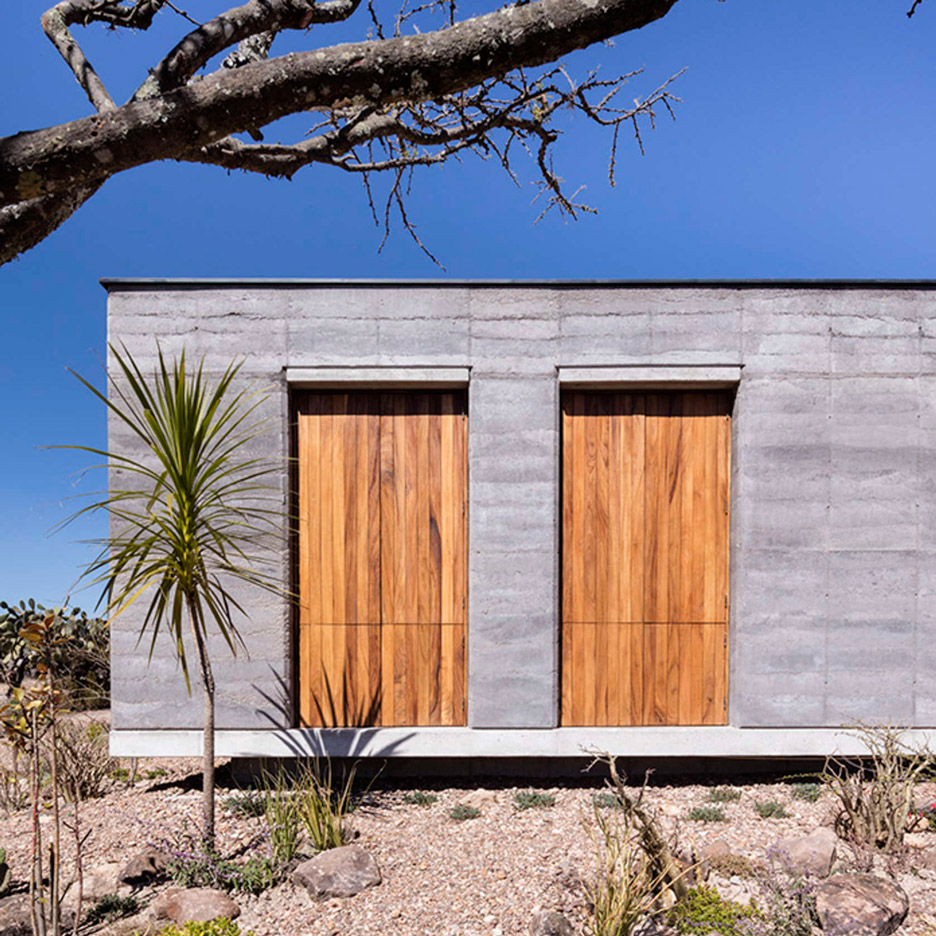
Cherem Arquitectos builds rammed-earth house in Mexican highlands


A+Awards: we’re launching a major collaboration with Architizer profiling winners from its A+Awards. First up is this house in the Mexican highlands, with rammed-earth walls made from soil excavated on site (+ slideshow). (more…)

http://ift.tt/2a51BTO

17 Le Corbusier Projects Named UNESCO World Heritage Sites


The UN Education, Scientific and Cultural Organization (commonly referred to as UNESCO) has named 17 projects in 7 countries by revolutionary Modernist architect Le Corbusier to their list of World Heritage Sites. Given to places of special cultural or physical significance, the designation will help to protect and preserve the buildings for future generations. Citing Le Corbusier’s inventive architectural language, UNESCO praised the collection of projects for “[reflecting] the solutions that the Modern Movement sought to apply during the 20th century to the challenges of inventing new architectural techniques to respond to the needs of society.”

“The inscription on the World Heritage List of 17 buildings of sites by Le Corbusier represents a strong encouragement to continue all along Le Corbusier’s built work to maintain this living heritage and to hand it down to future generations,” said Fondation Le Corbusier President Antoine Picon in a statement. “It also contributes to the understanding of that complex and fragile legacy and helps its dissemination to the widest audience.”

Continue after the break for the full list of projects and images.

Unité d’habitation, Marseille, France


Unité d’habitation, Marseille, France. Image © Rik Moran

Unité d’habitation, Marseille, France. Image © Rik Moran

Maison Guiette, Antwerp, Belgium


Maison Guiette, Antwerp, Belgium. Courtesy of ADAGP, Paris 2015. Image © Maury

Maison Guiette, Antwerp, Belgium. Courtesy of ADAGP, Paris 2015. Image © Maury

Capitol Complex, Chandigarh, India


Maison Curutchet, La Plata, Argentina. Image © ARQ+HIS

Maison Curutchet, La Plata, Argentina. Image © ARQ+HIS

The National Museum of Western Art, Tokyo, Japan


The National Museum of Western Art, Tokyo, Japan. Image © Flickr user pixelhut. Licensed under CC BY-NC-ND 2.0

The National Museum of Western Art, Tokyo, Japan. Image © Flickr user pixelhut. Licensed under CC BY-NC-ND 2.0

Weissenhof-Siedlung Estate, Stuttgart, Germany


Weissenhof-Siedlung Estate, Stuttgart, Germany. Image © Flickr user friemo. Licensed under CC BY-NC-ND 2.0

Weissenhof-Siedlung Estate, Stuttgart, Germany. Image © Flickr user friemo. Licensed under CC BY-NC-ND 2.0

Maison Curutchet, La Plata, Argentina


Maison Curutchet, La Plata, Argentina. Image © ARQ+HIS

Maison Curutchet, La Plata, Argentina. Image © ARQ+HIS

Dominican Monastery of La Tourette near Lyon, France


Dominican Monastery of La Tourette near Lyon, France. Image © Fernando Schapo

Dominican Monastery of La Tourette near Lyon, France. Image © Fernando Schapo

Villa Savoye near Paris, France


Villa Savoye near Paris, France. Image © Flickr user world3. Licensed under CC BY-NC-ND 2.0

Villa Savoye near Paris, France. Image © Flickr user world3. Licensed under CC BY-NC-ND 2.0

Notre-Dame du Haut, Ronchamp, France


Notre-Dame du Haut, Ronchamp, France. Image © Gili Marin

Notre-Dame du Haut, Ronchamp, France. Image © Gili Marin

Maison La Roche, Paris, France


Maison La Roche, Paris, France. Image © Flickr user pov_steve. Licensed under CC BY-NC-ND 2.0

Maison La Roche, Paris, France. Image © Flickr user pov_steve. Licensed under CC BY-NC-ND 2.0

Villa Le Lac, Corseaux, Switzerland


Villa Le Lac, Corseaux, Switzerland. Image © Wikimedia user Schwizgebel. Licensed under CC BY-SA 3.0

Villa Le Lac, Corseaux, Switzerland. Image © Wikimedia user Schwizgebel. Licensed under CC BY-SA 3.0

Cité Frugès, Pessac, France


Cité Frugès, Pessac, France. Image © Flickr user Lezzles. Licensed under CC BY-NC 2.0

Cité Frugès, Pessac, France. Image © Flickr user Lezzles. Licensed under CC BY-NC 2.0

Immeuble Clarté, Geneva, Switzerland


Immeuble Clarté, Geneva, Switzerland. Image © Wikimedia user Romano1246. Licensed under CC BY-SA 3.0

Immeuble Clarté, Geneva, Switzerland. Image © Wikimedia user Romano1246. Licensed under CC BY-SA 3.0

Immeuble Molitor, Paris, France


Immeuble Molitor, Paris, France. Image © Wikimedia user I, Sailko. Licensed under CC BY 2.5

Immeuble Molitor, Paris, France. Image © Wikimedia user I, Sailko. Licensed under CC BY 2.5

Usine Claude et Duval Factory, Saint-Dié, France


Usine Claude et Duval Factory, Saint-Dié, France. Image © Wikimedia user Pymouss. Licensed under CC‑BY‑SA‑3.0

Usine Claude et Duval Factory, Saint-Dié, France. Image © Wikimedia user Pymouss. Licensed under CC‑BY‑SA‑3.0

Cabanon de Le Corbusier, Roquebrune-Cap-Martin, France


Cabanon de Le Corbusier, Roquebrune-Cap-Martin, France. Image © Wikimedia user Tangopaso. Public Domain

Cabanon de Le Corbusier, Roquebrune-Cap-Martin, France. Image © Wikimedia user Tangopaso. Public Domain

Maison de la Culture, Firminy, France


Maison de la Culture, Firminy, France. Image © Flickr user jacqueline_poggi. Licensed under CC BY-NC-ND 2.0

Maison de la Culture, Firminy, France. Image © Flickr user jacqueline_poggi. Licensed under CC BY-NC-ND 2.0

News via UNESCO, Fondation Le Corbusier and BBC.

Spotlight: Le Corbusier
//cdn.embedly.com/widgets/platform.js

Material Masters: Le Corbusier’s Love for Concrete
//cdn.embedly.com/widgets/platform.js

http://ift.tt/29OXOuf

10 Law of Attraction Mistakes That People Make – And How To Fix Them (PART 2)

Months ago, I’ve written an article about 10 of the most common Law of Attraction mistakes that I’ve found people were making. Since then, I’ve discovered 10 more blunders that are crucial to be corrected if you’d like to succeed in manifesting your desires effectively.

So are you making any one of these mistakes with the Law of Attraction? Take a look at the list below. (It starts with Mistake #11 because Part One already covers Mistakes #1 to 10.)

Five-Forgotten-rules-Law-of-AttractionMistake # 11: They Are Too Specific.

They make their affirmations or intentions too specific to the point that they don’t feel good about it.

Fix It: Yes, a specific intention or affirmation is effective, but only to the point that you feel good about it. If it doesn’t make you feel good or comfortable in any way, make it a little more general. Still doesn’t feel right? Make it a little more general again. Do this until you feel no conflict arising within you.

For example, you say that you want a loving spouse with blue eyes, lean body, thin lips and drives a Porsche. If it feels right for you, then you’re on the right track. But for most people, a statement this specific might conjure the feeling they’re not worthy or it’s very unlikely to happen. If this is the case, make it more general. How about a financially stable and attractive spouse who understands your needs?

There’s no right or wrong here. Your yardstick is the way you feel. The better you feel about your statement, the more chances they will manifest into reality.

Mistake # 12: They Think About the ABSENCE Of What They Want.

They often think about what they want; but the more they think about it, the more they feel negative emotions because they realize it’s not yet in their current reality.

Fix It: Think about what you want in a state of fun and appreciation. Release the pressure that you should have it or your life would be miserable. Decrease resistance by letting it go and just say, “wouldn’t it be nice if I own that house (or other things)?” or “wouldn’t it be great if I become the president of this company?” Be playful and have fun with it. The more you practice this routine, the less resistant you will be to the attraction of your desires.

Mistake # 13: Their Dream Is Too Big To Be Believed In.

If a person making $3000 a month dreams of making $100,000 a month, it would be much more diffcult for him to achieve it because of cognitive dissonance. His mind doesn’t yet believe that he can achieve it.

Fix It: Take it one step at a time. In the example above, if he makes a goal of $5000 a month first (instead of $100,000), he will be more likely to achieve it because it is much more believable. And once he reaches that goal, it will boost his belief that he can make more… but only to the point in which he believes he can. So he could set up a higher goal of $10,000 this time. And once he attains it, he could raise it a little higher again.

Mistake # 14: They Get Stuck In A Negative Environment.

They may pray fervently, say their affirmations, or visualize all day; but they will never attract what they want because they live with negative thinkers, blamers or complainers… or because their surroundings reflect doom and gloom aspects that make them feel bad.

Fix It: The one vital component to manifesting your desires is to feel good. And you can never feel good (or will have an extremely difficult time doing it) if you live around negatve people or in a negative environment.

If you’re really serious to make the Law of Attraction work, you must avoid them like the plague. Stay away from people who make you feel depressed, guilty or angry. Switch jobs or live in another place if you have to.

If this is not possible with your current situation, then read my other article “10 Ways To Stay Positive And Happy In The Face Of Negativity” so you can minimize the damage being done by these negativities.

Mistake # 15: They Don’t Have A Big Enough “Why.”

They say they want to have this or become that; but when you ask them why, they’re totally clueless. This lack of clarity translates to a weaker manifesting power.

Fix It:  Your “why” is the foundation of your desires. When you know why you want it, you will do almost anything to achieve it and you will most likely stick to your goals/rituals.

Mistake # 16: They’re Too Busy To Relax.

They call themselves “action takers” so they don’t want to waste time relaxing. What they don’t know is that being in a state of relaxation can put them in a better state of alignment or higher vibration… which translates to more powerful manifesting.

Fix It: Find some quiet time when you can meditate even for just 10 minutes. Focus on your breathing and when a thought comes, put your focus back to your breathing. This state of “no-mind” will help you reduce resistance.

Another great idea is to take a nap, or simply find some quiet time to bask in appreciation for all the wonderful things around you.

Mistake # 17: They Give “Negative” Attention To The Smallest Things.

When their child cries, they feel irritated. When there’s traffic, they feel frustrated. Everytime they feel negative emotion, they put themselves out of alignment with the Universe.

Fix It: Ignore the small stuff and just let it go. Even if you think it’s a big issue, you have the choice of treating it like any other small stuff. And here’s the big secret… everything is small stuff. So break free from every single thing that annoys you, move on, and focus on your desires.

Mistake # 18: They’re Not Careful With Their Words.

They use negative words in their everyday language without being aware that such statements are affecting their vibration. Statements such as “I’m so hungry I could die any minute now” or “That’s sick” may sound innocent for some, but the ‘essence’ of these words could get picked up by the subconscious, which may affect their vibration negatively.

Fix It: Always be aware of what you’re saying at any given moment, for they also affect your thoughts and feelings. Remember that words carry certain vibrations with them, so practice replacing negative words with positive ones (that make you feel good and think good thoughts) in your everyday language.

Mistake # 19: They See The “Dark Side” Of Everything.

When they lose their job, they regard it as the end of the world. On the other hand, even if they get promoted, they dread the bigger responsibilities coming ahead instead of the exciting challenges this might offer. .

And this applies to even the smallest aspects of their lives. When they travel anywhere, they don’t see the beautiful scenaries and appreciate the wonderful journey; they see the bumps on the road, the traffic, or the cost of the trip.

This constant bombarding of negative feelings and vibrations will only bring them more of the things they’re complaining about, which will only make them feel worse and worse.

Fix It: Find the positive side in everything, even in those things and situations that may seem negative. If you lose your job, see it as an opportunity to get a better career. If you live alone, see it as an opportunity to be free and do whatever you want. Or if you live with people who give you a hard time, see it as a chance to develop your character as well as theirs. By giving out positive vibrations through your outlook in life, you’ll start attracting more of the things that you like.

Mistake # 20: They Don’t Improve Themselves.

They stay in their comfort zone. They are not motivated to improve their way of thinking, feeling, or attitude. Hence, they’re stuck in a rut.

Fix It: You will always remain in the same condition if you stay in the same vibrational frequency. To see changes in your life, you must aim for continuous improvement – in your thoughts, feelings, attitude, behavior, action, knowledge, the way you see things, and even your response/reaction to every situation. It doesn’t need to be a drastic one-time improvement. Aim to improve in one tiny aspect everyday, and after a few years, you would have become a much better manifestor in every way.

Go through the list once again and find out if you’re making any of these law of attraction mistakes. If you are, fix it immediately and be the powerful attractor you’re meant to be.

The post 10 Law of Attraction Mistakes That People Make – And How To Fix Them (PART 2) appeared first on Change your thoughts.

http://ift.tt/29H0d8X

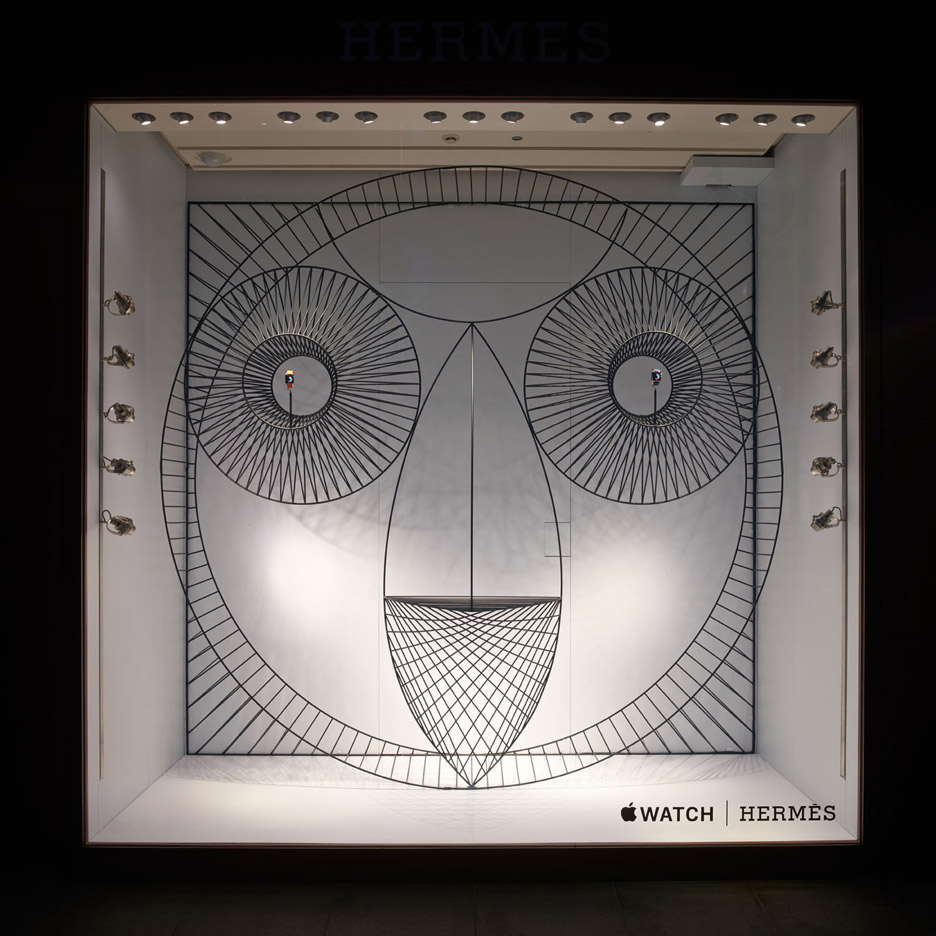
GamFratesi designs animalistic Apple Watch window display for Hermés


Danish studio GamFratesi created animals from metal wire for the Apple Watch Hermès window display in Japan (+ slideshow). (more…)

http://ift.tt/29Ik9oy

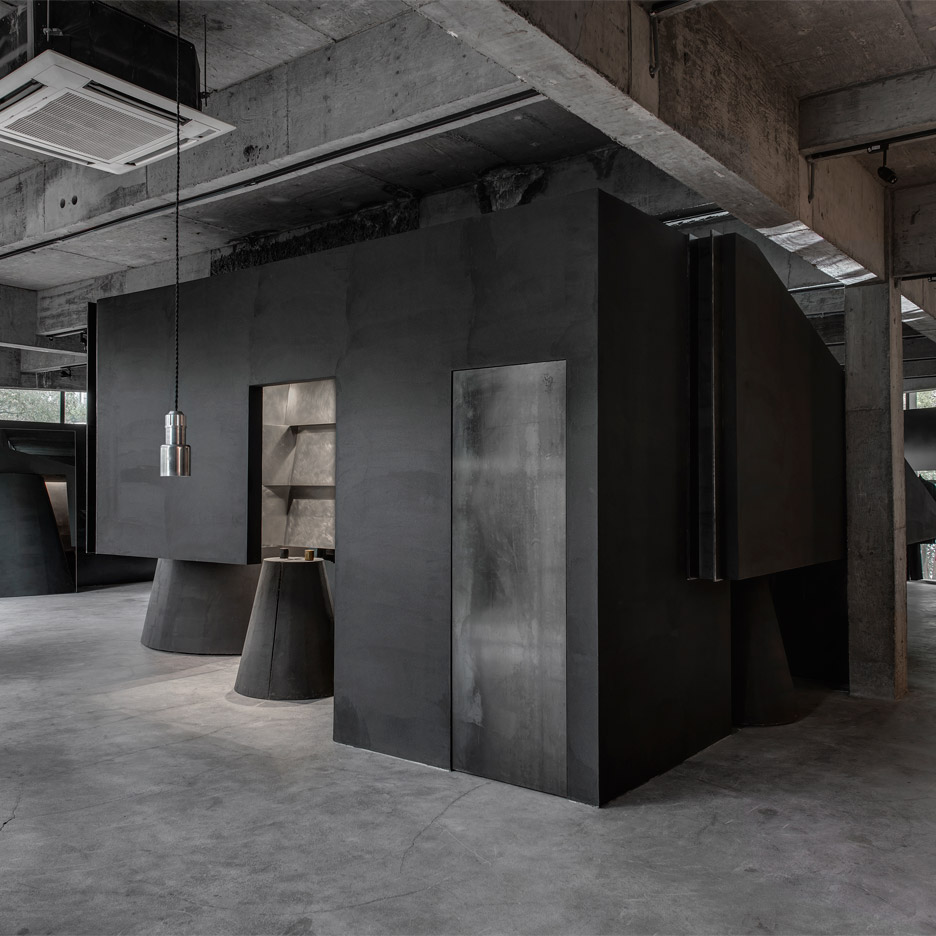
World Interior of the Year 2016 shortlist announced


Inside 2016:converted shophouse, a 1950s-style burger restaurant and a monochrome fashion boutique are among the projects shortlisted for the Inside Awards 2016 (+ slideshow). (more…)

http://ift.tt/2a4NA8J

House in Sabino Springs / Kevin B Howard Architects


© Winquist Photography

© Winquist Photography


© Winquist Photography


© Robin Stancliff Photography


© Robin Stancliff Photography


© Winquist Photography


© Winquist Photography

© Winquist Photography

From the architect. There are only a few instances in an architectural career where a client and an architect’s vision unify into an immaculate and complete expression of art and architecture. We were very fortunate to work with a couple who, devoted to the ideals of minimalism’s stark allure, asked us to design a house in the foothills of Tucson, Arizona, located in the profoundly diverse Sonoran Desert. The owners’ refined sense of contrast required a “modern, minimal home: a pristine box that seemed to have landed in the desert.”


© Robin Stancliff Photography

© Robin Stancliff Photography

The house’s hillside location required that we take advantage of the boundless vistas while protecting the owners’ carefully curated collection of art and modernist furniture as well as the desert itself. These diverging conditions resulted in the elevation of the major living spaces to the upper floor. The considerable programmatic shift reduced the footprint and the construction impact, as well as reiterating the owners’ vision of gently touching down upon the earth. Kevin Howard’s assertion that “The desert is very slow to heal” can be seen in the surgical location of the residence around and within the numerous Saguaros on the site.


© Winquist Photography

© Winquist Photography

Plan

Plan

© Robin Stancliff Photography

© Robin Stancliff Photography

The inclusion of gallery space and its appropriate protective measures overlaid the architectural program. Miesian glass walls were replaced with a studied array of spotless shadow boxes protecting deeply recessed glass panes. The clients shared their inspiration and enthusiasm for Renzo Piano’s Atrium in the Modern Wing of the Art Institute of Chicago. The interior stair acts as a tectonic centerpiece, contrasting the formal execution of the main atrium while matching its clarity and refinement in detailing. This Atrium houses the bulk of the owners’ art collection and connects the upper and lower floors of the residence. The height allows the living spaces to breathe and provides a new appreciation of the various pieces of art as they are viewed from different positions in the house. A single continuous skylight centered down the middle of the gallery marks the passage of time without harming the cherished art held within. The main living and dining spaces face south, framing the view of the desert below in a perfect unobstructed volume.


© Winquist Photography

© Winquist Photography

http://ift.tt/2a4QJ8C

The unspoiled beauty of Shi Shi Beach in Olympic National Park…

The unspoiled beauty of Shi Shi Beach in Olympic National Park is calling. It was a dreary, overcast and foggy day but Christian Loya decided to hike out to Shi Shi Beach anyway and hope it cleared. “My persistence paid off on this one. It finally did just before sunset and I was treated with this glorious sunset.” Photo courtesy of Christian Loya.

26 Things All Architects Can Relate To


© hvostik via Shutterstock

© hvostik via Shutterstock

Working in architecture is always a challenging experience in which you just never know what might happen next. That said, there are a number of things we can collectively relate to as a part of this industry. Here we’ve created a list of things we’re all too familiar with—whether that relates to finishing projects, working with clients, or just dealing with people that totally don’t even know what goes on in architecture. Which ones did we miss?

1. Sometimes, there’s nothing quite as relaxing as putting on your headphones, listening to your favorite music, and working on a drawing or model.


© Ramin Hasanalizade via Shutterstock

© Ramin Hasanalizade via Shutterstock

2. That geeky, incredible feeling of traveling to see a building you’ve always wanted to see.

3. Still qualifying for student discounts on software.

4. When you’re sure that your model is about to break from too much handling but the professor/client insists on holding it up at a strange angle.


© racorn via Shutterstock

© racorn via Shutterstock

5. That feeling when you send a drawing to the plotter and hope that a) it’s working b) you’re printing on the right kind of paper and c) the drawing is oriented correctly.

6a. That inner sense of victory when your printing bill comes out much cheaper than you anticipated.


© Visual Generation via Shutterstock

© Visual Generation via Shutterstock

6b. That inner sense of failure when your printing bills comes out way more expensive than anticipated.

6c. That inner sense of dread when you are about to look at your printing bill because let’s face it… you have NO CONTROL over this.

7. When you’re feeling a bit too good about a project, that’s when you know something bad is about to happen.

8. Splurging on books that you don’t have time to read… because you like them as “objects.”

9. Spending the first hour of an all-nighter cursing your situation and promising to make it the last… but you somehow never follow through afterwards.


© fatmawati achmad zaenuri via Shutterstock

© fatmawati achmad zaenuri via Shutterstock

10. That inner feeling of zen when you’re effortlessly reloading all your files after a computer crash because you backed up on a cloud.

11. Similarly, that sense of accomplishment when you find a good use for a little sketch that you decided to scan for “record-keeping.”

12. When you’re doing something completely unrelated to architecture but inspiration suddenly hits you and you just have to drop everything to draw it on any flat surface.


© Dmitry Guzhanin via Shutterstock

© Dmitry Guzhanin via Shutterstock

13. Walking around the studio/office and asking people to close programs they aren’t using because there’s only a limited number of software licences available.

14. If you’re having a conversation with a non-architect about architecture, you pretty much assume that the non-architect will (only) mention Frank Gehry, Frank Lloyd Wright or Zaha Hadid. If you’re lucky, you might even get Mies van der Rohe.

15. That cringe-worthy moment when some non-design professional uses an overused cliché like “Less is More”… as if they understood the actual context of that line.

16. When you hit the hay after a massive deadline and don’t come back to life until at least 12 hours later.


© Jiw Ingka via Shutterstock

© Jiw Ingka via Shutterstock

17. Explaining how to do something on BIM takes a lot longer than doing it yourself–but you’re too stubborn and explain it anyway in the vain hope that one day you won’t have to explain it again.

18. The perplexed sense of joy when the guest critics/clients are unexpectedly enthusiastic about your project.

19. If in doubt, throw the blade out! Nothing feels better than having 10 fingers intact because you always worked with fresh blades and a metal ruler.

20. When you’re learning new software, and you try a command from a different program and it does exactly what you want it to do.


© studiostoks via Shutterstock

© studiostoks via Shutterstock

21. The bliss of discovering a shortcut for a tedious task when you’re watching somebody else work.

22. The first stroke of an X-acto blade on foam core…and it feels like slicing butter.

23. Having to make peace with the past version of yourself that was too lazy and/or incompetent to correctly document professional experience for the registration exam.

24. When your napkin sketch is actually on point.


© Chadd McDermott via Shutterstock

© Chadd McDermott via Shutterstock

25a. Knowing all too well that last minute changes rarely do a project any good but you still go ahead and make a final tweak… and your project falls apart.

25b. Knowing all too well that last minute changes rarely do a project any good but you still go ahead and make a final tweak… and your project has never looked better.

26. And finally…that enormously satisfying feeling of leaving the studio at 5 pm on a Friday with a finished project/to do list.


© Visual Generation via Shutterstock

© Visual Generation via Shutterstock

All images via Shutterstock.com

http://ift.tt/29JhMRk

European Centre For Geological Education / WXCA


Courtesy of WXCA

Courtesy of WXCA


Courtesy of WXCA


Courtesy of WXCA


Courtesy of WXCA


Courtesy of WXCA

  • Architects: WXCA
  • Location: Chęciny, Poland
  • Architects In Charge: Michał Czerwiński, Marcin Jurusik, Ewa Gajda, Katarzyna Błaszkiewicz, Maciej Rudnicki, Agnieszka Nowicka, Katarzyna Kwiatkowska, Jacek Hawrylak, Marta Sękulska, Patrycja Michalak – Dębiec
  • Area: 8450.0 sqm
  • Project Year: 2015
  • Photographs: Courtesy of WXCA
  • Team: Szczepan Wroński, Paweł Grodzicki, Krzysztof Budzisz, Zbigniew Wroński
  • Acoustics: Phd. Piotr PekalaI (AKUSTIX)
  • Façade Technology: PROFA
  • Landscape Architecture: RS AK
  • Technical Projects: CHODOR-PROJEKT Sp. z o.o. (now BIURO PROJEKTÓW BUDOWNICTWA Sp. z o.o.)
  • Construction: Katarzyna Micigolska
  • Instalations: Karolina Wozniak
  • Investor: University of Warsw
  • General Contractor: ANNA-BUD sp. z o.o.,
  • Contacts: Rafal Adamski, Grzegorz Snochowski
  • Site Area: 35,577 sqm
  • Gross Covered Area: 3,700 sqm
  • Usable Area: 6,500 sqm
  • Cost: $30000000 PLN

Courtesy of WXCA

Courtesy of WXCA

Plan

Plan

Courtesy of WXCA

Courtesy of WXCA

From the architect. The Swietokrzyskie Mountains are an unique place for geologists, as there are exposed rocks illustrating 560 million years of Earth’s history located on a relatively small area. 
A few steps in this area is like turning back time by 100 million years. The fact that the layers of rocks of different ages located around Checiny are now on the surface, is a unique phenomenon on a European scale.


Courtesy of WXCA

Courtesy of WXCA

From the cultural point of view, our location is approx. 500m away from the ruins of a medieval royal castle situated on an adjacent hill and near the small town of Checiny with a preserved medieval urban layout.


Courtesy of WXCA

Courtesy of WXCA

Plan

Plan

Courtesy of WXCA

Courtesy of WXCA

The main objective of the concept is to split the functions into separate buildings. This way we achieved five two-storey buildings connected with a glass corridor.


Courtesy of WXCA

Courtesy of WXCA

The rectangular blocks of the buildings were scattered around the quarry like freshly loosened stone blocks that are the reminiscent of the former function of this place. The geometric shapes of the buildings, as compared to the background of the aforementioned 30 m rock wall, create a connection between what is natural and what is processed with the human hand, making us reflect on the importance of natural resources and their management. The intention of the project was to create forms that will not dominate, but complement its unique location.


Courtesy of WXCA

Courtesy of WXCA

Plan / Section

Plan / Section

Courtesy of WXCA

Courtesy of WXCA

Function (Architecture and use of space):
The ECEG complex is comprised of five buildings. First main building includes representative functions: an entrance lobby connected to the canteen and a foyer with an auditorium hall for 240 people.
The second building is a research laboratory facility with geological laboratories where the found specimens are subjected to pre-treatment. Then the created formulations are analyzed in chemical, geophysical and geological mapping laboratories. The whole technological line is connected with an education area enabling young students of geology to participate in the process.


Courtesy of WXCA

Courtesy of WXCA

The other three buildings are intended as a hotel base. Building 3 was designed with a higher standard intended for the staff and guests of the facility, and building 4 as an accommodation base for students.
The hotel buildings have been designed with double rooms. Each room has a large window with a comfortable, wide desk designed in such a way so as to form a whole with the window. Thanks to this, users will be able to peacefully explore knowledge and contemplate the surrounding landscape.


Courtesy of WXCA

Courtesy of WXCA

MATERIALS 
The project is located in old, exploited quarry in region of Holy Cross Mountains which are a unique place of geologists illustrating 560 million years of Earth’s history, 500m away from the ruins of medieval royal castle. The rectangular blocks of the buildings were scattered around the quarry like freshly loosened stone blocks that are the reminiscent of the former function of this place. The façade is made of different fractions, chipped stone block of limestone, geologically identical with the quarry rock.


Courtesy of WXCA

Courtesy of WXCA

RENEWABLE ENERGY
 The main source of heating and cooling for the buildings are heat pumps with a ground heat exchanger. The lower source consists of 91 wells drilled 120m deep. 
Heat pumps will work in the “water” / “glycol” system.
In addition, water is also heated thanks to the solar installation in the form of solar collectors placed on the roofs.
Landscape design and green roofs are preserving naturally occurring plant species in this area like grassland swards.


Courtesy of WXCA

Courtesy of WXCA

http://ift.tt/29JcOE5