House to the Beach / Gluck+


© Paul Warchol

© Paul Warchol


© Paul Warchol


© Paul Warchol


© Paul Warchol


© Paul Warchol

  • Architects: Gluck+
  • Location: W North Shore Ave, Chicago, IL 60631, United States
  • Design Team: Kathy Chang, Peter L. Gluck, Thomas Gluck, Charles Gosrisirikul, Joanna Gulik, Marisa Kolodny, Steve Preston, Wade Splinter, Jim True
  • Project Year: 2015
  • Photographs: Paul Warchol
  • Geotechnical Engineer: ECS Illinois, LLC
  • Coastal Engineer: Shabica & Associates, Inc
  • Structural Engineer: Robert Silman Associates P.C.
  • Mechanical And Environmental Engineer: IBC Engineering Services Inc.
  • Lighting: Lux Populi
  • Interior Design: Insight Environmental Design & FlepsDesigns, Ltd.
  • Landscape Architects: Hoerr Schaudt Landscape Architects
  • Low Voltage: Tech Tonic LLC
  • Façade: Forst Consulting Co., Inc.

© Paul Warchol

© Paul Warchol

Located in the northern suburbs of Chicago, this house sits opposite a unique object: the Baha’i Temple, 135 ft. high of white stone, symmetrically spherical, and monumental. The street-side face of the house must negotiate not only the scale and specificity of this alien architecture but also, the eclectic nature of the suburban environment. And the house must negotiate a 40 foot elevation differential between the road and the lake.


© Paul Warchol

© Paul Warchol

Diagram

Diagram

© Paul Warchol

© Paul Warchol

The house consists of four levels. A two story structure, windowless on the street, contains the garage, a gym, and a guest suite. This façade is unresidential in scale, but acts as foil to the monument it faces. Almost an inversion of the opposite grand stairs that lead up to the temple entrance, the main house entry is located at the top of the stair with the spaces of the house revealing themselves on the way down to the beach below. As one descends down the processional – light filled stairway the house gives itself away, beneath the typical American suburban lawn above. The architecture creates an experience, where the whole is pieced together through one’s mental landscape of moving down and through the house.


© Paul Warchol

© Paul Warchol

A mostly buried building with large operable windows facing the lake, the house requires less energy than a similar building of its type and size; tempered by the earth both passively through the combination of a green roof system and buried facades, and actively, by means of geothermal wells feeding heat pumps for heating and cooling the building. The above ground gym’s wall are clad in continuous insulation and its roof houses a network of solar hot water panels. 


© Paul Warchol

© Paul Warchol

The house is about the transition from suburban streets to lakeside beach on this unusual site. There are overlapping journeys provided by the house, from working world to family life, from formal to informal, from public to private worlds.


© Paul Warchol
© Paul Warchol

http://ift.tt/2aOMvyy

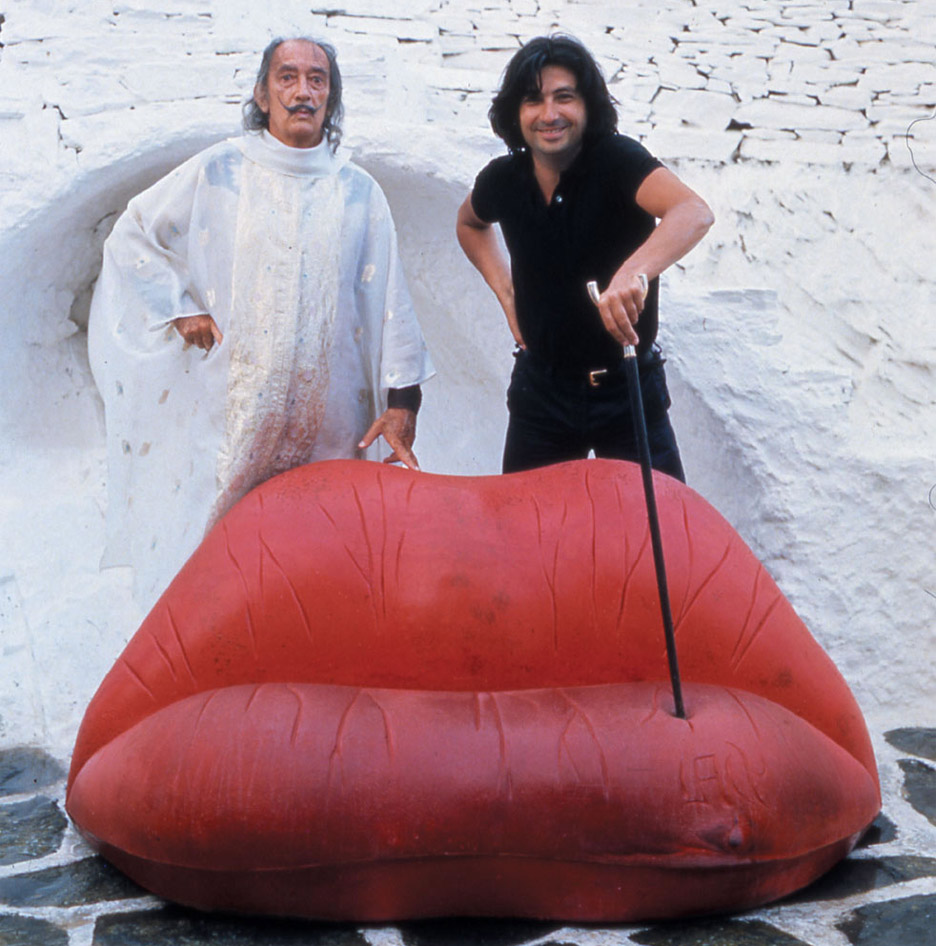
Dalí was “the most exciting and clever person I’ve met” says collaborator Oscar Tusquets Blanca


Architect and designer Oscar Tusquets Blanca was a close friend of Salvador Dalí and collaborated with the artist on a number of furniture pieces. He spoke exclusively to Dezeen about his career, parties with Dalí and his latest furniture based on the Surrealist’s paintings (+ slideshow). (more…)

http://ift.tt/2aE4Jpa

Imagining Megastructures: How Utopia Can Shape Our Understanding of Technology


“Utopia”: the word was coined by Sir Thomas More in 1516 when he started questioning the possibility of a perfect world where society would suffer no wars or insecurities, a place where everyone would prosper and fulfill both individual and collective ambitions. Yet such a perfect society can only exist with the creation of perfect built infrastructure, which possibly explains why architects have often fantasized on megastructures and how to “order” this dreamed society.

Megastructures, as imagined after World War 2 by the CIAM international congress and Team 10, are now regularly revived with the intent to solve social issues on a mass scale. Notably, architecture students have shown a renewed interest for walking cities as first conceived by Ron Herron of Archigram in the 1960s, assuming that megastructures could solve major crises in remote areas. Just as ETSA Madrid student Manuel Dominguez developed a nomadic city to encourage reforestation in Spain for his 2013 thesis project, Woodbury University graduate Rana Ahmadi has recently designed a walking city that would destroy land mines on its way. But these utopian projects also involve a considerable amount of technology, raising the question of how megastructures and technology can work together to give societies a new beginning.


Metabolic Machine/ Rana Ahmadi. Image © Rana Ahmadi


Metabolic Machine/ Rana Ahmadi. Image © Rana Ahmadi


Very Large Structure/ Manuel Dominguez. Image © Manuel Dominguez / Zuloark


Very Large Structure/ Manuel Dominguez. Image © Manuel Dominguez / Zuloark


Metabolic Machine/ Rana Ahmadi. Image © Rana Ahmadi

Metabolic Machine/ Rana Ahmadi. Image © Rana Ahmadi

With her “Metabolic Machine,” Ahmadi aims to revitalize the scarred terrain at the border of Iran and Afghanistan. The land-scraping megastructure is made of repurposed and fragmented military relics and lies atop an array of minesweepers. Conforming to our era’s energy saving demands, Ahmadi explains in a poetic project description that the structure “feeds on diesel, sunlight, and exploded land mines.” The structure also fulfills many other functions to promote economic revival. It improves access to water and food, boosts jobs and business, and helps to build roads. As Ahmadi imagines, “Local populations are drawn into [the Metabolic Machine’s] wake, craving the safety of its shadow. They share a symbiotic relationship with their new host. Micro-economies, informal shelters and spontaneous agricultural pursuits emerge at the prospect of purified land in these new technologic wilds.” As Ahmadi states it – “A utopia is born.”


Very Large Structure/ Manuel Dominguez. Image Courtesy of Poliedro

Very Large Structure/ Manuel Dominguez. Image Courtesy of Poliedro

Manuel Dominguez proposes a similar land remediation to address the environmental dangers of deforestation. His “Very Large Structure” moves on caterpillar tracks, and its inhabitants manage the redevelopment of the surrounding natural environment, bringing a sustainable solution to the need for jobs and economic recovery – a particularly intense subject during the Spanish financial crisis that provided the backdrop for Dominguez’s work. Dominguez also recognizes the importance of Utopia in the conception of his design: “knowing that all final thesis are ‘Utopical,’ I decided to do a self-consciously utopical one, utopic for real,” he says.


Archigram's Walking City proposal. Image © Deutsches Architekturmuseum

Archigram's Walking City proposal. Image © Deutsches Architekturmuseum

When Archigram designed the first walking city in the 1960s, it was also a pure utopia. The architectural group dreamed of a technologically-advanced society, where buildings would walk on steel legs like animals. With their cartoon-like architectural representations, they depict a nomadic lifestyle in a future where borders and countries disappear. Archigram’s buildings travel on land and sea, and can be plugged to various amenities in different locations to provide inhabitants with what they need for work or leisure purposes.

Whereas Archigram’s project was not technically feasible, the design is conceptually engaging. People can move freely from one location to another, which in effect anticipated the global exchanges of knowledge and information from different cultures which is becoming increasingly crucial to our modern society. Likewise, cities and agglomerations of building units are in permanent change, pointing to the endless diversity that cities could potentially have. Certainly Archigram’s conceptual design could not have been thought through completely – in his drawings, Herron appears not to have taken into account the reality of physical and material constraints. But the project opened a new avenue of thought that added value to architectural theory and discourse.


Metabolic Machine/ Rana Ahmadi. Image © Rana Ahmadi

Metabolic Machine/ Rana Ahmadi. Image © Rana Ahmadi

On the other hand, Ahmadi and Dominguez use utopia not to conceptualize new architectural or cultural theories, but to solve existing problems. For the purpose of their projects, the two graduates – unlike Archigram – need to embrace either existing or new technologies. Ahmadi relies on the use of minesweepers: the best demilitarizing technology up to now, both to destroy land mines and avoid deminers from being killed. In theory, people are kept away from exploding land mines, as they live behind the megastructure. Dominguez also makes efforts to find a realistic technological solution for his project, conceiving large steel frames and stable tracked vehicles to support his megastructure.


Metabolic Machine/ Rana Ahmadi. Image © Rana Ahmadi

Metabolic Machine/ Rana Ahmadi. Image © Rana Ahmadi

While the two projects show some technological strategies, both graduates forget to assess their designs’ technological efficiency. Ahmadi’s proposal consists of an existing technology incorporated into a megastructure. Whereas combining minesweepers should help cover more land faster, the architecture’s added value remains uncertain, as the design seems to represent significant investment for little or no improvement. The relationship between the megastructure and the informal shelters that follow it isn’t clarified either. In turn, Dominguez doesn’t detail how his design helps reforestation and glosses over the damage that enormous tracked vehicles do to the environment they pass over. This leads to broader questions: Are these utopian megastructures helping the conception of a new design or are they simply getting in the way of existing technology? Are we mixing up a desire for architects to meet social and humanitarian needs with their ability to conceive technologies that are complementary but unrelated to the architectural field?


Very Large Structure/ Manuel Dominguez. Image Courtesy of Poliedro

Very Large Structure/ Manuel Dominguez. Image Courtesy of Poliedro

Building is not the only design solution for such problem-solving. This is best exemplified by industrial designer Massoud Hassani and his firm Mine Kafon that developed alternatives to minesweepers. For the real problem is that minesweepers are far from being fully effective: they generate high military costs (today it costs $1,200 USD to destroy one land mine with such technology), are heavy and energy-consuming and cover a limited amount of land. In 2012, for his first Kickstarter campaign, Massani introduced a wind-powered design made of cheap materials that applies enough pressure on the ground to destroy a land-mine. Now, Massani is raising funds on Kickstarter for a drone to map sites, detect land-mines, and detonate them. The technology operates 20 times faster than other existing techniques, is safer, and up to 200 times cheaper.

http://ift.tt/29KEzgC

With this in mind, it is interesting to consider the relationship between architecture and technology, and perhaps differentiate the utopian endeavor from the process of solving problems based on concrete facts. Architects might feel overwhelmed as their field of intervention has widened over time. The potential disasters of global warming and rising geopolitical tensions, as well as problems related to overpopulation and lack of housing are alarming. Nevertheless, as WikiHouse co-founder Alastair Parvin highlighted in his 2013 TED talk with a now-famous story of a school whose multi-million-dollar redesign was avoided with a new timetable, architecture is not the only tool available. Design is more about analyzing an existing problem to derive innovative solutions. Getting “fixated on the idea of providing a particular kind of consumer product” will not necessarily provide adequate solutions to these new challenges, meaning architects might need to embrace critical reasoning about their own field of work. As demonstrated by Parvin’s example, critical thinking is indeed one of architects’ main abilities and should stay at the heart of the design process.

http://ift.tt/2bigXlm

Hey everyone, my name is Jacob W. Frank, aka Ranger Jake, and I…

Hey everyone, my name is Jacob W. Frank, aka Ranger Jake, and I am lucky enough to work as the visual information specialist at Glacier National Park in Montana. Interior thought it might be cool for me to take over its Instagram account today and share ranger tips on how to make a trip to Glacier memorable. Let’s get started:

Tip: Get into the Backcountry
Some places are too hard to reach during those golden hours without having to hike in the dark. The better solution is to backcountry camp. Yes it’s slower, heavier, and more of a challenge logistically with permits and planning, but sticking your head out of a tent with a view like this from Cracker Lake or any one of the other 60+ backcountry sites makes everything worthwhile. Backcountry camping also allows you to see some places that might be too far to hike in a single day. 🏃 

Check out more tips today on @USInterior’s Instagram: http://ift.tt/1lMi3Jl

 -Ranger Jake

Top 5 Traits Of Billionaires

//pagead2.googlesyndication.com/pagead/js/adsbygoogle.js

(adsbygoogle = window.adsbygoogle || []).push({});

What are the traits of billionaires? This article could be worth millions to you if you follow every detail diligently.

bill-gates-productivity-quotes

You ponder every day what demarcates billionaires from millionaires and millionaires from the rest of the world. And how do billionaires become billionaires?

Some might have it inherited the wealth from their forefathers but remember, the world has witnessed such legends as well who erected an immense business empire from the soil they used to plow. They had nothing once but their unique traits nourished them with wealth and power when the time came.

//pagead2.googlesyndication.com/pagead/js/adsbygoogle.js

(adsbygoogle = window.adsbygoogle || []).push({});

Every billionaire carries different traits but there must be something that is common to all. Here are the top 5 traits every billionaire has in common:

//c.amazon-adsystem.com/aax2/getads.js

//<![CDATA[
aax_getad_mpb({
"slot_uuid":"16dcbcd0-2124-4a85-9abe-c263dd9084e5"
});
//]]>

1. Burning desire

This term was coined by Napoleon Hill in his famous book Think and Grow Rich. This trait is most prevalent in all the billionaires: they never compromise with defeat. They try and try until they die. They leave no other way to retreat but to win or perish.

The story of Edwin C. Barnes proves how a burning desire can transform someone’s desires into wealth. Barnes was a penniless man who had BURNING DESIRE to work with Edison.

But, firstly, he had no knowledge in Edison’s field. Secondly, he did not know Edison.

//pagead2.googlesyndication.com/pagead/js/adsbygoogle.js

(adsbygoogle = window.adsbygoogle || []).push({});

These two barriers might have been used as excuses by a common man but he was not a common man. He was the man with burning desire. He kept trying to confront Edison but Edison had no time.

One day, Edison invented Ediphone but none of his salesmen were confident about his new invention. Enter Barnes who sold it to the entire nation.

//pagead2.googlesyndication.com/pagead/js/adsbygoogle.js

(adsbygoogle = window.adsbygoogle || []).push({});

Ediphone was a big hit. People found about this business as “Made by Edison and installed by Barnes”.

2. Dreaming

napoleon-hill-quotes

We limit our thoughts and dreams. This trait is not found in billionaires. They enjoy each moment of their utopic dreams.

When they are dreaming, they are actually setting fire to their desires. These imaginations and dreams might be virtual but these traits have the capability to turn their visions into a reality.

See Also: 8 Success Habits of Wealthy People That Cost Nothing

3. Efficient planning capability and leadership ability

Billionaires are so used to planning and organizing their thoughts that they get trained to plan even their dreams at some point of their life. With these planning capabilities comes the leadership quality that sets the billionaires apart from the rest.

//pagead2.googlesyndication.com/pagead/js/adsbygoogle.js

(adsbygoogle = window.adsbygoogle || []).push({});

They have the willingness to assume full responsibility when someone else on his or her behalf goes wrong. They know how to keep their workers happy.

4. Persistence

Everybody starts their journey on a locomotive engine but later on they turn out to be riding on a cart with dead bullocks. Billionaires have a trait of persistence embedded in their personality to such an extent that they finish what they once started.

They understand no matter how slow they go, their journey will be accomplished one day as they know that with persistence comes the success.

persistence quote

5. A classic approach to making decisions

Everybody can make decisions but only a few know how to make a right decision. Fewer still are the people who can turn their wrong decisions into right ones. These fewer people are known as billionaires.

Billionaires have such developed thought processes that they can anticipate the results of their decisions from every possible perspective. This trait is developed gradually by self-talking, introspecting and discussing ideas with people they trust.

When an intellect shares his or her experience in a group, this experience becomes available to everyone in the group. It enhances everyone’s intelligence and hence this group assists the head of the group (a billionaire, of course) to come to the right decision.

All these traits were prevalent in the billionaires of the past and the billionaires of the present have inherited the above five steps from them. These traits would be passed on to a few people who will be billionaires of the future.

Be it Andrew Carnegie, who expanded steel industry in 19th century’s America, or be it Mark Zuckerberg, who spread the social network worldwide. Both of these men share above-mentioned mutual traits that made them one of the richest people of their respective times.

See Also: 7 Amazing Lessons from 7 Distinguished Billionaires

Now, we listen to the present billionaires keenly. Shahrukh Khan has said enough to conclude our article with:

productivity quote

//pagead2.googlesyndication.com/pagead/js/adsbygoogle.js

(adsbygoogle = window.adsbygoogle || []).push({});

(function(d) {
var params =
{
id: “cb4f919c-04fa-460c-b2ff-2c7f9ecf4472”,
d: “ZHVtYmxpdHRsZW1hbi5jb20=”,
wid: “165294”,
cb: (new Date()).getTime()
};

var qs=[];
for(var key in params) qs.push(key+’=’+encodeURIComponent(params[key]));
var s = d.createElement(‘script’);s.type=’text/javascript’;s.async=true;
var p = ‘https:’ == document.location.protocol ? ‘https’ : ‘http’;
s.src = p + “://api.content.ad/Scripts/widget2.aspx?” + qs.join(‘&’);
d.getElementById(“contentad165294”).appendChild(s);
})(document);

The post Top 5 Traits Of Billionaires appeared first on Dumb Little Man.

http://ift.tt/2aDZ7v9

TH House / SUN arquitectos


© Nico Saieh

© Nico Saieh


© Nico Saieh


© Nico Saieh


© Nico Saieh


© Nico Saieh

  • Architects: SUN arquitectos
  • Location: Chicureo, Colina, Santiago Metropolitan Region, Chile
  • Architect In Charge: Juan Eduardo Salinas
  • Area: 356.0 m2
  • Project Year: 2015
  • Photography: Nico Saieh , Cortesía de SUN arquitectos
  • Collaborator Architect: Balazs Rose
  • Construction: Constructora ETK, Lamitec Maderas Laminadas
  • Project Year: 2014
  • Construction Year: 2015

© Nico Saieh

© Nico Saieh

From the architect. TH house is located at a 5000 sqm plot in Chicureo, close to Santiago de Chile. The house is designed by requires of use of laminated wood as the main structural material.


© Nico Saieh

© Nico Saieh

Plan 1

Plan 1

© Nico Saieh

© Nico Saieh

The plan is organized in 356 sqm, distributed on the ground floor, located so as to conquer a large portion of land in a place with minimum slope, without any presence of trees. The house is divided into two main volumes – service and rooms – connected by a higher central space where the lobby and the living room is located. 


Section

Section

Section

Section

The house is built on a plot of agricultural origin with expansive clay, so the foundations are pulled back under a cantilevered slab of 1.5 meters to protect them. A system of pillars of laminated wood with a width of 56 x 13 cm is placed onto the reinforced concrete slab, arranged in opposite directions, braces and supports the large laminated wood beams of 1 meter high and 30 meters long. These beams are arranged in such a way to balance cantilevers over 5 meters at its ends.


© Nico Saieh

© Nico Saieh

The roofing is constructed by a series of laminated wood beams spaced apart one meter each, the inclined height is taken depending on the interior spaces, incorporating a series of skylights that provide natural light.


Courtesy of SUN arquitectos

Courtesy of SUN arquitectos

Detail

Detail

Courtesy of SUN arquitectos

Courtesy of SUN arquitectos

The walls are all wood structure with tongue and groove and painted wood siding by both side, with a series of high standard heat insulation, preventing thermal bridges. The exterior walls are built of 20 cm thickness.


© Nico Saieh

© Nico Saieh

Courtesy of SUN arquitectos

Courtesy of SUN arquitectos

© Nico Saieh

© Nico Saieh

http://ift.tt/2aMeQ6J

💙 Frozen Sunset on 500px by Alfonso Morabito, Reggio…

💙 Frozen Sunset on 500px by Alfonso Morabito, Reggio Calabria,… http://ift.tt/1nrg1P2

http://ift.tt/2aOpV9s

What Is Your Signature Flower?

Everybody likes flowers! Some of us might know even their symbolism. But have you ever thought if you were a flower, what flower would you be?

Maybe you are passionate, but also have some thorns, like a rose, or maybe you are delicate and serene as a forget-me-not. No matter what flower you are, I’m sure it’s a beautiful one!

flower2Take just now this quick, fun quiz and find out what your signature flower is!

What Is Your Signature Flower?
//cdn.playbuzz.com/widget/feed.js

Leave a comment below to tell us what you’ve got!

The post What Is Your Signature Flower? appeared first on Change your thoughts.

http://ift.tt/2aJ1lVS

Theresa May won’t call a snap election – voters don’t want one

The temptation is obvious, but the EU referendum was enough excitement for most and there would be hurdles to clear

Will Theresa May try to call an early general election? With Labour in such obvious disarray and her own Commons majority consisting of just 12 possibly disloyal MPs, the temptation must be obvious. It’s an open goal, as Tim Montgomerie puts it in the Times(£). He’s not the only one.

My hunch is that the new prime minister will resist that temptation and be right to do so. Contrary to what political activists believe (at least they do for a while), most voters don’t want to be dragged to the polls more than is strictly necessary. They elect other people to worry for them, and the 23 June referendum was quite enough excitement for most.

Continue reading…

Politics blog | The Guardian http://ift.tt/2aYH3rY

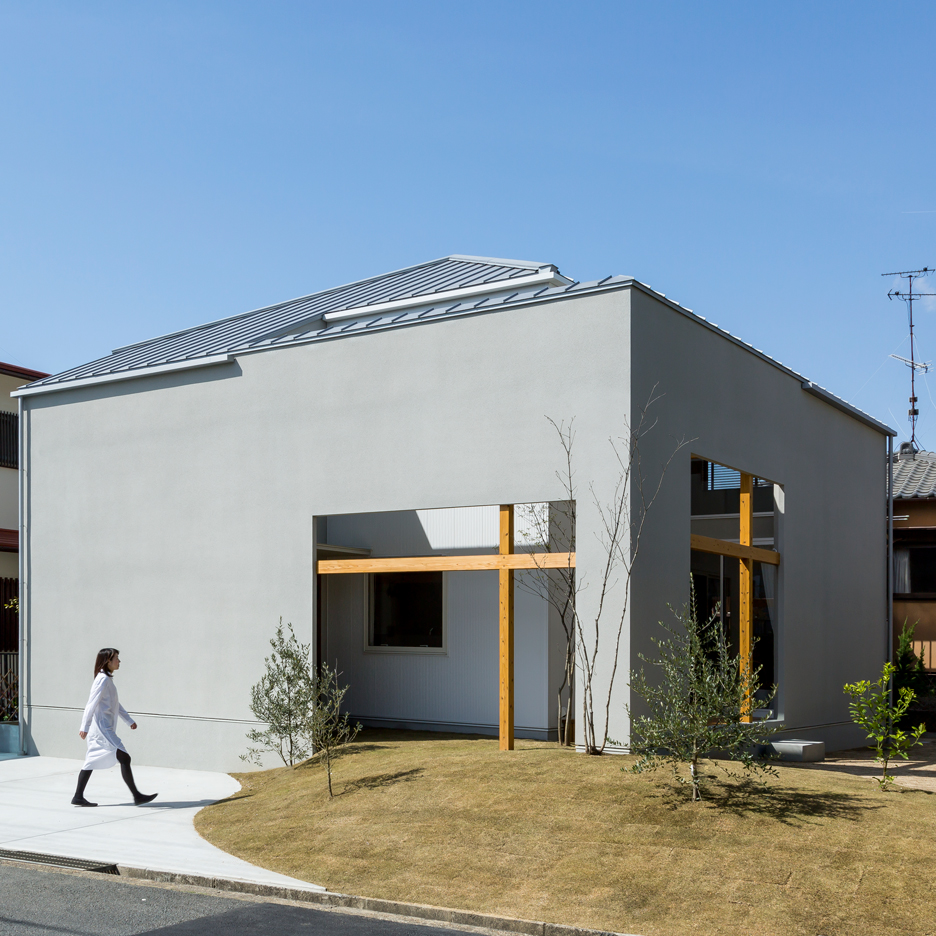
Uji House by Alts Design Office features a deliberately complex layout


Wooden crosses mark the entrances to this house in Japan, which features an intentionally complicated layout designed by Alts Design Office to create more privacy for residents (+ slideshow). (more…)

http://ift.tt/2bkRlU3