From the architect. Zambeze is an apartment building with four living units. Designed for a family that required every unit to have similar interior and exterior areas. That was resolved by placing one single apartment on the first floor, having open areas around it. As the building sits on a hill, the next two floors are occupied by two duplex units that have their exterior spaces on the back and sides of the lot. Finally, the remaining unit located on the fourth floor, had its exterior space created by covering the terraces on the second floor of the two duplex apartments. This creates a double story porch that is visible on the frontal facade.
The Miravalle area, where the building is located at, has the privileged views of the Cumbaya valley towards the East. This is why the frontal façade, which faces this direction, is very open, taking advantage of these views.
The structure of the building is made of cast-in-place concrete. Its columns, beams and ceilings are all exposed in the interior of the apartments. Artisanal brick was used to build the perimeter of the building, which was left exposed in the interior and exterior walls. Other materials used were wood for the screen that hides the vehicular access to the building and becomes an important element of the facade, and iron for the stairs of the duplex apartments and the hand railing of its terraces.
Important design details are the spaces creating tension on the side facades. These spaces help transition materials and divide volumes when they change in height. These height variations happen as the building responds to the positive gradient of the hill. Other important aspects are the green and brick combination on the terraces. Said terraces were designed in such way to allow trees to grow in every level of the building. Additionally, the side walls of the double story porches of the duplex apartments are made of artisanal brick. However, they are placed leaving spaces between them allowing more daylight in and, at the same time, giving privacy from its close neighbors.
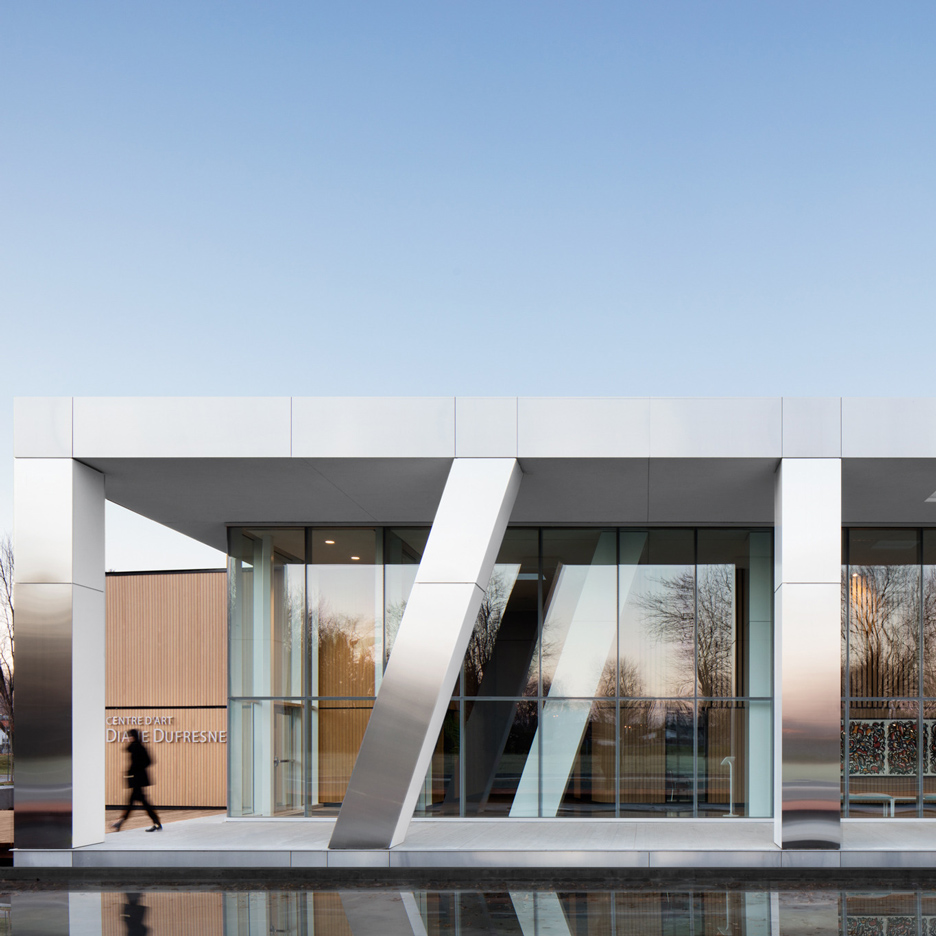
Montreal firm ACDF Architecture has created a new arts centre in the suburbs, fronted by a colonnade of vertical and angled stainless steel supports (+ slideshow). (more…)
Wood has always been one of the essential materials used in construction, and with the ongoing trend of timber-framed tall buildings, it has become more important than ever to be conscious of the impacts on the environment from the types of wood we source.
Currently, there exist more than 50,000 tropical timber species in the world, yet only a small percentage of those are utilized in construction projects. This has led to the exploitation of the more well-known timber species, altering the diversity of the world’s tropical forests and putting those species in danger of disappearing completely. But what if we began building with the full range of species available to us?
In efforts to increase awareness for the multitude of timber varieties available on the market, The Forest Stewardship Council of Denmark (FCS Denmark) have developed an online database of lesser known timber species (LKTS).
Courtesy of FCS Denmark
The website allows users to search through more than 200 species and 50 case studies of current applications of LKTS (and will be constantly updated as new cases and data become available), providing inspiration and guidance for architects and designers looking to use wood in their projects. The database gives technical descriptions of the capabilities of each species, as well as their practical applications and examples of existing projects in which they have been used. By making this information publicly available, FCS Denmark hopes that designers will begin to employ a more diverse selection of wood types as an alternative to the more well-known ones.
Courtesy of FCS Denmark
“It is our goal to create a more diverse timber market and break with the conventional thinking that dominates the industry today. We are not telling people to stop using well-known timber species like teak or cumaru – as long as they come from sustainable sources. However, if we can substitute some of it with lesser known species, it will make sustainable forestry much more profitable for the forest owners,” says Kristian Jørgensen, project coordinator at FSC Denmark.
FSC Denmark also welcomes users to submit their own LKTS case studies to help grow the database and support the goal of developing a “more diverse timber market to support sustainable forestry, improved pricing and regional development through the commercialization of a greater variety of wood species.”
Courtesy of FCS Denmark
You can check out the database for yourself, here.
If you want to upload your own FSC certified LKTS projects or if you have any questions, please contact Kristian Jørgensen from FSC Denmark at kristian@fsc.dk. For more information about FSC, please visit the organization’s international website.
From the architect. The Houtloods is the oldest, still remaining building in the Spoorzone, a former site of the Dutch Railroad Company. The Houtloods is located in Tilburg, the Netherlands, and originally served as the railroad’s lumberyard. The exposed masonry arched structure opened up to the elements and allowed the lumber to dry naturally. Later on the masonry arches were filled in with brick and the enclosed building became a workshop.
During the renovation, Bedaux de Brouwer Architects reopened the infilled arches to highlight the structure and let in natural light. A glass wall behind the arched wall complements and preserves the ‘newly’ opened structure.
Ground Floor Plan
1st Floor Plan
Inside the building, detached from the glass façade and timber roof, Bedaux de Brouwer Architects placed a large oak clad ‘furniture box’ that houses the newly added functions and program. The box facilitates offices, restrooms and storage, while in between the box and the glass façade public spaces are created. One side of the box forms an auditorium, the other side ends with an open kitchen and bar for the trendy restaurant, appropriately named ‘De Houtloods’.
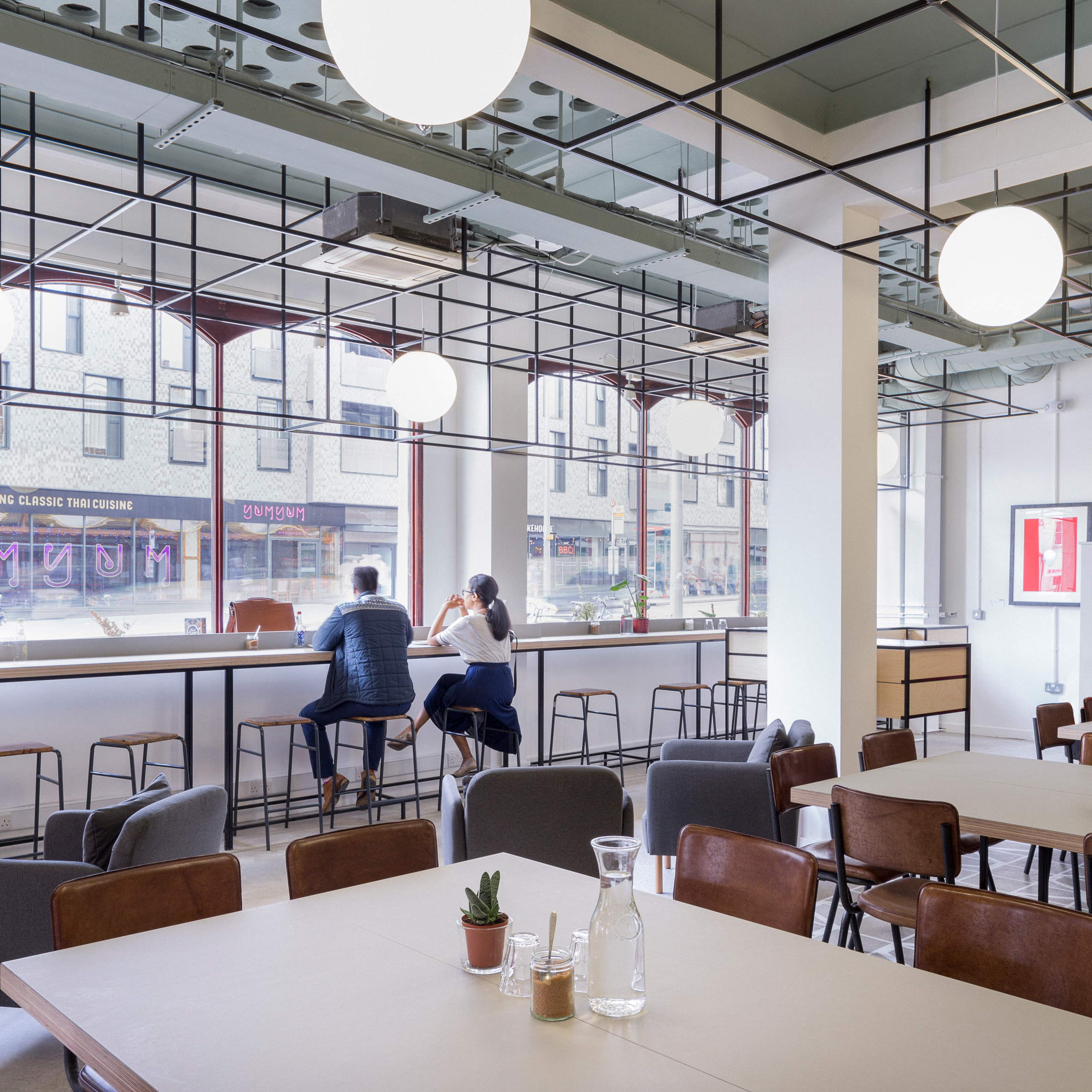
London studio Gort Scott has converted a rundown office block in London’s Walthamstow into a hub for local creatives, featuring co-working spaces, maker studios and a bakery cafe (+ slideshow). (more…)
Virgin Islands National Park’s hills, valleys and beaches are breathtaking. Beyond its tropical beauty, 7,000 acres on the island of St. John help tell the complex history of civilizations – both free and enslaved – who utilized the land and the sea for more than a thousand years. Photo of Trunk Bay by Kaitlin Kovacs, U.S. Geological Survey.
This essay was written by Rem Koolhaas on the occasion of his first trip to Brasília in August of 2011, and has since remained unpublished. Revista Centro (an online Brazilian magazine about architecture, urban studies, art & social science) has now published it in two versions (English and Portuguese) translated directly from its original language, Dutch. In addition to offering his first impressions about the modern Brazilian capital, Rem also emphasizes an autobiographical narrative about the origins of his relation with architecture.
Brasília
In 1956 – I don’t remember the exact circumstances – I happened to come upon an article in TIME Magazine about the new Brasília. The article unveiled the plans for a city-to-be, right in the center of the country; a dream of a city that would soon become a reality. It was there and then that my 11-year-old self made a decision: I was to become an architect. And not just any architect – a Brazilian architect. What followed were years of sketching and planning – emigration plans in particular; a rather ambitious project for a grammar-school student. Practicality caught up with me, and for eight years I managed to ignore the Brazilian pull. I became a journalist, and a co-writer of movie scripts. Until the day I realized – and this was nothing less than a revelation to me – that an architect is the one who decides the scripts of daily life. My initial calling rang more clearly in my ears than ever before.
A lot had happened between 1956 – the year TIME published its article – and 1968. By this time I was studying architecture in London. My conviction that architecture is a creative power, one that has led humanity for over three thousand years, was undermined by doubt and flower power. I became an architect at a moment in time when the foundations of architecture itself seemed about to crumble.






 Sig Nordal