Dezeen Mail issue 317 features this week’s best stories and discussions

Timelapse in 10K Shows Details of Daily Life in Rio de Janeiro

Photographer and filmmaker Joe Capra, known for Scientifantastic, filmed and produced the video ‘10328×7760 – The 10K  Demo‘, which is exactly what the title implies, a timelapse video resolution in 10K of the city of Rio de Janeiro. For those who are not familiar with the technical specifications, this resolution is about 10 times higher than the traditional Full HD (1920 x 1080px), which is the maximum resolution of most monitors sold today.

The video consists of a compilation of aerial images of Rio framing iconic landscapes of the city, showing every day life in fast motion, the frenzy of the metropolis all with timelapse techniques. The high resolution of the video allows you to see in detail the movement of people, vehicles, the Guanabara Bay waters, life in the favelas, the Lagoa Rodrigo de Freitas, the Sugar Loaf cable cars, among other emblematic points of the city.

Visit Joe Capra’s website for more of his work. 

http://ift.tt/2aojRCL

Toshiko Mori expands Marcel Breuer-designed residence with glazed addition


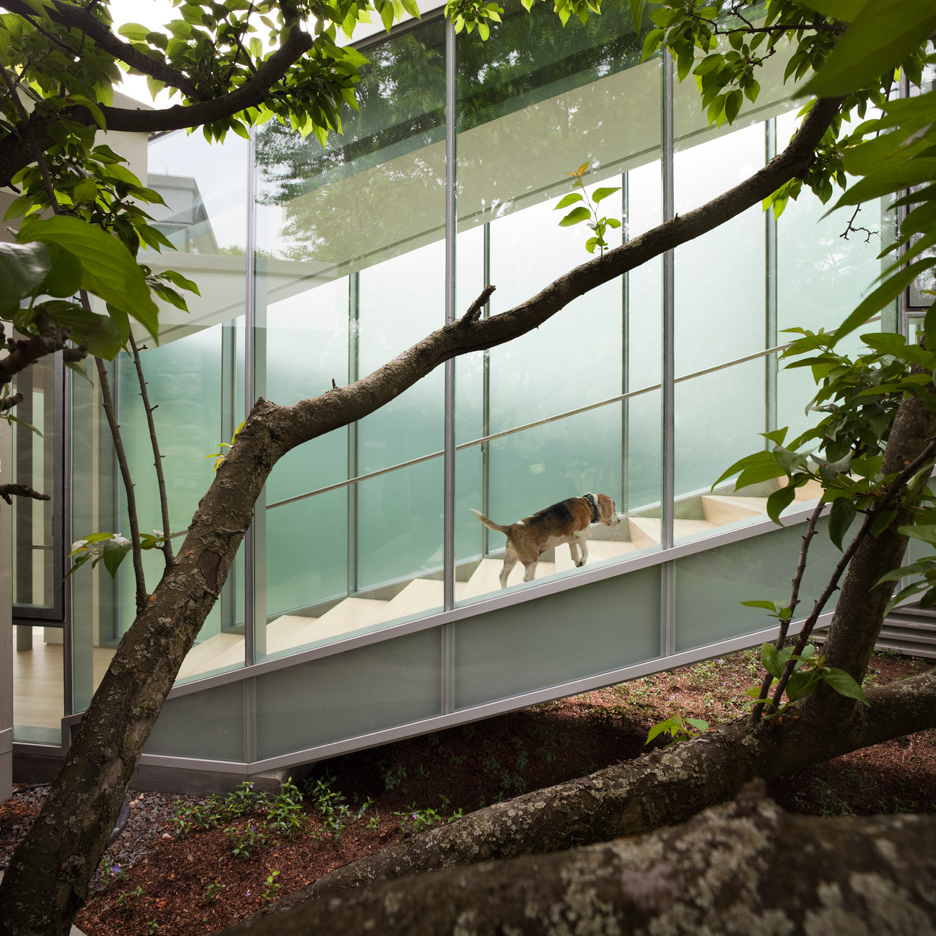
New York architect Toshiko Mori has renovated and extended a building originally designed by famed Modernist architect Marcel Breuer as a personal residence, connecting two structures with a glass-enclosed staircase (+ slideshow). (more…)

http://ift.tt/2akTW38

Leblon Offices / Richard Meier & Partners


© Roland Halbe

© Roland Halbe


© Roland Halbe


© Roland Halbe


© Roland Halbe


© Roland Halbe

  • Architects: Richard Meier & Partners
  • Location: Rio de Janeiro, State of Rio de Janeiro, Brazil
  • Design Principals: Richard Meier, Bernhard Karpf
  • Project Architects: Parsa Khalili, Anne Strüwing
  • Associate Architects: RAF Arquitetura
  • Area: 7030.0 sqm
  • Project Year: 2016
  • Photographs: Roland Halbe , Courtesy of Richard Meier & Partners Architects
  • Collaborators: Brandt Knapp, Ian Lotto

© Roland Halbe

© Roland Halbe

From the architect. The state-of-the-art commercial office building in the Leblon neighborhood of Rio de Janeiro houses the new international headquarters of VINCI Partners, one of Brazil’s leading alternative investment and asset management firms. The structure consists primarily of private interior courtyards, open office spaces and a series of terraces that create a direct connection with the urban artery of Bartolomeu Mitre Avenue.


Courtesy of Richard Meier & Partners Architects

Courtesy of Richard Meier & Partners Architects

Courtesy of Richard Meier & Partners Architects

Courtesy of Richard Meier & Partners Architects

Bernhard Karpf, design partner-in-charge, comments: “There is always a certain excitement and hesitation as to what the cultural differences mean for the design and construction process. We were excited to embark on a project within a city and country that has such a rich architectural legacy; for us it was important to try and understand how architecture’s role was shaped by both the climate and the people who were using it. The most interesting part of the process was discovering how our architectural ideas and strategies needed to respect and create the dialogue with its context.”


© Roland Halbe

© Roland Halbe

The building consists of seven floors above ground for a total height of 25 meters with a leasable floor area of 6,500 m2. A spacious lobby anchors the building to the streetscape, and three subterranean floors provide additional leasable space and private parking.

The office tower’s design, with its refined, formal vocabulary, reflects the distinct orientation of the site while addressing issues of sustainability, maximum efficiency, and flexibility. The entire building is recessed from the urban frontage and shielded by a carefully composed set of louvers along the western elevation designed for both maximum sun shading and privacy.


Ground Floor Plan

Ground Floor Plan

1st Floor Plan

1st Floor Plan

Typical Floor Plan

Typical Floor Plan

“The design of the Leblon project does not contextualize itself with its material palette, but rather through its articulation and layering of the primary façade with a screen. This enables the building to recede from the city while maintaining a street front. It offers its inhabitants the desired privacy and protection from the sun while maintaining a visual connection to the street and the sense of transparency,” states Mr. Karpf


© Roland Halbe

© Roland Halbe

The eastern section of the building is spaced apart from its neighbors to create internal courtyards and provide natural lighting on two exposures for all office spaces. Generous vertical gardens tie these open-air atriums into the exposed concrete core of the building. The entire project straddles between the refined precision of a white aluminum-and-glass free-plan office, and the roughness of concrete and the vegetation within the courtyards.

Guilherme Goldberg, Real Estate Officer at VINCI Partners, comments: “Working with Richard Meier & Partners through all the phases of the project was a very inspiring and learning process that resulted in a very unique office building. Starting from the early conceptual phases through the construction drawings, Associate Partner Bernhard Karpf and his team in New York City were very supportive to our ideas, and have now achieved a very efficient and innovative design that has exceeded our expectations.


© Roland Halbe

© Roland Halbe

“As a cohesive team, we successfully climbed a very steep learning curve. Richard Meier & Partners was able to recognize the local construction and development process in Brazil, and the local consultants were challenged by all the creative solutions proposed by the Firm. We believe the end result is magnificent, creating not only an exciting work environment, but also a landmark for the local neighborhood”.

Richard Meier comments: “The completion of the Leblon Offices is very special for our Firm as it represents our first completed building in South America and in Latin America. Brazil’s architecture is very distinct from Latin America as a whole and diverse in itself, and we are extremely honored to complete a project within a country that has such a rich architectural heritage.


© Roland Halbe

© Roland Halbe

“Looking at the context has always been something that is very important in our work. We look at how that project not only fulfills the functional requirements of what it is, but how it responds to where it is and how it enlivens the community. Brazil’s architecture celebrates natural light, openness and nature’s intimate relationship with the built environment, and these are elements that we have integrated in the design of the new Leblon Offices. The building reflects our firm’s commitment to accessible, open and sustainable architecture, and we are extremely thankful to our clients at VINCI Partners for all their support and dedication in the design and construction of the new Leblon Offices.”


Courtesy of Richard Meier & Partners Architects

Courtesy of Richard Meier & Partners Architects

The firm’s design role was to bring to life a vision for a successful, high-end office space with a project that aspires to become a significant architectural contribution to Rio de Janeiro, respecting Brazil’s rich architectural heritage while simultaneously challenging preconceived notions of indoor and outdoor spaces, and the relationship between the building and the city of Rio de Janeiro.


© Roland Halbe

© Roland Halbe

Richard Meier & Partners has designed seven buildings in Latin America, including the Reforma Towers in Mexico City, Mexico and the Vitrvm development in Bogota, Colombia both currently under construction.

http://ift.tt/2akVQRr

Marlon Blackwell On Working in Arkansas and Why We Should “Recreate Strangeness” in Architecture

In this video entitled Building Between, Marlon Blackwell advocates for a kind of regionalism which isn’t as divisive as “regionalism.” As a 24-year resident of Arkansas, he recalls his work and process in a place which he states is both “an environment of natural beauty and a place of real constructed ugliness”—showing the nuanced and self-critical awareness of place beyond the utopian glorification of genius loci which earlier this year earned him the 2016 Cooper Hewitt National Design Award in Architecture.


Srygley Office Building. Image © Timothy Hursley


Vol Walker Hall & the Steven L Anderson Design Center. Image © Timothy Hursley


Fayetteville Montessori Elementary School. Image © Timothy Hursley


St Nicholas Church. Image Courtesy of Marlon Blackwell Architects

Most architecture isn’t very good, and most good architecture is good enough for most days, but there is some architecture which should rise above the everyday.

In their often maligned context in Middle America, Blackwell’s projects inject life and cultural vitality, with the most notable examples being the St. Nicholas Church and the Fayetteville Montessori Elementary school. These works reflect his opinion that “architecture can happen anywhere, in any scale, [and] in any budget.” He further states that “most architecture isn’t very good, and most good architecture is good enough for most days, but there is some architecture which should rise above the everyday.” This statement makes an argument for the existence of outstanding architecture in any region. To achieve this, he urges the recreation of the strangeness of a place within the architecture. As one of the most respected regional-modern architects in America, to Blackwell it means developing a connection to the place which is “singular and universal, simultaneously local but with global presence.” 

http://ift.tt/2ao5ePG

Oceans cover over 70 percent of our planet’s surface and contain…

Oceans cover over 70 percent of our planet’s surface and contain 99 percent of the living space on earth, making them hotspots of biodiversity. The National Park of American Samoa – a remote park located on four volcanic islands in the South Pacific Ocean – protects coral reefs, rainforest and a strong Samoan cultural component. Coral reef studies at the park are helping scientists understand how warming waters are affecting these and other reef systems. Photo by National Park Service.

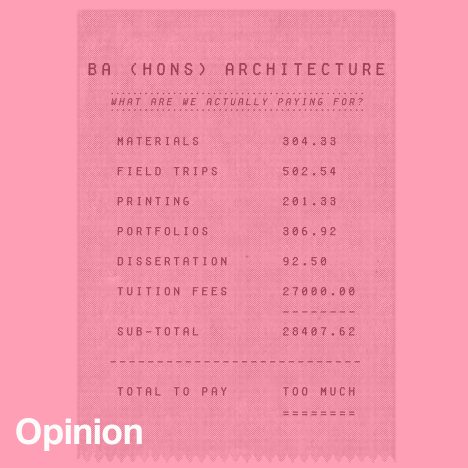
“We are all responsible for the state of architectural education in the UK”

Failure to Plan is Planning to Fail

//pagead2.googlesyndication.com/pagead/js/adsbygoogle.js

(adsbygoogle = window.adsbygoogle || []).push({});

Trying to achieve your goals without organization is similar to getting into an automobile without a steering wheel and expecting to reach your desired destination. Unfortunately, too many people do not embrace organization and the many benefits that it can bring. Instead, they rely upon chance and luck.

To be truly able to maximize your potential and accomplish all that you can, organization is a necessity. Organizing your life requires that you adopt a process that you embrace in every facet of your day and adhering to it to create habits that will encourage order.

This organizational process includes analysis, allotment and action. These three A’s can help you to structure your activities and increase your production through increased efficiency.

The First A: Analysis

plan analysis

//pagead2.googlesyndication.com/pagead/js/adsbygoogle.js

(adsbygoogle = window.adsbygoogle || []).push({});

Before you can truly become organized, you first have to understand what you have to do, and what must be done in order to do it. This requires that you devise categories for your responsibilities such as work, school and home.

//c.amazon-adsystem.com/aax2/getads.js

//<![CDATA[
aax_getad_mpb({
"slot_uuid":"16dcbcd0-2124-4a85-9abe-c263dd9084e5"
});
//]]>

Part of a successful organizational plan is applying it universally to everything that you do. Structuring a part of your life and leaving the rest a chaotic jumble will not enable you to maximize your potential.

So, begin your list by writing down everything that you must do on a daily, monthly and yearly basis. While it may seem counterintuitive to look at something that you only have to do once a year, such as your tax return, this will pay dividends by making the task easier and decreasing the amount of time that you have to spend doing it.

Breaking a task into a series of smaller actions that are completed as they occur, such as storing financial documents and receipts in a designated file, is the key to efficiently completing large projects. By doing so, you will save time when it is necessary to compile all of this information. Instead of first having to locate all of the necessary materials, they will be waiting for you.

//pagead2.googlesyndication.com/pagead/js/adsbygoogle.js

(adsbygoogle = window.adsbygoogle || []).push({});

As you write your list, it is helpful to think about how you might be able to be able to accomplish several tasks at once. For example, combining a trip to the grocery store with your daily commute, or using time spent waiting for a meeting to start to answer emails.

The analysis portion of organization is primarily about all of the things that you must do, and seeing how these tasks might be combined into a single action, rather than separate ones.

//pagead2.googlesyndication.com/pagead/js/adsbygoogle.js

(adsbygoogle = window.adsbygoogle || []).push({});

See Also: The Dos And Don’ts Of Planning Your Day

The Second A: Allotment

Allotment is the process of determining how much time to devote to each activity and when you will do it. This allows a “big picture” approach that enables you to decide how important each task is.

This way, you avoid spending too much time on the “little picture” activities, and concentrate your efforts on crucial actions. Answering every email instantly, for example, can waste a large portion of your day.

It is also important to allow yourself scheduled breaks. Noone is a machine, and we all need some down time. Allot periods of time throughout the day to review your social media, read and to recharge your batteries.

Your time allotment needs to be realistic. If you schedule fifteen minute blocks of time for projects that require an hour, you will not be able to finish what you have started and your plan will not help you to accomplish anything.

Using your analysis, determine what needs to be done and how long it will take. Be realistic about deciding how much time to allow for your various tasks.

//pagead2.googlesyndication.com/pagead/js/adsbygoogle.js

(adsbygoogle = window.adsbygoogle || []).push({});

See Also: Top 5 Time Management Hacks To Get You Ahead

The Third A: Action

failure to plan

Action may be the most important of the three As. Even the best plan is worthless if it is not put into motion.

That is why it is important to get into the habit of following your plans and learning to say “no” when others make requests of you for nonessential items. Staying committed to your organizational plan needs to be your top priority. With time, it will become second nature.

Action also requires that you get into the habit of writing lists, either hard copy or digital, to help to keep track of details and tasks that need to be accomplished in the short term. Decide what format you are most comfortable with and begin to make a list at the beginning of each day.

Mark off tasks as you complete them, to mark your progress and enjoy the sense of satisfaction that comes from being efficient and productive.

Organizational formats, storage and other tools are invaluable in accomplishing your goals. If your closet is cluttered, look for storage systems that will help you to keep it clean. If you have a difficult time keeping track of documents, incorporate a new filing system.

There are vast resources available to help. It is up to you to find them and take advantage of what you need.

As well, get in the habit of diminishing clutter by recycling or giving away things that you do not need or use. This can be clothes, magazines or even office documents that have lost their purpose, if they ever had one to begin with.

By working to devise a plan to organize your life, you increase your efficiency by spending more time on the things that are most important. Applying this strategy to every area of your life will help you find more time to spend on the activities that you enjoy as well as helping you to accomplish more. By using the three As you will be able to realize these benefits and reap the rewards of an organized life.

//pagead2.googlesyndication.com/pagead/js/adsbygoogle.js

(adsbygoogle = window.adsbygoogle || []).push({});

(function(d) {
var params =
{
id: “cb4f919c-04fa-460c-b2ff-2c7f9ecf4472”,
d: “ZHVtYmxpdHRsZW1hbi5jb20=”,
wid: “165294”,
cb: (new Date()).getTime()
};

var qs=[];
for(var key in params) qs.push(key+’=’+encodeURIComponent(params[key]));
var s = d.createElement(‘script’);s.type=’text/javascript’;s.async=true;
var p = ‘https:’ == document.location.protocol ? ‘https’ : ‘http’;
s.src = p + “://api.content.ad/Scripts/widget2.aspx?” + qs.join(‘&’);
d.getElementById(“contentad165294”).appendChild(s);
})(document);

The post Failure to Plan is Planning to Fail appeared first on Dumb Little Man.

http://ift.tt/2akLzor

Sou Fujimoto, Kengo Kuma and more propose future houses in House Vision exhibition


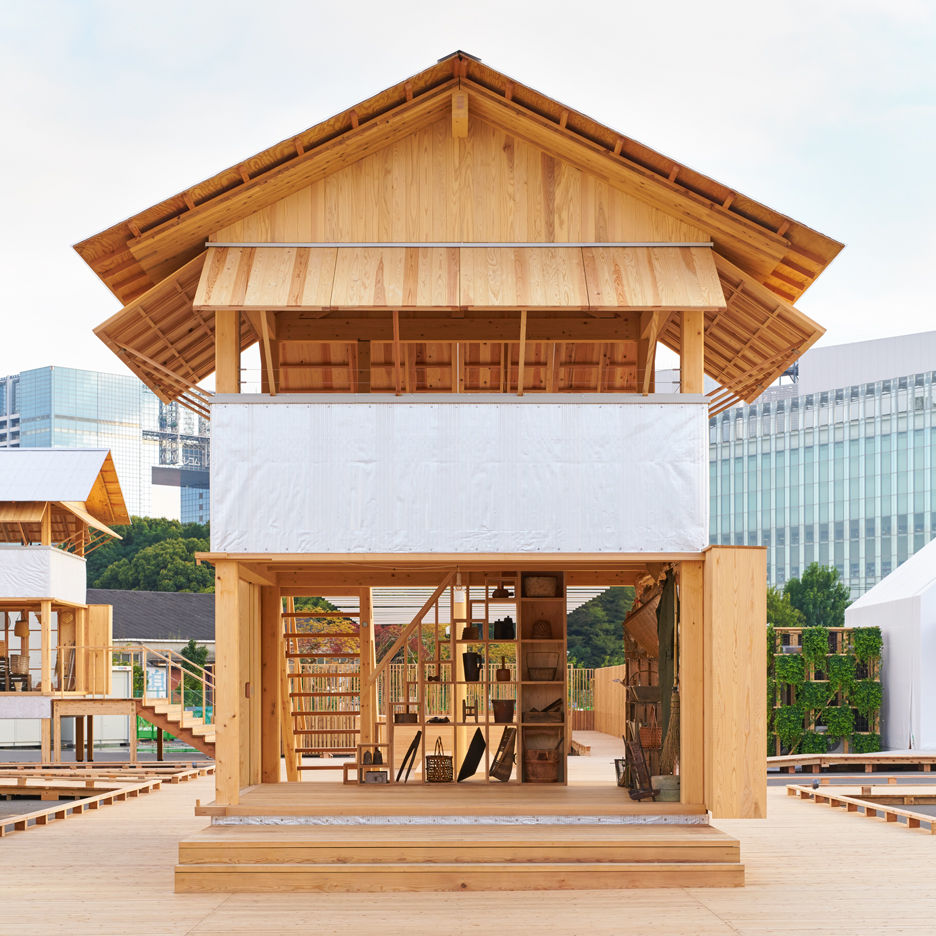
Japanese architects including Sou Fujimoto, Atelier Bow-Wow, Kengo Kuma and Shigeru Ban have all designed houses of the future for a Tokyo exhibition (+ movie). (more…)

http://ift.tt/2aL2yhF

House in Linderos / Cristian Hrdalo


© Nico Saieh

© Nico Saieh


© Nico Saieh


© Nico Saieh


© Nico Saieh


© Nico Saieh

  • Architects: Cristian Hrdalo
  • Location: Linderos, Buin, Región Metropolitana, Chile
  • Area: 780.0 sqm
  • Project Year: 2014
  • Photographs: Nico Saieh

© Nico Saieh

© Nico Saieh

Bulcke House is located in Las Araucarias de Linderos Golf Club, 30 km at south of Santiago.


© Nico Saieh

© Nico Saieh

Plan

Plan

© Nico Saieh

© Nico Saieh

The plot face the golf course in a corner in two of its sides, situation that gives a great perspective and views of the landscape but at the same time an overexposure of the privacy of the house.


© Nico Saieh

© Nico Saieh

The house was design as a large inner courtyard, the opaque facade of the street emphasizes the access and the volumes composed a U shape generate a protected exterior space, framing the views on the Golf Course. This self-enclosure is complemented by several interior courtyards, which gives the sun and light on blind areas.


© Nico Saieh

© Nico Saieh

The house is sheltered with large eaves and mobile frameworks of Corten steel that can be moved according to the sun, privacy or possible balls of a bad approach.


© Nico Saieh

© Nico Saieh

© Nico Saieh

© Nico Saieh

The house is entirely built in concrete with handmade wood cast in walls and ceilings and polished concrete floors, where the hardness of this material is contrasted in the interior with the warmth of walnut wood doors and furniture and in the exterior with Corten steel.


© Nico Saieh

© Nico Saieh

http://ift.tt/2awK0Pv