
Photo essay: now that North Korea is no longer the tourism black spot it once was, French photographer Raphael Olivier has travelled to the notoriously secretive nation’s capital to capture its particular architectural style (+ slideshow). (more…)
Photo essay: now that North Korea is no longer the tourism black spot it once was, French photographer Raphael Olivier has travelled to the notoriously secretive nation’s capital to capture its particular architectural style (+ slideshow). (more…)

The success of a temporary pavilion has seen Danish architects Schmidt Hammer Lassen (SHL) commissioned to realise a more permanent version of their original design. Situated on the HuangPu riverside in the West Bund district of Shanghai, the new arts and events space – dubbed the “Cloud Pavilion” – has been designed to appear as if it is floating along the waterfront. Comprised of two white surfaces and 20, 000 pieces of white rope, the pavilion has a sense of weightlessness and ephemerality which contrasts to the heavy industrial machinery nearby.
In 2013, SHL created a series of pavilions for the West Bund Biennale of Art and Architecture which were initially designed to remain for the two-month duration of the Biennale. The success of the projects extended their stay to two years, at which point a more permanent pavilion was commissioned. The original concept centered around the cloud, and it was requested that this theme be brought forward into the new building.
As well as maintaining the steel structure of the original pavilion, the new arts and events pavilion was to rework the plan to include 100 square meter space for events and small exhibitions and a small kitchen with storage. The illuminated ceiling makes the pavilion particularly experiential at night, as it is reflected in the adjacent water, resembling an “abstract cloud floating along the riverfront.”
Chris Hardie, design partner at Schmidt Hammer Lassen states, “The new pavilion creates a singular space in the form of an extruded glass cloud. The cloud shape in plan directly relates to the cartoon like form associated with how a child would draw a cloud, and how clouds are often seen depicted in traditional Chinese prints. The cloud is considered a symbol of luck in ancient Chinese painting.
The Cloud Pavilion is just one of many projects currently being designed by Schmidt Hammer Lassen architects along the Huang Pu River in Shanghai. Other projects include a new 1800 seat Broadway Musical Theatre, a 300 seat live music venue, and the conversion of a cement factory warehouse into a creative Art and Design Hub.
To understand the pavilion’s context and symbolism in greater detail, check out the video below.
News via Schmidt Hammer Lassen Architects.

Landmannalaugar by Hervé D. Coulées volcaniques et paysages sauvages de Landmannalaugar. http://flic.kr/p/oL654e

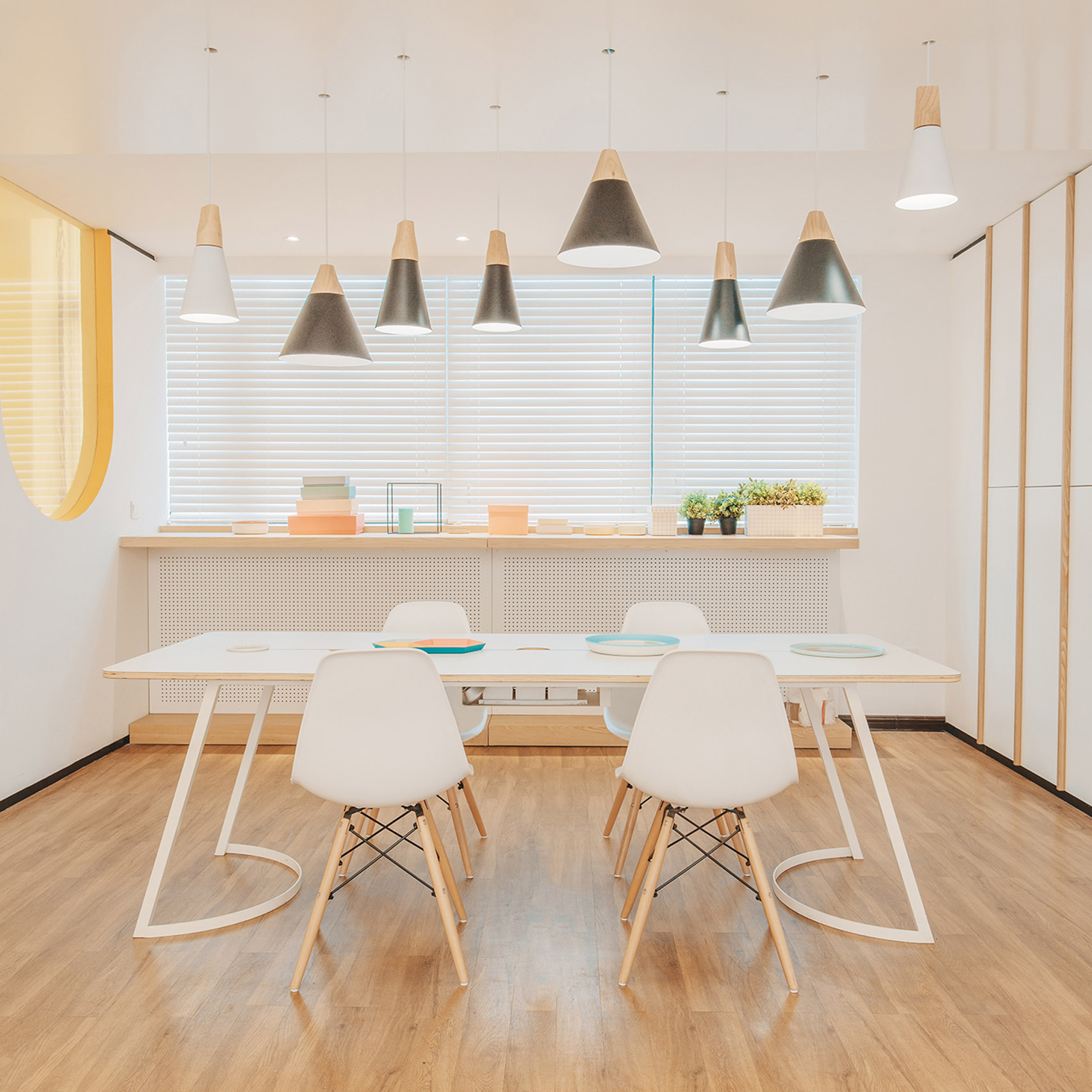
Chinese studio RIGI Design has placed a dining table and kids’ play area in the waiting room of a dental clinic intended to be warm and welcoming (+ slideshow). (more…)

From the architect. The assignment is a home for a young family, the lot in the town of Loma Verde in Escobar, in the northern suburbs of Buenos Aires, 55 km from the federal capital, on Route 9.
Both members the couple work in Escobar and the construction of their first home in Loma Verde, far from the civic and administrative center of the area implies a change in their lifestyle.
The lot dimensions are 15m wide x 30m deep. On the terrain there are three large trees that define the location of the house.
The house of 105 sqm is organized on a single floor and around a courtyard that opens onto the garden on one side. The interior height of the house is 2,40m with a living room ceiling of double height as to generate a window that incorporates the existing trees.
Because of a tight economic frame both material and labor-wise, the house was resolved with a traditional load-bearing construction of 18cm ceramic brick with precast light ceiling slabs. This is the construction method and technology that is most utilized around the Greater Buenos Aires. Foundations are solved by a linked beam with piling with a diameter of 20cm going 150cm deep into the ground.
The openings are sliding doors of bent sheet metal and cedar. Along the entire face of the house towards the garden runs a gallery, 1mt wide, that produces a small interspace between facade and an iron enclosure of fencing 2 “x 3/4”, constructed as folding sheets, 50cm wide.

The prolific Bee Breeder competitions encourage innovative and conceptual responses to charged architectural situations. The latest competition asked participants to consider the expansive material applications (and implications) of one of the world’s most prominent building materials; concrete. Described by Bee Breeders as a “poetic manifestation” of its constituent parts, concrete was then to form the basis for the Rome Concrete Poetry Hall.
The presence of the new, multi-purpose building in Rome required an awareness of the historic influences bordering the site. A further requirement was the excavation of the ground, a reference to Rome’s archeological past. According to Bee Breeders, the judges favored those projects which thoroughly addressed the “spatial, material, structural, conceptual, and cultural agency of this ever expanding building science.”
FIRST PRIZE WINNER – ROME CONCRETE POETRY HALL
Gino Baldi and Serena Comi | Italy
The first place winning proposal uses a subtractive approach to excavating the ground beneath the site, leaving only a few portals above ground through which pedestrians glimpse what lies beneath. By descending a ramp through one of these portals, the visitor begins a procession through a series of spaces which eventually culminate in the large assembly hall.
This composition of pure spatial typologies – the promenade, the vault, and the dome – are analyzed and deployed to frame the terrestrial plane, instead of the celestial sphere. Through this act of burial, these familiar architectural forms are transformed, creating an abstract mirror beneath the streets of the city. Through their subterranean “sanctuary,” the architects are able to free themselves from the constraints of the architectural object.
Read the full interview with the first prize winning team here.
SECOND PRIZE WINNER – ROME CONCRETE POETRY HALL
Sergey Korobkov, Alexey Yakushev, Evginy Korobskoy and Andrey Tsyplakov | Russian Federation
The second prize winning proposal subverted concrete’s traditional associations – material and mass – to mine the inherent formal capabilities of the substance. By “exploiting the monolithic” of concrete and it’s effectiveness to form spheres and spirals, a strong, internalized architectural object was formed.
The underground sphere is interlaced with spiral twists which function dually as circulatory elements and dividers of space. The functionality of the floor plan is enhanced by the spiral, as it’s labyrinthine form allows it to be fully occupied. The continuous and layered presence of the spirals alludes to a “continuous unfolding of hidden worlds as the user descends.”
Read an interview with the second prize winners here.
THIRD PRIZE WINNER – ROME CONCRETE POETRY HALL
Eveline Lam and Dave Holborn | Canada
The third place winning proposal took on the existing context to create a layered narrative, intertwining the site with new spatial sequences. As the scheme unfolds, it acts as a space of transition between the Piazza and the Poetry Hall. Historical and archeological value is added to the proposal by connecting the site to its greater context within Rome.
The proposal allows the Piazza to retain its typological stance as an above ground object, and the new Poetry Hall forms the subterranean element. Formed with layers and layers of concrete stratified from the ceiling downwards, space becomes otherworldly and poetic. The procession from public space to the surreal underground realm is enhanced by small gathering spaces along the path, allowing the users to pause and reflect.
Read an interview with the third prize winners here.
HONORABLE MENTIONS
Olivia Kate Peel, Craig Nener
Kyra Swee Yew Yong, Stephan Shen Yizhe
Michele Fumagalli, Andrea Tommaso Abbado, Andrea Toccolini
Jaime Campos Verdeguer, Maria del Carmen Figueroa Hernandez
Morpho Papanikolaou, Rena Sakellaridou, Despoina Pouniou, Constatinos Moustakas
Han Kwon, Suk Lee, Jieun Youn
For more information on each of the winners and honorable mentions, check out the competition website.
News via Bee Breeders
Have you ever compared yourself to someone else? Definitely!
If your answer is “No” to this question, then it means two things: either you are lying or you are not a human. Sorry.
Millions of years ago our ancestors compared themselves to their tribe members and adjusted their actions accordingly in order to be accepted and approved by other members of the tribe. If they had not acted like this, they would have been excluded from the tribe to face hunger and life or death situations at every step all by themselves. Hence, the natural instinct of comparing one’s actions with those of others served our ancestors to stay in tribes and survive.
Although in the modern world we do not have to worry about our survival as often as our ancestors did, we do need to acknowledge the fact that comparing oneself to others is wired into human brain and remains part of our human nature. The problem, however, arises when we get obsessed with comparing almost everything we are, we do or we have with what others are, have and do.
Furthermore, while comparing ourselves to others, we tend to forget a very significant fact:
Let’s assume that your dream is to become a renowned actress. You work your way hard, trying to hone your artistic skills to get that dream role in the theater. But you see Mary who has brilliant artistic skills getting that role. Then you beat yourself up for not being able to reach such a high standard in spite of your hard work. You keep on underestimating you own talent, skills, and the progress you have made so far as an actress. You are almost ready to give up. But wait… Do you know that Mary, the amazing actress that got your dream-role comes from a family, where both of her parents are from theater industry, while none of yours are?
Since childhood Mary has been engaged in conversations with the most brilliant minds of the theater world and had a chance to learn from the most prominent actors, playwrights, directors and producers you could only dream to meet in your entire life. This does not at all
imply that she did not work hard, but the fact that the environment she was raised in paved the way for her artistic excellence is undeniable.While you had to spend long hours of hard work all by yourself and make a number of sacrifices to make your way to the theater, the actress that got your dream role had an amazing advantage of picking up the brains of the great minds of theater industry at tea-table at her parents’ home without any obvious sacrifices.
Bringing such an example, I do not at all advocate for giving up on your dream if you are not lucky enough to have been raised in in the right environment. Not at all. I simply suggest that rather than comparing yourself to every other person who is doing better than you or seems to have what you dream of having, just pause. Pause and consider that no two human beings start the same. It is like comparing two runners whose starting points are different and tell the winner based on the fact who crossed the finish-line first. Instead, you should consider the starting point for each runner or the amount of time it took each of them to reach the finish.
The idea here is that one person may take a particular thing for granted in his/her life, for another person it may take years or even decades to acquire the same thing. And how on earth can you compare these people?
Period. Similarly, when you witness someone achieving big success in life and you are ready to call them “lucky”, pause and reflect. Do you have any idea on what it took that person to achieve success? Do you know what that person has gone through to be where s/he is today? Most probably, you do not.
Let’s now imagine John, a college student who had a big dream to start his own business. However, his family background was far from entrepreneurship. He had always been taught by his wonderful parents to study hard so that he could find a well-paid job. John was all alone in the pursuit of his dream, he did not have much understanding and support from his social circle and there was no one who could guide John in his entrepreneurial journey. While most of his classmates were busy taking selfies, fooling around or partying, John had to study long hours to accumulate business knowledge, work on a part time job to sustain himself and chase investors to believe in his dream. Yes, the path was challenging and full of sacrifices, but there came a moment when John was in his beautiful office, giving an interview about the successful company he had established.
For some people there is only one explanation to a person’s success: “S/he is just lucky”. Still, they do not even have the slightest idea about how many obstacles s/he had to overcome, how hard s/he had to work and how strongly s/he believed in their dream in order to become LUCKY!
These two examples may seem contradictory; in the first scenario Mary achieves success because of the luck of being raised in the right environment, and in the second scenario John achieves his dream because of the hard work that most people have no idea about.
The idea is that in most cases you do not know the story behind someone else’s achievements, what you know and know for sure is your own story. As the popular advice goes, “Mind your business”. I would add, “Mind your own story”. You don’t have anything to do with anybody’s life.
Comparisons constantly make us alienate from ourselves, look outside, rather than within and seek happiness in being better than someone else. When comparing ourselves to others, we tend to ignore our own talents and underestimate all the progress we have made so far in our lives.
Instead, our only concern should be to acknowledge where we are now in our life journey compared to where we started from, and never compared to where another person is. Too many of us put ourselves in the danger of forgetting our own life, wasting our precious time on what others are doing and living by the standards that others have made for us. The next time your natural instinct will tell you to compare yourself with someone else or be jealous for someone’s success, just ask yourself the question “Do you know the story behind?”
The post One Question To Ask Before Comparing Yourself To Others appeared first on Change your thoughts.
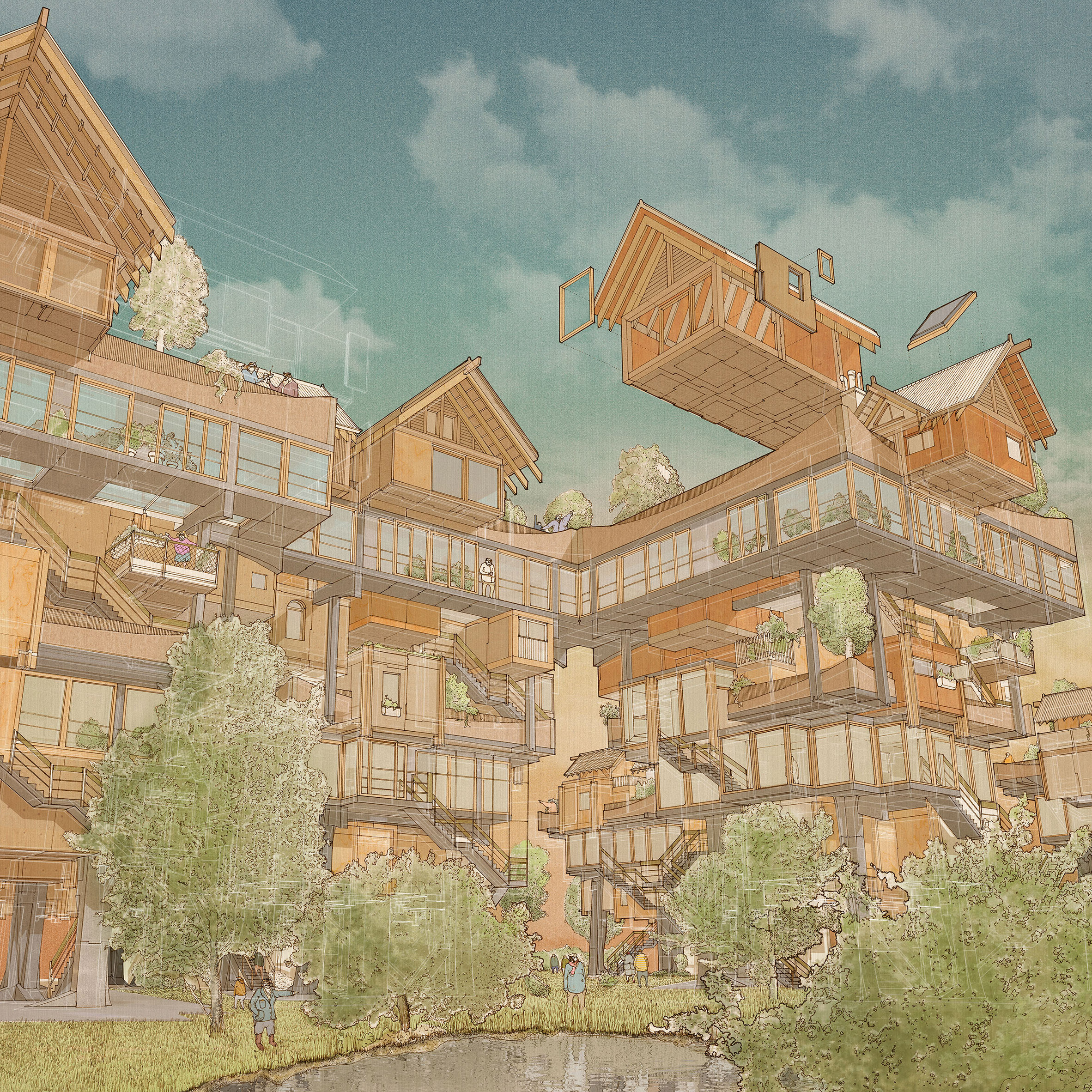
Graduate shows 2016: Bartlett student Matt Lucraft has proposed an evolving self-built housing co-operative based on a mishmash of English vernacular and historic Japanese architecture as a solution to London’s housing crisis (+ movie). (more…)

Stretching from the Rio Grande to the Chisos Mountains, Big Bend National Park in Texas includes massive canyons, vast desert expanses, forested mountains and an ever-changing river. Explore one of the last remaining wild corners of the United States where scenic vistas, historic sites and border culture can be found. Remember all national parks are waiving entrance fees August 25-28 to celebrate the National Park Service’s 100th birthday!
Photo by Kirsten Thompson (http://ift.tt/18oFfjl).
 Sig Nordal