The Roman Walls of Lugo Elevator / Antonio Pernas Varela


© Antonio Vázquez

© Antonio Vázquez


© Antonio Vázquez


© Antonio Vázquez


© Antonio Vázquez


© Antonio Vázquez

  • Project Collaborators Architects: Ramón Varela Barreras, Carlos Vázquez Castro
  • Work Collaborators Architects : Ramón Varela Barreras
  • Promoter: Junta de Galicia
  • Project Owner: Consejería de Cultura
  • Institution: Educación e Ordenación Universitaria

© Antonio Vázquez

© Antonio Vázquez

PREVIOUS STATE

The Roman Walls of Lugo, built between the late third century and early fourth century A.D, is the only complete roman fortification that is preserved in the world, and therefore, one of the most important monument of the Iberian Peninsula. The Roman Wall and the Historic Center of the walled enclosure have the highest level of patrimonial protection in Galicia and was declared in November 2000 a World Heritage Site by UNESCO. The plot of the intervention is located inside the walls, next to the entrance to the public gardens of the council building. The plot has two main entrances, one from the inner round of the wall [still incomplete] by the West, and the second, through the Romans Lane, which communicates with San Marcos street, on the South. In the target area, the wall has a lower height than in the rest of its route. The Romans Lane, which connects the gardens with San Marcos street, serves the Council buildings and the National Insurance Institute, and has a secondary character in the old town scene. On the street there is already a communications tower of strong vertical component and great height. Also, the views from the street are altered by the distant vision of the party wall of a building located in the outer round. On the east side, from the parapet of the wall and inside the garden of the council, the large sized magnolias existing work as a screen minimizing the visual impact of the new element.


© Antonio Vázquez

© Antonio Vázquez

Location

Location

© Antonio Vázquez

© Antonio Vázquez

AIM OF INTERVENTION

The parapet of the wall had no access that could be considered as accessible. For this reason, and with the aim to promote accessibility for all people, the location of an elevator on the far northeast of the enclosure was deemed necessary. The proposed intervention should provide an adequate response to the concept of quality of life and universal availability demanded by today’s society. The design of the elevator should take into account the protection of the cultural values of the Roman Wall and the Historical Centre of Lugo. The criteria and architectural design solutions used should also be compatible with the protection and conservation regimes established by law for the corresponding categories of protection to these two cultural goods. The new element image, seeking to adequately respond to a current need demanded by society in pursuit of improved quality of life, should also be consistent with the historical moment in which it was projected and, therefore, the architectural culture and modern appearance. At the same time, the design should be eminently respectful and discreet in relation to the presence of the Roman monument, and especially with the views from the parapet of the wall or from the public space of the Outer Ring. They were set as priority criteria to minimize the height of the installation to limit its visual impact on the monument and ensure the structural independence of the elevator to the historic structure except for the landing on the parapet, where the necessary functionality and safety should guide the design of the game. As for the used materials, finishes were chosen seeking an optimal level of quality, by designing and selecting them within a framework of current sustainability criteria that take into account the durability, the natural aging by use and weather conditions, safety and ease utilization. As for the functionality of the facilities it would be considered, on one hand, the possibility of providing the elevator of an ornamental and/or functional lighting to allow its use at night and, on the other hand, remote access control and surveillance of them will enable. The commissioning of the project comes from the Dirección General del Patrimonio Cultural, Consellería de Cultura, Educación y Ordenación Universitaria de la Xunta de Galicia through a contest that included project contracting and execution of works in the elevator for a budget of material execution of € 76,153.93. The plot on which would have to locate the elevator was owned of the Provincial Council of Lugo that would transfer to the new facility. Once the work was executed, the installation would be allocated to the Council of Lugo City that


© Antonio Vázquez

© Antonio Vázquez

Section / Plan

Section / Plan

© Antonio Vázquez

© Antonio Vázquez

DESCRIPTION OF INTERVENTION

The location chosen for the elevator proves to be the most appropriate to minimize the impact of the new item on the monument by the lower height of the wall on that stretch and the immediate presence of large trees. The new element has two distinct parts. On the one hand, the box houses the elevator device, its guides and equipment and, on the other hand, the gateway leads to the walkway on the upper level. The upper boarding of the elevator faces the wall while the lower boarding is laterally disposed to have a safe and big space to wait. This configuration requires the provision of an elevator with double entrance to 90º. The resulting plan dimensions of the box are 2.40 x 2.40 meters and 7.80 meters height. It is the minimum emerging from the operational requirements of the lifting device. The elevator body adopts the dominant alignment of the buildings inside the walls of the immediate environment. The choice of this alignment is, on one hand, due to reinforce the character [is intended] of independence and respect to the monument and, on the other hand, to facilitate the agreement of slopes between the gateway and the parapet of the wall. The resulting box and gateway connection to the parapet are solved with steel structure. The vertical body is solved internally with folded sheet steel and coated externally with iroko wood strips, which are separated in the stops forming a lattice that allows a glimpse of the outside. The pavement of the gateway connection is made with a folded perforated plate that reinforces the sense of independence between the elevator body and the wall, and solves water drainage and the need for a non-slip surface. It has sought a high degree of prefabrication in the design and layout of each of the structural elements of the project. Over time it is expected that the wood acquires a gray color that fits naturally to the historic masonry wall and its living patina.


© Antonio Vázquez

© Antonio Vázquez

EVALUATION

In the last decades Lugo City Council has stood by its commitment to accessibility, as evidenced by the Queen Sofia Prize for universal accessibility received in 2007 or his recent selection as the best accessible tourist destination for disabled people, in the second edition of the campaign ‘Accessible Tourism Destination’ driven by ThyssenKrupp Encasa. The elevator of the wall is the result of a long request of the social groups of Lugo, in particular the Auxilia organization, which for years fought to get this infrastructure. This achievement allows to complete an accessibility system that will open the use and enjoyment of the monument to all people. During its first months of existence, the presence of the new element has been accepted by the public as a necessary piece that agree with the openness of the city and the monument [the Great Wall is open to public use for free 24 hours a day]. During this time, the new elevator has not aroused great controversy and we could say its presence has naturally been assumed by the citizens, which, because of the sensitivity of the intervention, we understand as a success of our proposal


© Antonio Vázquez

© Antonio Vázquez

© Antonio Vázquez

© Antonio Vázquez

http://ift.tt/2bcJhXt

What Managers Should Know About Motivating Their Team

//pagead2.googlesyndication.com/pagead/js/adsbygoogle.js

(adsbygoogle = window.adsbygoogle || []).push({});

Do you want to know how to motivate your team?

The success of any business depends on people, and the effectiveness of the people depends on their managers. Managers don’t just manage and control all the work that has to be done, but they also motivate the staff to get the best out of them.

Motivated employees will be more effective at their jobs and will “go the extra mile” for your company. Motivated employees will also be good team players and good teamwork is essential for any successful business.

It is never enough to have good business processes and procedures in place. For a chance of building a successful business, employees need to be well-motivated and work well together.

//pagead2.googlesyndication.com/pagead/js/adsbygoogle.js

(adsbygoogle = window.adsbygoogle || []).push({});

But just what are the best ways of encouraging and motivating people? There has been plenty of debate over the years and traditionally a carrot-and-stick approach would have been used. More recently though, it has been recognised that if you want people to be innovative and creative then the fear of “punishment” just won’t get the best out of people.

//c.amazon-adsystem.com/aax2/getads.js

//<![CDATA[
aax_getad_mpb({
"slot_uuid":"16dcbcd0-2124-4a85-9abe-c263dd9084e5"
});
//]]>

See Also: The New and Modern Way Companies Are Increasing Productivity

There’s a great book by Daniel Pink called “Drive: The Surprising Truth About What Motivates Us” which suggests that the best way to motivate people is to enable then to develop to their full potential.

Here are some tips on how to motivate your team:

//pagead2.googlesyndication.com/pagead/js/adsbygoogle.js

(adsbygoogle = window.adsbygoogle || []).push({});

Identify Strengths

personal strengths

If, as a manager, you can identify your people’s individual strengths, then you are well on your way to motivating them. Give your employees tasks they are good at so they can enjoy their work and will have a better chance at succeeding.

//pagead2.googlesyndication.com/pagead/js/adsbygoogle.js

(adsbygoogle = window.adsbygoogle || []).push({});

Identify Weaknesses

Don’t shy away from highlighting weaknesses in individuals or in the team as a whole because acknowledging these weaknesses is the first step to rectifying them. Just make sure your methods are motivational.

For instance, someone has a lack of knowledge and experience in a particular area but a good training course can easily put this right at minimal cost and leave you with a much more motivated and enthusiastic team member.

Communicate

Always have honest and open discussions with everyone. Some conversations may, obviously, not be appropriate for a large group so it will be necessary to talk to individuals alone.

Don’t just do this once or twice a year at appraisal time. Find time in your schedule to talk more often to the whole group and to each individual. After all, their motivation and effectiveness at their job will reflect on you.

Support and Encourage

support and encouragement

Develop a fully motivated team by supporting and encouraging, praising when a job is done well, and offering constructive criticism (and training if necessary) when work does not meet the required standards. Promote open discussions about how working practices could be improved, encourage a flow of ideas about how to tackle problems and make full use of opportunities that arise.

//pagead2.googlesyndication.com/pagead/js/adsbygoogle.js

(adsbygoogle = window.adsbygoogle || []).push({});

Set Clear Expectations

It is critical that your team members understand what is expected of them. Otherwise, they cannot deliver what is required, no matter how capable they are.

So when assigning tasks, be absolutely clear about timelines and the quality of work that is expected. People are not mind-readers so you must be explicit in your instructions. And when people know what is expected, they can deliver and that in turn motivates them to continue to do a good job.

There are a few major organisations that allow their employees a high level of freedom in what they work on, where and when – believing they will be motivated to succeed doing something they enjoy. And it works for some types of creative roles but isn’t suitable for every business.

Many businesses need structure because they have regular deadlines to meet for their day-to-day activities. In such businesses, a lack of structure could simply lead to chaos so be absolutely clear when setting expectations.

That doesn’t mean some people can’t occasionally work from home or start and finish early to avoid a tiresome commute. Just make sure it doesn’t cause resentment in other team members because clearly resentment is not conducive to a motivated team.

See Also: Motivating Your Team – What To Do (And What To Avoid)

In a nutshell, motivation is all about helping people develop  professionally so they can achieve their full potential in a working environment that has clear expectations.

//pagead2.googlesyndication.com/pagead/js/adsbygoogle.js

(adsbygoogle = window.adsbygoogle || []).push({});

(function(d) {
var params =
{
id: “cb4f919c-04fa-460c-b2ff-2c7f9ecf4472”,
d: “ZHVtYmxpdHRsZW1hbi5jb20=”,
wid: “165294”,
cb: (new Date()).getTime()
};

var qs=[];
for(var key in params) qs.push(key+’=’+encodeURIComponent(params[key]));
var s = d.createElement(‘script’);s.type=’text/javascript’;s.async=true;
var p = ‘https:’ == document.location.protocol ? ‘https’ : ‘http’;
s.src = p + “://api.content.ad/Scripts/widget2.aspx?” + qs.join(‘&’);
d.getElementById(“contentad165294”).appendChild(s);
})(document);

The post What Managers Should Know About Motivating Their Team appeared first on Dumb Little Man.

http://ift.tt/2b4iqv2

Have you ever seen lightning make such crazy shapes? This bolt…

Have you ever seen lightning make such crazy shapes? This bolt looks like a Tyrannosaurus rex getting ready to chomp a formation at Blue Mesa in Arizona’s Petrified Forest National Park. Monsoons usher in summer lightning, so explore safely and be sure to check the weather. Photo by Hallie Larsen, National Park Service.

“Beyond the City”: A Captivating Look at the Design of the Hinterland


Courtesy of University of Texas Press

Courtesy of University of Texas Press

Felipe Correa’s latest book “Beyond the City: Resource Extraction Urbanism in South America” takes us to a region that architects and urban designers typically have neglected—the hinterland. The South American hinterland provides a unique subject of analysis as it has typically been urbanized for its natural resources, which are tethered back to the coastal cities where these resources are either consumed or distributed to global markets. Within this context, the hinterland is viewed as a frontier whose wilderness is to be tamed, put to work, and territorialized through infrastructure and urban design. Beyond the City provides an insightful look into these processes and the unique urban experiments that emerged in South America. Organized by five case studies, Beyond the City is tied together by what Correa has termed “resource extraction urbanism,” which he links to “new and experimental urban identities in the context of government-sponsored resource extraction frontiers.” Written as a lucid historical account that anchors the discussion within the political, economic, and social context, as well as within global design discourse, the book is also projective—setting the table for a series of questions on how design can act in these landscapes.


Courtesy of University of Texas Press

Courtesy of University of Texas Press

The first case study focuses on Belo Horizonte, a coffee-producing and iron-mining settlement planned by engineer Aarao Reis in 1893. Seen as a predecessor to Brasília, Belo Horizonte was established as an instant capital with an administrative and commercial center that would anchor the hinterland. Inspired by Enlightenment values, Belo Horizonte consciously deployed a rational plan that acted as a “political and economic staging ground”—ordering movement and privileging hygiene through a city-beautiful homage to L’Enfant among others. Despite its idealized grid geometries that provided order to the landscape, the city remained isolated until rail infrastructure connected it to other settlements in the 1920s, positioning it as a central hub within the continental interior. The rail line also instigated new industries and allowed for the absorption of disaggregated hinterland populations into Belo Horizonte. In fact, the railway serves as a clear reminder that infrastructure is even more critical than idealized urban forms in inciting urban transformations. Extending power from the city to hinterland through planning concepts, the first case study in Beyond the City takes us to the hinterland yet keeps us within the familiarity of the city.


Courtesy of University of Texas Press

Courtesy of University of Texas Press

The next case study transports the reader further into uncharted territory—to the Northern Chilean desert, where a constellation of extraction towns developed around the natural nitrate industry in the late nineteenth and early twentieth century. Correa’s unique analysis dives both into the territorial logic of extraction that developed a series of logistical infrastructures (ports, railroads, etc.) and the semi-autonomous logic of the extraction towns, such as Maria Elena. The territorial logic of the constellation was primarily comprised of a series of oficinas salitreras (extraction camps) which were grouped into the geopolitical system of “cantons” and linked to other settlement types—the coastal port city (to distribute goods to global markets), railroad hub town (intermodal transfer), and Andean oasis (water and agriculture)—via rail infrastructure. Each settlement type from the mountain to the ocean had a role within the system, and although the components had a degree of autonomy, they also had interdependencies reminiscent of Geddes’ Valley section that served to domesticate the harsh Atacama Desert landscape. Now largely abandoned, Correa argues for a reinvestment in this region through art, entertainment, and tourism. While these programs (and others) could take advantage of the existing infrastructure within this remote area, it is unclear why these extractive landscapes should continue to be inhabited or how the design of these infrastructures could anticipate and acknowledge potential future industries.


Courtesy of University of Texas Press

Courtesy of University of Texas Press

This tension between resource extraction towns as mechanisms of control that import ideal town plans to the hinterland and the larger territorial extraction practices that organize the landscape based on where resources are located, how they are extracted, and where they are moved to, is best exemplified in the third case study on petro encampments. Ciudad Ojeda was the first formal city to be established by the Venezuelan government in response to the migration associated with the emerging oil industry. Conceived by architect Cipriano Dominguez, the city had an idealized plan of concentric rings wrapping a central square. As new oil deposits were discovered, it was oil derricks that organized the landscape and urbanization around Ojeda, reducing Dominguez’s plan to but a small attempt to import control into a landscape driven by extraction logics. A more extreme case of this is found in Nueva Loja in Ecuador, whose prospecting strips of extraction have now served as the inadvertent framework for a city of over thirty thousand residents. Correa’s powerful analysis—through drawings and text—of the relationship between extraction processes and future productions of urbanism ask the reader to consider outcomes that are not inadvertent but rather planned within the infrastructural deployment of these industries. This quickly becomes a design question to consider future scenarios that leverage these industries as the originating catalyst.


Courtesy of University of Texas Press

Courtesy of University of Texas Press

It becomes exceedingly clear through Correa’s analysis that resource extraction urbanism is not only the territorial deployment of infrastructures related to industrial processes that set up a territorial frame for urbanization, but also a symbolic ordering of the landscape into critical town nodes that civilize the hinterland while creating a canvas for urban and architectural experimentation. Such experimentation was at the center of Ciudad Guyana, which attempted to merge design with social sciences. Designed by the Joint Center for Urban Studies, a research entity between Harvard and MIT, the city uniquely sought to reconcile rapid growth with a longer-term plan for economic development. Designed as a linear city that linked a series of nodes, the town was conceived of as a proactive framework for hinterland evolution rather than the byproduct of the extraction industry.


Courtesy of University of Texas Press

Courtesy of University of Texas Press

The final case study takes us once again to a symbolic ordering of the landscape in the plan of Vila Piloto (1962) along Brazil’s Parana River basin. Part of a TVA-influenced hydroelectric network that merged energy, hydrology, and regional planning into a larger urbanization strategy, Vila Piloto’s distinct circular plan of concentric rings are not as rigid as they first appear. Anticipating a transforming population, the houses of the original settlement were relocated, and slowly this circular framework was infilled by new residents that leveraged the services and amenities inscribed in the city’s plan. In this case study, we already see a critical move towards anticipatory design, and an understanding of the lasting legacy of these towns being their infrastructural arrangement both at the scale of the territory and settlement.


Courtesy of University of Texas Press

Courtesy of University of Texas Press

Today, once again South America is undergoing a process of hinterland urbanization, making Beyond the City a critical and timely guide to navigate potential opportunities within new infrastructural developments. You could argue that the catalyst of the Beyond the City is the Initiative for the Integration of Regional Infrastructure in South America (IIRSA), an agreement by eleven South American nations to deploy ten east-west infrastructural corridors across South America, creating a comprehensive energy, movement, and communication network. Already underway with more than half of the 524 projects under construction, the IIRSA plan once again brings the hinterland to the foreground.


Courtesy of University of Texas Press

Courtesy of University of Texas Press

The clues that Beyond the City provides are numerous. The historic analysis operates in a transcalar manner—moving between a territorial logic, urban settlements, to construction methodologies and materials—making it exceedingly clear that a holistic design project needs to consider the feedback between the territory and detail, as both are engines to organize place. Further, the case studies shed light on the design of the foreground versus the background. By foreground, I refer to the idealized city plans that are typically in the domain of architects and urban designers. In several cases in Beyond the City these plans are used to provide a symbolic ordering to the landscape and instill a civilization project into and onto the hinterland. Simultaneous to this, Beyond the City also reveals the background—organizational strategies that typically sit outside the domain of designers—such as the deployment of infrastructures and settlements based on extraction principles. Correa’s book suggests the need for design to engage in both the foreground and background in order to holistically link the territory to the settlement but also to more proactively account for the future of these settlements once they’ve exhausted their resources. Finally, Beyond the City reminds us that urbanism is still a site of experimentation. While the neoliberal city has eroded such dialogues in urban design, the remoteness of the hinterland and its instigation typically by a singular entity reawakens an arena for experimentation on systemic integration and holistic design. As the hinterland across the globe continues to urbanize and grow, Beyond the City provides a fascinating new subject for designers along with a captivating historic account that yields a series of experimental questions and templates.

Neeraj Bhatia is founder of design practice The Open Workshop and co-director of The Urban Works Agency at CCA in San Francisco.

http://ift.tt/2bAHhZZ

Tepoztlán Lounge / Cadaval & Solà-Morales


© Sandra Pereznieto

© Sandra Pereznieto


© Sandra Pereznieto


© Sandra Pereznieto


© Sandra Pereznieto


© Diego Berruecos

  • Collaborators: Manuel Tojal, Tomas Clara
  • Local Architect: Eugenio Eraña
  • Structural Engineering : Ricardo Camacho

© Sandra Pereznieto

© Sandra Pereznieto

From the architect. The bungalow is the first of a series of cabins to be built over a spectacular site in Tepoztlán, a small paradise located at about 50 km from Mexico City. The town has fantastic weather conditions, and a unique character built thru its pre-Hispanic origins that were followed by a colonial center that is still the heart of the village; its charm attracts the presence of intellectuals and thinkers to stay over the weekend, or for longer periods of time


Diagram

Diagram

The bungalow is conceived as a refuge for temporary sojourns in Tepoztlán. In the site there is already an area for common uses, including a large garden with a lounge and a pool which were also designed by our office. The bungalow is designed as part of the same project. A minimal private space for a couple or a small family is the program; however, views, light, nature and quietness are the reason of the project.


© Sandra Pereznieto

© Sandra Pereznieto

Floor Plan

Floor Plan

© Sandra Pereznieto

© Sandra Pereznieto

Exposed to the breathtaking views of the valley and the common area of the property, this contemporary cottage is located on a leveled surface already existing within the forest that occupies the site. The building is a small box that hovers over this plain, opening to the views and interacting with the steep slope of the terrain below. It is built on concrete seeking for low maintenance, and with the outer shell painted black to minimize the visual impact on the landscape. It is a framed box with its sides shut to maintain privacy with the succeeding bungalows, but fully open to the frontal views. The project aims to reinforce the belvedere condition in each of its main spaces. 


© Sandra Pereznieto

© Sandra Pereznieto

Being a temporary shelter, the project prioritizes both the living area and the master bedroom. Hence, the box brakes down in two at the front to make explicit the separation between those two main frontal spaces, allowing the vegetation to occupy the rift. To strengthen the necessary relationship with nature, these two key spaces have large front terraces that extend their experience and approach to the edge of the natural platform on which the bungalow stands. The cabin is a small plinth, a shelter among the trees to enjoy the views, the weather and the exuberant nature of the place.


© Diego Berruecos

© Diego Berruecos

http://ift.tt/2aVicsM

Which Famous Leader Were You In Your Past Life?

Have you ever dreamed of being a famous person? My best guess is that every one of us did, at least once! If you could be anybody who would you chose? And why?

If you want to know with which famous leader you are sharing some traits of your personality, this test is for you.

famous_leader_trajanTake just now this quick, fun quiz to find out which famous leader you were in your past life!

Which Famous Leader Were You In Your Past Life?
//cdn.playbuzz.com/widget/feed.js

Leave a comment below to tell us what you’ve got!

The post Which Famous Leader Were You In Your Past Life? appeared first on Change your thoughts.

http://ift.tt/2bio8bv

The “Kitchenless” House: A Concept for the 21st Century


Anna Puigjaner in her office in Barcelona. Image © Cati Bestard

Anna Puigjaner in her office in Barcelona. Image © Cati Bestard

Architect Anna Puigjaner imagines a future in which housing is suited to the needs of its inhabitants. Sometimes that happens to mean not having a kitchen. Her project “Kitchenless” has received the Wheelwright Prize from Harvard University, along with an endowment of $100,000 for research on existing models of communal residences worldwide.

Puigjaner and the other members of the Maio firm work alongside professionals from other disciplines in a beautiful spot in the Gracia district in Barcelona, which functions more as a co-working space than a conventional architectural office. The Maio team opted for this place in 2011, during the crisis, so in order to hold on to it they decided to open the space to other workers. In 2016 they could afford to be alone, but there isn’t any compelling reason for them to do it. This could be a summary of their philosophy and is surely one of the reasons why Puigjaner received the Wheelwright Prize, a unique prize among architecture awards as it doesn’t focus on a specific work or research but the relationship between the two, in direction and ideas.

She does the interview from her office and talks about the changes that lie ahead for the future of housing:

Would you live in a house without a kitchen?

I live in a house without a kitchenright now. Let me explain, I started with this idea of ​​”no kitchen” because it was the most provocative, I realized that when we talk about housing there was no problem if you eliminated the living room or bedroom, but if you touched the kitchen it generated a very curious adverse reaction. Kitchens were instilled with certain ideological values ​​during the twentieth century linked to the role of women, politics, and the construct of the ideal family.

The part that interests me the most involves a large change in mentality. It’s about looking at a house not for it’s square footage but for it’s uses. In short,  this idea of eliminating the  kitchen was quite good because it simplified everything while being very provocative. Homes that do not have a room designated as the kitchen have a kitchenette. Here’s the catch, my kitchen is only 1.20 meters ( 4 ft.) long.

So, you don’t have a kitchen but you have a space to cook?

I have appliances I can use for cooking. The compact kitchen or famous breakfast bar that emerged in America in the late nineteenth century were always accompanied by a communal kitchen. They were kitchens where you would only cook occasionally.

When you talk about a communal kitchen, are you referring to buildings where several homes were accessing a shared space?

There are many types.The residences I studied from late nineteenth century New York had no kitchen or kitchenette but always had a common kitchen with a cook. During the twentieth century this model was politicized because the Russians began to copy it as a system of social housing and loaded it with political meaning. Suddenly a collective kitchen was associated with communism. Now, when I say communal kitchen people imagine a shared kitchen space but at that time it was more like a domestic service with a cook.

In a similar vein, multi-family housing also had built-in childcare, housekeeping or other facilities for daily life. In addition to this you had your kitchenette in case you wanted to cook for pleasure. When it became politicized, that system was immediately swapped out for housing as we know it today.

So the “kitchenless” system you’re talking about is always linked to domestic services?

Yes, for me services are the most important, not whether you have a kitchen or not . It is about outsourcing domestic work, with jobs where people receive compensation.

How would you define domestic comfort?

Domestic comfort is built and designed. When we contemplate the question “what do I like?”, in a design that someone has thought of, we have to grow accustomed to it. It is a slow process, it takes time, but social trends in domestic comfort happen when a group of people or a particular school influence society in some way until they establish an idea of whether something is comfortable, expensive, or cheap. Our criteria are variables. What we consider comfortable today is different from what was comfortable at other points in time. It was neither better nor worse, just different.

For example, in the nineteenth century it was considered unhygienic to have a kitchen inside the house, something that makes some sense if you think about how dirty kitchen trash can be. At that time there was also an interest in controlling the quality of the food and the best way to do that was leave it up to a professional. People thought that a cook would have better control over the quality and where the food came from. Now there is a resurgence of this idea, an interest in knowing the origin of our food, whether any pesticides were used, etc. There are countries, like Australia and Canada for example, which have seen a resurgence of communal kitchens since the late 90s.

In Canada three women started out with the intention of reducing domestic costs and that partnership of three families has grown and now there are 1,500 varying models of communal kitchens you can join by paying a fee: in some the members themselves do the cooking; in others, a professional. It’s like a consumer co-op, with the only difference being that you’re buying cooked food. This phenomenon is happening in Australia as well. In both cases the factor of socialization and community is important, people enjoy coming together.

So far we’ve talked about two very different models: a housing concept where the cooking is done by a professional chef, and another where it’s done by the families themselves. Which one is your research aimed at?

My doctoral thesis, based in New York, was basically about outsourcing domestic tasks. I was particularly interested in an absolutely capitalist system that moved away from communism but also had communal kitchens. Managing a space like that was very different and it also came about for purely economic reasons, as it was more profitable and it was to the benefit of property owners to offer group domestic services.

Now my interest is to show that this model has a contemporary relevance and could be a great help to people throughout the world. That’s what I’ll be doing for the next two years thanks to Harvard, defending the idea that there are many advantages to this type of housing and that they can be adapted.

There are many individuals or families that would never share a kitchen with their neighbors, the idea itself would be shocking…

Remember when we talk about the idea of a conventional family we are only talking about a small percentage of people when compared to other social types. The percentages of families that consist of a couple in their first marriage who have children represent 46% of the US population. Patterns change. Sometimes people who were reluctant at first are more open when they are looking at it out of necessity.

We’re beginning to see different families who do not want to go deal with conventional nursing homes come together and build homes adapted to the needs of the elderly people in their lives. Even here in Spain, there are examples in Basque Country and Valencia. Social needs are changing at a brutal speed. The key aspect of these models is that there are a lot of options and possibilities. You can have a kitchen but if you can’t cook then the residence will fix that for you. The mindset is not one of forcing people but that of giving more options.

Here is where the role of women in society has come into play a little. I imagine that houses were designed for women to do all the housework.

When I talk about this, I’m referring to the United States. What’s happening here in Spain isn’t my area and I’ve never studied it, but in the United States’ case it is very clear that after the Stock Market Crash of 1929 there was a political push for women, who were part of the workforce during the war, return to the home and that the home itself become a productive place.

It was important to increase domestic consumption and that’s when we start to see the design and marketing of appliances as well as the idea of the individual consumer and no longer communal spaces because it’s more profitable to sell 20 washing machines than one. This is also when laws changed, and incentives were given for the construction of single-family homes.

While domestic services were the norm in the late nineteenth and early twentieth century it was normal to be paying several people to work in your home, after the war these services became more expensive and people started to do them collectively. Later, with Fordism and Taylorism, compact kitchens, which had previously been dependent on communal kitchens, started being sold in ads and  popular consumer magazines as kitchens that do it all. Suddenly, you no longer have a person in charge of the kitchen but you have a machine that will do it all. That was a big lie because those ads, with their own Fordist jargon, were selling the idea that appliances were taking over the act of cooking and thanks to them you could do everything faster. The big difference is that in Fordism, you broke away from using professionals in the kitchen and the woman took on all those responsibilities. Women lost many privileges in just a few years. Now we’ve gotten rid of domestic services, we have amazing kitchens, but we’re dedicating exactly the same amount of time to household tasks as 100 years ago, rather than understanding that housework should be done by paid professionals. We all believe we know how to clean very well but any ordinary professional could do a much better job than we can.

Suddenly, you no longer have a person in charge of the kitchen but you have a machine that will do it all. Those ads were a big lie, with their own Fordist jargon, they were selling the idea that appliances were taking over the act of cooking and thanks to them you could do everything faster. The big difference is that in Fordism, you broke away from using professionals in the kitchen and the woman took on all those responsibilities. Women lost many privileges in just a few years.

Now we’ve gotten rid of domestic services, we have amazing kitchens, but we’re dedicating exactly the same amount of time to household tasks as 100 years ago, rather than understanding that housework should be done by paid professionals. We all believe we know how to clean very well but any ordinary professional could do a much better job than we can.

I think that this part could seem pretty controversial, for example here (in Spain), in the middle of a crisis to think of hiring people to do household tasks…

This is where we get to talking about social norms and the fact that we consider these to be second-rate jobs. Why is working on a car assembly line more valued than cleaning a home? We have a problem. We are not talking about exploiting anyone, just normalizing these jobs.

Yes, but there’s also a financial element that could be difficult…

Now we’re talking about housing, in the 19th century it was cheaper because it came included in the rent. I would cost you the same to rent an apartment with domestic services included as it would to have an apartment that came with a kitchen and appliances. Why? Because you could build more units on the same piece of land if you had collective domestic services. The developers could build more homes and be more competitive. It was mostly a choice of what you wanted to have. These days it is more expensive because the current legal and tax systems aren’t structured well.

All of that brings me to ask, What do developers think of your idea?

One of the philosophies of the nineteenth century was that you rented services, you could have three rooms but then if you needed another room later because you had a child or whatever your reason was you could just add on because the buildings were adaptable. I’m talking about the kitchen because it’s the most interesting, but there are many other benefits to this model. 

It is difficult at the moment, but for now we are working for a private developer who wanted to build a residential building that could be adapted on demand. What this developer wants is to rent these flats and asked us to make a building where you could adapt units on demand with just a few changes. Now we know that the 60-square-meter (645 ft2) units  are the most popular, but if in a few years there is another kind of demand, they have got to be able to adapt.

This developer has found that demand changes very quickly and wants to be prepared for this: at the moment the units are 60 m2 , but in the future, he could have some flats be 120 and others 30. The internet is allowing for more flexibility with housing with things like renting individual rooms, but of course if the room isn’t well designed it is a nuisance. In the nineteenth century houses were designed to be much more flexible than they are now.

I imagine that these losses didn’t go unnoticed by property developers. 

They are political, economical. After the crash of ‘29, they wanted to encourage domestic consumption.

Although you say that in Spain we’re decades away from the United States, what can you point out here? Anything in particular?

Here everything is very recent. We had several decades of Francisco Franco encouraging private property, there was a slogan that went “Let’s change this from a country of blue-collared workers to a country of landowners”. All of a sudden in the 60s being a home-owner became an ideal .The public housing that went on the market in the 90’s and early 2000’s was an outrage. 

There is a culture of ownership and individuality related to housing, but gradually we realize that renting is positive. It implies a much less permanent relationship with your house, that your house does not have to be your house for life and it also allows for more respect for other people in certain ways. Taking care of things even if they aren’t yours. “Sharing” culture is growing and thanks to new technologies and the fact that we are spreading out more and more around the world makes it easier to be less afraid of others, or to let go of our things.

It is a drastic change. Even I find it difficult sometimes.

http://ift.tt/2b0rBLc

Pad Studio creates prefabricated dwelling to comply with New Forest housing regulation


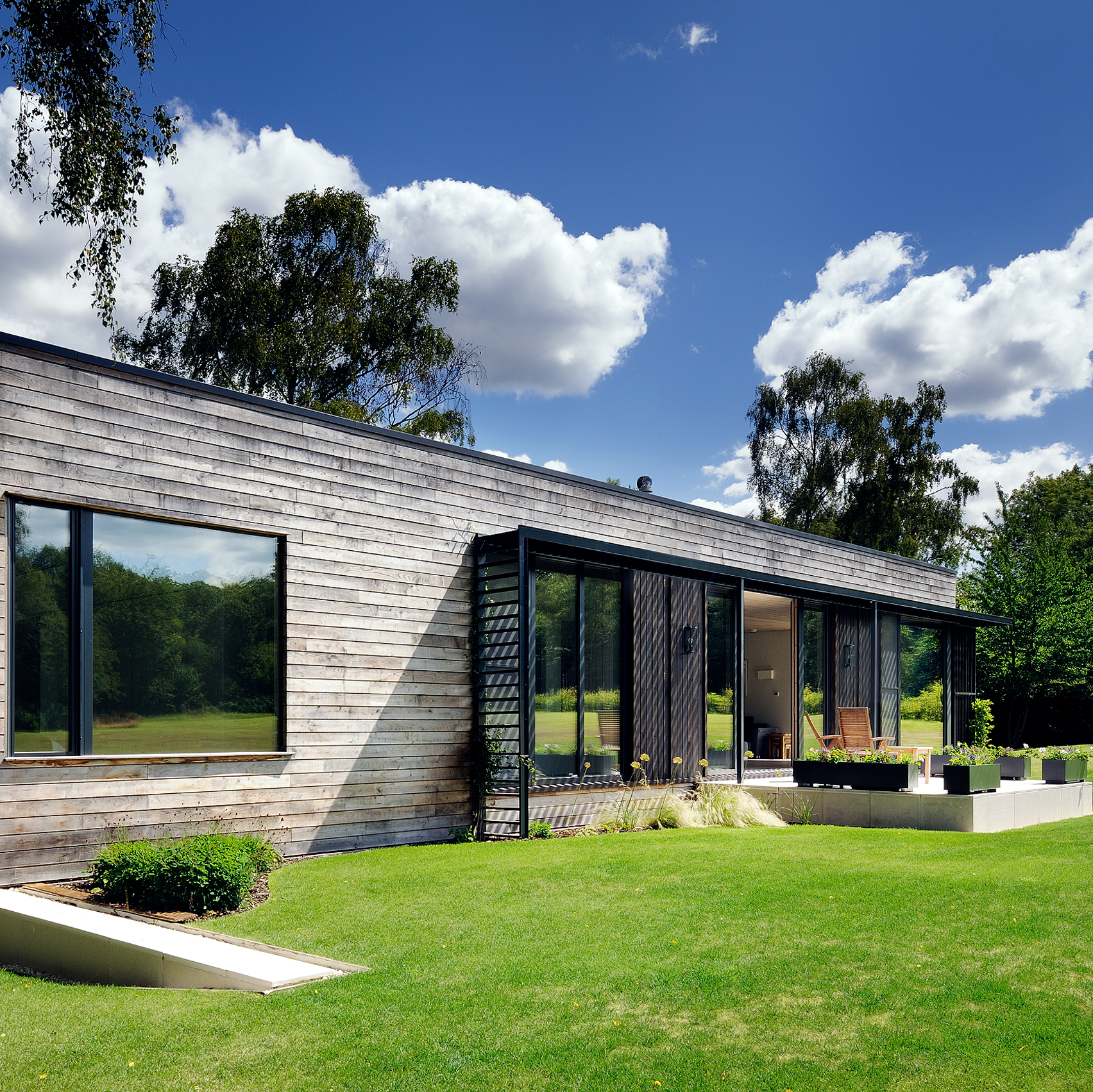
This chestnut-clad home by Pad Studio was prefabricated offsite before being craned into a clearing in the New Forest, a stretch of protected woodland in the English county of Hampshire (+ slideshow). (more…)

http://ift.tt/2bikjmM

💙 Tawny Owl on 500px by Milan Zygmunt, Zdar nad Sazavou,…

💙 Tawny Owl on 500px by Milan Zygmunt, Zdar nad Sazavou, Czech… http://ift.tt/1LgzugW

http://ift.tt/2aYKIVH

Front’s lifesize Horse Lamp for Moooi was a provocative experiment


Most Loved: in our next exclusive movie, Anna Lindgren and Sofia Lagerkvist of Swedish design studio Front discuss the unexpected reaction to their range of lifesize animal products for Moooi. (more…)

http://ift.tt/2b0hm9S