Palatine Passive House / Malboeuf Bowie Architecture


© Shea Pollard

© Shea Pollard


© Shea Pollard


© Shea Pollard


© Shea Pollard


© Shea Pollard

  • Passive House Builder: Tiffany Bowie of Blue & Yellow Builders
  • Certified Passive House Consultant: Dan Whitmore of Hammer and Hand
  • Building Engineer: Carissa Farkas

© Shea Pollard

© Shea Pollard

Conceived as a sustainable reinterpretation of a monolithic gable roof house, the Palatine Passive House integrates modern residential form with innovative building technologies. The certified passive house was designed and built by the architect. Apart from an abundantly glazed entrance gesture, the distinctive façade is windowless in order to meet passive house certification standards.


© Shea Pollard

© Shea Pollard

The unique façade is composed of hand-charred cedar in a herringbone pattern, adding a twist to a classic Northwest American building material. The dark patina complements the lush, tree-lined neighborhood streets, while the shou sugi ban treatment naturally seals the cedar, eliminating the need for regular maintenance in a rainy Seattle climate. Once inside, the large windows and white, minimal interior maximize natural daylight to create a light filled space that is private from the street.


© Shea Pollard

© Shea Pollard

The first level is a large open volume that spills out to the back yard for the social functions of the residential program. High ceilings on the second floor allow for a mix of private and loft spaces. An open double height circulation area joins the two levels and connects the public and private functions of the house.


© Shea Pollard

© Shea Pollard

In pursuing PHIUS certification, innovative building technologies and construction methods emerged in the envelope assembly, cladding fabrication, and energy management systems. Due to an airtight envelope, continuous high-performance insulation, and managed solar gain, the Palatine Passive House uses 90% less energy than required by local building code. The house employs a continuously filtered heat and moisture recovery ventilation system, resulting in excellent air quality and temperature control for a healthy, comfortable living environment. A home management & control system, monitors all major energy components, optimizes efficiency, and allows residents to manage lighting, cooling, heating, and ventilation from a phone app. In a testament to the progressive design, engineers used the Palatine Passive House as testing ground for the system.


© Shea Pollard
© Shea Pollard

http://ift.tt/2cROmE6

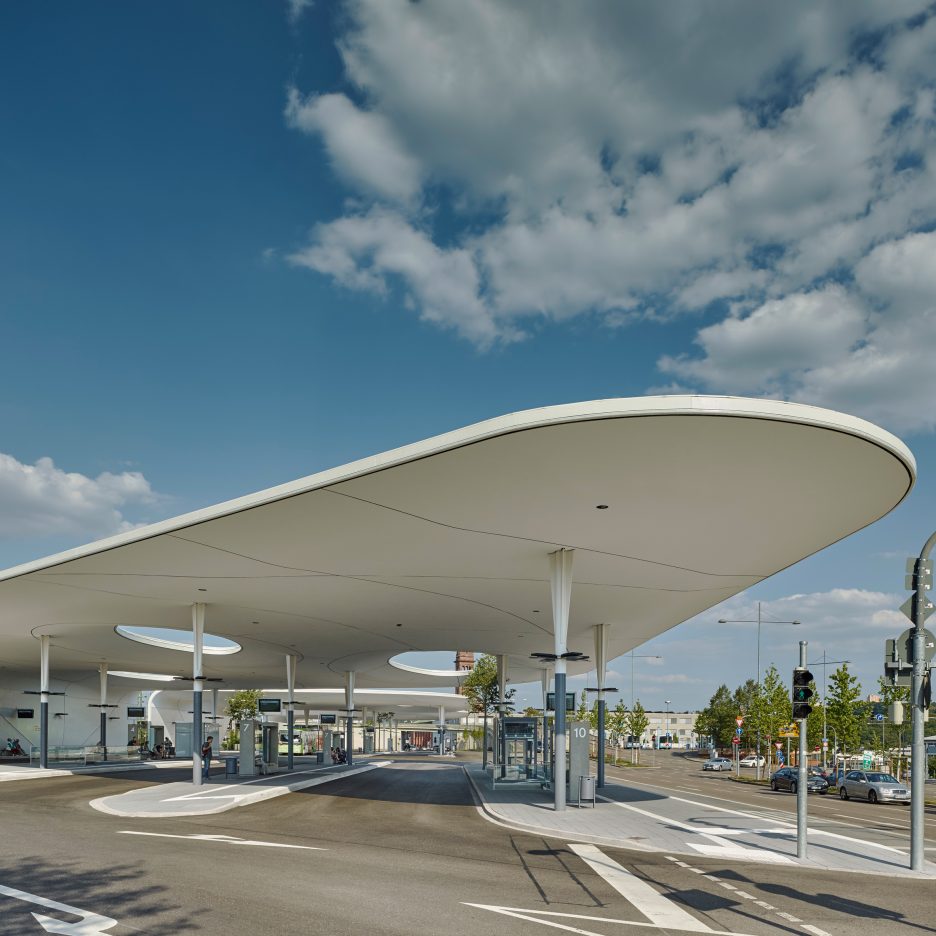
Shell-like roofs provide shelter at Pforzheim Central Bus Station


Stuttgart architecture studio Metaraum has completed a bus station in the German city of Pforzheim, featuring curving canopies that swoop up and over waiting areas (+ slideshow). (more…)

http://ift.tt/2d8JnkT

Brand New Island in Copenhagen Will Act as “Stepping Stone” Between Two Neighborhoods


Courtesy of COBE, Vilhelm Lauritzen Architects and Sted

Courtesy of COBE, Vilhelm Lauritzen Architects and Sted

Danish firm COBE have lead a team comprised of Vilhelm Lauritzen Architects, Sted, and Rambøll in the design of a brand new island in Copenhagen’s harbor. Situated in the Kronløb water basin in Nordhavn, the monolithic presence of the Kronløb Island references the geological processes by which the topography of Denmark was formed. The floating new district will include parking facilities, housing, and public spaces. 

The introduction of the island into the harbor will break up the expanse of water, providing a median point between two burgeoning city districts. Its presence will also facilitate a series of intimate canals that wind between the built areas.   


Courtesy of COBE, Vilhelm Lauritzen Architects and Sted

Courtesy of COBE, Vilhelm Lauritzen Architects and Sted

Kronløb Island will include the area’s biggest parking facility – a three-story underwater car park – as well as two new urban spaces in direct contact with the water, three new bridges and a monolithic housing volume with unique and varied housing qualities surrounding an intimate green heart.


Courtesy of COBE, Vilhelm Lauritzen Architects and Sted

Courtesy of COBE, Vilhelm Lauritzen Architects and Sted

The island has been conceived as a geographic formation similar to the Danish landscape and naturally occurring islands. This is expressed not only by its volumetric weight, but also through the chosen material of stone and the striated arrangement of the facades. COBE described the island as “a monolith carved from one stone”.


Courtesy of COBE, Vilhelm Lauritzen Architects and Sted

Courtesy of COBE, Vilhelm Lauritzen Architects and Sted
  • Architects: COBE Architects
  • Location: Nordhavnen, 2150 Copenhagen, Denmark
  • Lead Architect: COBE
  • Architect: Vilhelm Lauritzen Architects
  • Collaborator: Sted, Rambøll
  • Area: 33000.0 sqm
  • Project Year: 2016
  • Photographs: Courtesy of COBE, Vilhelm Lauritzen Architects and Sted

News via COBE.

http://ift.tt/2cxl0ym

Gustaf Holtenäs animates a space cartoon for Fabula Spatium music video


Gustaf Holtenäs based his animated video for Russian musician Mitya’s track Fabula Spatium on surreal sci-fi art from the 1970s (+ movie). (more…)

http://ift.tt/2d64P7i

Exhibition: Chiharu Shiota “Uncertain Journey”


"Uncertain Journey" / Chiharu Shiota. Image © Laurian Ghinitoiu

"Uncertain Journey" / Chiharu Shiota. Image © Laurian Ghinitoiu

Text via Blain|Southern. For her first exhibition with Blain|Southern, Chiharu Shiota will create a new site-specific monumental installation in the Berlin gallery, eight years after she last exhibited in her home city.

Shiota is primarily known for her immersive installations, such as The Key in the Hand, with which she represented Japan at the Venice Biennale in 2015. Weaving intricate networks of yarn, the artist creates new visual planes as if she were painting in mid-air.

The installation Uncertain Journey fills the gallery’s vast central atrium with dense webs of red yarn – seemingly growing from above, reaching down towards the skeletal hulls of boats which rest on the gallery floor below. The colour of blood, the nexus of yarn is laden with symbolism, for the artist it alludes to the interior of the body and the complex network of neural connections in the brain. Enclosed by the canopy overhead, the boat carcasses raise existential questions of fate and belonging, evoking ideas that can be as complex as the tangled yarn itself.


"Uncertain Journey" / Chiharu Shiota. Image © Laurian Ghinitoiu


"Uncertain Journey" / Chiharu Shiota. Image © Laurian Ghinitoiu


"Uncertain Journey" / Chiharu Shiota. Image © Laurian Ghinitoiu


"Uncertain Journey" / Chiharu Shiota. Image © Laurian Ghinitoiu

The gallery’s second floor mezzanine offers an alternative perspective, a bird’s eye view, several steps removed from the psychological weight of the entanglement below. On this floor in the Long Gallery, new two dimensional thread-on-canvas works further explore the ideas used in the main space. Shiota studied painting early in her education but restricted by the use of canvas and paint, she proceeded to push against the definitions of the medium. At first using her own body in performance pieces, she later began to use thread as a mode for formal and conceptual expression; it allowed her to remove her physical presence yet still address the corporeal ideas that are central to her practice. Her canvases can be viewed as this journey coming full circle.

Her explorations of space, objects, material and scale continue with a series of new works where networks of yarn, thread and occasionally found objects, connect within frames reminiscent of scaled down buildings or doll’s houses. Shiota has been commissioned for set design and artistic direction for many opera and theatre productions. This includes several productions with Theater Kiel including forthcoming productions of Shakespeare’s, The Winter’s Tale in October 2016 and Wagner’s Siegfried in March 2017.

Photographs courtesy and copyright Laurian Ghinitoiu.

http://ift.tt/2d2eRtV

It’s that time of year in Alaska when the gorgeous fall colors…

It’s that time of year in Alaska when the gorgeous fall colors come out at Serpentine Hot Springs in Bering Land Bridge National Preserve. Gone are the shockingly bright pinks, yellows and purples of summer, replaced by deeper and darker reds, yellows, greens and the beginnings of brown, all of equal vibrancy and beauty. 🍃🍁🍂 Enjoy the change of seasons wherever you may be! Photo by Katie Cullen, National Park Service.

Basildon’s “Failed” New Town: What Happened When We Built Utopia?

We are all familiar with the “utopian” towns of the 20th Century. Basildon, Essex, was one of the largest of those New Towns. It was founded in 1949, when Lewis Silkin, the Minister of town and country planning at the time, ambitiously predicted that “Basildon will become a city which people from all over the world will want to visit. It will be a place where all classes of community can meet freely together on equal terms and enjoy common cultural recreational facilities.”[1] Nearly seventy years later, Basildon is left with a struggling local economy, splintered communities, and a fraction of the art and culture than what was originally hoped for. “New Town Utopia” is a documentary film that confronts this concrete reality with a question: “What happened when we built Utopia?”


Basildon Fire Station. Image © <a href='http://ift.tt/2cWC1xh user GaryReggae</a> licensed under <a href='http://ift.tt/2cNSQNM BY-SA 2.0</a>


BasildonTown Square. Image © <a href='http://ift.tt/2cWCNuh user Stephen McKay</a> licensed under <a href='http://ift.tt/2cNSQNM BY-SA 2.0</a>


Freedom House, Basildon. Image © <a href='http://ift.tt/2cNS3fZ user GaryReggae</a> licensed under <a href='http://ift.tt/2cNSQNM BY-SA 2.0</a>


Bell Tower, St. Martin's Church, Basildon. Image © <a href='http://ift.tt/2cNSAyr user Julieanne Savage</a> licensed under <a href='http://ift.tt/2cNSQNM BY-SA 2.0</a>

Twenty-two New Towns were built in Britain during the post-war period, and these towns are are currently home to about 2 million people.[2] Their most identifiable common feature? Brutalism. Brutalism’s concrete character was born at around the same time as the New Towns, when the Western world was determined to create a “rationally planned modernist future”[2] after the Second World War. Le Corbusier, not just a strong supporter of Brutalism, but also one of the frontrunners in realizing the vision through architecture, even went so far as to propose a city that would function as a machine. The dream was of course beautiful; one city housing people from all socioeconomic backgrounds; enormous green park areas for recreation and leisure; a large amount of sunlight entering the buildings through skylights; rooftop gardens and efficient public transport.[3] With cheap land and such a rational concept, why hasn’t it worked?


St. Martin's Church Garden, Basildon. Image © <a href='http://ift.tt/2cWCBLF user terry joyce</a> licensed under <a href='http://ift.tt/2cNSQNM BY-SA 2.0</a>

St. Martin's Church Garden, Basildon. Image © <a href='http://ift.tt/2cWCBLF user terry joyce</a> licensed under <a href='http://ift.tt/2cNSQNM BY-SA 2.0</a>

The documentary project, led by Essex-raised producer-director Christopher Ian Smith, aims to evaluate how and why the utopian dream has faded. The film explores how Thomas Moore’s original vision of “a new age of citizen, a healthy, self-respecting, dignified person with a sense of beauty, culture and civic pride”[4] has been affected by the architecture of New Towns. Not only does it provide an insight into the lives of people living in these environments, but also on the influence of the utopian experiments on their psyches. The documentary brings us to a fundamental question: “Do people make the place… or does a place make the people?”

http://ift.tt/2cEXywP

“New Town Utopia” has been in the making for four years, with over 100 hours of footage filmed. However, Smith and his executive producer Margaret Matheson couldn’t have launched this Kickstarter at a timelier moment: this year is the 500th anniversary since Thomas Moore’s initial vision of Utopia, and the 70th anniversary of the New Towns Act, yet the UK is still facing housing shortages as well as social, economic and cultural challenges, especially in places such as Basildon; places that were meant to be at the forefront of Utopia. “New Town Utopia” is encouraging us all to question these dreams, because they have not been left in the past; countries around the world are still facing many of the same problems that prompted the construction of New Towns. Appropriately, the Kickstarter campaign ends with a challenging question: “If we did it again – how can we make it work?” 

References:

  1. Cox, William. “Basildon History.” Basildon History Online. N.p., 2008 2005. Web. 16 Sept. 2016.
  2. Unknown author. “Britain’s New Towns: Paradise Lost.” News. The Economist. N.p., 8 Mar. 2013. Web. 16 Sept. 2016.
  3. Newitz, Annalee, and Emily Stamm. “10 Failed Utopian Cities That Influenced the Future.” io9. N.p., 29 Jan. 2014. Web. 16 Sept. 2016.
  4. Christopher Ian, Smith. “New Town Utopia.” Crowdfunding. Kickstarter. N.p., n.d. Web. 16 Sept. 2016.

http://ift.tt/2cEX9dQ

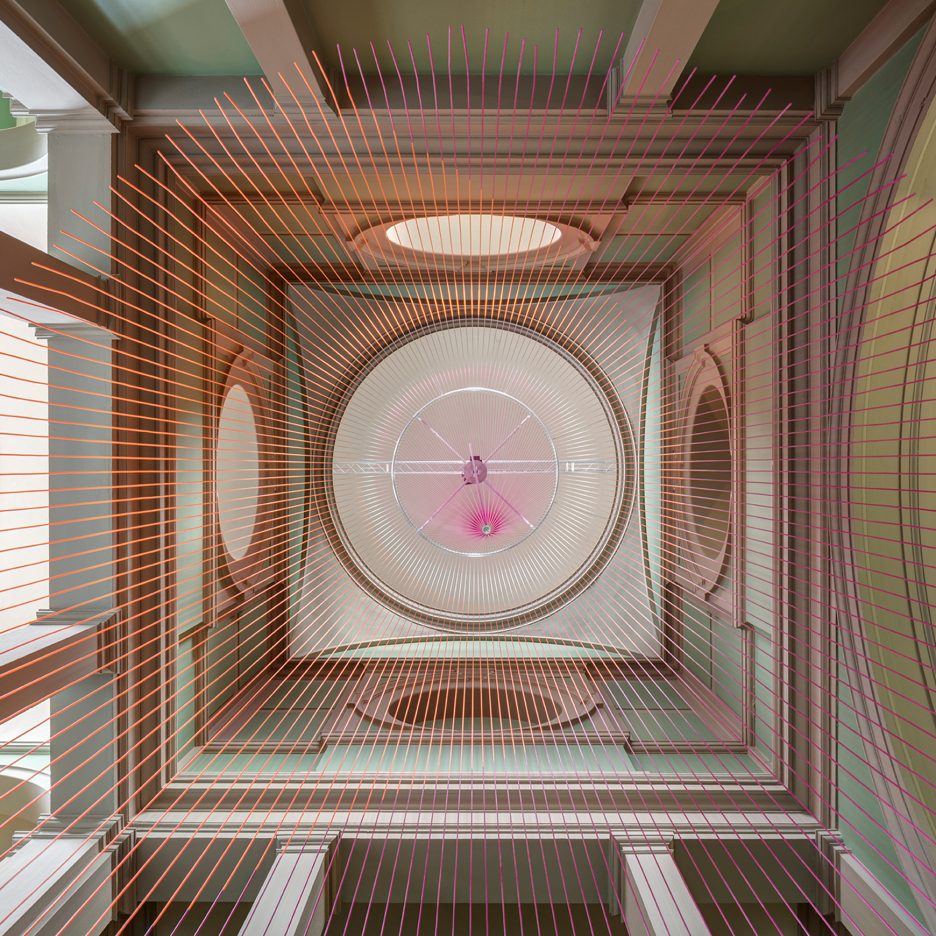
Glithero suspends highlighter-bright “abstract clock” above V&A stairwell


London Design Festival 2016: Taking inspiration from the passage of time, London design studio Glithero has created a kinetic installation that extends across six floors at the V&A museum. (more…)

http://ift.tt/2cHkpou

@signordal Double Rainbow

via Instagram http://ift.tt/2cydb8k

Duplex in Marseille / T3 Architecture


© David Giancatarina

© David Giancatarina


© David Giancatarina


© David Giancatarina


© David Giancatarina


© David Giancatarina

  • Architects: T3 Architecture
  • Location: Marseille, France
  • Architect In Charge: Luc Lacortiglia, Christophe Pinero
  • Area: 100.0 sqm
  • Project Year: 2016
  • Photographs: David Giancatarina
  • Collaborators: Anaïs Giraud, Cindy Lostys

© David Giancatarina

© David Giancatarina

Complete refurbishment of this duplex in the center of Marseille. The existing flat suffered from a significant lack of light and its main rooms were constrained by the central staircase.


© David Giancatarina

© David Giancatarina

The architects completely released the heart of the apartment by removing the stairs and most of the partitions. The entrance of the flat now enjoys a generous double height volume that offers a visual communication between the different spaces of the two storeys.


Section

Section

Glass floors and railings complement the effect of volume and allow a large penetration of daylight in the very center of the flat. In addition, a concrete wall reaffirms the verticality of the central volume and support the minimal metallic staircase.


© David Giancatarina

© David Giancatarina

The impressive traditional plaster ceiling in the main bedroom has been renovated and is a strong component that gives the flat its character. In order to make it visible from the livings rooms, the architects added a narrow glazed opening on the upper part of the concrete wall.


Floor Plan

Floor Plan

Floor Plan

Floor Plan

A small bathroom was added on the upper floor next to the second bedroom. Its triangle shaped leaves a free area that hosts a lounge space. This space is closed by a thin metallic glass partition that allows light to reach the entrance of the flat.


© David Giancatarina

© David Giancatarina

The living room and the kitchen are located at the bottom level and enjoy openings on the terrace and garden.


© David Giancatarina

© David Giancatarina

http://ift.tt/2cycXOT