Horseshoe Bend – Arizona – USA (by Graeme Maclean) 

Horseshoe Bend – Arizona – USA (by Graeme Maclean

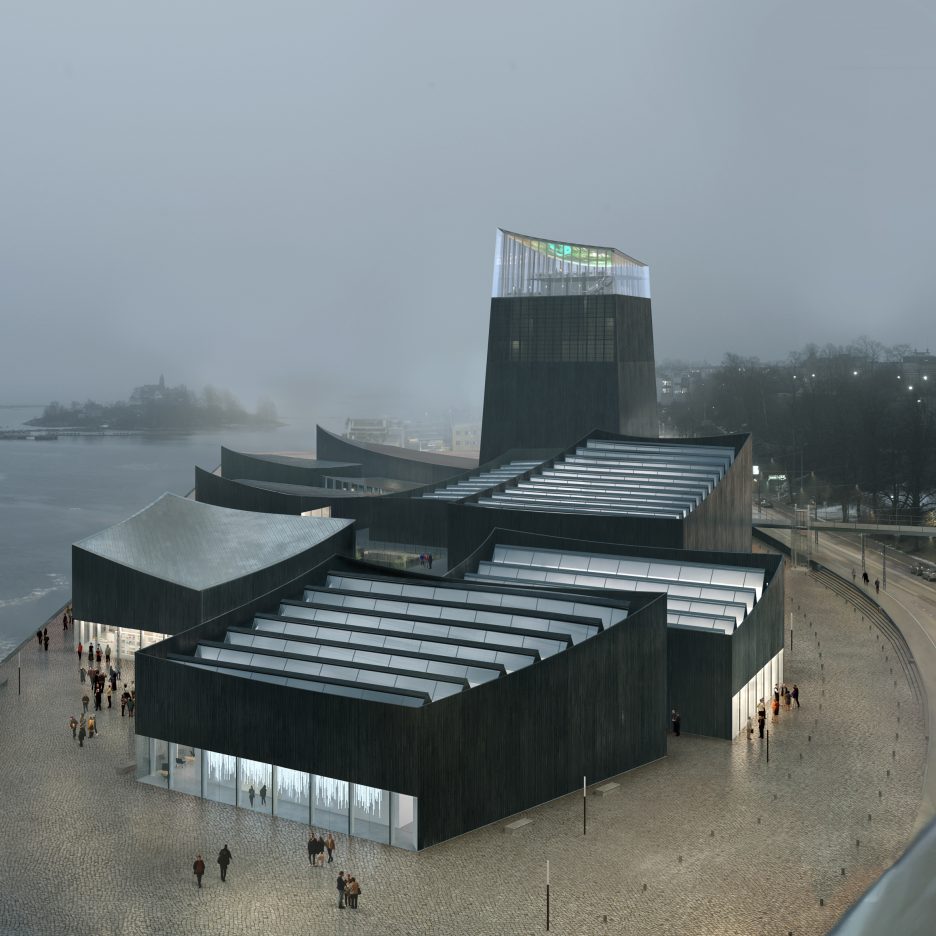
Guggenheim Helsinki denied funding from Finnish government


The Finnish government has reneged on its plans to part fund a new outpost of the Guggenheim museum in Helsinki, which is designed by Parisian practice Moreau Kusunoki Architectes. (more…)

http://ift.tt/2cHdsUX

Ecological Urbanism


While climate change, sustainable architecture and green technologies have become increasingly topical issues, concerns regarding the sustainability of the city are rarely addressed. The premise of Ecological Urbanism is that an ecological approach is urgently needed both as a remedial device for the contemporary city and an organizing principle for new cities.

Ecological Urbanism, now in an updated edition with over forty new projects, considers the city using multiple instruments and with a worldview that is fluid in scale and disciplinary focus. Design provides the synthetic key to connecting ecology with an urbanism that is not in contradiction with its environment.

The book brings together practitioners, theorists, economists, engineers, artists, policymakers, scientists and public health specialists, with the goal of providing a multilayered, diverse and nuanced understanding of ecological urbanism and how it might evolve in the future. The promise is nothing short of a new ethics and aesthetics of the urban.

Revised Edition

Edited by Mohsen Mostafavi, Gareth Doherty, co-published by Harvard University Graduate School of Design

  • Isbn: 9783037784679
  • Title: Ecological Urbanism
  • Author: Mohsen Mostafavi, Gareth Doherty
  • Publisher: Lars Muller
  • Project Year: 2016
  • Binding: Hardcover
  • Language: English

Ecological Urbanism

http://ift.tt/2cR1Nn3

Triplex Apartment in Prague / Lenka Míková & Markéta Bromová


© Veronika Raffajová

© Veronika Raffajová


© Veronika Raffajová


© Veronika Raffajová


© Veronika Raffajová


© Veronika Raffajová


© Veronika Raffajová

© Veronika Raffajová

The client asked us to design a refurbishment of an existing triplex with great views and his brief was to create a modern living inspired by American mid-century interiors. Our approach was to keep the interior space clean and simple in shapes and put an emphasis on the surfaces. We tried to minimize all details and hide technical fittings in order to support the natural texture or decor of the materials and their visual and haptic qualities.


© Veronika Raffajová

© Veronika Raffajová

The careful choice of materials is projected for example in flooring – each of the three floors and all bathrooms have a different surface that responds to the use of the space. At the same time we used several features that repeat on all floors to visually unite the interior. It’s mainly the wooden surface of natural oak veneer that appears on the wall unit in the living space and also on the cladding with sliding doors facing the staircase on the other two floors, as well as on the cladding in the main bedroom and all furniture units in bathrooms. Another uniting feature are tall doors of floor to ceiling height that make the relatively low spaces look higher, or the shape of handles on all custom-made elements.  


© Veronika Raffajová

© Veronika Raffajová

Layout 

The new layout of the apartment is divided into three parts corresponding to the three floors. The middle entrance floor serves for common activities and gathering of the family in the large living space with an open kitchen corner. From this common area the staircase leads to private parts – a half floor down to the area of children, a half way up to the rooms of parents. 


© Veronika Raffajová

© Veronika Raffajová

The living space has been purposely left open and undivided. The interior continues outside through a glass wall with large sliding panels to an outdoor terrace and the spacious feeling is enhanced by the generous view over the city. The main feature of the living space is the wooden wall unit that includes facilities both for the lounge and the kitchen. Its uniform look is marked only by a few openings – at one end there is a TV niche, a fireplace and an in-built bar and fitted kitchen units with a desktop in a niche at the other. By putting all necessary equipment to one side of the room we could leave the opposite wall free as a display for paintings. The kitchen part is designed in the way that it can be hidden when not in use, so it doesn’t visually disturb the lounge area – a wooden door can cover a set of appliances, sliding panels of white corian can close the shelving behind the desk in the opening. The kitchen island with cladding in carrara marble stands out in the space as a jewel. For practical reasons the kitchen is complemented by a separate storage room with a desk where all messy things can be made out of sight. The entrance corridor is divided only partially by white vertical slats, so the daylight gets in and even reflects in the glossy surface of closet doors. The slatted partition, the wooden wall unit and the general openness evoke together the mood of American 50s and 60s, which is supported by the selection of furniture including several design icons.    


Diagram 1

Diagram 1

On the way down, the staircase leads to a small hall in front of the children bedrooms that can be used as an extended playroom. The bedrooms are also connected by a sliding door and both have glazed walls with an access to a common outdoor terrace that continues into a garden. Both bedrooms are marked by unique wall illustrations by the talented illustrator Michal Bacak. The children share walk-in closet in pale colours and the bathroom with playful tiles decor. Other doors from the hall lead to a separate toilet that can be used by guests and to a technical room. The parents have their privacy on the floor above the children, beside a small home office there is mainly a bedroom connected with a walk-in closet and a large bathroom.  


© Veronika Raffajová

© Veronika Raffajová

Atypical solutions

The refurbishment changed substantially the layout of the apartment and its technical equipment including air-conditioning, the relatively low ceiling brought quite a challenge. We tried to reduce all visible components and ventilation grills were incorporated into the custom made furniture. As a reply to a dense technical equipment above the parents bathroom, we designed an atypical false slatted ceiling that includes ventilation, revision openings and lighting. It also supports an intimate atmosphere in the bathroom. The combination of tiles and wooden furniture is supplemented by aged brass fittings and brass cladding behind the mirror cabinet. The water taps are located precisely to match the fissures of the hexagonal tiles. In the children bathroom we used decorative tiles in an original pattern which gradually passes from the floor to walls around the bathtub. A large part of the interior consists of custom-made furniture and components that were designed specifically for the apartment and include details that support both the concept and a practical use. 


© Veronika Raffajová

© Veronika Raffajová

http://ift.tt/2cR4J7l

How much meat people eat around the world:People around the…

How much meat people eat around the world:

People around the world consume an average of 75 pounds of meat per person, per year, according to research by the Organization for Economic Cooperation and Development. That includes pork, beef, poultry, and sheep meat. If it were all beef, that would be equivalent to approximately 300 quarter-pounders each year for everyone on Earth.

http://ift.tt/2c3V1sh

Dinara Kasko’s Design Background Inspires Architectural Deserts & Delicacies


Part of the beauty of an architectural education is that it provides you with design skills that can be applied to a wide variety to jobs. So when it came time for Kharkov University Architecture School graduate Dinara Kasko to select a career path, she chose to pursue something a little bit sweeter: architectural pastry chef.


via Dinara Kasko's Instagram (http://ift.tt/2c9RomP)


via Dinara Kasko's Instagram (http://ift.tt/2c9RomP)


via Dinara Kasko's Instagram (http://ift.tt/2c9RomP)


via Dinara Kasko's Instagram (http://ift.tt/2c9RomP)


via Dinara Kasko's Instagram (http://ift.tt/2c9RomP)

via Dinara Kasko's Instagram (http://ift.tt/2c9RomP)

After graduating from university, the Ukrainian-born Kasko developed her architectural skills for 3 years as a designer-visualizer for a firm in the Netherlands, where she also worked part-time as a photographer. But her true love was pastry making, which she had discovered after traveling to 16 countries starting at age 17. So when she needed to take time off after the birth of her child, she found an opening to follow her passion, inspired by her architectural past.


via Dinara Kasko's Instagram (http://ift.tt/2c9RomP)

via Dinara Kasko's Instagram (http://ift.tt/2c9RomP)

via Dinara Kasko's Instagram (http://ift.tt/2c9RomP)

via Dinara Kasko's Instagram (http://ift.tt/2c9RomP)

Approaching her cakes and treats as if they were scale-models of buildings, Kasko utilizes 3D-modeling technologies to create silicon cake molds. She first models the designs in 3DMAX, then prints the master model on a 3D printer, which she uses to cast the silicon molds.


via Dinara Kasko's Instagram (http://ift.tt/2c9RomP)

via Dinara Kasko's Instagram (http://ift.tt/2c9RomP)

via Dinara Kasko's Instagram (http://ift.tt/2c9RomP)

via Dinara Kasko's Instagram (http://ift.tt/2c9RomP)

via Dinara Kasko's Instagram (http://ift.tt/2c9RomP)

via Dinara Kasko's Instagram (http://ift.tt/2c9RomP)

In their completed forms, her cakes resembled diagrammatic models of contemporary architecture, but rather than building with steel, concrete or glass, the material palette for her buildings consists of meringue, gelatin and chocolate.

In searching for her own niche within the field, Kasko is striving to connect “patisserie and architecture” through geometric forms and careful compositions.


via Dinara Kasko's Instagram (http://ift.tt/2c9RomP)

via Dinara Kasko's Instagram (http://ift.tt/2c9RomP)

via Dinara Kasko's Instagram (http://ift.tt/2c9RomP)

via Dinara Kasko's Instagram (http://ift.tt/2c9RomP)

“In my creations, I’ve used such geometric constructing principles as triangulation, the Voronoi diagram, biomimicry,” she explained in an interview with So Good Magazine. “Biomimicry is using the models, systems, and elements of nature, macro elements in general. It can be anything, fragmentation of expanding shells in spiral, herb structure, or the form that bubbles take.”


via Dinara Kasko's Instagram (http://ift.tt/2c9RomP)

via Dinara Kasko's Instagram (http://ift.tt/2c9RomP)

via Dinara Kasko's Instagram (http://ift.tt/2c9RomP)

via Dinara Kasko's Instagram (http://ift.tt/2c9RomP)

via Dinara Kasko's Instagram (http://ift.tt/2c9RomP)

via Dinara Kasko's Instagram (http://ift.tt/2c9RomP)

via Dinara Kasko's Instagram (http://ift.tt/2c9RomP)

via Dinara Kasko's Instagram (http://ift.tt/2c9RomP)

via Dinara Kasko's Instagram (http://ift.tt/2c9RomP)

via Dinara Kasko's Instagram (http://ift.tt/2c9RomP)

via Dinara Kasko's Instagram (http://ift.tt/2c9RomP)

via Dinara Kasko's Instagram (http://ift.tt/2c9RomP)

via Dinara Kasko's Instagram (http://ift.tt/2c9RomP)

via Dinara Kasko's Instagram (http://ift.tt/2c9RomP)

via Dinara Kasko's Instagram (http://ift.tt/2c9RomP)

via Dinara Kasko's Instagram (http://ift.tt/2c9RomP)

via Dinara Kasko's Instagram (http://ift.tt/2c9RomP)

via Dinara Kasko's Instagram (http://ift.tt/2c9RomP)

via Dinara Kasko's Instagram (http://ift.tt/2c9RomP)

via Dinara Kasko's Instagram (http://ift.tt/2c9RomP)

via Dinara Kasko's Instagram (http://ift.tt/2c9RomP)

via Dinara Kasko's Instagram (http://ift.tt/2c9RomP)

via Dinara Kasko's Instagram (http://ift.tt/2c9RomP)

via Dinara Kasko's Instagram (http://ift.tt/2c9RomP)

via Dinara Kasko's Instagram (http://ift.tt/2c9RomP)

via Dinara Kasko's Instagram (http://ift.tt/2c9RomP)

via Dinara Kasko's Instagram (http://ift.tt/2c9RomP)

via Dinara Kasko's Instagram (http://ift.tt/2c9RomP)

via Dinara Kasko's Instagram (http://ift.tt/2c9RomP)

via Dinara Kasko's Instagram (http://ift.tt/2c9RomP)

Kasko has also spent time visiting the kitchen of legendary pastry chef Pierre Hermé. Check out the video below for his lecture at the Harvard GSD on “The Architecture of Taste”:

H/T Bored PandaMetro UK

http://ift.tt/2cDpkbI

Explore the Oregon Coast at Yaquina Head Outstanding Natural…

Explore the Oregon Coast at Yaquina Head Outstanding Natural Area, which stretches a mile from the shore into the Pacific Ocean. Look for harbor seals year-round and gray whales feeding in shallow waters during summer months. Listen to the applause-like sound as the waves roll in over the rounded rocks of Cobble Beach. When the tide is low, a vibrant ocean floor is revealed – stroll alongside tide pools to see colorful animals like orange sea stars, purple sea urchins and giant green anemones. It’s also home to Oregon’s tallest lighthouse! Photo by Bob Wick, @mypubliclands

Commonwealth

Commonwealth-1

Ann Patchett is drawn to the often unexpected bonds people form in unusual circumstances. Many of her novels are predicated on what might be called the Magic Mountain syndrome, which she described succinctly in an essay in her 2013 collection, This Is the Story of a Happy Marriage: “a group of strangers are thrown together by circumstance and form a society in confinement.” In Bel Canto, high-profile guests attending a lavish birthday party for a powerful, opera-loving Japanese businessman in South America pair off in unanticipated combinations when they are held hostage. In State of Wonder, a team of research scientists in pursuit of a missing colleague and a miracle fertility drug in the Amazon rain forest find themselves relying on each other in new ways in the heart of darkness. And in Commonwealth, her most autobiographical novel to date, six stepsiblings from two broken marriages are thrown together during court-mandated summer vacations in Virginia, forming a surprisingly tight-knit “fierce little tribe.” The children, four girls and two boys, are united in part by their shared disillusionment with the two parents whose affair instigated the implosion of their original families. But after the oldest boy dies during one of their unsupervised escapades, they drift apart — yet remain forever linked by their uneasy sense of guilty complicity.

Commonwealth opens with another classic narrative catalyst: the uninvited guest. On a hot June Sunday in the 1960s, Beverly and Francis Xavier (Fix) Keating throw a christening party for the younger of their two daughters, Franny. Because many of the attendees are Fix’s fellow cops from the Los Angeles Police Department, “half the party was armed.” The afternoon takes a turn when an uninvited guest shows up bearing a bottle of gin. The interloper is Bert Cousins, a deputy DA, who is on the lam from weekend daddy duty with his three kids. From the moment he spots beautiful Beverly Keating he’s smitten. Unlike his pregnant wife, Teresa, Beverly has kept herself up and is dazzling in her yellow dress. Bert notes enviously that “Fix Keating had fewer children and a nicer watch and a foreign car and a much-better-looking wife” — all this despite the fact that “The guy hadn’t even made detective.” Before the party is over, he will have kissed the hostess and set in motion a chain of events that will reverberate over the next five decades.

There have been early glimpses of the personal story behind Commonwealth in Patchett’s work. The title essay in This Is the Story of a Happy Marriage addresses the author’s long family history of failed marriages and the generational “flotsam” from divorce — which led to Patchett’s early decision not to have children. It also contributed to two prominent themes in much of her work, including Commonwealth: commitment, and the importance of compassion to get through life. Both were factors in Patchett’s late, happy second marriage, which took her by surprise.

There is no shortage of great literature about the fallout from divorce and the reconfigured families that children are left to cope with. (Martha McPhee’s Bright Angel Time, featuring a motley gang of stepsiblings under the sway of a charismatic guru-like stepfather, springs to mind as another example of what in today’s world of intensely focused parenting seems like carelessness if not outright neglect.) Commonwealth stands out on many levels, from its assured handling of complex time shifts to Patchett’s extraordinary compassion even for seriously flawed characters like Bert. Her deeper sympathies clearly lie with Bert and Beverly’s two betrayed spouses, saintly Teresa Cousins and warm Fix Keating, who eventually find happiness with kinder partners. They also benefit from the tag-teaming care of their grown children in their final years. “What do the only children do?” Franny Keating asks her sister after a difficult eighty-third birthday outing with their dying father. “We’ll never have to know,” Caroline answers. In fact, Commonwealth — like Patchett’s essay “The Wall” — can be read in part as a love song to her father, who, like Fix, was a detective with the LAPD.

Patchett’s gift for characterization and empathy extends to each of the six children, from smart, bossy Caroline, who pleases both her father and stepfather by becoming a lawyer, to wayward Albie, Bert’s youngest, who is most affected by his older brother’s death, for reasons I’ll leave for readers to discover. If there’s a hole in her narrative, it’s Beverly, who remains a void beneath the surface of her multi-husband-catching glamorous looks.

Franny Keating is the linchpin of the novel. While her christening party is ground zero for Beverly and Bert’s ultimately doomed relationship, it’s Franny’s childhood memories — confided to a famous washed-up writer she meets while working as a barmaid in Chicago after dropping out of law school — that change the thrust of Patchett’s book. This narrative line, while initially jarring, ultimately elevates Commonwealth above your usual broken-home saga. When Leon Posen channels Franny’s stories into a wildly successful novel (also called Commonwealth), she is torn between her happiness about her role in his comeback and her serious misgivings about the propriety of having divulged family secrets.

Although Posen’s behavior is somewhat monstrous — he’s a married drunk thirty-two years older than Franny who milks her devotion and lack of direction — Patchett resists demonizing him. Franny and Leon’s relationship was “built on admiration and mutual disbelief,” she writes, and Franny “was the cable on which he had pulled himself hand over hand back into his work: she was the electricity, the spark . . . And more than that, he had found her life meaningful when she could make no sense of it at all.” Yes, “She had made a terrible error in judgment,” Patchett writes with typical judiciousness, but “he had turned it into something permanent and beautiful.”

Yet among all the troubling aspects of their relationship, the “nail in the tire” turns out to be Franny’s anguish over having betrayed her primary bond with her extended family. She realizes the gravity of her transgression when her estranged stepbrother turns up, horrified after coming across a copy of Posen’s novel and recognizing himself in its pages.

It’s worth stepping away from Patchett’s absorbing narrative to realize that she is after something extraordinary here: In a novel based loosely on her own disjointed childhood — the closest to home she’s ever come in her fiction — she is raising questions about the propriety of going public about such shared, private experiences. Who owns the story? Who has the right to turn it into a book that will sell thousands of copies and be read by strangers?

Although in Patchett’s scenario Franny doesn’t actually write Commonwealth, she feels guilty for having shared what wasn’t hers alone, enabling Leon Posen to capitalize on it. Patchett, however, has written a version (presumably heavily fictionalized) of her family’s story in this novel. And as she did in Truth & Beauty, a searing memoir of her friendship with Lucy Grealy, she has incorporated into her art her compunctions about telling a story that isn’t entirely hers to tell. In an age where so little is sacrosanct, this is remarkable.

The Barnes & Noble Review http://ift.tt/2c9Nj2T

Which body part hurts the most when stung by a bee? A scientist…

Dezeen’s top five collections from Parsons 2016 MA graduate fashion show


Graduate shows 2016: the trend for line-drawn furniture design crossed over into fashion at the Parsons School of Design graduate show in New York, where two collections with sketch-like details were among Dezeen US editor Dan Howarth’s favourites. (more…)

http://ift.tt/2c5omqS