Weston Williamson + Partners has won an international competition for a 125,000 square meter “Science City” along the western edge of Cairo, Egypt, beating out entries from Ngiom Partnership and Zaha Hadid Architects. The project will be built from the ground up in the desert surrounding the city, and will serve as a 21st century science museum and new national institute for scientific innovation. The competition called for an integrated master plan and conceptual design that express “a particular vision of the quest for knowledge and the pursuit of science.”
The jury selected the winning design for its overall comprehensiveness and identity, as well as its ability to be intelligently constructed in phases.
“This project was the one that best responded to the challenges of the brief. The design is subtle but rich. It involves various levels of planning,” said the jury in a statement. “It displays a blending of aspects of several of the “types” that were so visible: the circle, the striation, the berm (or dune), the legible apparatus of sustainable performance, the complex of courtyards, the oasis, etc. But the overall impact is one of a unified composition of great elegance and finesse.”
Continue reading for more on Weston Williamson’s design and to see images from all of the winning entries.
From the jury: The project feels very much of its place and has the potential to be quite beautiful and to produce a rich series of working, display, and learning environments. The basic scheme and concept of the architectural design (the parti) was impressive, the organization sound, the phasing logical, the environmental performance promising, and the image very strong but without needless grandiosity.
Though organized in a circular form, the project can be accomplished in three stages, with the staging starting from the central section and growing as wings. Thus it provides a design solution to the phasing problem which the jury considered a rational and workable idea.
The Project enjoys a multitude of umbrella-like circular canopies of various sizes, supported by single columns, providing a symbolic “column-scape” and an upper terrace elegantly shadowed by artificial clouds. They also provide opportunities for water harvesting and solar energy collection.
2nd Prize: Ngiom Partnership. Image via Bibliotecha Alexandrina / International Architectural Competition of the Science City
3rd Prize: Zaha Hadid Architects
3rd Prize: Zaha Hadid Architects. Image via Bibliotecha Alexandrina / International Architectural Competition of the Science City
4th Prize: Gansam Architects
4th Prize: Gansam Architects. Image via Bibliotecha Alexandrina / International Architectural Competition of the Science City
Honorable Mention: Tsampikos Petras & Georgios Chousos
Honorable Mention: Tsampikos Petras & Georgios Chousos. Image via Bibliotecha Alexandrina / International Architectural Competition of the Science City
Honorable Mention: Joaquim Caetano de Lima Filho, Daniel Henrique Ribeiro, Giliarde Silva & Guilherme Oliveira
Honorable Mention: Joaquim Caetano de Lima Filho, Daniel Henrique Ribeiro, Giliarde Silva & Guilherme Oliveira. Image via Bibliotecha Alexandrina / International Architectural Competition of the Science City
Honorable Mention: Francisco Jorquera
Honorable Mention: Francisco Jorquera. Image via Bibliotecha Alexandrina / International Architectural Competition of the Science City
Honorable Mention: Whitespace Architects
Honorable Mention: Whitespace Architects. Image via Bibliotecha Alexandrina / International Architectural Competition of the Science City
Judged by a panel of world-leading academics and science entrepreneurs, the open-call, one-stage competition was organized by the Bibliotheca Alexandrina, who will now work with Weston Williamson + Partners to develop the details of the project and set a schedule for realization.
From the architect. This 4,500-square foot residence is located near Jackson Hole, Wyoming in a neighborhood with flat, open, grassy sites with expansive views of Glory Peak and the Teton Mountain Range. Taking advantage of adjacency to 120-acres of open space to the south and the dramatic mountains to the west and north, the house is site responsive with simple and modest forms that blend with the landscape.
The clients, a family of four, part-time residents from New York City, wanted a contemporary house, but not urban contemporary – a mountain home, but not a log cabin. They desired generous spaces while maintaining an intimate feel. The team responded by creating a functional and efficient living environment that is broken into two zones to maximize both family interaction and personal privacy, and to encourage flow to the outdoors. A glass-walled, covered “bridge” connects the public and private areas of the home. The two wings embrace a south-facing courtyard. In addition a west-facing terrace captures panoramic view of the Tetons and provides access to the pond.
Inside a simple, yet refined materials palette is resolved in wood, steel, stone and glass. The kitchen anchors the public space with a wood-burning pizza oven, wrapped in steel panels. At all elevations, floor to ceiling window openings establish a connection to the outdoors. Teak creates a sophisticated master bathroom that is modern without being sterile. The main staircase is clad in white oak resulting in a sculptural element without being visually overcomplicated.
Outside, deep overhangs with a thin profile protect the building from harsh weather. The exterior is clad in cedar siding, which dissolves into screens to create pattern and depth at the building entry points. Bonderized steel panels are used to articulate additions and subtractions to the building form.
The Finnish Association of Architects (SAFA) have announced a shortlist of 4 projects in contention for the Finlandia Prize for Architecture 2016. Now in its third year, the prize continues with the goal to “increase public awareness of high quality Finnish architecture and [to highlight] its benefits for our well-being.”
Following the tradition of the award, while the shortlist was selected by a panel of architects, the final winning project will be chosen by a non-architect. This year, former Prime Minister of Finland Paavo Lipponen will have the honor of picking the winner.
Find out more about the 4 projects after the break.
The Lappeenranta City Theatre is housed, unusually for a theatre, within a new extension of a shopping mall. The Pre-Selection Jury finds that the concept in which a large public building is housed within a commercial building ultimately creates an intriguing setting for a new type of theatre building to emerge. The foyer of the theatre opens up towards the high central hall of the mall. The public spaces are furnished with dark monochrome and metallic surfaces providing a convincing contrast to the abundance of colour and information stimuli of the shopping mall. Built on one level, the theatre centres around a tight group of large hall spaces. Its elegant simplicity raises the ambiance above and beyond the ordinary. Completed in 2015, the theatre was designed by ALA Architects (architects Juho Grönholm, Antti Nousjoki, Janne Teräsvirta and Samuli Woolston).
Löyly was erected in Helsinki’s Hernesaari district this year. According to the Pre-Selection Jury, few buildings in Helsinki that are open to the public make such full use of their location by the sea as Löyly does. The horizon is visible from almost all indoor spaces and the views can also be taken in from the roof. The building is a mound clad in wooden lamellas that beautifully reflect the light thanks to their triangular profile. The wood used on the elevation will acquire a grey patina over time, so that, from a distance, it will look like one of the bare granite rocks emblematic of the Helsinki coastline. The slats provide discrete privacy to those using the saunas, while allowing a sea view from inside. The building was designed by Avanto Architects (architects Ville Hara, Anu Puustinen, Antti Westerlund and Hiroko Mori; architect students Laura Nenonen and Xiaowen Xu).
The spectator stand of the Rovaniemi Sports Arena, Railo, and the boulder-shaped residential and office buildings, once completed, will form a crevasse-like roadway winding between them. The building is located within the so-called “Reindeer Antler” town plan designed by Alvar Aalto, near the town centre of Rovaniemi. The stand has a very different look depending on the direction from which it is viewed. When seen directly from the front, from the other side of the pitch, the structure looks like a lean and lightweight canopy supported by columns. The best view of the spectator stand is from a distance: a large-scale, statuesque sports arena. According to the Pre-Selection Jury, the new sports arena and multipurpose building add a contemporary edge to the city’s high-quality architecture. Railo was designed by APRT Architects (architects Aaro Artto, Teemu Palo, Yrjö Rossi, Hannu Tikka and Jussi Vakkilainen).
The Suvela Chapel creates a natural highpoint within its surroundings. Some of the spaces are used by the City of Espoo residents’ park. The building also houses some facilities serving the residents’ park, making it a natural meeting point for people of all ages. The building forms clear delineation for traffic routes around it and the yard area it encloses. The copper clad building extends from the ground over the roof and belfry, resulting in a sculptural impression. The interior of the main hall is powerful in its simplicity. Completed in 2016, the chapel was designed by OOPEAA Office for Peripheral Architecture (architects Anssi Lassila, Iida Hedberg, Juha Pakkala, Teemu Hirvilammi, Jussi-Pekka Vesala, Hanna-Kaarina Heikkilä, Anis Souissi and Miguel Silva).
This year’s jury was comprised of Jury Chair Pirjo Sanaksenaho, Sari Nieminen, Eero Lundén and Janne Pihlajaniemi. Together they selected the four projects, each which serve in their own way as a “living room” for local residents.
“The shortlisted new builds represent buildings of widely differing functions and geographic locations,” says Sanaksenaho. “What they have in common is that they all form a space for the public to spend time in – a church space, a sports venue, a cultural space and leisure time space. In each of these buildings, architecture has been used to give them interest and personality within their respective environments.”
The winner will be announced at an awards ceremony in Helsinki on October 13, 2016. Learn more about the Finlandia Prize and the shortlisted projects, here.
Architecture is propaganda. Throughout my two years of visiting and living in North Korea the country slowly revealed to me the details of this evolved and refined tool for totalitarian control of the country’s population. The West views the country with incredulity—surely this cannot be a functioning country where people lead “everyday lives?” Surely the country’s populace can’t possibly buy into this regime? But I assure you that they do. People have careers, they go to work on the bus, and those women crying over the death of their leader were doing so through their own initiative, if not out of genuine emotion. How is this possible? This is a carefully constructed regime which has, at its heart, an unprecedented understanding of how architecture and urbanism can influence and control people. Coming second only to the military on the list of party priorities, the design of the built environment has had an incalculable effect on reinforcing the ideologies of the North Korean regime and conveying these to the people.
It is not that the architecture in Pyongyang has to be world standard, or even of a good standard at all; the people just need to believe that it is. In fact, due to the level of control, the buildings need only to do the bare minimum, capturing an architectural idea in order to convince the people of a notion of power, progress or wealth. The level of isolation is such that there is no way for citizens to compare the structures of their home country to the grandiose buildings of power around the world. Koreans I spoke to in the Grand People’s Study House seemed convinced, and in their minds rightly so, that this admittedly impressive building was the greatest in all of the world. Why shouldn’t they? The Arch of Triumph, a gigantic arch straddling one of the main highways through the city adorned with stories of Kim Il Sung, receives no comparison here with its counterpart in Paris or any other Roman arch around the world before that. It just has to be a symbol of power, wealth and, in the minds of the people, be an idea conceived by their leader. It does what it’s meant to do—people speak of the buildings with genuine pride in their eyes, and they see them as a gift from their leaders to whom they are ever grateful. This is, of course, after over 60 years of socialist rule. Few in the country would have been alive to see the city before the Kim dynasty; those that were must only remember it as a pile of rubble after years of war.
After the Korean War the Democratic People’s Republic of Korea (DPRK), led by Kim Il Sung and supported by the Soviets, was left with a scene of complete and utter destruction; with the exception of a handful of buildings Pyongyang had been completely flattened. For a young general with socialist ideals this was seen as a clean slate, on top of which a new country, both physically and ideologically, could be built. Today, even with knowledge of the outside world, it is hard not to admire the clear, axial urban plan of the city designed with the help of established communists, the Soviet Army. The designers of Pyongyang focused on portraying ideals to the individual on the ground. Standing at the foot of a monument celebrating the Worker’s Party, clear views open up across huge lawns adorned with fountains, and over the river Taedong to gigantic statues of both the late leaders. The monument symbolizes an appreciation of the people, idolizes their community spirit, and looks out to the men that supposedly gave them this city. Even to a visitor it’s a powerful motif and a spectacular view, and for a split second this tranquil viewing point might even make you believe that maybe people don’t have it so bad here. It’s not until the apartment blocks in your peripheral vision come back into focus with their missing windows and permanently sodden concrete that you remember just how poor the quality of life in this city is in comparison with the initial dream of a socialist utopia that was planned decades ago.
The Soviets, during their partnership with Kim Il Sung’s regime, left behind some monumental and genuinely impressive buildings, but almost overnight the Soviet Union collapsed and suddenly the North Korean regime was left without money or support. As the DPRK pushed to maintain an image of power and strength in the eyes of its people, genuine quality was replaced for buildings that merely gave the impression of wealth; construction quality plummeted and build speed increased. Even today buildings are in almost all cases constructed with weak and rudimentary concrete blocks that are hand shaped and comprised primarily of ballast. But to the layman on the street it looks like the city is in a constant state of rapid growth, and of course no one hears about it when an apartment block collapses. A recent development, named “Dubai” by expats living in the city, is an attempt at creating modern riverside apartment blocks. But don’t let the multi-colored neon lights fool you, the buildings themselves are but poorly made, barely insulated shells not suited for a standard of living even close to what you’d imagine. To your average North Korean however, they’re seen as the ultimate trophy home, one they might be awarded if they do their best for the Party; sadly, they don’t know any better.
The remaining buildings of actual quality in the city are the original governmental ministry buildings, which take prominent seats within the cityscape but could have easily been—and probably were—plucked out of a Soviet building catalogue. The grandiose steps used to lead up through a front of concrete pilasters adorned with symbols of prosperity and solidarity, into large, brutal yet beautiful entrance halls of marble with colossal chandeliers. Now though, the interiors are up for refurbishment, and the replacement? Chinese faux-marble on the floors and fake gems in the door handles. To the workers who use the building every day this appears to be an upgrade, and this enforces what they’re being told: that the country is getting stronger and richer.
Before the Soviet Union fell the DPRK had already been developing its own ideas and had begun imposing them upon their people. As the regime gained confidence in their ability to run a country and consolidated their power, they decided on a more nationalist approach to rule and created the current political stance of “Juche,” based on the principles of political, economic and military independence. In both their ideologies and architecture this meant showcasing what North Korea could produce, independent of outside influences, instilling a sense of national pride in its people. In conjunction with this idea, a new style of architecture began to appear across Pyongyang. Major cultural venues and public buildings with immense concrete casts of the traditional Korean Giwa styled roofs, sporting pastel green tiles, were suddenly built “for the people.” These buildings kept the same socialist content that had been donated by the Soviets but now had a national character which instilled a sense of nationalism and contributed to an independent North Korean socialist identity. The people love these buildings, as do tourists, for it’s in these buildings that they have fun. On special days out, or for the fortunate few with the luxury of freedom, these buildings signify the chance to read some foreign books, watch the circus or enjoy a concert. The mental connection is made between having a great time and being in a building that represents your country; ideology is enforced through a simple mechanism of positive association.
North Korean architecture today is a result of the country’s isolation and because of this has evolved in its own incestuous way. Now however, word of the outside world is trickling in and the regime are starting to realize that they’re going to have to try and catch up with their Asian neighbors, or risk losing credibility among their own people. As they can no longer shun the mass globalization and urbanization of the rest of the world, the government has announced an “Age of Construction” in which they intend to make North Korea an international contender for tourism, technology and commerce. With an increase in communications and trade with China, aided by a severe lack of enforcement of the sanctions imposed by the international community, the DPRK are having a good go at it. Just as cultural buildings were linked to nationalism, these “modern” designs have been employed for just about any building that symbolizes progress; whether it be new up-market restaurants, factories or technology centers. After all, how could the Koreans reject the idea that their technologies are becoming ever more advanced when their science institute is coated in metal and glass? At a time when the DPRK is boasting of strapping nuclear warheads to intercontinental missiles, it’s not enough to merely tell their people this—the government needs visual proof that there have indeed been some technological developments that could give this story some credibility.
With that being said, as with earlier architecture styles, certain adaptations are made to conform to the narrative set by the government, and these interpretations of contemporary design can therefore be described as no more than a retro-futuristic interpretation of what modern architecture should be. Ironically, the Koreans have copied the Chinese copy of American capitalist architecture; even big LED billboards on the front of the buildings have been copied, except in Korea they try to sell you Juche diatribe rather than a fancy new car. Unfortunately, the flashy new envelope hides the same deadly construction methods that give new North Korean buildings single-figure life spans.
During my stay in the country I was fortunate enough to be invited to the Pyongyang University of Architecture, the sole source of building design and engineering in the country, and have a sit down with the heads of the school to discuss how our countries, so very different to one another, approach architecture. Their enthusiasm to learn what I had to say came as rather a surprise, albeit a refreshing one, as I’d expected the individuals themselves to be as rigid as their design ethos, and their opinions of the outside world to be as hostile as those of their government. But instead they shared with me the ideas behind their designs with such pride, having finally been given the opportunity to explain their work to a foreign architect. Inspiration for their designs, in an approach that is rare among Western architects, comes from a very figurative way of looking at things; concert halls that mimic piano keys, or a table-tennis complex that symbolizes a table and net. As with everything else in the country, individuals are not left to make decisions by themselves. All designs have to stay in keeping with the underlying values of the Party and need to gain the approval of those in command—and in many cases from leader Kim Jong Un, whose say is final. The recently completed terminal for Pyongyang Airport, for example, had its design changed mid-construction after the “Supreme Leader” visited the site, disliked the entrance and had it demolished and reconstructed differently. It was reported in the foreign media that this decision came with grave consequences for the chief-architect, who was said to have been executed as a result of this fatal design choice.
Whether or not these claims have any truth to them—hopefully it’s no surprise to read that much of the “news” coming out of North Korea is a fantastic exaggeration at best—stories like this help highlight the genuine dangers that North Korean designers face on a daily basis. It is the architect’s natural instinct to want to apply their own design ideas to a project, something that most of us probably take for granted, but on a day-to-day basis this instinct has to be buried deep and replaced instead with the desire to do the bidding of their leader. As a result, North Korean architects are left with no choice but to produce the propaganda that feeds the machine and keeps their own people under the heavy hand of the North Korean government.
Architecture is propaganda, but the architects of the DPRK are just the humans caught up in the game, being used as a tool. From what I saw, they are just trying to make the best out of a difficult situation, yet they have in their hands the tools to completely control an entire nation. Without outside influences to help guide the country and its architecture to a better future for the people, the country risks falling into a stalemate, trapped in today’s status quo. But the architects that I met displayed a genuine thirst for knowledge, for inspiration, to share, to show off and to ultimately be the ones to shape their country for the better. They hold within them the best dreams of a socialist utopia, but are held back not only by the regime but also by the restrictions put on them by the outside world.
Is it then within the power of international visitors to make life better for the average North Korean? We have already seen how a gradual exposure to modern designs can change the architectural direction of the regime. If their architecture now keeps people trapped in this state, can further input of ours at the very least alleviate some of the suffering and danger that these people have to go through?
From the architect. The indoor swimming pool located in Sundbyberg, originally designed by Åke Östin in 1978 has now been expanded to accommodate the municipality’s growing population. The new addition includes a new 25-meter pool with a height adjustable bottom, a children´s swimming pool, a new side entrance, locker rooms, offices, conference rooms and a large sun deck. The project also included a new wellness center run by an independent operator.
The new building forms a separate volume that directs itself toward the sports field to the west. The new pool space is cradled by two parallel wood-paneled walls that seem to spring from a natural granite outcropping and a new concrete foundation – its characteristic, rough-hewn wood formwork still exposed. The large sun deck opens up to the south, embracing the older building volume and connecting the older to the new. On warm summer days, when the large glass sliding-doors are open, the sun deck becomes a natural extension of the new swimming pool space.
Sundbyberg’s swimming hall is in many ways a typical example of the many swimming halls that were built in Sweden in the 1970’s – a simple brick building devoid of unnecessary embellishment, meant to provide citizens with the opportunity to learn to swim. Despite its humble and utilitarian ambitions, it demonstrates a clarity of design and a number of carefully chosen elements and details that enhance the architecture beyond the ordinary.
The swimming pool is located along the central street of Fredsgatan, raised above the surrounding landscape upon a rocky knoll and slightly skewed in plan compared to the surrounding buildings, as was typical for the time period. The roof’s profile is accentuated by the corrugated metal roofing which stretches down onto the façade above a strip of windows that provide the pool space with natural light. The exterior brick reappears on the inside – partially as airbrick, to improve the acoustics.
Floor Plan
Since the building is a concrete structure with high demands for humidity control, we designed the wooden facade as a series of panels that “float” outside of the building envelope, easy to demount for future maintenance. This wooden facade refers to the original building’s horizontal character, while the large cantilevered glazed gable façade of the new swimming hall is clearly vertical. The robust glulam beams of the gable façade align with the lanes of the pool itself and help to shade the pool from the sun.
Inside, wood recurs in the form of acoustic panels in the large swimming hall, a material which can also be found in the original interior. Again, airbricks are used to improve acoustics, but this time they are glazed in a cheerful turquoise color. The lofty height of the room gives the space an added quality, in contrast to the more modest height of the older hall.
Sundbyberg’s swimming pool was inaugurated on January 1, 2015 and was immediately seen as a great success by both new and old visitors, reflected in the dramatic increase in visitor numbers. The swimming pool is open to all and is the first LGBTQ-certified Swedish indoor swimming pool with a designated gender-neutral locker room where it is possible to change in private. The new pool is a multi-pool, which means that the bottom is adjustable in height, thus it can adapt to the varied needs for training, children and adult swimming classes. The pool is also equipped with lift-platforms and is handicap-accessible. The swimming pool makes a noted effort to make all residents of the community welcome, as can be seen in events such as the annual Christmas Bath, that is particularly aimed at the homeless and economically disadvantaged.
Today, Morpholio has unveiled a new addition to their flagship Trace app. The new addition, called simply “Stencil,” offers a quick way to add figures and annotations to your Trace sketches using a tool that has been familiar to architects for years. The update to the app features a number of pre-loaded stencil designs, but thanks to its new digital twist, the act of stenciling is also augmented through the ability to take any image you can find or photograph and turn it into a stencil in seconds.
While architects have long had the opportunity to add images to their drawings through Photoshop or other similar software, Morpholio felt that that approach wasn’t really in the spirit of their own app. Their resulting solution is something which offers speed and convenience for architects, without losing the “hand-made” quality of the architect’s sketch. “Creating stencils sits perfectly between the architect’s sketch and the quick photo,” explains Mark Collins, Co-creator of Morpholio.
Here’s how Morpholio describes the process of making and using its new Stencil feature:
Make a Stencil: Sample the world around you and build an indispensable library of go-to drawings, compositions, elements and annotations. Stencil turns your device into a scanner and digital laser cutter. Like a facade? Street sign? Dashing figure? Simply find or take a photo, set the contrast or invert, and transform it into a stencil that is forever at your disposal.
Transform your Drawings and Images: Morpholio’s pre-made figures, furniture, fixtures, entourage, landscape and graphic symbols bring any sketch, floor plan, section drawing, or background image to life. Use them together with your custom stencils to annotate drawings with ease, or create your own super graphics, patterns, and art at any scale. Simply set the stencil and sketch over it with any brush or color.
Brushes, Textures and Vibrant Color: The Stencil tool works with the Trace App’s variety of color palettes created by the award wining graphic design firm MTWTF. Trace offers eight unique pen types, including pencil, charcoal, marker and brush. Building rich, multilayered drawings has never been easier or faster.
Export and Share: Stencils make your mobile device work for you in a new way. They take the images you’ve captured and turn them into productive, powerful tools to tell a new story – whether talking to a client or the world. Export effortlessly to scale as PDF or directly to your favorite social media or cloud service.
A hike through alder branches, thick vine maple stands, stinging nettle, devil’s club and a moss-covered gully is all worth it to reach this gem-colored lake. Bright and inviting, that first cold plunge into the icy lake re-invigorates like nothing else can. That’s what a trip to North Cascades National Park in Washington is all about. Photo from Trapper Lake courtesy of Crystal Brindle.
Once, alchemists sought the secret formula for turning lead into gold. Nowadays, we seek things that seem to be far more complicated than transforming things to gold. One of them is success.
With so many people trying to influence us, it can be difficult for most of us to really know and realize what we want. And since we’re misguided by what these people have to say, we struggle and we go around in circles trying to be successful.
If you’re struggling with the same issues, then this article is exactly for you.
Sam wants to get the perfect body. He follows almost every type of diet shown on TV. He exercises however his Facebook feed says is “the best way it’s done”.
However, since it’s hard to keep good habits, Sam mostly just tries until he fails- which is often.
When Sam was a student, he studied the same way everybody does. He picked his major, profession, and job based on what his parents said. He didn’t have enough time to reflect on what he wanted and what he personally thought was best for his career. The same thing happens when it comes to medical treatments. Sam just take whatever he hears is best from hearsay and friends.
Although there are things that go well, there are also some things that don’t work out well for Sam. And because he’s living his life on autopilot and based on what other people want, he sometimes wonders if the things he does and did are really his best.
And this is what’s admirable about Sam. He’s self-aware. He questions himself.
Unfortunately, however, Sam doesn’t put the necessary effort to improve his life. He just bounces from one strategy to another, based on what other people tell him.
And then there’s Sally.
Unlike Sam, Sally seeks the truth. She likes to go through a thousand lies just to get the one truth out of them.
She sifts through diet recommendations to find out what will really work for her. Changing habits isn’t easy for anybody, but Sally figured out how to make that work for her, too.
Her exercise plan works and she has control over her life. She knows exactly why she chose her major and what type of work she wants to do in the future. She knows what she wants and she doesn’t listen to anyone else. Sally feels successful with all her life choices.
To be successful, you need to be aware of two things- knowing the question and how you’ll find the right answers to that question.
Nate Silver, who was good at predicting the future, once wrote a book called “The Signal and the Noise”¸ The book talks about how you can find the true “signal” when it’s cut up into a thousand pieces and hidden in scattered “noises”.
For someone to be truly successful, he must first know what he really wants. Once he knows what his heart desires, he needs to have a good idea on how he can fulfill them- without the influence of other people or factors.
Now, let’s go back to Sam.
Sam knows that something’s not right. Despite achieving a lot of things, he still questions himself about his achievements. And because he’s not fully satisfied, he doesn’t feel as successful as he really is.
But, once he is able to find the answers to his questions and know what he really wants, much like Sally, Sam will succeed. He’ll move from one milestone to another, without the need to question himself again. And as he gains more accomplishments, he’ll never feel the same doubt he used to feel for himself before.
Looking for the truth within yourself is not that difficult. In fact, you can easily find it if you just stop looking at other people and listening to what they have to say.
Your success comes from within you. It’s not about your parents, your friends or what social media has to say. Your success is and should be about you.
(function(d) {
var params =
{
id: “cb4f919c-04fa-460c-b2ff-2c7f9ecf4472”,
d: “ZHVtYmxpdHRsZW1hbi5jb20=”,
wid: “165294”,
cb: (new Date()).getTime()
};
var qs=[];
for(var key in params) qs.push(key+’=’+encodeURIComponent(params[key]));
var s = d.createElement(‘script’);s.type=’text/javascript’;s.async=true;
var p = ‘https:’ == document.location.protocol ? ‘https’ : ‘http’;
s.src = p + “://api.content.ad/Scripts/widget2.aspx?” + qs.join(‘&’);
d.getElementById(“contentad165294”).appendChild(s);
})(document);
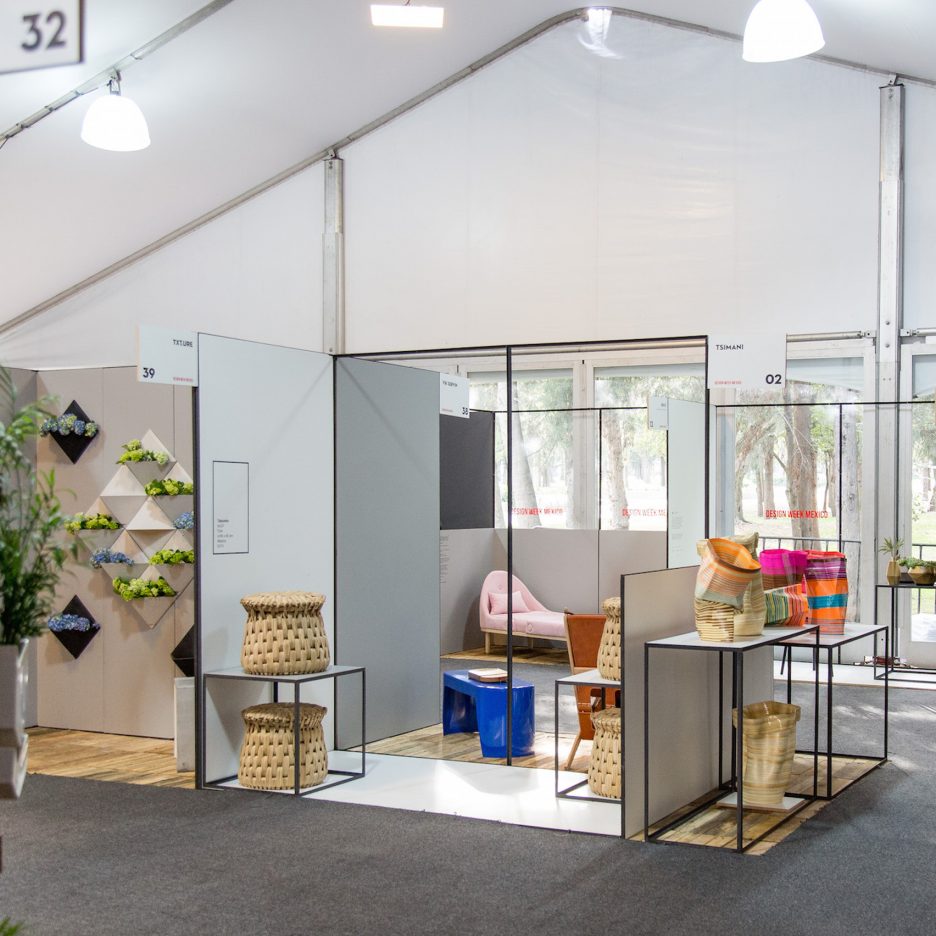
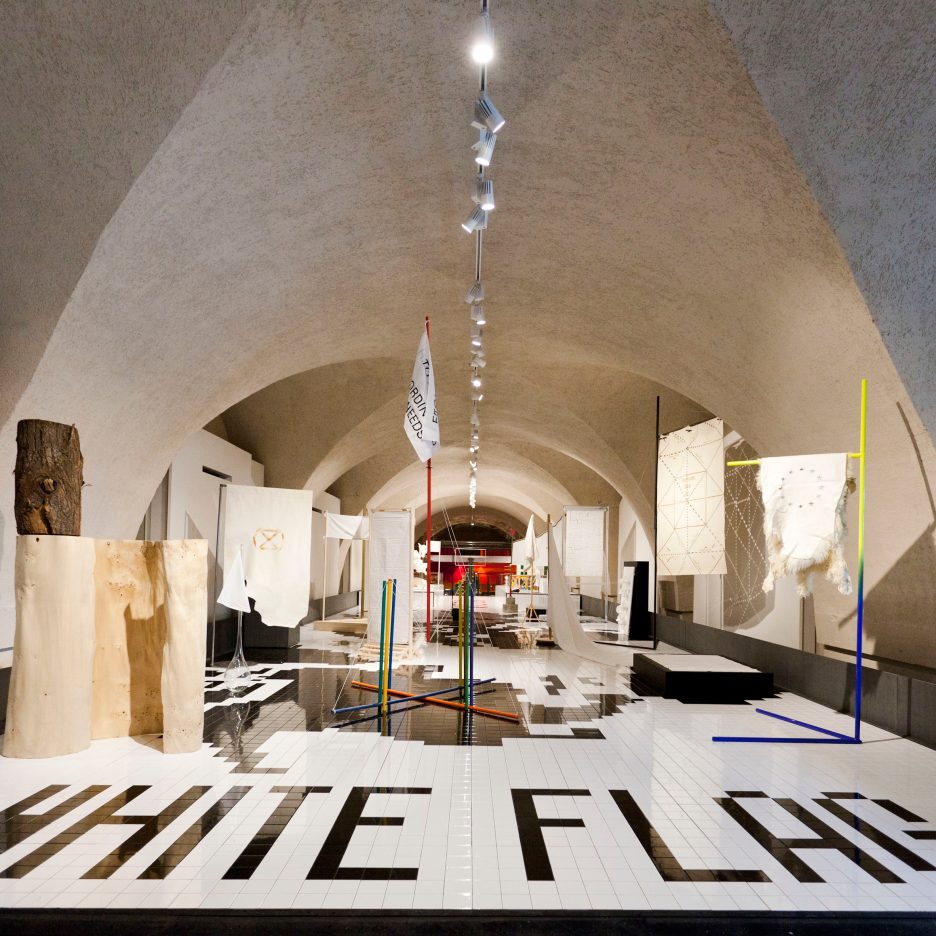
Dezeen promotion:Design Week Mexico has unveiled its programme for this year’s event, including exhibitions, installations, a symposium, film screenings and an architecture pavilion (+ slideshow). (more…)