EFFEKT & karres+brands Win Competition to Transform Industrial Wasteland Into Vibrant Urban District in Roskilde


© EFFEKT

© EFFEKT

EFFEKT and collaborator karres+brands have won a competition to transform an industrial waste site into a new vibrant urban district and infrastructural hub in the historic center of the city of Roskilde, Denmark. Beating out seven other invited teams, the winning design will encompass 100,000 square meters of mixed-use development across existing railroad tracks, reuniting the city and “reinventing the station as an integral part of the city center.”


© EFFEKT


© EFFEKT


© EFFEKT


© EFFEKT


© EFFEKT

© EFFEKT

While Roskilde station is already the most trafficked railway hub in Denmark outside of Copenhagen, since its completion, the railroad tracks have acted as a barrier, cutting off the contemporary city development from its historic downtown. EFFEKT’s solution will transform the station into a “unifying hub” by injecting new urban life and improved pathways throughout the district.

“The new Station Area will transform the previous divided city into a new urban destination. It will create a coherent urban experience in Roskilde, inspired by and in respect to both the rich cultural heritage and the cutting edge contemporary culture that Roskilde is known for,” says Sinus Lynge, founding partner at EFFEKT.


© EFFEKT

© EFFEKT

© EFFEKT

© EFFEKT

© EFFEKT

© EFFEKT

To revitalize the station, the team rejected the traditional typology of a station as a ticket office and waiting room, choosing instead to integrate the infrastructural program into the surrounding urban fabric.

“A comfortable seamless transition is crucial to the design of the new station area. For this reason, we have designed the Roskilde passage as a new type of urban landscape, that smoothly flow under the railway tracks and optimally connects all modes of transport. In this way the public space is creates a new relationship between the two parts of the city,” says Bart Brands, principal of karres+brands.


© EFFEKT

© EFFEKT

© EFFEKT

© EFFEKT

“Where infrastructure often connects on a global and regional level, it also often divides a city in a local level. The new Station Area will be reintegrated as an integral part of the network of streets and public spaces in Roskilde. So many stations have already been transformed into shopping malls and related commercial programme. In Roskilde our aim is to transform the station into a new the city center blurring the lines between the city and the station,” says Sinus Lynge.


© EFFEKT and karres+brands

© EFFEKT and karres+brands

© EFFEKT

© EFFEKT

The winning design calls for shops, cafés and restaurants to be located directly alongside the station platform, meaning travelers will be greeted with a lively urban area immediately upon disembarking.

Rather than using a traditional bridge or tunnel, the two sides of the city will be connected by an “open green urban space” below the tracks, which will also be lined with shops, cafés, service areas and informal meeting places. Program pieces will be organized to foster increased efficiency and intuitive navigation through the station for the nearly 30,000 daily passengers.


© EFFEKT

© EFFEKT

© EFFEKT

© EFFEKT

“The passage creates a visual and spatial connection across the railway and is designed as a generous and open urban space adding space instead of occupying. This station area will be a part of so many people’s everyday lives, so the solutions must be optimal in terms of distance, time consumption, accessibility and comfort. The seamless and efficient transition between different modes of transportation will also increase the use of public transport. “ says Lynge.


© EFFEKT

© EFFEKT

A former parking area and leftover industrial land will also be transformed, serving as the site for new housing, offices, retail, and hotel structures, interspersed with a series of new urban spaces, each with its own individual character. The new district will be planned for a wide variety of scales, densities and programs that will allow the area to integrate seamlessly into the surrounding city fabric.

The winning design was selected by a unanimous vote from the jury. The two-phase competition was first announced in November 2015.


© karres+brands

© karres+brands

© EFFEKT and karres+brands

© EFFEKT and karres+brands

© EFFEKT and karres+brands

© EFFEKT and karres+brands
  • Architects: EFFEKT, karres+brands
  • Location: 4000 Roskilde, Denmark
  • Design & Masterplan: EFFEKT and karres+brands
  • Engineering: WTM Engineers, ALECTIA and ARUP
  • Client: Roskilde Municipality
  • Area: 100000.0 sqm
  • Project Year: 2016
  • Photographs: EFFEKT, karres+brands, EFFEKT and karres+brands

http://ift.tt/2cBRRld

EFFEKT & karres+brands Win Competition to Transform Industrial Wasteland Into Vibrant Urban District in Roskilde


© EFFEKT

© EFFEKT

EFFEKT and collaborator karres+brands have won a competition to transform an industrial waste site into a new vibrant urban district and infrastructural hub in the historic center of the city of Roskilde, Denmark. Beating out seven other invited teams, the winning design will encompass 100,000 square meters of mixed-use development across existing railroad tracks, reuniting the city and “reinventing the station as an integral part of the city center.”


© EFFEKT


© EFFEKT


© EFFEKT


© EFFEKT


© EFFEKT

© EFFEKT

While Roskilde station is already the most trafficked railway hub in Denmark outside of Copenhagen, since its completion, the railroad tracks have acted as a barrier, cutting off the contemporary city development from its historic downtown. EFFEKT’s solution will transform the station into a “unifying hub” by injecting new urban life and improved pathways throughout the district.

“The new Station Area will transform the previous divided city into a new urban destination. It will create a coherent urban experience in Roskilde, inspired by and in respect to both the rich cultural heritage and the cutting edge contemporary culture that Roskilde is known for,” says Sinus Lynge, founding partner at EFFEKT.


© EFFEKT

© EFFEKT

© EFFEKT

© EFFEKT

© EFFEKT

© EFFEKT

To revitalize the station, the team rejected the traditional typology of a station as a ticket office and waiting room, choosing instead to integrate the infrastructural program into the surrounding urban fabric.

“A comfortable seamless transition is crucial to the design of the new station area. For this reason, we have designed the Roskilde passage as a new type of urban landscape, that smoothly flow under the railway tracks and optimally connects all modes of transport. In this way the public space is creates a new relationship between the two parts of the city,” says Bart Brands, principal of karres+brands.


© EFFEKT

© EFFEKT

© EFFEKT

© EFFEKT

“Where infrastructure often connects on a global and regional level, it also often divides a city in a local level. The new Station Area will be reintegrated as an integral part of the network of streets and public spaces in Roskilde. So many stations have already been transformed into shopping malls and related commercial programme. In Roskilde our aim is to transform the station into a new the city center blurring the lines between the city and the station,” says Sinus Lynge.


© EFFEKT and karres+brands

© EFFEKT and karres+brands

© EFFEKT

© EFFEKT

The winning design calls for shops, cafés and restaurants to be located directly alongside the station platform, meaning travelers will be greeted with a lively urban area immediately upon disembarking.

Rather than using a traditional bridge or tunnel, the two sides of the city will be connected by an “open green urban space” below the tracks, which will also be lined with shops, cafés, service areas and informal meeting places. Program pieces will be organized to foster increased efficiency and intuitive navigation through the station for the nearly 30,000 daily passengers.


© EFFEKT

© EFFEKT

© EFFEKT

© EFFEKT

“The passage creates a visual and spatial connection across the railway and is designed as a generous and open urban space adding space instead of occupying. This station area will be a part of so many people’s everyday lives, so the solutions must be optimal in terms of distance, time consumption, accessibility and comfort. The seamless and efficient transition between different modes of transportation will also increase the use of public transport. “ says Lynge.


© EFFEKT

© EFFEKT

A former parking area and leftover industrial land will also be transformed, serving as the site for new housing, offices, retail, and hotel structures, interspersed with a series of new urban spaces, each with its own individual character. The new district will be planned for a wide variety of scales, densities and programs that will allow the area to integrate seamlessly into the surrounding city fabric.

The winning design was selected by a unanimous vote from the jury. The two-phase competition was first announced in November 2015.


© karres+brands

© karres+brands

© EFFEKT and karres+brands

© EFFEKT and karres+brands

© EFFEKT and karres+brands

© EFFEKT and karres+brands
  • Architects: EFFEKT, karres+brands
  • Location: 4000 Roskilde, Denmark
  • Design & Masterplan: EFFEKT and karres+brands
  • Engineering: WTM Engineers, ALECTIA and ARUP
  • Client: Roskilde Municipality
  • Area: 100000.0 sqm
  • Project Year: 2016
  • Photographs: EFFEKT, karres+brands, EFFEKT and karres+brands
http://ift.tt/2cBRRld

EFFEKT & karres+brands Win Competition to Transform Industrial Wasteland Into Vibrant Urban District in Roskilde


© EFFEKT

© EFFEKT

EFFEKT and collaborator karres+brands have won a competition to transform an industrial waste site into a new vibrant urban district and infrastructural hub in the historic center of the city of Roskilde, Denmark. Beating out seven other invited teams, the winning design will encompass 100,000 square meters of mixed-use development across existing railroad tracks, reuniting the city and “reinventing the station as an integral part of the city center.”


© EFFEKT


© EFFEKT


© EFFEKT


© EFFEKT


© EFFEKT

© EFFEKT

While Roskilde station is already the most trafficked railway hub in Denmark outside of Copenhagen, since its completion, the railroad tracks have acted as a barrier, cutting off the contemporary city development from its historic downtown. EFFEKT’s solution will transform the station into a “unifying hub” by injecting new urban life and improved pathways throughout the district.

“The new Station Area will transform the previous divided city into a new urban destination. It will create a coherent urban experience in Roskilde, inspired by and in respect to both the rich cultural heritage and the cutting edge contemporary culture that Roskilde is known for,” says Sinus Lynge, founding partner at EFFEKT.


© EFFEKT

© EFFEKT

© EFFEKT

© EFFEKT

© EFFEKT

© EFFEKT

To revitalize the station, the team rejected the traditional typology of a station as a ticket office and waiting room, choosing instead to integrate the infrastructural program into the surrounding urban fabric.

“A comfortable seamless transition is crucial to the design of the new station area. For this reason, we have designed the Roskilde passage as a new type of urban landscape, that smoothly flow under the railway tracks and optimally connects all modes of transport. In this way the public space is creates a new relationship between the two parts of the city,” says Bart Brands, principal of karres+brands.


© EFFEKT

© EFFEKT

© EFFEKT

© EFFEKT

“Where infrastructure often connects on a global and regional level, it also often divides a city in a local level. The new Station Area will be reintegrated as an integral part of the network of streets and public spaces in Roskilde. So many stations have already been transformed into shopping malls and related commercial programme. In Roskilde our aim is to transform the station into a new the city center blurring the lines between the city and the station,” says Sinus Lynge.


© EFFEKT and karres+brands

© EFFEKT and karres+brands

© EFFEKT

© EFFEKT

The winning design calls for shops, cafés and restaurants to be located directly alongside the station platform, meaning travelers will be greeted with a lively urban area immediately upon disembarking.

Rather than using a traditional bridge or tunnel, the two sides of the city will be connected by an “open green urban space” below the tracks, which will also be lined with shops, cafés, service areas and informal meeting places. Program pieces will be organized to foster increased efficiency and intuitive navigation through the station for the nearly 30,000 daily passengers.


© EFFEKT

© EFFEKT

© EFFEKT

© EFFEKT

“The passage creates a visual and spatial connection across the railway and is designed as a generous and open urban space adding space instead of occupying. This station area will be a part of so many people’s everyday lives, so the solutions must be optimal in terms of distance, time consumption, accessibility and comfort. The seamless and efficient transition between different modes of transportation will also increase the use of public transport. “ says Lynge.


© EFFEKT

© EFFEKT

A former parking area and leftover industrial land will also be transformed, serving as the site for new housing, offices, retail, and hotel structures, interspersed with a series of new urban spaces, each with its own individual character. The new district will be planned for a wide variety of scales, densities and programs that will allow the area to integrate seamlessly into the surrounding city fabric.

The winning design was selected by a unanimous vote from the jury. The two-phase competition was first announced in November 2015.


© karres+brands

© karres+brands

© EFFEKT and karres+brands

© EFFEKT and karres+brands

© EFFEKT and karres+brands

© EFFEKT and karres+brands
  • Architects: EFFEKT, karres+brands
  • Location: 4000 Roskilde, Denmark
  • Design & Masterplan: EFFEKT and karres+brands
  • Engineering: WTM Engineers, ALECTIA and ARUP
  • Client: Roskilde Municipality
  • Area: 100000.0 sqm
  • Project Year: 2016
  • Photographs: EFFEKT, karres+brands, EFFEKT and karres+brands

http://ift.tt/2cBRRld

5 Ways Neuroscience Can Make You Happier

You’re reading 5 Ways Neuroscience Can Make You Happier, originally posted on Pick the Brain | Motivation and Self Improvement. If you’re enjoying this, please visit our site for more inspirational articles.

5 Ways Neuroscience Makes You Happy

happiness

Happiness is something we all aspire to and we all have different things that make us happy. But did you know that science examining the brain’s response to certain situations and scenarios has revealed strategies that we can all use to increase our happiness?

While it might feel like scientific study into our brainwaves might be a joyless way to find ways to lift our spirits, pioneering research in neuroscience has established methods and habits that you can use to make yourself happier. If you need a boost in happiness, try out some of these simple suggestions.

Get more sleep

How much sleep do you get every night? Medical advice suggests that to function properly we should get at least eight hours per day. Interestingly we know that depression can stop people from getting the kind of sleep they need, but equally not getting enough sleep can lead to depression. People with insomnia are far more likely to develop depression than those who get enough sleep. This suggests that we need to make a concerted effort to get enough time in bed. If you aren’t getting eight hours a night regularly it could be having an effect on your health. Ultimately getting more sleep will make you happier.

Listen to the music you listened to when you were happiest

Music can have an enormous effect on the brain. One of the most interesting discoveries in neuroscience has shown that if you listen to music that you listened to at a time when you were happier, it actually lifts your mood. Music has the ability to remind us of a different time in our lives and put us back into a mindset we were in when we were happier. This can be enormously valuable if you feel your levels of happiness have dropped.

Smile and laugh

It’s actually quite easy to trick your brain or at least lead it in a different direction. The brain uses something called biofeedback to better understand what is going on around you. So when you laugh or you smile, the brain is aware that you are relaxed and having fun. This effectively tells it that you are not in a state of anxiety or stress so it changes the chemicals being released into your body. In effect you can tell your brain that you are happier simply by smiling and laughing – doing so, the brain releases chemicals that actually will raise your mood.

Think about your long term goals

In a similar way that smiling can affect the way you feel, you can also influence your brain by thinking about your long term goals. If you feel under pressure or challenged it can be important to stop focussing on the challenge itself and instead set your mind on the positive thoughts of what it will be like to accomplish that goal. Your brain understands that accomplishing something is meaningful and actually begins to release the same chemicals it releases when you have actually completed the task.

Form good habits and you’ll keep them

Human beings are creatures of habit. When we come to make our decisions we actually rely heavily on something called the dorsal striatum which looks at what we have done in the past to make decisions. The striatum effectively controls how we make decisions if we aren’t focussed, so if we are in the habit of doing something we shouldn’t – for example, procrastinating – we are very likely to do that in future. To get out of the habit we need to retrain our dorsal striatum to respond the way we want it to. So focus on changing your behaviour to the way you want it to be and soon it will become second nature.

Article provided by Mike James, an independent content writer in the health sector – fascinated by neuroscience and its ability to aid improvement of one’s own mental and physical state. For the information in this post, Think Change Consulting were consulted.

You’ve read 5 Ways Neuroscience Can Make You Happier, originally posted on Pick the Brain | Motivation and Self Improvement. If you’ve enjoyed this, please visit our site for more inspirational articles.

http://ift.tt/2cmXYWd

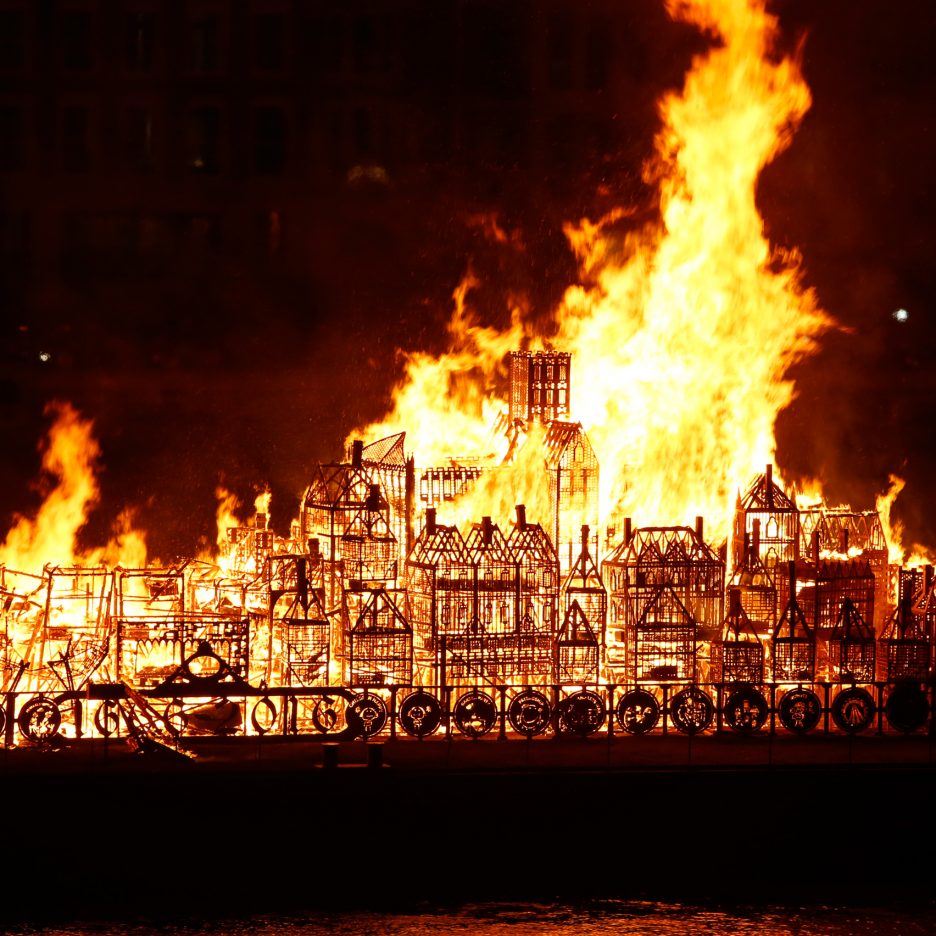
Huge wooden model torched on 350th anniversary of Great Fire of London


A giant model of London‘s 17th-century cityscape has been set ablaze on the River Thames to mark the 350th anniversary of the Great Fire of London (+ slideshow). (more…)

http://ift.tt/2bOmSwh

Geysers by $amii …

Trinity College Library, Dublin, Irelandphoto via great

Trinity College Library, Dublin, Ireland

photo via great

DesignStudio completes minimal rebrand for Deliveroo


Deliveroo has become the latest company to scrap its complicated logo in favour of a flat design, launching a pared-back rebrand by London agency DesignStudio (+ slideshow). (more…)

http://ift.tt/2c9HSTP

Beus Center for Law and Society / ennead Architects


© Bill Timmerman

© Bill Timmerman


© Bill Timmerman


© Bill Timmerman


© Bill Timmerman


© Bill Timmerman

  • Architects: ennead Architects
  • Location: United States, Phoenix, AZ, USA
  • Design Team: Michael Caton, Alfonso Gorini, Wanlika Kaewkamchand, Eliza Montgomery, Adam Sheridan, Natasha Skogerboe, Brent Stringfellow, Margaret Tyrpa, Joanna Williams
  • Area: 260000.0 ft2
  • Project Year: 2016
  • Photographs: Bill Timmerman
  • Design Partner: Tomas Rossant
  • Management Partner: Timothy Hartung
  • Project Manager: Felicia Berger
  • Project Designer: Brian Masuda
  • Project Architect: M. Gregory Clawson
  • Local Architect: Jones Studio
  • Lead Designer: Brian Farling AIA
  • Principal In Charge: Neal Jones AIA, LEED AP
  • Project Team: Jacob Benyi, Dan Childers, Eddie Curiel, Melissa Farling, Aaron Forbes, Rob Huff, Eddie Jones, Joanna Noonan, Bill Osborne, Maria Salenger, Eric Watson
  • Structural Buro: Happold Engineering
  • Mep/Fp Buro: Happold Engineering
  • Lighting Design Buro: Happold Engineering
  • Sustainability Buro: Happold Engineering
  • Landscape: Colwell Shelor Landscape Architecture
  • Civil: Dibble Engineering
  • Geotechnical: Ninyo & Moore
  • Av/Telecom/Acoustics: McKay Conant Hoover Inc., JBA Consulting Engineers, Inc.
  • Graphics: Poulin + Morris, Inc.
  • Code: Hughes Associates
  • Cost Estimating: Construction Cost Management Consultancy (CCMC)
  • Parking: Walker Parking Consultants
  • Construction Manager: DPR Construction
  • Renderer: Atchain
  • Specifications: Construction Specifications Inc.

© Bill Timmerman

© Bill Timmerman

From the architect. The Sandra Day O’Connor College of Law reinvents the traditional law school experience through the construction of a new, modern facility, the Beus Center for Law and Society, in the heart of downtown Phoenix. The relocation of the law school to this area of Arizona State University’s downtown campus


© Bill Timmerman

© Bill Timmerman

provides beneficial programmatic adjacencies to the Phoenix legal and criminal justice community and unique opportunities to advance the College’s pedagogical mission. The Beus Center for Law and Society is designed to act as an institutional change agent, dedicated to educating students and citizens on the importance of the law in shaping civil society. The six-story, 260,000-square-foot state-of-the-art facility, designed by Tomas Rossant of Ennead Architects in collaboration with Jones Studio, repositions the law school as a conduit for connecting the school’s progressive legal scholarship with its commitment to the community by providing services like a public interest law clinic and the nation’s first not-for-profit teaching law firm.


© Bill Timmerman

© Bill Timmerman

1st Level Plan

1st Level Plan

© Bill Timmerman

© Bill Timmerman

The building design was conceived and developed with openness to the public in mind and creates a unique urban environment that encourages vibrant connections between ASU, the College of Law and the local downtown Phoenix community. A north-south “slice” through the courtyard massing creates an inviting and active public space with a pedestrian pathway that brings individuals directly into the central core of the law school, exposing them to the main lobby and three double-height spaces located at the heart of the building.


© Bill Timmerman

© Bill Timmerman

These three spaces are stacked vertically and serve as the core of the College, with the Great Hall on level one, the main library floor on level three and an outdoor courtyard on level five. Library stacks and study spaces extend up to the upper levels and serve as the primary circulation paths, which promote intellectual and social interchange between students, faculty and visitors. The “slice” through the building is stitched together by open-air walkways that bridge east and west and provide access to a suspended double-height reading room at the north and two stories of think tank space at the south. 


© Bill Timmerman

© Bill Timmerman

Section

Section

© Bill Timmerman

© Bill Timmerman

Sustainability was a key design driver throughout the process. The self-shading, saw-toothed configuration of the main building façade, comprised of Arizona sandstone with aluminum and glass windows, changes in response to solar orientation, window size and programmatic requirements. The façade is unitized and factory assembled, both to assure quality and to achieve a higher standard of thermal performance. Heavily insulated walls and roof also contribute to the efficiency of the shell. Mechanically, the building incorporates energy-efficient technologies, including chilled beams and under-floor displacement cooling. Consequently, the building is expected to reduce energy consumption by 37% compared to a baseline building, per ASHRAE 90.1-2007. Desert-adaptive planting and water features activate the landscape, helping to minimize on-site irrigation demands.


© Bill Timmerman

© Bill Timmerman

Section

Section

© Bill Timmerman

© Bill Timmerman

Other design features include an innovative retractable seating system in the Great Hall that allows the space to be converted from an everyday tiered arrangement to a more formal auditorium configuration. Unlike traditional retractable seating where the chairs and tiered platform are attached and both retract together, the design team developed a motorized tray-like system that allows for each row of auditorium chairs to be deployed independently and concealed within the individual tiers. When the chairs are in their retracted position, the tiered array of wood steps serves as a unique social space and interior landscape that encourages interaction. The expansive bi-folding glass door at the front of the Great Hall blurs the line between Indro and outdoor space, providing flexibility while offering a unique civic space to the downtown Phoenix community. Its welcoming gesture of openness clearly communicates and embodies the overarching misión of the College of Law’s new home as a place where the study and practice of law and society converge. In an area of downtown newly invigorated with the addition of retail spaces, a bookstore and an independently owned and operated café, a large interior media display projects out towards Taylor Street and 1st Street and activates the street, featuring upcoming events, current legal topics and other programmable content that informs and reminds the public of the many ways law shapes society.


© Bill Timmerman

© Bill Timmerman

http://ift.tt/2c71rud

V&A director quits after expressing dismay over Brexit vote


The German director of the V&A museum in London Martin Roth is stepping down after five years, after describing the results of the EU Referendum as a personal defeat. (more…)

http://ift.tt/2bSeRK7