The Wilderness Act – enacted on this day in 1964 – defines a wilderness as “an area where the earth and its community of life are untrammeled by man, where man himself is a visitor who does not remain.” In the following 52 years, over 109 million acres of pristine forests, mountains, deserts and wetlands have been protected, giving all Americans the opportunity to escape into nature. Photo of the Steelhead Falls Wilderness Study Area in Oregon by Jeff Clark, @mypubliclands
With schools around the country starting back up again, it’s time for the latest edition of DesignIntelligence’s yearly rankings of the Top Architecture Schools in the US for both undergraduate and graduate programs. This year, CEOs, managing partners, and human-resource directors from more than 2,000 firms were asked to list the 10 programs from each category they felt best prepared students for success in the profession of architecture.
This information, along with detailed accounts on the best programs that teach skills in design, computer applications, sustainability and construction methods & materials, factored into the creation of the 2017 rankings. In addition, over 2,785 students were polled on the quality of their program and their plans for post-graduation. The two top schools, Cornell for undergraduates and Harvard for graduates, were once again named the best programs to attend, according to the study.
Read on to see the list of the top 10 undergraduate and graduate programs in the US.
The Top 10 Undergraduate Architecture Programs
1. Cornell University 2. California Polytechnic State University, San Luis Obispo 3. Syracuse University 4. Rice University 5. Virginia Polytechnic Institute and State University 6. University of Texas, Austin 7. Rhode Island School of Design 8. Pratt Institute 9. Auburn University 10. South California Institute of Architecture
The Top 10 Graduate Architecture Programs
1. Harvard University 2 (Tie). Cornell University 2 (Tie). Massachusetts Institute of Technology 4. Columbia University 5. Yale University 6. University of California, Berkeley 7. University of Michigan 8. Syracuse University 9. Rice University 10. University of Pennsylvania
Read more about the methodology and analysis behind the rankings, as well as the results of the subcategories and student survey, at Architectural Record, here.
ArchDaily just reached 1 million followers on Instagram! To celebrate, we’re featuring 25 new Instagram feeds to follow. As with parts one, two and three of our Instagram round-up, we’ve selected a varied group of accounts which includes architecture photographers like Laurian Ghinitoiu, whose stunning images have appeared on ArchDaily countless times, and prominent architecture firms like Mad Architects, MVRDV, Sou Fujimoto and OMA. We’ve also added well-curated feeds on certain subjects like socialist_modernism, and perfectly symmetrical buildings via symmetrical_monsters which are sure to inspire you.
If you’re looking for daily inspiration, these feeds are definite must-follows.
Don’t forget, we’ve already featured 75 Instagram photographers who are more than worthy of your Inst-attention – check out Part I, Part II and Part III of the series.
Photographs: Courtesy of Studio di Architettura Attilio Stocchi
Curated : Antonella Ranaldi and Fulvio Irace
Tower Unit: Italo Lupi, Rosa Casamento, Laura Crespi, Mirco Facchinelli, Evelino Facchinetti, Giulia Maculan, Davide Marcon, Enrico Prato, Ylenia Rose Testore, Annalisa Ubaldi
Courtesy of Studio di Architettura Attilio Stocchi
The 1960 stone versions of Savi – Costante Uomo (Sages – Constant Man) return to the place where Fausto Melotti evoked them for the first time in 1936.
Courtesy of Studio di Architettura Attilio Stocchi
Sheltered by a pavilion inspired by Leonardo’s coloured shadows in the interweaving branches of the Sala delle Asse in the castle, they call upon us to witness a silent dispute about the “after”: about the contemporary that measures up to what already exists.
Plan
A dispute, in the form of images, on the patterns of transformation intra, super, sub, and apud to verify Klee’s theory: when bodies touch each other, a certain thirst for adventure arises; if it does not, they must keep at a distance, and the distance should remain harmonious.
Courtesy of Studio di Architettura Attilio Stocchi
Milan and architecture invite visitors into an intriguing adventure After. Because architecture in Milan is contagious. But the contagion does not bring disease – just a pleasant euphoria.
Courtesy of Studio di Architettura Attilio Stocchi
Soprintendenza Belle Arti e Paesaggio – Milan XXI Milan Triennale 2016
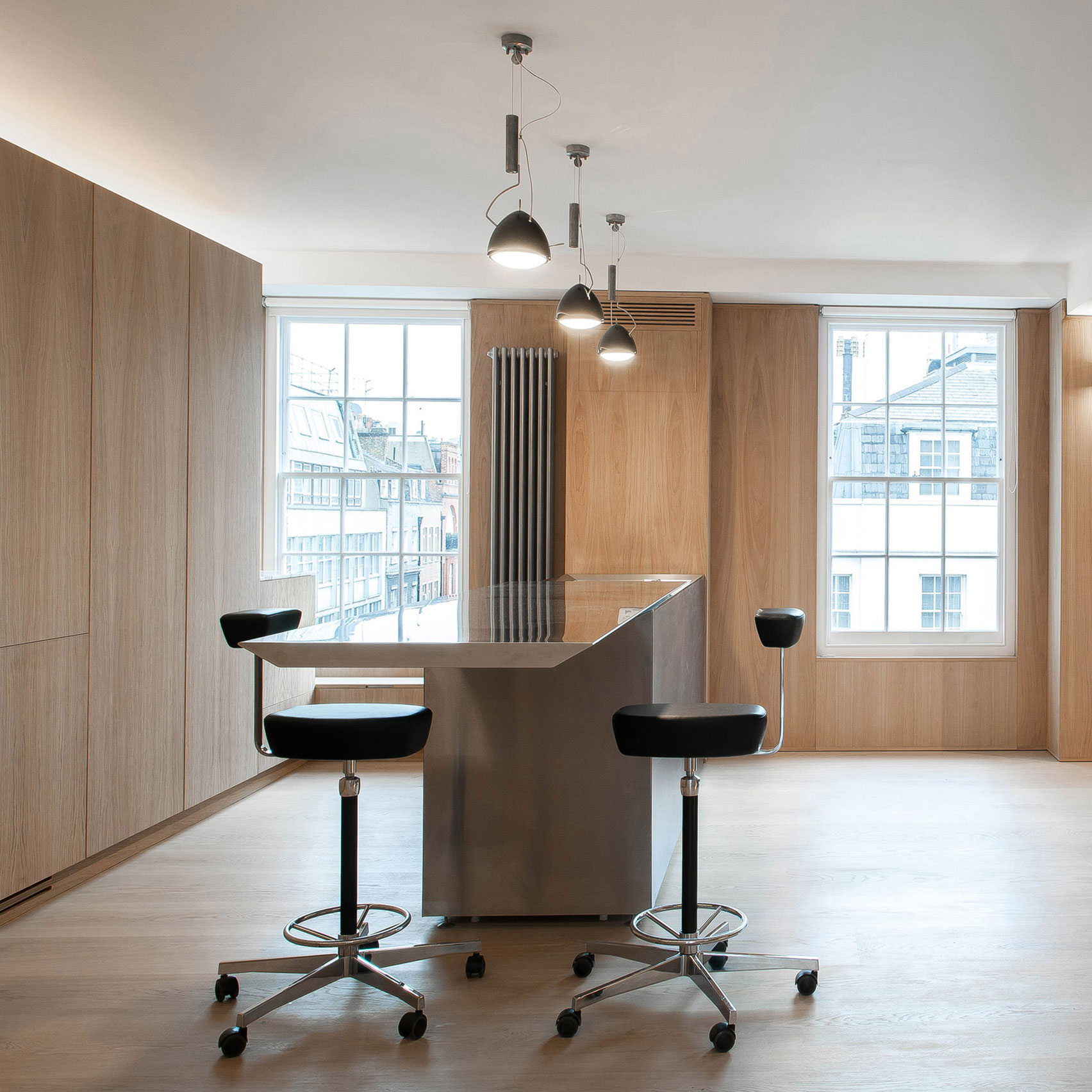
Oak-covered living rooms and bathrooms clad in large panels of veined marble add a touch of luxury to this otherwise simple apartment in the heart of London (+ slideshow). (more…)
Psychopathy is a personality disorder characterized by a lack of empathy for others. How much do we care about the others? It’s hard to say exactly. That’s why the true assessment should not be undertaken lightly and can only be done a trained professional.
But, we can catch a glimpse of our minds with some easier tests. All we have to do is to answer with honesty.
Take now this quick and easy quiz and find out if you can pass the psychopath test!
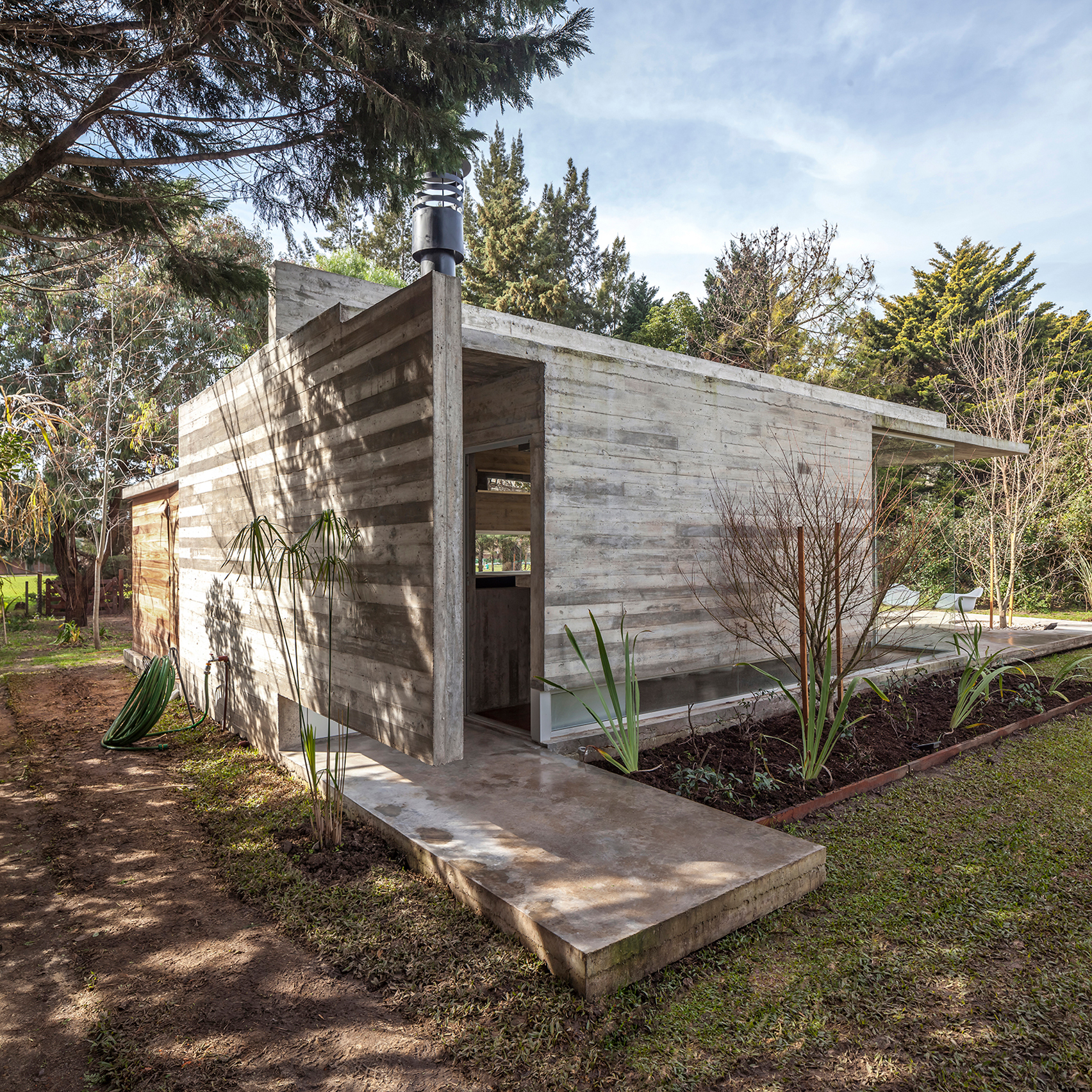
Argentinian studio Besonias Almeida has added a garden pavilion to a house in Buenos Aires, using board-marked concrete so that the two buildings match (+ slideshow). (more…)
3×10 House is a private home located in Định Công, Hoàng Mai, Hà Nội, Vietnam. It was designed by AHL Architects Associates in 2015. 3×10 House by AHL Architects Associates: “Over the years, Hanoi has been spontaneously developing and tube house has become a popular style in this city: the houses stand beside each other, deep in narrow alleys, layer like sardines. The typical tube houses “designed” by word of..
The client was a private sector company specializing in building materials (Pipes and fittings). The main plan was to develop office use while providing an attractive space for the visitors through design and organizational order apparent in the building. The main thing we wanted to achieve with the building’s design was avoiding provide an icon, but rather aimed at creating a neutral form in high density urban texture. In order to care about building context we know that office buildings in 70-80s in Tehran had similar characters. One of great Iranian architects “Abdol Aziz Farman-Farmaian” has built two complexes in site’s neighborhood in 1970s which are considered as contemporary Iranian architecture ( Abdol Aziz Farman-Farmaian he proceeded to create one of Iran’s most important modern-day architectural legacies). We tried to use the same contemporary motifs to build a modern office building today. These motifs mainly point to simplicity and repetition in facades. This is what makes for harmony in the context.
Diagram
The material is white Travertine with a hydrophobic nanomaterial cover in order to prevent damage by rain and pollution to the environment. We actually proposed a solution for using wide windows and simultaneously abiding by the limiting rules of glass area on the façade in this zone. As to their orientation, the reason was to provide the maximum shade on the façade(paicture 1 , that we take photo at afternoon and the sun direction is shown in the picture ). At their current position we have 30% more shade on the façade.
With interior design we aimed at creating a coordination between inner and outer space as well as gradual variation of materials while using the building, but reducing the variety to only 3 main materials in the design of main spaces and the furniture. Plaster is chosen as the base material for most of the spaces due to acoustic considerations. Office spaces are made from natural beech wood and white artificial wood due to hierarchical importance as well as repeating outer forms on the inside.