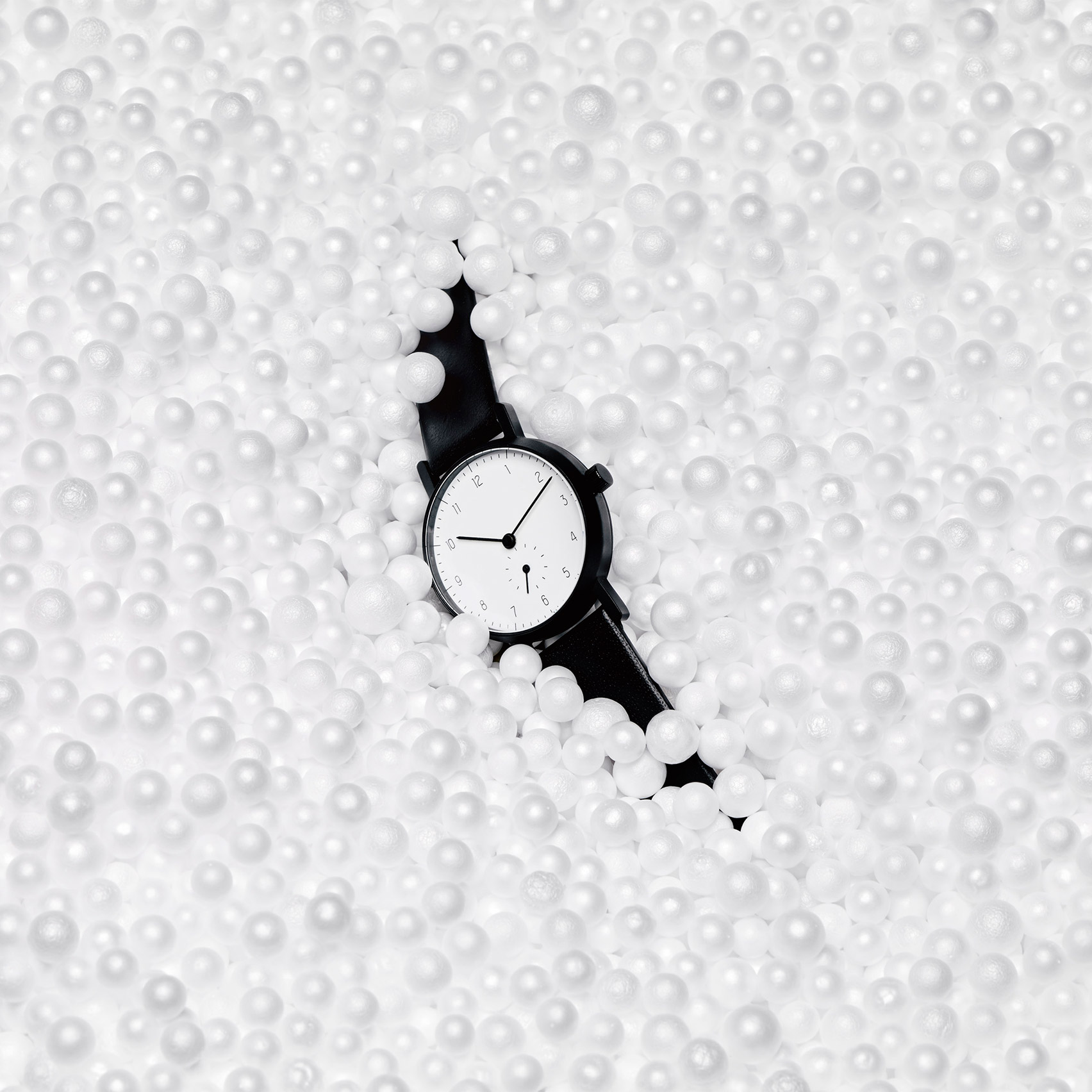
Dezeen Watch Store: Australian brand Stock‘s popular range is now available in a variety of new monochrome and brushed steel combinations. (more…)
Dezeen Watch Store: Australian brand Stock‘s popular range is now available in a variety of new monochrome and brushed steel combinations. (more…)

Have you ever thought of designing a house that is 8-foot cubed? It’s unlikely, unless you’ve been involved in Dallas CASA’s event “Parade of Playhouses.” For 25 years, the association has asked architects, designers and builders to conceive, construct, and donate playhouses to raise funds for abused and neglected children. Each year, the playhouses are displayed in Northpark Mall – Dallas’ main “cultural centre” – where people can buy $5 raffle tickets to win one of the playhouses exhibited.
Architect Bob Borson conceived his first two playhouses for Dallas CASA in 2009, before starting his popular blog Life of an Architect and subsequently launching “The Life of An Architect Design Competition.” The idea came in 2010 when a great number of architects suffered from the economic crisis. As Borson explains: “I could have a playhouse design competition open to other architects so that they could remain connected to the architectural profession.” This also required Borson to raise money and find builders to construct the designs. “I have always covered all the expenses so that the competition would remain free to enter – the playhouses were for charity and it seemed like the right thing to do,” reflected Borson.
For the first two years, Borson organised the competition as part of the American Institute of Architects (AIA) and simultaneously started spreading the word on The Life of an Architect. Since the website allowed for a greater outreach, in 2012 Borson decided to give people anywhere in the world the chance to design playhouses for the charity. In line with the project’s expansion, the jury went from selecting two winning playhouses in 2010 to five in 2016.
For those who want to get involved, the guidelines are fairly simple. The only requirements relate to size, but that doesn’t mean the competition is easy: effective playhouse design is deceptively complex. To determine the winning entries, the jury asks a number of questions: “Does it need to be an enclosed structure? What function would it serve over time? How would it age? Would people want this in their yard? Would a kid actually want this? How could we build this within the budget constraints and still keep the concept intact? Is it dangerous?”
Given that contractors donate money and time to build these playhouses, the designs shouldn’t be overly burdensome. But purpose remains essential. Children’s interests change, and so the design must be useful beyond the first few weeks of excitement when the playhouse makes it to the winner’s backyard.
Accordingly, Borson’s own designs included a “Lantern Playhouse” to illuminate a garden at night, an “Outdoor Movie Theater” to screen films either inside or outside, and a “Birdhouse” that could be reused as a working place, a storage shed or a deck. In 2015, competition-winner Tyler Murph similarly gave his design a lasting purpose; “the Reading Room” acts as a small-scale library, featuring a nice lookout as well as some bookshelves for storage.
This year’s winning projects “Lookout” and “Continous Window” also combine elegant design and possible pragmatic use with playfulness – a criteria that designers surprisingly often forget. As Borson says, “too often architects and designers new to the process think that they should design a playhouse that is shape- and form-driven with the idea that the child who ultimately uses this playhouse will assign their own idea of what a playhouse should be… but kids don’t work that way. If they see some amazing architectural shape or playhouse that looks like a monkey house, they’ll go for the monkey house every time.”
Designs with more evocative shapes are thus often rewarded. For instance, 2015 winning designs “Ellie the Elephant” and “Fun Guard Beach House” reinterpreted elements of childhood imagery to create environments for play. In fact, colorful and fun-shaped exteriors open opportunities for gathering, learning and exercising. Good examples include from 2016 include the cylindrical “Love and Peace,” the sloped-roof “Basecamp” with its climbing-wall, and the yellow playhouse “Say Cheese!” with its circular openings and indoor tree to “instill values about nature.”
This design strategy of allowing more creative and original playhouse shapes helps to maintain interest in Dallas CASA’s project each year. Yet such a cheerful palette of playhouses could probably not exist with a jury of grownups alone – which is why Borson consults “age specific playability experts and generational style docents” to select the final entries.
Borson’s design competition show that “architects have a skill set that lends itself to charity.” More than just conceiving a fun playhouse, this project is about giving time to help children in need, with all funds raised from the raffle going to Dallas CASA. If you are interested in designing a playhouse for charity or want to learn more about Bob Borson’s action within the Dallas community, check out his blog The Life of an Architect. The raffle ticket-winners have just been announced and playhouses should make it to their new homes soon, meaning more photos and interviews from this year’s winners to come.

(adsbygoogle = window.adsbygoogle || []).push({});
He was born with a rare disorder, with no legs and arms.
Despite suffering from bullying and struggling mentally and physically, he didn’t give up.
Today, Nick Vujicic is a motivational speaker and author of seven books. He writes about life, love, and self-acceptance. He writes about family, productivity, and work. He writes about the power of faith and standing strong.
Nick Vujicic doesn’t know the word depression. He’s the founder of several non-profit organizations and presenter of motivational speeches worldwide. His speeches give hope and meaning of life to millions of people. When it comes to motivation and self-belief, he’s one of the best people who can tell people about them.
(adsbygoogle = window.adsbygoogle || []).push({});
These 20 lessons from Nick’s book “Your Life Without Limits” will give you more reasons to live, create, and love the world around us.
//<![CDATA[
aax_getad_mpb({
"slot_uuid":"16dcbcd0-2124-4a85-9abe-c263dd9084e5"
});
//]]>
Check out Nick’s inspiring quotes about life, faith, acceptance, and motivation.
(adsbygoogle = window.adsbygoogle || []).push({});
1. “This life is full of great experiences if we only give it a shot.”
2. “… God gave you just one mouth but He gave you two ears, so you should listen twice as much as you speak”
(adsbygoogle = window.adsbygoogle || []).push({});
3. “Have you ever felt trapped in circumstances, then discovered that the only trap was your own lack of vision, lack of courage, or failure to see that you had better options?”
4. “Life is not about having, it’s about being. You can surround yourself with all that money can buy, and you’d still be as miserable as a human can be. I know people with perfect bodies who don’t have half the happiness I’ve found.”
See Also: 7 Inspirational quotes by CEOs and co-founder that will guide you to be successful
1. “I will try one hundred times to get up and if I fail one hundred times… If I fail and I give up, will I ever get up? No! If I fail, I’ll try again and again. But I want to tell you, it’s not the end.”
2. “The greatest rewards come when you give up yourself. It’s about bettering the lives of others, being part of something bigger than yourself, and making a positive difference.”
(adsbygoogle = window.adsbygoogle || []).push({});
3. “Take small steps in the right direction. No matter how small your steps, keep moving forward towards your goal.”
4. “Don’t give up. And know that there is always someone out there who believes in you and who loves you just the way that you are.”
1. “I have the choice to be angry at God for what I don’t have, or be thankful for what I do have.”
2. “If you can’t get a miracle, become one.”
3. “I don’t care if you are a good mathematician, or a good athletic, or not good at anything. That you think. But I am gonna come and tell you that you are awesome the way you are.”
4. “I encourage you to accept that you may not be able to see a path right now, but that doesn’t mean it’s not there.”
5. “Dream big, my friend, and never give up. We all make mistakes, but none of us are mistakes. Take one day at a time. Embrace the positive attitudes, perspectives, principles and truths I share, and you, too, will overcome.”
1. “To wish for change will change nothing. To make the decision to take action right now will change everything!”
2. “We may have absolutely no control over what happens to us, but we can control how we respond. If we choose the right attitude, we can rise above whatever challenges we face.”
See Also: 7 Incredibly Powerful Ways to Reach Your Goals Using Inspiring Quotes
3. “You can’t even stand without risking to fall.”
4. “Some injuries heal more quickly if you keep moving.”
5. “If I fail, I try again, and again, and again. If YOU fail, are you going to try again? The human spirit can handle much worse than we realize. It matters HOW you are going to FINISH. Are you going to finish strong?”
6. “Keep moving ahead because action creates momentum, which in turn creates unanticipated opportunities.”
7. “If a man without arms and legs is dreaming big why can’t we, why can’t we all?”
And the last but not the least to finish this post:
“My hope is that when people who are in pain see that I have a joyful life, they will think, if Nick – without arms and legs – is thankful, then I will be thankful for today, and I will do my best.” ~ Nicholas James Vujicic
(adsbygoogle = window.adsbygoogle || []).push({});
(function(d) {
var params =
{
id: “cb4f919c-04fa-460c-b2ff-2c7f9ecf4472”,
d: “ZHVtYmxpdHRsZW1hbi5jb20=”,
wid: “165294”,
cb: (new Date()).getTime()
};
var qs=[];
for(var key in params) qs.push(key+’=’+encodeURIComponent(params[key]));
var s = d.createElement(‘script’);s.type=’text/javascript’;s.async=true;
var p = ‘https:’ == document.location.protocol ? ‘https’ : ‘http’;
s.src = p + “://api.content.ad/Scripts/widget2.aspx?” + qs.join(‘&’);
d.getElementById(“contentad165294”).appendChild(s);
})(document);
The post 21 Powerful Quotes from Nick Vujicic To Help You Lead appeared first on Dumb Little Man.

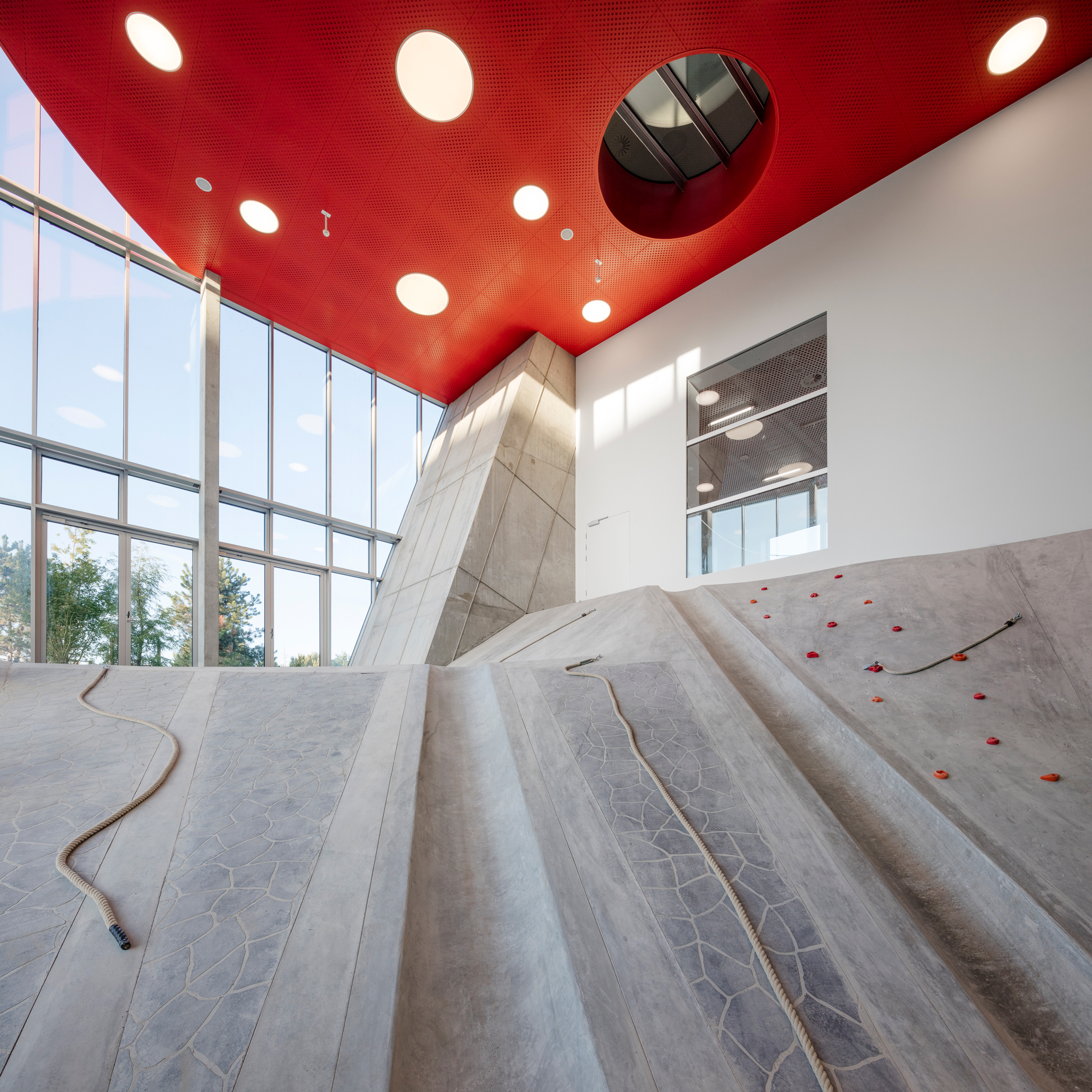
From the architect. The 3200 m2 Ku.Be House of Culture in Movement was designed for the municipality of Frederiksberg as a focal point for both the immediate community and also the wider area of Copenhagen; one that the people themselves could take ownership of and that would evolve its programme based on the specific wants and needs of its users. The project is a new typology, developed out of the response to a brief that solely asked for a building that would bring people together and improve the quality of life. In reply MVRDV and ADEPT answered with one that blends theatre, sport and learning into a space where body and mind are activated to promote a more healthy life for everyone, regardless of age, ability or interest; creating links between people that wouldn’t otherwise connect with each other.
The six primary volumes which make up Ku.Be, each with their own programme, are clad in a unique colour and material, clearly defining them within the building; from outside these shapes are hinted at in the fragmented tile façade. “We designed Ku.Be to encourage the unexpected,” explains MVRDV co-founder Jacob van Rijs. “Larger volumes are suited to hold performances or public meetings, smaller ones can be for exhibitions or debates. The fast-pace rooms are perfect for dance, or parkour; and zen rooms give you the contrast of yoga or meditation. It’s between these volumes where the real fun will happen though; spaces where we hint at a use, but which will become entirely user-defined.”
The six primary volumes which make up Ku.Be, each with their own programme, are clad in a unique colour and material, clearly defining them within the building; from outside these shapes are hinted at in the fragmented tile façade. “We designed Ku.Be to encourage the unexpected,” explains MVRDV co-founder Jacob van Rijs. “Larger volumes are suited to hold performances or public meetings, smaller ones can be for exhibitions or debates. The fast-pace rooms are perfect for dance, or parkour; and zen rooms give you the contrast of yoga or meditation. It’s between these volumes where the real fun will happen though; spaces where we hint at a use, but which will become entirely user-defined.”
The route through the building focuses on developing and encouraging alternate forms of movement. The Labyrinth gets people on their hands and knees climbing through a three dimensional network of cubes from the second to third floors; or alternatively they could take the Mousetrap, a vertical maze. A net which spans several floors throughout the building, lets users climb up from floor to floor – suspended over the voids – and slides and fireman poles offer a fast way to get back down. “In Ku.Be we tried to turn your average experience of a building on its head,” tells ADEPT co-founder Martin Krogh. “What would otherwise be a simple, mindless journey through the building turns into an exploration and discovery of movement. Here it’s you that defines the route, however you want: climbing, sliding, crawling … jumping.” To cater for all abilities and ages, both easier and more standard ways of moving around are provided but even then a visual connection is maintained throughout Ku.Be.
The urban gardens outside form the connection between Ku.Be and the urban realm, playing an important role in expressing the eight volumes and the activities happening inside. The diverse landscape – a system of microclimates with changing sounds, lights and scents which blends seamlessly into a hill with integrated slides – reaches out into the gardens and ends in an amphitheatre outside.
By becoming an extension of the urban landscape of Frederiksberg and integrating the community to such an extent, the House of Culture and Movement looks to become an incubator for further development within the neighbourhood.
Ku.Be is MVRDV’s third completed project in Denmark. Ragnarock, a museum for youth culture, pop and rock music opened in April of this year in nearby Roskilde and the Frøsilos, a conversion of two old silos into housing, was completed in Copenhagen in 2005.
Aside from Ku.Be, ADEPT has completed a number of cultural and educational buildings within the last few years. Among these are Dalarna Media Library in Falun, Sweden, Cortex in Odense, Denmark and UCN in Aalborg, Denmark.
MVRDV and ADEPT achieved the project through close collaboration with: Soeren Jensen Engineers who provided the complex structural engineering to support the visionary architecture; SLA landscape architects, who designed the urban garden surrounding Ku.Be ; and Max Fordham LLP to achieve environmental comfort throughout the building. Ku.Be was made possible by major contributions by Realdania and LOA (Lokale- & Anlægsfonden).
It is amazing the quantity of information our brains can store. Sometimes this info just lies around, never put to use. But from time to time, it can come handy. This is one of those moments. Even if it’s only a game you should accept the challenge and put your memory to work.
Let’s have some fun and see if you can win the title: Master of all knowledge.
Take now this quick and fun quiz and find out if you know to much!
//cdn.playbuzz.com/widget/feed.js
The post Do You Know Too Much? appeared first on Change your thoughts.

The Design Museum in London has announced the shortlist of 13 architecture projects being considered for the 2016 edition of the prestigious Beazley Design of the Year award. From Tatiana Bilbao’s Sustainable Housing Prototype to MAD Architects’ Harbin Opera House, the list features projects from a wide variety of scales and programs, celebrating some of architecture’s most significant achievements from the past year.
The award, now in its ninth year, “celebrates design that promotes or delivers change, enables access, extends design practice or captures the spirit of the year.” Nominees are selected in six categories, including Architecture, Digital, Fashion, Graphics, Product and Transport. An exhibition on the projects will be on display from 24 November 2016 – 19 February 2017.
Last year, the overall architecture prize was awarded to Alejandro Aravena’s UC Innovation Center for the building’s ability to be “permeable – visually, socially and climatically with its environment.”
View all of the shortlisted buildings, after the break.
Arena for Learning, UTEC / Grafton Architects + Shell Arquitectos
Better Shelter / Johan Karlsson, Dennis Kanter, Christian Gustafsson, John van Leer, Tim de Haas, Nicolò Barlera
Design That Saves Lives
Dreamland Margate / Hemingwaydesign
Harbin Opera House / MAD Architects
Nida house in Navidad (Chile) / Mauricio Pezo, Sofia von Ellrichshausen, Diego Perez, Carlos Atala, Ricardo Ballesta
SL11024 / Lorcan O’Herlihy Archtiects
Sustainable Housing / Tatiana Bilbao Estudio
The Green, Nunhead / AOC
Tate Modern Switch House / Herzog & de Meuron
You can view the nominated designs from all categories, here.

Just over a week ago in beautiful Rio de Janeiro the Olympic Games, the world’s largest sporting event, came to an end. The Games, as well as the FIFA World Cup, have been a driving force for the city over the last six and a half years. In the wake of the frenzy caused by the much-anticipated event, Rio will have the Paralympics, which will take place between the 7th and 18th of September. But then what?
The word “legacy” being associated with major world events is nothing new. We see it used a lot when referring to the Olympics and the World Cup, and it’s come up time and time again in recent years when we look at the lasting effects these events have had on host cities like Barcelona (1992), Athens (2004), Beijing (2008) and London (2012). Essentially, the issue revolves around some fundamental questions: Who are the major beneficiaries of the “legacy” of the Olympic Games? Were the huge public investments worth it? Will there be any improvement for the general population? Can the equipment that was built be adapted for everyday use?
If we use the fate of some of the stadiums built for the World Cup as a base to answer the above questions, then the forecast for Rio isn’t very favorable. However, the city’s relationship with the Olympic Games should be viewed through a much more intimate and complex spectrum than the relationship between the cities that hosted the World Cup and their stadiums.
Unlike the projects for the 2014 World Cup, which concentrated most of the efforts and investments in large stadiums (which also were subject to strict FIFA guidelines, over the last six years Rio de Janeiro has seen projects popping up in different parts of the city, including the demolition of the Perimetral highway, the construction of the Olympic Village, as well as the construction of a new bus rapid transit system and a new light rail tram system.
In his piece for the IMS blog, Francesco Perrotta-Bosch said “we had a bipolar Olympic project,” and that’s an interesting way to observe what was done in Rio de Janeiro over the last six years. In his analysis, he dissected the various projects implemented in the city and concluded that there were two completely opposite approaches to what was being built. Born in Rio and used to the routine of the second largest Brazilian metropolis, when he offers his point of view in relation to those projects he isn’t speaking as a critic but as a city resident.
You might say that there are, then, two “legacies” (for lack of a better word, even though it’s now overused) for Rio de Janeiro. One which effectively benefits the city and most of the population, another is the legacy of the “clearing of land” that is still undeveloped “but with unregistered owners.”
The dismantling of the Perimeter – an elevated highway that cuts through the Caju, São Cristóvão, Santo Cristo, Gamboa and Saúde neighborhoods, and had about forty thousand vehicles of daily traffic (symbolically represents the breakdown of the highway paradigm which has lead to urbanization of almost all Brazilian cities since the 1950s and allows the “reappropriation of urban lands by pedestrians” through the requalification of Orla Conde), we would just need to turn our eyes to the Olympic cluster of Barra da Tijuca to see that the focus on walkability and the proposal for designing public spaces for the entire population is not present throughout the Olympic project.
In Barra, the emphasis is on individual motorized transport, unlike that of Orla Conde or Praça Mauá , where Santiago Calatrava’s controversial Museu do Amanhã, or Museum of Tomorrow, was built. During the period of the Olympics, the project took on the role of express bus lanes (BRT), however, its implementation, which has several stations in vacant areas, leaves room for suspicions that after the Olympics, the real beneficiaries of the projects will be the developers and owners of the properties around these new sites, which were essentially made to establish new footholds in the area, making room for elite urbanization. Carlos Carvalho, owner of the Carvalho Hosken construction company, said it best when, in an embarrassing interview with BBC Brazil he asked “How can you put the poor there?” We don’t know, Carlos, but history leads us to believe it won’t be with projects like these.
We’d be lying if we said that all projects from the Olympics only benefited real estate interests. They all do benefit them in some way, it is true, but projects like the new bus lines, which “serve and redevelop several suburban neighborhoods” that have been neglected by the government for decades , or the Deodoro Park, that was designed by the firm of Vigliecca & Associates and (thanks to a timely protest) was open to the community even before the start of the Olympics, show that the “legacy” is also positive for the city.
In addition, other projects for specific sporting events were made keeping in mind their use after the Olympics, like the Handball Arena, designed by Lopes Santos and Ferreira Gomes Architects + OA | Architects Office. After the end of Paralympics, the arena will be dismantled and “take on a new form, being turned into four public schools,” as described by the architects.
Other examples are the Radical Park and the Olympic Youth Arena in Deodoro Olympic Park, both projects by Vigliecca & Associates. The first will be adapted for recreational use and will make use of the topography to create recreational spaces, the second will be transformed into athletic training and education center. In these and other projects by the same office, the stands to hold the spectators during the events are mostly made with conventional metal pipe scaffolding and will later be removed as to reduce the number of places needing to be adapted for everyday use and occasional larger sporting events.
Understanding the importance and strain of hosting an event of this scale is no simple task. It is impossible to turn a blind eye to the ghosts of Athens, Beijing and other host cities where the equipment, which for two weeks were the focus of attention around the world, ended up neglected, abandoned due to their size and high maintenance costs. It’s also impossible to ignore the compelling evidence that some projects were made the way they were in order to enhance certain areas of the city at the expense of others, thus benefiting certain individuals at the expense of the collective.
The “legacy” of the Rio 2016 Olympics is therefore, two-fold (or multiple, but not singular) as one might imagine when taking into account the complexity and scale of an event that put in motion such change in the city. It is still too early to draw more specific conclusions about the general state of the city before and after 2016, it’s possible to tip the scale towards the positive side, so long as the plans for the future of some of the Olympic installations don’t remain just plans and continue to bring about changes that influence daily life in Rio.
The last starter’s gun has gone off, the balls have stopped rolling and the Olympic torch has been extinguished. What do we need to do to make sure that the driving force that moved Rio de Janeiro over the last six and a half years doesn’t cease as well?
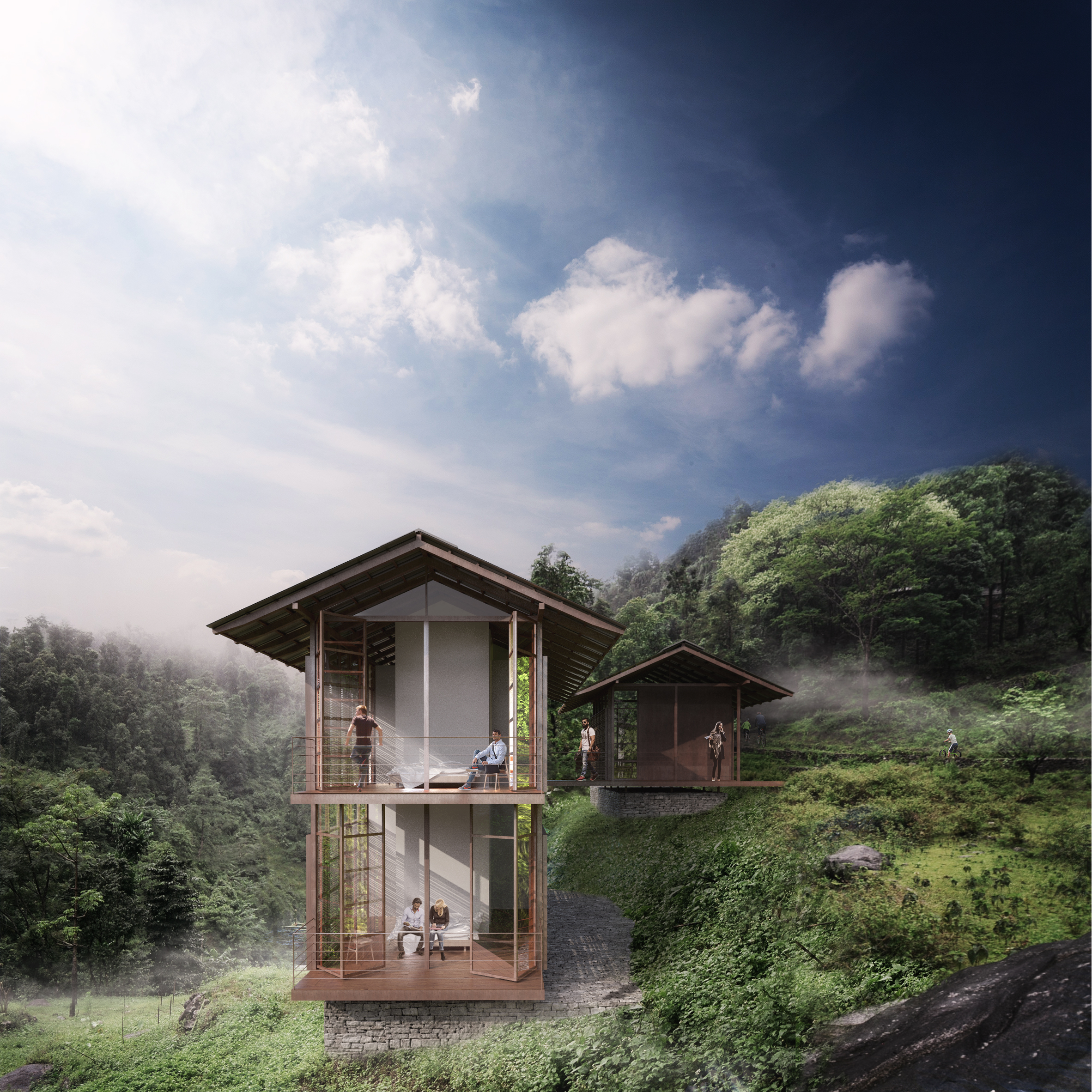
Construction has started on a digitally connected co-living and co-working retreat in the Himalayas, designed by Italian architect Carlo Ratti. (more…)
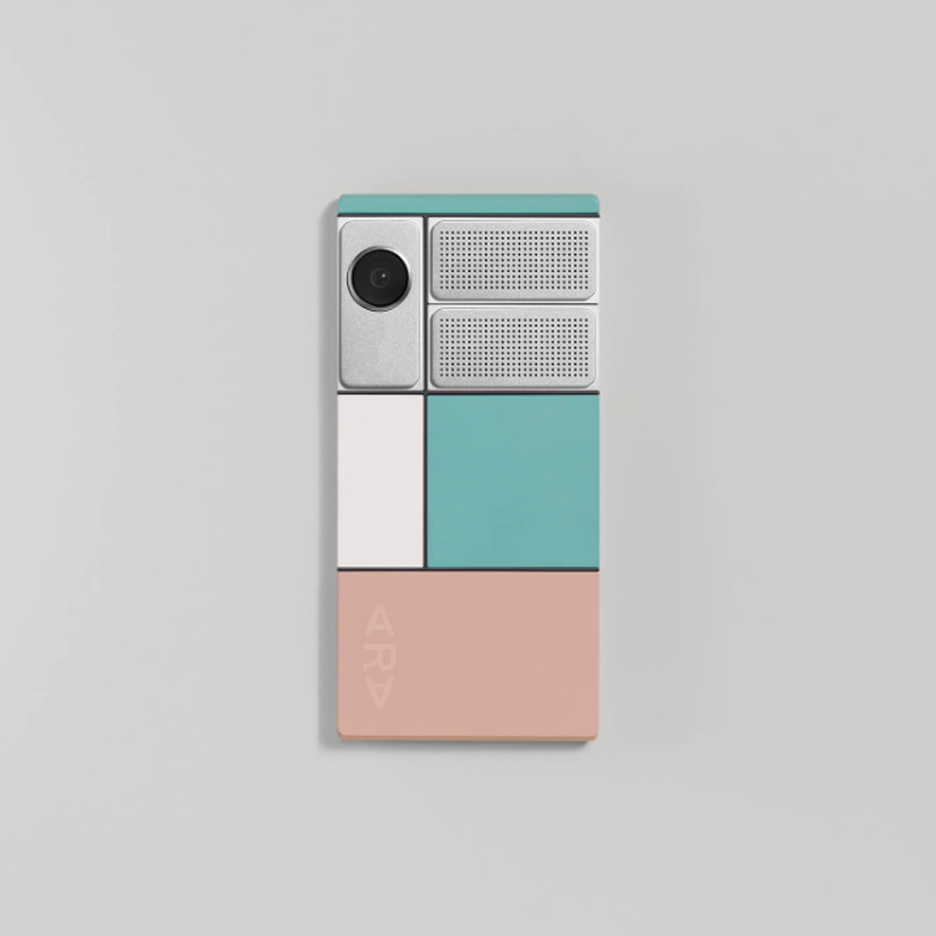
US technology giant Google has scrapped one of its most ambitious ventures, Project Ara, according to insider sources. (more…)