
Aurora Borealis by Steinar Hugi Northern lights at Thingvellir national park
Prentanir
Þessa mynd geturðu keypt prentaða og upplímda á foam plötu á góðu verði.
Sendu póst á steinar@steinar.is ef þú hefur áhuga. http://flic.kr/p/4pRJa4
Aurora Borealis by Steinar Hugi Northern lights at Thingvellir national park
Prentanir
Þessa mynd geturðu keypt prentaða og upplímda á foam plötu á góðu verði.
Sendu póst á steinar@steinar.is ef þú hefur áhuga. http://flic.kr/p/4pRJa4


A large volume of white extended walls that recreates the trees on the lot preserving family privacy that connects with portions of forest … lots of heaven…lots of wáter.
The lot is located in a gated neighborhood near the central area of the city of Córdoba and it showed great contrasts … .an irregular exposing corner lot that challenged us to preserve home life … .an ancient dense forest of native trees occupied half of the land, opposite to a plain stripped of vegetation.
The challenge and exploration of the work aimed to amalgamate the light of the land with the programmatic needs of housing … the forest, its shadow, its intimacy … and the plain, its light, its expansion as a vacuum to overturn in architecture. A serene family life of four members with an active social life. Thus, the skin is the element that condenses this dialectic as a contact membrane between the inside and the outside, assuming the responsibility to face different requirements as a whole.
We decided to consider the work in a stereotomic way, thereby we established and reinforced a concrete boundary between public and private. Pure white ceramic block masonry volumes lightly suspended soil barely were thought to connect the inner and outer spaces according to the demands of interior activities. As subtle counterpoint to the white walls, rusty sheets of iron act as a filter in these turning points, mobile panels that regulate access, lighting, privacy, from the full opacity to the transparency of the perforated surfaces.
The green landscape and the folds of the topography that we had built complete the proposal to set up a private space that reviews the patio paradigm. The requirement of considering the water as part of the family activities throughout the year brought about a large water mirror that connects the social spaces of the house and extends to the barbecue. In summer it enjoys the outdoors in the sun meanwhile the house offers shelter in winter with the help of solar and heating systems.
The culmination of the work relied on local construction systems and reinforced concrete masonry. The strategy aimed to differentiate private to social places, a smaller spatial scale and the presence of the walls capture visuals; and a more permeable social space characterized by large beams that support the roof and the wall of the main façade, hanging over and diluting the limits, large aluminum frames open the space to the family yard.
The proposal optimizes the relationship between the geometry of the lot, its landscape, the programmatic requirements of housing and our spatial intentions. Most private housing sectors directly link with the forest in the zero plane …they have direct contact with the tree and on the terrace. On a larger scale, social spaces are connected to the empty open place… the reference of the tree is at the distance …it is sculptural.

When it comes to expensive artforms, architecture undoubtedly tops the list (even if the artistic merits of some of the absolute priciest buildings are sometimes dubious). But what may not be so obvious is that many of architecture’s iconic works have been completed on budgets not so dissimilar to the work of another artistic industry: filmmaking. Each with their own set of merits, works from both categories have transcended time, confirming that (in most cases) they have more than returned on their initial investment.
To illustrate this point, we’ve complied a list of buildings from eras past, paired with movies of similar budgets completed in the same calendar year. Which buildings or movies have contributed the most based on their initial costs?
Building: Johnson Wax Building / Frank Lloyd Wright
$1.2 million
Movie: Wizard of Oz
$2.7 million
Building: Lever House / SOM
$6 million
Movie: The Greatest Show on Earth
$4 million
Building: Price Tower / Frank Lloyd Wright
$1.25 million
Movie: Love Me Tender
$1 million
Building: Solomon R. Guggenheim Museum / Frank Lloyd Wright
$3 million
Movie: Some Like It Hot
$3 million
Building: Habitat 67 / Moshe Safdie
$22 million
Movie: Casino Royale
$12 million
Building: National Assembly Building of Bangladesh / Louis Kahn
$32 million
Movie: Blade Runner
$28 million
Building: Wexner Center for the Arts / Peter Eisenman
$50 million
Movie: Indiana Jones and the Last Crusade
$55 million
Building: Guggenheim Bilbao / Frank Gehry
$100 million
Movie: The Fifth Element
$95 million
Building: Kunsthaus Bregenz / Peter Zumthor
$22 million
Movie: Austin Powers: International Man of Mystery
$18 million
Building: Jewish Museum Berlin / Daniel Liebeskind
$56 million
Movie: The Green Mile
$60 million
Building: Sendai Mediatheque / Toyo Ito
$130 million
Movie: Harry Potter & the Sorcerer’s Stone
$125 million
Building: Seattle Central Library / OMA + LMN
$166 million
Movie: The Polar Express
$170 million
Building: San Francisco Federal Building / Morphosis
$144 million
Movie: I am Legend
$150 million
Building: New Museum / SANAA
$50 million
Movie: Grindhouse
$53 million
Building: Watercube National Swimming Centre / PTW Architects
$140 million
Movie: The Incredible Hulk
$138 million
Building: Aqua Tower / Studio Gang
$300 million
Movie: Avatar
$425 million
Building: Columbia University Northwest Corner Building / Davis Brody Bond + Rafael Moneo + Moneo Brock Studio
$200 million
Movie: Tron: Legacy
$200 million
Building: The Dali Museum / HOK
$36 million
Movie: Midnight in Paris
$30 million
Building: HARPA Concert Hall / Henning Larsen Architects
$150 million
Movie: Thor
$150 million
Building: Heydar Aliyev Center / Zaha Hadid Architects
$250 million
Movie: The Hobbit: An Unexpected Journey
$250 million
Building: Danish National Maritime Museum / BIG
$55 million
Movie: Captain Phillips
$55 million
Building: Biomuseo / Frank Gehry
$60 million
Movie: The Lego Movie
$60 million
Building: The Broad Museum / Diller, Scofidio + Renfro
$140 million
Movie: Mad Max: Fury Road
$150 million
Overall budgets for buildings can be difficult to measure – numbers are based on total cost of construction. Movie budgets have been found at The Numbers. Buildings not listed in US dollars have been converted using the FXTOP Historical Exchange Rates Calculator.

Business news: German publishing house Gestalten has entered into voluntary insolvency after losing money on a concept store in Berlin. (more…)
I get it.
You want to live life without regrets.
Your biggest fear is waking up in a month, a year, or a decade and realizing you’ve wasted your time on the wrong things.
You’re scared because you don’t want to learn life’s lessons the hard way.
You don’t want to throw away years of your life struggling, only to discover the truth when it’s too late.
Learn these seven life lessons now and could save yourself years.
Everyone strives to become a better person and live a happier life.
Many of the paths we take lead to fulfillment. But one of the most common paths leads straight to dissatisfaction: the pursuit of perfection.
The simple fact is that perfection is impossible to attain, and the harder you work to achieve it, the further away you’ll feel.
The pursuit of perfection is why so many of the world’s greatest artists, athletes, and achievers live in a constant state of misery. Year after year, they delude themselves that the next achievement will bring perfection.
But once they get there, those people don’t feel perfect. So they set a new standard, and the cycle continues. It’s even worse when they base their plans on the future—but more on that later.
Don’t live your life in search of perfection. It will never come.
Instead, be content with the journey of continual growth.
As humans, we are terrible at buying memories for ourselves.
Think back to the five most vivid, pleasant memories you have. I can almost guarantee at least four of them were completely free.
Stop wasting money each year trying to make yourself happy. With time, you will forget the excessive entertainment, elaborate trips, and newer and shinier things. Those items rarely make it to our list of top memories.
The best memories are the morning we burned the expensive brunch, laughed about it, and ate cereal instead. The holiday cruise fades away, but we never forget how our six-year-old packed his suitcase full of toy cars. We don’t remember the brand of the giant TV, but we remember when it broke and we played games all evening instead.
Stop spending money on memories that don’t last. If you clutter your life with artificial experiences, you’ll waste time you should spend on the little things.
How many times have you tried to finish everything on your to-do list?
In a surge of motivation, you power through the first two or three, or maybe even make it through a dozen or more. As you work, though, you realize that each job you complete adds a few more.
The simple fact is that there will always be something else to do. There will always be another project to work on, skill to develop, or plan to improve.
Don’t throw away your life chasing after the next task on your to-do list. The more you do, the more you have to do.
Instead, set boundaries. Working is fine, but earning a paycheck is not the purpose of your life.
Don’t waste your life doing things, without focusing on the things worth doing.
If you define success as competing against others, there will always be someone to beat.
No matter how great you become, there will always be something you think is “better” than you. In truth, that person isn’t better.
That person may have achieved more success in one area, but if you were to switch with them for just a day, you would realize they are far from flawless.
Someone else will always be smarter, richer, healthier, or stronger than you. No matter what you achieve, there will always be another competitor.
And when you focus on others, you forget about your accomplishments.
Instead, stop competing against others and focus on your improvement. Compete against your former self.
When you are better today than you were yesterday, you will thank yourself tomorrow.
You know you can’t predict the future. But I bet you still believe it in your heart.
Every day, millions of people guess what’s going to happen. “Experts” tell us their predictions, friends gossip about what will happen to others, we plan our life a few hours or weeks or years from now.
But we are all wrong. Nobody can predict the future.
While it’s not a good idea to give up preparation entirely, it’s worse to expect the future to go as planned.
You didn’t predict any of the devastating life circumstances you’ve encountered. If you had, they wouldn’t be devastating!
Instead, be flexible. Understand that time moves on, whether you are ready or not. Be willing to change if it’s needed.
Plan for the changing future, but be willing to change your future plan.
Too often we avoid people, only to wish later that we had spent time with them while we could.
We delay getting together with an old friend because we have too much work. We tell the family not to interrupt while we’re watching our favorite TV show. We attend an event and squander the opportunity to meet new friends because we’re focused on the activities and not the people around us.
But nobody on their death bed ever said, “I wish I had focused a little less on people.”
When the end of our life draws near, what we will remember is not the work we did, or the TV shows we watched, or the events we attended.
We will remember the people around us. The people we should have helped more. The people with whom we should have been more vulnerable.
Instead, focus now on people. There will always be plenty to do and see. But a person may disappear from your life forever without warning.
Don’t forget now the people you won’t forget later.
Don’t wait for the perfect moment to live your dream. Just like you’ll never be perfect, the time will never be just right. Whatever you want to do, start it now.
Yesterday is gone. Tomorrow might be too late.
Sure, your dreams will be difficult to accomplish now. But they won’t be any easier in the future—and you might not be able to do them at all.
In a year, you will wish you had started today.
If you’ve always wanted to see the world, why are you staring at a screen reading this article? If you’ve always wanted to start your own business, learn how to write, or build the body of your dreams, what are you waiting for?
All those things are hard now, but they are doable. Tomorrow they may be impossible.
Your life is moving on, with or without you.
Are you making steps toward a happier future, or are you hurtling towards regret?
Take action. Add a small step in your morning routine so you will do it every day.
And if you already know one or more of these life lessons? Pass on the wisdom. Share the lessons with someone who hasn’t learned them yet.
Your moment is now.
The post 7 Life Lessons You’ll Probably Learn the Hard Way appeared first on Change your thoughts.

The Boulder Retreat is located adjacent to a ski resort in Wyoming. The owners’ program called for a modest but expandable residential program to be interpreted in an architectural language that is abstract rather than literal in referencing the ubiquitous “western log cabin”.
The site’s limited buildable area and the clients’ desire for minimal impact on the landscape required a small footprint for the building. This constraint, together with specifications of the owners’ program, pushed the living areas of the house onto an upper floor and into the canopy of trees, creating an upside-down version of a traditional house diagram. Steep slopes, dense tree cover, and an enormous boulder are all site influences central to the design solution. The primal, geologic character of the boulder had a profound impact on the building form.
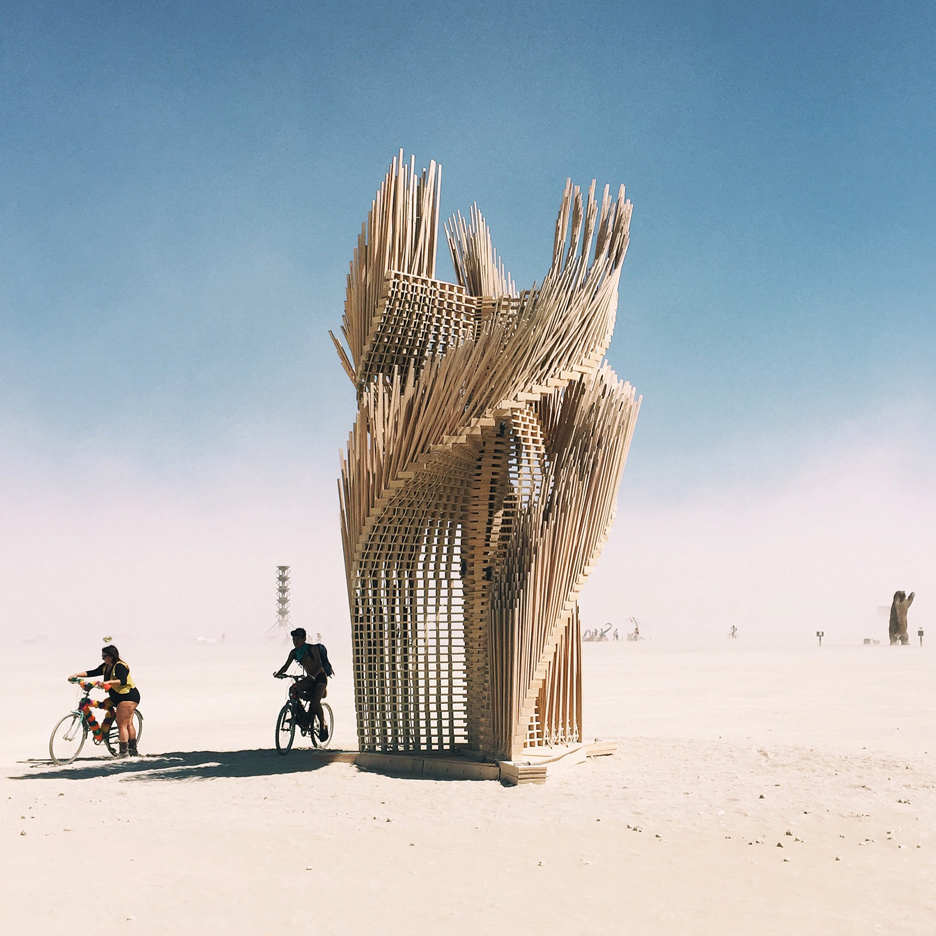
The 2016 Burning Man festival is taking place this week in Nevada‘s Black Rock Desert, where New York-based creative director PieterJan Mattan has photographed his highlights from this year’s event (+ slideshow). (more…)

Walk in the footsteps of fur traders and the Grand Portage Ojibwe at Grand Portage National Monument, located on the North Shore of Lake Superior in Minnesota next to the Canadian border. The 8.5-mile Grand Portage Trail winds through history and beautiful scenery like forests and meadows. After hiking through a downpour, photographer Travis Novitsky says, “The gorgeous sunset over the beaver meadow made it all worthwhile!” Photo courtesy of Travis Novitsky.


