From the architect. Maitén House is a country holiday house located on the southern region of Chile near Puerto Octay city. On the shores of the Llanquihue Lake, overlooking the Puntiagudo, Osorno and Calbuco volcanoes
This plot of green pastures becomes narrower while descending towards the lake, bounded between two streams with impenetrable forests of Ulmos, with a beach at the lake shore.
The clients have a very big family, 8 children’s and 12 grandchildren’s, our proposal was to fragment the program into several smaller cabins, giving independence to the families of the sons or guests and then the Maitén House was conceived as a common space to shelter the guest of the cabins and with a master bedroom and 3 rooms for single children’s.
The position of the house in the first row to the lake left to common areas and cabins in a rear area, which is why it was designed taking all private areas towards the ends, leaving a double height with the common areas in the center giving a transparency to the back of the house. This connection to this “Back” is enhanced by burying the first floor, access, parking and services.
Section
Section
Materiality of local agricultural buildings present in the region , with solid skirting, wooden facades ajar ventilate and illuminate , metal roofs that eventually oxidized blend in with autumn woods and sunsets. Materials which in Maiten House are being reinterpreted to work in harmony with the landscape.
The Form of Form starts on the holiday that celebrates the implementation of the Portuguese Republic with exhibition openings, debates, book presentations and many other activities. The intensive programme of the opening week will give a sneak-peek into what will follow until 11 December. The Lisbon Architecture Triennale invites you to join this celebration of architecture and the city. Book on your calendar.
via Trienal de Arquitectura de Lisboa
Four main exhibitions
This edition’s programme articulates around exhibitions that focus on fundamental aspects of contemporary architecture, from authorship to construction, from the city to logistics.
The Form of Form, MAAT Museum of Art, Architecture and Technology Building Site, Calouste Gulbenkian Foundation The World in Our Eyes, Garagem Sul – Centro Cultural de Belém Sines: Seaside Logistics, Triennale’s HQ
Seven Satellites
In order to expand the debate and to amplify its resonance with the city, the Satellites unfold into exhibitions and events that allow to reconsider the geographic dimension of Lisbon and its landscape, from Trafaria to Amadora, including Paços do Concelho.
Ruins of the Apocalypse Limits of Landscape Letters to the Mayor Object- Project The Power of Experiment A Triangular History 2016 – Ennials
Associated Projects & Sidekicks
Twelve Associated Projects and a number of Sidekicks will expand the programme and explore the many dimensions of the city, its architecture and its relevance to the contemporary architectural culture.
Other Lisbon
One of the Associated Projects consists in a set of free guided tours in Lisbon. The first one will happen on 8 October at Parque das Nações-Moscavide-Olivais Norte, conducted by Álvaro Domingues. The tours starts at 10.30am Bookings at: outralisboa@gmail.com / 92 713 62 91
Throughout the several weeks the Lisbon Triennale presents a vast programme of activities focussed on critical reflexion, debate and experimentation of architecture. These activities are directed to people of all ages and talents and rely on the collaboration of several specialists in the areas of architecture, art, literature and education.
As if Fantasy Canyon isn’t already a great name, this remote wonderland in Utah has also been called “The Devil’s Playground” and “Hades Pit.” Off the beaten path of more famous Southwestern sites, Fantasy Canyon is protected by the Bureau of Land Management and boasts some of the most amazing erosional features you will ever see. Sunrise photo courtesy of Brock Slinger.
As a philosophy teacher to grade-school students, Jana Mohr Lone is no stranger to getting her mind blown.
For the last 20 years or so, Mohr Lone has been the president of PLATO, a nonprofit focused on bringing philosophy to schools.
Though her students still have most of their baby teeth, Mohr Lone says a lack of life experience hardly deters them from reflecting on life’s big mysteries: happiness, existence, knowledge, death.
Over the years, some quotes have really stuck with her. Here a select group she shared with Business Insider that are particularly profound.
Not every piece of architecture can be an economic and social success. But there is one dreaded term reserved for only the mot wasteful of projects: “white elephants.” The term comes from a story of the kings of Siam, now Thailand, who would reportedly gift sacred albino elephants to courtiers they didn’t like. Refusing the gift from the king would have been unacceptable, but being sacred, these animals were forbidden from work, leading the courtier to financial ruin—a fact the kings knew all too well.
Of course, in architecture the term “white elephant” is used frequently to disparage certain projects, and whether a project is deserving of such infamy is usually a matter of perspective. Often eyesores or reminders of poorly spent funds, these projects refuse to be forgotten despite few wanting to remember them. Dotted around the world and across history, they all have the same thing in common: although they may (or may not) have once looked good on paper, they probably should have just stayed on paper.
This 230,000 square meter, eight-story bus station opened in 1993 with “indoor micro-metropolis” aspirations. The architect, Ram Karmi, even went on to win the Israel Prize for architecture. But the Tel Aviv Central Bus Station came to contradict his success, given the derelict state of the megastructure. The thousands of stores struggled to find tenants, the innards of the concrete giant are a confusing maze of corridors, and its location in southern Tel Aviv was illogical for a bus terminal in the first place.
Today, entire sections of the structure are uninhabited or used only for illicit purposes; old shops and winding halls conceal sex workers, drug sellers, rave throwers and others who appreciate the winding darkness. – 99% Invisible
The third largest building in the world, the Palace of the Parliament has a floor area of 365,000 square meters and costs over US$6 million per year just to heat and light, a fact that is especially astonishing considering 70% of the building remains empty. The building was born from the dictatorship of Nicolae Ceausescu, with construction of the palace including the displacement of forty thousand people and the demolishing of churches, hospitals and religious buildings.
Construction involved 700 architects and 20,000 building workers doing three shifts a day, plus 5,000 army personnel, 1.5 million factory workers and an army of so-called volunteers. – CNN
The Olympic building that has perhaps caused the most detriment-per-capita, the 1976 stadium in Montreal has been fraught with problems from its conception through to today. Its complicated design and delays escalated the project’s cost to the point that the final Olympic debt of C$1.16 billion wasn’t paid off until 2006. Today, the stadium still lacks a permanent tenant and its roof remains structurally unsuitable.
Built in 1734 by Maharaja Jai Singh II, the outdoor Jantar Mantar Jaipur site consists of nineteen astronomical instruments made of stone, including the world’s largest sundial, with a with a 22.6-meter-high gnomon arm. The reason for the monumentality of the instruments was the Maharaja’s belief that the small-scale instruments used by Ptolemy rendered inaccurate results. However, the opposite was true, with their largeness making them easy to misalign, and the complex soon fell into disuse.
Partially opened in 2011, construction on the two final buildings of the Peter Eisenman-designed City of Culture of Galicia was finally halted in 2013 following under-performing visitor numbers and extremely high costs.
‘It was born in the Spain of excess and is opening during an economic collapse, as a sort of monument to the construction bubble,’ wrote one Spanish journalist; the British critic Oliver Wainwright called it ‘a bloated vanity project.’ – Architect Magazine
Smatterings of life—renovations and a slight increase in visitor traffic—keep New South China Mall afloat, though barely. The 2350 store-mall still remains largely vacant 11 years after its opening, largely due to its location in Dongguan, where most of the 10 million residents are financially poor migrant workers rather than the middle or upper class.
Outside the mall, a giant Egyptian sphinx and a replica of the Arc de Triomphe were erected alongside fountains and canals complete with Venetian gondolas. It even boasted an indoor roller coaster. – CNN
The Ciudad Real Central Airport is a clear white elephant, having cost €1.1billion to build and closing after three years of operation. With its final flight having taken off in 2011, its feature on a 2013 episode of Top Gear is likely the most action seen in the airport’s recent history. The airport’s initial owner filed for bankruptcy with €300 million of debt, and the airport was finally sold this year for €56 million following a series of failed auctions, including one that saw a lone bid of a mere €10,000.
Naypyidaw became the capital city of Myanmar after a mysterious change from Yangon (also known as Rangoon). A warning from an astrologer is among the speculated reasons for the switch in 2006. Naypyidaw’s geographic size (it is six times the area of New York City), its 20-lane roads, and its giant but empty shopping malls, all emphasize its ghost-town status.
The city feels like an extreme test of the ‘if you build it, they will come’ theory. But so far, with the government already having moved at least one of its investment agencies back to Rangoon, it’s looking like a spectacular failure. – The Guardian
Perhaps the poster child of architectural white elephants, the Ryugyong Hotel in Pyongyang holds a perpetually pushed back opening-soon date. At 105 empty storeys, it is the world’s tallest unoccupied building.
‘Today, nearly 30 years and an estimated $750 million later, this looming, gleaming, futurist-modernist arrowhead of a building is essentially a glorified telecommunications antenna.’ – The Daily Beast
Architect Santiago Calatrava has famously come under fire for his art complex in his native town, both for its crumbling roof just eight years after completion and for exceeding the original budget fourfold. Despite its tourist appeal and appearance in the movie Tomorrowland, locals remain indifferent to the monumental complex. In an alternate form of tourism, it is a key stop on a Valencia“wastefulness tour” that aims to show foreigners where their economic contributions are going. “they are interested to know where … is the money,” explained tour operator Miguel Angel Ferris Gil to NPR. “And we go to show you where there isn’t the money — at the public schools, at the hospitals.”
11. National Centre for Popular Music – Sheffield, UK
Following a RIBA competition won by Nigel Coates Architects, this £15 million project opened in March 1999. However, visitor numbers were not enough to sustain cashflow and it closed after just a little over a year. Sheffield Hallam University eventually gave hope to the building in 2003 by buying it for £1.85 million for use as a Student Union.
Starting a blog can be as easy as 1-2-3. The hard part is in maintaining it and making it successful.
To achieve success for your blog, you need to have a significant amount of traffic and viewership. This means lots of effort and techniques so that you can get the type of response you need from your target audience.
If you want to convince and attract more viewers, you can follow these strategies which are sure-fire ways to increase blog traffic.
Reading blog comments will not only help you in connecting with your readers; it can also help you generate new ideas. One of the best ways is to start reading and understanding comments made by people who are knowledgeable in their fields.
You can try visiting authority blogs where you can find lots of insights written by experts. Comments made by seasoned marketers, entrepreneurs, and SEOs can give you ideas on how you can add value to your blog.
Long tail keywords are rarely used, particularly those which are considered as ‘low competition’. Taking advantage of these keywords will make it easier for you to boost your page in terms of ranking and traffic.
To do this, you can look up a few long tail keywords from Google’s auto-suggest feature or you can use tools such as LongTailPro. Once you find these keywords, make sure to include them in your blog posts.
Use them as naturally as possible and add them in high-quality articles that are informative and useful. Readers are more interested in articles that can help solve their problems or give them new ideas to enhance their skills or improve their habits.
You can bookmark your posts on different blogging communities and sites which are somehow related to your niche. All you have to do is to sign up for these sites and use them as your social networks. Social bookmarking works well in boosting blog traffic.
You can try visiting the following sites which offer social bookmarking services:
– BlogEngage
– Dosplash
– Kinged
– Bizsugar
– Viralcontentbuzz
4. Be smart in guest posting
While you’re still new, you may find it difficult to convince other people to let you post on their blogs. It’s also hard to encourage other bloggers to contribute to your own site.
To deal with this, you can start within your circle. You can find bloggers who already know and trust you and ask them if they can let you contribute something to their page. You can offer them a space in your blog in return.
Guest blogging is a great way to market your brand and reach the audience you won’t be able to reach through your blog alone. It can also be very useful in getting links and references to your site, which can boost traffic and search rankings.
One important thing to keep in mind is to be cautious in finding your target sites. Make sure that the blog has a solid audience so that the time you’ll spend on writing won’t go to waste.
Some of the most popular sites for guest blogging include LinkedIn, Facebook, Google+, and Twitter. There are also tools like Fresh Web Explorer and BuzzSumo which offer guest blogging services.
5. Re-publish contents
When you write articles, it will be better if you can have few but longer posts instead of many but shorter ones. Longer articles tend to rank better, especially if they provide great value to the readers.
Another great benefit of long articles is that you can re-publish them anytime. You can turn these long posts into new pieces with different content formats and then upload them to different channels.
Podcast, Slide presentations, Screencast, and e-books are just some of the format variations you can try for your existing blog posts. When re-purposing and re-publishing, you need to make sure that your post’s content is not extremely similar to the original one. You need to add new value to your posts to avoid boring your readers.
These strategies to increase blog traffic have been proven and tested by many bloggers. However, for them to work for you, you need to practice one thing: consistency.
These won’t work overnight or as soon as you start your blog. You have to stick with them for you to start seeing the results that will help you sustain your site for a long time.
(function(d) {
var params =
{
id: “cb4f919c-04fa-460c-b2ff-2c7f9ecf4472”,
d: “ZHVtYmxpdHRsZW1hbi5jb20=”,
wid: “165294”,
cb: (new Date()).getTime()
};
var qs=[];
for(var key in params) qs.push(key+’=’+encodeURIComponent(params[key]));
var s = d.createElement(‘script’);s.type=’text/javascript’;s.async=true;
var p = ‘https:’ == document.location.protocol ? ‘https’ : ‘http’;
s.src = p + “://api.content.ad/Scripts/widget2.aspx?” + qs.join(‘&’);
d.getElementById(“contentad165294”).appendChild(s);
})(document);
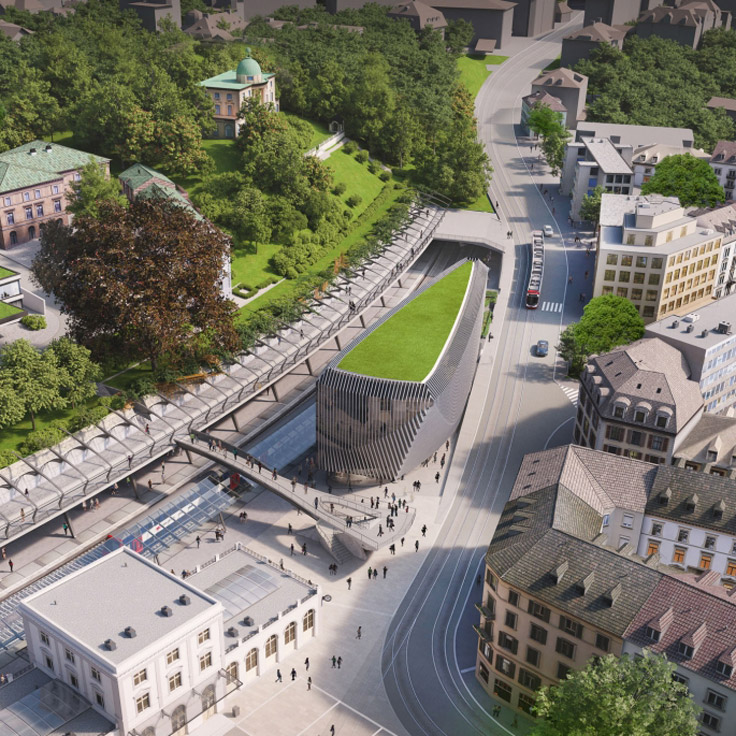
Architect Santiago Calatrava is set to create a grass-topped office block on the plaza in front of his Stadelhofen Station in Zurich with public parking for 1000 bicycles on the ground level. (more…)
From the architect. The Municipality of Hoogezand-Sappemeer has been given a single, prominent, public building in which a theatre, an arts centre, a library and the town hall are accommodated. In the dynamic heart of this Dutch municipality citizens are served a wide palette of services, information, education, culture and recreation. Existing elements, such as the theatre auditorium, dating back to the 1980s, are re-used in the new development. The adjacent town hall, at the moment still in an outdated state, will ultimately undergo a complete transformation. In the meantime the existing premises and the new build function as a single entity. The connecting, central street forms a temporary solution to the gaps in the present infrastructure. Both in terms of use, as well as technological exploitation and urban design, the new central building has great advantages for Hoogezand-Sappemeer.
One of the issues that the municipality struggled with was whether to demolish the existing building or reuse it. De Zwarte Hond presented a plan of measures that focused on studying three reuse scenarios. Each scenario assumed a different reuse percentage: thirty, fifty or eighty percent. The scenarios were compared to establish the best ratio between building costs, operating costs, functionality and sustainability. And, in conjunction with the future users, a list of criteria was formulated to meet the needs of their future accommodation. This led to an informed choice for the scenario that assumed fifty per cent re-use, which was subsequently worked out in an integral redevelopment plan.
One of the interesting outcomes of the study was that the existing town hall – a design by Jan Brouwer – was more suitable for transformation into a modern working environment than was previously assumed. The introduction of a number of open recesses in the relatively deep building volume would create pleasant workplaces. By installing insulation, the existing building could be just as energy efficient as the new development.
Floor Plan
Central street
The integration of town hall, library, theatre and arts centre allows for lower operating costs and more efficient use of the number of square metres due to the double use of spaces. The architectural challenge was: how to ensure that the four different functions conveyed an overall impact that reflected their programme and the public objective? In addition to this, the interior should facilitate exchange between the four users.
The solution for both problems was to a large extent found in the central street. This connects the various functions and forms part of them. Giving the public spaces a flexible layout meant that, throughout the day, users can easily switch between intimate and larger-scale spaces. At the same time, the street functions as the building’s focal point. The great height, the overhang and the façade pattern create a distinctive location for the various functions.
Section
Culture and administration in two phases
The new development is being implemented in two phases. The first phase, just completed, comprises the central street and all the cultural functions. In phase two, to be carried out in the longer term, the town hall will also undergo transformation and the library will be given a definitive location. In the intervening period the central street has been given a temporary function that has as much usage quality as possible and is constructed from chipboard, a hard-wearing but affordable material forming a good contrast with the permanent structure in natural stone and glass. The temporary infill is also proving valuable as a source of inspiration and a way of testing a design while it is in use. The broad, tribune-like stairs at the entrance, for example, are much appreciated by the users, but they were not in the original design for the central street.
In terms of urban development the Cultural and Municipal Complex has brought many changes to Hoogezand-Sappemeer. Grouping the town hall, the library, the arts centre and the theatre in a single, prominent, public building has improved the quality of facilities and urban planning in the town centre. It has created a focal point of which the existing environment and, most notably, the adjacent De Hooge Meeren shopping centre, can take advantage. The representative theatre can confidently compete with the other theatres in the region.
Simply put, metamaterials are materials that behave according to their structure, rather than their base material composition. By manipulating their internal microstructures, metamaterials can exhibit properties that would not otherwise be found in a naturally occurring material.
To date, the term has mostly been used to refer to materials which can manipulate electromagnetic waves with an unnatural refractive index. But recently, a different way of looking at metamaterials has been studied by a team at the Hasso Plattner Institute (HPI), who suggest that “so far, metamaterials were understood as materials – we want to think of them as machines.” A series of objects created by HPI that perform mechanical functions through their metamaterial configuration demonstrate this concept of “metamaterial mechanisms.”
For example, a metamaterial door latch is able to transform rotary handle movement into linear hatch motion, all within a singular object. It is the definition of the small-scale structure within the object that allows it to produce the desired macroscopic movement. These functional objects have no separate parts to assemble, and those made by HPI were simply made from laser-cut rubber foam. With such technology, as well as 3D printing, the fabrication of such objects could easily become more common.
Architecturally, the proposed uses of metamaterials have largely focused on those that are engineered to manipulate electromagnetic waves, which it has been suggested could be used in cloaking devices to protect military buildings from radar detection. Other possible uses of metamaterials in buildings have also included seismic and acoustic protection, also through wave manipulation.
With metamaterial mechanisms however, their architectural implications could extend beyond such specific technical applications. Laser cutting a working door handle not only solves a range of mechanical problems within a single object, it also expresses a total integration between the structure and the mechanical function of a material. What arises is a philosophy of harmonic efficiency within a material itself, which stands as a unique approach towards fabrication and reducing excess material use in the building industry.




 Sig Nordal