10 DESIGN Wins Competition for Massive Urban Development in Zhuhai


Courtesy of 10 Design

Courtesy of 10 Design

10 DESIGN has won a competition to design China Resources Land’s (CR Land) “Hengqin Wanxiang World,” a 2.3 million square meter (25 million square foot) mixed used development to be located in Zhuhai, China. The complex will include destination retail locales centered around an “Experience Central Square,” which will serve as a venue for a variety of cultural and performance programs. Construction on the massive development is set to begin this month.


Courtesy of 10 Design

Courtesy of 10 Design

“To realise CR Land’s vision, the design team created an ‘Experience Central Square’, which marks the nexus of the river and mountain geometries that surround the site,” said Ted Givens, Designer Partner at 10 DESIGN. “This large central hub becomes the active heart of the masterplan unifying 4 neighbourhoods and providing a vibrant retail and cultural destination.”


Courtesy of 10 Design

Courtesy of 10 Design

Courtesy of 10 Design

Courtesy of 10 Design

The immense scale of the project meant design needed to begin at the urban scale. To create pedestrian-friendly routes that connect to the urban fabric, the project features a central green belt linking to different activated streets, a convention center and waterfront walkways.

“In addition to the ‘Experience Central Square’, the energy of the city centre is ignited by the diverse mix of amenities including the Central Green Belt – Wanxiang Avenue, Retail Axis, Waterfront Promenade, National Pavilions, Expo and Convention Centre,” explained Miriam Au Yeung, Project Director and Partner at 10 DESIGN.


Courtesy of 10 Design

Courtesy of 10 Design

Courtesy of 10 Design

Courtesy of 10 Design

Givens added, “Sustainable design is a key driver for the master plan design. The first concept is to minimise the energy requirements through simple passive solar principles. Another goal is to reduce the reflectance and light pollution generated by the project through maximising the solid areas of the tower façades. With the proximity to the river, treating the storm water run-off through bio swales and abundant garden spaces is also very critical to achieving an eco-responsible design.”


Courtesy of 10 Design

Courtesy of 10 Design

Courtesy of 10 Design

Courtesy of 10 Design

CR Land in cooperation with Macao’s New Fenghong Real Estate Development and China Resources Trust have set aside 50 billion yuan for the construction of the development, which is expected to create approximately 50,000 new jobs and generate nearly 1 billion yuan in tax revenue each year – promoting the economic growth of the surrounding region, which includes nearby Guangzhou, Hong Kong and Macao.

News via 10 DESIGN.


Courtesy of 10 Design

Courtesy of 10 Design

Courtesy of 10 Design

Courtesy of 10 Design

Courtesy of 10 Design

Courtesy of 10 Design
  • Architects: 10 Design
  • Location: Zhuhai, Guangdong, China
  • Design Team: Ted Givens, Design Partner; Miriam Auyeung, Partner and Project Director; Barry Shapiro, Partner
  • Competition Team: Joyce Lo, Peby Pratama, Ray Lam, Ewa Koter, Daniel Wang, Xuan He, Yang Wang, Ismael Sanz, Jocelyn Zheng, Mujung Kang, Ruizhao Zhang, Thomas Chan, Dian Feng, Kenton Sin, Ketty Shan, Martin Lai
  • Client: China Resources’ Land
  • Area: 2330000.0 sqm
  • Project Year: 2016
  • Photographs: Courtesy of 10 Design

http://ift.tt/2cWVoHP

Five trends to look out for at the London Design Festival 2016


London Design Festival 2016: the London Design Festival has officially begun. With hundreds of events, installations and talks scheduled over the course of the nine days, we’ve picked out five key trends already emerging from the event. (more…)

http://ift.tt/2cpghvH

Eyes on the Street

Eyes on the Street Cover Crop

Jane Jacobs was an author and activist whose fame and influence derived from one book. It’s apt, then, that the most stirring part of the first major biography of Jacobs, Robert Kanigel’s enthusiastic and admiring Eyes on the Street, concerns the creation of that book, 1961’s paradigm-smashing The Death and Life of Great American Cities.

When it was published, Jacobs, who was born and raised in Scranton, Pennsylvania, had been living in New York City for nearly three decades. The ideas that became Death and Life began brewing in the mid-1950s when Jacobs, then a writer for Architectural Forum, was shown around Philadelphia by celebrated urban planner Edmund Bacon. Bacon, something of a showman, started what he conceived as a “before and after” tour in a densely packed, impoverished black neighborhood where Jacobs observed people crowding the sidewalks and hanging out on stoops. Next, as Kanigel tells it, the planner proudly escorted her to a street that had been “the beneficiary of Bacon’s vision—bulldozed, the unsavory mess of the old city swept away, a fine project replacing it, all pretty and new.” Jacobs acknowledged that the street looked very nice, but what struck her with most force was the absence of human life: “She saw one little boy—she’d remember him all her life—kicking a tire. Just him, alone on the deserted street.” Worse yet, when she asked her guide where all of the people were, he appeared uninterested in the question.

Around the same time, Jacobs went on tours of East Harlem with community leader William Kirk; their meandering walks convinced her that so-called slums had a strong and functional social fabric, that razing dilapidated blocks to build tall modernist projects resulted, in Kanigel’s words, in “social glue weakened—a community, as Jane would put it, replaced by a dormitory.” Indeed, when a community group wanted to meet with residents of an East Harlem project that had replaced a chunk of the old neighborhood, its members were told that there was nowhere to gather except the basement’s laundry room.

Jacobs wasn’t an urban planner or an architect; she didn’t even have a college degree. But as Kanigel—whose previous books include On an Irish Island and The Man Who Knew Infinity —establishes in the first third of the book, she grew up challenging received wisdom and believing she could do anything, qualities that served her well as an uncredentialed woman taking on male-dominated professions, as she did in Death and Life. (The author is explicit in his desire to convey the hurdles Jacobs faced as a woman and a mother, so one wishes he’d focused less on her appearance—”never beautiful” and “not even memorably unbeautiful,” he marvels—or at least consulted a thesaurus before describing her as “fat and dumpy.”) Jacobs wrote in her own unique style, neither academic nor literary, full of observations, insights, and provocation. Across several pages, she lovingly described the “intricate sidewalk ballet” of her own chaotic-seeming Greenwich Village block, which involved a web of community ties that urban planners were blind to. “There is a quality even meaner than outright ugliness or disorder,” she declared in one of the book’s famous passages, “and this meaner quality is the dishonest mask of pretended order, achieved by ignoring or suppressing the real order that is struggling to exist and be served.”

The Death and Life of Great American Cities had immediate impact. While critics took issue with its blind spots (among them Jacobs’s lack of analysis of race and ethnicity and her tendency to romanticize city life without fully acknowledging the costs of poverty and crime), readers found it thrilling. Jacobs’s prescription for vital cities—mixed-use buildings, population density, short blocks—has triumphed so completely that it’s difficult to appreciate how disruptive her thinking was to the status quo. Kanigel provides useful context of the postwar period, when destroying cities and rebuilding from scratch seemed the obvious course of action (although here, as throughout the book, he has an irritating tendency to make his point with rhetorical questions): “Was any old horse-and-wagon better suited to us today, more desirable, than a new automobile? Then in what impossible, upside-down universe would you not want to tear down an aging slum of nineteenth-century tenements and put up a new apartment complex designed to make life easier, airier, and brighter?” As far as Jacobs was concerned, easy, airy, and bright were better left in the suburbs. Whether landscaped “superblocks” were created as part of low-income housing projects, middle-income residences like Manhattan’s Stuyvesant Town, or cultural complexes like Lincoln Center, she argued that overlarge structures set back from the street deadened, rather than revitalized, urban life.

Jacobs, who authored seven books, saw herself primarily as a writer, but when her own beloved neighborhood was threatened, she reluctantly abandoned her typewriter to enter the fray. She helped kill a proposal to narrow the sidewalks on her block in order to widen the street for cars and a plan to allow traffic into Washington Square Park, her children’s local playground. She is credited with a major role in defeating New York master builder Robert Moses’s planned Lower Manhattan Expressway, which would have destroyed parts of the Soho and Little Italy neighborhoods to make room for an eight-lane highway. Jacobs and Moses are so often paired in a David and Goliath narrative—there’s even an opera about them—that it’s surprising to learn they may have met only once.

Kanigel’s account of how Jacobs came to write Death and Life is so compelling that the biography suffers a loss of momentum afterward. Jacobs and her family moved to Toronto in 1968 to protect her draft-age sons from serving in the Vietnam War. She became a Canadian citizen and remained in Toronto, a city she came to love, until her death, in 2006, at 89. Her later books were respectfully received, but none had the impact of her masterwork. All told, she had an interesting, contented life: a happy childhood, a solid marriage, well-adjusted children, work she loved along with ample recognition for it. “All these lucky things,” she herself said. The biggest drama of her life involved the formation and expression of her visionary ideas. Eyes on the Street works because as cities evolve and face fresh crises – gentrification, soaring rents, and renewed segregation — those ideas continue to challenge as much as they fascinate.


The Barnes & Noble Review http://ift.tt/2ci0KdZ

Dezeen Watch Store to launch Void collaboration at designjunction pop-up

dezeen-void-collaboration-watch-design-junction-sq

London Design Festival 2016: Dezeen Watch Store will return to designjunction this Thursday for a pop-up showcasing its newest and most popular timepieces. (more…)

http://ift.tt/2cToVE8

Dyson Campus / WilkinsonEyre


© WilkinsonEyre - Dyson Research Limited

© WilkinsonEyre – Dyson Research Limited


© WilkinsonEyre - Dyson Research Limited


© WilkinsonEyre - Dyson Research Limited


© WilkinsonEyre - Dyson Research Limited


© WilkinsonEyre - Dyson Research Limited


© WilkinsonEyre - Dyson Research Limited

© WilkinsonEyre – Dyson Research Limited

From the architect. The Campus includes Dyson’s existing headquarters and factory alongside new built facilities: the D9 research and development building, the Lightning Café and The Hangar, which provides sports and leisure amenities for Dyson employees. The existing elegant and minimal buildings – originally designed by WilkinsonEyre – have also undergone extensive internal changes to allow Dyson’s continuous growth.


© WilkinsonEyre - Dyson Research Limited

© WilkinsonEyre – Dyson Research Limited

The practice’s design approach aims to create a new technology campus that is set to be a leading creative hub for UK’s top engineers and designers where new forms of working environment emerge. The D9 has been conceived as a minimal, reflective glass pavilion within a rural landscape setting. A central atrium brings daylight into the two floors and breakout spaces. The interiors are designed to facilitate flexible working, combining conventional desk space with laboratory facilities to allow for collaborative discussion and brainstorming.


© WilkinsonEyre - Dyson Research Limited

© WilkinsonEyre – Dyson Research Limited

Plan

Plan

© WilkinsonEyre - Dyson Research Limited

© WilkinsonEyre – Dyson Research Limited

As part of the brief, the surrounding landscape has been enhanced to create more privacy and prevent direct views into the building. The greenery connects to the existing Nature Walk, which surrounds the perimeter of the site, offering Dyson employees the opportunity for quiet outdoor reflection. The Campus now provides 129 advanced research laboratories and new collaborative spaces for the engineers to develop Dyson’s sophisticated technology pipeline.


© WilkinsonEyre - Dyson Research Limited

© WilkinsonEyre – Dyson Research Limited

http://ift.tt/2cNcZzL

Get excited for Sea Otter Awareness Week with this adorable…

Get excited for Sea Otter Awareness Week with this adorable photo of a snoozing sea otter in Kenai Fjords National Park. These cute mammals are found in the coastal waters of the Pacific Ocean, including areas around several national parks in Alaska. Their dense coat of luxuriously soft fur helps keep them warm in cold waters, where they can dive up to 250 feet in search of food like clams, crabs and sea urchins. For more sea otter facts, check out http://on.doi.gov/2d10YvZ. Photo by National Park Service.

GMAA’s Meditation Pavilion and Garden creates a contemplative atmosphere at Swiss home


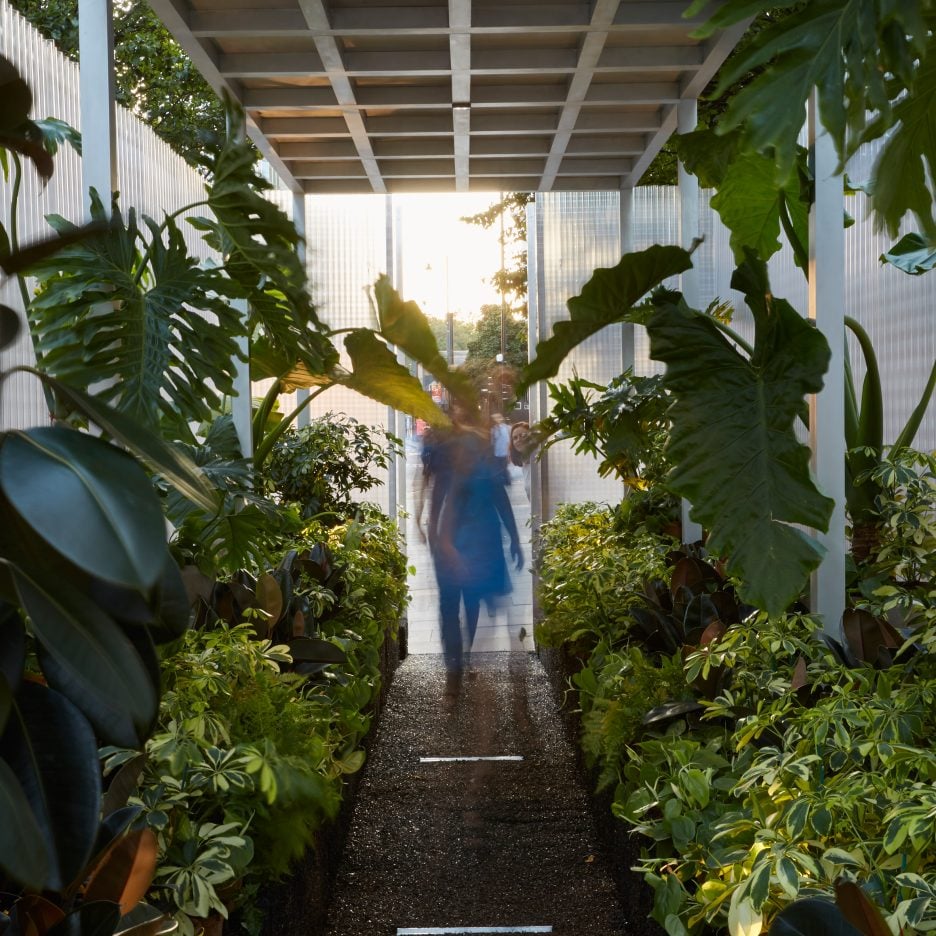
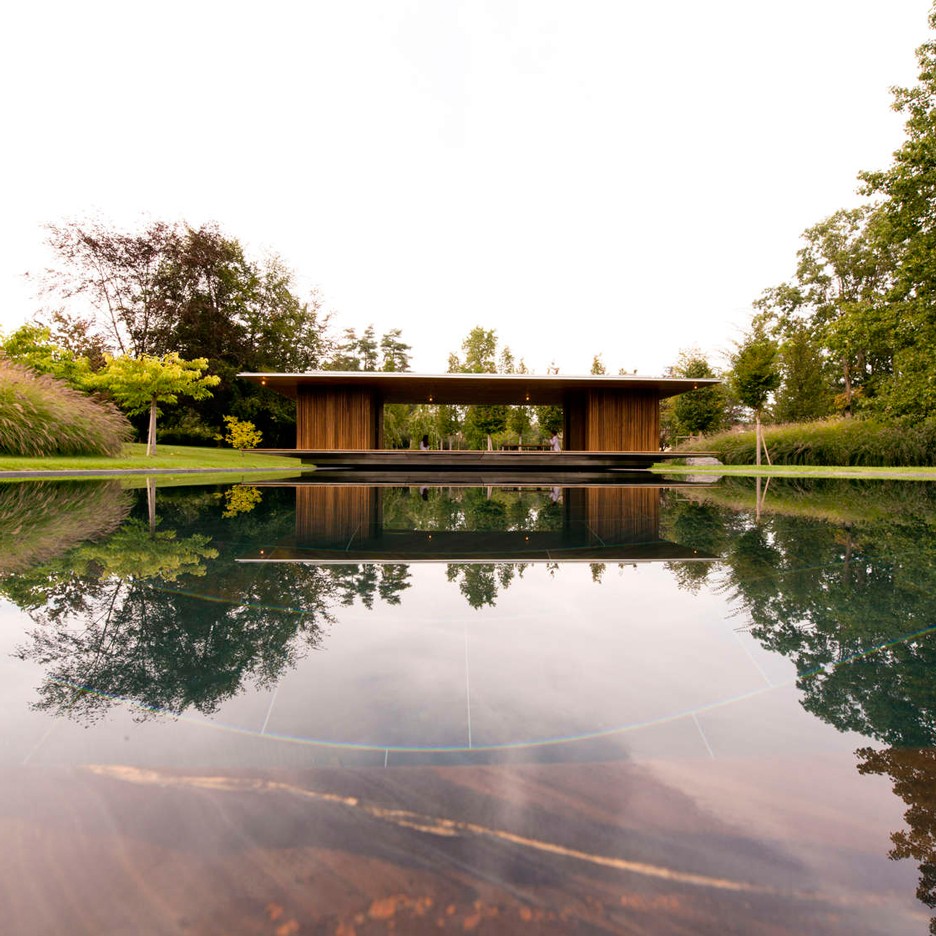
A+Awards 2016: artificial mist envelops this wooden meditation pavilion near Geneva, which earned its designers GM Architectes Associés an Architizer A+Award earlier this year (+ slideshow). (more…)

http://ift.tt/2chMXUU

Haus Meister / HDPF


© Valentin Jeck

© Valentin Jeck


© Valentin Jeck


© Valentin Jeck


© Valentin Jeck


© Valentin Jeck

  • Architects: HDPF
  • Location: Rümlang, Switzerland
  • Area: 2012.0 sqm
  • Project Year: 2012
  • Photographs: Valentin Jeck

© Valentin Jeck

© Valentin Jeck

This single-family house is located on a former cooperative workers’ estate and replaces a building designed in 1948 in the spirit of the garden city. Its close proximity to the airport meant that the municipal building regulations largely ceased to have effect. The resulting restriction to a slightly larger replacement building and the distance guidelines created a lengthwise rectangular plan and volume.


© Valentin Jeck

© Valentin Jeck

Plan 0

Plan 0

© Valentin Jeck

© Valentin Jeck

A slight rotation of the upper floor in comparison to the two floors below articulates the building and brings it into scale with its surroundings. This moment of phenomenological irritation is moved into the foreground while solutions to specific details are handled with discretion. A window grid is implied by slightly set back, niche-like surfaces. The use of fewer window types and a restrained formwork pattern allow the storey-high twisting to emerge as a distinctive motif of the façade.


© Valentin Jeck

© Valentin Jeck

Inside the building, the modest dimensions and the decision to eschew hallways create a sense of intimacy. In each room, the corporeal building envelope of insulating concrete is omnipresent. In contrast stands the separation of the external elements of the composition. The house, the showcase balcony of steel construction and the garage as a precast concrete element are spread loosely across the plot. These necessary functional elements create an immediate context within the surrounding greenery.


© Valentin Jeck

© Valentin Jeck

Materialisation in insulating concrete allows a systematic to be achieved in the solution of the necessary building details. The structural elements of the façade and the interior are all part of the cast shell. The formal severity inside and out is not an aesthetic end in itself. It aims rather to provide an economical use of moments of irritation and serves to channel the viewer’s attention.

http://ift.tt/2cMPnLM

Explore the Fascinating Overlap of Architectural Styles Throughout History With “The Piranesi Project”


Courtesy of Olympio Augusto Ribeiro

Courtesy of Olympio Augusto Ribeiro

Driven by an intrigue in the ruination of Roman architecture, Brazilian architect, and photographer Olympio Augusto Ribeiro has undertaken a fascinating comparative analysis of Giovanni Battista Piranesi‘s architectural etchings and the scenes as they stand today. Travelling to each of the Italian sites brought to life in Piranesi’s drawings, Ribeiro has managed to recreate the original angle and shot, eventually compositing them together to create collages which cross time periods. 

Piranesi’s drawings show different architectural styles side by side, and it was this coexistence that urged Ribeiro to investigate what has changed in Rome and Tivoli since their conception. The project, officially dubbed “Piranesi Project (In search of Giovanni Battista Piranesi’s Rome, 1720-1778)” took Ribeiro two months to photograph, meticulously recreating the images across Rome, Villa Adriana, and Tivoli.  


Courtesy of Olympio Augusto Ribeiro


Courtesy of Olympio Augusto Ribeiro


Courtesy of Olympio Augusto Ribeiro


Courtesy of Olympio Augusto Ribeiro


Courtesy of Olympio Augusto Ribeiro

Courtesy of Olympio Augusto Ribeiro

Ribeiro explains in the project bio that history was always the most intriguing part of architecture school, allowing him to further expand on his existing fascination with the renovation of Roman ruins.

The history lessons stimulated my curiosity about the transformations undergone by the ancient Roman Empire, and its transmutation into a new reality in which the old aesthetic glory had to live within the dark ages. During my studies in restoration I began to understand the process of their dilapidation, the history of their reconstruction, and how the ruins came to be in our time. However, I lacked the understand of how these 2000 years of transformations resulted in this mixture of styles and overlapping – said Ribeiro. 


Courtesy of Olympio Augusto Ribeiro

Courtesy of Olympio Augusto Ribeiro

Piranesi created The Piranesi Prints some 1500 years after the fall of the Roman Empire. They illustrate the coexistence of medieval villages, baroque architecture, and Roman ruins, and are commonly heralded as a strong influence to neoclassicism. Piranesi’s poetic and artistic flair allowed him to portray the buildings in a kind of “ruin fantasy,” and the expressiveness of the etchings make them all the more fantastic. 


Courtesy of Olympio Augusto Ribeiro

Courtesy of Olympio Augusto Ribeiro

Upon returning to Brazil, Ribeiro began to compose the collages, merging Piranesi’s mid-18th-century drawings with his digital, color photographs. He said that “I allowed myself my artistic freedom, but worked carefully to respect the original Piranesi work.”


Courtesy of Olympio Augusto Ribeiro

Courtesy of Olympio Augusto Ribeiro

Check out the full gallery below for the exhaustive photograph analysis, and see for yourself how the sites have evolved.

News via Olympio Augusto Ribeiro.

http://ift.tt/2cJW1FH

How Do Men Perceive You?

That’s a quiz only for women. It’s Monday, but that doesn’t mean a bit of daydreaming will hurt anybody. Maybe you have met somebody interesting over the weekend… Maybe you are waiting for Prince Charming.

Have you ever asked yourself how the guys see you? If not, maybe it’s about time to do it. This quiz can help.

men_perceiveTake just now this quick and fun quiz and find out how men perceive you.

How Do Men Perceive You?

//cdn.playbuzz.com/widget/feed.js

Leave a comment below to tell us what you’ve got!

The post How Do Men Perceive You? appeared first on Change your thoughts.

http://ift.tt/2cSTolC