How Combining Traditional Asian and African Design Could Minimize Diseases in Rural Tanzania


© Konstantin Ikonomidis

© Konstantin Ikonomidis

Architecture firm Ingvartsen Architects has turned their gaze towards “cultural exchange architecture”—not with the aim of exploring identity or experimenting with aesthetics, but with a practical purpose in mind: to minimize the spread of diseases. The Magoda Project combines Asian elements with traditional rural African building methods in the village of Magoda, in the Tanga region of Tanzania, taking shape in the form of eight prototype homes. The design goes to show that cultural exchanges in design and architecture can make great contributions towards problem solving for a humanitarian purposes, not only to improve health and hygiene, but also comfort and happiness.


© Konstantin Ikonomidis


© Konstantin Ikonomidis


© Konstantin Ikonomidis


© Konstantin Ikonomidis


© Konstantin Ikonomidis

© Konstantin Ikonomidis

Many traditional low-cost homes in rural Africa use mud or brick walls due to their high thermal mass, allowing the materials of the buildings to absorb heat during the day, and release heat during the night, keeping the temperature of the house comfortable and cool. Usually, this effect is amplified by using small windows, and as few of them as possible, if any are used at all. The Tanga region is located on the hot and humid coast of Tanzania, making these traditional building systems effective in achieving their purpose.


© Konstantin Ikonomidis

© Konstantin Ikonomidis

However, the disadvantage of these buildings is that they provide minimal airflow, due to the thick walls with few openings, as well as limited cooking areas or sanitary water supplies. The combination of these effects can create a hotspot for diseases, such as Malaria, in spaces where people spend a significant amount of their time: the home. Ingvartsen Architects have worked with local engineers, laborers, doctors and sociologists to combine Asian building elements with traditional African building methods, resulting in buildings that still utilize local materials, but maximize airflow. The aims of this design process are to prevent people’s living environment from fostering diseases, and to create a comfortable microclimate in the homes.


© Konstantin Ikonomidis

© Konstantin Ikonomidis

Three different materials have been used to build the facades of eight houses, in single or double stories: bamboo, shade nets and timber louvers. The advantage of these typically Asian elements is the possibility for cross-ventilation through the openings in the materials, while still using other materials with a high thermal capacity, such as brick and concrete, to serve as outdoor kitchen spaces and elevated platforms that prevent the houses from flooding. This optimized combination of the two building styles improves the hygiene and wellbeing of the local inhabitants, demonstrating how innovative solutions can come from interchanging cultural knowledge.


© Konstantin Ikonomidis

© Konstantin Ikonomidis

Ingvartsen Architects are also using this cultural exchange as a research opportunity, evaluating the effectiveness of the different microclimates that will result from the various materials and building designs, as well as the efficiency of insect screens that cover all open windows. Their aim is to work with the local community leaders and important stakeholders to increase the acceptance of new design techniques and expand the architecture, minimizing diseases on a broader scale. 


© Konstantin Ikonomidis

© Konstantin Ikonomidis

Breaking barriers between cultural design methods is shown in the Magoda Project to produce utilitarian solutions that advance social and environmental sustainability, improving the quality of life of people who may not have access to different cultural formulas. Hopefully this evolution will continue to lead us towards new and experimental architecture, where social development and wellbeing carry on as the driving forces behind our designs.


© Konstantin Ikonomidis

© Konstantin Ikonomidis

http://ift.tt/2dDMijM

Ambulance Station / het Architectenforum


© Stijn Poelstra

© Stijn Poelstra


© Stijn Poelstra


© Stijn Poelstra


© Stijn Poelstra


© Stijn Poelstra

  • Structural Engineer: IKAABEE
  • Landscape Design : Copijn
  • Contractor: Van Zoelen
  • Client: RAVU

© Stijn Poelstra

© Stijn Poelstra

From the architect. Ambulance workers do a challenging job that is physically and mentally demanding. The client asked for a responsible and resource-efficient building that would offer a comforting environment for the staff. The layout of the building is designed to offer views of nature, while sparing existing trees. Natural materials, mainly various types of wood, are used throughout the building. Wood is sustainable and regrowable, it contributes to a friendly and relaxing atmosphere.


© Stijn Poelstra

© Stijn Poelstra

 The building is located on the outskirts of town, near the edge of a forest. The L-shaped plan is carefully positioned between existing trees. A large beech tree shades the 4 meter high window in the main staffroom.


© Stijn Poelstra

© Stijn Poelstra

 An ambulance post has no public function, patients will never enter this building. We decided to design no façade facing the road to the entrance of the nearby hospital. Instead green sloping walls rise from the ground and transform into in the curved line of the roof, blending in with the surrounding trees and the edge of the woodlands.


Model

Model

Structure

Structure

The building is almost energy neutral thanks to a highly insulated envelope. Heating and cooling are provided by an all-electric system with a heat pump and a solar water heater. 100 Solar panels provide electricity.


© Stijn Poelstra

© Stijn Poelstra

Wood has many advantages as a bio-based and healthy building material. We opted for a laminated timber construction. The timber-frame facades, the siding and the window frames are also made in wood.


Floor Plan

Floor Plan

The curved shape of the roof is the main theme of the interior. The wooden trusses remain visible in the entire project.


© Stijn Poelstra

© Stijn Poelstra

Glued laminated timber lends itself beautifully to make curved beams in one piece, with minimal loss of material. The beams were shaped in the form we needed to support the curving roofs. Laminated timber is ideal for large spans that are difficult to achieve in normal timber. 


Section

Section

The sloping walls are covered with fast-growing climbers. Two thirds are Hedera Helix (common ivy), which are very robust and wintergreen. Between the ivy one third of Clematis montana ‘Rubens’ give a sprinkle of pinkish white flowers in the early summer. The roof is covered with a sedum carpet.


© Stijn Poelstra

© Stijn Poelstra

http://ift.tt/2e4OjZn

Closca creates accessories for folding Fuga helmet to shield cyclists from the cold and dark


Bike helmet brand Closca has updated its folding headgear with accessories designed to keep cyclists safe and warm during winter (+ slideshow).  (more…)

http://ift.tt/2dX9IEb

It’s National Wildlife Refuge Week! Whether you’re looking for…

It’s National Wildlife Refuge Week! Whether you’re looking for flippers, feathers, fur, fins or fangs, you can find amazing animals at wildlife refuges. Refuges across the country provide habitat for more than 700 species of birds, 220 species of mammals, 250 reptile and amphibian species and more than 1,000 species of fish. There’s at least one national wildlife refuge in every state and territory and within an hour’s drive of most major metropolitan areas. Photo of seals at Nantucket National Wildlife Refuge in Massachusetts by Amanda Boyd, U.S. Fish and Wildlife Service.

What’s Your Secret Power?

To some extent everybody has a secret power. Think at something that you are very good at without any apparent effort. But if it where to have a real secret power, like mind control?

How would you use such gift? Each power comes for a price, are you ready to pay it?

the powerTake just now this quick and easy quiz and find out what’s your secret power!

What’s Your Secret Power?

//cdn.playbuzz.com/widget/feed.js

Leave a comment below to tell us what you’ve got!

The post What’s Your Secret Power? appeared first on Change your thoughts.

http://ift.tt/2do9l08

Affordable Pocket Apartments in Former Office Building Secure Planning Permission in England


Courtesy of Gort Scott

Courtesy of Gort Scott

Gort Scott, in collaboration with developer Pocket Living, has secured planning permission to build 45 affordable “Pocket” apartments out of unused office space in Walthamstow, England. In an effort to produce highly-sought-after living space in the heart of the city, the design features three- and four-story elements that complete the terrace in the rear of the existing building, filling the gap between neighboring developments. 

Inspired by the legacy of the William Morris School that previously occupied the site, as well as by the Warner Houses typical to the city, the exterior of the project will be characterized by a decorative fletton type red brick and precast concrete.


Courtesy of Gort Scott

Courtesy of Gort Scott

The four story element denotes the main shared entrance, providing pedestrian access through a well-lit, emerald tiled walkway. Filigree metal gates frame the entrance and lead into a landscaped courtyard. This provides a quality external amenity space for residents. All ground floor flats will also benefit from private garden space which add lush planting to the street said the architect. 


Courtesy of Gort Scott

Courtesy of Gort Scott

In order to maximize social interaction between neighbors, the building will additionally feature a top-lit single access stairwell that will lead to two separate corridors around which the apartments will be clustered. The first floor will furthermore contain an enlarged landing that will double as a common room with seating.

The project is expected to begin onsite in November 2016.

News via Gort Scott

http://ift.tt/2dX4yIh

Boston – Massachusetts – USA (by Ville Miettinen) 

Boston – Massachusetts – USA (by Ville Miettinen

💙 Sunset at Tailor Bight on 500px by Paul Hayes,…

💙 Sunset at Tailor Bight on 500px by Paul Hayes, Brisbane,… http://ift.tt/1soTe9e

http://ift.tt/2d4iREv

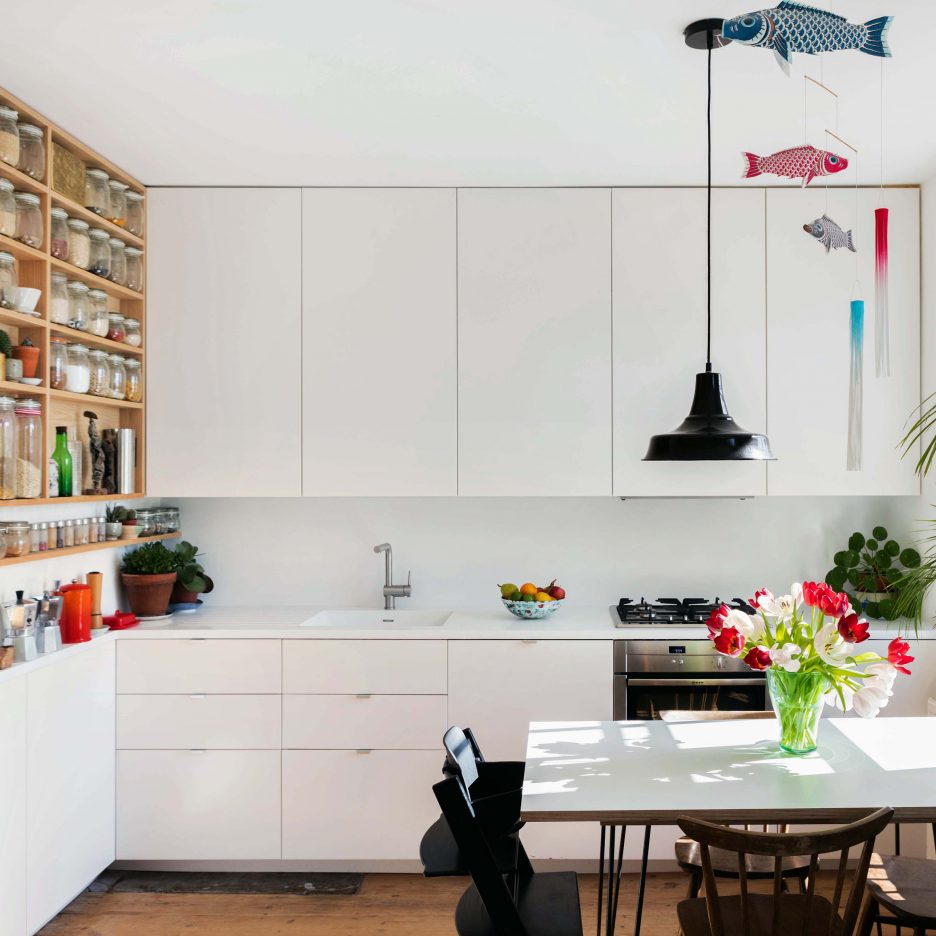
Custom joinery creates tailored storage systems inside home for Emil Eve Architects founders


Architect couple Emma and Ross Perkin used plywood to create bespoke storage solutions inside this tiny London flat, allowing them to showcase books, toys and cooking ingredients (+ slideshow). (more…)

http://ift.tt/2e4D2bn

Studio Arthur Casas Designs a Home in São Paulo for a Young Couple with Children

MP Baronesa by Studio Arthur Casas (14)

MP Baronesa is a residential project designed by Studio Arthur Casas. Completed in 2010, it is located in São Paulo, Brazil. MP Baronesa by Studio Arthur Casas: “A young couple with children hired our Studio to conceive this country house in a very steep plot. Located near São Paulo, the project has close to a thousand square meters (10,764ft2), but remains almost imperceptible from the street. We chose to have..

More…