Watershed / FLOAT Architectural Research and Design


Courtesy of FLOAT Architectural Research and Design

Courtesy of FLOAT Architectural Research and Design


Courtesy of FLOAT Architectural Research and Design


Courtesy of FLOAT Architectural Research and Design


Courtesy of FLOAT Architectural Research and Design


Courtesy of FLOAT Architectural Research and Design

  • Architects: FLOAT Architectural Research and Design
  • Location: Oregon, United States
  • Architect In Charge: Erin Moore
  • Area: 4600.0 ft2
  • Project Year: 2008
  • Photographs: Courtesy of FLOAT Architectural Research and Design

Courtesy of FLOAT Architectural Research and Design

Courtesy of FLOAT Architectural Research and Design

From the architect. The owner is a philosophy professor and a well-known nature writer. She commissioned the studio as a retreat for herself and for visiting writer friends. Her first request was for a roof that would let her hear rain falling.


Courtesy of FLOAT Architectural Research and Design

Courtesy of FLOAT Architectural Research and Design

The writing studio site is a small piece of land along the Marys River about 20 minutes from the owner’s home in town. The studio sits just uphill from riparian wetlands that are part of a project to restore hydrological and ecological function to the whole Marys River watershed.


Floor Plan

Floor Plan

Thewriting studio is designed to reveal the ecological complexity of the site to visitors and in this way it is successful:  Small tunnels under the studio bring rare reptiles and amphibians into view through the floor-level window. The water collection basin that doubles as the front step draws in birds and deer. At midday, the silhouettes of these animals project from the water onto the interior ceiling. Windows on the west and north sides frame different bird habitats—the tops of fence row trees and the patch of sky at a hilltop updraft. The roof diaphragm amplifies rain sounds and the collection basin is a measure of past rainfall.


Courtesy of FLOAT Architectural Research and Design

Courtesy of FLOAT Architectural Research and Design

Two major intentions underlie careful design detailing: 1) that the studio be able to be constructed without road access, without electricity on site, and without major excavation and 2) that the building be removable and recyclable at the end of its useful life.


Section

Section

The way the studio is designed in three separate construction stages made it possible to shop fabricate most of it and then to walk the parts to the site for assembly. The first stage of construction was the site-poured foundation piers that are cast to spread the weight of the building on the ground and to drain water away from the steel frame. The second stage, the steel frame, was shop fabricated and dropped in a single piece onto the piers by a track drive front loader. Stainless steel bolts connect dado-grooved cedar 2x6s to the frame and the final tongue-in-groove cedar and glass enclosure layer floats in those grooves and on rubber engine seats. There are no irreversible connections. The wood enclosure can be updated or recycled piece-by-piece as necessary. The steel frame can be removed the same way it arrived and can be reused or recycled.


Courtesy of FLOAT Architectural Research and Design

Courtesy of FLOAT Architectural Research and Design

http://ift.tt/2cYigaV

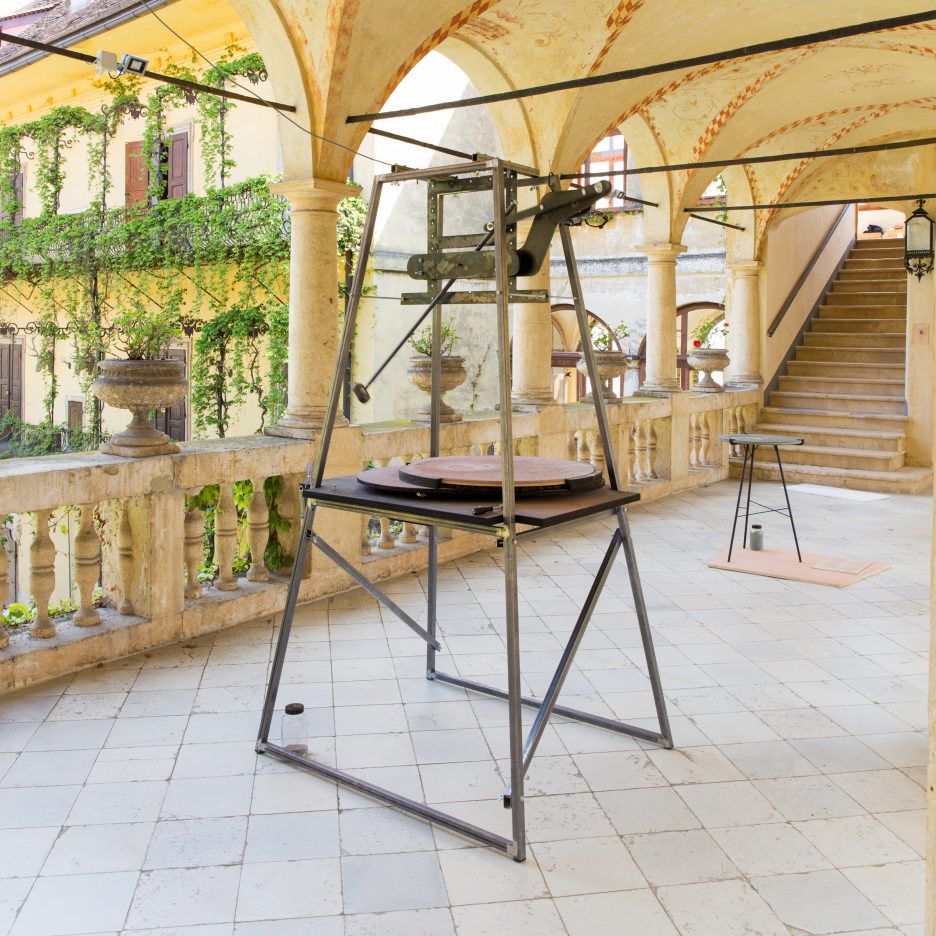
Mischer’Traxler builds pendulum in a castle to slowly sculpt a single tabletop


Vienna Design Week 2016: a pendulum swinging back and forth for a week crafted the colourful recession in this table, designed by Austrian studio Mischer’Traxler. (more…)

http://ift.tt/2cNAvRV

Is Your Small Business in a Marketing Rut? That Could Be Dangerous

By Andrew Raso

“Don’t put all your eggs in one basket.” That saying has been passed around for decades. It’s smart advice, but often goes unheeded in the business world.

Due to time and budget constraints it’s not uncommon for small business owners to lock onto a single marketing tactic and run with it for as long as possible, especially when it seems to be working. But what would happen if your sole means of generating customers suddenly disappeared? Would your small business be able to adapt quickly?

I recall one small business owner I worked with who was reluctant to diversify his marketing. His retail business had been doing quite well and business was growing rapidly, thanks to local radio spots that he had purchased. He didn’t feel the need to do more because radio was working, so he continued to put his budget into that.

Sometime later he reached out to me because the radio station had changed formats and ownership. With it, the rates for his ad spots during drive time had gone up, and he was forced to cut his daily advertising down to just a few ad spots a week. He found himself with a dramatic drop in business and was struggling to get by.

Diversify or Die

This story is all too common with small business owners. Most businesses can sustain themselves with a 10 or 20 percent in business. Everyone has lean times. But an over 50 percent decrease can spell the end. That’s why it’s important to diversify your marketing.

With diversity in marketing you:

  • Reach a broader audience, tapping into audience segments you would otherwise miss.
  • Have more channels to produce fresh content.
  • Create a more diverse and organic link profile which contributes to better search visibility.
  • Free yourself from cost fluctuations that otherwise trap marketers using single-channel marketing (as in my example above).
  • Are more prepared for changes in marketing, your industry, and consumer behaviors.

Diversity isn’t about doing everything, though; it’s smart deployment using marketing channels that most effectively help you communicate with and engage your audience.

Here’s the approach I recommend for effectively diversifying your marketing:

Research your audience. Any decisions you make about the marketing channels you use, your messaging, the images, the timing–they’re all based on your audience. You likely have a broad idea of who your customer is, and if you dig deeper you can create several targeted personas that represent real segments of your audience.

Understanding the demographics (who customers are) and psychographics (why they buy and behave the way they do) as well as their online behaviors you’ll be able to see:

  • Where they spend their time online (which social channels).
  • What they like and dislike.
  • What content formats they prefer to interact with (video, text, images).
  • What their pain points are, and more.

This way you’re not just picking a channel, like radio, because “everyone listens to radio.” You’re basing your choice (blogging, video content, radio, community events, organic social or paid social ads) specifically on audience insights.

Examine the competition. Whenever I’m creating or refining a marketing strategy I always perform a SWOT analysis of my competitors:

  • Strengths
  • Weaknesses
  • Opportunities
  • Threats

A SWOT analysis will reveal opportunities for you to take what your competitors are doing and do it better. When you examine your competition, you’ll also see how they engage your audience. What channels are they using? How effective is their outreach and do you see ways to do it better?

Choose your channels. Again, you don’t have to do everything all at once. There are over 100 commonly used marketing channels you can use to engage your audience. Start by focusing on three, based on your research, that would be the most effective for engaging your audience.

The most common channels that will likely be at the top of your list are:

  • Social media (organic engagement) on sites like Facebook, Instagram, and Twitter
  • Secondary social sites for video content like Snapchat and Periscope
  • Blogging
  • Email marketing
  • Video content posted to sites like YouTube and Vimeo
  • Paid social (Facebook ads, Instagram ads)
  • Community engagement (local events, social media groups, community sites like Reddit)

Don’t just focus on this list, though. Go by what your research tells you.

Set goals and milestones. Don’t jump immediately to promoting and content publishing on any channel you select until you’ve established your goals. You need to know what it is that you want from your efforts.
Create your overarching goals and define your key performance indicators (KPIs); these will help you define what success looks like. Break down goals into milestones to create a road map you can follow to your primary goal.

For example, if your goal is to increase your engagement on Facebook, a key performance indicator might be a certain percent gain in reach and engagement each week. Small goals to help reach the larger might be setting a number for daily number of posts–achieving that number, and responding to every comment.

Test everything. Even if your research says a certain marketing channel is ideal, you still want to test and measure everything you do. Track important metrics like customer conversions, traffic generated from certain channels, in-store purchases traced back to custom coupon codes online, etc.

Measuring your results is the only way to know how effective your efforts are. From your metrics you’ll be able to determine if it’s worth changing up the strategy on a certain channel to improve it, or dumping it if it’s not working.

Revisit your strategy. You’ll likely see success with your initial efforts, which is fantastic. I urge you to continue to revise your strategy, however. Once you have one or more successful marketing channels you should continue to build on them.

Conduct new research, improve your current channels, and add new marketing channels to further diversify your efforts. Like a small tree, your marketing and content strategy will eventually grow with a lot of branching channels, each contributing to a consistent influx of new and returning customers.

About the Author

Post by: Andrew Raso

Andrew Raso is the co-founder and director of the Online Marketing Gurus, a fast-growing, award-winning search company that works with some of the world’s leading brands, including Coca-Cola, Salesforce and FreshBooks. Follow him on Twitter @marketinggurus3.

Company: Online Marketing Gurus
Website: http://ift.tt/1jxar9H
Connect with me on Facebook, Twitter, and LinkedIn.

The post Is Your Small Business in a Marketing Rut? That Could Be Dangerous appeared first on AllBusiness.com

The post Is Your Small Business in a Marketing Rut? That Could Be Dangerous appeared first on AllBusiness.com. Click for more information about Guest Post.

http://ift.tt/2dLMU9W

DS+R, Calatrava Among Winners of 2016 Leading Culture Destinations Awards


The winners of the 2016 Leading Culture Destinations Awards have been announced. Presented this past weekend at a ceremony in London, the LCD Awards are given annually to recognize the success of “museums, art organizations, and cultural destinations from around the world [that] are investing in iconic architecture, cross-sector collaborations, [and] audacious programming […] to diversify the experiences offered to visitors and establish their global reputations.”

This year, awards were presented in four categories: Leading Cultural Destination of the Year; Best New Museum of the Year (for museums opened in the past 15 months); Best Soft Power Destination of the Year (a new award for 2016, given to destination who exhibit ‘excellence, relevance, transparency, accountability and sustainability’); and the Traveller’s Award for Best Place to Visit.

The overall winner for 2016 was Diller, Scofidio + Renfro’s Broad Museum in Los Angeles. Continue reading to see the full list of winners.

Leading Cultural Destination of the Year

Museum Architecture of the Year: The Broad Museum, Los Angeles / Diller, Scofidio + Renfro


Museum Architecture of the Year: The Broad Museum, Los Angeles / Diller, Scofidio + Renfro. Image © Iwan Baan

Museum Architecture of the Year: The Broad Museum, Los Angeles / Diller, Scofidio + Renfro. Image © Iwan Baan

Exhibition of the Year: Proportio, at Palazzo Fortuny, Venice, curated by Axel Vervoordt and Daniela Ferretti

Museum Shop of the Year: Louisiana Museum, Copenhagen

http://ift.tt/2dEySac

Restaurant of the Year: LouLou, Musée des Arts Decoratifs, Paris

Digital Museum of the Year: Rijksmuseum, Amsterdam


Digital Museum of the Year: Rijksmuseum, Amsterdam. Image © Myra May

Digital Museum of the Year: Rijksmuseum, Amsterdam. Image © Myra May

Best New Museum of the Year

Europe: Tate Modern Switch House extension, London / Herzog & de Meuron


Best New Museum, Europe: Tate Modern Switch House extension, London / Herzog & de Meuron. Image © Iwan Baan

Best New Museum, Europe: Tate Modern Switch House extension, London / Herzog & de Meuron. Image © Iwan Baan

North America: The Broad Museum, Los Angeles / Diller, Scofidio + Renfro

Central and South America: Museu do Amañha (Museum of Tomorrow), Rio De Janeiro / Santiago Calatrava


© Gustavo Xavier

© Gustavo Xavier

Africa: Sinthian Cultural Centre (THREAD), Senegal / Toshiko Mori


Best New Museum, Africa: Sinthian Cultural Centre (THREAD), Senegal / Toshiko Mori. Image © Iwan Baan

Best New Museum, Africa: Sinthian Cultural Centre (THREAD), Senegal / Toshiko Mori. Image © Iwan Baan

Asia Pacific: Design Museum Dharavi, India

http://ift.tt/2cO4BQg

Best Soft Power Destination of the Year

Best Soft Power Cultural Activation Award: The Cultural Spring, Sunderland

Best Soft Power Cultural Organisation Award: The Canadian Museum of Human Rights, Manitoba / Antoine Predock


Best Soft Power Cultural Organisation Award: The Canadian Museum of Human Rights, Manitoba / Antoine Predock. Image © Aaron Cohen/CMHR-MCDP

Best Soft Power Cultural Organisation Award: The Canadian Museum of Human Rights, Manitoba / Antoine Predock. Image © Aaron Cohen/CMHR-MCDP

Best Soft Power Cultural District Award: La Ponte Ecomuséu, Villanueva de Santo Adriano, Spain

Traveller’s Award

Cultural City of the Year: Québec City


Cultural City of the Year: Québec City. Image © Bruce Damonte

Cultural City of the Year: Québec City. Image © Bruce Damonte

Art Hotel of the Year: Durslade Farmhouse, Hauser & Wirth, Somerset, England / Laplace, Piet Oudolf

Learn more about the awards here.

News via the Leading Culture Destinations Awards, DailyMail.

http://ift.tt/2cY9Gcg

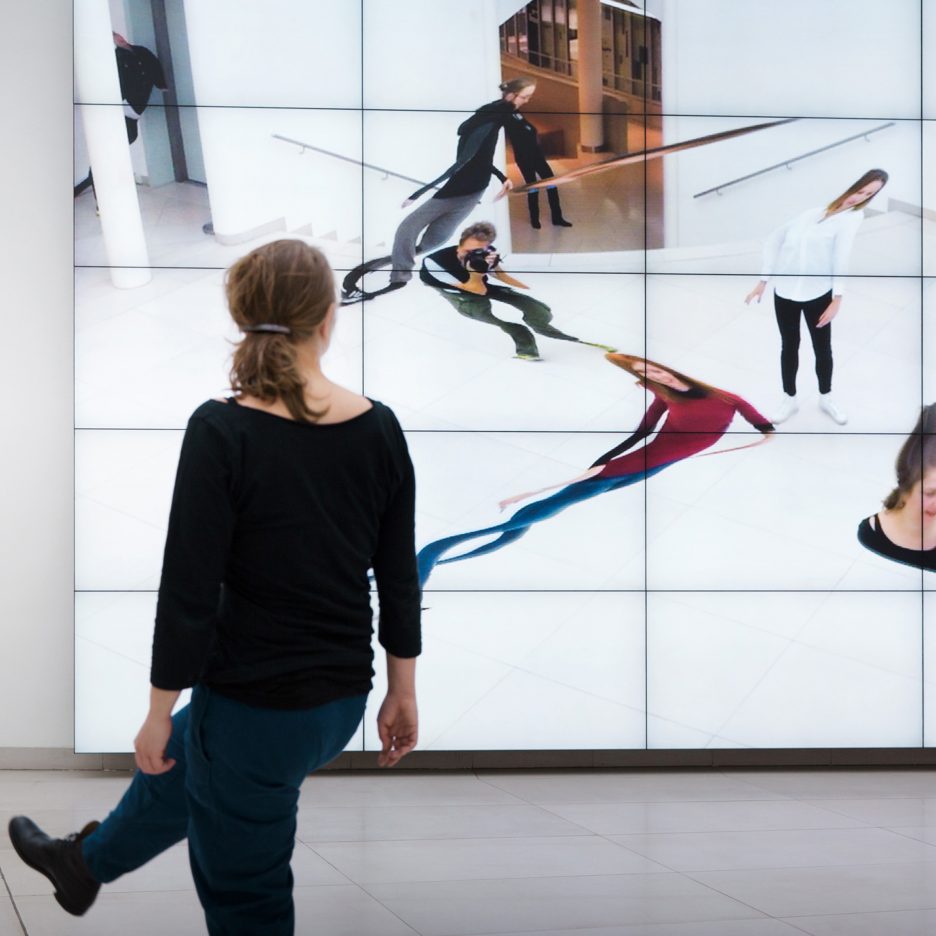
Programme unveiled for Istanbul Design Biennial 2016 under the theme “Are We Human?”


Dezeen promotion: the programme for this year’s Istanbul Design Biennial has been announced, featuring over 70 projects that explore the relationship between design and the human species over the last 200,000 years. (more…)

http://ift.tt/2cNpnEI

Deildargil by hó The small river Deildará in Mýrdalur in…

Deildargil by hó The small river Deildará in Mýrdalur in S-Iceland
http://flic.kr/p/bChffQ

http://ift.tt/2dExh4u

Drachenburg Castle, Germanyphoto via noemi

Drachenburg Castle, Germany

photo via noemi

Zn House / +tongtong


© Lisa Petrole

© Lisa Petrole


© Lisa Petrole


© Lisa Petrole


© Lisa Petrole


© Lisa Petrole

  • Designers: +tongtong
  • Location: Toronto, ON, Canada
  • Principal: John Tong
  • Senior Designer : Nathan Dykstra
  • Area: 3000.0 ft2
  • Project Year: 2015
  • Photographs: Lisa Petrole
  • Landscape Design : +tongtong
  • Landscape Contractor & Plant Specialist: Neil Turnbull/ Hedgerow
  • Contractor: Symmetry Construction

© Lisa Petrole

© Lisa Petrole

+tongtong Transforms Traditional Toronto House into Tasteful Modern Home that Honors East-end Neighborhood


© Lisa Petrole

© Lisa Petrole

Multidisciplinary design studio +tongtong recently completed a renovation and addition to a traditional Victorian house in Toronto. The house was transformed into an open and bright modern home through a series of strategic moves and incisions. 


© Lisa Petrole

© Lisa Petrole

The specifications were to build a modern family home that expands the area of livable space while remaining true to the vernacular of the neighborhood. This challenge was met with an emphasis on natural materials and light. Inspired by rural living and the original build date of the home, industrial materials accentuate re-imagined architectural qualities in an unmistakable contemporary space.


© Lisa Petrole

© Lisa Petrole

Grey and black Zinc used throughout both the exterior and interior of the home is a material that blends traditional aspects with the new contemporary scheme. Inside, a vertical shaft brings light from large skylights down 3 floors illuminating the ground floor while animating a zinc wall and ceiling above the kitchen.


© Lisa Petrole

© Lisa Petrole

As for +tongtong principal John Tong’s favourite element of the house, “I really embrace the slot between the two floors. It turns the 2nd floor hallway into a bridge that connects all of the floors. This is key to bringing light down to the first floor.” 


Second Floor Plan

Second Floor Plan

On the 3rd floor, the entire gable has been replaced with an expansive triangular glass window affording views of the neighbourhood and downtown skyline in the distance. A custom-made triangular blind shades the window and retracts into a millwork unit when not in use. 


© Lisa Petrole

© Lisa Petrole

In the kitchen, an original window at the side of the house was reconfigured proportionally to retain its original breadth. This now horizontal window extends along the kitchen and integrates seamlessly within the millwork of the dining room. The kitchen counter also extends providing the means for a countertop vent-free ethanol fireplace in the dining room. Throughout the home, millwork such as that found in the transitional space between the kitchen and dining room defines overlapping function.  


© Lisa Petrole

© Lisa Petrole

Outside, the rear facade of the home has been entirely transformed to maximize views of the expansive elm tree behind the house; while in front, a large glass pop-out opens up the home to the street while being protected from the sun and elements by a new zinc awning reminiscent of bygone neighbourhood corner stores. The landscaped berm and retaining walls create a layer of privacy between the public street and the private home which provides a small area of refuge in front of the home for children to play, complete with theatre seating to watch the spectacle of life unfold.

http://ift.tt/2dyMqSU

In Residence: Inside Casa Gilardi, Luis Barragán’s Final House Design

http://ift.tt/2dnbn2q

I want you to let me do all the ideas I still have in my head.

In the latest installment of the In Residence series, NOWNESS visits the last house designed by legendary Mexican architect Luis Barragán, Casa Gilardi. By the time current homeowner Martin Luque and advertising agency partner Pancho Gilardi approached Barragán to ask for a house design in 1975, the architect had already formally retired. He originally declined to take on the project – until he made a visit the site, where he was captivated by a remarkably beautiful jacaranda tree. Changing his mind, Barragán remarked, “Don’t chop down this tree, because the house will be built around it.”

Check out the video to learn the rest of the story behind the masterwork and to see the vibrant house as it stands today.

Video via NOWNESS.

Clásicos de Arquitectura: Casa Gilardi / Luis Barragán
//cdn.embedly.com/widgets/platform.js

http://ift.tt/2dncgIr

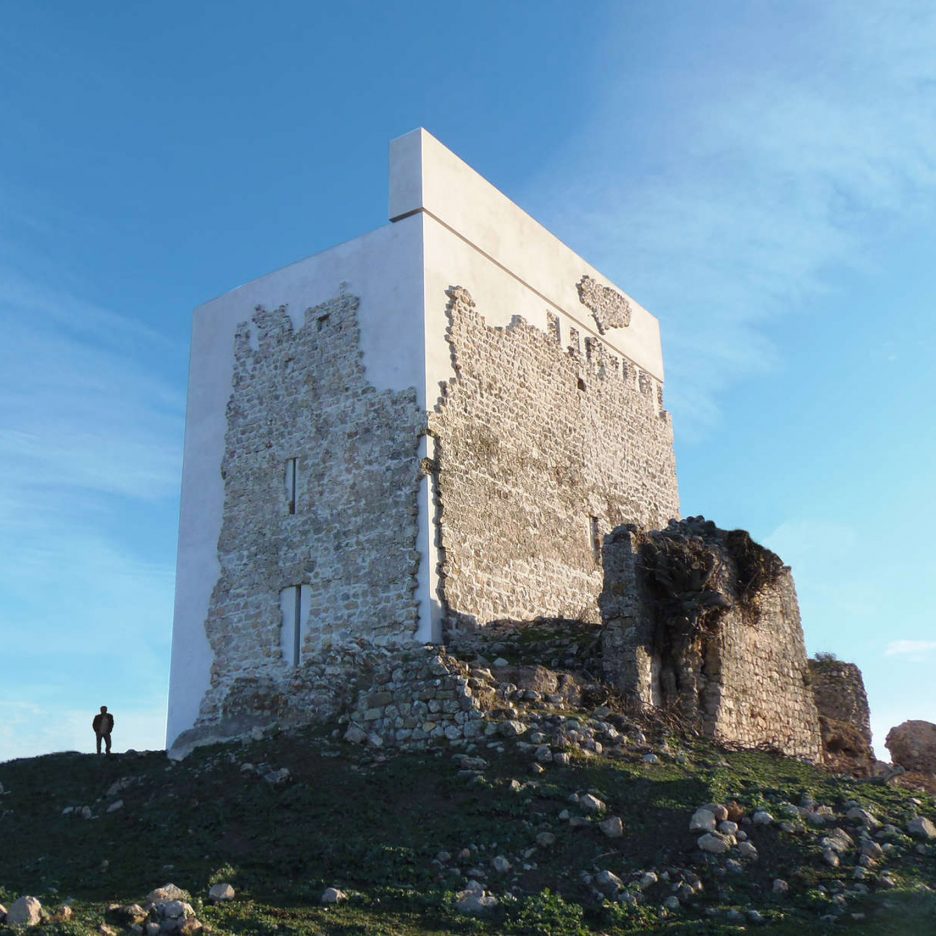
Carquero Arquitectura restores ancient Matrera Castle with contemporary elements


A+Awards: Spanish firm Carquero Arquitectura received a 2016 Architizer A+Award for this restoration of a crumbling hilltop castle near Cádiz. (more…)

http://ift.tt/2cXWROO