5 Energy Protection Techniques for Empaths and Sensitive People

If you are energy sensitive (aka an empath or highly sensitive person) , you can deeply sense the energy around you; often taking on the emotions and/or pain of others as if they were your own.  This sensitivity is a result of your central nervous system processing sensory information more intensely and the very different way that energy can affect you emotionally and physically.

The upside of energy sensitivity is immeasurable.  Highly sensitive people are intuitive, compassionate and kind individuals who are often driven to help others and make the world a better place.  Empaths can tune into the feelings of others and provide insightful comfort and care; making them great healers, counsellors, teachers and advocates.  Energy sensitives also tend to be less judgmental, because they can feel and understand the energy and feelings of people on all sides of any issues.

energy_protectionOne of the main downsides to being highly sensitive is becoming overwhelmed by the energy around you.  Absorbing the feelings, emotions and physical sensations of others can drain your own energy.  Energy sensitivity creates a strong empathy for others, leading many to literally take on the emotions and pain of those around them; from feelings to physical symptoms.  This can leave many who are sensitive feeling fatigued, anxious, irritable, stressed and even in physical pain.  But it does not have to be this way.  It is possible to enjoy the many “pros” of being an empath while safeguarding against the “cons”.  It’s a simple as understanding energy and knowing how to work with it (in your favor).

Energy Protection refers to being aware of your own vibration and field of energy; taking mindful action to keep your energy clear, balanced and high vibrating for your optimal well-being.  This helps to avoid getting drained, feeling overwhelmed, becoming anxious or manifesting physical symptoms (like pain or headaches).  Here are 5 ways to protect your energy:

1. Healing Crystals:

Healing crystals balance the body using the healing properties of gemstones and crystals. When crystals are worn or placed on your body, they have a powerful vibratory effect that surges from the crystal to you.  Each stone has a different purpose; working with various chakras and organs to bring about physical and emotional healing, as well as providing energy protection.  Any black crystals, like Black Onyx or Jet, provide protection for your energy field.  A grounding Crystal, like Hematite, will do the same.  It helps create a boundary so you can take your space and help others, without taking on energy and issues that are not yours.  I wear a Black Onyx or Hematite bracelet every day for this purpose.

2. Reiki:

This could apply to any form of energy healing; Reiki is the one I Practice and teach, so I can speak with experience about using it for energy protection.  Once you learn and become attuned to Level 2 Reiki, you can use the symbols for energy protection and clearing.  You can also receive Reiki Healing if you aren’t trained and ask your practitioner to do this for you.

3. Archangel Michael:

AA Michael is a protector.  A great technique for energy protection is to ask him for it and envision yourself surrounded by a soft bluish-purple light (this can be used for literal and energy protection of people and material items).  You can also wear an amethyst which is Archangel Michael’s Crystal, it is great for protection.

4. Cross Cross:

if you are ever in a situation where someone is being very negative, cross your arms and legs and set the intention that your energy is protected.  This sends a clear signal with body language as well, and the person will likely stop.

5. Bubble of Light:

Light is a form of energy and can provide protection for your personal field.  Picture yourself surrounded by white, purple or pink light; or layer all 3.  White light is pure and clears energy, purple light is protective and pink light is loving energy; any of them work alone and combined together they keep you centered in positive energy.

There are lots of other techniques available for energy protection, experiment to find the ones that work best for you.  It’s important to remember that this is not about protecting yourself from anyone who means you harm; people are generally not “out to get you”.  This is about recognizing your own sensitivity and safeguarding so you can function daily.  These techniques help set healthy energy boundaries so you do not take on all that energy swirling around every day and can serve your purpose in your optimal state of well-being.

The post 5 Energy Protection Techniques for Empaths and Sensitive People appeared first on Change your thoughts.

http://ift.tt/2dn4FtA

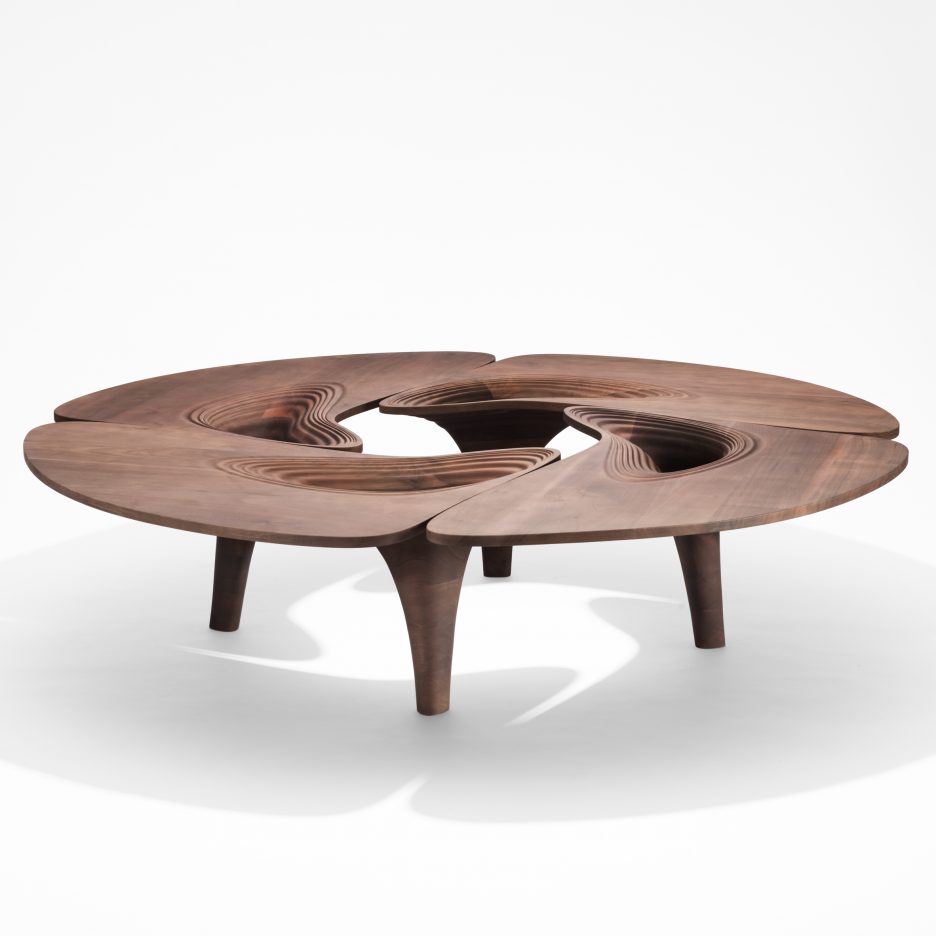
Zaha Hadid’s final furniture collection for David Gill is based on mid-century antiques


Zaha Hadid‘s final furniture collection for London’s David Gill Gallery is made of walnut and leather, a reference to antique furniture from the 50s and 60s (+ slideshow). (more…)

http://ift.tt/2dLjsR6

Casino and Hotel Ovalle / Turner Arquitectos


© Felipe Díaz Contardo

© Felipe Díaz Contardo


© Felipe Díaz Contardo


© Felipe Díaz Contardo


© Felipe Díaz Contardo


© Felipe Díaz Contardo

  • Architects: Turner Arquitectos
  • Location: Ovalle, Coquimbo Region, Chile
  • Design Team: Patrick Turner, Josefina Vergara, Gastón Fuenzalida
  • Area: 14020 sqm
  • Project Year: 2016
  • Photographs: Felipe Díaz Contardo
  • Owner: Ovalle Casino Resort
  • Calculations: Rafael Gatica
  • Construction: Mena y Ovalle
  • Landscape: Jadue – Livingstone
  • Lights: Estudio Par
  • Weather: IPC CLIMA
  • Sanitary: Urbano Proyectos
  • Electricity: REHLEC

© Felipe Díaz Contardo

© Felipe Díaz Contardo

From the architect. About 3 kms from the city center, away from the urban grid, stands the Casino and Hotel Ovalle, founding a citadel in the middle of the valley of the Limarí. As well as the ancient inhabitants of the valley settled to the interior of the gullies; real cracks that striped the central plateau of the valley, this intervention aims to constitute a new gully on this new site. This crack seeks to give refuge through its nooks, which generate a sequence of indoor and outdoor spaces that are hidden from the outside traffic and tracks, favoring the calm and rest.


© Felipe Díaz Contardo

© Felipe Díaz Contardo

A large perimeter stone pirca delimits the living space of this new citadel. On it lie the volumes that contain the various components of the architectural program forming a square floor plan, which cuts through diagonally, forming the central crack of convergence. Making it seem as if this monolithic and hermetic volume was carved from the inside toward the outside, taking place through the stone materials, generating a crack and leaving the perimeter uncarved.


© Felipe Díaz Contardo

© Felipe Díaz Contardo

Except from the hotel, all other buildings are quite airtight, with walls veneered in stone found in the surroundings, giving a vernacular sense, and referring to the rocky walls of the gullies of the valley of the Limarí.


© Felipe Díaz Contardo

© Felipe Díaz Contardo

Planta segundo nivel

Planta segundo nivel

© Felipe Díaz Contardo

© Felipe Díaz Contardo

Each volume and its respective form accuse in a very subtle way what happens inside. The Casino and Ball Room collectively form a large box in a single floor, which is accessed from 2 opposite directions and receives a botanical garden on the roof, where the main species of cacti from the region are grown. On the other side of the central crack are located the Hotel and the Spa, which despite being connected, are formed in a completely different language, responding to the program in its interior, but maintaining a colloquial character. The hotel is distinguished by its metal cladding, inspired by the diaguita culture and their geometric forms, emulating a Greca. The Spa is a series of enclosed volumes arranged along 75 meters. Each one of these blocks suites heated swimming pools, body treatments rooms and other similar uses, topping off at the end with the outdoor swimming pool. Towards the end of the path stands the Diaguita Museum, a large monolith cube in board exposed concrete, striped by cuts of zenithal light. 


© Felipe Díaz Contardo

© Felipe Díaz Contardo

http://ift.tt/2cXNPRY

American Undertow: The Stories of John O’Hara

Ohara Seated crop

Could there be a worse time to make a case for John O’Hara? Not that there isn’t a case to be made. O’Hara is the greatest social novelist America produced since Edith Wharton, though the very idea of “American society” as it appeared to writers of his generation now seems itself to be an artifact of history. Over the course of 800 pages, the new Library of America O’Hara volume, dedicated to his stories, makes the case for the sharpness of his craft and observation, displaying the marvel of a writer who knew his subject effortlessly. And it needs to be said that given the wealth and quality of stories to choose from (twelve volumes, half of this prodigious body consisting of fat volumes that appeared from 1961 to 1968), the editor, Charles McGrath, must have been in the position of a man who has amassed a first-rate library and is moving into a studio apartment. I hope he’s relaxing somewhere with a vodka Gibson and the satisfaction of a job well done.

The problem with making a case for O’Hara has absolutely nothing to do with the quality of his work and everything to do with living in an era when it’s routinely assumed that the aim of art should be social justice, and that the proper purpose of fiction about the American privileged should be moral condemnation. You can’t blame people for being disgusted with the rich or for feeling something has to give. A Seattle entrepreneur named Nick Hanauer recently wrote a piece in Politico dedicated to his fellow plutocrats and entitled “The Pitchforks Are Coming,” and it’s hard not to feel “it’s about time.”

But as Fran Lebowitz, an O’Hara admirer, remarked in the Martin Scorsese documentary Public Speaking, “there’s too much democracy in the culture, not enough democracy in the society.” Given that both the creation and experience of literature is that of sympathetic imagination, we should be well past the notion that we have to morally justify fiction about people we wouldn’t feel much for in real life. And in O’Hara’s case, the subject was writing about a substratum of American power that was fading – not always gracefully — even as he was chronicling it.

There’s no denying O’Hara felt a trace of envy for the well-to-do (not filthy-rich) families of the midsized Pennsylvania towns he took as his subject. O’Hara was the son of a prosperous Pennsylvania doctor but was plunged into rough times when his father died at the age of fifty-seven, in debt and without a will. Sudden poverty prevented the young O’Hara from attending Yale. (Six years before his death in 1970 at age sixty-five, he was still asking Yale president Kingman Brewster to grant him an honorary degree. Brewster refused, “because he asked.”) When O’Hara details the fictional sojourns of those comfortable families’ sons in the Ivy League and then in Washington and in New York he is, at least in part, detailing the life he wanted to lead. But envy never got in the way of O’Hara’s unfailingly accurate — occasionally withering — powers of observation.

O’Hara’s people are the sort once called rock-ribbed Republicans: conservative, loyal to those in their set and to accepted notions of decency and business and tradition, publicly very careful in their behavior. O’Hara’s characters know the price of violating those accepted notions. For Julian English, the protagonist of O’Hara’s first novel, Appointment in Samarra, it’s his destruction, as it is for the respectable old gentleman of the story “Over the River and Through the Wood,” the hominess of that title almost a cruel joke given what transpires. These families are not, however, America’s ruling class. These are not the Rockefellers or the Mellons, the Peabodys or the Saltonstalls. O’Hara’s characters may encounter representatives of those dynasties, may attend the same universities or even belong to some of the same clubs, but they are not movers and shakers. They are the loyal home front, provincial perhaps to some higher up the social register but perfectly capable, when business or pleasure brings them to Philadelphia or New York, of knowing where to stay, where to dine, where to shop. And, if that pleasure includes an affair, which in O’Hara it often does, knowing how not to be found out.

O’Hara himself had, to borrow the words of another great American writer, Johnny Mercer, seen him some big towns and heard him some big talk. Hollywood, chief among them. His 1962 novel The Big Laugh, and his Hollywood short stories, especially the best of them, the chilling “Natica Jackson,” belong on the same small shelf with the very finest Hollywood fiction: Budd Schulberg’s What Makes Sammy Run?, Gavin Lambert’s The Slide Area and Inside Daisy Clover, and the three novels comprising Don Carpenter’s Hollywood Trilogy. But O’Hara was content mostly to write about the Pennsylvania territory he named Gibbsville and to cover the years in which this, for want of a better word, suburban tier of American power knew its greatest influence, roughly from just before World War I to just after World War II. By today’s standards, it can’t help but look a bit provincial, if not reactionary. Apart from servants and tradesmen, the working classes do not feature in O’Hara. Ditto, for the most part, black people. (Though a black family is the subject of a sentimental but sweet story in the Library of America collection called “Bread Alone.”) O’Hara depicts a world in which women do not publicly assume roles other than wives or mothers, and he is well aware of that in the moments when he assays the private confusion and turmoil that results when they confront themselves as sexual beings, almost always outside of their marriages. (One of the uncomfortable truths O’Hara specialized in was that, at least as far as society was concerned, the romantic notion of marriage had still not fully overtaken the idea of marriage as an alliance for the sake of appearance, power, and wealth. Naturally, as with almost all of the truths in O’Hara, it’s one his characters would vigorously deny while knowing it was true in their bones.) The excitement and price of sexual freedom is everywhere in O’Hara. The moment in “Natica Jackson” when O’Hara shifts his focus from the movie star of the title, having an affair with a married man, to the man’s wife, who would have been called in those days “a poetess,” is a terrifying slide into the airless existence of a sexual hysteric.

O’Hara’s reputation was unsettled even in his own day. That had partly to do with his apparent talent for making enemies easily, partly with the monstrous need for acclaim that expressed itself as monstrous vanity. He was given a National Book Award in 1955 for his novel Ten North Frederick. He believed he was going to get a Nobel Prize for the 1958 From the Terrace. The critical line on O’Hara hasn’t really changed much since 1949, when his first long novel, A Rage to Live, was pilloried by Brendan Gill in The New Yorker. (The review prompted O’Hara to not submit another story there until the early ’60s. He wound up publishing more stories in the magazine than any other writer.) That line is that after two compact and brilliant early novels, Appointment in Samarra and BUtterfield 8,and despite his mastery of the short story, O’Hara embarked on big, prestigious novels that dissipated his talent. It didn’t help that those big novels were very popular with the public. (But then, in America popularity has never helped anyone’s literary reputation.)

Of the ones I’ve read, I’d say there are four masterpieces: Appointment in Samarra, BUtterfiled 8, Ten North Frederick (O’Hara’s best, I’d say), and Ourselves to Know. From the Terrace is a flawed and maddening novel that fails at a higher level than most novels attain. And there is much pleasure to be had from the minor novels, like 1963’s Elizabeth Appleton. It is, hard though, to imagine that the ’60s reading public could not find that an old-fashioned novel. Certainly that was the basis on which critics in the last years of O’Hara’s career dismissed him — if they deigned to notice him at all.

The only purpose of noting that a writer is no longer read or is out of fashion is simply that, the stating of a fact. No one’s literary worth can be decided by such a judgment, and given the fate of Melville, out of print and forgotten for years after his death, or the fact that The Great Gatsby was out of print when Fitzgerald died, American critics should be especially wary of relying on that formulation.

But the question remains, why is O’Hara worth reading? Foremost for a reason too many literary critics overlook but which a great critic, Leslie Fiedler, noted as the only real reason anyone reads: for pleasure. O’Hara was a great storyteller, whether the stories are the sprawling family chronicles of the novels or the compact tales in this volume. In the space of five pages in the story “Are We Leaving Tomorrow?” O’Hara, by simply relating an anecdote or two, suggests the entire life of a couple whose existence consists of drifting from resort to resort because the husband, an alcoholic, regularly manages to break the rules of propriety that, in this set, mean social death. The wife’s reaction to his latest offense, as they sit late in a hotel bar, is to ask:

“I wonder if the man is still there at the travel desk. I forgot all about the tickets for tomorrow.”

“Tomorrow? Are we leaving tomorrow?”

“Yes.”

He stood up and pulled the table out of her way, and when she had left he sat down to wait for her.

There are years wasted, the wreckage of lives in what is unsaid in that exchange, and an aftertaste that is bitter, and even foreboding. What is entirely absent is melancholy.

The story takes place in Fitzgerald territory (Fran Lebowitz has called O’Hara the “real Fitzgerald”). But you find none of the melancholy such a situation would call forth in Fitzgerald (or Noël Coward, for that matter), none of the romantic charisma of wreckage. Even the fact that O’Hara is, in most cases, writing about a society and time that is passing does not invite nostalgia into his work, the nostalgia you can find in Booth Tarkington’s The Magnificent Ambersons (and exquisitely in Orson Welles’s film) or, in Europe, in Lampedusa’s The Leopard (and exquisitely in Luchino Visconti’s film). O’Hara is certainly motivated by memory in the explicitly autobiographical story “The Doctor’s Son,” in which a version of O’Hara as a young teen assists the doctor his exhausted father has called in to deal with the Spanish flu epidemic in their town. But he is not motivated not by fond recall. The undertow of this long story, which feels the product of an abiding anger the writer has mastered but never gotten over, is a determination to get down exactly what he saw and to leave implicit what such sights wreaked on a young man’s psyche.

Offhand, I can’t think of another novelist so steeped in, so assured in relating, the details of the milieu he has chosen. O’Hara knew his subject as few novelists ever know theirs. There are two stunning examples of this in Ten North Frederick. Early on O’Hara spends nearly two pages describing the front door of the title residence belonging to the Chapin family. What he is able to do, by describing the dips worn in the stone steps, the tarnish on the gold nameplate, the switch from a pull bell to an electric bell, is to convey the passage of years and fashion, and just how settled are the Chapins in their privilege to have weathered all of this. Later, in a scene at a dinner party thrown before a winter dance for young people home for the Christmas holiday, O’Hara goes around the table to tell us not just where each young man is matriculating but which particular fraternity pin adorns his tux. There’s an element of the parlor trick in this — most of these characters we never meet again. But O’Hara isn’t just showing off. He is telling us that what would appear minor details to most are just the sort of distinctions that are crucial in this world, subtler but no less telling than the downwardly mobile residences the heroine of his novella “Imagine Kissing Pete” winds up in.

O’Hara’s empathy is its own peculiar beast, not judgmental or chilly. And it doesn’t approach the cruelty of, say, Madame Bovary. But nothing, no hardship or tragedy, gets in the way of O’Hara’s desire to get down the truth of each situation on the page. You can come away from an O’Hara novel or short story realizing that you have been emotionally invested in the fates of his characters without really warming to them. Honesty, not just the rub-your-nose-in-it variety favored by the tough guy or the barroom philosopher, is nothing that will make you friends, and the sharper the observations behind the honesty the fewer friends you will make. O’Hara provides documentary reporting about a certain stratum of society in the way that Galsworthy or C. P. Snow or William Dean Howells or Edith Wharton did (he is in many ways the American realist progeny of Wharton). But what makes O’Hara so compelling is finally that his use of a setting in which it was imperative to keep up appearances is a heightened version of the war between our public and our private selves, and the distance that exists between people who can never fully know each other’s reality. It’s no surprise that this often expresses itself most strongly in sex, in marriages gone bad, in affairs entered into with haste or calculation, and then in the cold determination not to deny the dissatisfaction, even the hatred, that prompted the affair when it is revealed.

George Cukor, who directed the film versions of the plays of another great Pennsylvania writer, Philip Barry, Holiday and The Philadelphia Story, talked about the playwright’s gift for “throwaway candor,” the way, watching his plays, we are lulled by the wit flying back and forth only to be confronted with the sudden cruelty of one character’s cold assessment of another. O’Hara’s candor is not throwaway but deliberate. Not only didn’t he have the wit with which Barry could both sharpen and soften the blow; the point-by-point precision of O’Hara’s writing — the particularity of detail and description, the acuity of psychology — does not lend itself to catharsis. Often at the end of his stories and novels O’Hara the realist leaves you in the midst of the catastrophe that has transpired without anything like tragic grandeur to lift you above it. This can be a problem. The 900 pages of From the Terrace lead you, in the final sections, to the realization of a failed and wasted life from which there is, neither for the character nor for you, any escape. (The book knocked me into a funk that didn’t lift for days.)

More often, though, O’Hara has left me grateful for his candor, for the rare feeling that I am not being lied to. He was the novelist as reporter, without the impulses toward social activism or satire you find in Sinclair Lewis (another American novelist whose importance and achievement need to be reaffirmed). He was the social anatomist savvy about power and appearance and not given to romanticizing or glamorizing his milieu. And he was a truth teller without the hardboiled tendency to sentimentality or romantic fatalism. It says on O’Hara’s tombstone in Princeton, New Jersey, “Better than anyone else, he told the truth about his time. He was a professional. He wrote honestly and well.” What’s appalling is that he composed it himself, one of those needy outbursts that have surely contributed to his underappreciation. Better than anyone else? No, and what kind of person would admit that even if he thought it? That should not keep us from admitting that the last part is not merely just but an understatement. Even in a moment of self-praise, O’Hara couldn’t help but be honest.

The Barnes & Noble Review http://ift.tt/2dUgKIp
National parks are both the stuff dreams are made of and the…

National parks are both the stuff dreams are made of and the places where dreams come true. Photographer Evan Brogan snapped this gorgeous vista of Colorado National Monument shortly after quitting an unfulfilling job and asking his girlfriend to marry him. “We took photos of her ring over the 485-foot cliff where we camped. We found ourselves at this vantage point, yelling echoes into the canyon walls, alone, watching the rain blow in and carrying with it one of Colorado’s many daily rainbows.” Photo courtesy of Evan Brogan.

4 Ways to Start Building Great Credit

Good credit is a privilege that comes with great responsibility. However, before lenders can give you this type of privilege, they need to first check on your reputation as a borrower.

This is where your credit scores and credit reports come into play. Having excellent credit will allow you to receive better benefits and perks with lower interest rates and higher limits.

But, what if you have low credit scores or some negative marks on your credit reports?

Lenders may still grant your credit request, but it can come with a lower limit and steeper fees. The idea is that the lower the risk you are to a lender, the better benefits you can get.

Here are four of the best ways you can use to start building great credit.

1. Understand & Lower Your Credit Utilization

credit-utilization

This is where a lot of people get hung up. And since it accounts for 30% of your FICO score, it can severely impact their credit health.

Let’s say you have a credit card with a credit limit of $2,000. Instead of paying it off each month, you’ve been carrying a balance of around $1,200.

If we divide that $1,200 by $2,000, we get 60%. If this is your only credit card, this means that you’re already utilizing 60% of your total credit.

To start building better credit, you can try lowering your utilization to under 10%, if possible. For most people, however, keeping it under 30% is more realistic and manageable.

2. Increase Your Credit Card Limits

Raising your credit limits can have a profound effect on your credit since it will give you more freedom when it comes to its utilization. Increasing your card’s limit can be as easy as calling your credit card provider either through email or phone.

I recommend doing this once every six months. You can keep asking for as long as you want to keep increasing your limits or until your issuer won’t increase your limits any further.

If you have a lot of cards and you’re getting pinged with hard inquiries, then it might be a good idea to space out your requests to avoid having to answer to lots of inquiries in a short amount of time.

3. Become an Authorized User of a Credit Card

If you’re struggling to build better credit on your own, see if a family member or trusted friend can add you as an authorized user of his or her open credit card.  Although you’ll be able to use the account, you need to remember that the primary account holder will still be liable in case you don’t get to pay your debt.

To avoid conflicts, try to negotiate the payment details with the account owner first. If he has a poor standing in his account or if there are any delinquent credit card activities, these data can reflect in your credit reports, too.

See Also: 9 Valuable Credit Card Perks

4. Open a Credit Builder Loan

credit-builder-loan

This last option is for those people who have bad credit but are looking for a quick option to start rebuilding their credit health. A typical credit builder loan can cost around $500.

If you get approved, your bank will deposit the money into a savings account. You won’t be able to access this account until you’ve fully paid it back. The bank, however, will report the said deposit to your credit card company to help build a better credit for you.

See Also: 6 Step To Improve Your Credit Score Now 

These four options are reliable and safe to use in building great credit immediately. Aside from these tips, it can also help if you can start understanding your credit and using it responsibly. Always pay your bills on time and keep your balances low. These ideas are very basic, but they  can help you build better credit faster.


The post 4 Ways to Start Building Great Credit appeared first on Dumb Little Man.

http://ift.tt/2dp5r90

Renault replaces doors with a sliding roof for Trezor concept car


French car manufacturer Renault has unveiled its latest concept car, which features a red windscreen and a roof that “opens like the lid of a jewellery box” (+ movie). (more…)

http://ift.tt/2dl1WEe

Dezeen Jobs: latest jobs update

Dezeen Jobs architecture and design recruitment

See the latest from our recruitment site Dezeen Jobs, including positions at Glithero, 20th Century Fox and Micha Weidmann Studio, which created Dezeen’s website and visual identity. This is also the last chance to apply for roles with the Metropolitan Museum of Art, Caruso St John Architects, Hassell and more… (more…)

http://ift.tt/2dDYf7M

Dezeen Jobs: latest jobs update

Dezeen Jobs architecture and design recruitment

See the latest from our recruitment site Dezeen Jobs, including positions at Glithero, 20th Century Fox and Micha Weidmann Studio, which created Dezeen’s website and visual identity. This is also the last chance to apply for roles with the Metropolitan Museum of Art, Caruso St John Architects, Hassell and more… (more…)

http://ift.tt/2dDYf7M

House Aartrijke / Atelier Tom Vanhee


© Filip Dujardin

© Filip Dujardin


© Filip Dujardin


© Filip Dujardin


© Filip Dujardin


© Filip Dujardin

  • Architects: Atelier Tom Vanhee
  • Location: Aartrijke, 8211 Zedelgem, Belgium
  • Architect In Charge: Tom Vanhee
  • Area: 318.0 sqm
  • Project Year: 2016
  • Photographs: Filip Dujardin
  • Stability: LIME

© Filip Dujardin

© Filip Dujardin

From the architect. The former farmhouse is situated in an agricultural area. The typology of the existing building was used in a contemporary way to enlarge the dwelling. We added two new volumes with a pitched roof connected with the existing volume. Two chimney shaped skylights create light and a view on to the first floor. A third chimney houses the air outlet of the heat pump. Old and new collaborate together, while both remain clearly visible. 


© Filip Dujardin

© Filip Dujardin

Section

Section

© Filip Dujardin

© Filip Dujardin

The new volumes are finished in wood. The old brick exterior is felt inside when entering the house. The new stairs are a reminder of the pre-existing mouldering stair that was removed. The buttresses and strips of brick in the floor will show the former layout of the barn. The double height in the dwelling makes the living areas more spacious. A new pre-weathered zinc roof connects the buildings into a whole. In addition to the replacement of the old joinery with new windows, the old volume opens up to the landscape on the rear side. Simple uniform windows according to the golden ratio characterize the construction.


© Filip Dujardin

© Filip Dujardin

The former building contains the dining room and sitting room, the kitchen, a storage room and toilet, four large bedrooms and two bathrooms. The extension accommodates the entrance hall, circulation spaces, storage space, technical facilities and a garage.


© Filip Dujardin

© Filip Dujardin

Floor Plan

Floor Plan

© Filip Dujardin

© Filip Dujardin

Floor Plan

Floor Plan

© Filip Dujardin

© Filip Dujardin

Both the former building and the new buildings are properly insulated (retaining the exterior brick wall) to create a low energy house. The house is mainly heated by an air-water heat pump with low temperature floor heating and radiators. Photovoltaic panels supply most of the electricity. All details are designed and implemented airtight.


© Filip Dujardin

© Filip Dujardin

http://ift.tt/2cNl2fK