Are You Your Own Best Friend Or Your Own Worst Enemy?

Most of us know by now how important self-love is for our emotional health and physical/mental wellbeing.

We’re often bombarded with an avalanche of books, videos, seminars and workshops discussing the importance of loving ourselves. But, while most of us understand the concept of how self-love works, realistically, how much do we truly practice it?

The fact is, we live extremely busy lives and are constantly under pressure these days. We’ve become accustomed to juggling the incessant demands of our work, family, social and personal lives.

We spend an hour or two at the gym, meditate and practice yoga, convincing ourselves we are ‘on’ it. Meanwhile for the other 22 – 23 hours, we run around like headless chickens caught in a never-ending cycle of pressure and stress.

Over committing, over-working, over-giving – over stimulated. It’s not our fault – it’s the way life these days has evolved.

Where is the love?

Where is the balance as we slot self-care into the fast lane drive that our lives have become?

What happens to us when we lose ourselves in the demands of life, and more importantly, what happens to our relationships?

How is it truly possible to have a healthy loving relationship with another person without first having created a healthy loving relationship with our individual selves?

When I asked myself these questions I was guided to write my own story Sunshine in Neverland. While writing about my journey, it became crystal clear that although we all have our own individual life stories, we share very similar human experiences and can easily relate with each other. After all, pain is pain, whatever and wherever the source comes from.

sunshine-in-neverland

When we connect to our story without judgement, it helps take us out of the concept of self-love and into a deeper bond with our own true heart. With this, we gain clearer insight and the ability to access our soul wisdom along the way. In addition, we build compassion on a bigger scale.

As each one of us courageously embarks on our own inner journey, whoever we are, wherever we have come from and whatever our experience, all of us have the ability to reach a place of deep inner peace, truth and love.

Loving yourself – it starts with you. But what does that truly mean?

In all the situations you are in, or have been involved with – you are the common denominator. You play the leading role.

We send unconscious messages to ourselves the whole time and these messages will be reflected back to us from the outside world to help us see and learn something about ourselves. If the message being sent is “I don’t matter” or “I’ll get to myself when everything else is done and everyone else is looked after”, the world will continually reflect this back to us until we eventually get tired enough to begin bringing ourselves into the equation. Only then can we see that our happiness and life matters, and, is just as important as the happiness and life of everyone we know and love.

It’s all about balance.

This doesn’t mean you don’t care for others – it simply means you care a little bit more for yourself.

Become your own best friend instead of your own worst enemy.

Our true friends are interested in us. They listen to us, want to get know who we are and what we love. They support us in our lives. Our job is to give ourselves the same level of respect as a dear and true friend would give to us. And give to our-selves the same love and respect we give to our most beloved friends.

Therefore we must listen and hear what is good, right and true for us. Otherwise, how can we get to know what we need far less give it?

What we can do to create the Real Deal!

The 5 Simple Steps

Following the 5 Steps to self love – not just now and again or even daily but consistently on a moment to moment basis — takes us from ‘doing’ to ‘being’ the real deal of self love. Practice, practice, practice and use as a tool when necessary.

1. STOP

self-love

To even be in the position to self-love, we need to stop. Or to put it another way – breathe.

Before any decision or action is taken, stop and breathe. The purpose of this is to check in with yourself first to see where you are physically, mentally, emotionally and spiritually. This offers a moment of space to step back from any drama before we react from fear or a people-pleasing habit.

Stopping offers us the ability to respond to a situation from love, value, truth and honour. It’s the first step to loving ourselves.

See Also: 11 Simple Ways to Fall in Love With Yourself 

2. STILL

Remember stopping doesn’t necessarily mean stillness. Our minds can be full of irrational thoughts even when we have stopped.

Stillness requires focus, practice, and presence. Being rooted in the present moment allows us to land in stillness and places us in the position to listen and connect to our truth on a deeper level before we make a decision.

3. LISTEN

With listening we get closer to honouring ourselves but in this step, our fear-based ego minds can still come up with many reasons, excuses, explanations and justifications to override ourselves at this point. To honour our-selves truly, we must drop deeper into the next step and hear from the compassion of our hearts. This allows us to have the same compassion for everyone involved. We hear our truth with our HEAR(T) which is the next step.

See Also: Self-Acceptance: The Key To True Happiness

4. HEAR

listening-with-our-hearts

Hearing is listening with our hearts, our honesty, compassion and kindness. It includes us in the equation and delivers the message to ourselves that we also matter. It helps us make decisions to honour ourselves and others.

5. ACTION

Taking action without first listening and hearing is usually reaction and it’s likely you are repeating the same habits as before from fear, habit, or stress. Taking responsible action, from a place of presence, honour and connection to a deeper truth delivers the message to yourself and others that you are on the ball with living from self-love, value and respect for yourself. If you have it for you – you will have it for everyone.

“When you awaken to your own inner power, you become the light in the darkness and are able to see the way through to the other side, bringing Sunshine into your own personal Neverland.”

Here’s to you becoming your own best friend.

For your life, love, and your eternal honour.
Moira Darling


The post Are You Your Own Best Friend Or Your Own Worst Enemy? appeared first on Dumb Little Man.


http://ift.tt/2e52Nq8

10 of the most creative office interiors from Dezeen’s Pinterest boards

google-campus-jump-studios-office-interiors-col1

Google‘s flexible workspace featuring bright red shipping containers and a meeting area with five-metre-high trees are included in this week’s Pinterest roundup, which focuses on office interiors. Read more

http://ift.tt/2eZBJpz

Relax Into the Moment

By Leo Babauta

You might be surprised how often we’re resisting life.

If you assess your body right now, I bet you can find some kind of tension or tightness. For me, it’s often in my chest, but sometimes it’s in my jaw, face, neck or shoulders.

Where does this tightness come from? We’re struggling against something — perhaps we’re irritated by someone, frustrated by something, stressed or overwhelmed by all we have to do, or just don’t like whatever it is we’re faced with. This causes a resistance, a hardening or tightening. Everyone does it, most of the day.

It’s normal, but it causes unhappiness, an aversion to the present moment, struggles with other people or ourselves, struggles with the task we’re faced with. What I’ve found useful is the idea of relaxing into the moment.

Try this:

  • Notice where the tension is in your body right now.
  • Notice what you’re tightening against — it might be someone else, or whatever it is you’re faced with.
  • Relax the tightness. Just let yourself melt.
  • Face the same situation, but with a relaxed, friendly attitude.

And repeat as often as you can remember, throughout the day. Just use the phrase “relax into the moment” to remind yourself.

What this does is helps us to face the day with less tension and greater contentment. We struggle less with how other people are, and instead might open our hearts to them and see that they, like us, are struggling and want to be happy.

We might face a task with less resistance, and instead do it with a smile. We might just notice the physical space around us and start to appreciate it for the unique gift that it is. And in the end, we’re changing our mode of being from one of struggle and resistance to one of peace and gratitude.

http://ift.tt/2eDJtB0

20 of the World’s Best Building Images Shortlisted for Arcaid Awards 2016


via Arcaid Images

via Arcaid Images

Arcaid has shortlisted 20 of the year’s best architectural photographs in the running for the 2016 Arcaid Images Architectural Photography Awards. The annual award presents prizes in four categories – Exteriors, Interiors, Sense of Place, and Building in Use – and judged by an esteemed panel on their atmospheric quality, composition, use of scale and more.

This year, judges for the award include Emily Booth, executive editor of The Architectural Review; artist and Sto Werkstatt curator Amy Croft; Katy Harris, director of communications at Foster + Partners; architect Kai-Uwe Bergmann of BIG and photographers Fernando Guerra and Ulrich Müller.

The photographs will be showcased at World Architecture Festival from November 16-18 in Berlin, Germany, where the overall winner will be announced. The shortlist of 20 images is as follows:

Buildings in Use


via Arcaid Images

via Arcaid Images

Photographer: Fabrice Fouillet
Building: Musee de Confluences, Lyon, France / Coop Himmelb(l)au


via Arcaid Images

via Arcaid Images

Photographer: Adrien Barakat
Building: Allianz Headquarters, Zurich, Switzerland / Wiel Arets Architects


via Arcaid Images

via Arcaid Images

Photographer: Julien Lanoo
Building: Independence Square, Accra, Ghana


via Arcaid Images

via Arcaid Images

Photographer: Laurian Ghinitoiu
Building: ‘Forest of Light’ for COS, Salone del Mobile, Milan, Italy / Sou Fujimoto Architects


via Arcaid Images

via Arcaid Images

Photographer: Torsten Andreas Hoffmann
Subject: Dharavi, Mumbai, India

Exteriors


via Arcaid Images

via Arcaid Images

Photographer: Nick Almasy
Building: Shanghai Tower, Shanghai, China / Gensler/Marshall Strabala


via Arcaid Images

via Arcaid Images

Photographer: Inigo Bujedo Aguirre
Building: SESC Pompeia, Sao Paolo, Brazil / Lina Bo Bardi


via Arcaid Images

via Arcaid Images

Photographer: Edmund Sumner
Building: Lattice House, Kashmir, India / sP+A Architects (Sameep Padora)


via Arcaid Images

via Arcaid Images

Photographer: Julien Lanoo
Building: Vitra Shaudepot, Weil am Rhein, Germany / Herzog & de Meuron


via Arcaid Images

via Arcaid Images

Photographer: Sebastian Weiss
Building: Olympic Stadium, Helsinki, Finland / Yrjo Lindegren and Toivo Jantti

Interiors


via Arcaid Images

via Arcaid Images

Photographer: Fabrice Fouillet
Building: Jesus Church, San Sebastian, Spain / Rafael Moneo


via Arcaid Images

via Arcaid Images

Photographer: James Newton
Building: Serpentine Gallery Pavilion, London, United Kingdom / Selgascano


via Arcaid Images

via Arcaid Images

Photographer: Kilian O’Sullivan
Subject: Interior and portrait of Derry Road Resident on the Queen’s Birthday / Bell Phillips Architects


via Arcaid Images

via Arcaid Images

Photographer: Matt Emmett
Building: Covered Reservoir, Finsbury Park, London, United Kingdom / East London Water Works Company 1868


via Arcaid Images

via Arcaid Images

Photographer: Will Scott
Subject: Helical Staircase in Workshop, Littlehampton, United Kingdom / Finkernagel Ross Architects

Sense of Place


via Arcaid Images

via Arcaid Images

Photographer: Victor Romero
Building: Baku National Stadium, Azerbaijan / ROSSETTI with Heerim Architects


via Arcaid Images

via Arcaid Images

Photographer: Paul Turang
Building: Hygge House Warming Hut, Winnipeg, Canada / Plain Projects, Pike Projects, Urbanink


via Arcaid Images

via Arcaid Images

Photographer: Inigo Bujedo Aguirre
Building: Blok 23, Novi Beograd, Belgrade, Serbia / Aleksandar Stjepanovic


via Arcaid Images

via Arcaid Images

Photographer: Julien Lanoo
Building: The stage for Haduwa Arts & Culture Institute, Ghana / [a]FA [applied] foreign affairs


via Arcaid Images

via Arcaid Images

Photographer: Mark Wohlrab
Building: Bruder Klaus Field Chapel, Mechernich-Wachendorf, Germany / Peter Zumthor

News via Arcaid Awards.

http://ift.tt/2feDrsb

What Is The Best Spiritual Nourishment For You?

Our physical nourishment

We all know that in order to live and function we have to nourish our body, so that it is supplied with energy that can make it function. We know that if we do not feed our body, we will eventually perish. Our whole experience of life depends on having a body that is well nourished, because if it is not, then our experience will become less than perfect, and we will get weak or ill. We cannot experience life to the full unless we give our body the best nourishment, and a lot of us are concerned with what we eat. We strive to eat healthy things that will nourish us in the best possible way, and we try to avoid things that we know are not good for us, such as sugar, saturated and trans fats, refined carbohydrates, red meat, alcohol, tobacco etc. Our knowledge about what kind of food we should put into our bodies is quite substantial, and a lot of research has been carried out in this field. We strive to get enough vitamins and the right balance of carbohydrates and protein to avoid being ill because of undernourishment. We have realized that we must learn to take responsibility for our own physical health, so that we get the best possible experience of life. We know that when we are ill or in hospital our experience of life has been reduced and a lot of us are trying our best to stay healthy.

cameron-gray-spiritualOur spiritual nourishment

But we not only have a physical organism, we also have a spiritual organism. This spiritual organism is often referred to as our psyche.  This organism must also be nourished. While the physical body needs physical food, the spiritual body needs spiritual ´food´. What is spiritual food or nourishment? It is our thoughts. Our thoughts are ´something´ and they are a type of energy. It is extremely important that we feed our psyche the right types of thoughts because, according to Martinus, the Danish visionary and mystic, our thoughts are the most important factor in our health. Our thoughts are more important for our health than the physical food we eat.

Hunger and satiation

Just as we have hunger and satiation for physical food, we also have hunger and satiation for spiritual food. And just as we can harm our physical body with the wrong type of food, we can harm our spiritual body with the wrong type of spiritual nourishment. And when we feed our spiritual body with the wrong type of ´food´, our spiritual experience of life is also reduced. For that reason it is of importance that we reach clarification about what nutrition is the best for the spirit or psyche. But whereas there is lots of information out there about our physical nourishment, it is a different matter when it comes to our spiritual nourishment. There is not a lot of information about this, and a lot of people are feeding their spirit or psyche with nourishment that can only be defined as junk food.  A lack of contact with the right spiritual nourishment will result in spiritual undernourishment. When you never give any thought to what kind of spiritual nourishment you consume, you will in the long run undermine your spiritual health. The human beings must learn that its spiritual health is as important as its physical health.

What is the best spiritual nourishment?

Martinus does, however, have very clear guidelines about what the best spiritual nourishment is, and he points out that many of us have accustomed ourselves to consuming harmful, not to say deadly, spiritual nourishment. There are many types of harmful spiritual nourishment and one of them consists of ideas that have been passed down from past centuries. It could be old habits and beliefs, such as believing that you need to eat the flesh of other living beings because ´we have always done that´, it could be being afraid of what other people might think if you do not follow the unwritten rules, it could be not wanting to go against the opinions of the flock, of being afraid to not drink and eat what the others are drinking or eating; in other words being afraid to be who you have become, because others do something differently. It is very important for our mental health to dare to stand up for who we are, even though all the others around us may look down upon us. In this connection it may be worth remembering that many of the traditions that we still live by today were forged centuries ago, so that today they really belong in a museum.  This could for instance be discriminating against others because of race, skin colour, religion, sex, age or sexual orientation. If we don’t respect all people, on the spiritual level it’s akin to driving an old Ford T Model, even though on the materialistic level we might be driving a Mercedes or a Jaguar.

Harmful spiritual nourishment

What then, is harmful spiritual nourishment? Quite simply, everything that makes people feel antipathy, anger and hatred towards other living beings. It is harmful to watch films that encourage revenge and hatred, films that encourage crime and unlawfulness and films that are packed with violence, blood and killing. Violence, hatred and murder are not healthy spiritual nourishment. It is worse than junk food.
Also there is a lot of harmful nourishment in magazines, such as gossip and focusing on the private life of well-known film stars, royals or billionaires, to see if they are getting divorced or are having affairs, what clothes they wore to this or that event, if they look fat or slim, if they looked good and had a good or bad hair day etc. These magazines have been produced by people whose interests are focused on the idolatry of ´glamour´ and money, and that is not what human life is about. It is poison for the psyche and only leads to jealousy, envy and a lack of self-worth in the reader.

One should also avoid speaking badly about other persons, speaking behind a person´s back and sowing the negative seeds of rumours and gossip. If one still has these tendencies, then one must realize that s/he has a medieval side to the psyche.

Another type of harmful spiritual nourishment is directed at yourself, by yourself, e.g.: self-criticism, dwelling on past mistakes, reliving painful episodes in the past and recycling emotional pain. Let it go! Learn from your mistakes but don´t dwell on them. Leave them in the past where they belong and move on. If your mind keeps returning to the mistakes of the past, then make a mental catalogue of loving and happy replacement thoughts that you can activate instead.

We have an enormous choice of thoughts

It is important to realize that we have the ability to focus and this means that we have an enormous choice of thoughts we can think. We have millions and millions of thoughts at our disposal and we are free to choose which thoughts we allow into our thought sphere. Some of the thoughts may have been dressed up in a chocolate coating, so that we think that they are healthy and attractive, but at their core they can be poisonous and harmful. We all have responsibility for our own mental or psychic life. Nobody else has. Not our spouse or mother, not our best friend. Only us!

As it is extremely important for the maintenance of a healthy psyche to learn which substances are the right spiritual nourishment, what then are they, in a nutshell?

The right spiritual nourishment

It is first and foremost: humane and humanitarian thoughts. We must strive to be understanding, kind, tolerant and loving towards our neighbour and all the time evaluate and ask ourselves: is this act that I am about to do humane? Is it kind, is it loving?

The people you win with your love, will come to you to ask your advice, and the best way to influence others is by your example. The right nourishment is thoughts that make you want to be a blessing and a source of joy for your neighbour and help them when they are in need.

We must understand that nobody can be any different than they are today based on their evolution and the experiences they have gone through, and that every one of us is standing at the peak of his/her evolution. If they were wiser, they would have behaved differently, but they were not, so we should forgive, bless and send them light and love.  We all stand at different stages of our development, and blaming a person that s/he is nor very evolved is the same as blaming a thistle because it’s not a rose. We have no right to judge, because we do not know the path other people are on, we do not know their challenges nor their sufferings. We have no right to criticise or throw stones, nor to feel enmity or bitterness towards anybody. When we strive to act in a kind, loving and tolerant way, we have started feeding our psyche the right kind of nourishment that will bring us spiritual health. When we think positive thoughts we magnetize our blood positively and this will bring health to every part of our body.

The spiritual hunger follows material satiation

The spiritual hunger comes as a result of our material satiation. Once we have filled our material needs, we realize that fancy villas, expensive cars, fur coats, jewellery and designer clothes do not feed our soul. What use it is to be a millionaire and be able to buy everything you want, when you cannot make your family life function because of control issues, unkindness and lack of love? What use is it for the millionaire when he gets hit with a serious illness and has nowhere to turn in his hour of need? These states will eventually give rise to a spiritual hunger and to the questions: what is life all about? Why are we here? What is the solution to the mystery of life?

The post What Is The Best Spiritual Nourishment For You? appeared first on Change your thoughts.

http://ift.tt/2fnpYxw

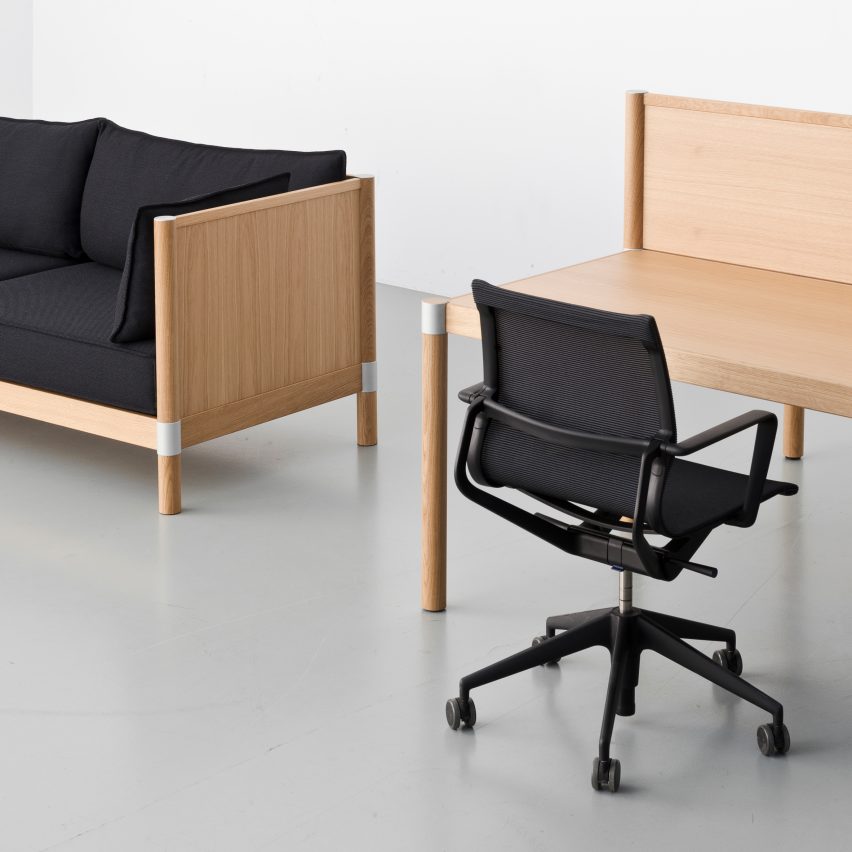
Bouroullec Brothers design Cyl office furniture to recall the warmth of home

Orgatec system - Studio Bouroullec + vitra

French designers Ronan and Erwan Bouroullec have created a furniture range for Vitra that aims to bring the atmosphere of home into the officeRead more

http://ift.tt/2eUQRX3

BYA House / BUDIC


© Jaime Navarro

© Jaime Navarro


© Jaime Navarro


© Jaime Navarro


© Jaime Navarro


© Jaime Navarro

  • Architects: BUDIC
  • Location: Culiacán, Sinaloa, México
  • Architect In Charge: Fernando Pérez Vera
  • Area: 1250.0 sqm
  • Project Year: 2015
  • Photographs: Jaime Navarro
  • Project Manager: Luis Ramírez Villaseca
  • Project Architect : Edgar Benítez
  • Team : Octavio Cabrera, Andrea Canut, Dania Gómez.
  • Local Architect: Alan Machado
  • Interior Designer: Gloria Cortina
  • Structural Engineer: Oliver Ubando
  • Lighting Design: Artec3 Studio

© Jaime Navarro

© Jaime Navarro

From the architect. The client approached BUDIC (http://www.budic.com.mx) with two main requests for their house project, one functional and one aspirational. On the one hand, they needed a house that had adequate scale and comfort for a couple whose kids have grown and left the home, but that at the same time in which they could have a Christmas celebration with over 60 members of their extended family. On the other hand, they wanted to live in a “French Villa” that took advantage of the privileged location that the site provides on a peninsula.


© Jaime Navarro

© Jaime Navarro

Using the “French Villa” as a conceptual departure point, we adapted a pyramidal hipped-roof module that is implemented throughout the plan varying in size depending on the hierarchy of the space. This approach allowed for an integrating concept, at the same time it permitted for continuous and flexible, yet differentiated, spaces. This approached fulfilled the restriction from the residential development, where the project is located, to have pitched roofs covered in the clay roof tiles common to traditional Mexican residential architecture and it also met the clients’ desire to have tall expansive spaces, as the roof measures as much as 7.8 in height internally.


First Floor Plan

First Floor Plan

The pyramid as an organizing module was not only employed in plan, but in elevation as well, generating the organization of all of the façade elements as a series of protruding and detracting pyramids clad in smooth “conchuela” marble in combination with rough marble panels to create a series of contrasting textures. The façade pyramids are then cut to open windows and doors whose edges are delineated by metal frames that integrate LED lighting to highlight the volumes and to produce dramatic effects at night.


© Jaime Navarro

© Jaime Navarro

The pyramid motif is repeated in other details in the house, including flooring, doors and fixed furniture design in order to weave a formal logic through all of the scales of the project


Sections

Sections

Functionally, the project is arranged very simply in two main wings –public and private- connected by a vestibule that opens up to a garden-patio that overlooks the lake and can be filled with a thin layer of water or emptied to allow for bigger family events.

 The access to the vestibule is through a closed courtyard shaded by an existing tree.


© Jaime Navarro

© Jaime Navarro

The private volume of the house includes the owners’ bedroom, which includes a bathroom with a jacuzzi that visually blends with the adjacent outdoor pool. It also includes the visitors’ bedrooms in the second floor, accessible through the main stair. The TV Room/Office acts as the space that marks the transition between the public and private realm.


Axonometric

Axonometric

The public wing is conceived as a series of continuous spaces –living room, bar, dining room, breakfast room and kitchen- that can be integrated or used separately. The covered terraces that they connect to on the south façade also act as sun protection and extensions of the interior public space. An additional request by the owners to be able to constantly see and hear their visiting grandchildren from the kitchen -where they enjoy cooking- was solved through the insertion of a game room in a mezzanine that overlooks an expansive double-height kitchen.


© Jaime Navarro

© Jaime Navarro

In the end, the project achieved the original goals of the clients by using their dream of living in a French Villa to develop a formal organizing concept that was flexible enough to seamlessly accommodate their lifestyle requirements as well.


© Jaime Navarro

© Jaime Navarro

http://ift.tt/2eXxUm9

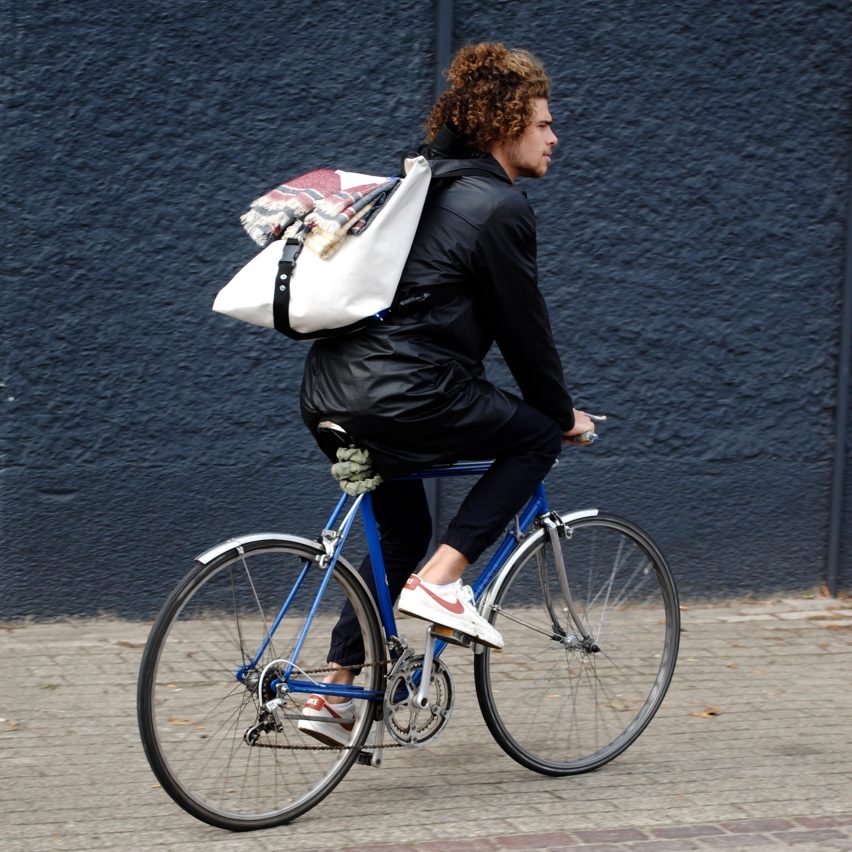
Refugee-made backpacks are produced from recycled life vests and boats

BAG2WORK backpacks by refugees

Two Dutch designers have worked with refugees to create a rucksack from discarded boats and life vests. Read more

http://ift.tt/2eOHcDt

Happy 130th birthday to Lady Liberty! On this day in 1886, the…

Happy 130th birthday to Lady Liberty! On this day in 1886, the Statue of Liberty was officially dedicated, becoming a universal symbol of freedom and democracy. In 1924, it was designated as a National Monument. 305 feet above the ground, her torch has been a shining beacon on our greatest days and our darkest nights. Photo courtesy of Michael Bissel.

Top 10 Lifehacks Everybody Should Learn from Nurses

Do you know that some nurse life hacks are also useful outside the medical practice?

Nursing is a tough job. Over time, nurses developed their own life hacks that make daily patient care easier to accomplish. Due to their innate ingenuity and resourcefulness, some of their life hacks are actually useful not only in the hospital and wards, but also in our homes and offices.

Take a look at the following life hacks we can learn from nurses.

1. Use hydrogen peroxide for blood stains

Hydrogen peroxide is a basic staple in every household’s medicine cabinet. It is a handy antiseptic solution for minor cuts and wound care. But did you know that you can also use it in removing blood stains from fabrics?

Start by putting one to three drops of hydrogen peroxide directly to the blood stain. Wait for a minute before adding more drops.

The solution works best for blood stains on white fabrics. For colored fabrics, test for color fade reaction first by putting one drop of hydrogen peroxide in the inner hemline of the affected garment.

See Also: How to Get Rid of Lily Pollen Stains

2. Use ground coffee beans as odor neutralizer

ground-coffee-odor-neutralizer

Nurses use ground coffee beans from their pantry as odor neutralizers in their station or in patents’ room. Ground coffee beans act like charcoal in absorbing unpleasant odors in an enclosed room. The fragrant coffee aroma also masks any unpleasant smell present.

Freshly grounded coffee beans work best but if it’s not available, you can also try used ground coffee bean from coffee making machines. Just put a handful amount in a bowl and leave near the source of the unpleasant smell.

If you need a lot, coffee shops will commonly give it out to you for free.

See Also: Cheap Cleaning 101 – Use Baking Soda

3. Smell alcohol swabs to relieve nausea

Feeling nauseous? Reach out for some alcohol pads and swipe one under your nose. If alcohol pads are not available, rub a small amount of isopropyl alcohol on your palm and take a whiff.

While nurses get used to different medicines and body fluids, they sometimes have a bad day and end up feeling nauseous hence this little trick. Sometimes, they even swipe their facemasks with alcohol if they need to get back to bedside care while still feeling nauseated.

The sharp smell of alcohol is effective in relieving nausea for most people. This life hack is also helpful in relieving sinus discomfort.

4. Use alcohol to remove tangled, matted hair

Bedridden patients have one thing in common – tangled, matted hair. Nurses solve this problem by pouring a small amount of alcohol over patient’s matted hair.

Alcohol dissolves oiliness and breaks down any other substance that may be causing tangles. It also removes unpleasant hair odor.

To use this trick, put a moderate amount of alcohol in your palm and rub in matted hair. Let the solution stay for one to two minutes before trying to untangle hair with a wide-toothed comb.

5. Remove unpleasant odor from your hands with toothpaste

It’s typical for nurses to be involved in stinky situations. When they clean and replace the diapers of bedridden patients, the smell sometimes sticks on their hands even while sill covered with latex gloves. For strong odors, handwashing is not enough and this is when they learned to use toothpaste as a trick.

To dissolve any unpleasant odor left in your hands, just rub toothpaste between your palms. Wait for three minutes before rinsing and wash again with soap and water. It is best to use minty bubblegum toothpaste but if not available, using any regular toothpaste is also effective.

6. Put an ice pack behind your ear for persistent nausea and vomiting

If you are suffering from persistent nausea and vomiting, put an ice pack behind your ear for 5-10 minutes intermittently. You can also try moving the ice pack downward to your nape.

Cases of persistent nausea and vomiting can be related to inner ear problems. This can be relieved by putting an ice pack behind the ears. It can also be related to stress and for this case, rotating the ice pack around the nape area will offer relaxing relief.

7. Use heated blankets for calming


If you have an elderly family member or a sick patient in your home who feels restless, calm them down with the help of a heated blanket. This will also keep your patient from getting out of bed too much.

If not contraindicated, keep the room dark and cool for an even more calming environment.

8. Put Vicks under your nose when dealing with unpleasant odors

Nurses are used to unpleasant stinks but sometimes, smells get so strong that they need a good shield for their noses. Facemasks are not enough and during these times, Vicks is a handy solution.

If you can’t stand a particular smell but need to finish a particular task, just rub Vicks under your nose and breathe in the menthol scent.

9. Use mouthwash for smelly rooms

mouthwash-for-smelly-rooms

Aside from ground coffee beans, mouthwash solution is also effective in absorbing unpleasant odors in a room. Nurses put a washcloth soaked with mouthwash solution in a kidney basin and they leave it at bedside. It absorbs unpleasant smells while filling the room with a minty scent.

You can use this life hack in deodorizing a room especially during winter season. In a small bowl, just soak washcloth in 1 part of mouthwash and 1/2 part of water. Leave it at the center of the room for the whole day.

10. Keep kids and elderly occupied by folding washcloths

Kids, elderly folks, or sick patients can get restless in bed. If you don’t want them getting out of bed when they need to be staying still and resting, give them a pile of stuff to fold. They can be washcloths or handkerchiefs. This little household task should keep them busy for awhile until they feel drowsy or tired again.

BONUS! Use shaving cream to remove sticky feces

We’re sure nurses aren’t the only ones who get the run-in with sticky feces stubbornly sticking to skin. If you ever get in this situation (maybe from a pet or a baby running around the house), it’s shaving cream to the rescue.

Before you try wipes, apply a glob of shaving cream. Leave on for awhile until it loosens the sludge from your skin or from cloth faster.


We hope you can recall these nurse life hacks as needed. There’s no harm in trying them out as they are time-tested tricks of nurses in their work.


The post Top 10 Lifehacks Everybody Should Learn from Nurses appeared first on Dumb Little Man.

http://ift.tt/2eDc8pR