7 Ways To Save Money When Traveling In South Africa

Traveling to different places and going on trips, in general, is quite expensive. If you aren’t careful when making your plans, you can end up spending way beyond your budget.

If you are planning on South Africa as your next travel destination, expect the trip to be a bit pricey. However, with these tips, you’ll still be able to enjoy your travel in South Africa while cutting costs and saving money.

Travel off season

If you are to travel to South Africa, be sure to plan your trip off-season since plane tickets are much cheaper during this time. Find out the best time to travel off-season.

Get a group together

group trip

If you want to save money and cut the actual cost of your trip, consider planning your travel in South Africa with your friends.

Having a group to go with can cut down your trip’s total cost since you won’t need to shoulder all of the expenses and fees alone. In addition to helping you save, traveling with a group can also make the trip more enjoyable.

See Also: 4 Smart Ways to Travel The World For Free

Refrain from always eating out

Food trips are definitely one of the highlights of every travel. However, it is not convenient for you to always eat and dine out as this can easily shoot your expenses to the roof.

You have the option to go out and taste the country’s signature dishes, but it’ll save you more if you can include them as highlights on your itinerary. As for your other meals and snacks, it’ll be much better if you can cook cheap at your own place.

Hire a tour operator

When traveling to a new city, it is very convenient to have your own tour operator. Although it may require additional cost, having a tourist guide can help you plan out your travel within your budget.

When talking to your tourist operator, lay out your expectations, wants and budget limitations.

This will help you save time, money and effort since a travel operator knows where to get the cheapest deals in the area. They are familiar with the most affordable places, activities and locations to go.

If you really want to save much, then don’t be shy to ask for assistance while traveling.

Choose long stay rates

As for the length of stay, you’ll be able to save more if you stay longer. There are lots of packages and discount rates offered for people who choose to extend their travel in South Africa.

This is a win-win situation for you. You’ll be able to save while getting to see more of the place’s most beautiful views.

Consider walking

travel walking

Driving rented vehicles or taking cabs during your travel can greatly increase your expenses. Add to that is the cost of gas.

For a cheaper solution to these concerns, consider taking walks if your destination isn’t that far. You won’t only get to save money but you also get to enjoy the nice views in South Africa.

Research great deals

Before traveling, make sure you do your research and check out deals or packages that fit your budget first.

There are tons of package deals and special offers these days, especially with more people demanding them from travel agencies. Once you find the right deal, you’ll be able to greatly cut down the overall cost of your trip.

See Also: Use Pinterest to Plan Your Next Vacation — Here’s How

These are the best tips that can help you save money when traveling to wonderful places. If you are planning to travel in South Africa, make sure to keep these things in mind to make your trip more enjoyable and budget-friendly.


The post 7 Ways To Save Money When Traveling In South Africa appeared first on Dumb Little Man.

http://ift.tt/2ofpVsf

*** by Djony

How to Tap Into the Enormous Benefits of a Regular Sleeping Cycle https://t.co/eYSFhIrK9R via @SigNordal

//platform.twitter.com/widgets.js
from Twitter https://twitter.com/signordal

An impressive mix of pine savannas and wetlands, Grand Bay…

An impressive mix of pine savannas and wetlands, Grand Bay National Wildlife Refuge straddles the border of Alabama and Mississippi and preserves a uniquely southern environment. With only 5 percent of wet pine savanna remaining across its originally range, the refuge is home to many unusual plants, including 9 species of carnivorous plants. Discover these and other marvels as you explore this remarkable place. Photo by Tom Carlisle via U.S. Fish and Wildlife Service.

Warning! 5 Beauty Ingredients You Need To Avoid This Winter

As the temperature drops, the battle for healthy skin begins.

During winter, your skin can experience a lot of discomforts, like scaling, flaking, and itching. Applying creams and moisturizers without considering the pros and cons of the ingredients they contain can make things a lot worse for you.

If you are planning on changing your products or adding items to your vanity, below is a list of ingredients you should avoid and winter skin care tips you need to know.

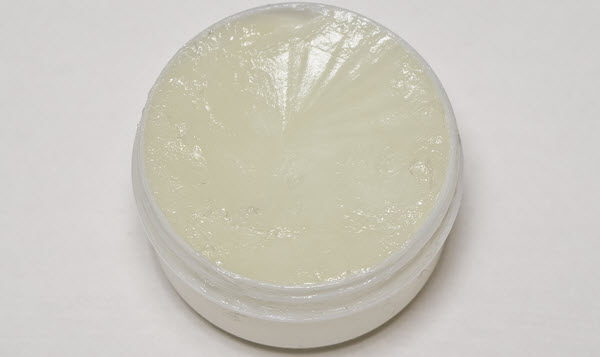
Petrolatum

petrolatum

Petrolatum, also known as petroleum, is extracted from crude oil. It is often marketed as a lubricant. In addition to this, it also makes a great remedy for diaper rash, raw nose, and flaky skin.

Health Canada considers petrolatum non-toxic. However, EWG gives it a ‘moderate hazard’ safety rating, which means it requires further studies to determine its safety level.

EWC and CCTFA warn the public about the excessive use of petrolatum as it’s linked with the risk of contamination from polycyclic aromatic hydrocarbons. It’s a cancer-causing chemical that can be found in crude oil.

The Experts’ Take:

Celeste Lutrario, vice president of research and development for Burt’s Bees says that petroleum is an exclusive barrier which helps lock in moisture. It doesn’t, however, allow moisture to be absorbed from the atmosphere. As a result, petrolatum can potentially suffocate the skin.

Reflecting this claim, a research at Herb Research Foundation noticed that petrolatum used in skincare products suffocate the skin by absorbing the chemicals directly into the bloodstream. This, in turn, decreases oxygen absorption by the skin.

Petrolatum can cause skin photosensitivity and promote sun damage, too. It interferes with the body’s moisturizing mechanism leading to dry skin.

The comedogenic property of petrolatum completely seals off the skin from air, water or anything else that wants to enter or leave its surface.

Soap

soap

The skin has its natural barrier which is maintained by its pH level. Normally, the skin’s pH level is marked between 4 to 6.5.

Soaps, on the other hand, are considered harsh on the skin due to their high pH level. Because of their lye and fat contents, they are considered alkaline and can disrupt the skin’s natural pH level.

The Experts’ Take:

Sherry Ingraham, M.D, M.P.H, a dermatologist in Texas, says that soaps strip the skin of lipids. One of her winter skin care tips is to avoid using soap-based cleansers.

Using soap makes the skin dry, especially during the cold season. It sucks the natural oils from the skin and leaves it dry.

Apart from that, regularly washing your face with soap will leave your face haggard and wrinkled. The harmful chemicals in soap can clear the dust and dirt on your skin, but they can compromise your skin’s health. Because of these things, experts recommend the use of syndet bars (synthetic detergent cleansers) instead.

This doesn’t mean that all soaps harm skin. Products with herbal base, for example, contain plenty of moisturizing ingredients.

See Also: 10 Best Skin Foods For Healthy Glowing Skin

Astringents

Generally, people who have oily skin use astringents to minimize the size of their pores. Unfortunately, most of these astringents are alcohol-based, which means they can potentially dry your skin out.

To avoid the excessive dryness, use an astringent that has witch hazel as its main ingredient. Pick one that has anti-bacterial properties, too.

The Experts’ Take:

Astringents, especially those containing alcohol can strip the skin’s natural oils, says Dr. Foitl.

The overuse of astringent will hurt your skin, especially if you already have dry skin. People with sensitive skin should also avoid alcohol-based astringents completely to avoid the risk of irritation.

In addition to an astringent’s main ingredient, you should watch out for the amount you use.

Since astringents have drying effects, applying excessive amounts can force the skin to produce excessive oil to protect itself. This defense mechanism can put your skin at risk of more problems, like skin breakouts and clogged pores.

The main thing you have to remember is to use products in lesser quantity. Overuse of astringents, especially in winter, can result in uneven complexion. It can also make your skin unprotected, weak and prone to dermatitis, dry skin and even infection.

Heavy Fragrances

heavy fragrances

There are about 500 potential chemicals used under the name fragrance. Unfortunately, most companies do not list all the ingredients they used while making their products’ fragrances.

To give you an idea, you should stay away from products that contain ethanol, acetaldehyde, and benzyl acetate. Other common chemicals used for fragrances include acetone, ethyl acetate, and a-pinene.

The Experts’ Take:

The chemicals used in fragrances can cause irritability, mental vagueness, muscle pain and asthma. They can lead to sinus problems, headache, sore throat, and skin irritation, too.

Researchers have also established that a lot of ingredients found in fragrances are neurotoxins, which means they have poisonous effects on the brain and nervous system.

For a healthier solution, you should go for unscented or minimally scented products. Make sure to read labels properly and use products that contain natural ingredients.

Cortisone

Cortisone is a steroid that prevents the release of substances that cause inflammation. It is more commonly used in moisturizing creams and salves.

It decreases hyperpigmentation, hives, and stretch marks. Cortisone also works well in soothing dry skin and irritation.

Although beneficial, creams containing cortisone may cause stinging, burning, irritation, dryness and itching.

The Experts’ Take:

“Don’t fall into the trap of including cortisone creams into your routine,” advises Dr. Foitl. It can treat allergies and rashes if used in short term, but long term use can make your skin addicted to it. It can take months for the skin to return back to its normal state.

Apart from that, long term use of cortisone can lead to redness, dryness and painful burning, too. It can also cause enlarged pores and damaged blood cells.

Consult a doctor right away if your skin experiences any adverse reaction from using cortisone creams.

See Also: 5 Ways To Keep Your Skin Healthy This Winter


The post Warning! 5 Beauty Ingredients You Need To Avoid This Winter appeared first on Dumb Little Man.

http://ift.tt/2oCu1GM

10 Conflict Resolution Skills For Having A “Good” Fight

Conflict Resolution Skills


There’s no way around it: living a full life means embracing conflicts with other people.

In the course of a typical week most of us will encounter coworkers, friends, and family members who have their own beliefs, preferences, tastes, intentions, and plans.

What we want or believe won’t always align with what others want or believe.

Unfortunately, while most of us would like to think we’re flexible and creative as problem solvers, research suggests that we’re first and foremost conflict averse, biting our tongue or actively taking steps to avoid potential conflict with others.

Whether it’s a work colleague’s bad idea, a roommate’s annoying habit, or an in-law rattling on about politics, many of us would rather shut up (rolling our eyes or complaining to friends) than engage.

When we do engage, we may give in quickly or compromise, failing to meet our own needs or devise really useful solutions.

Or if we dig in our heels, we fall into the trap of trying only to persuade the other side that our belief or preference is the right one – missing the chance to learn more and to problem solve.

In short, what most of us do well is to negotiate solutions to conflict.

Why is that?

Learn 10 conflict resolution skills for having a good fight.

First, conflict is more emotionally perilous than we may think.

My research has shown that people rate the prospect of conflict with a friend or roommate to be about as pleasant as running out of gas in the middle of traffic or sleeping on an airport floor.

Second, “negotiating” isn’t a strategy that is modeled well for most us. Too many of us don’t really understand why negotiation is such a powerful process option, and what it means to negotiate effectively, particularly when relationships matter.

Finally, we don’t know how to build the right kind of confidence in approaching and resolving conflict effectively.

Conflict: why we hate it so much.

As I argue in Resolve: Negotiating Life’s Conflicts with Greater Confidence, most conflicts are “crucibles” in which our own mix of motives and fears are interacting, under pressure.

We want to achieve a better outcome — stopping the neighbor’s loud music, amending our spouse’s proposed vacation plans, or revising a new work policy. But when relationships matter, we’re driven by two other motives.

The first is the desire to preserve what psychologists and behavioral economists call social capital — the relationship(s) or reputations that are at stake.

Humans are highly social animals, and we tend to achieve better outcomes over time when we have many allies and few enemies.

Conflicts that aren’t managed well can put social capital at risk. Will my spouse be in a foul mood if we argue? Will the relationship with my neighbor or in-law suffer if we disagree? What will they tell others about me?

The second is the desire to avoid negative feelings in ourselves and others. Some of us are more prone to negative emotions than others; some of us self-monitor more than others; some of us have been raised (by family and culture) to believe that certain emotions are harmful or rude.

These personality tendencies (called temperament, emotional awareness, and meta-emotional style) mean that for some of us, conflicts can become an emotional minefield in which we twist and turn to try to avoid feeling bad or making the other person feel bad.

How to have a “good” fight.

To live fully, we need to get better at having a good fight. What does that mean? It means understanding how to approach and resolve conflicts in ways that generate useful solutions while protecting relationships.

A good fight doesn’t mean being “nicer” about fighting. Rather, it means, having a good process for working through differences. And this is where negotiation becomes so important.

Negotiating well means deploying a process of creating better solutions — ones that meet each person’s most important needs and preferences — in a way that protects social capital and manages emotions.

We need to develop mastery in negotiating, and this only happens through practice.

Sadly, most of us don’t see negotiation modeled often or well in our families or beyond. Much of what we see in Hollywood movies are examples of extreme negotiation (hostage situations) and stereotypically amusing negotiation (haggling).

More often what we see modeled is active avoidance, giving in, compromise (which may leave no one happy, when stakes are high), and mutual attempts at persuasion.

Negotiation is not about persuasion. There is an element of persuasion in most negotiations, but to protect relationships and generate solutions, two (or more) heads are almost always better than my idea (or yours).

What we need is a better way to disagree — a way to have a “good” fight. This isn’t something that happens overnight; it is something that we build over time, sometimes in partnership with our spouses, friends, or coworkers.

Forty years of negotiation research suggest that there are reliable traps we fall into, and reliable ways that we screw up when we think about conflict. (This is true beyond the negotiating table, and bestsellers like Predictably Irrational and Thinking Fast and Slow are excellent summaries.)

To build our confidence in approaching conflict, managing our own foibles, and dealing with stressors of the conflict crucible, we need to develop confidence, without becoming arrogant or pushy.

Books like Sheryl Sandberg’s Lean In did a terrific job of describing the costs of not negotiating often or well, but not such a great job at explaining how to “lean in” without having others become irritated.

A slew of research suggests that when less powerful people act in more assertive ways, they are punished by others, rather than rewarded.

Develop greater confidence in negotiating life’s conflicts.

Developing confidence in approaching and managing conflicts requires first understanding what it means to be genuinely confident.

Confidence is not bravado, braggadocio, fake-it-til-you-make-it, or the use of intimidating or aggressive tactics.

True confidence in social settings has three components: mastery (a behavioral component), awareness (a cognitive or mental component) and poise (an emotional component).

Read Related: 9 Powerful Body Language Tips to Boost Your Confidence

There are ways to cultivate all three of these facets of confidence. (To distill a great deal of research into a few sentences: have a process plan; practice out loud; use checklists; diversify your coping style; engineering situations.)

But there are specific tactics that make sense when you are in a situation where the relationship matters most — whether is it a romantic connection, a family member, a roommate, a friend, or a mentor.

For these situations, here are ten conflict resolution skills to help you to build confidence and competence approaching and navigating a “good” fight.

1. Pick the right time.

Too often, we decide to start up conflict in the evening, when we’re tired. With more of us working longer hours, this is recipe for disaster.

Instead, schedule a time (Saturday lunch, once a month) to handle issues where you are disagreeing, or a behavior that someone is finding irritating.

2. Start with a constructive frame.

“I’d like to discuss the way to talk to the kids” actually sounds to the receiver like a criticism. The problem, as defined, is in the other person.

Instead try, “I’d like to see if we can agree on some rules for how we talk to the kids.” This is a more constructive frame for the conversation, naming a positive goal rather than implying a deficiency in the other person.

3. Create ground rules together.

When my wife and I were first married, we realized that arguing in the evening rarely led to good outcomes. We implemented a “six o’clock rule” that prevented us from raising major issues after 6:00 pm.

Research on circadian rhythms suggests why this is helpful: most of us are not as patient and alert as we are earlier in the day.

Another rule? Avoid using the words always and never. But those are just ours. You and your partner or friends should come up with your own, over time.

4. Listen and validate first.

Remember that letting someone feel heard and understood is a powerful way to help them to be more generous and flexible.

You can acknowledge what someone is saying or feeling without agreeing that they are “right” to their view or feeling.

Simply summarizing what you are hearing, without judgment, is a powerfully constructive move.

5. Generate more than one option.

When future plans or current problematic behaviors are the topic, disputants tend to rush quickly to a proposed solution and then argue about whether it is good or bad.

Instead, declare a short period of brainstorming, where many solutions get put forward, without criticism.

Once multiple solutions are present, you may find that combining several of them is quickly agreeable to both people.

6. Seek social resources.

Too often we stew for days or weeks about things that are bothering us, eventually letting loose with a barrage of criticisms that make constructive engagement hard for the other person.

Instead, find a confidant you can talk to about what is bothering you before resentments build up. Ask them to help you.

They can help you articulate what is really bothering you, and what you really want; help you think of a constructive opening frame; help you think of questions to ask; help you talk about your fears.

As new data on relationships has shown, social support is a remarkable aid in helping our brains to work better.

7. Recast criticism as complaint.

As research by John Gottman has shown, there is an important distinction between a complaint and criticism.

Complaint identifies a behavior as the problem; criticism implies a quality or trait inside the other person as the problem.

Read Related: How to Deal With Mean and Nasty People

If your partner or roommate opens with, “Your absent-mindedness is getting to be a problem,” avoid the urge to debate about whether you are absent-minded.

Instead, focus on specifics. What specifically are we talking about?

Conversations that begin with criticism tend to spiral downward into cycles of defensiveness and counter-criticism, leaving everyone unhappy.

Conversations that begin with a specific complaint tend to lead to more concrete solutions.

8. Use the phrase, “Anything else?”

A powerful move at the outset of a conflict is to invite the other person to really “empty their pockets” in terms of their issues with you.

“I want to talk about summer plans,” says Allison. But what if instead of starting in, Pat simply asks, “Anything else?”

Read Related: What is Empathy and How Does It Differ From Sympathy

The real issue might be that Allison feels that Pat doesn’t want to spend time together that summer. Making space for the real issue to emerge at the front end can save a lot of time.

9. Learn a few repair moves.

Repair moves are moves that help ease tensions in the thick of an emotionally difficult disagreement.

Three powerful ones are humor (which must be funny to the other person); reminiscing about a fun time together; and apologizing for your part in creating a problem.

10. Reframe conflict as normal.

Last, but definitely not least: think of conflict as a signal that your relationship is normal, not troubled.

All meaningful relationships have conflicts. The presence of conflict or disagreement is not a sign that things are somehow bad or wrong in the relationship.

Rather, it’s the way we handle conflict that matters — and avoiding conflict is extremely costly in the long run, because we get worse outcomes and fail to seize opportunities to deepen our mutual understanding and trust.

These ten moves will help create conditions in close relationships that make it more likely you will generate beneficial solutions in ways that protect social capital and avoid bad feeling.

Finally, remember this: habits around conflict are like well-worn grooves that we fall into over and over again.

Creating new ones takes time and practice. But starting with a better process is the fastest route to having better fights, and to building your confidence in approaching and navigating conflict when the stakes are high.

Author Bio:

Founder and president of Movius Consulting, Dr. Hal Movius is also consultant to the Affective Neuroscience Laboratory at the University of Virginia, research collaborator at Ethical Systems at NYU Stern, senior consultant to the Consensus Building Institute, and visiting executive lecturer at the Darden Graduate School of Business. He is the author of Resolve: Negotiating Life’s Conflicts with Greater Confidence (2017) which prescribes steps for negotiating more effectively without becoming arrogant or pushy.

The post 10 Conflict Resolution Skills For Having A “Good” Fight appeared first on Live Bold and Bloom.

http://ift.tt/2nDlndy

A Contemporary Home in Itajaí, Brazil

This construction, located in Itajaí, Santa Catarina State, Brazil, covers an area of of 937 square meters, and was made by Jobim Carlevaro Arquitetos between 2013 and 2015. It consists of three very well distributed levels. In the basement, we find a large garage and service area. In the second level are the social areas which consist of a large living-dining room as well as a comfortable kitchen. Outside, the..

More…

New York City – New York – USA (by M M) 

New York City – New York – USA (by M M

5+1 Things I learned From The Best Personal Finance Books

Although we live in a time where we can literally find everything and anything online, there are still a lot of people who are clueless when it comes to money. Just imagine how many of us are still living in debt instead of wealth.

If you are one of these people, here are some of the most important personal finance tips I can share with you.

Write down your goals

list-goals

It is impossible to reach a destination when you don’t know exactly what and where it is. Everybody knows that, but a lot of people still fail to write down their goals in terms of work, money, achievements, or even personal life.

Know what you want and know it in detail.

What is your desired monthly income? How will you reach it? How long will it take you? How will your life change when you reach it? How will you and your life look like? How will you feel?

Learn these things about yourself and revise your goals as needed.

Take action

If a decision is not accompanied by action, then it’s just a wish and not an action.

Ideally, you don’t really need to take big steps right away. In fact, doing a quick research on how you can achieve your goals is one simple way to get started.

Keep yourself acting daily towards your goal even if it is with the smallest thing. You won’t reach your destination in one huge step but with a 1,000 small ones.

Everyone can save money

The more money we make, the more we spend.

That is exactly why most people are never satisfied with the amount of money they make. They want more because they spend too much money that they end up in debt.

In reality, you can save at least 10% of what you make if you…

See Also: 10 Ways To Save Money Without Compromising Your Lifestyle

…Pay yourself first!

From whatever you earn, put aside at least 10% BEFORE you spend anything. This way you’ll learn how to budget the remaining money you have for your expenses.

Open a savings account and use it. Don’t be one of those people who close their accounts after a couple of months.

Pay off your credit card

credit card

Settling a debt with high interest, like 17%, is like making an investment with 17% return! That is some great return, mind you.

Don’t just pay the minimum on your card. That is the banks’ trick to keep you paying forever. Put as much as you can spare above the minimum and keep on doing it until you are free from debt.

In case you have to pay more than one credit card (and who doesn’t?), there is a strategy you can use. It’s not magic, but it gives you a blueprint to follow.

Pay off the minimum amount on all cards except for the one with the smallest debt. In that one, pay off as much as you can every time.

When the smallest debt is paid off, do the same with the next one in order. Continue the process until you’ve cleared all your debts.

See Also: The Aussie Guide to Bad Credit & What to Do About It

+1. Poor people buy stuff; rich people buy assets

Average Joes think their cars or houses are assets when, in reality, they are actually liabilities. Rich people know this, so they try to put their money only on things that can make them earn more.

This is one of the best personal finance tips that is often overlooked by a lot of people.

Next time you want to spend money on something, take a minute and think: “Is this going to help me increase my monthly income or not?”

If the answer is no, maybe it’ll be wiser to just let the idea go.


The post 5+1 Things I learned From The Best Personal Finance Books appeared first on Dumb Little Man.

http://ift.tt/2nOPajN

An Unusual Coffee House in Gijang, South Korea

Incredible as it may seem, this wonderful structure is part of a coffee shop built in Gijang, near Busan, Port City, the second largest city in South Korea. Gijang is famous for its beautiful and incredible seaside landscapes surrounded by rocky hills that give them an intimidating but, at the same time, mesmerizing appearance. This is part of the attractive that this wonderful cafe offers to visitors – after all,..

More…