Hasshoden-Charnel House in Ryusenji Temple / Love Architecture


© Masao Nishikawa 

© Masao Nishikawa 


© Masao Nishikawa 


© Masao Nishikawa 


© Masao Nishikawa 


© Masao Nishikawa 

  • Architects: Love Architecture
  • Location: Saitama, Saitama Prefecture, Japan
  • Architect In Charge: Yukio Asari
  • Area: 191.7 sqm
  • Project Year: 2015
  • Photographs: Masao Nishikawa 

Site Plan

Site Plan

From the architect. Opens the temple to community as a place to interact with “life”.
In recent years, the decay of local communities due to urbanization has changed the Japanese sense of religion including ancestor worship, weakening the “Jidan” (system where commoners had to register with a temple to prove their Buddhist faith) which is the financial basis of many temples in Japan. Charnel house, which is a new style of grave that appeared as though it responded to the trend of the contemporary times, is different from the graveyard passed down from generation to generation and does not follow the traditional Jidan system.


© Masao Nishikawa 

© Masao Nishikawa 

Amidst such time period, this temple, which stands in the city of Kawaguchi, had the garden changed into a funeral hall and parking lot, oppressing appearance of the main temple building. The tall fences surrounding the premises made the buildings a closed area. The over 40-year-old charnel house, which was rarely in use, stood in a quiet way.

Buddhism is originally not a religion that just supports the succession of families. The custom of visiting graves does not change easily even if the form of graves change. This is why we decided not only to renovate the charnel house related to “death” but also to reproduce the temple as a whole that involves people with “life”.


Basement Floor Plan

Basement Floor Plan

© Masao Nishikawa 

© Masao Nishikawa 

The originally curvy front approach was made straight, and existing granites were used to focus the perspective on the main temple. The place where it was originally the front approach was planted with trees to visually divide the area into funeral and worship areas. The fences along the front approach were then all removed, releasing the drawing power that a traditional religion naturally has. The locations of washstand, restroom, and the branching approaches that extend from the “Shinobi no komichi” (pathway of recollection) and the front approach were decided in relation to worship activity and the whole lot. Jizo and Buddha stone statues that had been gathered in one place were appropriately distributed along the front approach.


© Masao Nishikawa 

© Masao Nishikawa 

Designs the hours of worship through one-time natural phenomenon
While the forms of many graves have transformed into monuments and mechanism, relying on human-made pre-established harmony, the time and space for recollection of the dead should be something transcendent and beyond human knowledge.


© Masao Nishikawa 

© Masao Nishikawa 

The trees along both sides of the front approach and the flowers at one’s feet show one the sunlight through trees, and wind through rustling of leaves, and tell the change of seasons through different fruiting and blooming of flowers. The expressive walls of restroom and washstand and the ripples on water basin reflect the one-time natural phenomenon and function as a filter of natural tremor. This way, the path leading to the charnel house was set as a representative of “life” in opposition with the charnel house and graves representing “death”. The staircase bridging over the water basin functions as the boundary which separate life and death. The octagonal charnel house represents the Hades; essentially the form of the universe. The dim lit entrance makes one aware of the change in place through the luminance difference. The spiral staircase in the center made of rammed earth allows the top light from the sky to enter, reminding you of underground and promoting introspection within the rotational motion.


© Masao Nishikawa 

© Masao Nishikawa 

Section

Section

When you reach the charnel chamber, the luminous doors look like planets. The light streaming in through the gap in the bamboo ceiling blink like the stars in the space. This is where you face the deceased. The series of architectural facilities appeal directly to your perception along the time sequence of worship.


© Masao Nishikawa 

© Masao Nishikawa 

A fixed point to watch over cycle of life.

After the renovation, they say there are more visitors accompanied by children. We wish that children would play in the water basin during summer. They would play in the temple in their childhood. They would visit the temple and cherish it. Then they would marry and have children, and eventually pass away. We hope that this temple would be a place to watch over such cycle of life peacefully. The plan was to reconstruct the temple into its original state. Temples should remain the same.


© Masao Nishikawa 
© Masao Nishikawa 

http://ift.tt/2eA0cpJ

Timelapse movie captures visitor centre created by Reiulf Ramstad in the Norwegian mountains

Reiulf Ramstad-designed Trollstigen Visitor Centre

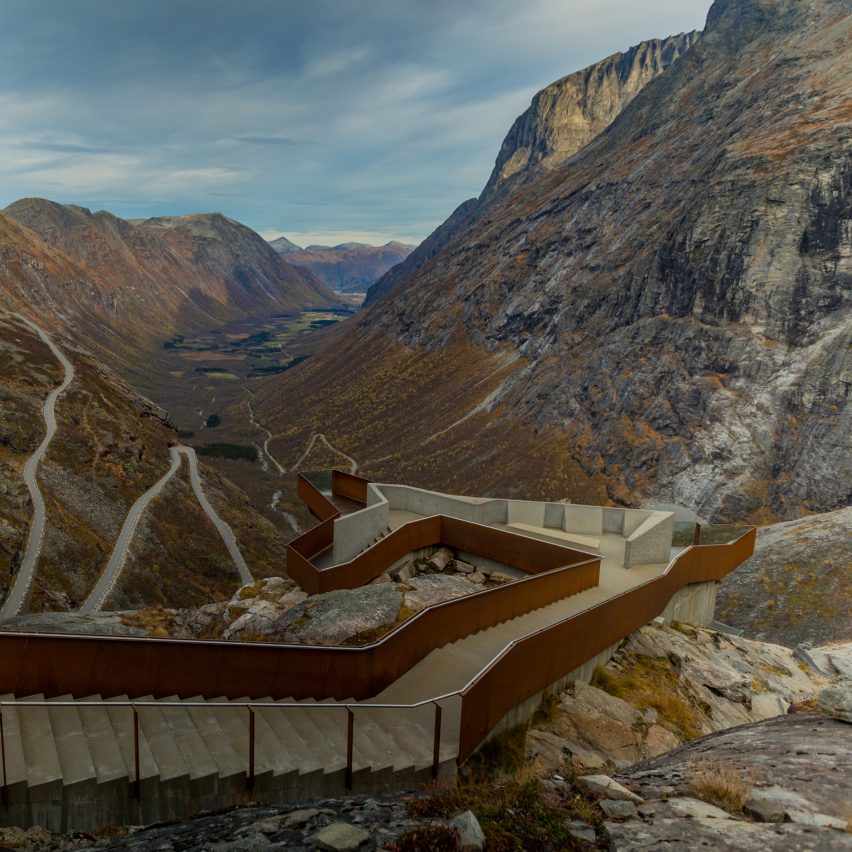
This movie by videographer Alejandro Villanueva tours the Reiulf Ramstad-designed Trollstigen Visitor Centre in rural Norway, revealing how its network of pathways zigzag across a landscape of rugged mountains and deep fjords. Read more

http://ift.tt/2eUwrvh

MW Works uses weathered cedar and glass to build waterside Washington retreat

Case Inlet Retreat by Mw works

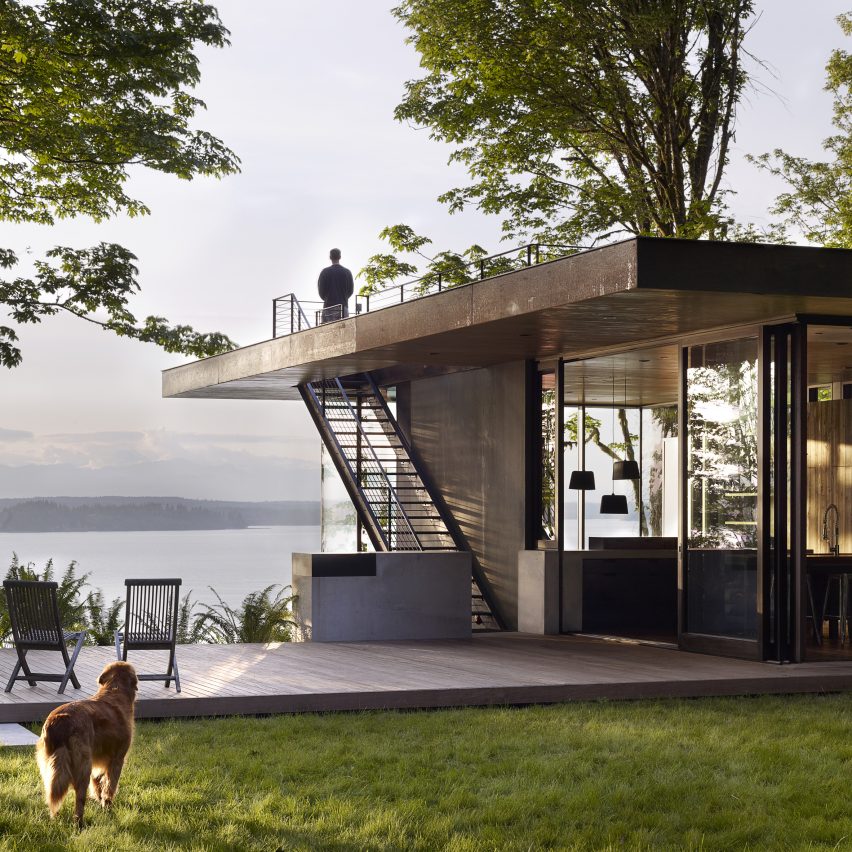
US firm MW Works Architecture + Design has created a holiday home with ample glazing and natural materials, helping it blend with its picturesque surroundings. Read more

http://ift.tt/2fzXwFE

Royal College of Art named most important design school on Dezeen Hot List

royal-college-of-art-helene-binet-dyson-building-rca-hot-list_dezeen_sq

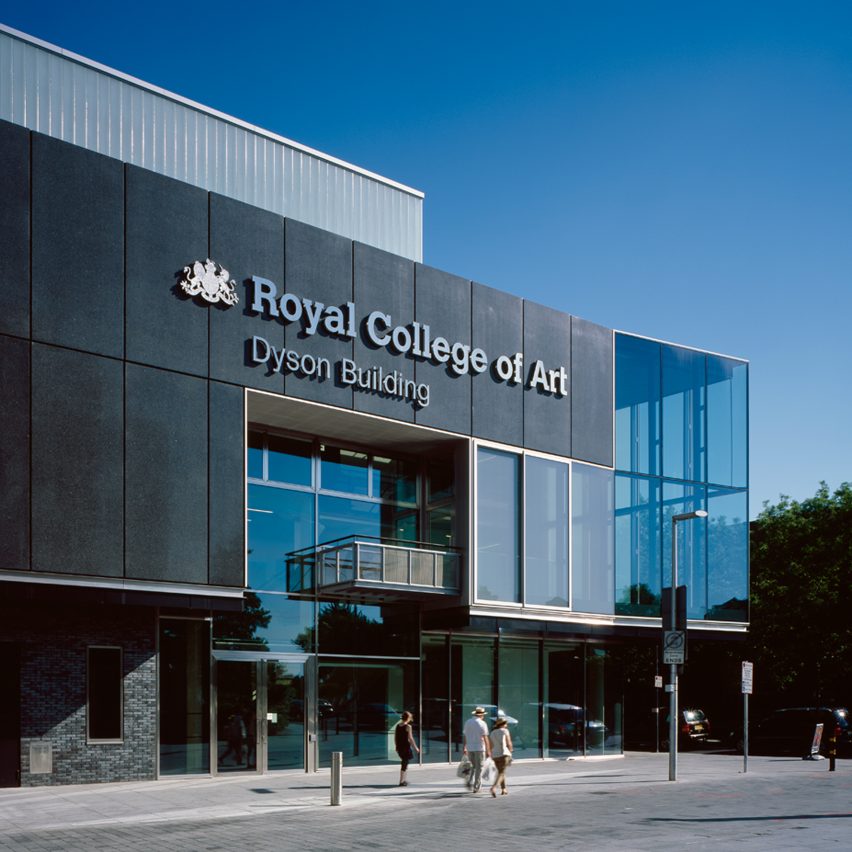
London’s Royal College of Art is the design school that Dezeen readers most want to hear about, finds our inaugural Dezeen Hot List. Read more

http://ift.tt/2fShOgv

Sunken washroom by Studio 304 allows residents to bathe in a garden setting

Sunken Bath by Studio 304

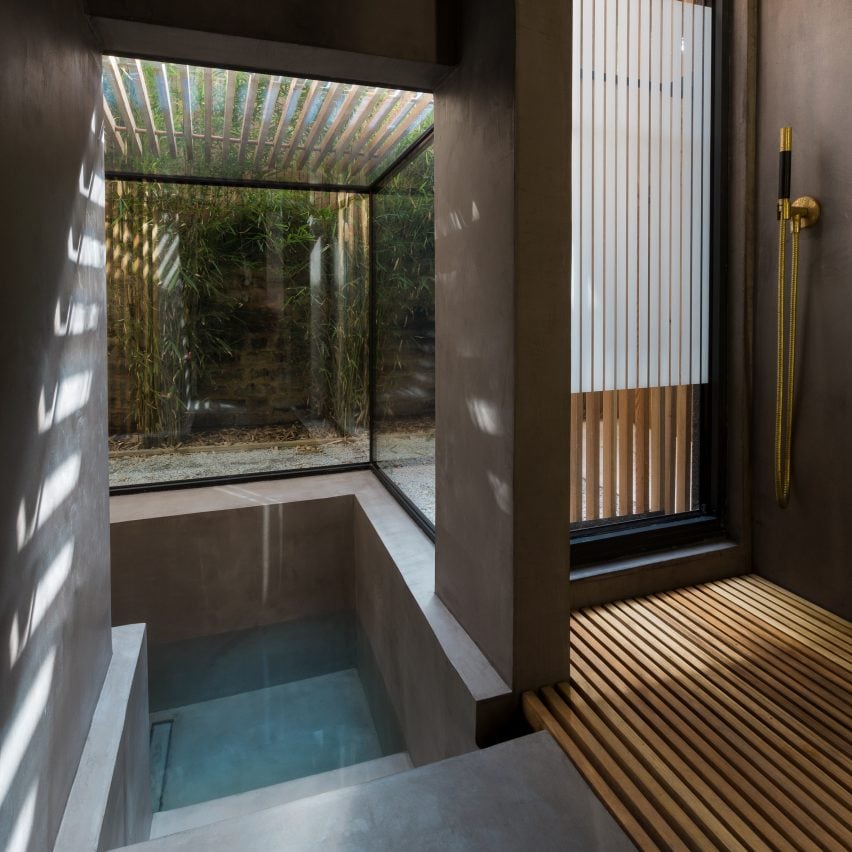
Studio 304 has added a glazed bathroom to a London flat, featuring a sunken bathtub that offers Japanese-style bathing to its occupants. Read more

http://ift.tt/2gaNzSu

Hekerua Bay Residence / Archimedia


© Patrick Reynolds

© Patrick Reynolds


© Patrick Reynolds


© Patrick Reynolds


© Patrick Reynolds


© Patrick Reynolds

  • Architects: Archimedia
  • Location: Hekerua Rd, Oneroa, Auckland 1081, New Zealand
  • Architect In Charge: Lindsay Mackie
  • Area: 390.0 sqm
  • Project Year: 2014
  • Photographs: Patrick Reynolds
  • Other Participants: Lindsay Mackie, Surya Fullerton, Canam Construction, Jonathan Boersen, Ormiston Associates, Boffa Miskell, Green Group Ltd, eCubed Building Workshop

© Patrick Reynolds

© Patrick Reynolds

The site is an elevated promontory above a rocky cove at the western entrance to a double bay on Waiheke Island in Auckland’s Hauraki Gulf.  The site slopes north-east toward a reef and sandy beaches opposite.


Site Plan

Site Plan

The house is a collaboration with the Client, an engineer with meticulous attention to detail, who owns a winery on the island. His sensibility for materials is directed by his Cypriot heritage and the sensory experiences founded in his Mediterranean culture. His brief was a single line instruction to enhance the experience of the occupants. 


© Patrick Reynolds

© Patrick Reynolds

As a structural engineer he has an affinity with concrete and in situ concrete was defined as the core material for the structure.  The Client sourced travertine, remembered from his childhood that matched the colour of the beaches across the bay and the clay-coloured sandstone of nearby island cliffs. 


Floor Plan

Floor Plan

Section

Section

The curved concrete forms resonate with the early 20th century gun emplacements that dot the margins of the Hauraki Gulf – rudimentary, part buried, part exposed, partly anchored, partly projecting from the land.

From these four posits – a specific material sensibility, an engineered concrete shell structure, the inclined topography of the place and the forms of the old concrete buildings nearby – the house emerged. 


© Patrick Reynolds

© Patrick Reynolds

The site is rebuilt as a series of platforms for living, aligned with the oblique contour, with a cubist pool of water part embedded, part exposed on the west edge. 

The master suite, a reading room, a second guest suite and a studio are suspended above these platforms. Between them they create a stage for human interaction. This stage opens and closes to the exterior entirely, combining with the terraces and the pool to create a continuous surface bridging inside and out.


© Patrick Reynolds

© Patrick Reynolds

The east and west elevations most clearly articulate the separation between site and superstructure and the single continuous line that traverses the outer edges of the concrete shells. 


© Patrick Reynolds

© Patrick Reynolds

http://ift.tt/2faSZJ9

The Dinosaur Egg Geological Museum / Wuhan HUST architecture and urban planning design institute


Courtesy of Wuhan HUST

Courtesy of Wuhan HUST


Courtesy of Wuhan HUST


Courtesy of Wuhan HUST


Courtesy of Wuhan HUST


Courtesy of Wuhan HUST


Master Plan

Master Plan

From the architect. Yunxian situates in the mountain area in central China, at 32°40′N, 110°37′E. It is in the “Hot-summer and Cold-winter climate zone”. The museum design adopts all local material, local teams and local construction techniques. It strives to create least disruption with most locally-sourced design input.

Cast-in-place concrete, reinforced concrete system, local construction team and local materials are used as much as possible.


Courtesy of Wuhan HUST

Courtesy of Wuhan HUST

Floor Plan

Floor Plan

The design used locally fast-grown bamboo as concrete molds, it also used old tiles from deserted local earth houses as the 2nd layer of roof. It also helps keep interior temperature in good condition for hot summer climate region. Without any decoration for inside and outside facade, only using some chimney-shaped light well in order to draw in natural daylight as spotlights for the dinosaur eggs.

Following the passive design principle, the Museum does not need to use any air condition and other artificial ventilation facilities.


Axonometric

Axonometric

Aside from design philosophy, another benefit of the local material and construction team/technique is the economic budget. The site condition including its topography and accessibility is rather complicated, which also results in a building form complicated to construct. Using local material and local construction technique also helps to ensure a modest construction budget while keeping a high-quality contextual design. The Design team also made very frequent trips to the construction site to deliver quality-controlled project within a friendly budget.


Courtesy of Wuhan HUST

Courtesy of Wuhan HUST

The morphology of the design roots in spatial distribution of the dinosaur eggs and vertical variation of the on-site topography. The site remained least disturbed, with the minimally- designed walking bridge gently floating above to hug around the site of the eggs, which further determines the direction and form of the architecture that serves as a silent backdrop for the site. It is a building that is modest to the site, honest to the history and respectful to the archaeological excavation.


Courtesy of Wuhan HUST

Courtesy of Wuhan HUST

Old material + New construction technique:

– The fast-growing local bamboo was chosen as a low-budget sustainable material. However the conventional material is used with innovation: the bamboo was used mostly to make molds that provides concrete a unique, rough and textual finishing.
– The old tiles from deserted earth houses nearby were also recycled in an innovative way: They are used to constructed second layer of the roof. Two layers of roof enables the circulation of air in between, therefore minimizing heat from entering the building during the summer.
– “The Chimneys of Light” are used to provide simple and pure “natural spotlight” for the dinosaur eggs, the only item on exhibition in the entire museum. “The Chimneys of Light” also construct a mysterious atmosphere for the exhibition.


Elevation

Elevation

Innovative “wind-transparent but light-blocking” window system, solving conflicts between dark visual indoor environment and well-natural-ventilated exhibition sensual environment. 

The project collects and piles big rocks from rivers and creeks nearby to protect the foundation of architecture. The unaltered natural grass-field and 800-year-old ancient trees are the main landscape feature, which echoes the natural and minimalistic design principles from the architecture.


Courtesy of Wuhan HUST

Courtesy of Wuhan HUST

http://ift.tt/2ezvZr4

Lahinch House / Lachlan Shepherd Architects


© Ben Hosking

© Ben Hosking


© Ben Hosking


© Ben Hosking


© Ben Hosking


© Ben Hosking

  • Architects: Lachlan Shepherd Architects
  • Location: Torquay VIC 3228, Australia
  • Architect In Charge: Lachlan Shepherd, James Donaldson, Kang Gao
  • Area: 350.0 sqm
  • Project Year: 2016
  • Photographs: Ben Hosking
  • Builder: Torquay Homes Pty Ltd
  • Engineer: Andrew Cherubin and Associates
  • Interior Designer : Sweden Interiors

© Ben Hosking

© Ben Hosking

Floor Plan 01

Floor Plan 01

In the first briefing meeting with our clients Angie, Vic and their Dalmatian Pirate, Angie’s main brief requirement was that she wanted people to walk in and say/think “holy f***”…

It was conceived as a place for entertaining, whereby the owners regularly have guests stay including family and friends from within Australia and abroad. Thus, the house had to function firstly as a home to its two full-time occupants (and their Dalmatian) and secondly as a luxury hotel; each guest bedroom is provided with its own ensuite and robe areas, so essentially their guests can “check-in” to their own space before moving into the main living zones of the house.


© Ben Hosking

© Ben Hosking

The planning responds to the site surrounds by turning its back on the one adjacent neighbour and opening up to the beautiful golf course views to the south and east. Large expanses of glazing work to draw the rolling golf greens and sound dunes beyond into the home, blurring the distinction between outside and inside.


© Ben Hosking

© Ben Hosking

The main kitchen and living zones are also tied to an integrated plunge pool, which is heated year-round, providing a practical, usable pool and doubling as a water feature which is viewed from all living zones. There are no walls diving the lounge, kitchen, dining, and sitting zones but they are separated visually and spatially by the sunken lounge area.


© Ben Hosking

© Ben Hosking

© Ben Hosking

© Ben Hosking

The building, whilst highly detailed and technical in its design/construction, also represents an honest, low-maintenance and warm home.


Sections

Sections

Product Description:
The shade factor external blinds were utilized to provide full sun-control to the northern façade of the building, allowing for solar passive gain as required, along with allowing for privacy for guests as required at the street interface.


© Ben Hosking

© Ben Hosking

http://ift.tt/2eYF6A6

IKEA Recreates Syrian Home Inside their Store in Efforts to Aid Refugee Crisis


via POL

via POL

Swedish mega-retailer IKEA is taking action to combat the destitute living conditions faced by Syrian refugees.

Partnering with the Norwegian Red Cross and advertising agency POL, IKEA has installed a replica of refugee house in Damascus, Syria at their store in Slependen, Norway.


via POL


via POL


via POL


Screenshot via Design Museum

Just 25 square meters in area, the structure represents the actual home of a woman named Rana and her nine family members. Presented in stark contrast to the nearby IKEA room displays, the room’s concrete block walls and sparse furnishings highlight the everyday struggles of Syrian citizens.

“When we had to flee to this area to find safety, we did not have enough money to rent a better place. We have no money to buy mattresses and blankets, or clothes for the children,” Rana told the Norwegian Red Cross.


via POL

via POL

via POL

via POL

Items throughout the model home feature the iconic IKEA tags, but instead of price and dimensions, they list stories about the Syrian family’s daily life in the face of war and the crippling shortages of the basic needs like food, water, and medical supplies. Most importantly, each tag also provides information about how customers can help.


via POL

via POL

Meanwhile, in London, the Design Museum has installed one of IKEA’s flat-pack refugee shelters, “the Better Shelter,” outside the South Kensington Underground station, just steps away from the institution’s new home within a 1960s structure renovated by a team including OMA and John Pawson.

The occasion marks the Better Shelter’s first public exhibit in the UK, and will be on display up until the museum’s reopening on November 24th.

Nominated for the Design Museum’s Beazley Designs of the Year Award 2016, the Better Shelter was designed by the IKEA Foundation in collaboration with the UN Refugee Agency (UNHCR) and the Refugee Housing Unit in 2013 to provide a high-quality temporary accommodation that could replace the tents currently used in refugee camps all over the world.

Thousands of the structures have since been deployed worldwide, serving as a longer term solution for housing and other needs.

News via TV-aksjonen, Norwegian Red Cross, the Design Museum. H/T Bored Panda, Dezeen.

http://ift.tt/2fah1DY

Hires Apartment Renovation / buro5


© Artem Ivanov

© Artem Ivanov


© Artem Ivanov


© Artem Ivanov


© Artem Ivanov


© Artem Ivanov

  • Architects: buro5
  • Location: Moscow, Russia
  • Lead Architects: Boris Denisyuk
  • Area: 105.0 sqm
  • Project Year: 2016
  • Photographs: Artem Ivanov

The basis for the creation of the interior served as a non-standard original layout of the house and the customer’s wishes.

The apartment is located in a 40-storey high-rise building, in which there are no open windows due to strong gusts of wind. Instead, ventilation is provided through the front grille, located on the balcony. There’s also the place to set the air conditioner was provided. Balcony area was 25 m2


© Artem Ivanov

© Artem Ivanov

The client wanted to make part of the balcony of the living space, which is not contrary to the design of the house. To do this, we had to first solve three major problems:

– Preserve the free flow of fresh air
– Place the air conditioner
– To increase the heating power


© Artem Ivanov

© Artem Ivanov

These problems we have decided due to:

– The installation of double glazing
– Create a small room for air conditioners
– Installation of powerful radiators.


© Artem Ivanov

© Artem Ivanov

In addition, the Client has set the task to make the most spacious room with a minimum of interior items.

All these factors will affect the future of the interior aesthetics – we chose the style of Urban.
The general mood of the interior is transmitted through the use of dark tones in the interior and unusual for a residential materials: facade tiles, stucco, a large number of front windows, which we closed with black shutters, black huge radiators that resemble urban pipes and even black garage shutters, behind which hidden lockers.


© Artem Ivanov

© Artem Ivanov

Final Touch overall style added views – the house is located on the banks of the Moscow River with views of the industrial landscapes.


Before  Plan

Before Plan

After Plan

After Plan

http://ift.tt/2g8Aie7