Batiment Periscolaire / Atelier 56S


© Jeremias Gonzalez

© Jeremias Gonzalez


© Jeremias Gonzalez


© Jeremias Gonzalez


© Jeremias Gonzalez


© Jeremias Gonzalez


© Jeremias Gonzalez

© Jeremias Gonzalez

The urban need was to build a public infrastructure that hosts an associative space and an extra-curricular space. 

The project’s shape was born from the desire to attract people and invite them to enter the building. 


© Jeremias Gonzalez

© Jeremias Gonzalez

The way the transition between outside and inside areas was drawn makes of this border between inside and out a real meeting space. 

On the main facade, the walls lean toward the inside of the building in order to generate an outside access hall. 


© Jeremias Gonzalez

© Jeremias Gonzalez

The transparent gable walls offer large views on the outside, not only on the urban environment but also on the rural landscape. The simple shape of the infrastructure and the use of local stones and slates make the building perfectly merge into its urban surroundings. 


Floor Plan

Floor Plan

Three different sizes of the granite stone were used for the main facade to give it a more contemporary aspect.


© Jeremias Gonzalez

© Jeremias Gonzalez

Product Description. The use of granite stones for the façade allows us to use a local material in relationship with the surroundings; the stones are between 0.3 and 1m long and between 0.03, 0.05 and 0.07m high. Their dimensions give a contemporary image to an old material. 


© Jeremias Gonzalez

© Jeremias Gonzalez

http://ift.tt/2eQ2jBB

Andrew Trotter Studio Designs a Modern Day Farmhouse in Ostuni, Italy

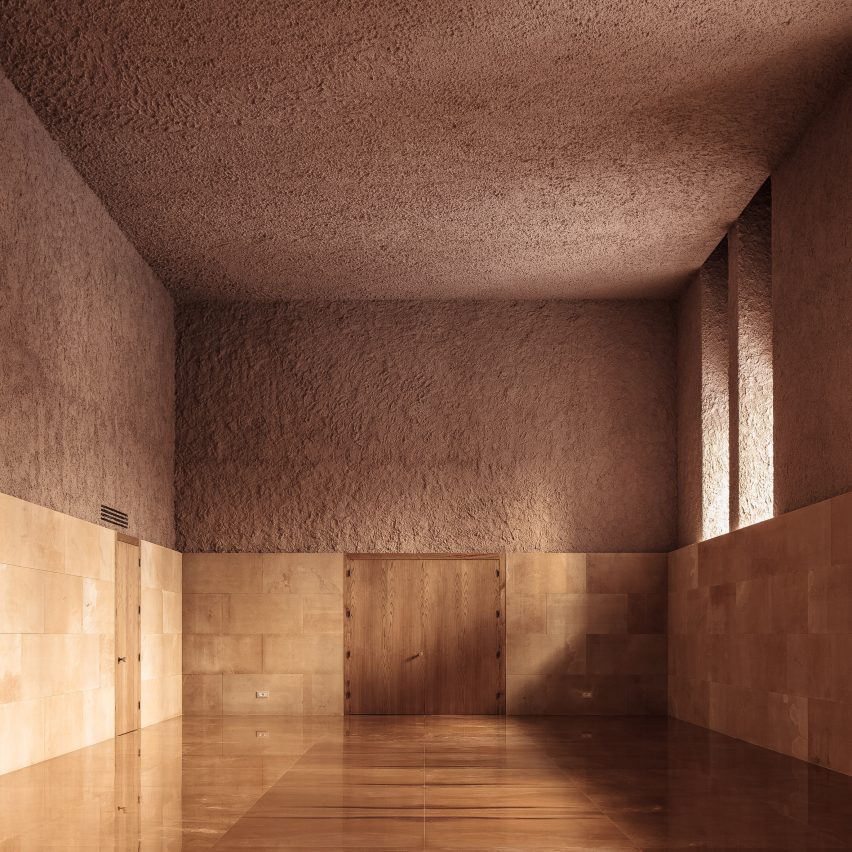
Coarse coral-pink plaster lends a furry appearance to Antonino Cardillo’s Sicilian grotto

house-of-dust-by-antonino-cardillo-sq

Italian architect Antonino Cardillo has coated the walls of this vaulted chamber music and event space in lumpy coral-pink, grey and green plasterwork. Read more

http://ift.tt/2fews1N

TRN / JRKVC


© Peter Jurkovič

© Peter Jurkovič


© Peter Jurkovič


© Peter Jurkovič


© Peter Jurkovič


© Peter Jurkovič

  • Architects: JRKVC
  • Location: Trnava, Slovakia
  • Architect In Charge: Peter Jurkovič
  • Area: 100.0 sqm
  • Project Year: 2016
  • Photographs: Peter Jurkovič

A former monastery in which this flat is located was built in 1719. In the middle of 20th century it was converted into an apartment house. The mail goal of the project was to convert this space with a lot of disrupting layers into a clean and functional dwelling for a young couple. We decided to uncover the beauties of old construction methods with a reasonable budget. After a short design process it was clear that the focus will be put into the main living hall. It is an open space with height of 3,6m, restored original trusses on the ceiling and a full height library. Part of the library is able to rotate and serves as a secret door to the bedroom suite behind, providing fluid connection of these two parts. Currently the apartment is inhabited by a childless couple, hence the open plan. In the future it could be converted into 3 bedroom apartment with just small interventions. 


© Peter Jurkovič

© Peter Jurkovič

Floor Plan - After

Floor Plan – After

© Peter Jurkovič

© Peter Jurkovič

http://ift.tt/2etPP5A

Estudio PKa Designs a Beach Home in La Costa Partido, Argentina

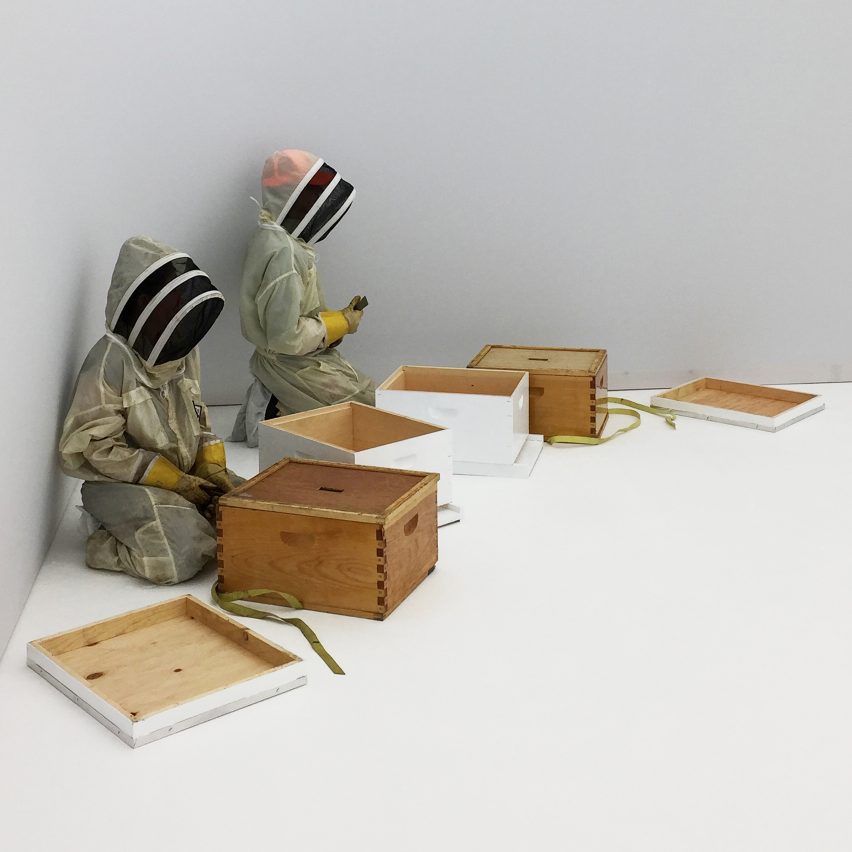
The Synthetic Apiary lets bees enjoy year-round spring

Neri Oxman synthetic apiary

Designer and researcher Neri Oxman‘s Mediated Matter group at MIT Media Lab has designed an artificial apiary that creates a constant spring-like environment for bees. Read more

http://ift.tt/2e97EDZ

Motorway Maintenance Centre Salzburg / marte.marte Architekten


© Marc Lins

© Marc Lins


© Marc Lins


© Marc Lins


© Marc Lins


© Marc Lins

  • Client: ASFINAG
  • Site Area: 22121sqm
  • Enclosed Space : 28658m3 (above ground), 5572m3 (underground)
  • Built Up Area : 4706sqm
  • Usable Area: 5100sqm
  • Construction Costs: 8.3 million euros

© Marc Lins

© Marc Lins

The design of the new motorway maintenance centre is strongly influenced by its direct access to the motorway. The centre is nestled into the sloping plain of the northwest quadrant. The entrance is located on the northwest side of the site and a flat ramp leads down to the existing underpass. 


© Marc Lins

© Marc Lins

Plan 0

Plan 0

© Marc Lins

© Marc Lins

The individual buildings come together to form a clearly structured complex. Four buildings serving different functions are grouped around a spacious courtyard. The deliberate use of gaps opens up visual axes with the surrounding landscape and creates exciting spatial sequences. The enclosed courtyard makes it easy to keep track of things within the centre and protects the neighbouring residents from noise. The 25-metre tall salt silos stand like towers in the middle of the complex. 


© Marc Lins

© Marc Lins

The appearance of the motorway maintenance centre is characterized by the interplay of concrete, glass and aluminium. The building is designed as a reinforced steel structure with a minimum of static elements. The flexibility of the basic structures provides a lot of possibilities for modifications and the office wing has been furnished with lightweight walls in the interior and concrete lamella with glass windows on the façades. Plus, the open design of the centre leaves plenty of room for future expansions within the complex. The noise barriers running along the southern and western boundaries of the site to the A1 Motorway and the Freilassing Dual Carriageway have been formally integrated into the overall design of the centre. 


© Marc Lins

© Marc Lins

http://ift.tt/2dV50nE

Solid Concrete Studio + Gallery / ASWA


© Phuttipan Aswakool

© Phuttipan Aswakool


© Phuttipan Aswakool


© Phuttipan Aswakool


© Phuttipan Aswakool


© Phuttipan Aswakool

  • Architects: ASWA
  • Location: Bangkok, Thailand
  • Architect In Charge: Phuttipan Aswakool, Chotiros Techamongklapiwat
  • Area: 900.0 sqm
  • Project Year: 2015
  • Photographs: Phuttipan Aswakool

© Phuttipan Aswakool

© Phuttipan Aswakool

ASWA (Architectural Studio of Work – Aholic) designed the solid concrete studio + gallery situated in Bangkok, Thailand. The private studio and gallery of the Thai artist, who preferred privacy of his daily life from the neighborhood, has only single opening view from the street to communicate with its surrounding but has surprisingly interior space.


© Phuttipan Aswakool

© Phuttipan Aswakool

For the first glance, the solid concrete box welcomes guest by the high ceiling chamber with the skylight that allowed the natural light shine the sculptural floating staircase in the center. People can stand in the center of the court to notice the sun light gradually changed on the concrete central shaft wall as the main attraction to display itself as a living artwork due to the changing of daylight during the day. 


© Phuttipan Aswakool

© Phuttipan Aswakool

Section

Section

© Phuttipan Aswakool

© Phuttipan Aswakool

On the second floor, the central light shaft wall has irregular position and size of square window frames to allow people to wonder as the living artwork by displaying the changing of daily light on the concrete canvas on each side of the shaft that also allow the light through to brighten up the inside space. Obviously, the imperfect concrete form-tile which created the unique characteristic of this private gallery along with the steel, wood and glass – the purity of material tend to remind people of craft-work.


© Phuttipan Aswakool

© Phuttipan Aswakool

Product Description. Exposed Concrete played as the main role for the principal material of the building by using as the living canvas.

http://ift.tt/2et7Ukj

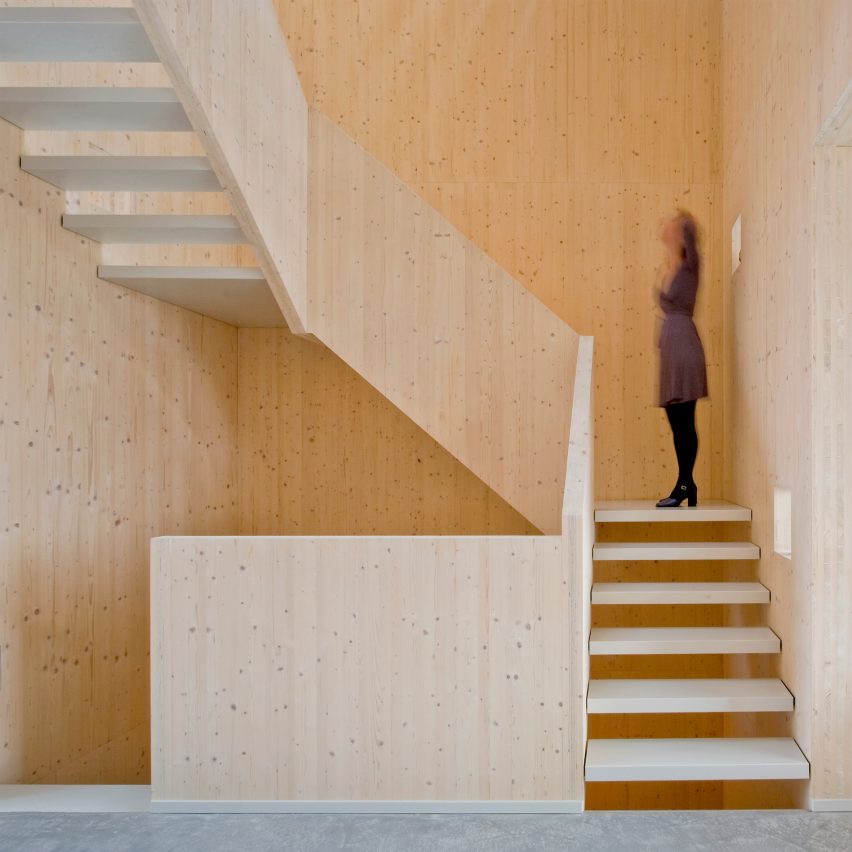
MAATworks references Scandinavian architecture with wooden townhouse in Amsterdam

Houten Herenhuis by MAATworks

Panels of cross-laminated pine form an angular staircase at the heart of this Amsterdam townhouse by MAATworks, which features a bright red facade. Read more

http://ift.tt/2eE0Squ

Matale Holiday Retreat / Thisara Thanapathy Associates


© Waruna Gomis

© Waruna Gomis


© Waruna Gomis


© Waruna Gomis


© Waruna Gomis


© Waruna Gomis

  • Structural Engineer: Wasantha Chandrathilake
  • Civil Contractor: Sunil
  • Client : Sanjeewa Maddumage

© Waruna Gomis

© Waruna Gomis

The building is positioned to create an immense enclosure of space between the building and encircling crescent of mountains across the valley.


© Waruna Gomis

© Waruna Gomis

The building is linear in form. It does not dominate the landscape, but tries to be a gentle noticeable part of it. This thin form does minimum damage to the vegetation, while allowing the sun and rain to fall on the ground. All this minimizes the damage to the ecology. By being on pillars it allows the breezes to cool the building. Timber grills used on either side of the upper level bedrooms provides ample natural ventilation. A thin metal roof with its long eaves, shades the building.


© Waruna Gomis

© Waruna Gomis

Salvaged materials are used for the building. These salvaged materials had been purchased prior to designing the building. Steel and timber grills were salvaged from a demolished factory.


Ground Floor Plan

Ground Floor Plan

First Floor Plan

First Floor Plan

The decks are out of salvaged railway sleepers. Rest of the timber was purchased from the locality. There are only two main masonry walls, except the peripheral walls of the toilets.


© Waruna Gomis

© Waruna Gomis

The building is approached via a long walkway by the side of an elongated wall. At the end of the long walkway begins a viewing deck which is perpendicular to it. This viewing deck is pierced through the building and is in the center of the vast space between the mountain range and the building enabling the user to fully experience it. This viewing deck is orientated towards a patch of paddy field, which is a significant feature of this landscape.


Elevation

Elevation

While the building tries to capture different views from the dinning room and the bed rooms, it is the extreme end of the significant deck that provides the dramatic experience of an encompassing space defined by the mountain range and the building.


© Waruna Gomis

© Waruna Gomis

http://ift.tt/2e8vFeE