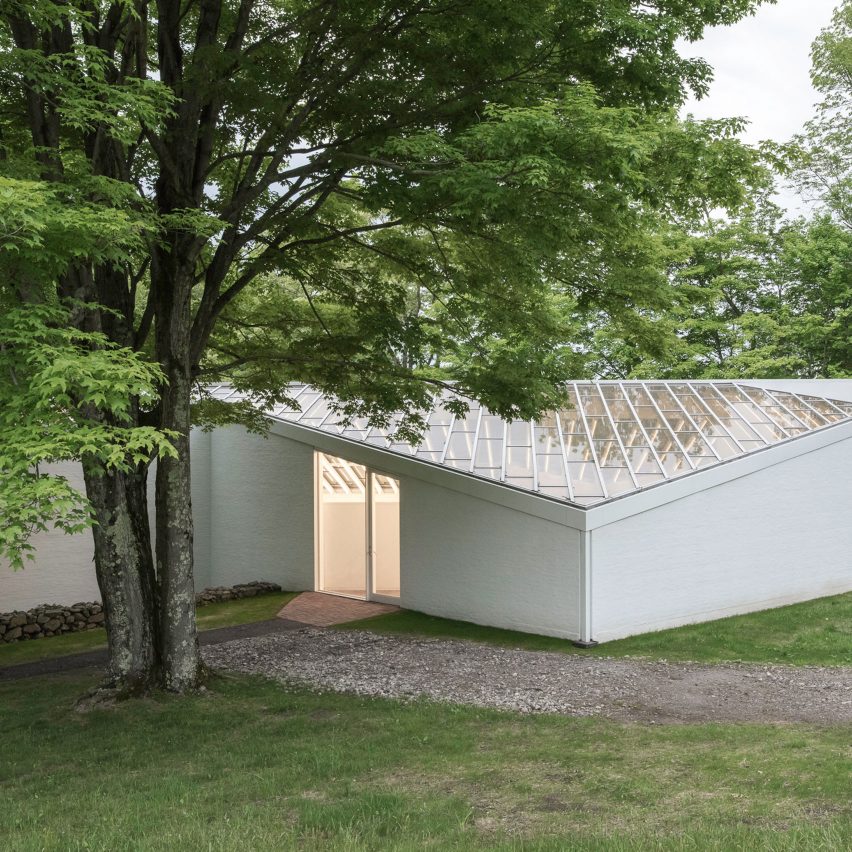
The sculpture gallery designed by American architect Philip Johnson in the grounds of his iconic Glass House in Connecticut has been restored to its former glory. Read more
The sculpture gallery designed by American architect Philip Johnson in the grounds of his iconic Glass House in Connecticut has been restored to its former glory. Read more

Reflections on Architecture, Society and Politics brings together a series of thirteen interview-articles by Graham Cairns in collaboration with some of the most prominent polemic thinkers and critical practitioners from the fields of architecture and the social sciences, including Noam Chomsky, Peggy Deamer, Robert A.M. Stern, Daniel Libeskind and Kenneth Frampton. Each chapter explores the relationship between architecture and socio-political issues through discussion of architectural theories and projects, citing specific issues and themes that have led to, and will shape, the various aspects of the current and future built environment. Ranging from Chomsky’s examination of the US–Mexico border as the architecture of oppression to Robert A.M. Stern’s defence of projects for the Disney corporation and George W. Bush, this book places politics at the center of issues within contemporary architecture.
Foreword: Murray Fraser
Introduction: Graham Cairns
Chapter 0. Alberto Perez Gomez.
Ethics, Emotion, and Aesthetics: Architecture After the Crisis of Modern Science
Chapter 1.
Noam Chomsky. Hidden Power and Built Form – The Politics Behind the Architecture.
Chapter 2.
Robert A. M. Stern. Dream Culture and the Politics of the Past – Today
Chapter 3.
Peggy Deamer. Architecture and Capitalism – From Production to Product
Chapter 4.
Peter Nears.
Finance, Planning and Architecture UK – A Developer’s Perspective
Chapter 5.
Stephen Hodder. Politics, Society and the Public: The RIBA Reaching Beyond the Profession
Chapter 6.
Michael Sorkin. Driving on the Left: A View of the Street, the City and Architecture
Chapter 7.
Paul Goldberger. History and Modern Architecture in the Age of the Star
Chapter 8.
Clare Devine. The ‘Commissioning’ of Architecture and the Built Environment
Chapter 9.
Daniel Libeskind. Ground Zero – The Socio-Political Minefield of Symbolic Architecture
Chapter 10.
Steven Weir and Gareth Hepworth. Habitat for Humanity – Operating Outside the State and the Market
Chapter 11.
Kenneth Frampton. A Critical Architecture – Comments on Politics and Society
Chapter 12.
Jonathan Woetzel. Global Finance, Global Planning –China’s Urban Explosion Seen from the West
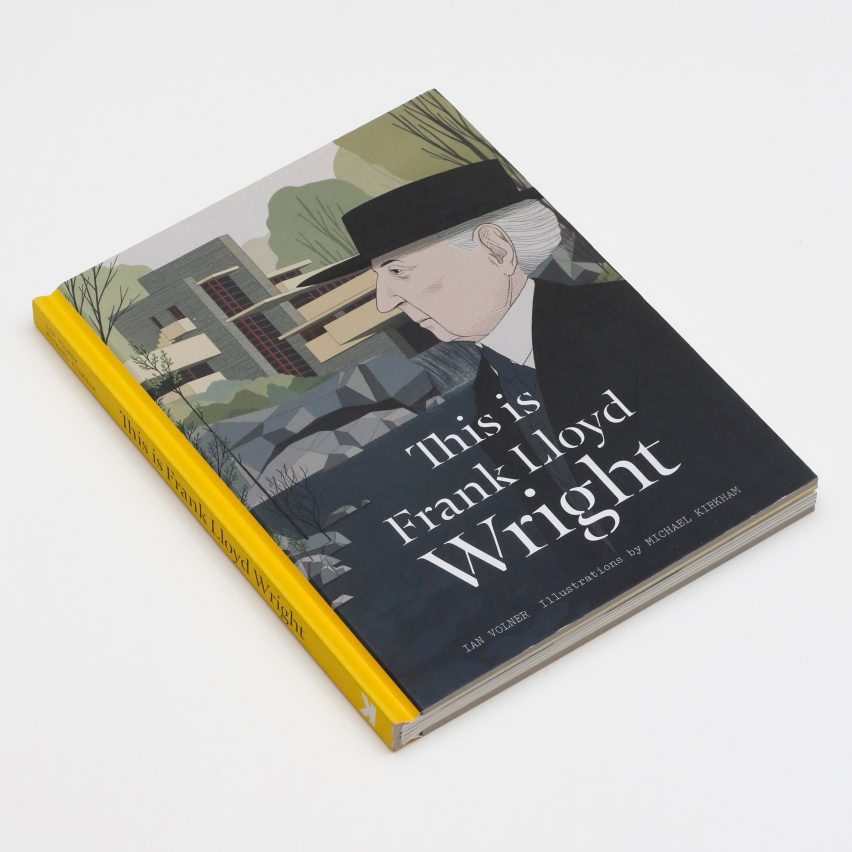
A Frank Lloyd Wright monograph disguised as a children’s book and a photo reportage of African modernism shot by Iwan Baan have been chosen as the top 10 books about architecture from 2016. Read more

From the architect. A towering building on Terehegy was designed by the students of Szent István University (SZIE) – Ybl Miklós College of Building, Faculty of Architecture and Civil Engineering (Stefánia Radnai, Csaba Székely, János Korpás and Máté Kis) under the guidance of instructors: István Fülöp and András Krizsán DLA, and built with widespread local support.
At the border of the village, at the side of the road next to a vineyard, the Protestant cemetery is located like a green grove among the large shield of agricultural lands. The cemetery garden overgrown with bushes and trees is now only used occasionally. The funeral ceremonies were held in the open air – sometimes in the rain and mud, in undignified conditions. There was not a designated area, an indoor space where to lay out the coffin, where the priest could pray and the relatives could say their final goodbye to their loved one.
The task was to design a multi-purpose community building and funeral home, what is a simple half-covered construction, protects against rain and sunshine. Where is place for the feretory and the relatives, and give the impressive ambience of passing away – but also captures the atmosphere of the landscape. It must be a determinative but not excessive construction in the graveyard, linking the environmental elements (road, slope, graves, stairs) with the funeral ceremony. It has to show a sacral function together with architectural value of the structure.
Because of a local initiative András Krizsán went to István Fülöp who organizes annually construction camps. At first this project was the topic of the workshop-week at the Masters courses ended with an exhibition. After some valuable, inspiring suggestions the Bsc students gave the final form of this project in their exam exercises of the semester. Working in teams the students designed the plans, refined and clarified the concept week after week. It was a motivating factor that this plan can be their first built project, but they also had to pay attention to make it feasible and easily performed. The common thinking deepened the contact between client and designers: for the client this project was a personal story and it became an alive challenge for the students.

Adding to their collection of pre-fabricated houses by top designers and architects, Robbie Antonio’s “Revolution Pre-Crafted” has released 3 new designs by Paulo Mendes Da Rocha + Metro, Massimiliano & Doriana Fuksas, and Philip Johnson Alan Ritchie Architects.
The three designs follow Revolution Pre-Crafted’s goal of democratizing the design of pre-fab structures, as they offer a line of products that incorporate the distinct spatial and social brands of master designers. The new houses join options from architects including Zaha Hadid, Sou Fujimoto, Daniel Libeskind and Gluckman Tang.
Matilda Home by Massimiliano and Doriana Fuksas
The idea to bring design also in common life attracted us. This is a new concept of habitat of house. It’s a mobile home it can be everywhere around the world; everybody can be a client. It’s a modular unit so many of them can be added together like a cloud. It can even be a city.
This is not an object, it is a concept, it can be a city, a landscape or simply a home. Easy to build, it can be done in different materials more or less expensive. Matilda is a completely different space since nowadays we don’t need so much storage space, you just need to have a screen. The only thing is important is to have a nice place to eat, to seat and to sleep but also this can be done with something you close when you don’t need.
Modular Glass House by Philip Johnson Alan Ritchie Architects
The original Glass House, designed seventy years ago by Philip Johnson as his home in Connecticut, has become a classic representation of modern architecture. The Glass House was not only Philip Johnson’s private residence; it was also his viewing platform for the world. The primary function of a house is to provide for the basic need of shelter. The beauty of a glass house is that it becomes a framework for the viewing of one’s surroundings.
The modular glass house was inspired by the original but has been re‐imagined as a series of modular components that can be pre‐fabricated and shipped to any site. The design follows the principals of the original by introducing a typical window bay and structure that become the outer skin of the building. Alan Ritchie sees residing in a glass house as an enhancement of the living experience by being immersed in your natural surroundings.
Modular Living Unit by Paulo Mendes Da Rocha + Metro
MODULAR LIVING UNIT by PMR + METRO for Revolution Precrafted is a proposal for a prefabricated dwelling system. The project provides a multi-functional solution through the principles of reduced design grammar and refined construction technique. This flexible system can be employed in a variety of contexts and environments: urban and rural, tropical and temperate, individual and collective.
The basic living unit is 65m2 and is composed of a living room, kitchen, bathroom, bedroom, and two verandas. This module can be distributed over a given lot in a variety of situations, creating diverse spatial combinations through multiple units. It may also be extended to two stories.
A simple structural frame permits a great range of arrangements. Its composing elements are dimensioned to allow ease of transportation and to minimize the need for the use of supporting equipment during installation.
An innovative facade system is constructed of durable, fibre-reinforced Ductal® concrete panels with different levels of insulation for different climates. The tone of the concrete may also vary: white, gray and black. The interior is made of a combination of concrete, glass and wooden panels.
For more information on the designs and to see the full collection, visit Revolution Precrafted’s website, here.
News via Revolution Precrafted.
Zaha Hadid and Sou Fujimoto Among 30 to Design Pre-Fab Pavilions for Revolution Pre-Crafted
//cdn.embedly.com/widgets/platform.js

With Dutch Design Week just around the corner, we’ve rounded up five of the event’s best exhibitions, including a gastronomic venture from Maarten Baas and a show exploring erotic displeasure. Read more

Hartrow is a substantial detached 1960s house in Winchester.
Background
We were approached by the client in 2010 to look at completely remodelling and extending the existing house – which had not been touched since the sixties and was in dire need of a complete overhaul.
The existing building was essentially a split 5-level house, and the original internal arrangement made no connection between the levels. There was also no connection between the inside and the outside, as both the kitchen and living areas were on the top levels. The carport at the bottom of the house was virtually unusable due to the steep access down the side of the house.
Our brief was to transform this outdated 1960s arrangement into a 21st century family home.
Project Design
We started by enclosing the carport under the house with large glazed sliders and turning this into a new family room with kitchen. This allows for an inside – outside connection that didn’t exist before. To avoid this family room being detached from the rest of the house, we punched a vertical hole through the five split stories. This void now allows all levels to connect through the house.
The existing timber cladding was in a very poor state, and needed replacing. Poor detailing and inadequate ventilation aged this otherwise durable timber prematurely. Along with replacing timber cladding we added insulation, appropriate building paper, and allowed for adequate insulation behind the weatherboarding.
The existing roof is supported on hardwood beams at 1250mm centres that run the length of the building. On top of these are 2-inch thick balsawood planks and hardboard, onto which a bituminous roof was laid. Internally, the ceiling was visually attractive, although the roof did not provide enough thermal insulation and the building suffered from overheating in the summer, whilst being very cold in winter. We installed plenty of new insulation and replaced the existing felt roof with crisp black zinc. Internally we went to great lengths to preserve the character of the original roof and we carefully refurbished the hardwood beams and balsawood planks. We also retained the existing beech hardwood floor, which was sanded and oiled.
We refurbished the house throughout including replacing windows, re-plumbing and re-wiring. The work was carried out in two phases and completed in the summer of 2014.
Product Description. The sliding Reynaers glazing on the bottom floor has been instrumental in achieving the light, open, flexible space that the clients wanted. By recessing the lower and upper tracks in the ceiling and floor finishes we were able to achieve a more seamless transition from the family room to the terrace when the doors are open. When closed, the façade appears uncluttered thanks to the large size of the sliding panes that Reynaers could provide, allowing just two panes to be used for each face.

The New York City Department of Design and Construction (DDC) has selected 26 architecture firms to be pre-qualified to design new public projects throughout the city’s five boroughs. In effect until 2019, these firms will be given exclusive access to Request for Proposals (RFPs) for public works projects with an estimated budget of $50 million of less. These projects will include new constructions, additions and renovations of existing public buildings, parks and plazas.
The program, known as the Design and Construction Excellence 2.0 Program, was established in 2005 to increase the efficiency and quality of procuring design services. Recent successes of the program include the Times Square pedestrian plaza by Snohetta, Dattner and WXY’s Spring Street Salt Shed, Studio Gang’s Fire Rescue 2, and BIG’s 40th precinct police station in the Bronx.
This year’s list features 12 prior participating firms, and has been divided into four categories based on company size:
Micro firms (1 to 5 professional staff, eligible for projects projected to cost up to $5 million)
Small firms (6 to 20 professional staff, eligible for projects projected to cost $2 to $15 million)
Medium firms (21 to 50 professional staff, eligible for projects projected to cost $10 to $35 million)
Large firms (Over 50 professional staff, eligible for projects projected to cost $25 to $50 million)
Of the 26 firms selected in this round of the program, nine are helmed by either women or people of color, as part of mayor Bill de Blasio’s goal to award 30 percent of all city contracts to Minority- or Women-owned Business Enterprises (MWBEs). Last year, $242 million dollars worth of contracts were given to minority-led groups.
For more information, visit the New York Department of Design and Construction website, here.
News via Architect’s Newspaper.

From the architect. Located in a narrow site in downtown of Curitiba, the project aim the best use for a program of four studios.
This two-story building, have in the ground floor the parking area. The passerby can see the back of the lot from the street, creating a continuous relationship between public and private space.
Arranged through a central atrium with stairways and walkways, each floor receives two apartments, one facing the street and another facing the garden. The kitchen and service areas open to the atrium, thus ensuring ventilation and natural lighting.
The apartment also maintains this spatial relationship of continuity, the facade of the street is full of transparent glass. Wooden brises and curtains allow movement to the facade, give privacy and adapt to various moments of inhabiting. The life of the building and the city are connected through this closer relation created by the architecture, the result is a gentler building to the city.
The structure in reinforced concrete and masonry is unique. A prefabricated slab panel system, which functions similarly to a slab, allows the absence of beams in the front and rear edge, which makes the facade visually lighter.
The choice of a palette of discreet colors: – white, black and gray; and honest materials: – concrete and wood; highlights the design of the architecture and shows the relationship of light and shadow.
Cozy and provocative this small building stands out for the proportionality of form and the architectural simplicity.