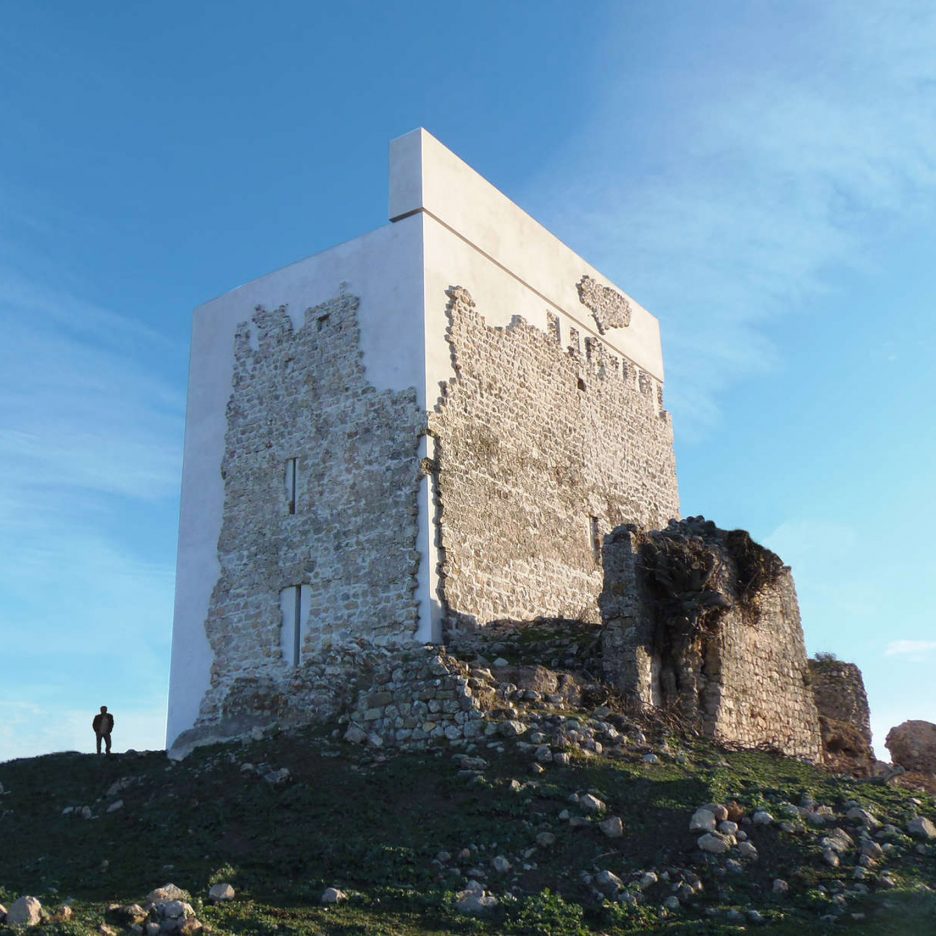
A+Awards: Spanish firm Carquero Arquitectura received a 2016 Architizer A+Award for this restoration of a crumbling hilltop castle near Cádiz. (more…)
A+Awards: Spanish firm Carquero Arquitectura received a 2016 Architizer A+Award for this restoration of a crumbling hilltop castle near Cádiz. (more…)
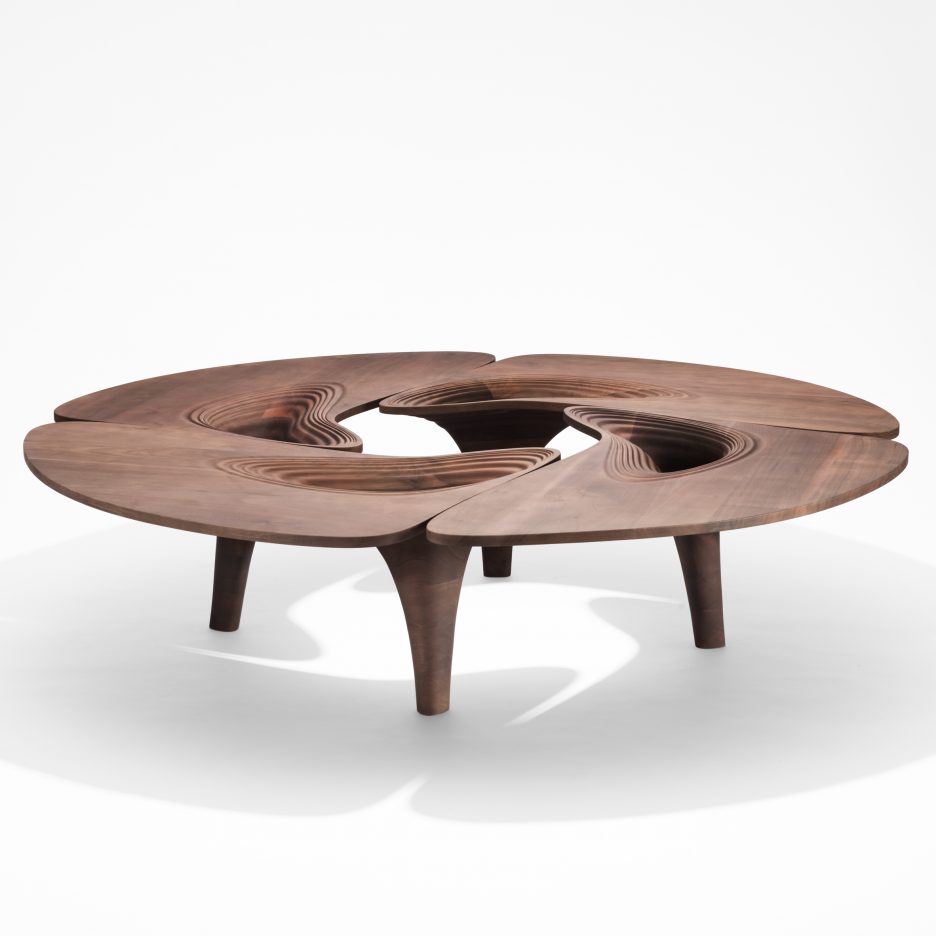
Zaha Hadid‘s final furniture collection for London’s David Gill Gallery is made of walnut and leather, a reference to antique furniture from the 50s and 60s (+ slideshow). (more…)

From the architect. About 3 kms from the city center, away from the urban grid, stands the Casino and Hotel Ovalle, founding a citadel in the middle of the valley of the Limarí. As well as the ancient inhabitants of the valley settled to the interior of the gullies; real cracks that striped the central plateau of the valley, this intervention aims to constitute a new gully on this new site. This crack seeks to give refuge through its nooks, which generate a sequence of indoor and outdoor spaces that are hidden from the outside traffic and tracks, favoring the calm and rest.
A large perimeter stone pirca delimits the living space of this new citadel. On it lie the volumes that contain the various components of the architectural program forming a square floor plan, which cuts through diagonally, forming the central crack of convergence. Making it seem as if this monolithic and hermetic volume was carved from the inside toward the outside, taking place through the stone materials, generating a crack and leaving the perimeter uncarved.
Except from the hotel, all other buildings are quite airtight, with walls veneered in stone found in the surroundings, giving a vernacular sense, and referring to the rocky walls of the gullies of the valley of the Limarí.
Each volume and its respective form accuse in a very subtle way what happens inside. The Casino and Ball Room collectively form a large box in a single floor, which is accessed from 2 opposite directions and receives a botanical garden on the roof, where the main species of cacti from the region are grown. On the other side of the central crack are located the Hotel and the Spa, which despite being connected, are formed in a completely different language, responding to the program in its interior, but maintaining a colloquial character. The hotel is distinguished by its metal cladding, inspired by the diaguita culture and their geometric forms, emulating a Greca. The Spa is a series of enclosed volumes arranged along 75 meters. Each one of these blocks suites heated swimming pools, body treatments rooms and other similar uses, topping off at the end with the outdoor swimming pool. Towards the end of the path stands the Diaguita Museum, a large monolith cube in board exposed concrete, striped by cuts of zenithal light.
See the latest from our recruitment site Dezeen Jobs, including positions at Glithero, 20th Century Fox and Micha Weidmann Studio, which created Dezeen’s website and visual identity. This is also the last chance to apply for roles with the Metropolitan Museum of Art, Caruso St John Architects, Hassell and more… (more…)
See the latest from our recruitment site Dezeen Jobs, including positions at Glithero, 20th Century Fox and Micha Weidmann Studio, which created Dezeen’s website and visual identity. This is also the last chance to apply for roles with the Metropolitan Museum of Art, Caruso St John Architects, Hassell and more… (more…)

From the architect. The former farmhouse is situated in an agricultural area. The typology of the existing building was used in a contemporary way to enlarge the dwelling. We added two new volumes with a pitched roof connected with the existing volume. Two chimney shaped skylights create light and a view on to the first floor. A third chimney houses the air outlet of the heat pump. Old and new collaborate together, while both remain clearly visible.
The new volumes are finished in wood. The old brick exterior is felt inside when entering the house. The new stairs are a reminder of the pre-existing mouldering stair that was removed. The buttresses and strips of brick in the floor will show the former layout of the barn. The double height in the dwelling makes the living areas more spacious. A new pre-weathered zinc roof connects the buildings into a whole. In addition to the replacement of the old joinery with new windows, the old volume opens up to the landscape on the rear side. Simple uniform windows according to the golden ratio characterize the construction.
The former building contains the dining room and sitting room, the kitchen, a storage room and toilet, four large bedrooms and two bathrooms. The extension accommodates the entrance hall, circulation spaces, storage space, technical facilities and a garage.
Both the former building and the new buildings are properly insulated (retaining the exterior brick wall) to create a low energy house. The house is mainly heated by an air-water heat pump with low temperature floor heating and radiators. Photovoltaic panels supply most of the electricity. All details are designed and implemented airtight.

//giphy.com/embed/dbAqlv5kD3tAY
Maybe it’s the eighties nostalgia. Maybe it’s the cast of lovable characters (a few reminiscent of The Goonies). Or maybe it’s just a break from reality via a fantastical monster. Whatever your reason for watching (binging) it, the hit Netflix series Stranger Things has left fans yearning for Season 2.
Till then, we have the next best thing: drawings of two major S.T. settings from architect Boryana Ilieva, who creates studies of space and light in cinematic architecture. Warning: the following contains spoilers regarding the first season.
The first episode of Stranger Things introduces us to a crew of geeky tweens playing “Dungeons and Dragons” in ring leader Mike Wheeler’s basement. (Think basic eighties furniture and walkie-talkies strewn about.) This room is later used to sequester Eleven (Elle for short), the psychokinetic runaway fleeing a government lab.
A quick flight upstairs is the bedroom of Mike’s older sister, Nancy Wheeler, the quintessential role model dating a classic sleaze ball. Admittedly, the minor drama in Nancy’s subplot provides a breather throughout the series.
Although the nuclear family — and their home “the two-story house at the end of the cul-de-sac,” — may look picture perfect, secrets inundate this household. We all remember when Nancy’s boyfriend snuck in through the window. And while it remains Eleven’s hiding spot for most of the series, this particular setting feels like a respite in contrast to Will’s home. We’ll take this false sense of security over the “upside down” anytime!
As ominous as those Christmas lights are, they certainly add a quaint charm to this beautiful plan of Will Byers’ home. This setting’s anxiety-ridden scenes appear innate to its design, however. Does that hallway seem extra long and narrow? The amount of time it takes Will to race down it leaves viewers on the edge of their seats. While interactions between these walls (literally) remain sinister, the colors of this particular drawing express the abode’s impending doom.
At the end of this evaluation, one can only feel sorry for Jonathan, the good-guy dealing with the resulting panic.
For more from Boryana Ilieva check out her Instagram account.

As the month-long 3rd Istanbul Design Biennial draws near, the Istanbul Foundation for Culture and Arts (İKSV) have revealed a full list of projects and participants. Curated by Beatriz Colomina and Mark Wigley, the biennial—which is titled Are We Human? The Design of the Species: 2 seconds, 2 days, 2 years, 200 years, 200,000 years—will revolve around one pressing provocation: that design itself needs to be redesigned.
Presenting more than 70 projects from five continents by designers, architects, artists, theorists, choreographers, filmmakers, historians, archaeologists, scientists, laboratories, institutes and NGOs, the exhibitions will be spatialized by Andrés Jaque and the Office for Political Innovation and spread across five main venues – the Galata Greek Primary School, Studio-X Istanbul and Depo in Karaköy, Alt Art Space in Bomonti, and the Istanbul Archaeological Museums in Sultanahmet. The work of a dense array of international writers, video makers, and designer researchers will also be presented online.
Aimed at rethinking design for an age in which design has gone viral, the biennial is organised in four overlapping “clouds” of projects:
Over the course of the last year (2015-2016), the curators have held graduate seminars on “What is Design?” at Princeton University and Columbia University in order to explore a wide range of topics related to the theme of the Biennial. A joint team of Princeton and Columbia students worked over the summer with the curatorial team to prepare a set of six curatorial interventions to be inserted into the main exhibition of the Biennial. These interventions—Design Has Gone Viral, The Unstable Body, Are We Normal?, Enclosed by Mirrors, Homo-Cellular, and Design in 2 Seconds—present historical and contemporary research to supplement the work of the invited contributors to the Biennial and deepen the reflection on the central question: Are We Human?
In addition to the curatorial interventions, the biennial will include two special projects: the famous “Transparent Man” from the Deutsches Hygiene Museum (whuch will return to Istanbul for the first time since 1938 to be exhibited in the Designing the Body section), and a set of casts of Neolithic human footprints in what is now Istanbul is being exhibited in the Designing Time section, along with some of the original footprints in the original soil.
Over fifty writers, scientists, artists, architects, designers, philosophers, historians, archaeologists will be addressing “Self-Design” as part of this collaborative project. Nikolaus Hirsch and Anton Vidokle of e-flux, alongside Beatriz Colomina and Mark Wigley, have commissioned 2000-word contributions from different fields that respond to the theme of the Biennal.
A long term research project investigating the last two centuries of Turkish design has also been instigated. Representing an attempt to bring together fields such as packaging, graphic design, communication and advertisement, housing, furniture, landscape, industrial buildings, and other fields which have not been addressed from the perspective of design yet, like lighting, toys, music, ceramics, health or non-governmental organisations, within a time frame starting from the Ottoman Tanzimat reform era (beginning around 1839) until the present day. A team of of Turkish experts is being coordinated by Pelin Derviş.
In the spirit of expanding the bandwidth of the Biennial to the widest possible interdisciplinary and intergenerational conversation, Colomina and Wigley launched an Open Call for two minute videos on the question Are We Human? / Biz İnsan mıyız? based on the following eight interlinked propositions:
According to the Biennale, more than 200 videos from 68 cities in 36 countries were submitted. 146 videos that fulfilled the requirements of the Open Call will be presented in a dedicated section within the exhibition itself, and will be made available online. An “international and interdisciplinary” jury evaluated each submission and selected five which will be highlighted in the biennial exhibition and catalogue:
According to the curators, the 3rd Istanbul Design Biennial “carries the most complex design-work, the human itself, into the streets and online media, with images of people taking selfies in the mirror.” The flash in these “no-selfies” interrupts the human image, masking the identity of the selfie-taker and enabling the viewer to imagine themselves or others in the image. The over exposed human becomes a mystery, a question mark. In their introduction to the exhibition catalogue, the curators suggest:
This biennial is a kind of mirror. The real work is not just what is on show but in the unexpected and inventive reactions to the surprising reflections one always sees in a mirror.
Beatriz Colomina and Mark Wigley, Curators of the 2016 Istanbul Design Biennial, Discuss “The Design of the Species”
//cdn.embedly.com/widgets/platform.js
The 3rd Istanbul Design Biennial (which runs from the 22nd October to the 20th November 2016) is free of charge (except the Istanbul Archaeological Museums will require a museum ticket). You can learn more about the Biennial in this exclusive interview with Colomina and Wigley.
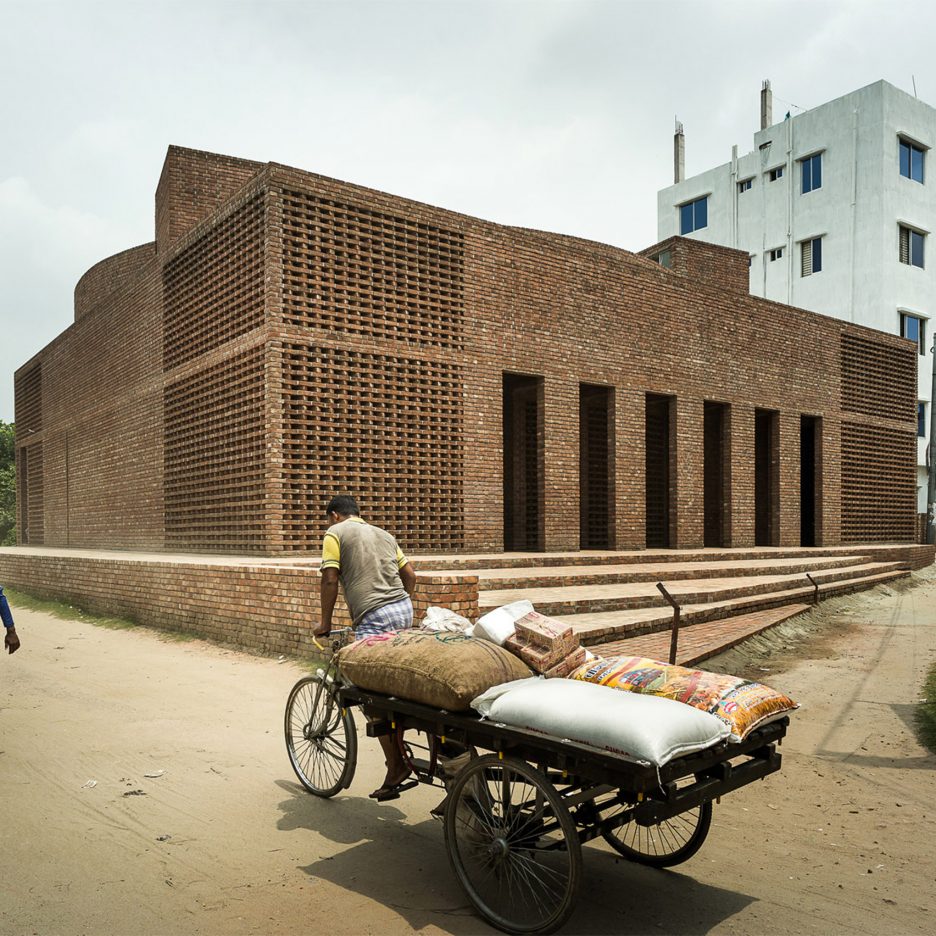
Iran’s largest pedestrian bridge, a pink rubberised park by BIG and Zaha Hadid’s first building in Lebanon are among the six winners of this year’s $1 million Aga Khan Award for Architecture (+ slideshow). (more…)
 Sig Nordal