Eindhoven University of Technology Building to Become World’s Most Sustainable University Building


Courtesy of Team V Architecture

Courtesy of Team V Architecture

Total Engineer Team RSVP has unveiled the renovation design for the Main Building of the Eindhoven University of Technology in the Netherlands, which, once completed, will be the most sustainable university building in the world. On September 27, the design was awarded as BREEAM Outstanding under the BREEAM-NL sustainability label of the Netherlands, with a score of 93.86%. 

The university building, which will be called Atlas upon completion, was designed by a multidisciplinary team consisting of Team V (architect), Van Rossum (construction engineer), Valstar Simonis (building installations engineer), and Peutz (building physics engineer and sustainability expert).


Courtesy of Team V Architecture


Courtesy of Team V Architecture


Courtesy of Team V Architecture


Courtesy of Team V Architecture


Courtesy of Team V Architecture

Courtesy of Team V Architecture

Courtesy of Team V Architecture

Courtesy of Team V Architecture

We are really proud of and pleased with this result, says Jo van Ham, vice-president of the TU/e executive board. Sustainability is a hugely important theme in our education and research, and this also means taking the lead in terms of our buildings and operations. We have been investing extra in sustainability for fifteen years now, with campus-wide geothermal storage one of the outcomes. This geothermal system is one of the biggest in Europe.


Courtesy of Team V Architecture

Courtesy of Team V Architecture

This geothermal system will replace the building’s previous gas connection, and will work alongside solar panels, which will provide energy to cover most of the building’s power requirements.


Courtesy of Team V Architecture

Courtesy of Team V Architecture

Courtesy of Team V Architecture

Courtesy of Team V Architecture

The building will additionally feature smart and efficient LED lighting—controllable by users via an app—as well as a  triple-glazed curtain wall paired with interior sun blinds, and a “night flush” system that will side windows outwards during summer nights in order to cool the building and purify the air.


Courtesy of Team V Architecture

Courtesy of Team V Architecture

Courtesy of Team V Architecture

Courtesy of Team V Architecture

In combination, all of these sustainability initiatives will reduce the carbon dioxide emissions of the building by 80 percent, even though the number of users in the building will more than double after the renovation.


Courtesy of Team V Architecture

Courtesy of Team V Architecture

Courtesy of Team V Architecture

Courtesy of Team V Architecture

Courtesy of Team V Architecture

Courtesy of Team V Architecture

Upon completion in the summer of 2018, the Atlas building will function as a living lab for research on innovative and sustainable technologies.

News via Team V Architecture.
http://ift.tt/2dzJZRP

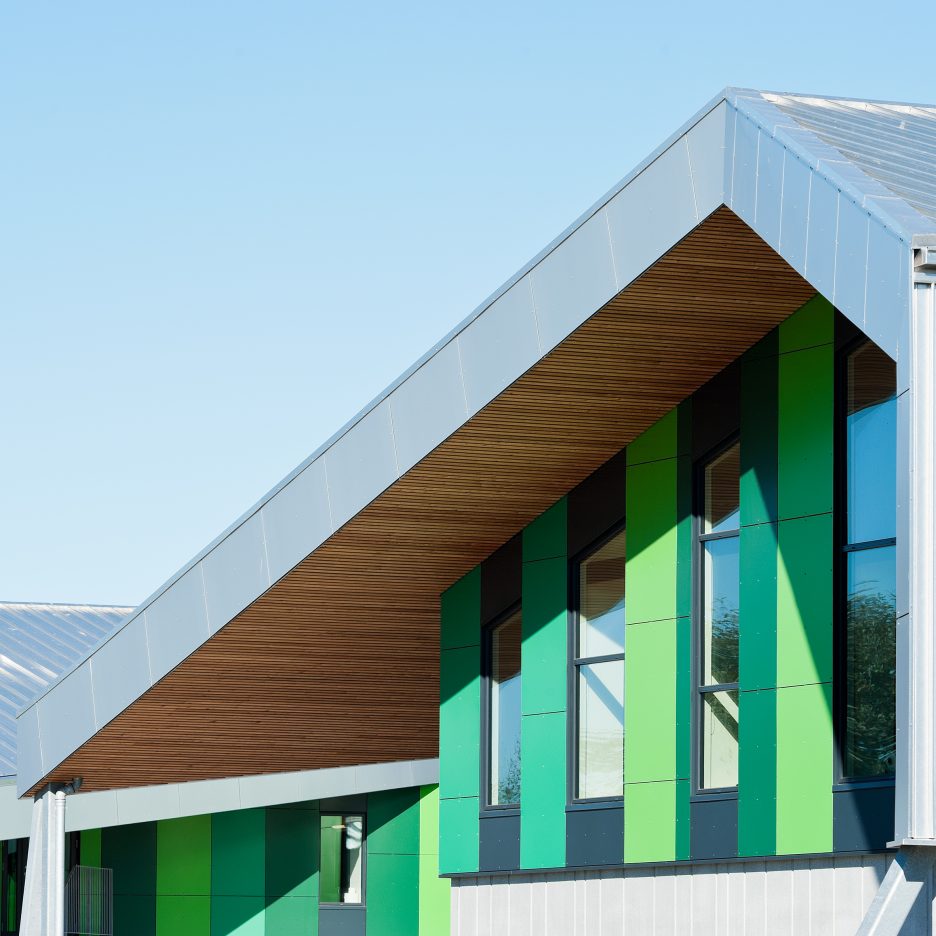
CEBRA completes Danish school with jagged roofs and stripy green walls


Vibrant green stripes and angular roofs add character to the exterior of this school that architecture firm CEBRA has completed in Aabybro, Denmark (+ slideshow). (more…)

http://ift.tt/2dzCN8s

Walter and Leonore Annenberg Center for Information Science and Technology at Caltech / Frederick Fisher and Partners


© Benny Chan

© Benny Chan


© Benny Chan


© Benny Chan


© Benny Chan


© Benny Chan

  • Landscape Architect: James Burnett

© Benny Chan

© Benny Chan

From the architect. The Walter & Leonore Annenberg Center for Information Science and Technology (IST) is a 46,000 sf research facility designed as home to participants of the IST Initiative, a program of interdisciplinary research that addresses the growth and impact of information science as it relates to all science and engineering practices. Participants in this initiative migrate from all parts of the campus, representing all Colleges of Science and Engineering at Caltech. 


© Benny Chan

© Benny Chan

The aim of the facility is to foster collaboration, research and teaching intrinsic to this new academic discipline. The building was planned as an immediately accessible plaza of group teaching, learning and working spaces on the ground level supporting a two story research center.


Schematic Model

Schematic Model

Glass walls make the ground level an active, connected environment. The upper two levels contain faculty and graduate student offices and studios, designed for the project teamwork which is at the core of the University’s educational and research activities.


© Benny Chan

© Benny Chan

Flexible studios open onto a two story atrium that acts as a “town square”, furnished for casual gathering, events and study. Upper levels are also interconnected by a two story “resident lounge” that functions as an updated faculty club with dramatic views of the mountains and campus walkway. FFP incorporated green materials and fixtures such as those made from certified wood & recycled content, low VOC paints and carpet, waterless urinals, and a white roof system.  


© Benny Chan

© Benny Chan

A great focus was placed on the individual comfort of the professors that will have offices in the IST Center. In addition, operable windows have been included in these spaces to maximize thermal comfort and personal control.


Site Plan

Site Plan

This LEED Gold project was awarded “Best in Show” honors from the Los Angeles Chapter of the USGBC at their 2011 Sustainable Innovation Awards.


© Benny Chan

© Benny Chan

http://ift.tt/2dltHsA

Zaha Hadid’s Successor Patrick Schumacher Discusses Parametricism in Architecture and Fashion


Images by: Virgile Simon Bertrand, Owencn_95, Courtesy of Zaha Hadid Architects, Thomas Mayer, Khoo Guo Jie

Images by: Virgile Simon Bertrand, Owencn_95, Courtesy of Zaha Hadid Architects, Thomas Mayer, Khoo Guo Jie

As Zaha Hadid’s successor and current leader of the firm, Schumacher relays a host of opinions, including those on parametricism, which he deems the “architectural style of capitalism.” The term describes the avant-garde practice that uses digital animation to create equations for designs. Patrik Schumacher, who coined this term in 2008, believes this style extracts doubt from the design process, relying instead on the infallibility of science.


© Virgile Simon Betrand

© Virgile Simon Betrand

I discovered that my own drive and passion for architecture and for the progress of our discipline — together with the enthusiasm and commitment of our staff — can propel us forward without loss of momentum, says architect Patrik Schumacher in The Guardian’s My Blueprint for the Future.


Zaha Hadid's Dongdaemun Design Plaza. Image © Virgile Simon Betrand

Zaha Hadid's Dongdaemun Design Plaza. Image © Virgile Simon Betrand

Now parametricism is expanding into products and clothes. “The Extraordinary Process,” a new exhibition at the London gallery Maison Mais Non, centers on innovative technologies in fashion design. Schumacher has personally created two dinner jackets for himself that use “zippers, and leather in particular zones, and lightness and perforations in zones where you might perspire more.”  Check out these designs and more on Schumacher’s thoughts here.

News viaThe Guardian

Dongdaemun Design Plaza / Zaha Hadid Architects
//cdn.embedly.com/widgets/platform.js

Sneak Peek: Zaha Hadid Architects’ Nanjing International Youth Culture Center
//cdn.embedly.com/widgets/platform.js

Step Inside Zaha Hadid Architects’ Antwerp Port House With Thomas Mayer’s Photos
//cdn.embedly.com/widgets/platform.js

Video: Zaha Hadid Discusses the Influence of Kazimir Malevich on her Work
//cdn.embedly.com/widgets/platform.js

http://ift.tt/2dwli3D

Carine Khalife paints on glass to create Francis Bacon-inspired visuals for Makeunder music video


When creating this hand-painted music video for Oakland musician Makeunder, Carine Khalife looked to the works of figurative painter Francis Bacon (+ movie). (more…)

http://ift.tt/2cJc5E7

How Barcelona’s “Superblocks” Pedestrian Plan Hopes to Return the Streets to the People

Cars have reshaped cities across the world, largely at the cost of everyone outside of a private vehicle. In recent years the “grid city” of Barcelona has been suffering from clogged roads and choked air quality, with urban traffic contributing to the 3500 premature deaths caused by air pollution each year. Beginning in the district of Eixample, proposals laid out in the 2014 Urban Mobility Plan aims to diffuse traffic congestion and reduce air pollution in the city. In a recent film Vox have picked up on one of a number of potential schemes: the Superblock concept (known as superilles in Catalan). According to Salvador Rueda, the Director of the Urban Ecology Agency of Barcelona who developed the plan, these are “grid[s] of nine blocks [in which] the main mobility happens on the roads around the outside, […] and the roads within are for local transit only.”


Ildefons Cerdà i Sunyer's 1859 urban plan for Barcelona. Image via Wikimedia Commons under public domain (original source: Museu d'Historia de la Ciutat, Barcelona)

Ildefons Cerdà i Sunyer's 1859 urban plan for Barcelona. Image via Wikimedia Commons under public domain (original source: Museu d'Historia de la Ciutat, Barcelona)

As shown in the video, a Superblock closes off traffic within a square of nine city blocks, with main traffic only allowed around the perimeter. A “one-way system inside the Superblock makes it impossible to cut through to the other side of the Superblock,” Rueda has explained in an interview with Curbed. “That gives neighbors access to their garages and parking spaces but keeps the Superblock clear of through traffic.” Rueda estimates that Barcelona can implement this initial phase across the city for less than €20 million. The second phase, which is designed to reinvent the reclaimed space, will ban curbside parking (moving vehicles to off-street parking complexes) and reduce the speed limit to 10 kilometers per hour (6 miles per hour) in a bid to encourage new forms of urban appropriation. The result is a much more pedestrian-friendly neighborhood, encouraging pedestrian and bike traffic, markets, and other on-street activity.


via screenshot from Vox video

via screenshot from Vox video

The video also gives a glimpse of Barcelona’s future improvements by discussing the example of Vitoria-Gasteiz, a city northwest of Barcelona. Since implementing the Superblock in 2008, pedestrian surface area increased from 45% to 74%. Pollution also decreased, with nitrogen oxide emissions reduced by 42% and particle pollution by 38%. Finally, noise levels also dropped, from 66.5 decibels to 61 decibels – cutting sound amplitude almost in half.

The first Superblocks will be tested across 5 neighborhoods in Barcelona, with a further 120 locations identified as potentially suitable. For more, the full video and accompanying article from Vox can be found here.

This article was written by Sharon Lam and James Taylor-Foster.

http://ift.tt/2cJ0vsw

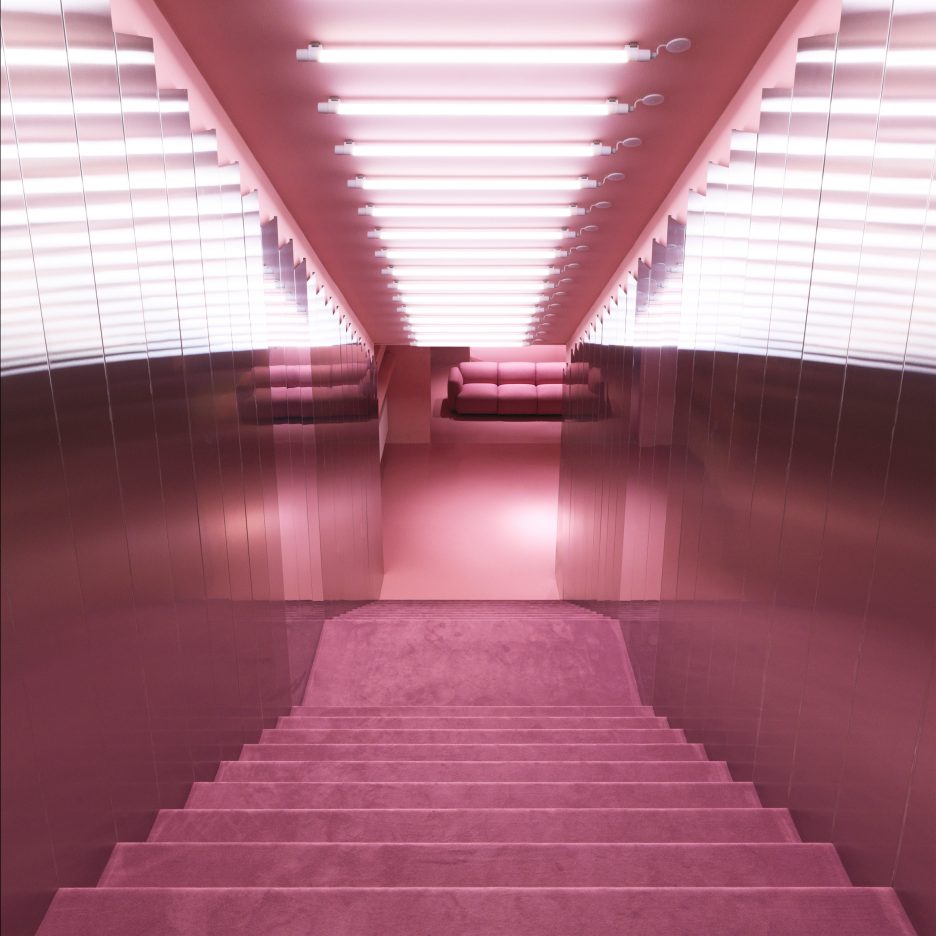
Normann Copenhagen’s revamped flagship store features completely pink room


Normann Copenhagen has reopened its flagship furniture and homeware store in the Danish capital, where a steel corridor, mirrored walls and a space coloured entirely in pink have all been added (+ slideshow). (more…)

http://ift.tt/2dHCoN3

Fire Station in Chamonix-Mont Blanc Valley / Studio Gardoni Architectures


© Jerome Ricolleau

© Jerome Ricolleau


© Jerome Ricolleau


© Jerome Ricolleau


© Jerome Ricolleau


© Jerome Ricolleau

  • Landscape: Atelier Anne Gardoni
  • Bet Tce: OTEIS
  • Bet Vrd: SOTREC

© Jerome Ricolleau

© Jerome Ricolleau

From the architect. Winner of the architecture competition in 2012, Studio Gardoni Architectures discreetly fit this major facility into the small town of Chamonix and more particularly into the valley’s grandiose landscape. Rising from the slope, the building is covered up by the ground of the clearing, and is destined to disappear when the nature once again reclaims its rightful place. 


© Jerome Ricolleau

© Jerome Ricolleau

© Jerome Ricolleau

© Jerome Ricolleau

Plan 0

Plan 0

© Jerome Ricolleau

© Jerome Ricolleau

The architectural concept strives for invisibility: more precisely, it aims to render invisible the impact of a fire station as we typically see or imagine one, a building bustling with activity, with a particularly prominent roadway network. At an emergency services center, every second counts, requiring a design that emphasizes precision and detail. This new building not only meets these criteria scrupulously, but has also been cleverly designed to enable the vehicle bay to be placed underground.


© Jerome Ricolleau

© Jerome Ricolleau

In order to minimize impact and allow space for the natural environment to once again thrive, key elements had to be both built underground and made more compact. The shape is akin to an assembly of elements of programs that intertwine opportunistically to simultaneously create proximity (functionality and ergonomics) and minimize the structure’s footprint. This principle results in a building with two facades that are partially or entirely underground, and two broad facades that contain all of the functions. This is epitomized through the opaque, mysterious structure of the gymnasium, an emblematic figure at the bow of the complex. 


© Jerome Ricolleau

© Jerome Ricolleau

Inherent to the nature of this site is the passing of time. These spaces are materialized in a process of disappearance, of time unfolding. Here, time is not destructive but transformative. 


© Jerome Ricolleau

© Jerome Ricolleau

First of all, nature covers the roof, and will reclaim its rightful place, both around and on the structure. The gabion foundations are composed of rocks from the site, a selection of pebbles excavated from the surrounding glacial moraine.


© Jerome Ricolleau

© Jerome Ricolleau

Plan 2

Plan 2

© Jerome Ricolleau

© Jerome Ricolleau

Finally, the copper, found in the scaled façade and the standing seams, begins its slow mutation once it has been installed, and will turn from gold to brown, as seen in a number of structures found in the valley. This material reflects the surrounding peaks, transforms the site and is transfigured every hour of the day by the changing sunlight and the clouds.


© Jerome Ricolleau

© Jerome Ricolleau

http://ift.tt/2dl5OBj

Economic Concepts That Every Architect Should Know

We talk about sustainability, livability, and land use to describe a project, but we often avoid the profitability, capital gains, and externalities that go along with them simply because we don’t know how to use the terms. Architecture doesn’t exist outside of the economy and in fact, how we build each building directly affects the economy of our cities.

As a profession, architecture acts as the mediator between different specialties, and it is very important to speak the official language of each of them. This article will help you easily understand some basic economic concepts that relate to architecture.

Real Estate

Goods that have a fixed position in space and cannot move. So land, buildings, farms or other types of constructions (basically, architecture). 

Community Space

Property whose enjoyment is not unique to an individual. Parks and public spaces fall under this category. 

Housing Bubble

Excessive and unjustified increase in real estate values, usually caused by speculation. The housing bubble of 2008 was caused by speculation as a result of fictitious mortgage payments (people paid their credit with more credit) making it seem as though market demand continued to grow. 

Opportunity Cost

The maximum profit that could have been obtained from investing in other options aside from what you did invest in.  


Economic Cycle

The stages of expansion and contraction in economic activity experienced by industry, a fact that occurs at certain periods of time. 

Mortgage Loan

A loan in which the payment of interest and principal is guaranteed by the property registration. Most construction is financed in this way. 

Commodities

Primary goods traded internationally. For example: grains, metals, energy products (oil, coal, etc.) coffee, cotton, etc. Construction depends mostly on these goods and a rise in price of these will directly affect the price of a work we are building. 

Savings and Loan Corporations

Financial institution whose function is to promote private savings and helps to drive the construction industry through mortgage loans. Profits are earned through savings accounts, ordinary deposits and term deposit certificates. 

Externality

Benefits or social costs arising as a result of a private activity for parties not included in this activity. An example of a negative externality is traffic produced by a building with a lot of parking, where damage is suffered by the neighborhood, but is not an expense that the private producer paid accordingly. 

A positive externality was the increase in tourism generated by the construction of the Guggenheim Museum in Bilbao, which meant an increase in hotels, sales, restaurants, etc.


Demand

The quantity of goods or services which are desired by a market. For example how many people are looking for housing at one time. 

Depreciation

Loss of value of an asset (house, car, household appliances, etc.) due to use and function, which can not be compensated for by repairs, maintenance or even by replacement of all components.

Economies of Scale

Any production situation in which the cost per unit produced decreases as the number of units produced increases.

Architecture often fails in this area as in many cases mass production reduces quality.


Investment Expenditure

Public spending with the intent of improving public capital; public infrastructure such as schools, national roads, and parks. 

Investment

Placing funds in a project (operational, financial, real estate, etc.) with the intention of making a profit in the future. 

Supply

The quantity of goods or services that are available to be sold in a market. For example the number of apartments for sale in a city. 


Mortgage-backed Security

Participation by a third party in a certain percentage of a mortgage. Often used in the construction of large infrastructure works, construction or acquisition of high-value buildings.

Capital Gain

The increase in the value of an object for reasons extrinsic to them. 

The existence of a park brings increased value of property next to it, since most people prefer to live near a public space. 


Cost Effectiveness

The relationship between the utility provided and invested capital (income – expenses). 

Economics tells us that higher habitability means higher returns (the more I build more I can sell). However this creates cities without design criteria and little habitable value.

Appraisal

Report or document to determine the value of property on the market in relation to supply and demand at any given time. 

Sources

http://ift.tt/2dEg0ru

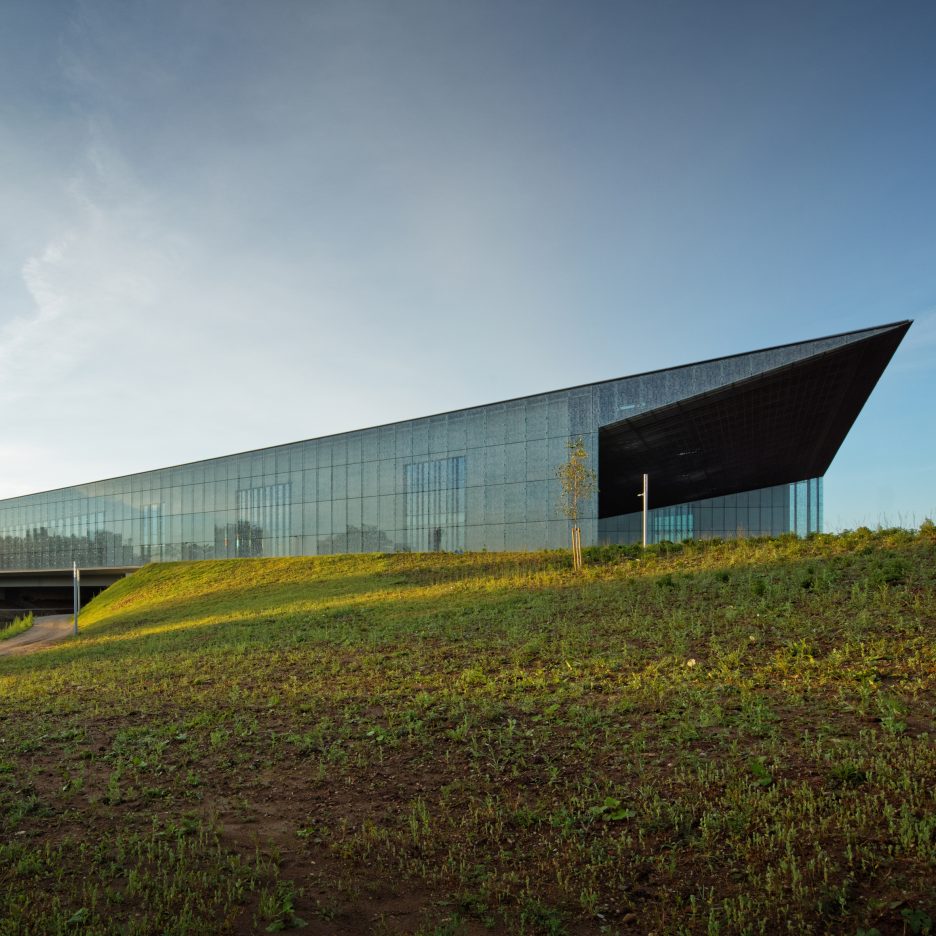
Estonia’s wedge-shaped national museum opens on former Soviet airbase


A 350-metre-long glass block ramps up from the runway of a former soviet airfield near the city of Tartu to form the Estonian National Museum, which officially opens to the public today (+ slideshow). (more…)

http://ift.tt/2dfoA0A