Sam Jacob Studio has created a replica of Adolf Loos’ unrealized 1921 mausoleum in Highgate Cemetary, London, which is home to the graves of Karl Marx and Malcolm McLaren, amongst other notable figures.
Commissioned by the Architecture Foundation, the project—entitled A Very Small Part of Architecture—“resurrects” the Austrian Modernist architect’s radically simple mausoleum design for art historian Max Dvorák.
The project is recreated at a 1:1 scale using a lightweight timber frame and scaffold net, creating “a ghostly reenactment of an unrealized architectural idea.”
The title of the project is taken from Loos’ 1910 essay Architecture, in which he asserts that “only a very small part of architecture belongs to the realm of art: the tomb and the monument.”
Built within Highgate Cemetery, amongst the many monuments and memorials to the dead, A Very Small Part Of Architecture makes a different kind of memorial. Not one dedicated to a person, an event or a moment in time, not designed to remember the past but instead to imagine other possibilities, altered presents and alternative futures.
In architecture, perhaps the most remarkable change heralded by the 20th was the radical rethinking of housing provision which it brought, driven by a worldwide population explosion and the devastation of two world wars. Of course, Modernism’s reappraisal of the design and construction of housing was one part of this trajectory, but still Modernism was underpinned by a traditional process, needing clients, designers and contractors. Arguably more radical were a small number of fringe developments, such as mail-order houses in the US and Walter Segal’s DIY home designs in the UK. These initiatives sought to turn the traditional construction process on its head, empowering people to construct their own homes by providing materials and designs as cheaply as possible.
In the 21st century, the spirit of these fringe movements is alive and well, but the parameters have changed somewhat: with a rise in individualism, and new technologies sparking the “maker movement,” the focus has shifted away from providing people with the materials to construct a fixed design, and towards improving access to intellectual property, allowing more people to take advantage of cheap and effective designs. The past decade has seen a number of initiatives aimed at spreading open source architectural design–read on to find out about five of them.
ELEMENTAL Releases Social Housing Designs into the Public Domain
The 4 designs which ELEMENTAL released to the public in 2016
When he was awarded the Pritzker Prize earlier this year, Alejandro Aravena was praised by the jury for his part in the construction of over 2,500 units of social housing. However, for Aravena this number was clearly not enough to solve the housing crises taking place worldwide, and he used the platform of the award ceremony to announce that his firm ELEMENTAL was releasing four of its signature “half a house” designs to the public via its website, allowing people to use and adapt their ideas for other contexts around the world. This unprecedented move for a Pritzker Laureate undoubtedly raised the profile of open source architecture.
After winning the prestigious TED Prize in 2006, Cameron Sinclair, of Architecture for Humanity fame, got the chance to realize his wish of an online network for humanitarian architecture, where those involved in bringing architecture to the world’s most disadvantaged communities would be able to share their work, strategies and designs. The initiative was the first major attempt to bring open source principles to architectural design, and while the idea unfortunately didn’t gain the momentum required to sustain itself after Sinclair moved on to other ideas–the website is now defunct–the initiative was unquestionably a huge, high profile step forward for open source architecture which inspired many to follow in Sinclair’s footsteps.
The concept behind WikiHouse taps in deeply to the recent advances made in digital manufacture. Using a construction system that requires only a CNC machine and timber sheets such as plywood or OSB, buildings can be constructed by just about anybody. With this construction system, WikiHouse pairs a website on which users can share and adapt designs for a variety of purposes. Since it was founded, the concept of WikiHouse has expanded, with co-founder Alistair Parvin taking to the TED stage to explain how the concept could become a “Wikipedia for stuff,” offering blueprints for everything from off-grid energy solutions right down to a mallet constructed from plywood to build WikiHouse structures.
Paperhouses
Tatiana Bilbao S.C.'s design for Paperhouses, The Module House. Image Courtesy of Paperhouses
While many developments in open source architecture have focused on designs for people at the low end of the economic spectrum, Paperhouses focuses on a slightly different mission. Central to its mission is bringing world-class design to middle-class people who would otherwise probably end up with mediocre houses. In a result that would surprise some, Paperhouses has found a number of internationally-renowned architects willing to release their work via the platform; as founder Joana Pacheco has said, while some architects consider their designs as irreproducible works of art, there are many others who “embrace this idea of the participation of the people, of a collaboration between user and architect that can bring about different and interesting results.”
Bricksource
Sstudiomm's parametric patterned brick facade, which inspired their open source initiative. Image Courtesy of Sstudiomm
But the greatest sign of the rise of open source architecture will not be in a small number of high-profile programs, but in a groundswell of hundreds, perhaps even thousands of grassroots operations, of architects sharing their work simply for the benefit of humanity. Such is the case with Sstudiomm. After designing a low-tech way to construct a parametric patterned brick facade in Iran, they initially released the templates they used to create that facade to the public. Now, recognizing that their simple parametric process could be used to create all manner of other patterns, they have released details of the design process and founded a blog known as Bricksource, where they hope other like-minded designers will share variations on their original design. Announced without the fanfare of a Pritzker Prize ceremony or a TED Talk, this low-key approach to sharing design ideas may be where the future of open source architecture.
400 Grove introduces 34 residences in the heart of Hayes Valley, continuing the neighborhood’s rise as a vital, walkable neighborhood. Its prominent site at the corner of Grove and Gough streets, is one of several sites created by the removal of the Central Freeway in 2003, as part of a bold initiative to reconnect Hayes Valley with surrounding neighborhoods.
400 Grove’s design references the central mews typology, which set row houses around an internal alley that provided car access as well as a place where neighbors meet. This contemporary take replaces the alley with a landscaped common area accessible only to bicycles and pedestrians, strengthening the community focus of the open space.
Its faceted facades echo an earlier tradition: the classic San Francisco bay windows prevalent in the area. The facets angle windows capturing views of Hayes Valley’s bustling street scene and surrounding hillside neighborhoods. Most of the studio, one-bedroom and two-bedroom residences have light from two sides and an individual expression from the street, with the amenities associated with urban living.
Completed in early 2016, 400 Grove residents enjoy the advantages of Hayes Valley’s central location and easy access to major public transit stops, Civic Center arts venues, and other neighborhoods including the Mission District, the Castro, and the Mid-Market district.
400 Grove employs a variety of sustainable strategies. All units are designed with window son more than one façade providing adequate light and ventilation thereby reducing energy loads. Wood dowels on the façade …
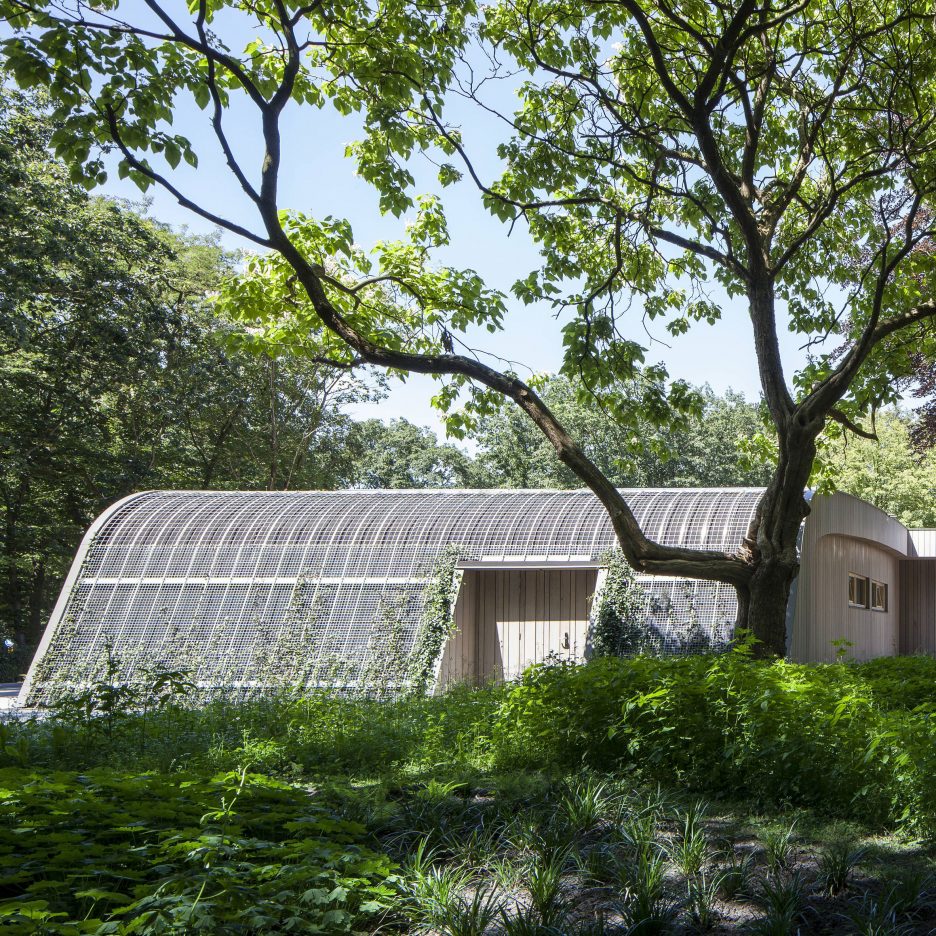
This ambulance station in the Dutch town of Zeist features a curved wooden framework and sloping walls covered with climbing plants to help it blend into its woodland setting (+ slideshow). (more…)
Murphy’s Law, right? The thing is, since technology moves so fast, chances are you’re using slow and/or outdated hardware to build and render your models. Of course, those software crashes always get you when a client needs to see your work. And yet, when you tell the bosses you need better hardware, or updated software, they often scoff and lecture you about the costs. Perhaps one day they’ll understand the struggle of the production staff, but it seems like for now, not so much. So, good luck at the office today, hopefully, everything will work.
Have you had similar experiences fighting with the outdated technology in your office? Tell us about it for our new book project, Architects, LOL.
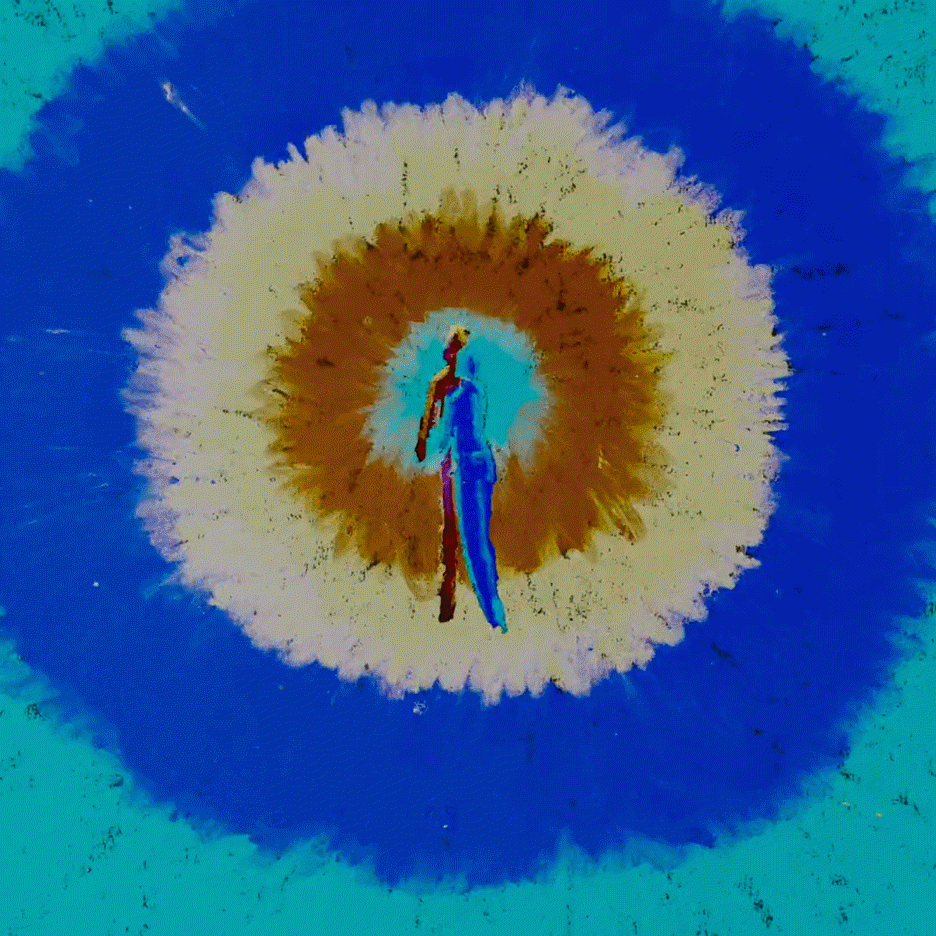
Music: London animator Jack Brown used oil pastels to create an animation of a woman on a journey of self discovery for Doe Paoro’s The Wind track (+ movie). (more…)
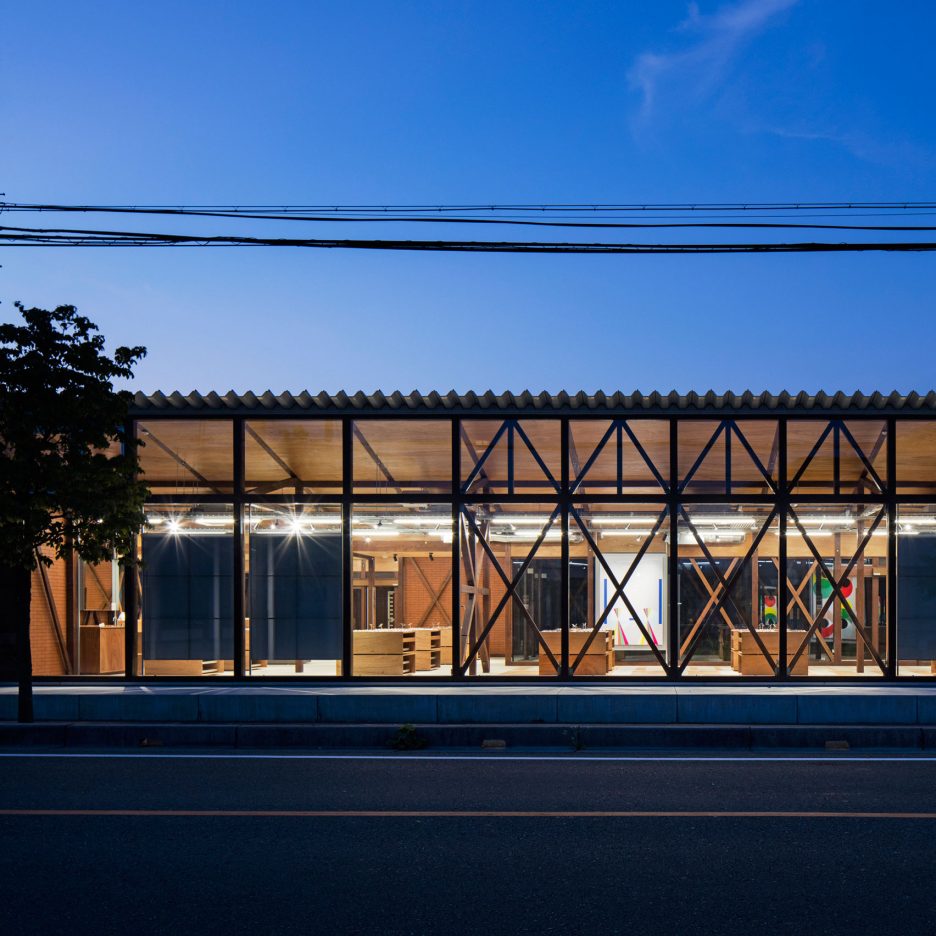
To celebrate the 12th anniversary of a Jins eyewear store, Schemata Architects has completed a renovation that involved taking a sledgehammer to the walls (+ slideshow). (more…)
From the architect. Between city and park, the university area weaves, student life awakens … Between architecture and landscape structures – all buildings were made in around ten years and they are all “signées” – the last empty site, is dedicated to students, north / east, open to the park, a “maison”
A “maison” for association’s offices and other leisure areas. A house that, at the intersection of mutually perpendicular axes of the park, could not escape the strict morphology of the site, but could however claim to be the focus of the “campus”.
Section
Section
Radical in its implementation and in its volume, it chooses to make a difference. It becomes a landmark. Claims the status of “madness” nestled in the park, coppery red monolith, lodge also hyperfunctional.
Proctor and Matthews Architects have released its plans for 140 homes in the first development phase of Mountfield Park, a major urban extension of Canterbury, England as a 21st-century garden city.
Inspired by the local landscape and vernacular forms, namely nearby courtyard farms and the site’s existing landscape of hops fields and fruit orchards, this first phase of the development will feature six residential clusters with houses interconnected around an orchard landscape. These clusters will be configured as a series of stepped terraces, in response to the site’s topography.
Courtesy of Proctor and Matthews Architects
Courtesy of Proctor and Matthews Architects
Each residential court cluster is contained within a red brick perimeter wall incorporating gables, chimneys and perforated brick panels. This echoes Kent village streetscapes, and provides a distinctive profile to the clusters. White masonry gables rise above the wall – a hint of the predominantly white courtyard façade walls of each home. Red clay tile roofs dominate, while natural slate is used in places to add variety and accentuate particular buildings. A scattering of different gable treatments offers further visual interest – described the architects.
Courtesy of Proctor and Matthews Architects
Courtesy of Proctor and Matthews Architects
Houses will range in typology and size, from one-bedroom apartments to six bedroom family homes.
Courtesy of Proctor and Matthews Architects
Courtesy of Proctor and Matthews Architects
The elevated siting of the project will afford views of Bell Harry, the tower of Canterbury Cathedral.
Courtesy of Proctor and Matthews Architects
Development is expected to begin in early 2017, if planning consent is granted, and the first homes will be completed by March 2018.
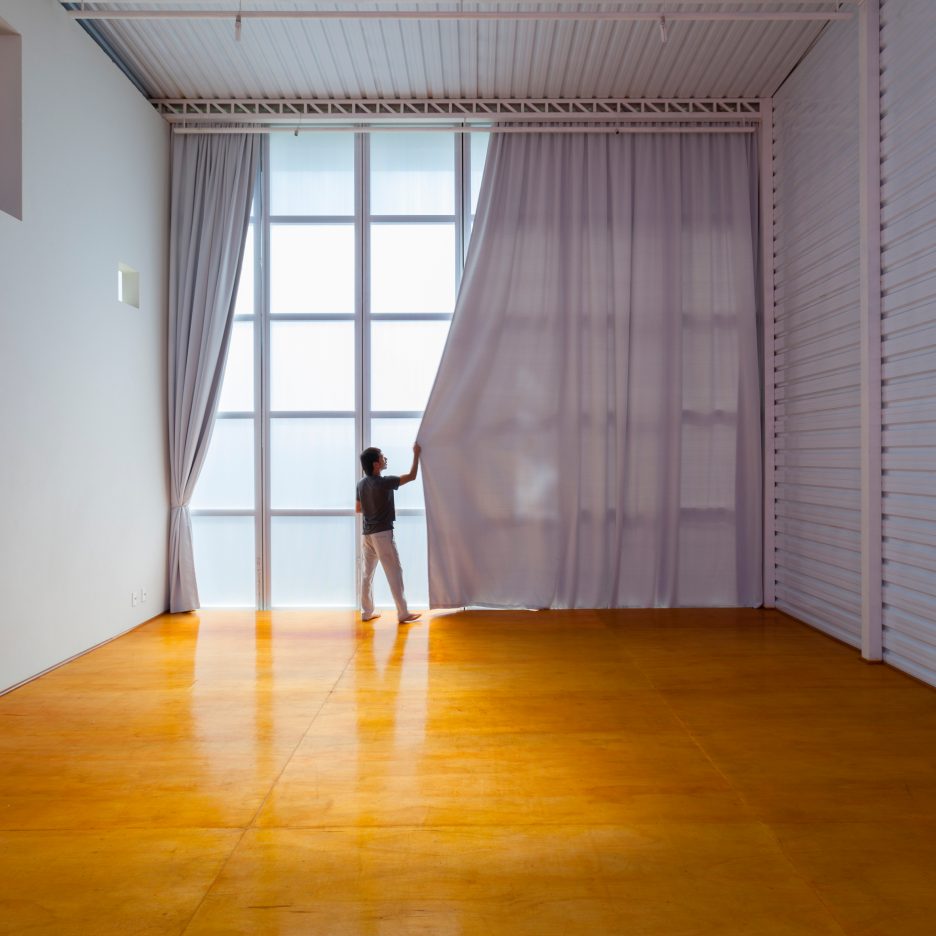
Tall translucent doors open two sides of this theatrical rehearsal space created by Brazilian architect Alan Chu for an actor in São Paulo (+ slideshow). (more…)





 Sig Nordal