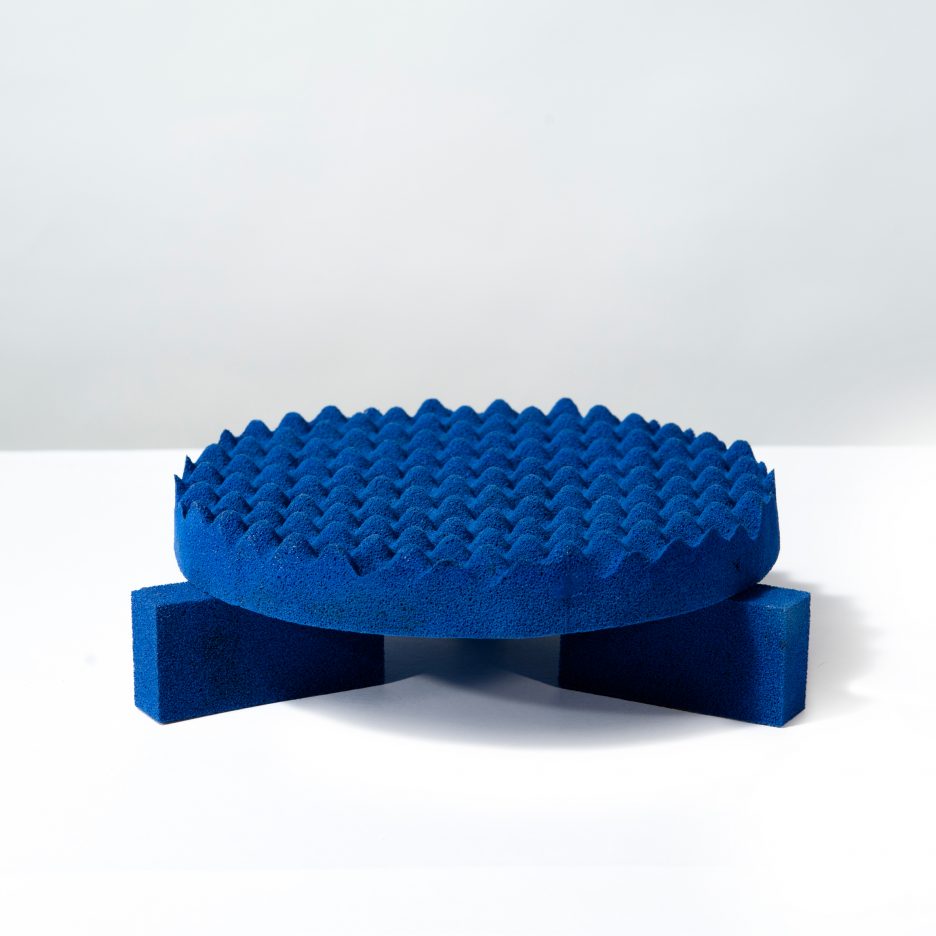
London Design Festival 2016: Studio Furthermore injected sponge and foam with porcelain to create this collection of vessels (+ slideshow). (more…)
London Design Festival 2016: Studio Furthermore injected sponge and foam with porcelain to create this collection of vessels (+ slideshow). (more…)

From the architect. A duplex house located in a small neighborhood north of Tel-Aviv, Israel, resides two families of close friends. Both are well attuned to modern architecture as owners of construction technology solutions businesses.
The goal was to design two different single family houses, each with its own unique plan, and still maintain a unified and coherent architectural element.
The architectural design sets a dialogue between the modernist basic principles of the early 20th century of basic, simple and decoration free geometry, and the latest technological solutions that can be used in today’s homes.
The first House is composed of two basic shapes that create a minimalistic and balanced composition. It contains two concrete masse, with one floating on top of the other and creates a feathery feeling despite the massive materials. These two shapes extend over a horizontal axis. some parts are overlapping while in other areas they detach and break out opposite directions. The meeting point of these two masses is a vertical axis that cuts the horizontal position with a use of a staircase that goes through all levels of the house. These opposites across the horizontal and vertical lines create the architectural conflict and strain.
The two masses also enable clear functional separation with the lower mass containing the public spaces and the upper one hosting the private section.
The upper unit is a box that opens up to the view. The interior functions are separated by partitions while ensuring all facing the open view.
The lower structure delivers an open space that is connected to the outside. Without a formal entry point, these openings merge the interior and the exterior and allow a daily and unformal passage between the inside and the outside.
The floating mass at the top provides shading to the parts below and thus creates an outdoor space that feels like an integral part of the interior. The yard and swimming pool are part of the structural composition as well, and made of clear and minimalistic lines.
To enhance the minimalistic design, the materials used provide a sense of rawness, sincerity and coherency. The exposed and clean concrete gets a lighter and more open interpretation thanks to the constructive technology that allows the usage of big openings, a wide open floor plan and the hovering of the upper mass into the open view.

Built in 1916, the strong architectural language of the Commonwealth Bank’s iconic ‘money box’ building provided a strong foundation that inspired the design for Challenger’s new workplace. Creating 9,000 sqm of workspace across four levels, the design by Woods Bagot was focused on bringing people together. Strategic in both concept and design, the design fosters alignment to grow the capability of the organization in line with business objectives. Looking back in order to create a forward-thinking workplace, work floors comprise individual and project based work stations, semi-open meeting pods and small, bookable private meeting rooms.
Woods Bagot Workplace Interiors Sector Leader in Sydney, Todd Hammond said the design created a workplace with longevity that leveraged the heritage character of the building while paying homage to the future, as well as Challenger’s youth and innovation.
“Fitting-out a heritage building means you approach the design differently. While we placed functionality at the core of the concept, the existing heritage void set a pivotal starting point from which to centre the heart of the project.”
Shared by multiple tenancies, the void is complemented by a glazed feature stair that contributes to the distinctive aesthetic of the space. The stair acts to connect all four Challenger floors, providing both physical and visual linkages across the business. Comprising steel construction with Australian Blackbutt timber cladding, the stair sits adjacent to the void, with glazed balustrades enabling a highly transparent feature that references the organisation’s objectives.
“Fortunately, working with an agile client like Challenger, the cultural value of inserting the stair into the floor plate was already understood. We worked to increase the void on the Challenger floors so the stair wouldn’t disrupt the heritage footprint,” added Todd.
“Separated from the existing heritage void, a four-storey timber box provides a frame for the stair to sit within, simultaneously elevating the feature to become a key statement of organizational integration, connectivity and wellness.”
The look and feel of the interiors embodies both the heritage architecture and the modern reuse of the building. Carefully considering client and employee experience, the language of the details are refined while maintaining a warm ambiance to create a welcoming reception to greet both staff and visitors.
Upon entry, clients and visitors are introduced to the space via the custom concierge desk at reception featuring seamless technological integration. Situated on Level 2, reception blurs into a town hall-style breakout zone for internal forums, social gatherings and presentations. Positioned adjacent to the café, commercial-grade kitchen and living green wall, the town hall area has provided a dynamic zone that functions at the heart of information exchange.
Throughout the fit-out, the finishes scheme develops the heritage-inspired palette using natural stones and textured glazing. Ceramic wall and floor tiles alongside bronze trim and fluted glass bricks reference the past, while contemporary furniture enables modern functionality, detailed considerately with the heritage overlay.
The repetitive and articulated nature of the space connects back to the heritage features of the building. The decorative timber beams and ceiling panels replicate the pattern of the heritage glazing, while maintaining a modern feel. The geometric motif in the ceiling in reception is inspired by the original stained glass windows of the heritage windows. Client-facing heritage meeting rooms are also situated on Level 2, finished with Harbour Bridge steel paint framing in a nod to the heritage aesthetic and the Sydney context too.
Considering workplace efficiency and employee wellbeing, Challenger’s new workplace delicately balances collaboration and the requirement for privacy, facilitating a productive environment that builds engagement, and enables connectivity within the Challenger community.
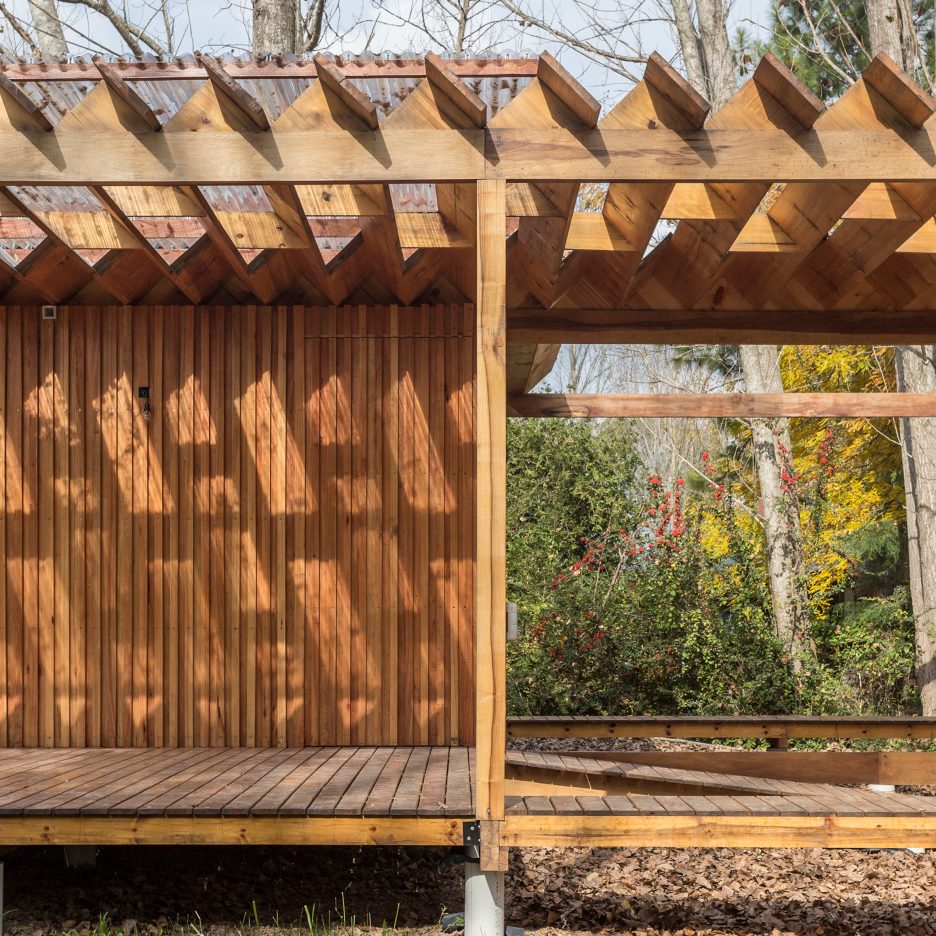
The zig-zagging roof of this wooden holiday home in Buenos Aires by local practice Estudio Borrachia provides shade for a series of terraces, and will eventually be covered in wildflowers and grass (+ slideshow). (more…)

From the architect. WeWork Yanping Lu is located in the Jing’An district of Shanghai. Nestled in what was once the British settlement, the area was occupied by a neighbourhood of longtangs. These houses and laneways are scattered throughout the area, and many now exist as remnants of their previous lives. These longtangs are sectionally cut, revealing the structure and interiors of the buildings and the way residents once occupied these laneway houses. Linehouse used this as their conceptual approach in developing the co-working space for WeWork.
Upon entering, a house framework envelops the reception, composed of white metal channels with the interior of the channel painted teal blue. Polycarbonate is layered upon the structure filtering the lighting; in moments this is peeled back to reveal the structure beyond. The reception desk is composed of salvaged TVs and radios; objects commonly seen in the laneways of Shanghai.
This play of sectionally cut structures continues in framing the pantry and seating nooks. Materials are layered, fixings exposed, revealing tectonically how the wall has been composed together.
A gridded rebar structure is inserted into the pantry area, moments of the volume are cut away allowing for guests to occupy the voids; leaners and shelving are integrated into the framework.
An oak wood structure, lined with backlit polycarbonate, leads you to the meeting rooms and phone booths. Seating nooks and phone booths are nested within the framework, allowing users to experience both sides of the ‘wall’.
Mosaic tiles line the bathroom interiors; their colours are placed to create ‘shadows’ on the floors and wall of the objects occupying the space.
Custom graphics were developed for all the wallpapers and murals. Inspired by Shanghai’s White Rabbit candy, a motif of rabbit wallpapers and artwork was developed. Meeting room wallpapers take reference from common Chinese games played in the laneways; Chinese chess and tangram. Motifs often seen in the streets of Shanghai are stamped throughout the public seating areas, playing on Chinese and English words encapsulating the community spirit of WeWork.

Seddon House by Melbourne based studio OSK Architects transforms what was a disused inner city car park into a compact family home.
Designed for 3 generations of the one family, the form of the building responds to the modest proportion of its neighbouring buildings, from the street appearing as a single storey construction.
“Having the building read at different scales, from different angles, was the real challenge of the project.’’ said Ben Waters, Principal of OSK Architects
“At first glance the building registers as a simple single storey structure, one that follows the logic of its street context. From the north, you realise a second floor fits within the roof form… the scale of the house opens up as you move around it.”
‘’The project emphasises the roof as a unifying architectural element. It’s geometry defines the scale and architectural expression of the building whilst controlling light and temperature throughout the year. It collects rainwater, allows for cross ventilation and provides the property with power via an integrated solar system.’’
The site is located within a flood zone, and in response the building floats above the natural ground level to avoid inundation. A highly engineered concrete slab is suspended above the landscaping, supported by screw pile footings, raising the finished floor level of the house above 100 year flood levels.
Built for a passionate, creative family who are environmentally conscious, the building combines passive and active technology to reduce energy consumption. Air, water and materials are all recycled throughout the design.
Thermal mass principles are adopted on the southern ground floor wall, constructed as a reverse brick veneer structure which helps keep interior temperatures consistent.
Large operable awning windows open the house up to the north elevation, whilst small highlight openings to the south allow for optimal cross ventilation.
Inside the house material details are highly crafted to form individual expression throughout the spaces. Small eccentricities including recycled 1950s sandblasted glazed doors, fitted with found river stones as handles, joyfully articulate the unique character of the building and its inhabitants.

Opinion: if the government is serious about putting design at the heart of post-Brexit Britain, it must support creative education says Hannah Paterson from the Design Business Association. (more…)

The Royal Institute of British Architects (RIBA) has announced Níall McLaughlin, founder of Níall McLaughlin Architects, as winner of the 2016 RIBA Charles Jencks Award. The award is given annually to an outstanding architect or practice “that has recently made a major contribution internationally to both the theory and practice of architecture.”
“Niall McLaughlin is a great inspiration for architects today, especially the young, because of his masterful skill in drawing from all traditions – classicism, modernism, postmodernism,” said jury member and award namesake Charles Jencks. “All the “isms” are under his belt, not on his back, and he extends them all through the commitment to architecture as an art and professional practice.”
Previous winners of the award include Herzog & de Meuron (2015), Benedetta Tagliabue (2013), Rem Koolhaas (2012), Eric Owen Moss (2011), Steven Holl (2010), Charles Correa (2009), Wolf Prix (2008), Ben van Berkel and Caroline Bos (2007), Zaha Hadid (2006), Alejandro Zaera-Polo and Farshid Moussavi (2005), Peter Eisenman (2004) and Cecil Balmond (2003).
“Niall’s body of work exemplifies the spirit of this award, which recognises the ability to seamlessly and in this case, beautifully, build theory into one’s practice,” said RIBA President Jane Duncan. “I am in awe of the materiality and the craftsmanship, of the dedication, the collaborative relationships and the contextual sensitivity with which Niall’s buildings are created, all of which make him a most-deserving winner of the 2016 RIBA Charles Jencks Award.”
This year’s jury consisted of Charles Jencks (landscape designer, architectural theorist and writer), RIBA President Jane Duncan, Lily Jencks (Director, Lily Jencks Studio and JencksSquared), Deyan Sudjic (Director, Design Museum) and Brett Steele (Director, Architectural Association School of Architecture), and was chaired by David Gloster (RIBA Director of Education).
Said Níall McLaughlin on winning the 2016 Jencks Award:
“I am honoured to receive the RIBA Charles Jencks Award; particularly given its special emphasis on a simultaneous engagement with theory and practice. For me, architectural practice includes drawing, writing and building as interlinked activities. It is a continual ferrying between an engagement in the natural processes required to bring something reliable and concrete into being, and the need to clear a space for the expression of doubt, possibility and a half-glimpsed ideal. I acknowledge the distinguished list of previous winners of this award; and I am very grateful for the recognition.”
The award will be presented Tuesday 25 October at the RIBA in London, where McLaughlin will also give a public lecture chaired by Charles Jencks.
News via RIBA.
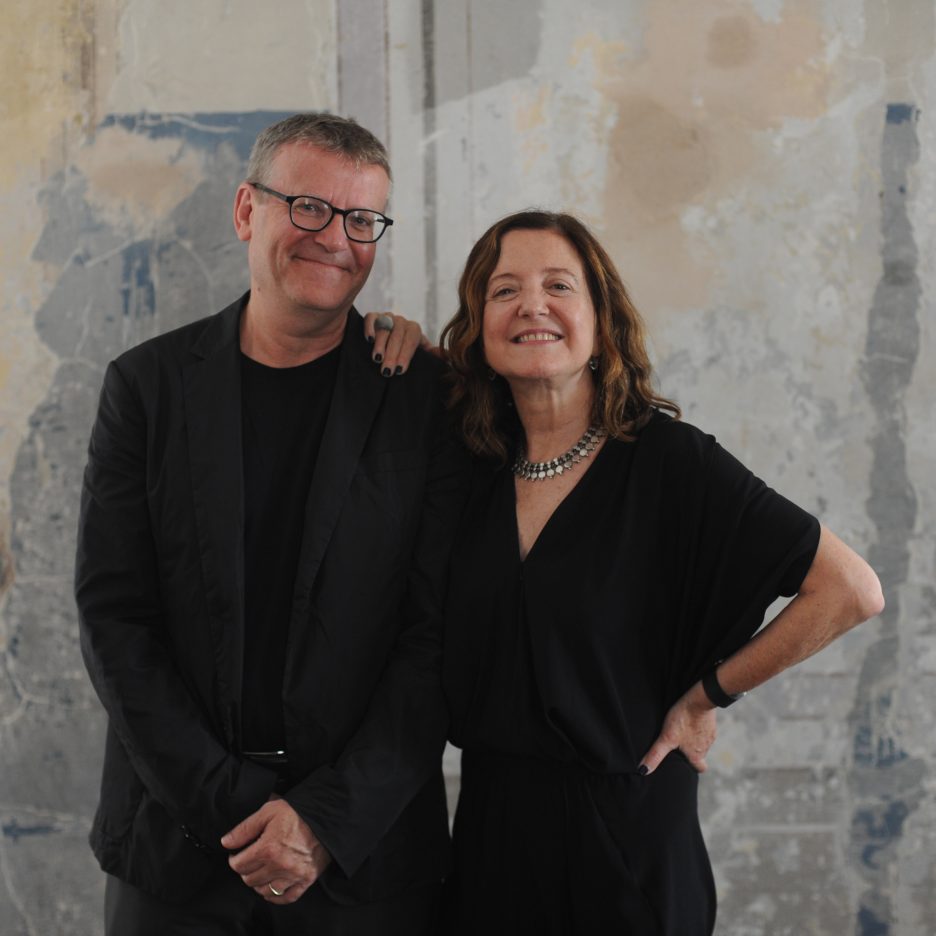
Istanbul Design Biennial 2016: today’s radical ideas rarely come from designers according to Istanbul Biennial curators Beatriz Colomina and Mark Wigley, who say the entire industry is 200 years out of date (+ interview). (more…)

 Sig Nordal