The seat of the advertising and movie sound production company is a remarkable place, the place in which the paths of many different people: actors, lectors, clients and team employees intermingle. The same way, there intermingle the paths of sound and images in audio and sound montage rooms. There is a lot going on here. All that jazz needs to be restrained and arranged – divided and separated, so that both work and breaks between the recordings provide necessary relaxation.
Our primary design task was to create an arranged, representative entrance – a spacious common area. The company seat is located in a terraced house from the 80’s, rather dimly lit and with undersized interiors.
Exploded Axo
The ground floor space, where a receptionist welcomes the visitors, was completely redesigned. There is a coatroom and a room with a large table designed for meetings with a large number of participants. We also prepared separate rooms for the administration and accounting as well as some quiet nooks for casual meetings. And, of course, a lavatory.
The design needed to be economical since the building is only rented.
The real challenge here was a tough deadline imposed by the investor – a holiday period. The assumption was not to interfere with the large amount of tasks which the company employees have to complete during the year. All tiers underwent renovation which included renovation of the staircase and development of new designs of the recording and sound editing studios. However, the major part of the renovation related to the ground floor area.
Apart from the rearrangement of the areas and functions on the ground floor, our design included development of partition walls, which is a reference to the divider wall structures in 2b4 buildings. We teasingly didn’t fill them in with the acoustic insulation material that would absorb the noise. We left (and designed) structure framework and emphasized their aesthetics by filling them with semitransparent polycarbonate panels. Transverse divisions of the wooden structure form marvelous shelves for books, magazines and binders.
Thanks to this solution the interiors became more spacious. The activities performed in individual rooms are hardly seen, however, the light from the garden spreads throughout the whole ground floor.
All structures and furniture are made of varnished pine wood, the filling panels are made of semitransparent polycarbonate and the ground level floor is covered with grey rubber flooring. The walls were painted white and additionally we placed a mirror in the waiting room to make the room even more spacious. To complement the interior we used standard luminaires and simple and affordable furniture from a well-known megastore.
The Chicago Architecture Biennial (CAB) has announced that Sharon Johnston and Mark Lee, of the Los Angeles-based firm Johnston Marklee, have been named Artistic Directors for the 2017 event. Following a successful inaugural run in 2015, the second edition of the biennial will take place from September 16 – December 31, 2017.
Speaking exclusively to ArchDaily, Artistic Directors Sharon Johnston and Mark Lee said:
“We are thrilled with the invitation to be the Artistic Directors for the second edition of the largest exhibition of contemporary architecture in North America. To have a global platform to address current ideas and showcase the talent in the field of architecture in a city with such an extraordinary architectural pedigree is a once in a lifetime opportunity.”
Johnston Marklee. House is a House is a House is a House is a House. Courtesy of Chicago Architecture Biennial / Tom Harris, 2015
Since 1998 the practice has worked on residential, commercial, and institutional work with a particular focus on the arts. They frequently collaborate with artists, visual designers and writers to, in their own words, “broaden the breadth of [their] design research” in order to maintain “permeable boundaries for greater results.”
The practice is jointly led by Sharon Johnston, a graduate of Stanford University, and Mark Lee, a graduate of the University of Southern California. Both have studied at the Harvard Graduate School of Design.
Also announced was the addition of Todd Palmer, formerly of the National Public Housing Museum, as the Biennial’s Executive Director. He will work alongside the CAB board to establish the Biennial as a “world-class cultural attraction for the city.”
Under the theme of “State of the Art of Architecture,” the inaugural Biennial was North America’s first and largest international exhibition dedicated to the display of contemporary architecture, featurings works from over 120 architecture and design offices from more than 30 countries. Over half a million people from all over the world attended the event.
“The Chicago Architecture Biennial’s return in 2017 confirms Chicago as an architectural hub,” said Chicago Mayor Rahm Emanuel. “Last year’s edition was a resounding success, and I’m pleased to see the great planning and support for the second Biennial, which will be even better. Not only is the Biennial’s return a testament to our city’s architectural significance, but it speaks to Chicago’s place as one of the world’s cultural destinations and our place in the world of architecture and design.”
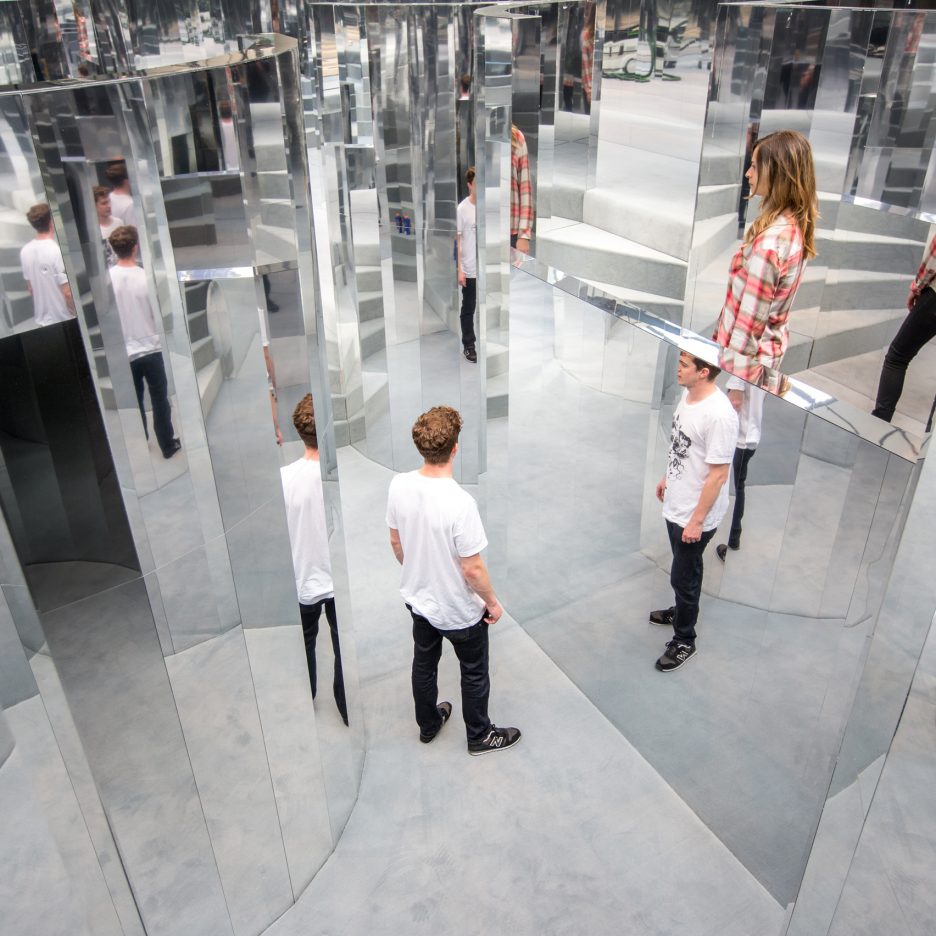
British set designer Es Devlin has created a disorienting mirror maze inside a former warehouse in Peckham, which is perfumed with an exclusive Chanel scent (+ slideshow). (more…)
An emerging sector of construction is developing new systems that manage to not only reduce construction times and costs, but also solve the housing problem in Mexico’s most disadvantaged areas. Originating from previously known construction techniques, national companies are venturing into international markets by proposing new models of construction that use fewer materials and have a greater structural strength and greater comfort. They’re also introducing smart materials adaptable to any construction need.
As part of this new industry breakthrough, Juan Manuel Reyes from Armados Omega and architect Jorge Capistrán have developed a new, low-cost construction system which also reduces construction time by 50%. It uses single module blocks and doesn’t require binders, mixtures, or skilled labor.
Block ARMO, developed by Armed Omega, debuted in late 2015 in an official press release by the Mexican Council for Science and Technology, in which Juan Manuel Reyes said the company’s goal “is to provide new construction systems to further contribute to Mexican society meeting the demand for decent housing.”
The manufacturing process for the stone blocks uses production methods based on recycled materials and low water consumption. The team of developers is interested in releasing to the market a new system of self-building at different scales and for different needs.
Courtesy of techBA
According to Jorge Capistran, who patented the innovative system putting it into practice in 2009 for a project developed by the Ministry of Social Development (SEDESOL), he has built more than 300 homes in Sierra Negra, Puebla.
Juan Manuel Reyes explained that “the system consists of six pieces of self-assembly that are self-supporting. A metal rod is inserted every 80 centimeters, with no need for a special foundation, creating a structure where you can install pipes and wiring without any problems.”
Courtesy of ARMADOS OMEGA
The idea of this particular assembly, which is similar to a puzzle, is that extensive training or side building systems that complicate the assembly process or generate high building costs are no longer required.
“This construction method helps workers because they don’t need any extensive training to implement the system” said the director Juan Manuel Reyes.
Courtesy of techBA
With a manufacturing plant in Cholula, Puebla, the Mexican company continues to create new elements that diversify the product and function as decorative elements with various finishes, colors, and textures in the piece, with the hope of replacing traditional systems, reducing costs all while contributing significantly to the construction sector and housing in Mexico.
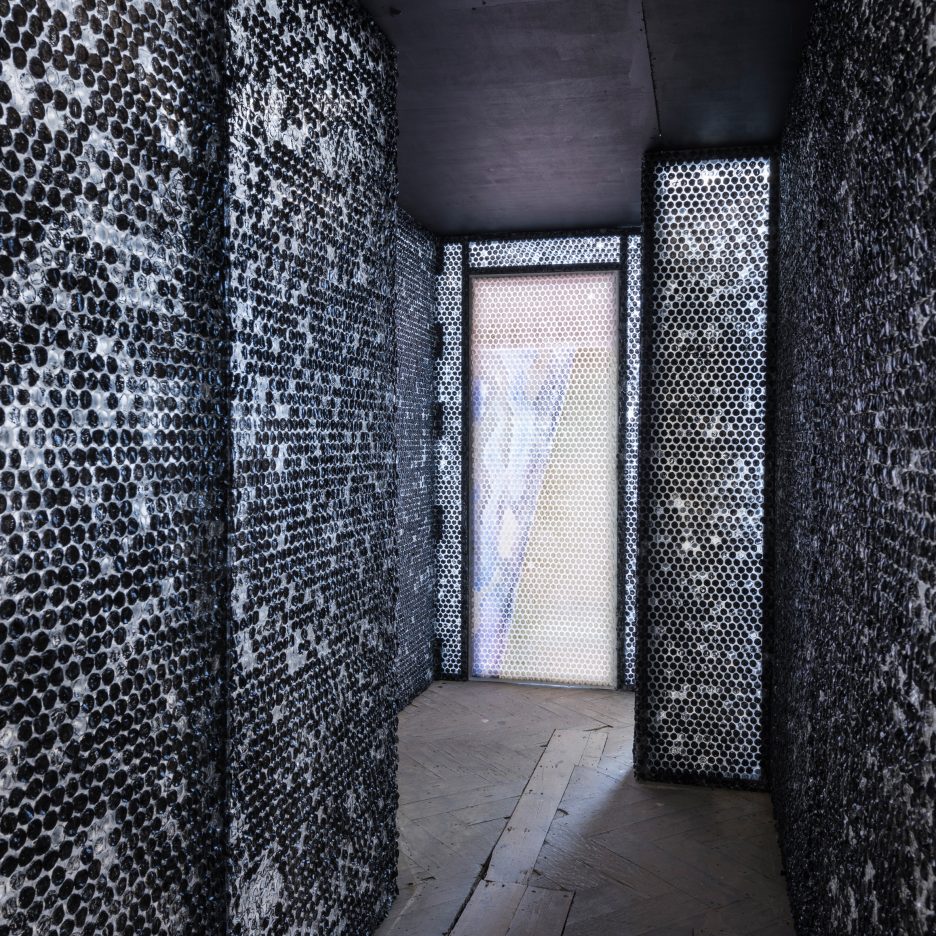
Bubble-wrap partitions reveal the former layout of a derelict west London hotel as part of an installation by UK artist Michael Iveson (+ slideshow). (more…)
Iconic building in the cultural and heritage landscape since 1991, the Museum of Stella Matutina, known as Musée de France, has witnessed a major renovation (37329m2 of total built area and landscaping encompassing the museum and surrounding buildings). Driven by a new scientific and cultural program, this project has focused on both, the buildings of the original sugar factory, and the museum trail, with a set of enriched collections and the use of innovative multimedia and interactive technologies. The project implementation covered the rehabilitation of the buildings, restoration of the collection items and the museographical aspect. The team of L’Atelier architectes was in charge of all operations on site, including the ones of environmental remediation, restoration of machines and transport of heavy collection items from their locations in-situ. A five-year adventure for the team of L’Atelier architectes, responsible for coordination with some forty companies.
The museographic thought, which preceded the architectural one, consisted of looking at the old factory not only as a reminder of the history of the industrial and sugar sectors of the island, but also the base for a speech about the history of a territory, its settlements and its people.
The raw materials of the existing museum, the buildings of the old factory, the collection holdings and documentary resources were put together to reconstruct the history. This story, narrated by the museographer Laurent Laidet, places the building in the heart of the subject.
The tour of the new museum is written in five chapters unfolding over 1200 linear meters (3600 m²). If the tour sets out and explains the transformation of sugar cane and its successive innovations, the Stella Matutina museum is also intended as a tool to understand the history of Reunion society, strongly shaped by the sugar industry, and a tribute to the men and women who have built the Island as we know it nowadays and who gave it its identity.
Additional spaces have also been allocated for the functioning of a modern museum: conservation, exhibition, mediation, broadcasting, didactic spaces …
Ground Floor Plan
Design embedded in the site
The team of L’Atelier architectes moved to the site of the old factory during the whole design phase. An important task of appropriation of the site, its environment and its history was undertaken by the architectural team. A special insight was also made possible thanks to the cooperation with former workers of the factory. This enhanced understanding of the site and its light, the integration of the factory in the landscape, the history of the region and its inhabitants.
The challenge was to restore the original area and enhance the factory that has a strong symbolic attribute. Eventually, the museum is only the old factory, which has been revealed. Gateways and multiple split levels which rendered the museum unreadable were removed. The factory relives and extends its entirety and majesty.
The modification is deliberately light on the exterior of the factory. It was limited to the change of the outer part of the building in order to identify it better as a museum, marking its transition from an industrial into a cultural building. A slightly nobler treatment has been chosen with the use of copper cladding.
The northern facade has been cladded with louvers. This large horizontal cladding ventilates the building while protecting it from sunlight. In addition, it provides a beautiful natural light inside which varies according to the time of day. From far away, the façade vibrates and sparkles in the sun ‘like sugar’.
Discrete extensions that blend into the “landscape”
The additions and extensions, which match the clients desires on having an archive centre, a temporary exhibition hall and an amphitheater, were placed in such a way that Stella’s silhouette remains unchanged. The extensions are hidden in the contours of the existing building and they do not alter the perception of Stella in any way and especially its silhouette as it emerges. It can be discovered gradually from La Route des Tamarins, the main highway that connects the north to the south of the island.
About 60 machines were refurbished and staged in the museum. Some, by their large size, were restored in situ, with all the precaution that this job requires, on a site under construction. More generally, the restoration of nearly 600 collection items allowed local actors to take advantage of skills’ transfer from experienced personnel.
The task of management of Stella construction site was complex, because of the number of contractors to coordinate (40 contractors), almost archaeological precautions required tor restore different historical layers of the factory, new technologies loaded by numerous multimedia devices – the museum has 48 multimedia devices including a 4D movie theatre, with a total of 25 km of network cables built in.
The discovery of asbestos in the soils has required the implementation of a complex and innovative pollution control process which lasted for nearly a year.
Sections
A didactic and heritage space open onto the ocean
Endemic plants, fruit trees, shrubs, aromatic herbs: the landscaping of the gardens creates an educational, leisure and heritage space for the visitors. The gardens and outdoor spaces, completely renovated, consist of several pathways as well as external spaces dedicated to diverse events.
Movie: Dezeen goes behind the scenes at the factory where the fibreglass blocks that comprise BIG’s Serpentine Gallery Pavilion were made in this exclusive video produced for material manufacturer Fiberline. (more…)
Sierra Fría is a private home located in Mexico City, Mexico. Completed in 2014, it was designed by JJRR Arquitectura. Sierra Fría by JJRR Arquitectura: “Modernist architecture (also known as International Style) is defined by thin linear forms, exposed metal frames, concrete cladding, and little ornamentation – characteristics often met with hesitation due to the perception that strict functionalism leads to overly minimalistic spaces. But these beautiful homes by José..
Erik Giudice Architecture has released its proposal for a transit station at Södra Munksjön, in Jönköping, Sweden, a design that was created as an entry for the station area ideas competition, which recruited four firms to create a new station as a part of the area’s larger expansion plan.
Based on the idea of connecting the city and its surrounding nature, the station proposal utilizes light and a playful wooden canopy structure to create a portal from Jönköping to Munksjön, a lake on its opposite side. The “matchstick” structure of the station additionally pays homage to the city’s past as Tändsticksstaden, a famous matchstick capital of Sweden.
Courtesy of Erik Giudice Architecture
Using a combination of wood and polycarbonate panels, the structure will provide partial shade, as well as views over the surrounding lakes and forests, for its travelers.
Courtesy of Erik Giudice Architecture
Transparency and openness helps sunlight reach below the cover and onto the platforms and other areas, ensuring that all areas of the station have access to light with entrance areas on all sides, making the spaces above as well as below the viaduct feel safe and secure for all users – described the architects.
Courtesy of Erik Giudice Architecture
Courtesy of Erik Giudice Architecture
Conceptualized as a “living room in the forest,” the project is “green” not only in its use of materials but also in its incorporation of nature. Local tree species like ash, pine, and oak will be planted in areas of the station where the canopy dips down and is anchored into the streets.
Furthermore, the polycarbonate portions of the canopy will feature solar panels on the south side of the building, and rainwater will be harvested and reused in planted areas on site.
Courtesy of Erik Giudice Architecture
The use of wood and curbed, creates irregular surfaces helping to absorb and diffuse noise from the train and other traffic and adds to a more peaceful atmosphere, a place where people are invited to linger and relax – said the architects.
Long, circular ramps will guide visitors to the upper level of the station, where they can walk and take in views of the lakes, forest, and city.
The lower level of the station will host a number of different uses including ticket offices, shops, cafes and restaurants. It is where other modes of transportation connect with and within the train station. It has been designed to favour easy access for all users and a good flow of both pedestrian and motorized traffic in and around the station through the use of wide sidewalks, large entrance areas and transparency which offers excellent visual orientation.
Dezeen promotion: this film by Eizo ColorEdge follows visualisation artist Forbes Massie as he describes his studio’s methods for creating images that “your grandmother falls in love with” (+ movie). (more…)





 Sig Nordal