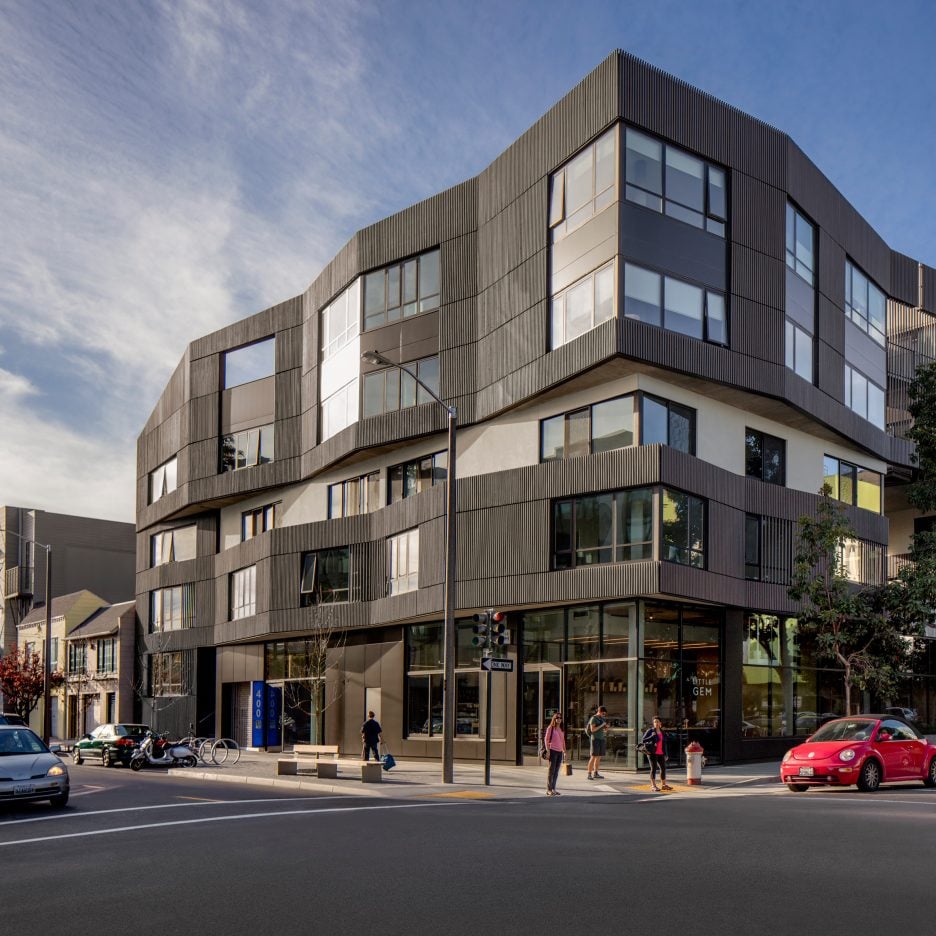
US studio Fougeron Architecture has completed an urban residential building in a San Francisco neighbourhood that features faceted facades covered with grey rods (+ slideshow). (more…)
US studio Fougeron Architecture has completed an urban residential building in a San Francisco neighbourhood that features faceted facades covered with grey rods (+ slideshow). (more…)

From the architect. As a response to the site, environment and client’s requirements the pod extension is a true expression of ‘form following function’. A modern structure is not restricted with a period (Victorian) architectural language but is free to respond honestly to the brief, site and restraints.
By separating the pod from the existing house the new structure is free to respond whilst respect the past. This is evident in the series of articulated plans of the new pod extension directly responding to the external factors / forces. The roof extends out around the meals to provide solar shading from the summer sun but allow low winter sunlight to enter. The higher family room roof folds down to the west to protect from the harsh western sunlight whilst still offering views to the back yard.
The lower roof to the south side respects the south neighbours right to light and setback codes. The change in ceiling heights defines the kitchen / meals and family areas. The separate structure also has a financial advantage; with less time spent dealing with the existing structure the ‘fiddle factor’ is reduced, providing a simpler and more cost efficient solution.

Studio Pei-Zhu has unveiled their design for the Jingdezhen Historical Museum of Imperial Kiln, a museum dedicated to the unique history of ceramics in Jingdezhen, China. Located in the heart of the historic china-making district of the city, nestled between ceramic workshops that date back to the Ming and Qing dynasties, the museum draws inspiration from the special forms of the kilns, creating gallery spaces out of a series of hand-crafted vaulted structures.
According to Studio Pei-Zhu, the city of Jingdezhen was “born by a kiln” and rose to economic prosperity over thousands of years through the creation of high-quality, sleek china pieces. As symbols of this prosperity, the remaining workshops hold important cultural and historic value to the city. Studio Pei-Zhu’s museum design is therefore deferential to this context, maintaining a relatively low profile that encourages visitors to look out at the city, with direct sightlines to important monuments such as the Tang Dynasty pagoda.
Rather than attracting attention through size and scale, the museum stands out through its composition, rotation and gathering of individual volumes and vaults. The arrangement consciously breaks with the existing urban fabric to activate its surroundings and provide visitors to the exhibition spaces with an unexpected experience.
“Vaults of the museum reflect unearthed relics, while half of its volume remains underground. It creates connections, both physical and spiritual, between the aboveground and underground; present and history. The museum guides visitors into kilns, to ruins, and back to the traditions and culture of local history. The form is simple and primitive, yet full of strength. In silence and light people are encouraged, by the honesty of architecture, to feel the history and culture. We expect visitors will have a chance to rethink upon the relationship between this city and its kilns, its past and its future,” explain the architects.
Studio Pei-Zhu also hopes that the museum will serve to garner global attention to Jigndezhen, both to increase awareness of the city’s role in the history of ceramics, but also to change the city for the better.
“A single museum is capable of changing an entire city. The historical museum of china is bound for carrying on the culture of china, telling the stories of Jingdezhen’s history and culture to the world, and bringing out new life and events to the city.”
Construction on the project begins this year, with an expected completion date in 2017.
Studio Pei-Zhu’s design for the Jingdezhen Historical Museum of Imperial Kiln is currently being exhibited as a part of “Towards a Critical Pragmatism: Contemporary Architecture in China,” now on display at the Harvard GSD.
Our special newsletter includes everything you need to know for this year’s London Design Festival, including the top trends to watch out for and the pick of the best exhibitions and events.
Read the Dezeen Mail LDF special | Subscribe to Dezeen Mail
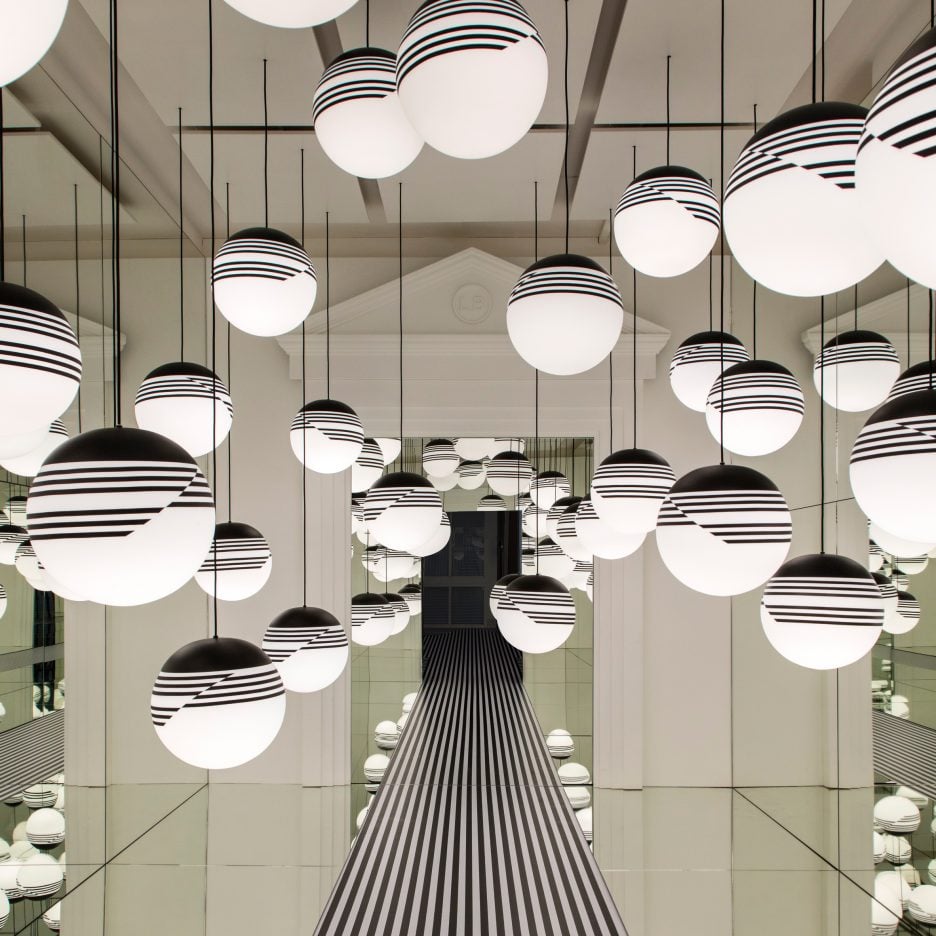
London Design Festival 2016: British designer Lee Broom has transformed his east London store into an experimental installation inspired by the 1960s Op Art movement (+ slideshow). (more…)

Acquisition of an adjoining site made possible a new extension to an existing Victorian period house in Brondesbury, North London, which had stabling at ground floor level originally. This enabled a doubling of the original volume and transformation into a stunning contemporary home for the two occupants.
The building occupies a corner plot and acts a ‘bookend’ to the existing house and terraced street. The mono-pitched slate roof is separated from the existing brick house by a dark grey rendered panel which also demarks the new entrance to both parts of the newly combined buildings. A timber slatted screen to the front glazing provides extra privacy. The Welsh slate roof finish is taken down the side elevation creating a unified and discreet facade to the street.
The new wing provides spacious open plan living/dining and kitchen on ground floor opening out through full height glazed sliding doors to a limestone paved terraced area at the rear. Wide board Oak flooring with underfloor heating throughout gives the clean interior a unified calm appearance.
The dining area is located to take advantage of views to both the front and rear gardens. A study/gym and utility room within the boundary of the existing house complete the accommodation at ground floor level. A substantial roof-light over the stone clad island unit lights the kitchen from above.
The living room features a real wood fire supported on a linear Limestone shelf which also conceals an LED wall-washer luminaire.
Vertical hardwood slats form a dramatic screen to the main stair to first floor leading up to the first floor a master bedroom with an en-suite wet-room and dressing room which opens out on to the large elevated south facing terrace.
The triangular shaped rear garden has at its apex a timber-clad workshop/studio with a green Sedum roof covering.
London Design Festival 2016: Dezeen will be involved in events throughout the week as part of London Design Festival, including The World’s Biggest Design Party. (more…)

BIG, MVRDV, Snøhetta and aMDL have unveiled images of their proposals for the redesign of San Pellegrino flagship factory and bottling plant located at the source of the mineral water in San Pellegrino Terme, Italy.
The competition brief asked architects to renovate and expand the historic home of San Pellegrino, the world’s leading sparkling mineral water company, with a “truly innovative and technologically-advanced design” aimed at integrating into the natural aesthetic of the surrounding terrain, while responding to the iconic identity of the S. Pellegrino brand.
Continue reading to see each proposal along with official descriptions from each firm.
Our proposal for S. Pellegrino’s new home in the heart of Bergamo is an authentic extension of the rational and functional architecture of the existing factory, where the natural mineral water has been bottled since 1899.
Located in the Brembana valley between the Brembo river and at the foot of the Italian alps, our proposal embraces and enhances the existing architecture while forming an elegant framework that will allow the visitors to sense the power and purity of the surrounding Alpine nature.
The design is evolved around a well-known architectural element: the archway. The simple and clear character of the expanding and contracting arches throughout the campus, create a multitude of spaces and experiences. The visitors and S. Pellegrino employees will walk through majestic vaults, covered tunnels, arcades and green pergolas that frame the history and heritage of the brand. The seriality of the architecture will reveal parts of the surrounding mountains from the snowcapped summit to the running river at the base.
At the center of the campus, a giant core sample will visualize the 30-year journey the mineral water has to travel through to acquire the minerals and achieve the purity that is unique to S. Pellegrino. The new S. Pellegrino Campus will appear disciplined yet fluid; cavernous yet transparent; unifying yet diverse; classic yet contemporary. Celebrating both tradition and evolution the architecture of the new campus reflects the values of San Pellegrino Terme as well as the core values of the Sanpellegrino Group: Purity, Transparency and Naturality.
“Shaped by the serpentine run of the Brembo river and the sloping Alpine mountainsides, our proposal for the new S. Pellegrino Campus inherits its narrative structure from the landscape of the Brembana valley. Like an aquatic equivalent of a wine cellar, the repeating archways expand and contract to create the narrative framework for the purity and clarity of the mineral water, in an environment characterized by lightness, openness and transparency. The architecture of manmade elements is embraced and enhanced by the forces of nature, tapping into the rhythmic rationality of the industrial heritage of S. Pellegrino while eliminating the traditional segregation between front and back of house, creating a seamless continuity between production and consumption, preparation and enjoyment.” – Bjarke Ingels, Founding Partner, BIG.
The vision and objective of the S.Pellegrino company to transform and elevate the image of its main production and logistics facility is not only an opportunity to increase its international brand recognition but also to demonstrate its respect and participation in the evolution of the whole valley as an important tourism destination. With this in mind Michele De Lucchi Studio have developed a comprehensive project for the whole complex that is organised around 4 key themes;
To be Natural – regarding the surrounding environment, with the introduction of a tree planted logistics and pedestrian bridge that makes a connection of the local flora and fauna across the Brembo river. Where as the existing perimeter boundary industrial style fence is replaced with one made from fragments of local natural stone.
To be Pure – regarding the quality of the water, that is represented by the architectural unification of all the existing production buildings and renovated office facilities with new facades in translucent white glass.
To be Conscientious – regarding all staff, that places human needs and desires at the centre of the redesigned work environment and includes a variety of supporting amenities; gym, library and cafeteria that emphasises wellbeing and views to the surrounding valley landscape.
To be Cool – regarding the visitors and customers, where we have designed a large transparent greenhouse that brings together all of S. Pellegrino’s values and creates an amazing place to visit and ‘passeggiare’ around a naturally inspired environment that includes an auditorium, a ‘water café’, water experience and taste labs, show cooking space, meeting rooms and study centre. An external ‘Water Theatre’ and reflecting pool provides a backdrop to support events and installations that will continue to make the flagship factory a ‘Cool’ place to work and visit.
“TO BE NATURAL, TO BE PURE, TO BE CONSCIENTIOUS, TO BE COOL AND TO LIVE IN ITALIAN.” Architetto, Michele De Lucchi.
A Star is Born! MVDRV lifts an old factory out of its existing landscape breathing new life into an industrial working site in the heart of San Pellegrino Terme.
The S.Pellegrino Experience Lab has been lifted from the landscape to increase the factory’s flexibility, and to emphasises the views over the site. At the same time, it strengthens the brand: A Star is Born!
The ceilings and floors are made of a transparent and slightly reflective material, emphasising the purity of architecture as well as the intentions and ambitions of the brand. On the roof a layer of water reflects the landscape and falls to the ground, echoing the core process of the factory at its very essence.
As MVRDV co-founder comments for the site’s transformation; “We turn the factory even more into a star. We dream about a factory that enlarges its transparency, its honesty, its relation with the landscape… In the existing and new components of the factory, as a factory will ever adapt…A new transparent star floats over the factory and the valley. Overseeing this operation. it lifts the water and shows it as it falls over its edges onto the factory and the soil. It symbolizes the dream…”
The current façade of the factory is open where possible, but outwards, it creates views towards the surrounding nature, an idyllic setting for those working and aloes a perfect backdrop for the working processes. Inwards, on the other hand, views are created to show the purity and transparency inherent in the S. Pellegrino brand.
For the office, the extension has been realised inside and on top of the existing building allowing the factory to be transformed into a crisp and edgy loft space. A double height lobby enhances the feeling of community by concentrating all the main public functions, while a rooftop restaurant sits above the workplace and celebrates this with a beautiful view for all.
The functionality of this is shown in all its purity, giving the visitor a strong belief and admiration and for the worker, a sense of beauty, joy and pride for the town’s “miraculous” water.
The S. Pellegrino Flagship Factory will be embedded within the San Pellegrino Terme area. The connection of the Experience Lab`s public levels to the community, the softening of the impact of the existing factory together with views from the surrounding hillsides back to the building, the San Pellegrino Flagship Factory will be integrated in the area both physically and visually.
This extrovert outlook locates the building in the cultural context, enhancing public ownership to the building and providing a specific focus for both the public and private areas. A new public space, the Park, is created for all to enjoy and installs a high degree of permeability within the proposal, ensuring connectivity across the site and with the wider neighbourhood with a new pedestrian bridge over the River Brembo.
Upon the Park sits the Experience Lab, welcoming, transparent and intriguing. Located under a floating cloud, an episodic sequence of spaces unfurl themselves in the form of a spiral ramp from which the visitor can gain an understanding of Italy, the San Pellegrino Area, its terroir and the San Pellegrino brand.
The existing factory form is shrouded in a stainless steel mesh that adapts to the contours of the buildings. The buildings take on a new form as edges are blurred. Depending on the viewing angle the mesh can appear closed and reflective or open and transparent, often at the same time.
“The history of San Pellegrino and its water is in itself strong enough to create a successful future. Snøhetta has drawn its inspiration for the project from this fact, just emphasizing the extraordinary values already embedded in San Pellegrino, its nature, in the water and its international standing” – Kjetil Thrædal Thorsen
“We have been astonished by the projects presented today,” said Stefano Agostini, President and CEO of the Sanpellegrino Group. “All four architectural firms interpreted our brand’s rich history and values so well that it will be extremely difficult to determine a winner. On the other hand, that is why we have invited four architecture studios of such an international stature to take part in this tender; we want to ensure the new home of S.Pellegrino mineral water, which is intended to become the signature of our Group, will amaze visitors from all corners of the world.”
S. Pellegrino will announce a winner and a project timeline by the end of September.
News via San Pellegrino.

Prototype square in Cesis, Latvia designed by Mailitis A.I.I.M. reconnects a historical brewery with an old town and hosts the publicly usable 1:1 architectural prototypes of the future brewery reconstruction.
The project is located in the historical part of Cesis town center in the territory of an Old Beer Brewery. It is bordered with Cesis Medieval Castle square and adjacent park. Cesis Beer Brewery was not functioning for the last 10 years and has been used just occasionally for the art festival, but now the whole site is going to an extensive gradual transformation into a Venue for Science and Arts. It will present the idea of «slow architecture» where the process of rebuilding will become a public event and an architectural image of the reconstructed Brewery.
The square is made as an entrance that restores the ever-exiting historical connection from the Cesis Castle square to the Brewery. Two parking plots that were separated with a masonry wall where merged and from the closed and isolated area the square becomes an open public space which is well connected with the Cesis old town.
The Prototype square is intended to be a herald for the visitors which presents the beginning of the Brewery’s transformation process. It is designed as a place to exhibit the architectural 1:1 prototypes that are intended to test the architectural solutions for the future Brewery. These mockups has informative and aesthetical function. Meanwhile they are designed to become a pieces of public infrastructure. Thus they become a coffee place, playground for kids, event’s space.
The square will host various prototypes every year. This year the temporary pavilion – rack for drying a wood that functions as a canteen and an events place where built in the Prototype square. Inspired by the building process that will be the part of Brewery’s daily routine, it is informing the people about the coming changes. The main architecture image resembles a construction site where assemblage of the scaffolding, sawn timber and gravel becomes the main aesthetic elements of the square. The diagonal timber supports are the prototypes to test the visual appearance of structural elements for the brewery project. The modular scaffolding structure is filled up with local timber and creates a shelter for the visitors and a stage for a concerts. A massive stack of the timber sleepers serves as a terrace stairs and benches. 2016 year’s public prototype will operate until the end of October.
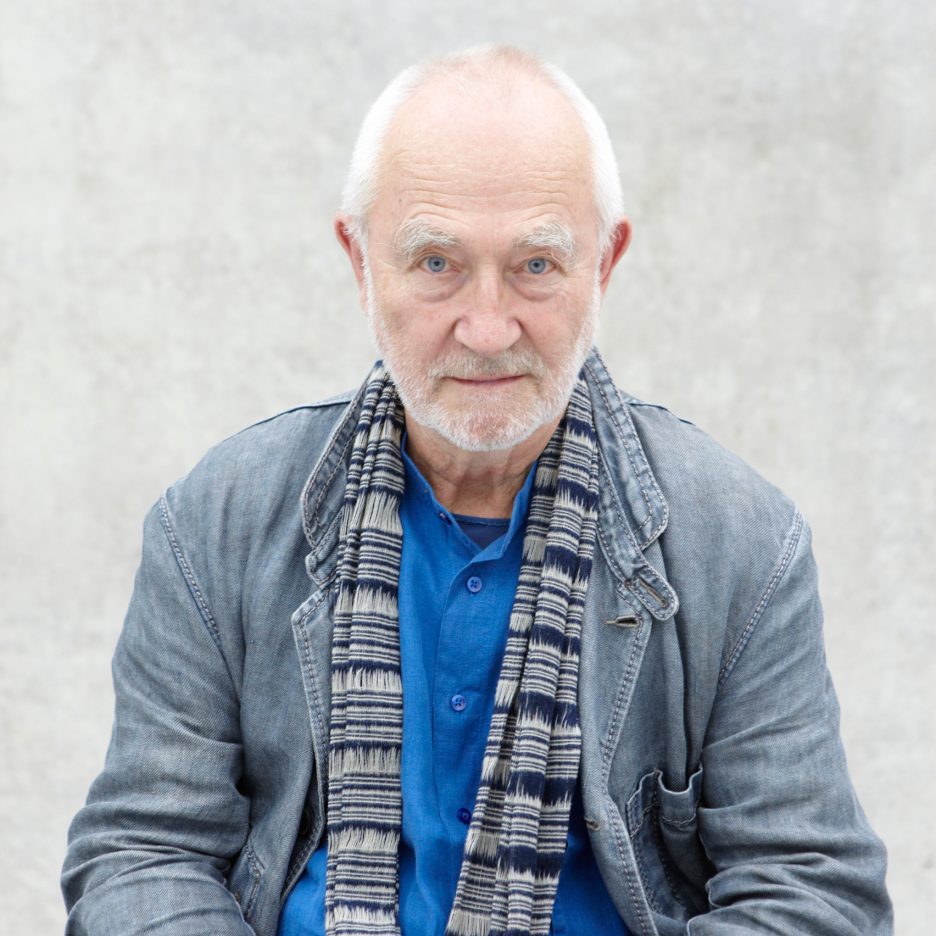
Swiss architect Peter Zumthor has been chosen to extend to Switzerland’s most-visited art museum – the Fondation Beyeler in Riehen, Basel, originally designed by Renzo Piano. (more…)
 Sig Nordal