OMA/Shohei Shigematsu-Designed Installation for “An Occupation of Loss” Opens Today at Park Avenue Armory


An Occupation of Loss / Taryn Simon in collaboration with OMA/Shohei Shigematsu. Image courtesy OMA. Image © Naho Kubota

An Occupation of Loss / Taryn Simon in collaboration with OMA/Shohei Shigematsu. Image courtesy OMA. Image © Naho Kubota

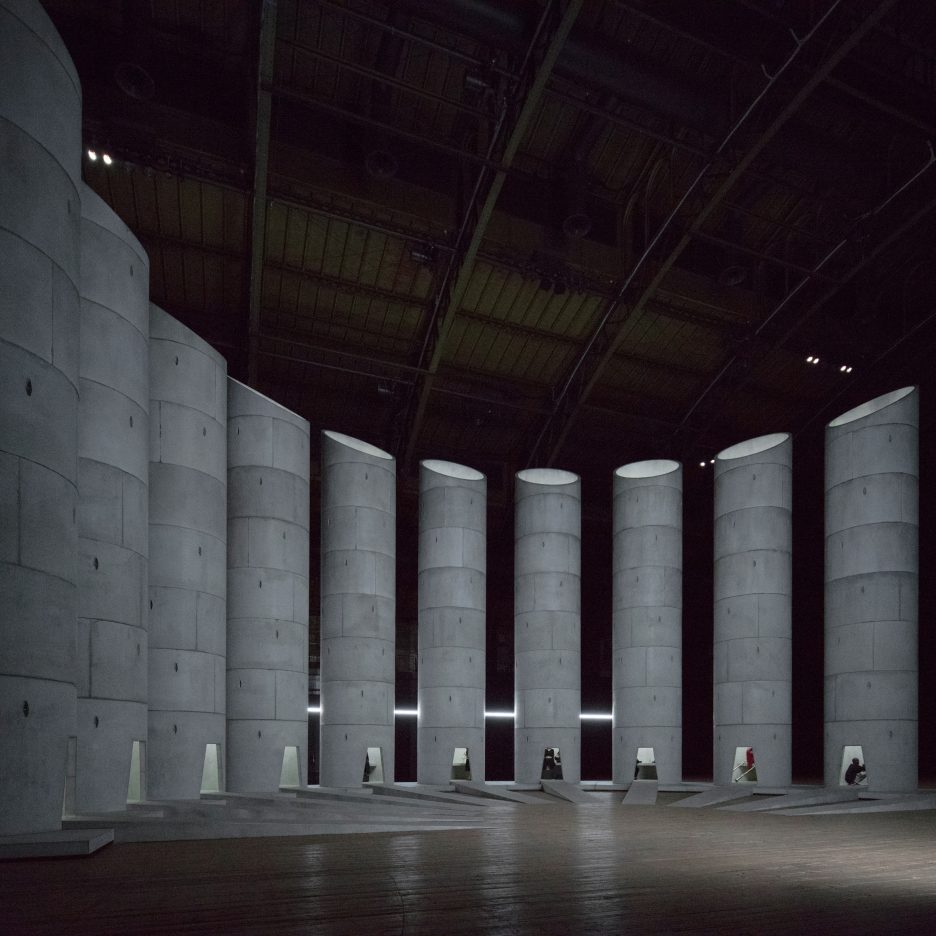
Artist Taryn Simon in collaboration with OMA/Shohei Shigematsu has designed An Occupation of Loss, a major new performance work choreographed around an OMA-designed monumental sculptural setting consisting of 11 concrete wells. Located at Park Avenue Armory’s Wade Thompson Drill Hall, and co-commissioned by the Armory and Artangel, London, the performance piece focuses on “the anatomy of grief and the intricate systems that we devise to contend with the irrationality of the universe.”


An Occupation of Loss / Taryn Simon in collaboration with OMA/Shohei Shigematsu. Image courtesy OMA. Image © Naho Kubota


An Occupation of Loss / Taryn Simon in collaboration with OMA/Shohei Shigematsu. Image courtesy OMA. Image © Naho Kubota

An Occupation of Loss / Taryn Simon in collaboration with OMA/Shohei Shigematsu. Image courtesy OMA. Image © Naho Kubota

An Occupation of Loss / Taryn Simon in collaboration with OMA/Shohei Shigematsu. Image courtesy OMA. Image © Naho Kubota


An Occupation of Loss / Taryn Simon in collaboration with OMA/Shohei Shigematsu. Image courtesy OMA. Image © Naho Kubota

An Occupation of Loss / Taryn Simon in collaboration with OMA/Shohei Shigematsu. Image courtesy OMA. Image © Naho Kubota
Designed by OMA’s New York office, the 11 concrete wells, each measuring 45 feet in height, will be activated by the presence of 30 professional mourners from around the world each evening. The wells are constructed of eight stacked, industrial concrete rings, which distribute their structural load onto a continuous platform. Integrated lift holds allow for easy disassembly to facilitate their transportation to new venues.


An Occupation of Loss / Taryn Simon in collaboration with OMA/Shohei Shigematsu. Image courtesy OMA. Image © Naho Kubota
An Occupation of Loss / Taryn Simon in collaboration with OMA/Shohei Shigematsu. Image courtesy OMA. Image © Naho Kubota

An Occupation of Loss / Taryn Simon in collaboration with OMA/Shohei Shigematsu. Image courtesy OMA. Image © Naho Kubota

An Occupation of Loss / Taryn Simon in collaboration with OMA/Shohei Shigematsu. Image courtesy OMA. Image © Naho Kubota

“Like Zoroastrian “towers of silence,” the installation makes explicit the never-ending human need to give structure to death in order to understand it,” explain the architects in a press release.

“The design was sonically-motivated, focusing on the performative act of loss rather than its physical manifestation, which has been historically marked by multiple scales – from tombstones to the World Trade Center Memorial,” says Shohei Shigematsu. “The industrial wells were configured into a readymade ruin that responds to both personal and monumental dimensions.”


An Occupation of Loss / Taryn Simon in collaboration with OMA/Shohei Shigematsu. Image courtesy OMA. Image © Naho Kubota

An Occupation of Loss / Taryn Simon in collaboration with OMA/Shohei Shigematsu. Image courtesy OMA. Image © Naho Kubota

An Occupation of Loss / Taryn Simon in collaboration with OMA/Shohei Shigematsu. Image courtesy OMA. Image © Naho Kubota

An Occupation of Loss / Taryn Simon in collaboration with OMA/Shohei Shigematsu. Image courtesy OMA. Image © Naho Kubota

Each towering structure provides the setting for the orchestrated ritual of mourning, emphasized by the “collective presence, absence, and movement of the audience within the installation.” The wells have been designed to amplify and reverberate sound waves, functioning as a discordant instrument.


An Occupation of Loss / Taryn Simon in collaboration with OMA/Shohei Shigematsu. Image courtesy OMA. Image © Naho Kubota

An Occupation of Loss / Taryn Simon in collaboration with OMA/Shohei Shigematsu. Image courtesy OMA. Image © Naho Kubota

The performances will be inevitably unrepeatable, as the interaction between the mourners and the audience and set will create unique reactions and movements. The mourners’ recital will feature texts from a variety of sources, including: Albanian laments, excavating “uncried words”; Venezuelan laments, safeguarding the soul’s passage to the Milky Way; Greek laments, binding the story of life with afterlife in polyphonic poetics; and Yezidi laments, mapping a topography of exile.


An Occupation of Loss / Taryn Simon in collaboration with OMA/Shohei Shigematsu. Image courtesy OMA. Image © Naho Kubota

An Occupation of Loss / Taryn Simon in collaboration with OMA/Shohei Shigematsu. Image courtesy OMA. Image © Naho Kubota

An Occupation of Loss / Taryn Simon in collaboration with OMA/Shohei Shigematsu. Image courtesy OMA. Image © Naho Kubota

An Occupation of Loss / Taryn Simon in collaboration with OMA/Shohei Shigematsu. Image courtesy OMA. Image © Naho Kubota

“The professional status of these mourners—performing away and apart from their usual contexts—underscores the tension between authentic and staged emotion, spontaneity and script,” the architects add. “During the daytime, visitors are invited to activate the sculpture with their own sounds, as a subtle drone created from recordings of the mourners’ rituals provides echoes of the evening performances.”

An Occupation of Loss will be on view at the Armory from September 13 – 25, 2016, after which it will be packed up and transported to be presented by Artangel in London next year.

A review of the work can be found at the New York Times, here.

News via OMA.


An Occupation of Loss / Taryn Simon in collaboration with OMA/Shohei Shigematsu. Image courtesy OMA. Image © Naho Kubota

An Occupation of Loss / Taryn Simon in collaboration with OMA/Shohei Shigematsu. Image courtesy OMA. Image © Naho Kubota

http://ift.tt/2cujw2p

BIG’s Website is Now a Playable Classic Arcade Game

The jury may be out on the usefulness and ease-of-use of BIG’s website, but you could never accuse the Danish firm of not having fun.

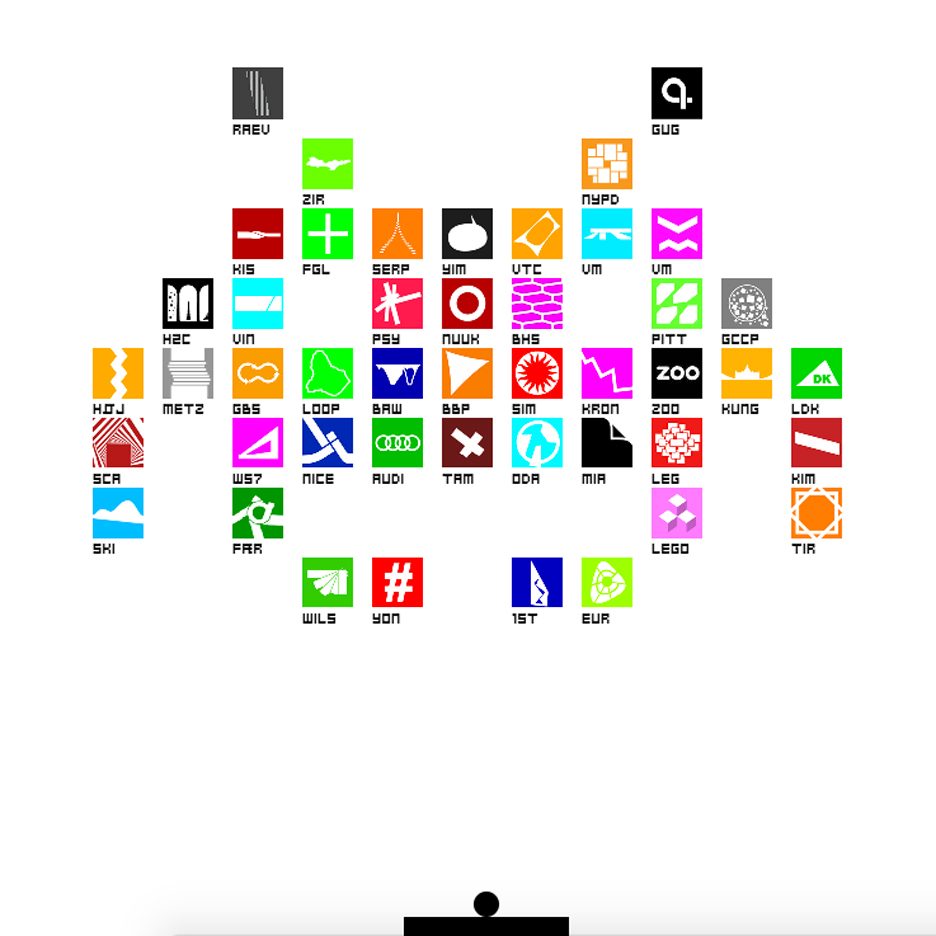
In line with their playful spirit, BIG has teamed up with programmers Ruby Studio to release an alternate version of their icon-filled homepage that allows visitors to play a version of the classic arcade game Arkanoid.

Just like the original game, BIG’s site challenges players to destroy bricks using a ball and a sliding platform – but in the place of standard colored bricks, the objective is to eliminate the square icons representing different BIG projects.

As you progress through the game, the tiles will rearrange to create different patterns, and the ball will speed up to increase the difficulty.

Check the game out for yourself, here.

http://ift.tt/2cVqUoI

OMA’s monumental concrete wells host mourners at New York’s Park Avenue Armory


These cylindrical towers were designed by OMA‘s New York office to echo sounds made by mourners during a performance by artist Taryn Simon (+ slideshow). (more…)

http://ift.tt/2cCbyIb

Bellevue First Congregational Church / atelierjones


© Lara Swimmer

© Lara Swimmer
  • Architects: atelierjones
  • Location: United States, Bellevue, WA, USA
  • Design Team: Susan Jones, Joe Swain, Michelle Kang, Brooks Brainerd, Marisol Foreman, Mesa Sherriff, Dhara Goradia, Brett Holverstott, Megumi Migita
  • Area: 48.926 ft2
  • Project Year: 2016
  • Photographs: Lara Swimmer
  • General Contractor: Goudy Construction Blaise Goudy, owner; Carl Deach, Superintendent; Gary Moss, project manager
  • Clt Fabrication/Cnc: Structurlam Kris Spickler
  • Structural Engineer: DCI Engineers Greg Gilda, Matthew Amrhein
  • Civil Engineer: DCI Engineers Darren Simpson, Matthew Frisby
  • Acoustic Design: Arup Dennis Blount
  • Lighting Design: Blanca Lighting Bev Shimmen, Lucretia Blanca
  • Daylighting Consultant: Integrated Design Lab Christopher Meek Justin Schwartzhoff
  • Landscape Architect: Lauchlin Bethune
  • Organ Consultant: Burton Tidwell
  • A/V Integrator: CCI Solutions Todd Gathany
  • Owner: Bellevue First Congregational Church
  • Co Chairs Bfcc Design Committee: Otis Gillaspie, Donna Kozial

© Lara Swimmer

© Lara Swimmer

From the architect. The challenge was to convert a typical multi-tenant office space into a space capable of creating awe. To do this, the architects had to bring life to the existing beige box by breaking it open and allowing the diffuse Northwest light filter in. Historically, light has played a significant role in marking a transcendent space, and this design captures the richness of indirect, cast light reflected off natural surfaces. For the new Bellevue First Congregational Church, the new soaring sanctuary is filled with this indirect light, which subtly changes throughout the day and seasons. 


© Lara Swimmer

© Lara Swimmer

Within the strict grid of the two-story building, the new form of the sanctuary is inserted, pushing out existing walls and roof, creating a new definitive form within the existing matrix. Delineation between the northern interior wall and ceiling is collapsed by using CLT, or cross-laminated-timber panels, as structure and finish material. The 17 CLT panels, each averaging 40’ x 8’, are inserted as an irregular, folded plate structure insuring both greater structural stability as well as a rich interplay of light, shadow and the warm texture of the Canadian White Pine of the white-washed CLT panels. Shafts of skylights are inserted into this composite skin dissolving the edges of the 40’ high space through high northern light. The use of cross-laminated timber highlights the Pacific Northwest’s regional relationship to timber, reduces the project’s overall carbon footprint, and humanizes the cold sterility of the existing two-story ribbon-window stucco building.


© Lara Swimmer

© Lara Swimmer

Section

Section

© Lara Swimmer

© Lara Swimmer

http://ift.tt/2cVpBGx

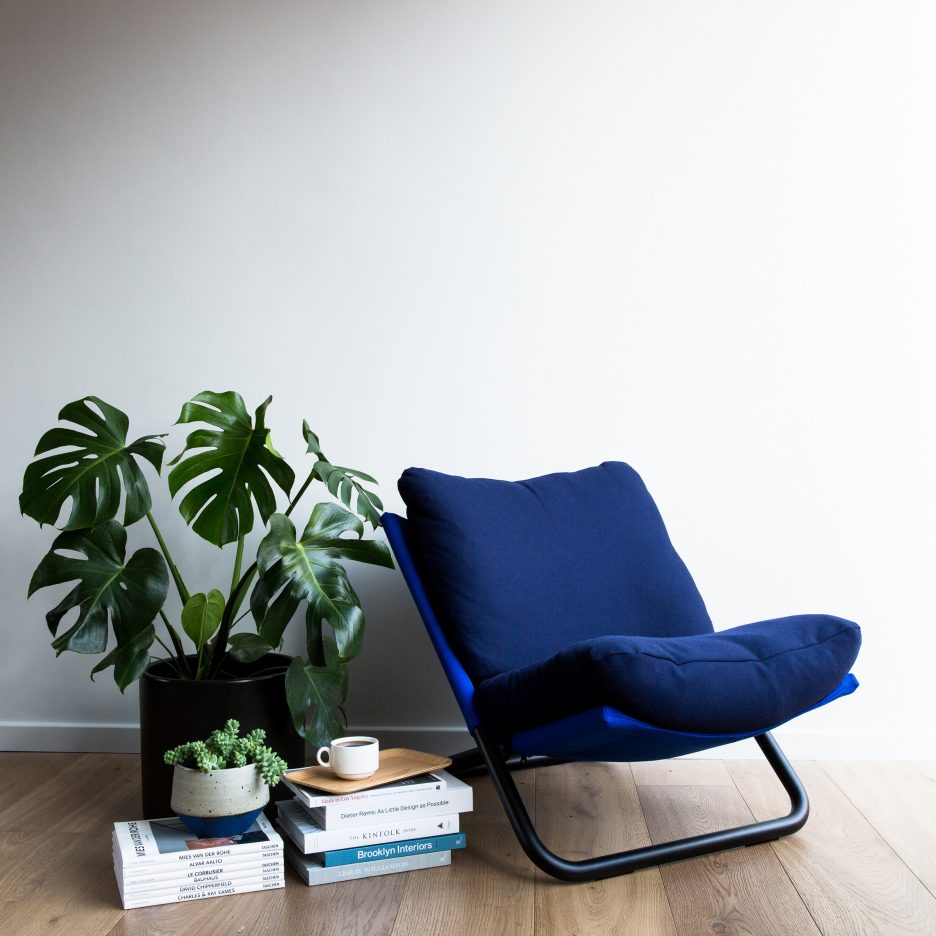
Dominic Kuneman creates minimal interior for Sydney micro apartment


When renovating this tiny apartment in Sydney, Australian interior designer Dominic Kuneman adopted a minimal style to make the most of the small space (+ slideshow). (more…)

http://ift.tt/2ctU6VT

“Could this finally be the end of Fishbowl architecture?”

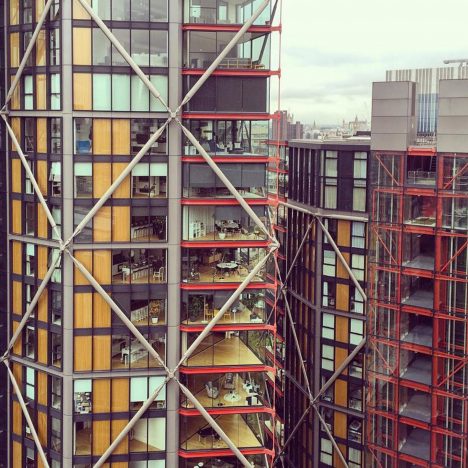
Tate Modern visitors accused of spying on Neo Bankside residents

Comments update: visitors to Tate Modern’s new observation deck have been accused of spying by residents of the nearby Neo Bankside apartments, prompting readers to poke fun at “people in glass houses”.  (more…)

http://ift.tt/2cDuV50

MR House / H+H ARQUITECTOS


© Rodrigo Dávila

© Rodrigo Dávila


© Rodrigo Dávila


© Rodrigo Dávila


© Rodrigo Dávila


© Rodrigo Dávila

  • Architects: H+H ARQUITECTOS
  • Location: Bogotá, Bogota, Colombia
  • Authors: Eric Halliday, Martin Halliday
  • Area: 714.0 sqm
  • Project Year: 2015
  • Photographs: Rodrigo Dávila
  • Collaborators: Felipe Zúñiga, Luisa Collazos
  • Construction: H+H Construcciones
  • Construction Director: Ing. Libia Izquierdo
  • Construction Resident: Ing. Gisela Rodriguez
  • Administrative Support: Fabiola González

© Rodrigo Dávila

© Rodrigo Dávila

From the architect. Located in an exclusive neighborhood in the north of Bogota, this house was designed to have in a minimalist style incorporating responsible constructive solutions in order to  preserve the environment. The exposed concrete and rusty steel are highlights in the project giving expressiveness both to the exterior and to the interior of the house.


© Rodrigo Dávila

© Rodrigo Dávila

The land with moderate slope, allows the house´s volume to be read as a concrete box that floats over the front yard. With the same concept the second level of the house floats over the first floor.


1st Floor Plan

1st Floor Plan

Once inside the house, a double height space spatially integrates the house and at the same time gives spatial quality with natural light coming in from the ceiling to the center of the construction. From the main entrance it is possible to see the full depth of the house where the garden becomes a beautiful background for the living and dinning area. In this space sliding windows integrate the interior and exterior spaces, expanding the social area and forming a private and peaceful atmosphere. On this ground level, you can find all social spaces of the house, the kitchen and laundry area.  On the second level of the house, are the bedrooms and the family room, all organized around the central void. The basement level  has all technical and parking areas.


© Rodrigo Dávila

© Rodrigo Dávila

Section

Section

© Rodrigo Dávila

© Rodrigo Dávila

From an architectural point of view, the exposed concrete was defined to give expression and texture to the facades and the main interior walls. In order to protect the interior spaces from the sun and the terraces from the rain, the volume has large eaves. These elements were not  only designed to provide functionality. They become an important aesthetic element of the house´s architecture.


© Rodrigo Dávila

© Rodrigo Dávila

http://ift.tt/2cV5OXN

MVRDV Wins Competition to Masterplan New Innovation Port in Hamburg


MVRD’s masterplan foresees the development of a vast site of which hotels, conference halls, offices and start-ups, laboratories, research facilities and parking will occupy the site.. Image Courtesy of MVRDV

MVRD’s masterplan foresees the development of a vast site of which hotels, conference halls, offices and start-ups, laboratories, research facilities and parking will occupy the site.. Image Courtesy of MVRDV

MVRDV with co-architects morePlatz have won a competition to design the masterplan of the Hamburg Innovation Port, a new 70,000 square meter waterfront development that will add to the high-tech hub of Channel Hamburg in Hanse City, Hamburg. The plan for the mixed-use development uses a fusion of existing port typologies and dynamic architectural interventions to create a network of buildings containing hotels, laboratories, research facilities, offices for start-ups and a conference center.


MVRD’s masterplan foresees the development of a vast site of which hotels, conference halls, offices and start-ups, laboratories, research facilities and parking will occupy the site.. Image Courtesy of MVRDV


A total surface of 70,000m2 will transform the waterways of  the Channel Hamburg development, the southern high-tech hub of Germany’s northern metropolis.. Image Courtesy of MVRDV


The roofs of some buildings are partly green and partly used for terraces and solar cells.. Image Courtesy of MVRDV


Part of the plan is the idea of a diverse public space in which each part has its own strong character inviting the office workers to have outside meetings and al fresco luncheons. . Image Courtesy of MVRDV


The roofs of some buildings are partly green and partly used for terraces and solar cells.. Image Courtesy of MVRDV

The roofs of some buildings are partly green and partly used for terraces and solar cells.. Image Courtesy of MVRDV

Located on the site of the old Harburger Schloss waterways, the planned development has been organized around a system of alleys between the street and harbor basin. A three-story plinth containing a variety of public spaces borrows from the harbor typology, and in a later phase, will connect to surrounding buildings via a series of skybridges. On top of the plinth, increasingly glazed facades provide light and views to laboratories, and higher up, flexible office spaces. In the building’s center, special program volumes will contain restaurants, cafeterias and libraries.

On the building roofs, occupiable green spaces have been arranged to create a park-like atmosphere linked by the skybridges, while arrays of solar cells will help provide energy to the complex. The interiors of the bridges feature flexible space that can be adapted to create large office areas. Parking, meanwhile, has been placed underground and out of sight, and is accessible through one communal entrance.


Part of the plan is the idea of a diverse public space in which each part has its own strong character inviting the office workers to have outside meetings and al fresco luncheons. . Image Courtesy of MVRDV

Part of the plan is the idea of a diverse public space in which each part has its own strong character inviting the office workers to have outside meetings and al fresco luncheons. . Image Courtesy of MVRDV

Most of the complex will be ground-up construction, but one existing hall on site will be transformed to be used for temporary activities and to support construction of future phases. An additional floating building accessible via a jetty with contain a hotel.

“Part of the plan is the idea of a diverse public space in which each part has its own strong character,” explain the architects in a press release. “There is a park, a boulevard, a square, shared spaces and a waterside promenade featuring wide stairs towards the water that invite the office workers to have outside meetings and al fresco luncheons.”


A total surface of 70,000m2 will transform the waterways of  the Channel Hamburg development, the southern high-tech hub of Germany’s northern metropolis.. Image Courtesy of MVRDV

A total surface of 70,000m2 will transform the waterways of the Channel Hamburg development, the southern high-tech hub of Germany’s northern metropolis.. Image Courtesy of MVRDV

“At Hamburg Innovation Port we envision a very high density to create a vibrant neighbourhood and to make the best use of this fantastic location at the waterside, a former cattle food factory site,” says MVRDV founding partner Jacob van Rijs. “The density is FAR3.3, comparable to a typical Berlin city block with its courtyards and outhouses, but designed in a way to offer daylight and vistas.”

The plan is designed to be built in stages with the flexibility for possible program changes as the construction progresses. This will allow each of the five buildings to be realized independently.

The competition was organized by Hamburg construction company HC Hageman. Hadi Teherani Architects have also been selected to build one of the architectural projects. The total budget for the project is estimated at 150 million euros.

News via MVRDV.

  • Architects: MVRDV, morePlatz
  • Location: Harburger Schloss, Bauhofstraße, 21079 Hamburg, Germany
  • Design Team: Winy Maas, Jacon van Rijs, Nathalie de Vries, Markus Nagler, Tobias Tonch, Jonathan Schuster, Lisa Bruch
  • Co Architect: morePlatz: Johannes Schele, Caro Baumann
  • Model: Made by Mistake
  • Client: HC Hagemann Construction Group
  • Area: 70000.0 sqm
  • Project Year: 2016
  • Photographs: Courtesy of MVRDV

http://ift.tt/2cBL8q9

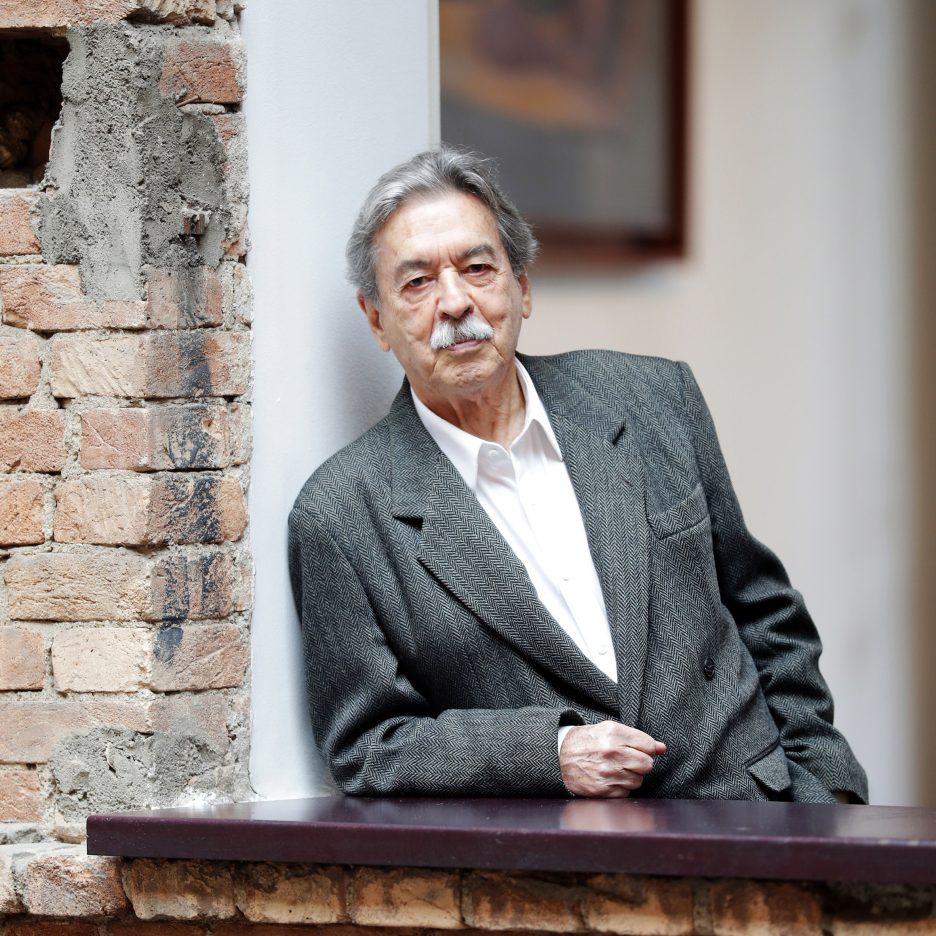
Paulo Mendes da Rocha wins Praemium Imperiale prize


Brazilian architect Paulo Mendes da Rocha has been named the architecture laureate for the 2016 Praemium Imperiale arts prize from the Japan Art Association. (more…)

http://ift.tt/2cDgq0H

BIG transforms its website into a classic 1980s arcade game


Bjarke Ingels’ firm has unveiled a duplicate version of its website that mimics 1980s video game Arkanoid (+ game). (more…)

http://ift.tt/2cBARKt