Historic Site in Belgium to Receive New Pool and Fitness Center


Courtesy of Slangen+Koenis Architecten

Courtesy of Slangen+Koenis Architecten

Slangen+Koenis Architects, in collaboration with Cordeel-Farys-Hellebrekers, have been selected transform a historic site in Temse, Belgium, into a new public pool and fitness center. The complex is situated in the Scheldepark, a scenic English landscape garden that once hosted a castle, and more recently a mid-century pool that has now fallen into disrepair. 

The provision of three new pools; a leisure pool, a combination pool and a competition pool as well as a fitness centre, an indoor playground and a restaurant will turn the complex into the epicenter of activity within the park. Slangen+Koenis explained in a press release that “the aim of the design is to combine functions and activities creating a vibrant place during both day and night.” 


Courtesy of Slangen+Koenis Architecten


Courtesy of Slangen+Koenis Architecten


Courtesy of Slangen+Koenis Architecten


Courtesy of Slangen+Koenis Architecten


Courtesy of Slangen+Koenis Architecten

Courtesy of Slangen+Koenis Architecten

The Scheldepark is located on the banks of the river Schedlt, just outside of Temse’s historic center. The new complex references the scenic and historic qualities of its surrounds, and is placed gently into the existing landscape like a pavilion into an English garden. The building is bound on all sides by public zones that soften the transition from garden to interior, and these zones are demarcated by large roof overhangs. 


Courtesy of Slangen+Koenis Architecten

Courtesy of Slangen+Koenis Architecten

It was imperative to maintain visual connectivity between the garden and the new program. From the bistro area, both the indoor swimming pool and the Scheldepark can be overseen. A large terrace with flights of steps creates a resting and gathering place for users of the complex and the general park alike, and invites them to stay in the area. 


Courtesy of Slangen+Koenis Architecten

Courtesy of Slangen+Koenis Architecten

The complex features a functional layout and routing that enables users to share many central functions, but also gives them the opportunity to retreat to their own activities. The interplay between communal spaces and these more private zones enables new users to be invited into the building, while maintaining the privacy of those utilizing the functions of the center. 


Courtesy of Slangen+Koenis Architecten

Courtesy of Slangen+Koenis Architecten

Slangen+Koenis explained in their press release: When designing the pavilion, we took advantage of the 2521 concept with almost 30 years of knowledge in the field of swimming pool design, utilization, exploitation, maintenance and sustainability. The concept of 2521 provides a 25x21m swimming pool and a small restaurant area. However, the design is made-to-measure according to the specific site location and Belgian regulations. Due to the modular design and flexible construction system, it is possible to adapt the layout of the building depending on the program and target groups.


Courtesy of Slangen+Koenis Architecten

Courtesy of Slangen+Koenis Architecten

The consortium were awarded a DBFMO contract (Design, Build, Finance, Maintain and Operate) which means they will be overseeing the project for the next 30 years. With program spanning both day and night, Slangen+Koenis said that the pool complex will be “the beating heart of the Scheldepark.”


Courtesy of Slangen+Koenis Architecten

Courtesy of Slangen+Koenis Architecten
  • Architects: Slangen+Koenis Architecten
  • Location: Kasteelstraat 85, 9140 Temse, Belgium
  • Project Year: 2016
  • Photographs: Courtesy of Slangen+Koenis Architecten

News via Slangen+Koenis. 

http://ift.tt/2csvyJq

Introducing Volume #49: Hello World!


© Volume

© Volume

Machines have long been integral to architectural discourse. Vitruvius concluded his ten books with a meditation on war machines, and Le Corbusier published on his industrial muses just over 100 years ago. Yet something is different today. We have always learned from machines—our societies are fundamentally shaped by their processes—but now, machines learn. We live in paradoxical times. Machinic processes, computational algorithms and artificial intelligence have never been so proximate, direct, and intimate to daily life, yet we are many steps removed from their practical operations.

This issue of Volume, the third in our Learning series, seeks to take one small step in the direction towards understanding the contemporary relevance of machines for architecture, and one giant leap for mankind. Volume #49: Hello World! also includes In Loving Support, a 32-page insert produced with Het Nieuwe Instituut on living and working with algorithms.


© Volume

© Volume

Over the coming weeks Volume will share a curated selection of essays from this issue on ArchDaily. This represents the continuation of a partnership between two platforms with global agendas: in the case of ArchDaily to provide inspiration, knowledge and tools to architects across the world and, in the case of Volume, “to voice architecture any way, anywhere, anytime [by] represent[ing] the expansion of architectural territories and the new mandate for design.”


© Volume

© Volume

© Volume

© Volume

Contributions

  • Editorial: Going Live / Nick Axel
  • The Rational City / M. Christine Boyer
  • Out of the Loop / Doug Spencer
  • On Automation in The Stack / Benjamin H. Bratton
  • Architecture After the Event Horizon / Kazys Varnelis
  • Demo Life / Orit Halpern
  • Hausbaumaschine / Nader Vossoughian
  • The Ultimate Industrial Revolution / W J McKee
  • Animated Aberrations, Rebellious Objects / Shannon Mattern
  • Welcome to FutureLand / Victor M. Sanz
  • Robots on Screen / Volume
  • Insert: In Loving Support
  • The Smart City of Gaza / Francesco Sebregondi
  • We, Robots / Kas Oosterhuis
  • Social Physics and Democratic Suprematism / Philippe Morel
  • The Promethean Gift Economy / Troy Conrad Therrien
  • Machine Learning from Las Vegas / Pierre Cutellic
  • Domestic Machines / Nicholas Korody
  • Machinic Apprenticeship / Sara Dean and Etienne Turpin
  • Drive / Ed Keller and Carla Leitao
  • Here and Anywhere in the World / Valle Medina and Benjamin Reynolds
  • Where the City Can’t See / Tim Maughan and Liam Young

© Volume

© Volume

Volume is an “agenda-setting” quarterly magazine, published by the Archis Foundation (The Netherlands). Founded in 2005 as a research mechanism by Ole Bouman (Archis), Rem Koolhaas (OMA*AMO), and Mark Wigley (Columbia University Laboratory for Architecture/C-Lab), the project “reaches out for global views on designing environments, advocates broader attitudes to social structures, and reclaims the cultural and political significance of architecture.”

The latest issue can be purchased here.

http://ift.tt/2cFvecs

Bates Masi Architects Design a Private Residence in Amagansett, New York

Elizabeth II by Bates Masi Architects (2)

Elizabeth II is a private home designed by Bates Masi Architects. Completed in 2014, the home is located in Amagansett, New York, USA. Elizabeth II by Bates Masi Architects: “Too often, architecture fixates on the visual sense, with little regard for other faculties of perception. The location of this house, in the heart of a bustling resort town, demanded special consideration of the acoustic sense. Research in architectural acoustics drove..

More…

Northern Harbour / Juul Frost Architects


© Stamers Kontor

© Stamers Kontor

© Stamers Kontor

© Stamers Kontor

Site Plan

Site Plan

© Stamers Kontor

© Stamers Kontor

In the course of the next 10-15 years, the erstwhile commercial harbour in Sønderborg will be transformed into an attractive and buzzing new urban district. Based on the visions and intentions presented by Gehry Partners LLP for Sønderborg Harbour (2008), JFA has prepared a design guide for Sønderborg Municipality, outlining a development framework for this new part of town. JFA works with the development of urban spaces and areas in both practical and theoretical terms and possesses unique competences in the transformation of mono-functional areas into integral and diverse urban areas. To secure a holistic development of Sønderborg Northern Harbour, JFA makes use of a horizontal planning tool that will incorporate and treat four separate parameters in one process: town, urban spaces, lifestyle, and the body. This ensures a holistic development trajectory that will meet needs at all levels while visions and goals show due regard for the presence of people in the area. In this way, the design guide will, in a collective process, consider the physical context as well as the social interactions and behaviour of users. As an integral part of the process, JFA applied BIM (Building Information Modelling) to outline, qualify, and examine the spatial qualities of the area. At the same time, BIM supports JFA’s holistic work methods and, besides buildings, the application is also used for landscape and urban development.


© Stamers Kontor

© Stamers Kontor

Plan 1

Plan 1

© Stamers Kontor

© Stamers Kontor

The Havbo housing scheme is the first housing project to be built according to the framework set out by Gehry’s master plan and JFA’s design guide for Sønderborg Northern Harbour. The nine dwellings will be built in the area between Ewer’s Warehouse and the Christian X Bridge – an area characterised by open spaces between the buildings. The design of Havbo will set the scene for future buildings in the northern part of the harbour area, which includes Ewer’s Warehouse, the Cultural Centre, as well as hotel and commercial facilities. Inspired by Rubik’s Cube, the floors of the structure are rotated and offset against one another with the balconies forming part of this rotational design, ‘cutting’ into and out of the building profile. This results in a harmonious building whose white façades reflect the maritime character of the area. The façades are opened up in large window sections linking the exterior with the interior. All dwellings benefit optimally from the view and the surrounding outdoor areas and all have a generous intake of light.


Section

Section

Further, JFA has developed a master plan for the Havbogade district on the Northern Harbour where phase one was recently opened. The aim is to create a unified, cohesive area embracing the existing urban environment and the new projects – a great contrast between the cultural and historical environment, and the planned future buildings. The first new building projects in the harbour area have created new spatial features and a need for additional urban functions while forming a more coherent link to the rest of the town. New workplaces and new homes have already had an effect on the local environment, as increasing numbers of people in the area are having to grow accustomed to new behavioural patterns. At the same time, the new urban area will be a great asset to the town as an important destination. For this reason, access to the harbour area is crucial. Town and harbour should be linked by an efficient network of roads and paths augmented by urban areas. The urban space is where everything will conflate. The public urban spaces will be the hubs where expectations to identity, unity and cohesion, accessibility, functionality, a sense of belonging, atmosphere, and experiences will be met.


© Stamers Kontor

© Stamers Kontor

http://ift.tt/2cku7NH

Barber and Osgerby and Jasper Morrison furnish previously unseen kitchen at Soane Museum


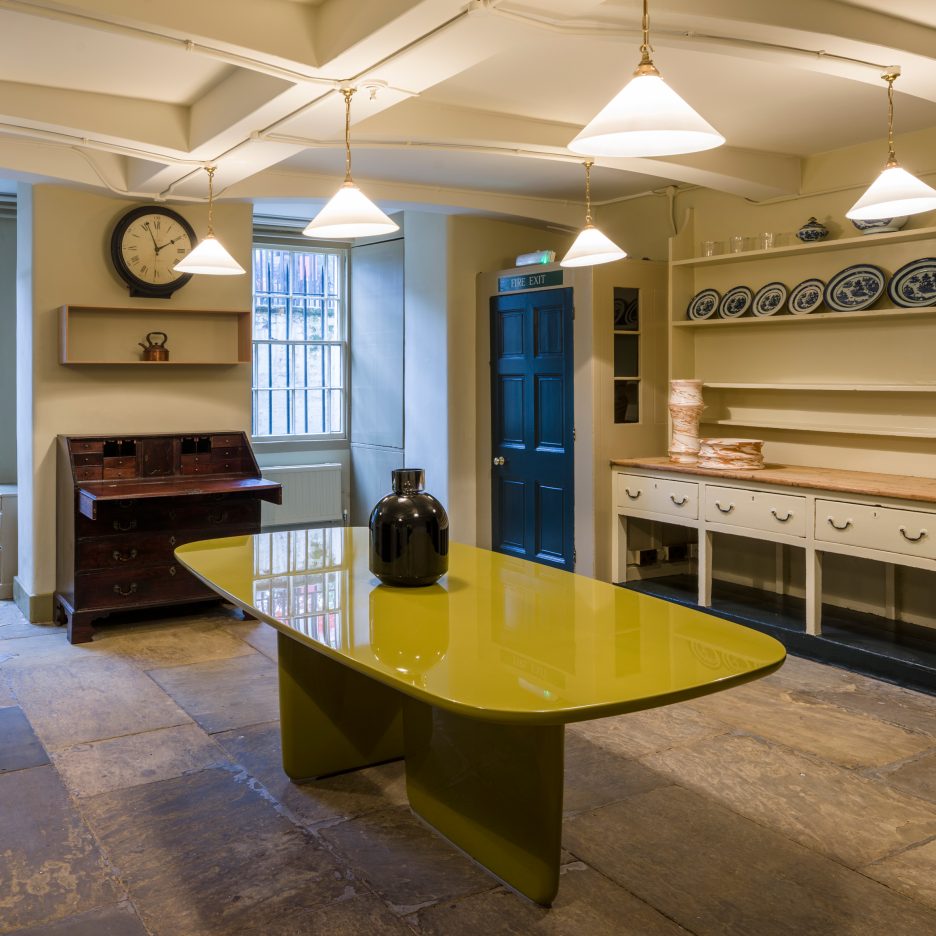
London Design Festival 2016: the kitchen of Sir John Soane’s Museum in London has opened to the public for the first time, filled with contemporary homeware by designers including Barber and Osgerby and Jasper Morrison (+ slideshow). (more…)

http://ift.tt/2c5xoiO

Chalet 4.0 / YOD design studio


© Andrey Avdeenko

© Andrey Avdeenko


© Andrey Avdeenko


© Andrey Avdeenko


© Andrey Avdeenko


© Andrey Avdeenko


© Andrey Avdeenko

© Andrey Avdeenko

From the architect. Chalet 4.0 is a part of the hotel complex Relax Park Verholy. New apartments are fully integrated in a pine forest. Instead of the usual solid base the building stands on the so-called screw base. This construction helped to settle chalet just in the forest without harming trees or damaging their root system.


© Andrey Avdeenko

© Andrey Avdeenko

The building consists of two separate rooms with a common guest hall. There is an additional house for the guests in the territory.


Plan

Plan

The interior is eco-friendly and restrained. Forest theme and connection to nature are emphasized by the selection of principal materials, such as stone and wood. Rhythmic veneer lines on the walls symbolize rows of pine trees outside the window, and cow skin looks like animals that lives in the forest.


© Andrey Avdeenko

© Andrey Avdeenko

http://ift.tt/2cAt4fP

Design Studio +tongtong Completes a Renovation and Addition to a Traditional Victorian House in Toronto

ZN House by + Tongtong (5)

ZN House is a private home located in Toronto, Canada. It was designed by +Tongtong. ZN House by +Tongtong: “Multidisciplinary design studio +tongtong recently completed a renovation and addition to a traditional Victorian house in Toronto. The house was transformed into an open and bright modern home through a series of strategic moves and incisions. The specifications were to build a modern family home that expands the area of livable..

More…

Korean Dandelion Farm / Archihood WXY


© Woohyun Kang

© Woohyun Kang


© Woohyun Kang


© Woohyun Kang


© Woohyun Kang


© Woohyun Kang

  • Architects: Archihood WXY
  • Location: 340 Jenae-ri, Judeok-eup, Cheongju, Chungcheongbuk-do, South Korea
  • Architect In Charge: Woohyun Kang, Youngjin Kang
  • Area: 191.63 sqm
  • Project Year: 2015
  • Photographs: Woohyun Kang
  • Movie Direction: ‘Woohyun Kang’ / Archihood WXY

© Woohyun Kang

© Woohyun Kang

The building is hidden by the silver-grass forest. The whistle of the wind from the sliver-grass leads the way. At the end of a leafy and curved pathway, you can meet a heavy wooden door. The black bamboo welcomes you through the spaced wooden fence, and natural sunlight filtering through the louver, enveloping the dark entry space. Walking through this entry space, you can see the peaceful front courtyard, covered with Korean fine soil.  Experience of dark and light: this is what triggers your emotional experiences in this space. When you enter the front courtyard, you can see the forest valley through the wide open Farm café. The sense of nature from the valley stays in the farm a while, and passes through the wooden fence. 


© Woohyun Kang

© Woohyun Kang

This is the place for processing Korean dandelion, primarily used for medicinal purposes. Many guests visiting this place are weary in both body and mind because of their long struggle against illness. So we wanted to provide a place where it can re-energize their listless and depressed state, and can help remind memories by evoking their senses. This will help achieving some opportunities to look back on their lives and create positive energy through motivation from nature.


© Woohyun Kang

© Woohyun Kang

Plan

Plan

© Woohyun Kang

© Woohyun Kang

Another important consideration of this project is its sensitivity to its placement and orientation in relation to the site’s topography. We do not want to disconnect the flow of nature from the forest  valley behind the site due to our new building. Therefore the center space of this building is lifted up, so that the air of nature can come into the front courtyard. A 2.1meter wide wooden canopy and deck are installed both at the front and rear of the Farm café and it ensures that guests are provided with a gathering space which is enveloped by the surroundings.  


© Woohyun Kang

© Woohyun Kang

The folding doors allow for a full opening of the spaces to the outside deck area, offering a more engaging natural experience.   It is the same as ’twat-ma-ru‘ and  ‘deul-a-yeol-gae-chang‘  at Sa-rang-bang, which are Korean traditional architecture elements. This space was designed to provide a peaceful, wondrous and natural setting where people can rest and relax.


© Woohyun Kang

© Woohyun Kang

Section

Section

© Woohyun Kang

© Woohyun Kang

The wooden fence around the building is installed with a 3cm gap between each piece. These gaps allow the nature to come in and out, blurring the boundaries of the building.


© Woohyun Kang

© Woohyun Kang

The nature itself makes this space change in every moment.

The sunlight shining through the water’s glittering on the water garden.

The shadow of wooden fence shows the time and seasons.

The sound of water drops falling through the water garden on a rainy day.

The little tremulous leaves of the wind.


© Woohyun Kang

© Woohyun Kang

The pleasant memory is recognized and embedded in people’s experience and the memory will make people to come back to this place. Memory of senses is the fundamental essence for people to remember the place. With use of the ‘sense of nature’, it becomes a healing environment where people can enjoy this place.

http://ift.tt/2cSsH1W

Giles Miller designs shingle-covered pavilion for English countryside


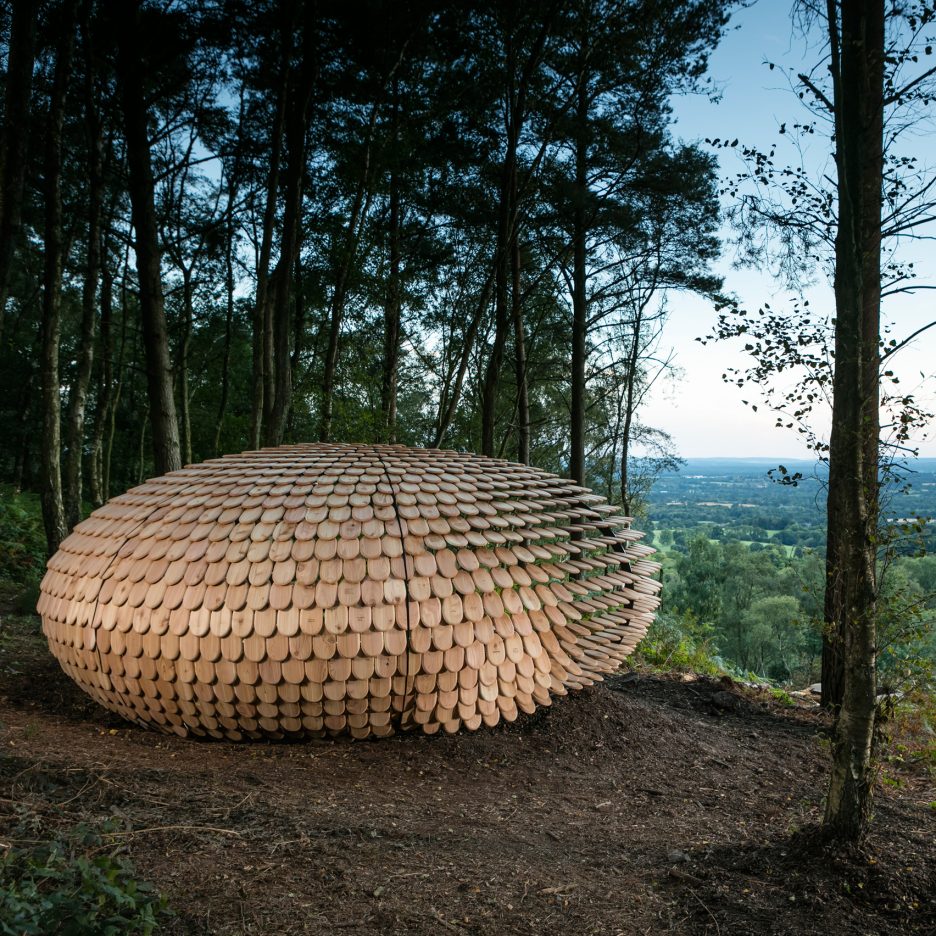
Shingles inscribed with personal messages cover this squat hilltop pavilion, created by British designer Giles Miller as a rest stop for ramblers (+ slideshow). (more…)

http://ift.tt/2cAJKVR

R&F Yingkai Square / Goettsch Partners


© 1st Image

© 1st Image


© 1st Image


© 1st Image


© 1st Image


© 1st Image

  • Architects: Goettsch Partners
  • Location: Guangzhou, Guangdong, China
  • Area: 174500.0 sqm
  • Project Year: 2014
  • Photographs: 1st Image
  • Associate Architect: Guangzhou Residential Architectural Design Institute
  • Structural Engineer: Beijing R&F Properties Development Co.
  • Mep Engineer: Arup
  • General Contractor: Guangzhou R&F Properties Development Co.
  • Landscape Architect: ACLA
  • Lighting Designer: BPI
  • Hotel Interior Designer: Super Potato

© 1st Image

© 1st Image

From the architect. Located in Guangzhou’s new city center of Zujiang, R&F Yingkai Square emerges as part of a larger master plan of mixed-use towers that collectively signify the stature of Guangzhou as a major metropolitan city. The simple yet iconic form of the tower traces inspiration from the abundant local bamboo plants, rising 296 meters and defined by the building’s asymmetrically carved corners as well as the veining of vertical strips on the façade that provide a sense of visual movement. The strips compress and stretch as they rise, starting more dense at the base to enhance the sense of gravity. The Park Hyatt Guangzhou hotel occupies the building’s uppermost floors, with office space below, and subway connections below grade.


© 1st Image

© 1st Image

While the tower internalizes its functions into a singular expression, the design is greatly born of its context. The square tower massing respects the geometric rigidity of the street grid, helping to form urban rooms in conjunction with the neighboring parcel. The pinching language created by carving out the corners highlights the unique views available at various heights through and over neighboring structures while the diagonal extensions of the site relates to the adjacent central green and nearby Pearl River Delta.


Section

Section

The building is at once connected to the urban street life around it while balanced with an intimacy required for a luxury hotel experience. The hotel drop-off and arrival sequence is choreographed to emphasize a sense of calm, with a warm, neutral palette punctuated by sculptures that aid in orientation. An infinity-edge pool on level 60 runs the length of one side of the building, overlooking the panoramic views of the Guangzhou skyline. A signature outdoor roof garden on level 70 offers similar sweeping views while providing an inviting space to dine and relax.


© 1st Image

© 1st Image

http://ift.tt/2cgV4a8