HAT / APOLLO Architects & Associates


© Masao Nishikawa

© Masao Nishikawa


© Masao Nishikawa


© Masao Nishikawa


© Masao Nishikawa


© Masao Nishikawa

  • Structural Engineer: Nomura Structure (Nomura Motoi)
  • Mechanical Engineer : Naoki Matsumoto
  • Lighting Design: SIRIUS LIGHTING OFFICE

© Masao Nishikawa

© Masao Nishikawa

The client is a couple in their 50s and both work full-time. Their plan was to rebuild their parents’ house in the urban area in order to live with their mother. The site is located in a dense residential area where one can find the remnant of good old days of Tokyo. In order to prepare for possible natural disasters in the future, the couple wished to build a house of reinforced concrete box frame construction with high resistance to fire and earthquakes. Since the site is small with a deformed shape, it was required to achieve the maximum capacity while avoiding setback-line limits on each side of the house.


© Masao Nishikawa

© Masao Nishikawa

One cannot have a full view of the house since it is built at the very end of a blind alley. The building consists of three stories, with two floors above ground and a basement floor, and a half of the basement floor is buried underground in order to achieve the maximum capacity by taking advantage of easing of the restrictions.


Plan

Plan

Section

Section

The outline of the deformed land was extruded three dimensionally to form the house, and the charming appearance of the exposed concrete box topped with a roof resembling a pointed hat catches the eye of passers-by.


© Masao Nishikawa

© Masao Nishikawa

Their mother’s room is on the semi-basement floor, down the stairs next to the entrance in the entrance court. The entire floor plan is designed compactly: the couple’s space is on the first floor with two study rooms, for the husband and wife respectively; a bedroom between the studies; and a wet area. Although it appears rather closed from the outside, the interior space with a sense of openness with abundant natural light is achieved by providing the courtyard.


© Masao Nishikawa

© Masao Nishikawa

The family room on the second floor is shaped along the setback-line limits, and the wooden rafters are used for the roof truss instead of reinforced concrete ones, creating a unique appearance of the mixed structure.


© Masao Nishikawa

© Masao Nishikawa

One feels a distinct centripetal force in the loft-like small space with a courtyard, which somehow reminding one of a yurt, a dwelling of Mongolian nomads. The entire roof is lit up by the ambient light, creating a sense of security in such a small space, as if staying under the shelter of a big tree. 

http://ift.tt/2bSCoZb

Bjarke Ingels, Rem Koolhaas to Feature in September Issue of WIRED UK, “THINK BIGGER”

http://ift.tt/2bEvdrE

Next Month, architecture will be hitting the mainstream media, as Bjarke Ingels has been selected to grace the cover of the September 2016 edition of WIRED UK. Titled “THINK BIGGER,” the issue will also feature profiles and stories from architects and designers Tom Dixon, Neri Oxman, David Adjaye and Rem Koolhaas. A Condé Nast Publication, the magazine focuses on the effects of science and technology on topics including design, architecture, culture, the economy, politics and philosophy.


Courtesy of OMA

Courtesy of OMA

The feature is not Ingels’ first appearance in WIRED or WIRED UK, as previous profiles have included articles about BIG’s Serpentine Pavilion Design and the firm’s role in shaping the New York City skyline. He was also recently named to the annual WIRED 100 list of people “shaping our culture, the tech economy, consumer behaviour, scientific discovery – in short, the people making things happen.”

Koolhaas, too, has an intimate history with the publication, serving as guest editor of the June 2003 issue of WIRED as a follow-up to the successes of his own manifestos, S,M,L,XL and Delirious New York. The edition contained 30 mini-essays, reminiscent of an expanded S,M,L,XL dictionary, and contained the first widespread public release of investigations conducted by OMA’s newly-established research wing, AMO.

http://ift.tt/2bDnQfE

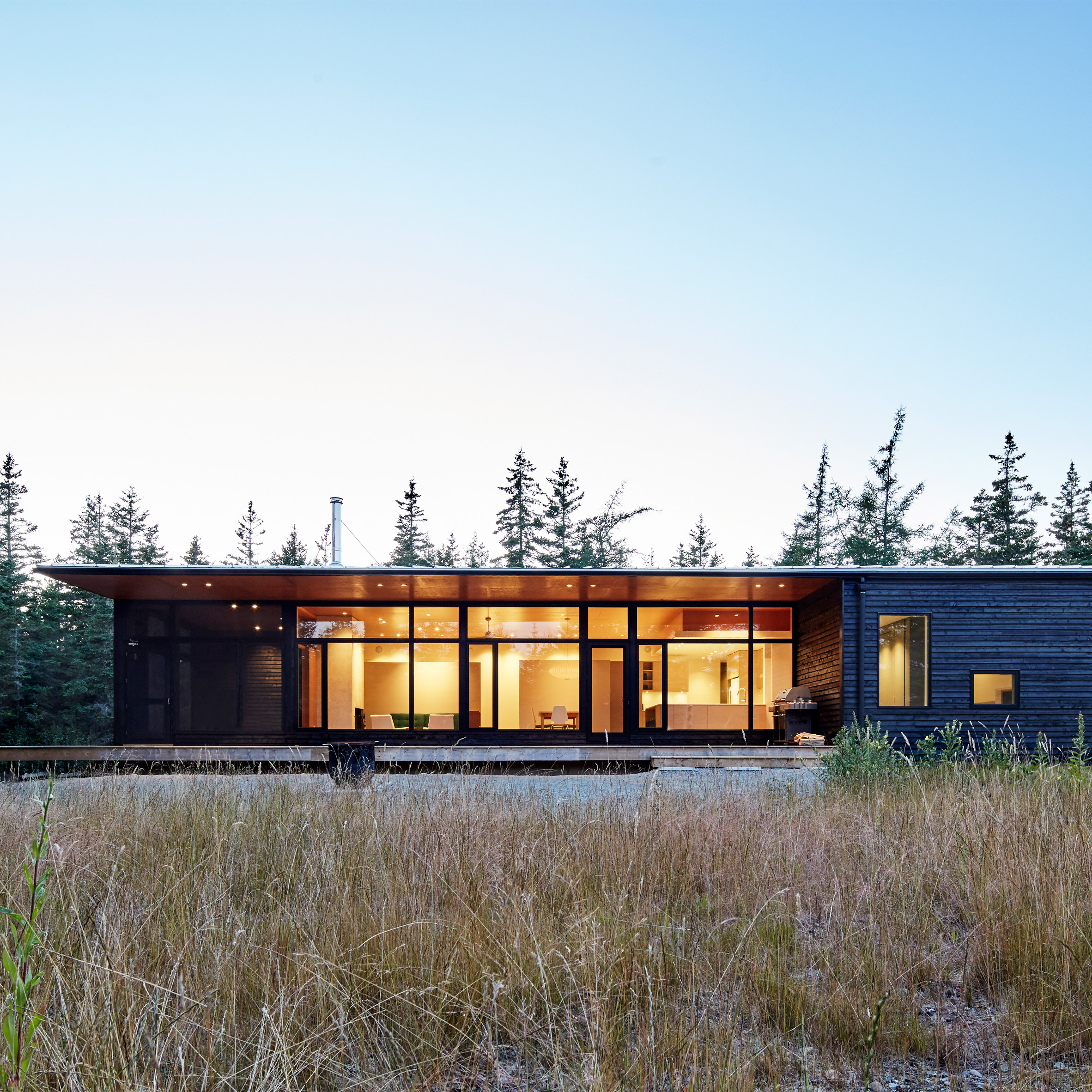
Nova Tayona designs Canadian beach house hidden from the ocean


Toronto-based architect Nova Tayona has completed a house near the beach in Nova Scotia, from which the ocean can be heard but not seen (+ slideshow). (more…)

http://ift.tt/2cbPlSD

Huynh Residence / Norman D. Ward architect


© Charles Davis Smith

© Charles Davis Smith


© Charles Davis Smith


© Charles Davis Smith


© Charles Davis Smith


© Charles Davis Smith

  • General Contractor: Studio Mud

© Charles Davis Smith

© Charles Davis Smith

From the street the house appears to be three, single-story connected buildings that suggest a compound. The exterior surfaces of the units are different materials and colors accentuating the tripartite design. The main volume that faces the street and houses the public areas is clad in Leuders limestone, the others in stucco, one painted cream, the other left the natural gray with a sealer. The three units are staggered and offset by 10-feet, but are unified by a standing seam metal roof. A black cypress screen sets off the front door.


© Charles Davis Smith

© Charles Davis Smith

The south-facing entry courtyard is enclosed on three sides with two stone veneer bedroom pavilions and an entry wall sheathed with a cypress rain screen.


Diagram

Diagram

The interior is crafted to bring in light without sacrificing privacy. Two glass boxes flank the courtyard wall, act as “light containers” that diffuse light into the rooms rather than submit them to a direct blast of Texas sun. One box is placed to the northeast end of the entry hallway to capture morning light, the other to the southwest for the evening light.


© Charles Davis Smith

© Charles Davis Smith

Plan

Plan

© Charles Davis Smith

© Charles Davis Smith

A wall engages the glass volumes to create a visual buffer between the bedroom pavilions and living areas. Passage into the bedroom pavilions is through the glass boxes.


© Charles Davis Smith

© Charles Davis Smith

The low windows in the master bedroom and bathroom allow light to wash over the floors and provide privacy without the need for window coverings. They also allow an expanse of unpunctuated wall.


© Charles Davis Smith

© Charles Davis Smith

The home office is secluded while the reading alcove is elevated and projects from the house with three window walls.  It is a serene spot for reading or contemplation. Steps lead up to the glass-enclosed space, which opens to the northern daylight. The reading alcove is elevated above the exterior ground plane offering protected views into the tree canopy. 


© Charles Davis Smith

© Charles Davis Smith

http://ift.tt/2bZvZPj

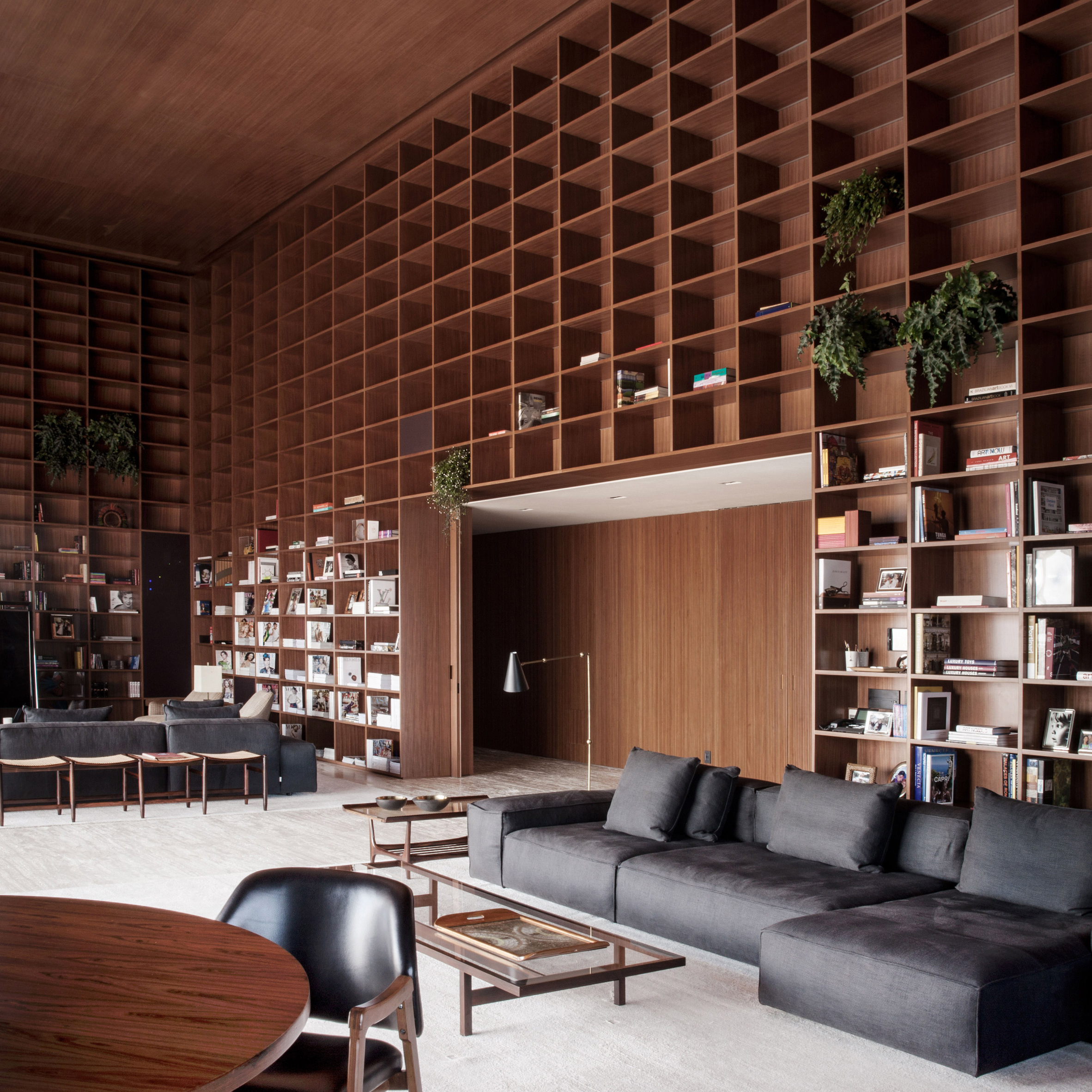
Studio MK27 creates giant shelving units in São Paulo penthouse


Floor-to-ceiling grids of wooden shelves cover double-height walls inside this luxurious apartment in São Paulo by local studio Studio MK27 (+ slideshow). (more…)

http://ift.tt/2blAnbH

Experts Fear Massive Losses of Historic Italian Architecture Following Magnitude 6.2 Earthquake


After yesterday’s devastating magnitude 6.2 earthquake in central Italy, art historians fear that numerous historic Italian buildings and their contents may be permanently lost. The affected region is dotted with hilltowns containing beautiful churches, monuments and museums, many of which have been rendered completely unrecognizable.

//platform.twitter.com/widgets.js

The town of Amatrice, which was voted one of Italy’s most beautiful towns just last year, faced some of the worst destruction, including to many of its acclaimed “Cento Chiese,” 100 churches filled with sculptures, mosaics and frescos. Notable architectural elements ,such as the rose window of the 15th-century church of Sant’Agostino, have collapsed, while a remaining Renaissance palazzo has been covered as a temporary morgue.

Hauntingly, the clock face on the town’s 16th-century tower remains frozen at the exact time the earthquake hit: 3:36 a.m.

While saving lives and caring for the victims has been the government’s first priority since the disaster, the Italian Culture Ministry was expected to meet this afternoon to assess the extent of the damage.

Find out more about the extent of the damage here.

News via The Guardian.

http://ift.tt/2bAiKDI

CSF House / Felipe Hess


© Fran Parente

© Fran Parente


© Fran Parente


© Fran Parente


© Fran Parente


© Fran Parente

  • Architects: Felipe Hess
  • Location: São Paulo, State of São Paulo, Brazil
  • Design Team: Lucas Miilher, Isabela Rosengarten, Natalie Calderini
  • Area: 800.0 sqm
  • Project Year: 2016
  • Photographs: Fran Parente , Danilo Zamboni
  • Construction: Lacaz Broggin
  • Landscape: Ricardo Vianna
  • Perspective Drawing: Danilo Zamboni

© Fran Parente

© Fran Parente

From the architect. Originally designed by modernist architect Zenon Lotufo in the late 1940s, this house passed through a total renovation and expansion to host the new family and become up to date with contemporary way of living. Initially a ground house with ‘butterfly’ shaped roof, the construction received a new upper volume, a little outbuilding and the use of the frontal part has been completely redesigned.


© Fran Parente

© Fran Parente

The project aims to elevate the original elements, such as the bicolor wooden floor, the windows ‘iron grades, the pantographic door and the external finishing that have been completely recovered and restructured, in order to valorize the original architecture. The plan was object of great adaptations, with the construction of new bathrooms, new divisions and sectorization and the creation of a new staircase, which leads to the new upper floor, holding the study and the home cinema. Following the organic shapes of some elements of the original design, such as the marquise and the water tank, the new upper volume, delicately lies on the main volume, in complete harmony with the rest of the construction.


© Fran Parente

© Fran Parente

Plan 1

Plan 1

© Fran Parente

© Fran Parente

The marquise, initially the garage, grew and gained a new purpose. It is the new main entrance, besides hosting the barbecue, the external dining and living with the fireplace, entirely integrated to the garden and to the indoor living room.


© Fran Parente

© Fran Parente

© Fran Parente

© Fran Parente

New skylights join the existing ones, emphasizing the use of natural light, together with the opening on the roof close to the barbecue, illuminating a small garden.


© Fran Parente

© Fran Parente

A new garage, on the front side of the lot, hides behind a new hollow bricks wall, reminding of the modernist architecture, creating an organic background to the garden, alongside with the upper volume and the marquise´s curves.


© Fran Parente

© Fran Parente

A little outbuilding in the backyard, literally embracing the guava three. The brick wall reminds the original disposition of the bricks on the lateral sides of the house. This disposition is used in the external new wall too.


© Fran Parente

© Fran Parente

http://ift.tt/2bRTExP

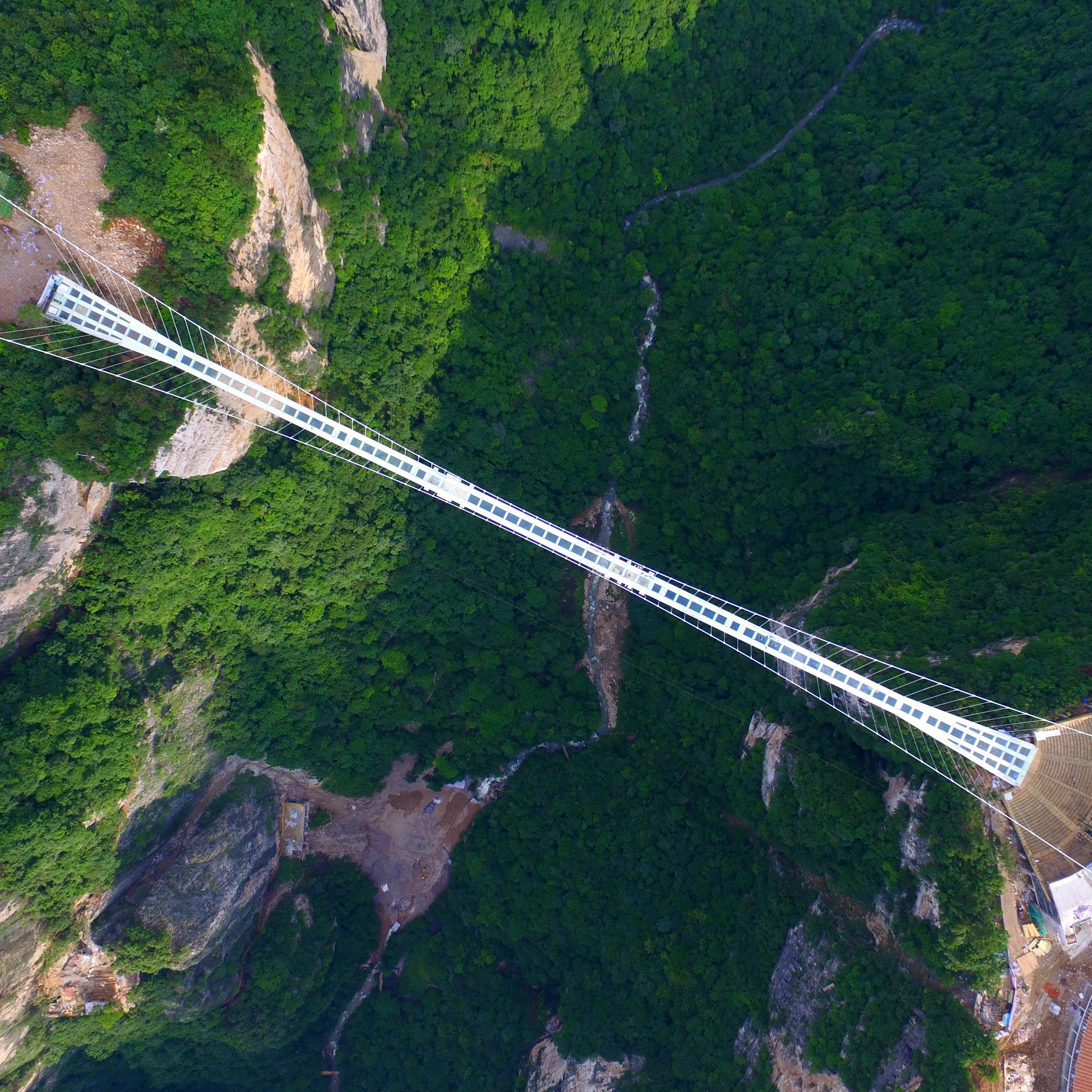
World’s tallest and longest glass bridge opens in China


A 430-metre-long glass bridge has been constructed across a deep canyon in China’s Zhangjiajie National Forest Park (+ slideshow). (more…)

http://ift.tt/2bA6x1Q

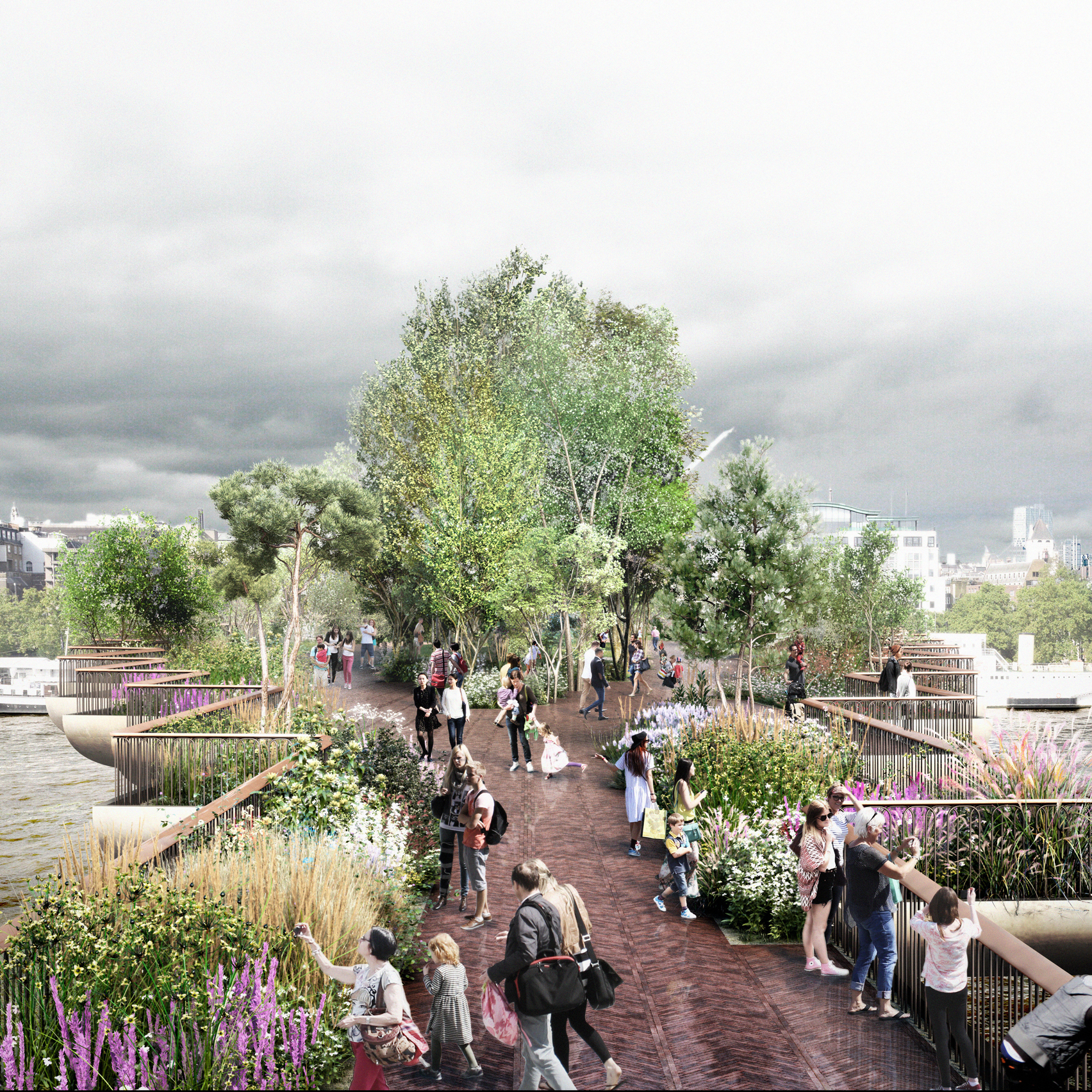
UK government renews support for Garden Bridge but reduces offer by £6 million


The UK government has pledged its continuous support for the Thomas Heatherwick-designed Garden Bridge, but has reduced its financial guarantee from £15 million to £9 million. (more…)

http://ift.tt/2bQixun

This Artist Draws Iconic Works of Architecture Using an Etch A Sketch


via Intrepid Travel

via Intrepid Travel

Anyone who has ever picked up an Etch A Sketch knows just how difficult and time consuming it can be to draw even the simplest of shapes. But for some fanatics, the challenge is simply a part of the fun. Artist Jane Labowitch, known also as “Princess Etch A Sketch,” is one of those people. Since first picking up an Etch A Sketch at the age of 4, she has been fascinated with the red drawing toy, developing her skills to recreate notable works of art, architecture and pop culture.

Check out her drawings of some of architecture’s most iconic works after the break.

Spending up to 20 hours on the most complicated pieces, Labowitch creates her drawings on Etch A Sketches of various sizes. A recent trip to India saw her expand her artistry into a unique form of travel journalism.

Taj Mahal (With Flowers)


via Intrepid Travel

via Intrepid Travel

//platform.instagram.com/en_US/embeds.js

Red Fort


via Intrepid Travel

via Intrepid Travel

via Intrepid Travel

via Intrepid Travel

Humayun’s Tomb


via Intrepid Travel

via Intrepid Travel

via Intrepid Travel

via Intrepid Travel

Ceiling Detail from Amer Palace Hall of Mirrors


via Intrepid Travel

via Intrepid Travel

via Intrepid Travel

via Intrepid Travel

Tuk Tuk (A covered motorized bike)


via Intrepid Travel

via Intrepid Travel

via Intrepid Travel

via Intrepid Travel

Other pieces include the ornate St. Basil’s Cathedral and the Chicago Skyline:

St. Basil’s Cathedral

//platform.instagram.com/en_US/embeds.js

Chicago Skyline

//platform.instagram.com/en_US/embeds.js

A Sunday on La Grande Jette / Seurat

//platform.instagram.com/en_US/embeds.js

Winged Victory

//platform.instagram.com/en_US/embeds.js

Check out more of Labowitch’s work at her website, here.

H/T Insider, Intrepid Travel.

http://ift.tt/2breeWh