Burke’s Warning

EdmundBurke1771 Crop


Edmund Burke’s Reflections on the Revolution in France, regarded as one of the foundation texts of conservative political thought, was published on November 1, 1790. Burke’s argument contained not only a rebuttal of revolutionary principles, which he found hopelessly idealized and impractical, but a prophecy that the ensuing destabilization and violence would open the door to a charismatic military opportunist, someone “who understands the art of conciliating the soldiery, and who possesses the true spirit of command”:

Armies will obey him on his personal account. There is no other way of securing military obedience in this state of things. But the moment in which that event shall happen, the person who really commands the army is your master; the master (that is little) of your king, the master of your Assembly, the master of your whole republic.

As Jesse Norman says in Edmund Burke: The First Conservative, Burke’s words offered “a frighteningly exact description of the emergence of Napoleon Bonaparte.” Almost nine years to the day after Burke published his Reflections, Napoleon staged the coup which allowed him to master not only the French republic but, over the next fifteen years, most of Europe. Unsurprisingly, after the Allies finally reined in the Little Emperor, they lost no time in implementing policies and national boundaries that ushered in a new “Conservative Order,” one that favored the old ruling dynasties.

The unofficial birthday of that new Conservative Order is November 1, 1814, when over 200 states and princely houses, representing Europe’s finest royalty and brightest diplomats, gathered for the Congress of Vienna. As described in David King’s Vienna, 1814: How the Conquerors of Napoleon Made Love, War and Peace, the eight-month discussion of how to rebuild Europe was also the party of the century:

Reasoned opinion predicted that all negotiations would be wrapped up in three or four weeks. Even the most seasoned diplomats expected no more than six. But the delegates, thrilled by the prospects of a lasting peace, indulged in unrestrained celebrations. The Vienna peace conference soon degenerated into a glittering vanity fair: masked balls, medieval-style jousts, and grand formal banquets — a “sparkling chaos” that would light up the banks of the Danube.

Europe’s most recent political makeover took effect on November 1, 1993, when the twelve-nation European Union — twenty-eight nations now, though soon to be twenty-seven — was established. Also born from the chaos of war, the EU seemed like a good idea to many countries reeling from WWII, as reflected in this 1946 speech in Zurich by, ironically, Winston Churchill:

We British have our Commonwealth of Nations . . . why should there not be a European group which could give a sense of enlarged patriotism and common citizenship to the distracted peoples of this turbulent and mighty continent? And why should it not take its rightful place with other great groupings and help shape the onward destinies of men? . . . Therefore I say to you: let Europe arise!

Churchill’s comments give title to the prizewinning Turbulent and Mighty Continent, in which the eminent British sociologist Anthony Giddens offers a balanced critique of the EU’s problems and suggests how Churchill’s vision might still be achieved. In Out of Ashes: A New History of Europe in the Twentieth Century, the German-American historian Konrad H. Jarausch also supports a reformed and reinvigorated EU, because “the European Alternative” may be the best one available — even for America:

No doubt the continent is confronting serious problems of aging, immigration, fiscal control, institutional structure, and global competitiveness — but they are ultimately solvable. Instead of being an imperfect clone of American modernity, Europe has different ideas about the role of religion, gun control, capital punishment, welfare support, public transportation, and international organization, just to mention a few. To many liberal Americans, these European solutions are more appealing than Tea Party prescriptions of military strength, unilateral intervention, unrestrained speculation, and social conservatism.

The Barnes & Noble Review http://ift.tt/2eAcPgs

BIG’s VIA 57 West Wins the 2016 International Highrise Award


© Kirsten Bucher

© Kirsten Bucher

BIG’s VIA 57 West has been unanimously chosen as the winner of the 2016 International Highrise Award (IHA) for the world’s most innovative highrise.

One of the world’s most important architectural prizes for tall buildings, the award is presented by Deutsches Architekturmuseum (DAM) every two years to the project that best exemplifies the criteria of future-oriented design, functionality, innovative building technology, integration into urban development schemes, sustainability, and cost-effectiveness.


© Kirsten Bucher


© Kirsten Bucher


© Kirsten Bucher


© Kirsten Bucher


© Kirsten Bucher

© Kirsten Bucher

Described by DAM as a “grandiose building sculpture [representing] a varied and sensual experience from all perspectives,” the winning project was selected from over 1500 highrises commissioned worldwide over the last two years, which was narrowed down to 30 nominated buildings and later a 5-strong shortlist.

“It is a great honor that VIA 57 West receives the International Highrise Award 2016,” said BIG founder Bjarke Ingels. “It is a rare new breed of building combining the communal qualities of a european courtyard with the density and views of a highrise. I see this prize as an invitation for us and others to think differently about how we want inhabit our future cities”


© Kirsten Bucher

© Kirsten Bucher

Project Description via DAM

In the west the site is separated from the Hudson River by a multi-lane motorway, in the north stands a historical electricity plant, in the south there are the noises and smell of the newly built waste sorting centre, while a conventional, blue-glazed, 130-metre-high residential tower rises up in the east, whose view of the Hudson River may not be obstructed – these were the unattractive framework conditions in the very mixed district “Hell’s Kitchen”.


© Kirsten Bucher

© Kirsten Bucher

© Kirsten Bucher

© Kirsten Bucher

The architects responded to this with the innovative concept of a “courtscraper”. The hybrid of an American high-rise and a European perimeter development turns away from the building to the north-east and is orientated towards a green interior courtyard. The balconies integrated into the roof surface afford protected views of the Hudson River in the West. Almost all of the 709 apartments enjoy a view of the river and the sunset, which would have been geometrically impossible for a normal perimeter development. This sculptural prototype therefore offers a quiet, sheltered oasis within the loud city, without being closed off from it. BIG Architects have created great innovations with this building.


© Kirsten Bucher

© Kirsten Bucher

© Kirsten Bucher

© Kirsten Bucher

“Basically, this project is a major milestone for housing, and not only in the extreme residential market of New York,” said DAM Director and jury member Peter Cachola Schmal.

“It not only brings in an exciting new typology, a hybrid of a skyscraper and a perimeter development, but also shows how impulses from current European movements, building groups, and cooperatives can be applied to quite different residential areas. The metropolitan inhabitant residing alone is no longer lonely, but finds the necessary social contact with like-minded fellow beings within the same block. “


© Kirsten Bucher

© Kirsten Bucher

© Kirsten Bucher

© Kirsten Bucher

The Jury also awarded a special recognition to the Housing & Development Board (HDB) of Singapore for their “exemplary leadership as a public agency realizing innovative high-rise sustainable residential community projects.”


© Kirsten Bucher

© Kirsten Bucher

© Kirsten Bucher

© Kirsten Bucher

Led by 2014 IHA winner Stefano Boeri, the competition’s world-class jury also featured Lamia Messari-Becker (civil engineer, Professor at the University of Siegen), Ole Scheeren (architect, Buro-OS, Beijing/Berlin), Brigitte Shim (architect, Shim-Sutcliffe Architects, Toronto), Horst R. Muth (Head of Project Management at Deka Immobilien GmbH, Frankfurt/Main), Peter Cachola Schmal (Director of Deutsches Architekturmuseum, Frankfurt/Main), Thomas Schmengler (CEO of Deka Immobilien GmbH, Frankfurt/Main) and Felix Semmelroth (Former Deputy Mayor in charge of Culture and Science for the City of Frankfurt/Main). Substitutional Jury members were: Claudia Meixner (architect, MEIXNER SCHLÜTER WENDT Architekten, Frankfurt am Main) and Holger Techen (civil engineer, imagine structure, Frankfurt am Main).

An exhibition on all 30 nominated projects, titled “Best Highrises 2016/17 – International Highrise Award 2016,” will be on display at Deutsches Architekturmuseum in Frankfurt from November 4, 2016 through January 15, 2017.

News via DAM.

http://ift.tt/2enQgxS

Tara Clancy: Urban Voices

Tara Clancy Crop

Miwa Messer, director of Barnes & Noble’s Discover Great New Writers program, writes “Tara Clancy’s memoir The Clancys of Queens roared into our hearts and minds; we couldn’t shake her voice even if we’d wanted to. The Clancys of Queens is the very best kind of memoir: emotionally inclusive and familiar, even if its terrain is not exactly ours; the universal, revealed through layers of detailed observation and ferocious, lively, loving prose.”

When we asked the author to share some of her favorite reading with us, she supplied a list of five favorites, each of which illuminates the life of the city from a unique angle.


The Wanderers
By Richard Price

“This book, more than any other, changed my life, both because of its unvarnished storytelling and for how it influenced future decisions I made. It’s Price’s very first novel — a partially autobiographical story about a group of working-class Bronx guys in the ’60s. Reading it transported me right back to being a kid in my own kitchen in Queens, where I used to eavesdrop on my father and uncles telling raunchy stories from their youth. But, as much I loved this book for what was in it, I was equally struck by what wasn’t: the stories of New York’s working-class women. In fact, after I read this book, I went to a bookstore, found a clerk, held up my copy, and said, ‘I want a book just like this, but by a woman!”‘The clerk thought about it for a while, then said, ‘Me too! . . . but it doesn’t exist.’ ‘So,” I said, ‘what was the last book written by a working-class New York woman?’ And he replied . . .


A Tree Grows in Brooklyn
By Betty Smith

“Yup! This classic was what the clerk and I came up with. The thing is, Smith’s novel about growing up as a second-generation Irish-American girl in Williamsburg, though deserving of its lasting legacy, was published seventy-three years ago! That’s my mother’s lifetime; it’s unreal to me. Immediately after leaving the bookstore, I started relaying this bonkers fact to everyone I spoke to. I often added the joke, ‘Well, shoot, maybe I’ll have to write the next book! I’ll call it, A Tree GREW in Brooklyn, A Long Effing Time Ago!’ Eventually, it went from being a joke to being a real motivator for me.


Drown
By Junot Díaz

“This was another life-changing book for me. The characters in Díaz ‘s first short story collection were very familiar — growing up in Queens, I went to school with a lot of Dominican kids — and so, just like with Richard Price, reading this book took me home. It also helped me realize that it was okay (and maybe even more powerful) to write in my authentic voice; that I could share my story without having to adopt any literary pretense. And when the term ‘ghetto nerd’ starting popping up around Díaz, as well as his characters, my instant response was, ‘YES! I knew a bunch of those growing up. Well, damn, I kinda am one, too!’


Preparation for the Next Life
By Atticus Lish

“Published in 2014, this was my favorite novel of the last decade. It’s a dark, raw, and thoroughly original love story between a white working-class American war vet and a recent Chinese immigrant, two demographics that hardly appear in literature. It’s also set in Flushing, Queens — a place where I spent a lot of time as a teenager — and features a native New York Irish-American family who, for better or worse (they’re some pretty rough folks), bear strong similarities to families I grew up with. Lish’s writing is phenomenal, and the story is one that needed telling.


Another Brooklyn
By Jaqueline Woodson

“So, here I’ve been outraged about the decades-long lack of native New York women writers, wondering why their stories have been missing on our shelves, and a few months ago, the brilliant Jacqueline Woodson comes out with this amazing novel! Set in Brooklyn in the 1970s, it centers on the friendship between four young black women. She had me hooked from the dedication: ‘For Bushwick (1970–1990) In Memory.’ Whether you’re familiar with Brooklyn then, now, or not at all, there’s no other way of putting it — this lyrical and transporting novel is an absolute must-read.


The Barnes & Noble Review http://ift.tt/2fd0Cj1

Villa M House / Liag Architects


© Ben Aarts

© Ben Aarts


© Germano Borrelli


© Ben Aarts


© Ben Aarts


© Ben Aarts

  • Interior Design: Arnie van Dun interieurarchitectuur
  • Lighting Design: FLOS lighting

© Ben Aarts

© Ben Aarts

LIAG has designed a sustainable residential villa for a private client. The design consists of a distinct framework, finished in Western Red Cedar cladding, that contains the different functions of the building. 


© Ben Aarts

© Ben Aarts

The kitchen and swimming pool form two volumes that protrude out on either side of this framework. In the front yard the main volume floats above a rising landscape of Marram grass. The facade takes a step back to create space for a breakfast patio with a grand view of the inland shipping in the ever-busy canal. The terrace at the rear forms an extension to the living room, connected via expansive glazed sliding doors.


Section

Section

Section

Section

Through the use of mobile hanging cabinets in the form of room dividers the villa has a wide variety of options for interior transformation, giving it variable arrangements and atmosphere. This way the kitchen can be completely separated from the living area but also connected to serve as an open kitchen. The same goes for the study room. It can be part of the living area to create a vast open space, or can be separated when required.


© Ben Aarts

© Ben Aarts

Parking is made easy and convenient by creating a carport underneath the main floor to allow direct access to the house. The lower floor accommodates a cinema, storage areas and guest bedrooms.


© Germano Borrelli

© Germano Borrelli

© Germano Borrelli

© Germano Borrelli

The heating and cooling is provided by an Aquifer Thermal Energy Storage system. The villa has demand-controlled ventilation. The swimming pool has a separate heating installation using a heat pump system. The villa is also designed with 78 solar panels on the roof for a sustainable supply of electricity. By giving them a 10-degree angle the panels are not visible from the street.


© Ben Aarts

© Ben Aarts

http://ift.tt/2fb9Z5g

One of the most famous and recognizable landmarks for the…

One of the most famous and recognizable landmarks for the pioneer travelers on the Oregon, California and Mormon trails, Chimney Rock is still an icon on Nebraska’s landscape. Today, Chimney Rock and its surrounding environs look much as they did when the first settlers passed through in the mid 1800s. Photo of the Milky Way erupting over Chimney Rock courtesy of Jesse Attanasio.

Jaime Hayón designs cake creature for Häagen-Dazs

The Häagen-Dazs Ice Show - Jaime Hayon

Spanish designer Jaime Hayón has created this festive ice cream cake for Häagen-Dazs. Read more

http://ift.tt/2fvcKzB

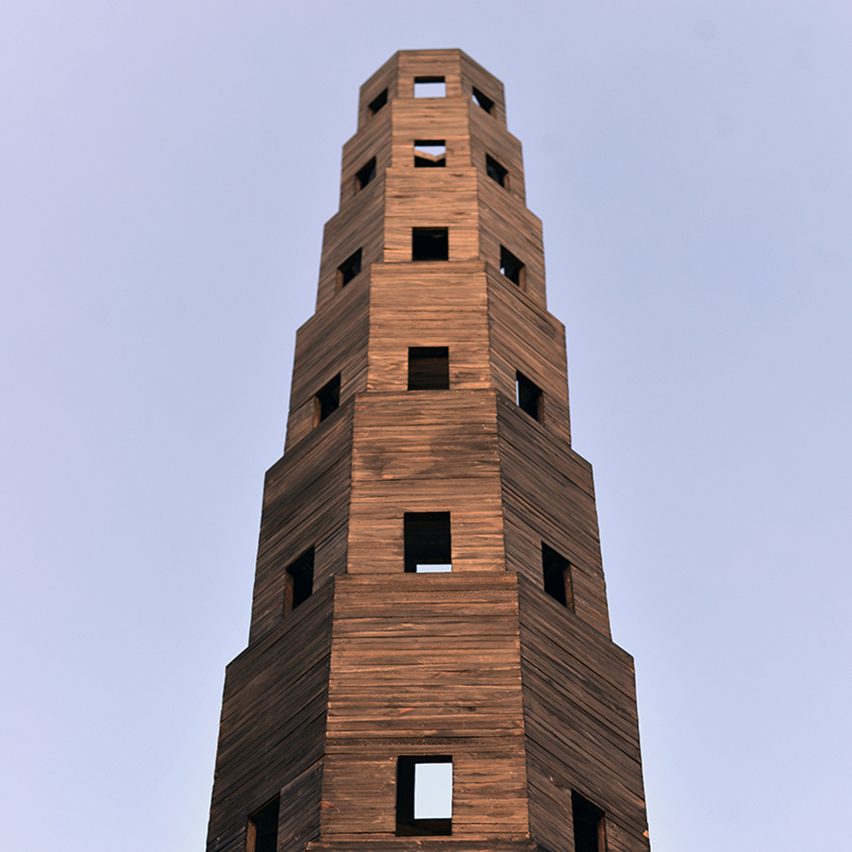
Pezo von Ellrichshausen uses octagonal drums to build skinny tower

pavilion-fiac-paris-pezo-von-ellrichshausen-architecture-france_dezeen_sqa

There is only enough room for one person inside this tall skinny pavilion that Chilean studio Pezo von Ellrichshausen has built in the Jardin des Tuileries in Paris. Read more

http://ift.tt/2fcidry

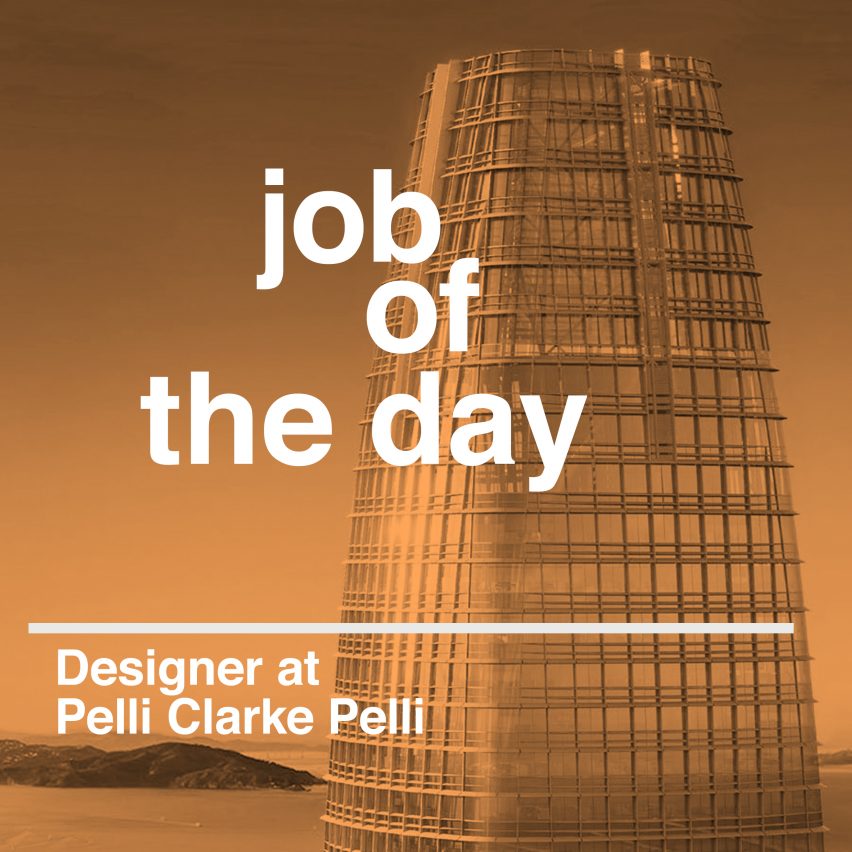
Job of the day: designer at Pelli Clarke Pelli

Dezeen JObs architecture and design recruitment

Our job of the day from Dezeen Jobs is for a designer at Pelli Clarke Pelli’s New York studio, whose glass Salesforce Tower (pictured) is under construction in San Francisco. Browse more architecture and design opportunities on Dezeen Jobs.

http://ift.tt/2faDvYH

Claesson Koivisto Rune models vibrating massage pillow on pebbles

Claesson Koivisto Rune Stone Pillow

Claesson Koivisto Rune based the stone-like appearance of these massaging pillows on pebbles found on Sweden’s beaches. Read more

http://ift.tt/2emI3Ky

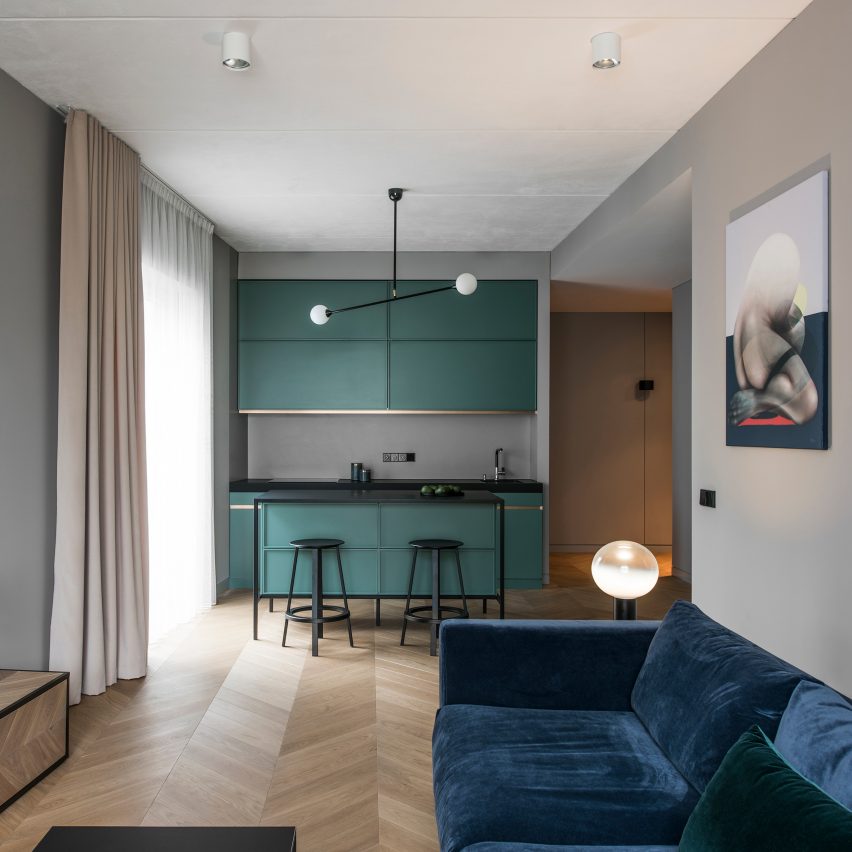
Colourful accents offset grey walls in Vilnius apartment renovation by AKTA

Basanavičiaus by AKTA Studio

The kitchen, dining and living room of this apartment in the Lithuanian capital Vilnius features grey-painted walls and black-metal details, which are offset by colourful cabinets and furniture. Read more

http://ift.tt/2fgGMlP